What to expect
Highlights
- Museum visit at Kerala Science and Technology Museum
- Indoor cultural or historical context
- Easy pairing with nearby food and heritage stops
A hands-on science museum with the Priyadarshini Planetarium, popular with families and school groups.
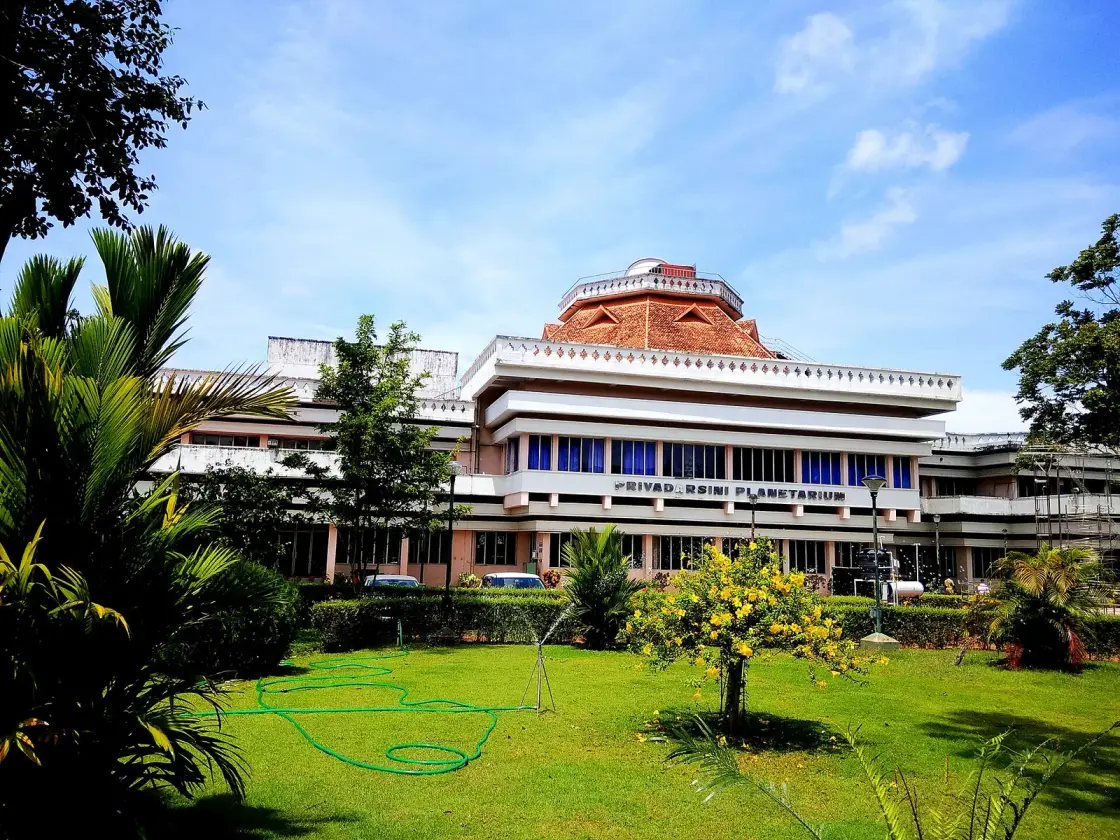
Levers, optics, a planetarium dome and a great many school children pressing buttons. The Kerala Science and Technology Museum is not on any heritage trail, and it is one of the most genuinely useful places in Thiruvananthapuram if you are travelling with anyone under fifteen.
The museum is a hands-on science centre in the modern sense: galleries of working exhibits covering mechanics, optics, electricity, mathematics and energy, most of them designed to be operated rather than read about. The pitch is squarely at school-age visitors, and the place is at its noisiest and best when a school party is in.
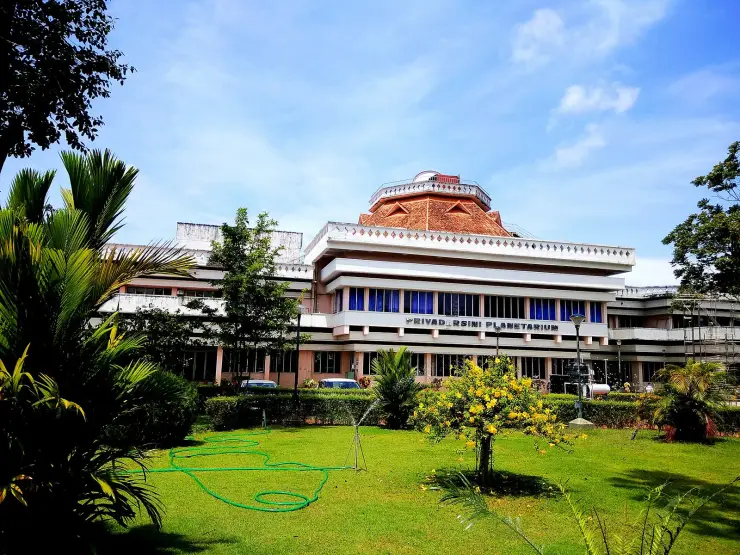
Its headline attraction is the Priyadarshini Planetarium, which runs scheduled shows under a dome and is the main reason many families come. Show times are fixed and limited, seating is finite, and on holidays and weekends they fill — so the single most useful piece of planning advice for this museum is to find out the show schedule before you arrive rather than after.
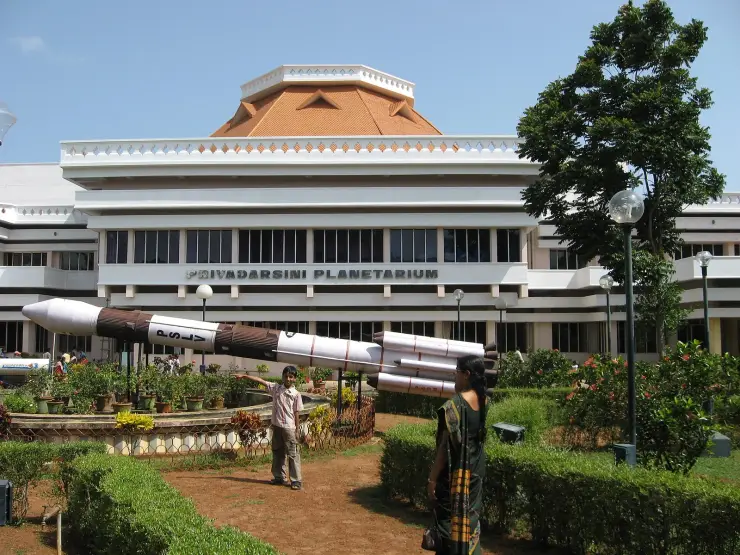
Outside, the grounds hold larger exhibits of the kind that do not fit indoors — full-size or near-full-size hardware, science-park pieces and demonstration installations that children climb on. Given Thiruvananthapuram's role in Indian space research, with the Vikram Sarabhai Space Centre in the city, the space and rocketry material here has more local grounding than it would in most cities.
It is worth being clear about what this is and is not. It is not a historic building, it does not hold a collection of artefacts, and it will not detain an adult travelling alone for very long. What it does is fill an afternoon extremely well for families, and it does so indoors and air-conditioned, which on a hot Thiruvananthapuram day is not a minor consideration.
The location helps: it sits in the central museum quarter, within easy reach of the Napier Museum, the zoo and Kanakakunnu, so it slots into a day already spent in that part of the city.
The scale is larger than the modest frontage suggests. The electricity, electronics, power and motion-mechanics galleries alone carry more than three hundred exhibits between them, and there are further galleries on popular science, mathematics, automobile engineering, bio-medical engineering, computing and solar energy. Add a 3D theatre, a motion simulator with six degrees of freedom, an energy park and a library, and the honest problem becomes triage rather than finding enough to do.
One part of the operation never appears in the galleries at all. Since 1999 the museum has run a Mobile Science Exhibition - a science centre built into a vehicle that goes out to schools across Kerala, reaching children who will never make the trip to Thiruvananthapuram. It is a deliberate inversion of how a museum usually works, and it says something about what this institution was set up to be: not a collection to be visited, but a teaching programme that happens to have a building.
The additions arrived in layers, and knowing the order helps you plan. The museum opened in 1984; the planetarium has been running since 1994; a Children's Science Park followed in 1997 and a Mobile Science Exhibition unit — a science centre on wheels that goes out to schools across the state — in 1999; a play park with thirteen educational playing devices was added in 2005. What you walk through is four decades of accretion, which is why the galleries vary so much in vintage and style.
The most common error about this museum is simply where it is. A striking number of travel listings file the Kerala State Science and Technology Museum and Priyadarsini Planetarium under Kochi. It is not in Kochi. It is in central Thiruvananthapuram, in the museum quarter on the northern high ground, and it always has been. The mistake propagates from one aggregator to the next and is worth knowing about if you are planning from search results rather than a map.
The second is that the planetarium opened with the museum. It did not. The museum was established in 1984; the Priyadarsini Planetarium has been functioning since 1994, a decade later. The two are routinely given the same founding date, and the ten-year gap disappears in most write-ups.
The third is the spelling, which is genuinely unsettled rather than wrong: you will see Priyadarsini and Priyadarshini used interchangeably, including in official material. Neither is an error to correct — it is a transliteration choice, and searching for one will not reliably find the other.
The fourth is a superlative worth reading closely, because it is a good lesson in how such claims are built. Kerala Tourism describes the Priyadarsini as 'the first hybrid planetarium in India with tilted dome'. Count the qualifiers: first, hybrid, in India, with a tilted dome. Each one narrows the field, and a claim with four conditions attached is usually engineered to be defensible rather than discovered to be true. That is not an accusation of dishonesty — it is probably accurate as stated — but it tells you the record being claimed is a narrow one. The substantive facts stand without it, and they are better: an eighteen-metre dome seating one hundred and eighty-four, a GM-11 starfield projector that can wind the sky forward or back by some twelve and a half thousand years, and a hybrid system running an opto-mechanical star projector alongside digital projection.
The fifth is not an error but an omission, and it is the most useful single fact on this page. Almost nothing written about the museum mentions that the planetarium runs public telescope observation on Thursday and Friday evenings, roughly between half past six and eight. That is a free-standing reason to come back after dark in a city where almost every other attraction has closed by six, and it is invisible in the listings that only report dome-show times. Confirm on the day, since evening sessions depend on staff and sky, but ask about it explicitly rather than assuming the website tells you everything.
A sixth confusion is about names, and it costs people time. Three are in circulation for what is one site: the Kerala State Science and Technology Museum, which is the institution's formal name; the shorter Kerala Science and Technology Museum, used almost everywhere including here; and the Priyadarsini Planetarium, which is a component of it rather than a separate attraction. Listings and booking sites treat the planetarium as its own destination often enough that visitors plan two stops and make one, or arrive at the museum not realising the dome show they read about is inside the ticket they are holding. If you have an itinerary with both on it, they are the same address.
There is no folklore here, and it would be dishonest to manufacture any. A science centre is one of the few kinds of place a travel page can describe without reaching for legend, and the discipline is worth keeping. This is a forty-year-old state institution built to teach school children how a lever works. Its myths are the small factual drifts that accumulate around any place that gets described more often than it gets visited.
The Kerala State Science and Technology Museum was established by the Government of Kerala in 1984 as an autonomous institution for popularising science and scientific temper, particularly among young people, and has developed into a complex of hands-on galleries with an attached planetarium and outdoor science park.
The Priyadarsini Planetarium has been functioning since 1994 — a decade after the museum itself — and remains its best-known component, running scheduled dome shows for the public and for school groups.
A Children's Science Park opened to the public in 1997 and a Mobile Science Exhibition unit, taking science demonstrations out to schools across Kerala, in 1999. A play park with thirteen educational playing devices followed in 2005.
The planetarium's own equipment is worth recording: an 18-metre dome seating 184, with a GM-11 opto-mechanical starfield projector - able to present the sky across roughly 12,500 years in either direction - running alongside digital projection in a hybrid configuration, and public telescope observation offered on Thursday and Friday evenings.
The galleries cover electricity, electronics, power and motion mechanics — more than three hundred exhibits between them — alongside popular science, mathematics, automobile and bio-medical engineering, computing and solar energy, with a 3D theatre, motion simulator and library added over time.
The museum's emphasis on space science reflects its setting: Thiruvananthapuram is a centre of the Indian space programme, home to the Vikram Sarabhai Space Centre, and rocketry has a direct local resonance here that it lacks elsewhere.
It sits within the city's museum quarter on the northern high ground, alongside the nineteenth-century institutions of the Museum Park.
It is the best thing in Thiruvananthapuram to do with children — hands-on galleries designed to be operated rather than looked at, in a museum founded to teach rather than to display.
The Priyadarshini Planetarium runs dome shows that are the highlight of the visit for most families.
The outdoor science park holds larger exhibits and hardware that do not fit indoors, including space and rocketry material with genuine local grounding — this is the city that houses the Vikram Sarabhai Space Centre, so the subject is a local industry rather than a general-interest topic.
It is indoors and cool, which makes it a sound plan for the hottest part of a Thiruvananthapuram afternoon — and unlike the temples and the heritage museums, nothing here depends on the weather, the calendar or a dress code.
It is genuinely a teaching institution rather than an attraction dressed as one: forty years old, state-funded, with a science exhibition on wheels that goes out to schools across Kerala. What you walk through is the shop window of a much larger programme.
It sits in the central museum quarter, so it combines easily with the Napier Museum, the zoo and Kanakakunnu Palace.
For the telescope evenings, which almost no listing mentions: public observation sessions run on Thursday and Friday nights, roughly 6.30 to 8, in a city where nearly everything else has shut by six.
For a working planetarium rather than a display one — an 18-metre dome seating 184, with a hybrid system running an opto-mechanical star projector alongside digital projection.
Road km to Thiruvananthapuram; ghat roads and traffic vary — allow extra.
Midday works well for museums, especially when outdoor heat is high.
Live forecast loads in your browser.
Sun and moon are calculated for this location and shown in IST. Photography windows are the hour around sunrise and sunset; the sunset bearing is degrees clockwise from true north. Moon phase is accurate to about half a day.
Browse listed stays, food, activities, sights, shops and rentals around Kerala Science and Technology Museum. Check each listing’s locality and contact the business directly for current arrangements.
Thiruvananthapuram International Airport serves the city and southern Kerala’s coast. Match your airline’s terminal to your pickup point when booking an airport-side stay or meeting a driver.
Mango Cabs lists an Edapazhanji office and advertises city taxis, airport transfers, outstation cabs and vehicle hire. If you are arriving at Thiruvananthapuram airport, give the operator your terminal, flight time, destination and luggage count before asking for a vehicle. For a Kovalam, Varkala or longer trip, request a written quote covering the exact route, tolls, parking, waiting time and return journey. The website lists vehicle categories, but the car and fare for your date need direct confirmation.
Southgate Travels operates from Vikas Lane in Kunnukuzhy and advertises chauffeured taxis, airport pickups, self-drive cars and vehicle hire for events. Its own gallery shows a Southgate-branded car; that image does not promise the same vehicle for every booking. For a city or airport transfer, give the operator the exact pickup point, flight or train time, destination and luggage count, then ask for the total fare and waiting allowance. Self-drive and event bookings need a different quote: confirm the named vehicle, documents, deposit, mileage limit and cancellation terms before paying.
Do on Eanchakkal Westfort Rd, J P Nagar, VKK Nagar, Pazhavangadi in Thiruvananthapuram City.
Book with the place itself. India’s cyber-crime coordination centre warned in April 2025 that convincing copies of hotel and pilgrimage booking sites are being pushed through sponsored search and social ads, taking payment for rooms the property never hears about. Use the contact and source details on each profile to confirm the exact business and booking channel. A directory entry or map pin alone does not establish an operator’s identity or current availability. Roampedia takes no commission and does not collect booking payments. If a booking page reached you through an ad, check the address bar against the property’s own site before you pay. Fraud can be reported on cybercrime.gov.in or on 1930.
Find food, accommodation and activities across Thiruvananthapuram city. Browse the guides for places to eat, stay and explore along your route.
Walking routes start at Kerala Science and Technology Museum. Check the route and access before setting out, especially where a road, gate or waterway separates the stops.
22 more places around Thiruvananthapuram city. Open a guide to plan the visit and onward journey.
The ancestral palace compound associated with Raja Ravi Varma at Kilimanoor; visitor access concerns the working family estate and must be confirmed before travel.
6.1 km · straight line
A major coastal Muslim pilgrimage landmark south-west of the city centre, known for the Beemapally Uroos and the tombs honoured within the shrine complex.
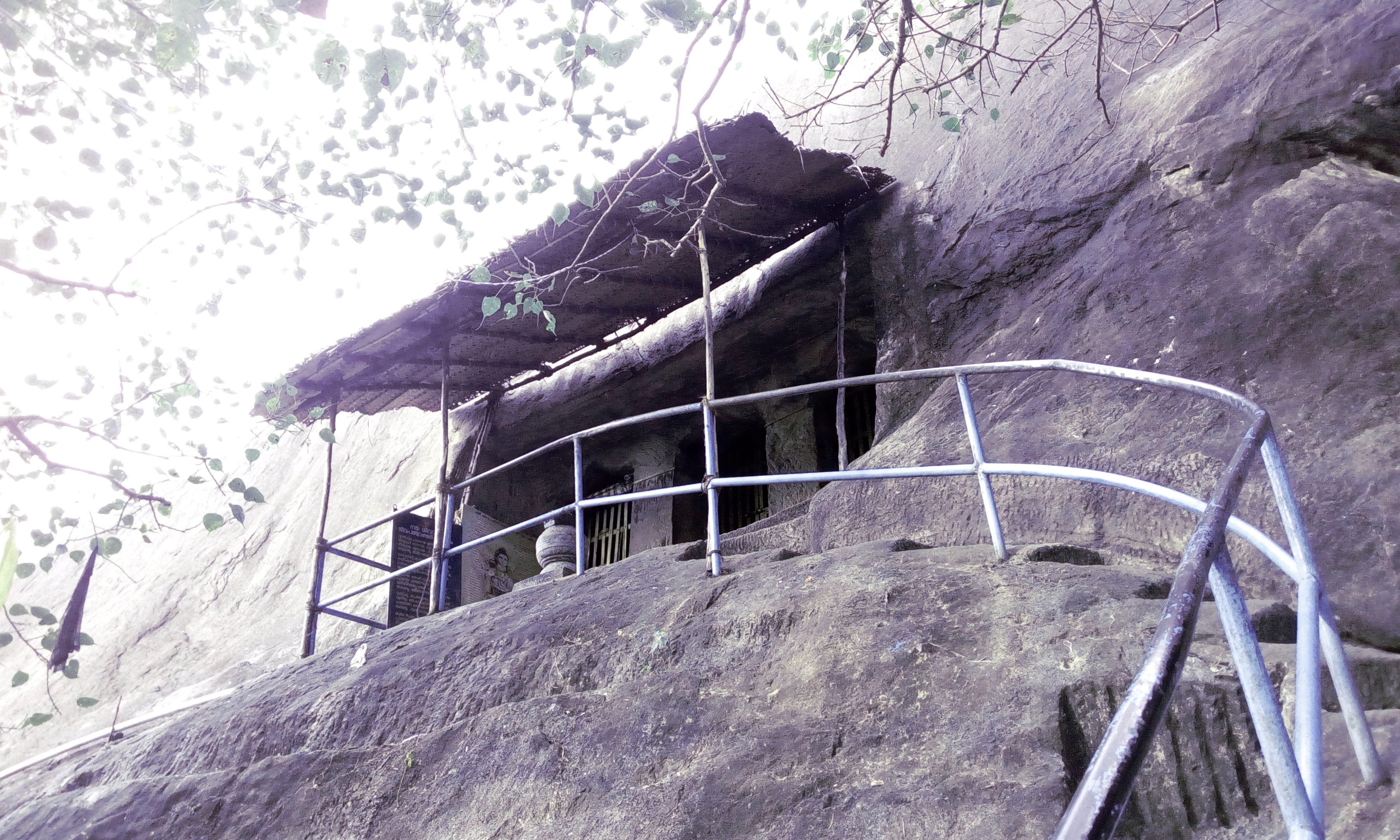
Madavoorpara combines a rock-cut Shiva shrine with a rocky hill landscape on Thiruvananthapuram’s northern edge. The temple and the climb offer different reasons to visit, and both deserve time.
5.4 km · 9 min drive
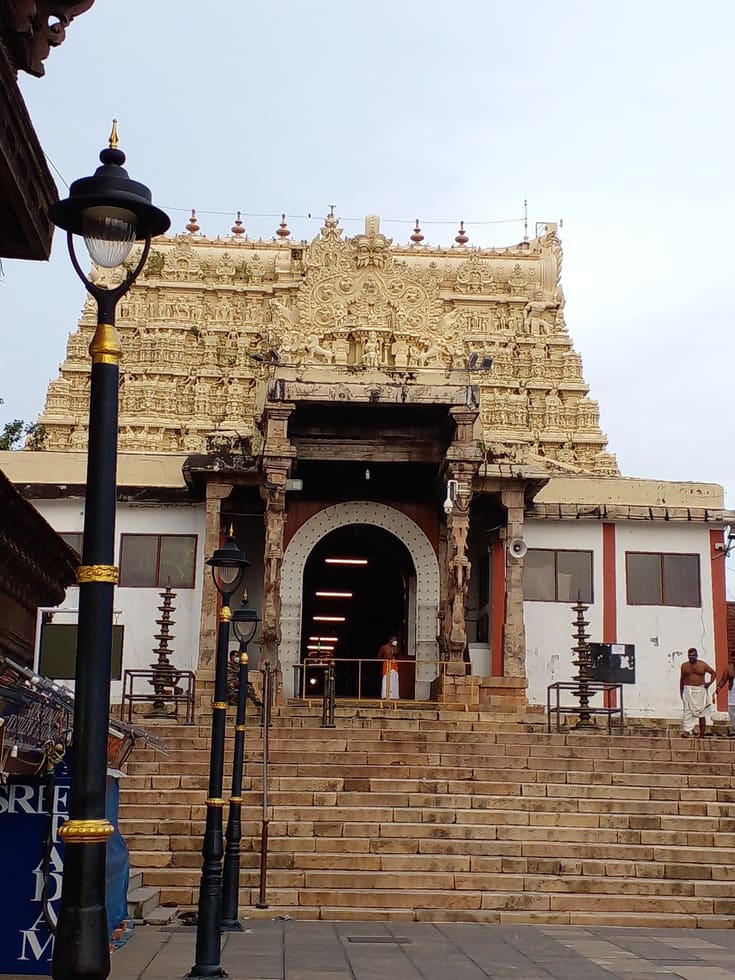
Major Vishnu temple and one of Kerala’s most important pilgrimage landmarks; strict entry and dress rules apply.
1.2 km · 15 min walk
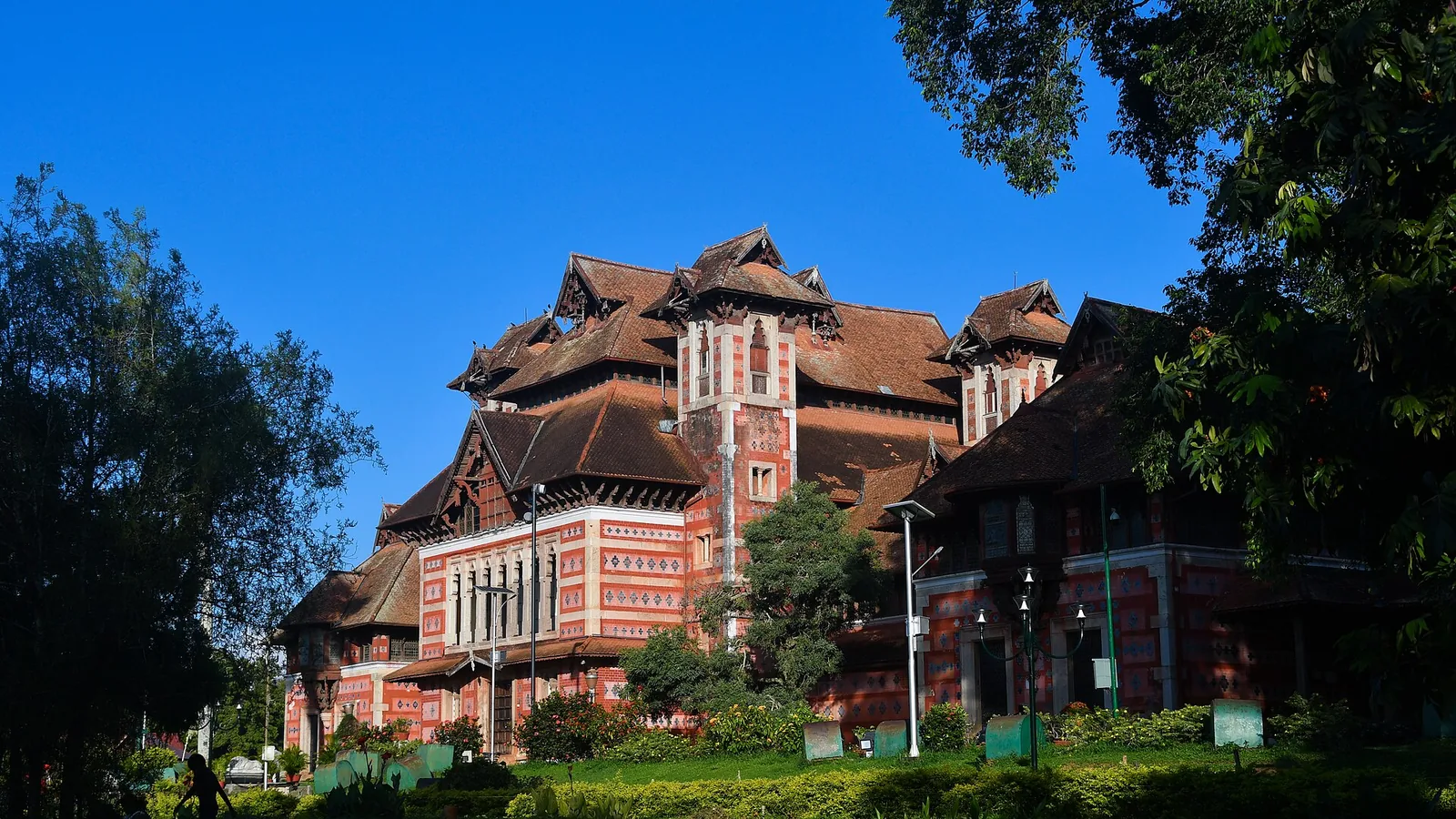
Robert Chisholm’s 1880 Indo-Saracenic museum in the Museum Park — a polychrome landmark holding Chola and Kerala bronzes, ivories and temple carts, with the Sree Chitra Art Gallery alongside it.
1.7 km · 20 min walk
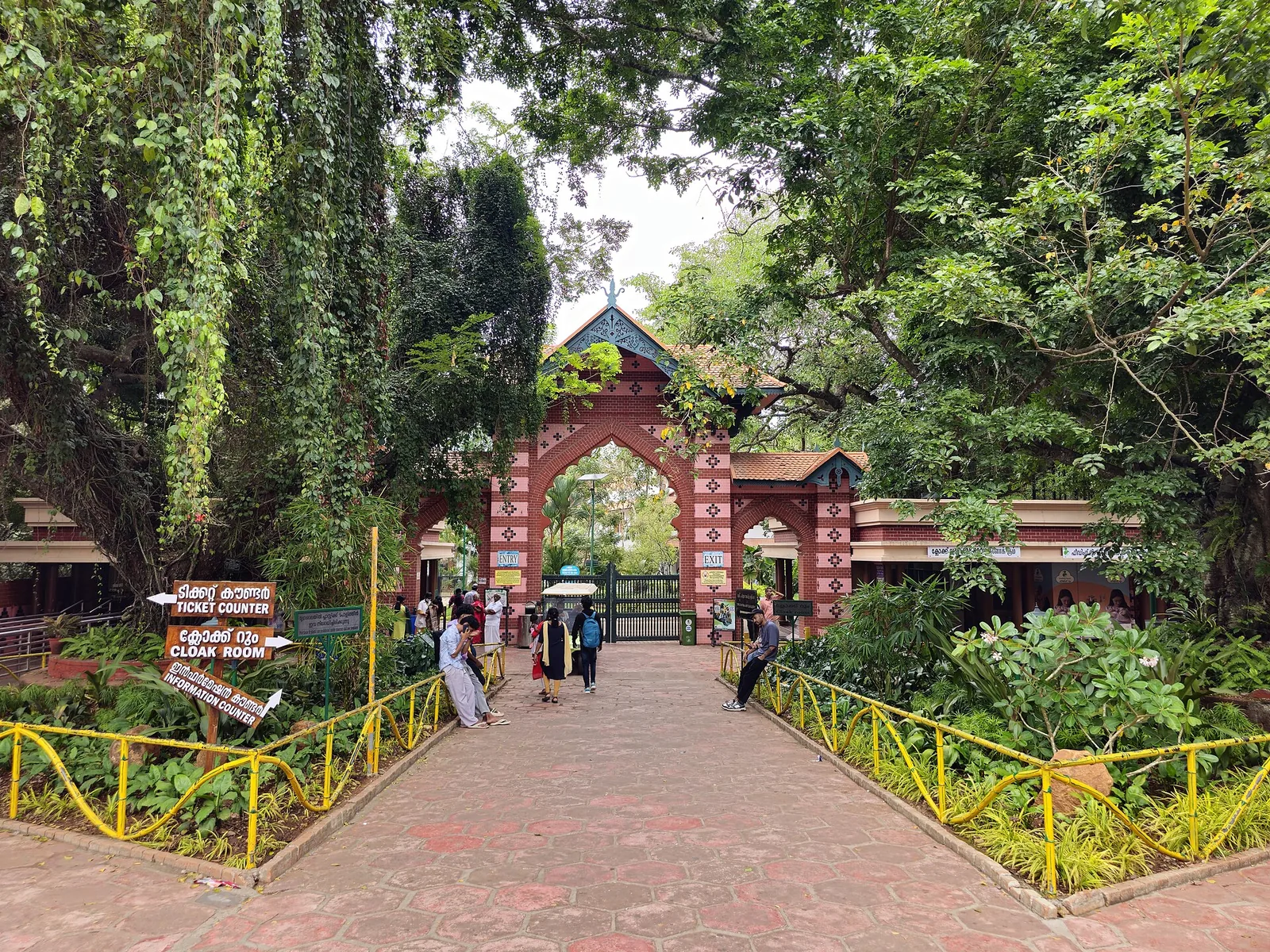
Old trees, winding paths and animal enclosures share the Museum Park at Thiruvananthapuram Zoo, also known as Trivandrum Zoo. Allow time for the garden as well as the collection, with the Napier Museum close by.
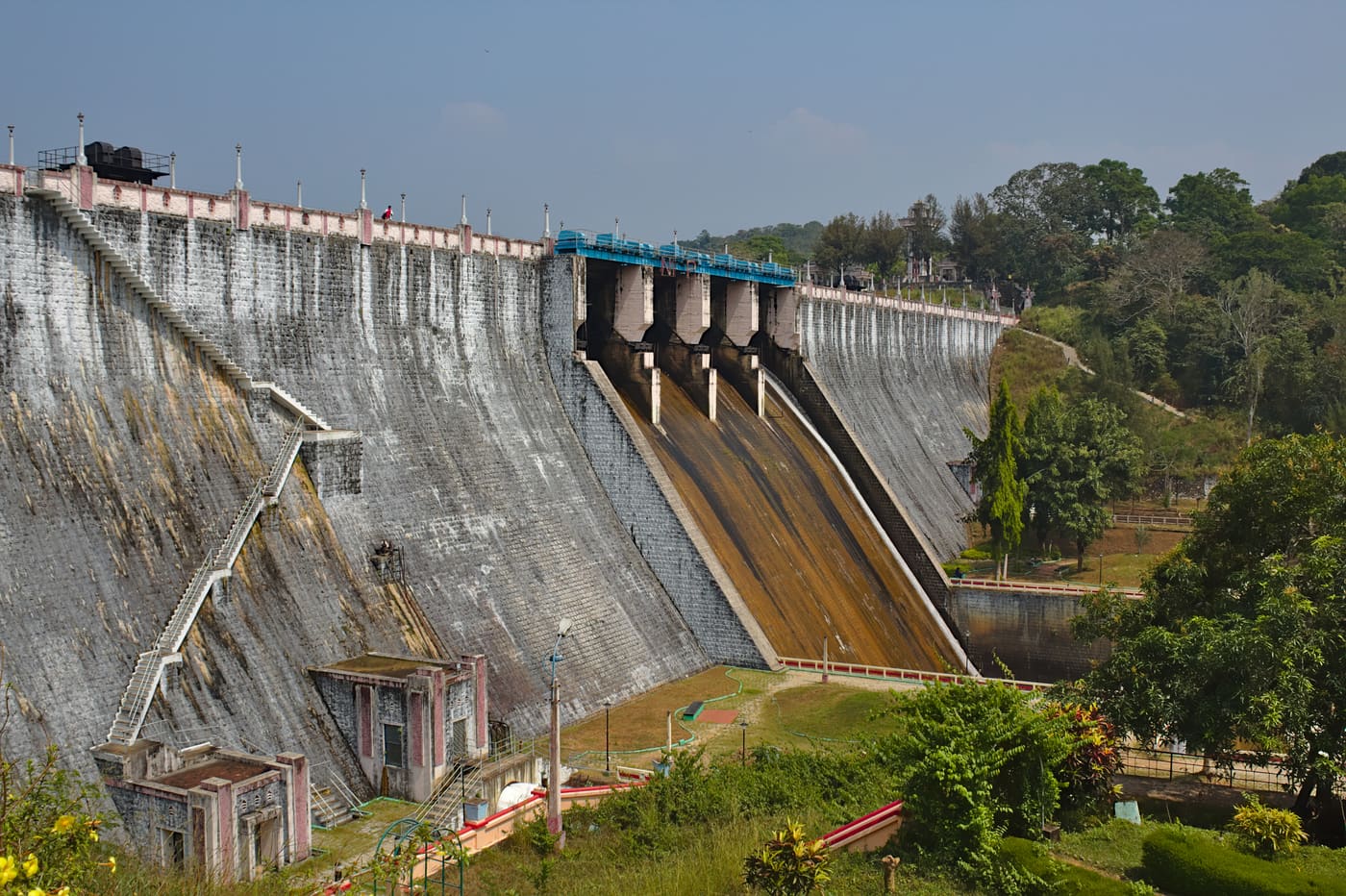
Guided forest trekking in the Neyyar Wildlife Sanctuary near the Agasthyamala foothills, south-east of Thiruvananthapuram.
6.7 km · 11 min drive
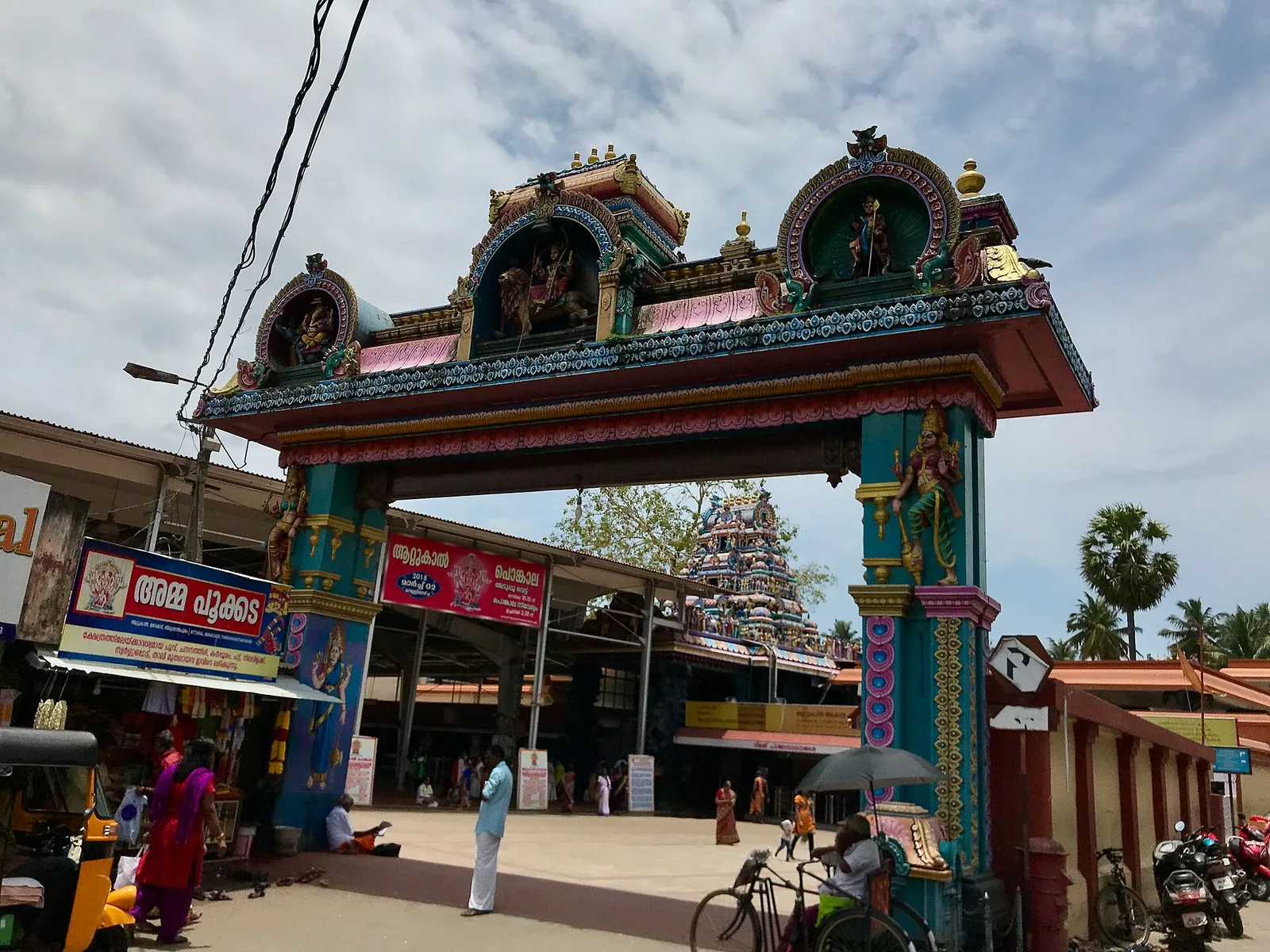
Famous Devi temple in the city, home of the Attukal Pongala — recorded as the largest annual gathering of women.
4.9 km · 8 min drive
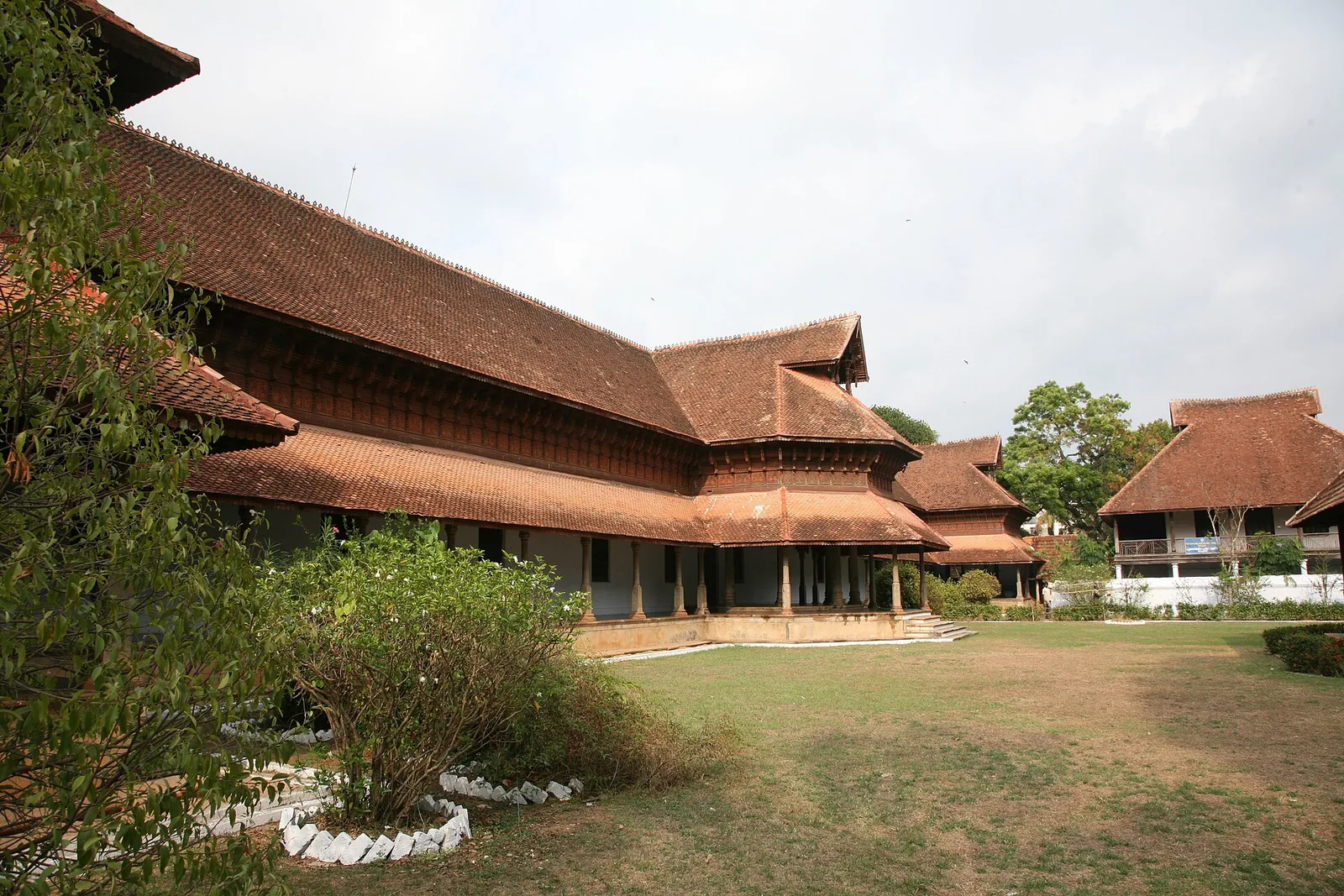
A row of carved wooden horses gives Kuthiramalika its name. Beside Sree Padmanabhaswamy Temple, this Travancore palace museum brings timber craftsmanship and royal collections into one compact visit.
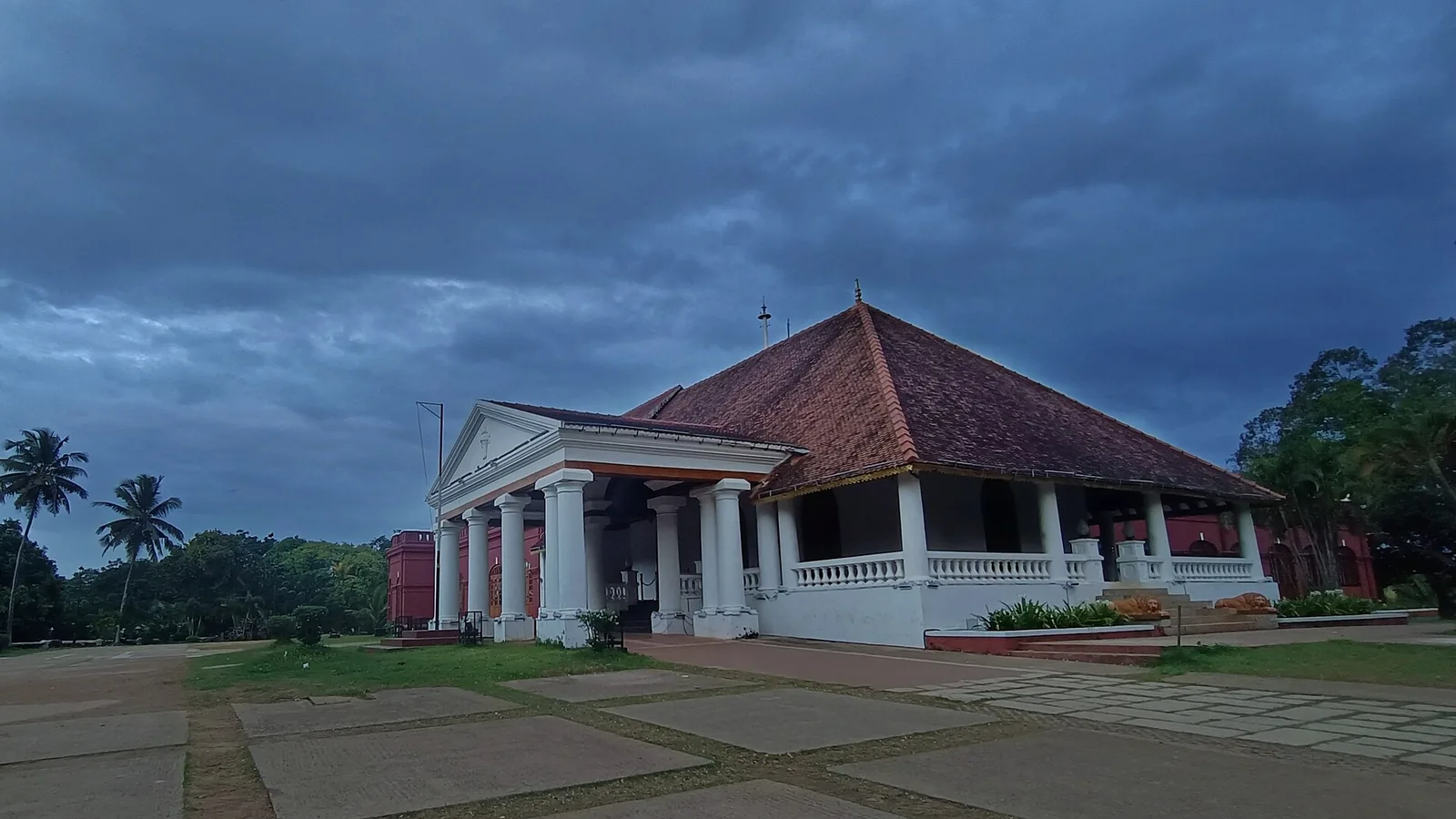
1.7 km · 20 min walk
Kanakakunnu puts a Travancore palace among gardens and cultural venues near Thiruvananthapuram’s Museum Park. Come for an evening walk or choose a date around a performance.
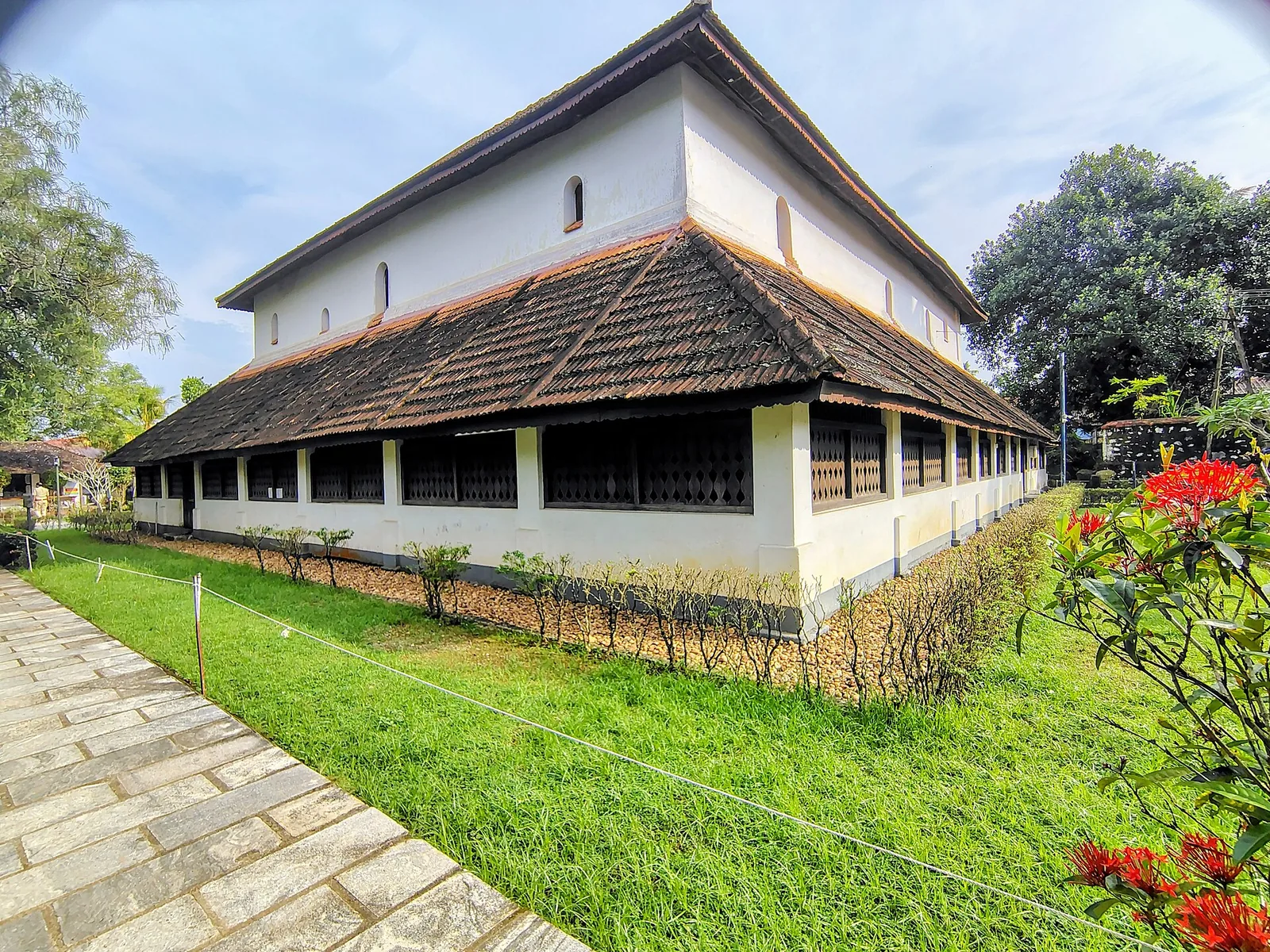
Koyikkal Palace at Nedumangad houses folklore and coin collections inside a traditional Kerala palace. Everyday objects, instruments and currency make this a more intimate museum stop than a grand royal gallery.
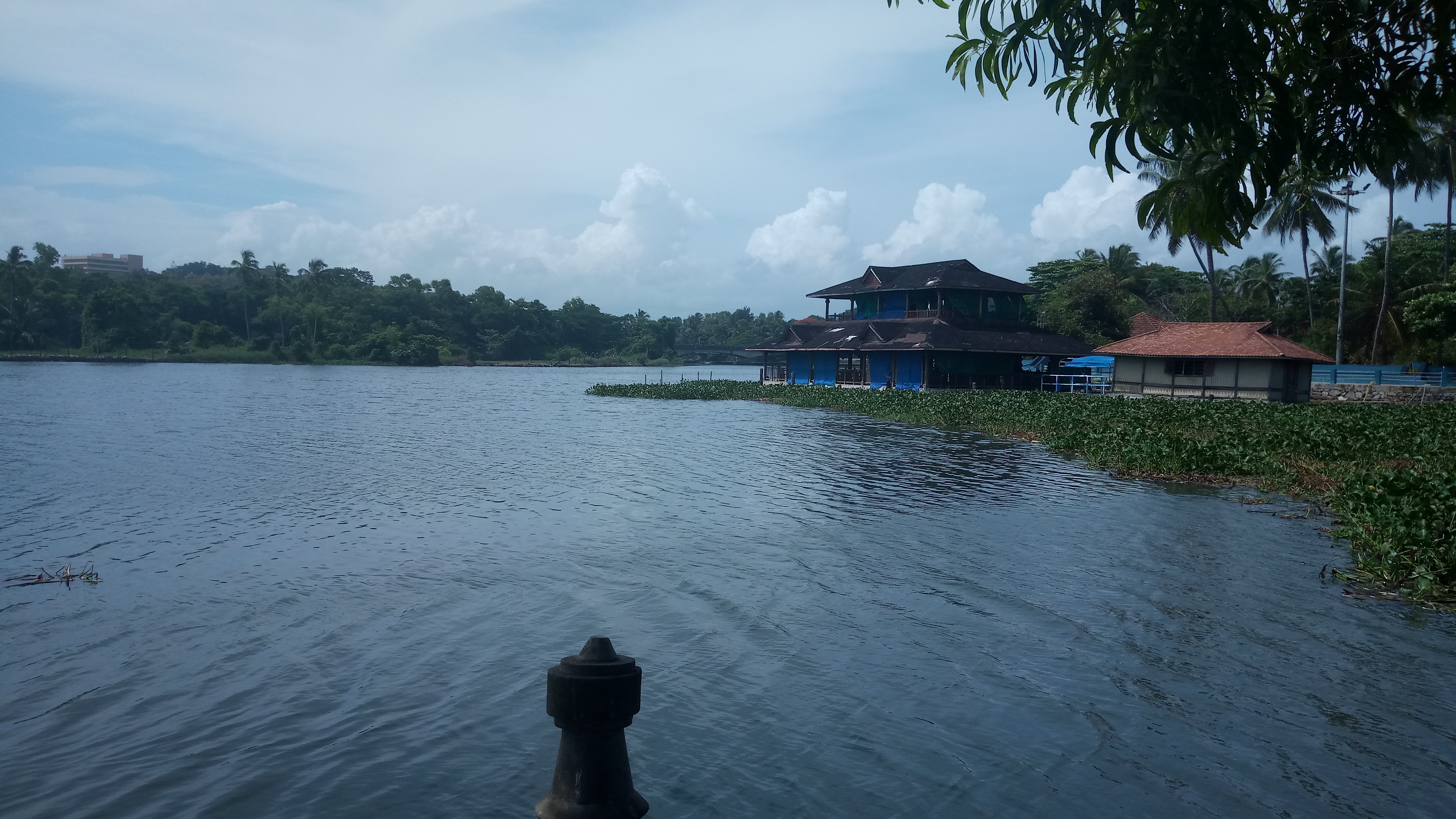
8.4 km · 12 min drive
Veli Tourist Village brings lake views, gardens and boating to the coast near Thiruvananthapuram. It is a family outing at the meeting of Veli Lake and the Arabian Sea.
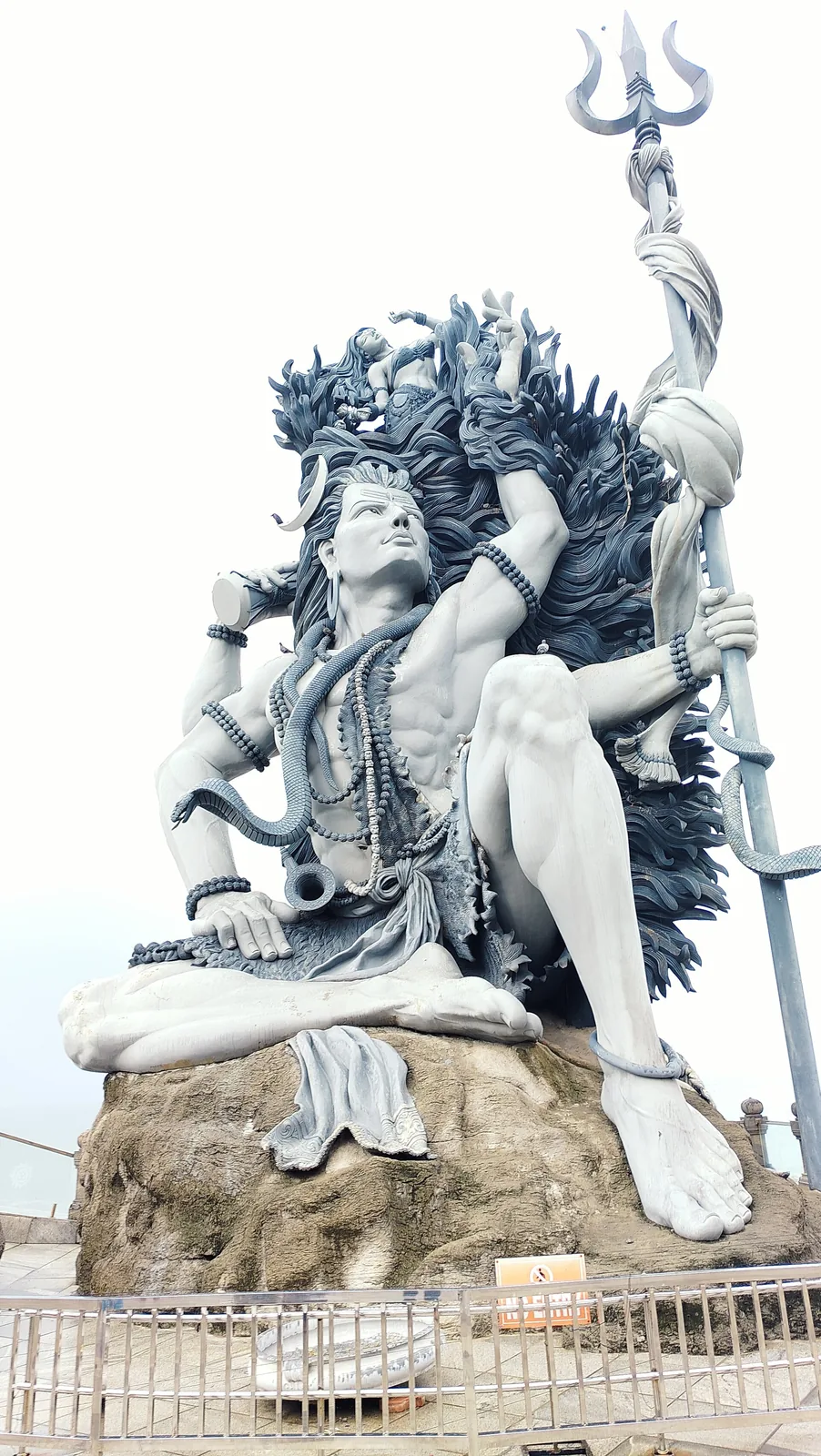
A clifftop seaside temple at Adimalathura near Vizhinjam, known for a giant Gangadhareswara (Shiva) sculpture.
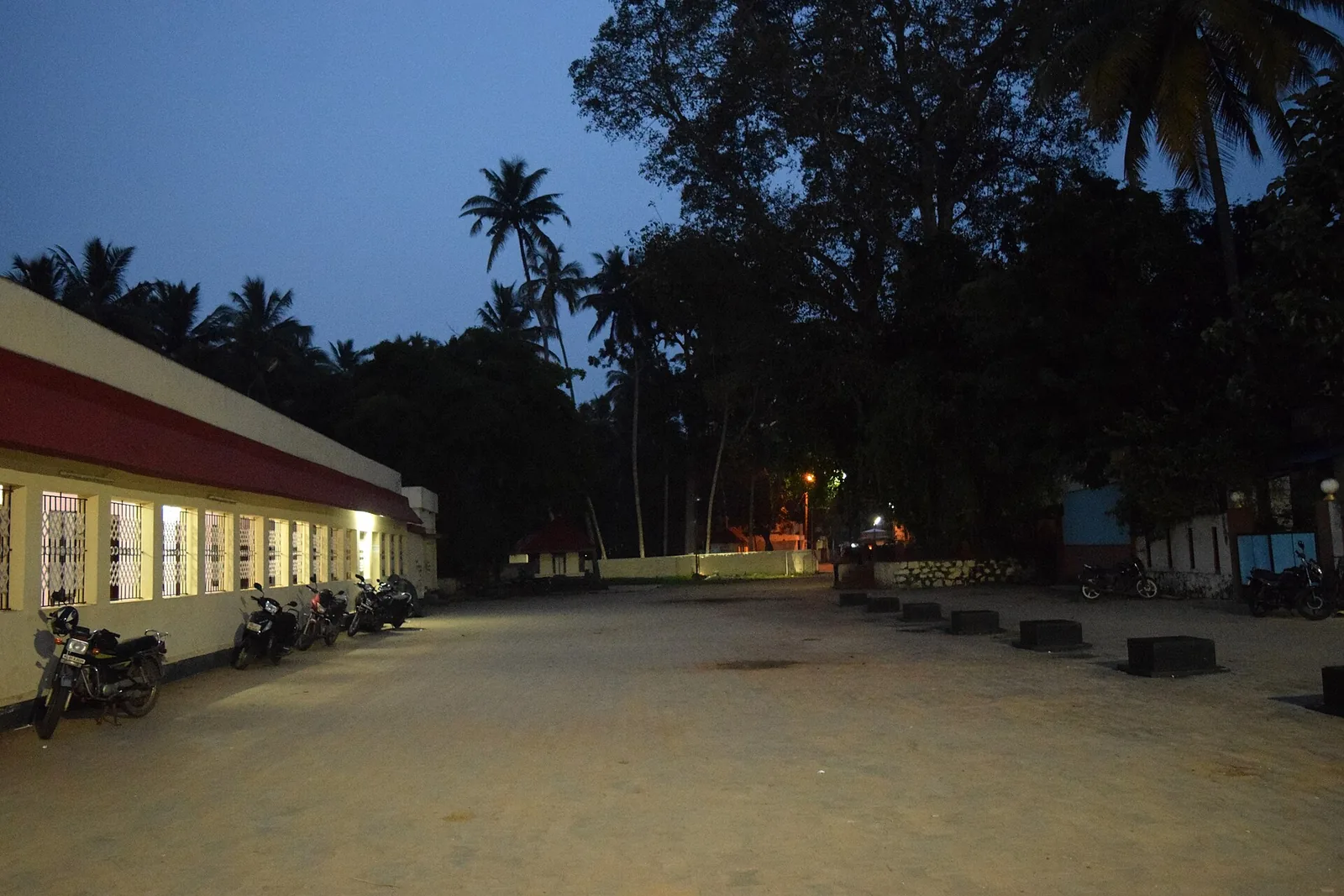
An ancient temple on the Karamana river, the district’s main site for ancestral (bali) rituals and rare for its Parasurama deity.
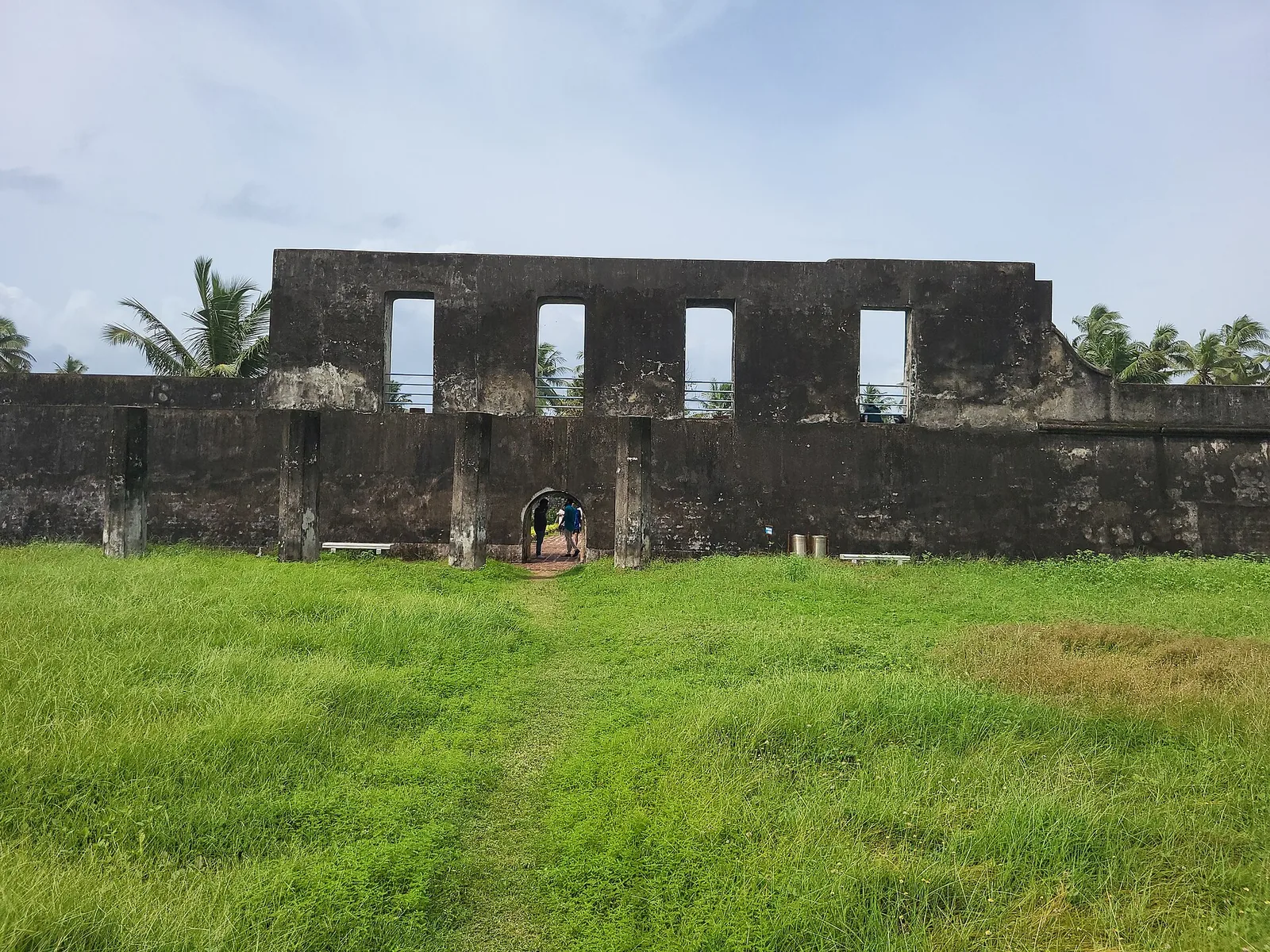
A 1690s English East India Company sea fort (Anjengo) on the coast north of the city, one of the earliest English settlements in Kerala.
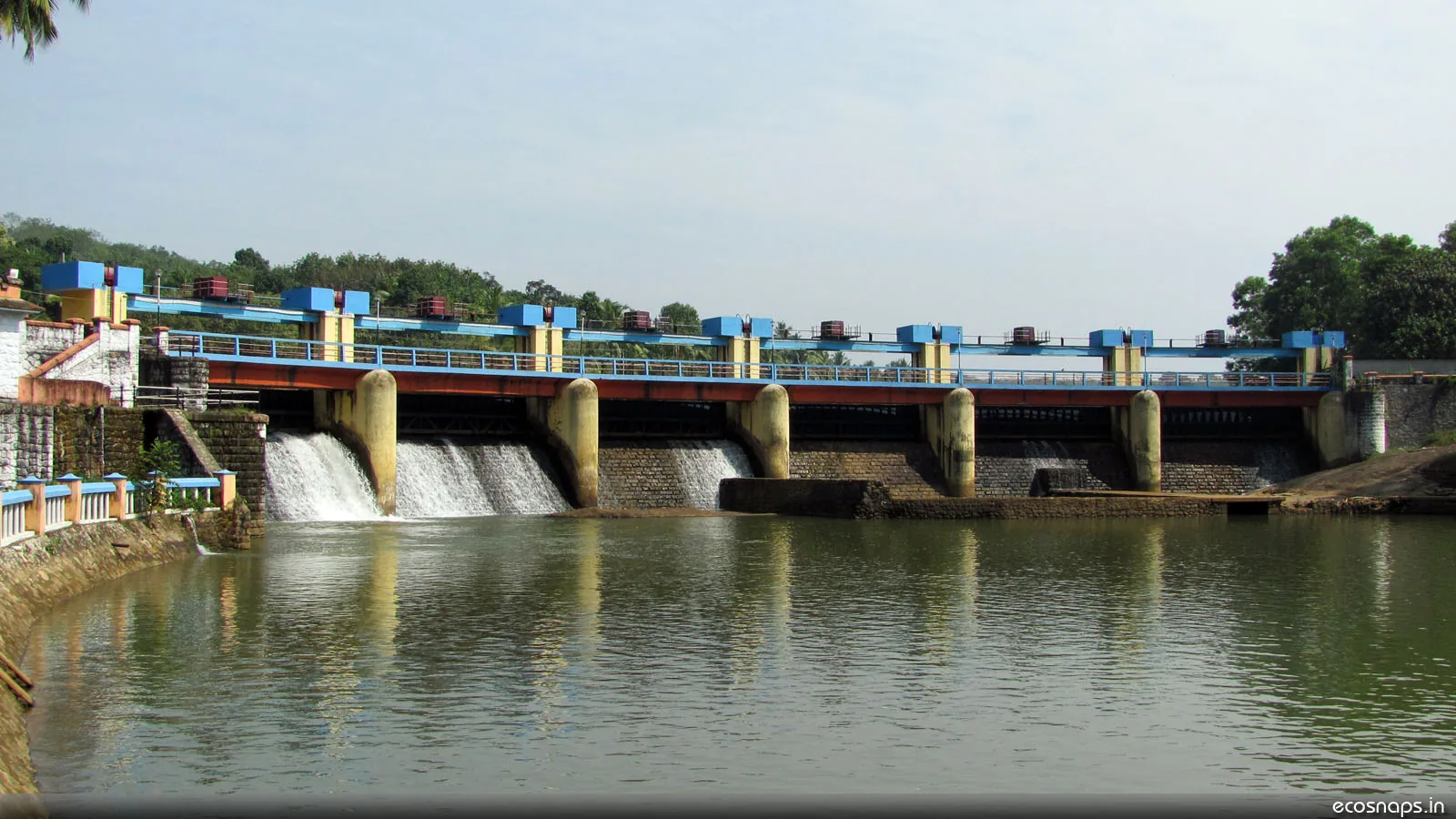
A reservoir, riverside temple and small park on the Karamana river north-east of the city, a popular local picnic spot.
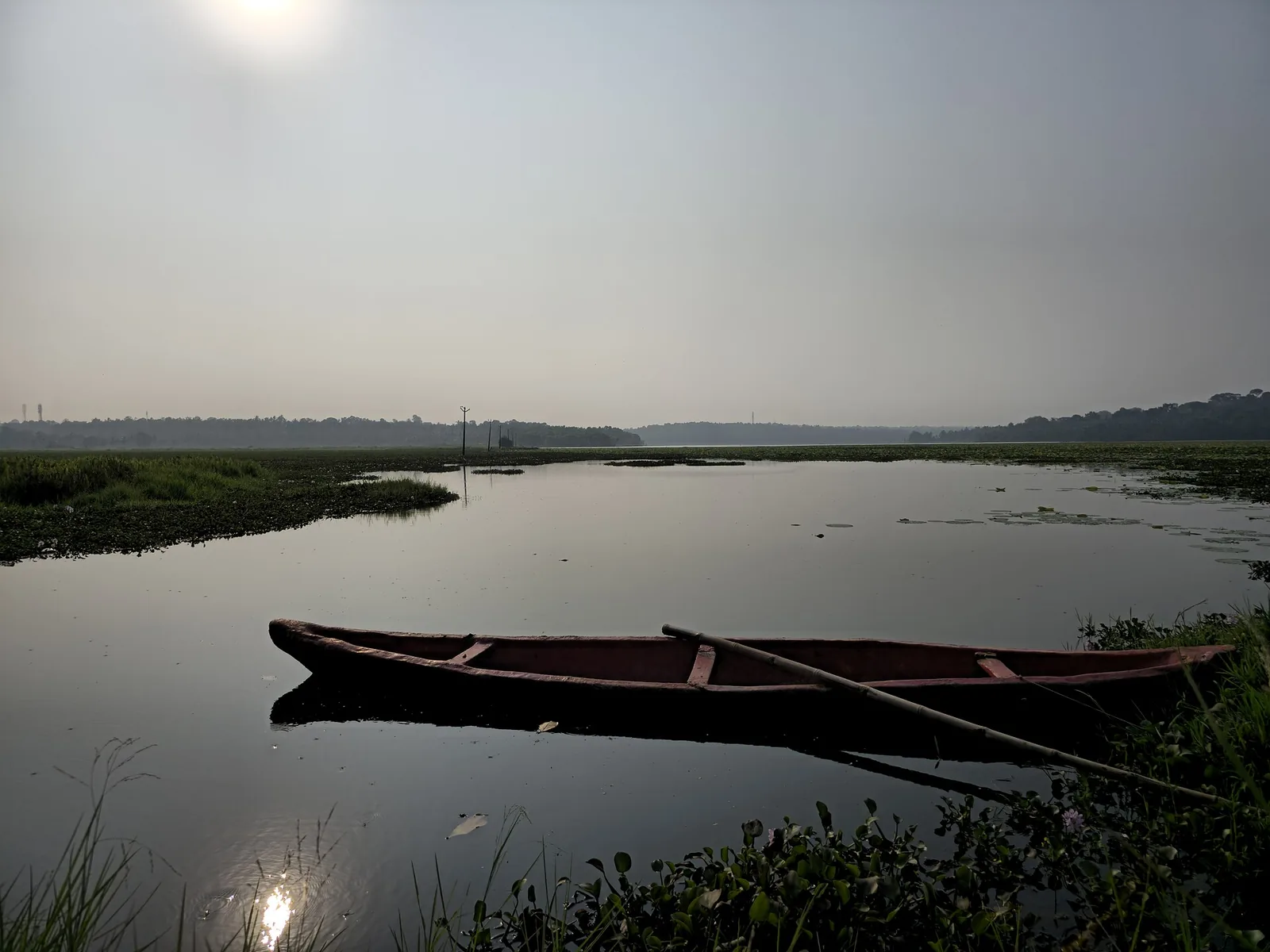
A freshwater lake in Thiruvananthapuram district, with the Punchakari–Vellayani wetlands nearby offering seasonal birdwatching.
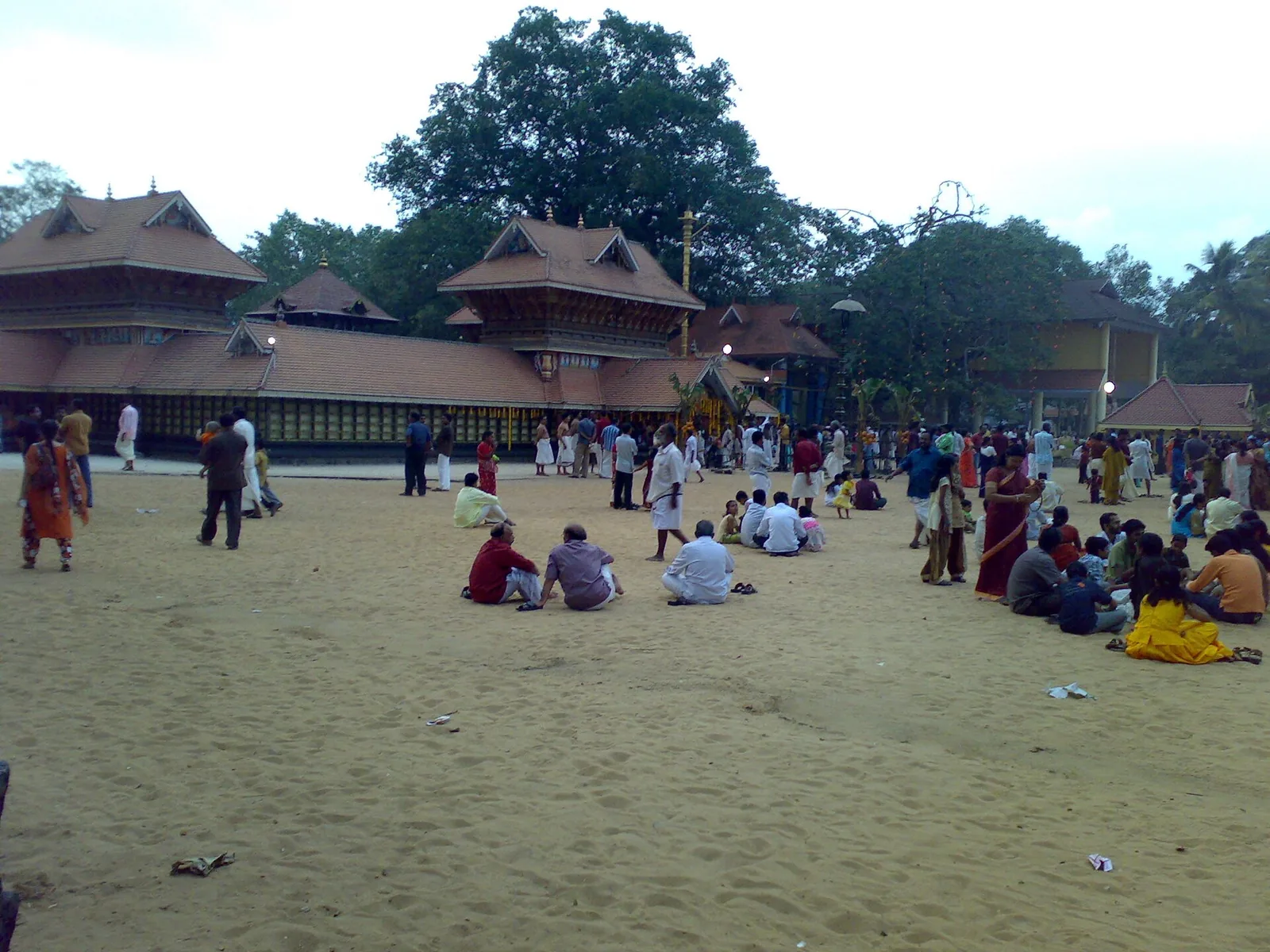
A renowned Devi temple at Chirayinkeezhu, famous for the Kaliyoot festival and the Sarkara jaggery legend.
10.4 km · 14 min drive
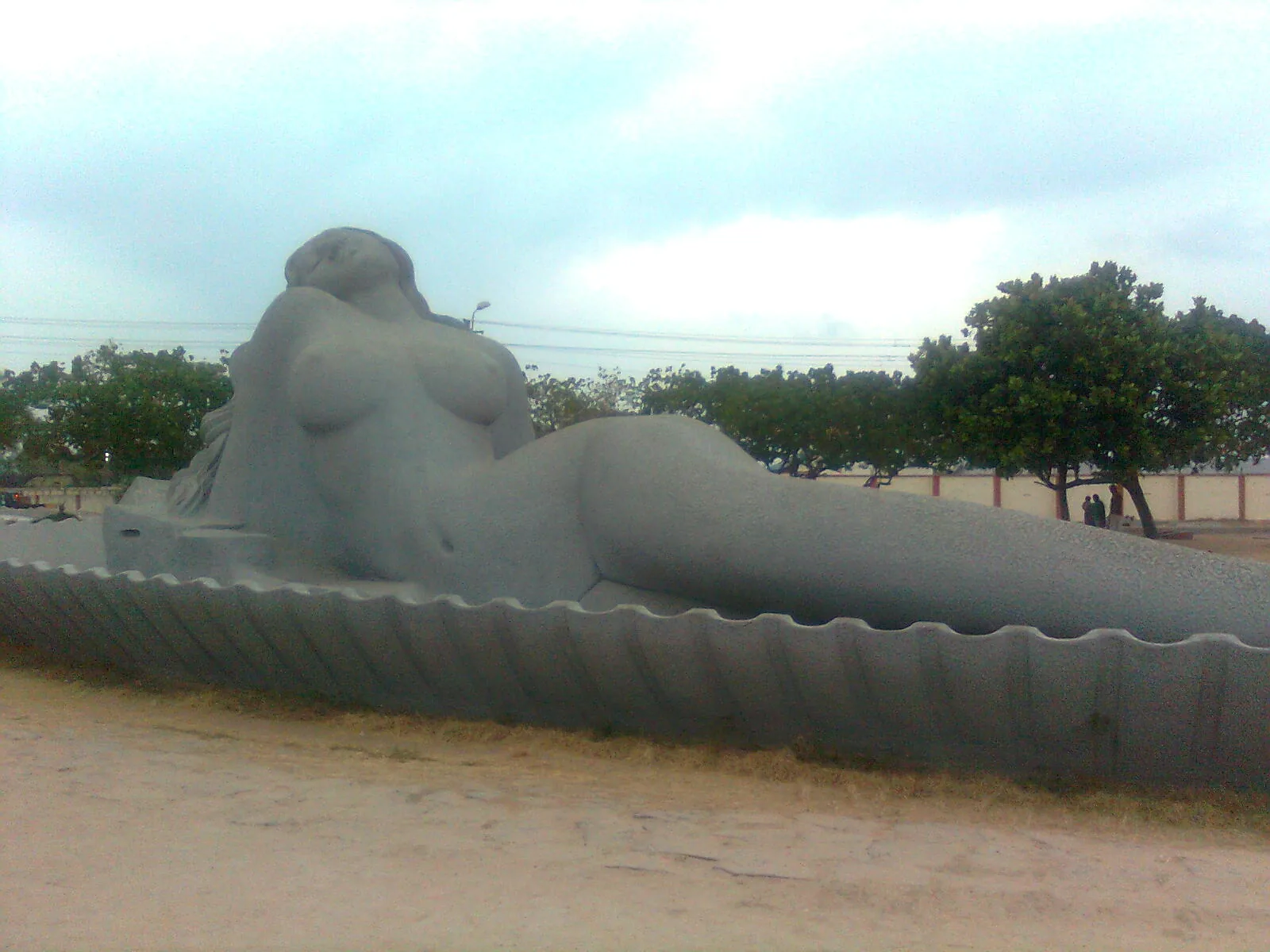
Shanghumukham is Thiruvananthapuram’s evening shoreline: an open sea horizon, airport-side access and Kanayi Kunhiraman’s reclining mermaid sculpture. Come for a coastal walk and the changing light.
4.5 km · 7 min drive
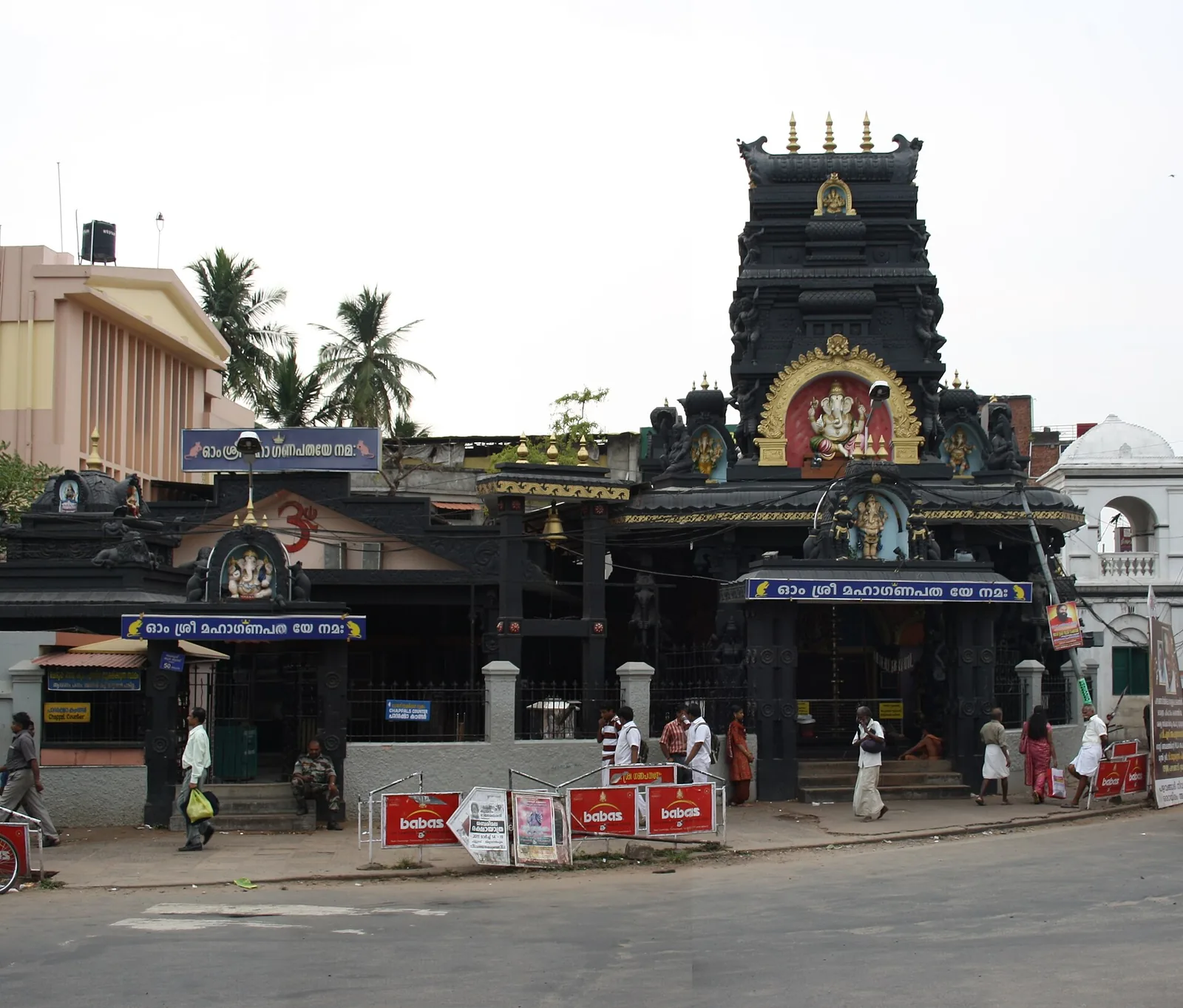
A popular Ganapathy temple near East Fort, known for the coconut-breaking offering; run by the defence services.
7.2 km · 10 min drive
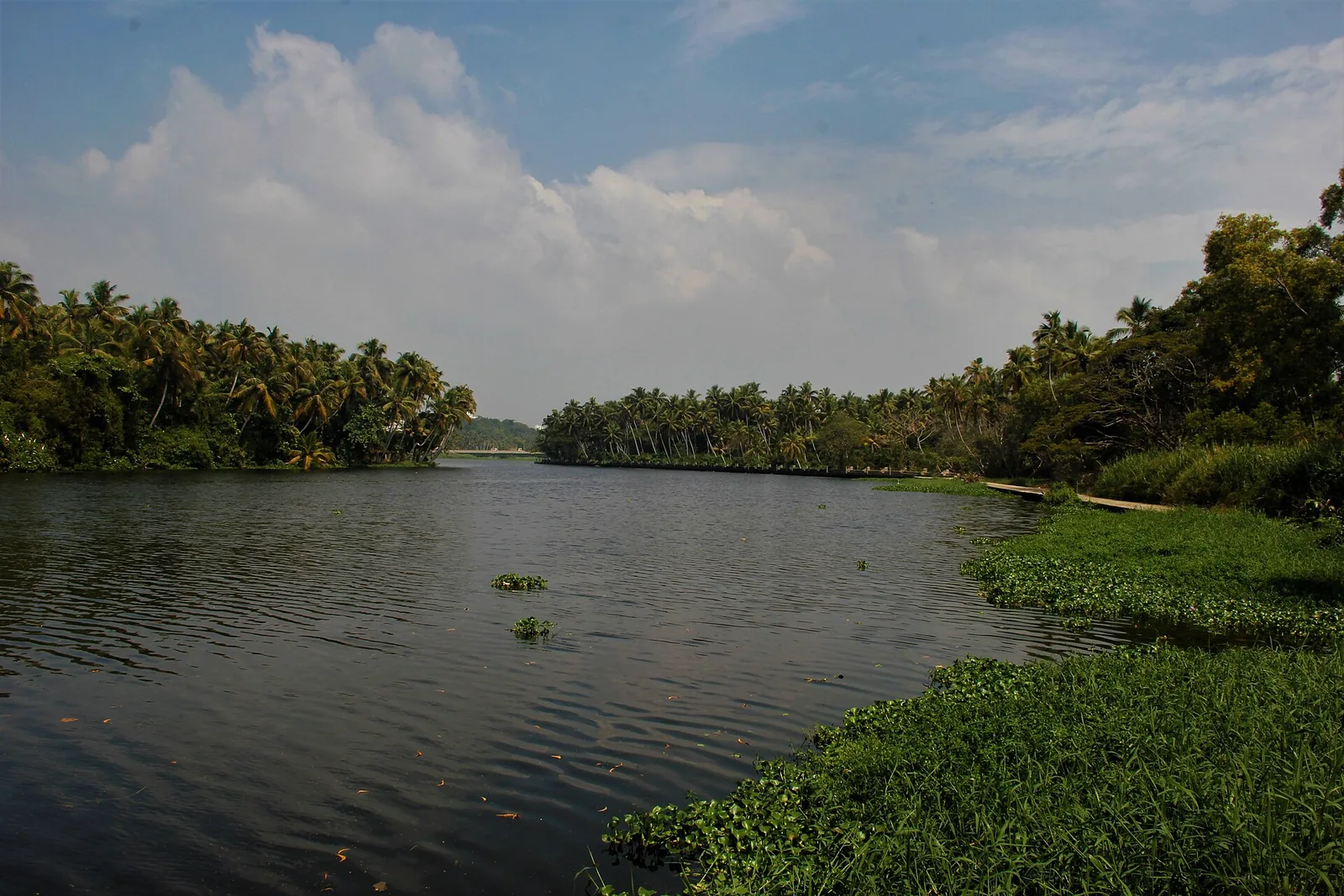
A calm backwater and boating spot near Veli with a lakeside tourist village and children’s park.
7.4 km · 12 min drive
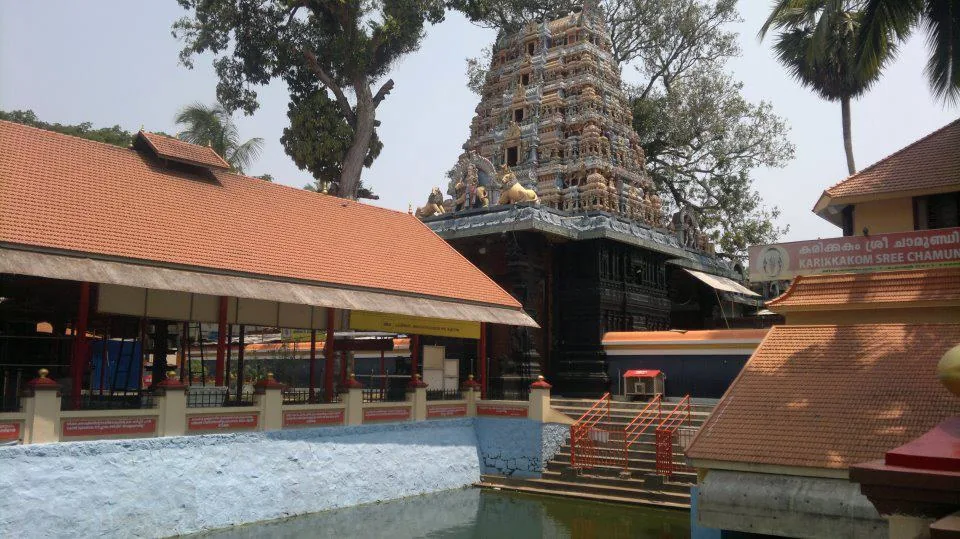
A well-known Chamundi Devi temple on the western edge of the city, busy during its festival season.
Roampedia is commission-free — own or know a stay, eatery, guide or shop near Kerala Science and Technology Museum? Submit public business details for review.
Add a nearby businessEntry: Small entry charge; the Priyadarshini Planetarium shows are ticketed separately.
On PMG-Law College Road near Vellayambalam in the city; reachable by auto-rickshaw or city bus.
If you are travelling by bus or ferry, check the return service with the operator before setting out. Leave time to reach the stop or jetty after your visit.
Ask at the bus stand for the time of the last service back, not the next one. If you miss it, an auto or app cab is the fallback — agree the fare before you get in.
If you need step-free access, contact the site before travelling. Ask about a level entrance, steps along the route, the nearest drop-off point, seating and accessible toilets.
Charge cap and free-transaction limits: Reserve Bank of India, ATM FAQ updated 4 July 2025; checked 4 October 2026.
These services are listed within about 1.2 km of Kerala Science and Technology Museum. Walking distances follow mapped routes; access and opening hours can change. Other services may be closer but are not included here.
Published emergency and visitor-assistance contacts. For an immediate emergency, call 112. Shared Kerala contact sources checked 4 October 2026; publication does not establish a tested live response.
Robert Chisholm’s 1880 Indo-Saracenic museum in the Museum Park — a polychrome landmark holding Chola and Kerala bronzes, ivories and temple carts, with the Sree Chitra Art Gallery alongside it.
1.2 km · 15 min walkKanakakunnu puts a Travancore palace among gardens and cultural venues near Thiruvananthapuram’s Museum Park. Come for an evening walk or choose a date around a performance.
1.7 km · 20 min walkOld trees, winding paths and animal enclosures share the Museum Park at Thiruvananthapuram Zoo, also known as Trivandrum Zoo. Allow time for the garden as well as the collection, with the Napier Museum close by.
1.7 km · 20 min walkA popular Ganapathy temple near East Fort, known for the coconut-breaking offering; run by the defence services.
4.5 km · 7 min driveA row of carved wooden horses gives Kuthiramalika its name. Beside Sree Padmanabhaswamy Temple, this Travancore palace museum brings timber craftsmanship and royal collections into one compact visit.
4.9 km · 8 min driveMajor Vishnu temple and one of Kerala’s most important pilgrimage landmarks; strict entry and dress rules apply.
5.4 km · 9 min driveA major coastal Muslim pilgrimage landmark south-west of the city centre, known for the Beemapally Uroos and the tombs honoured within the shrine complex.
6.1 km · straight lineFamous Devi temple in the city, home of the Attukal Pongala — recorded as the largest annual gathering of women.
6.7 km · 11 min driveA calm backwater and boating spot near Veli with a lakeside tourist village and children’s park.
7.2 km · 10 min driveA well-known Chamundi Devi temple on the western edge of the city, busy during its festival season.
7.4 km · 12 min driveVeli Tourist Village brings lake views, gardens and boating to the coast near Thiruvananthapuram. It is a family outing at the meeting of Veli Lake and the Arabian Sea.
8.4 km · 12 min driveShanghumukham is Thiruvananthapuram’s evening shoreline: an open sea horizon, airport-side access and Kanayi Kunhiraman’s reclining mermaid sculpture. Come for a coastal walk and the changing light.
10.4 km · 14 min driveRoad and walking figures are route estimates, with travel times dependent on access, traffic and conditions. Figures marked “straight line” show direct separation and do not describe a road or walking route. Fare estimates use Kerala’s 26 April 2022 auto/taxi notification and exclude waiting, night and applicable one-way surcharges. Confirm the current meter or operator quote before travelling. Routing: © openrouteservice.org by HeiGIT | Map data © OpenStreetMap contributors
Nearby toilets, pharmacies, ATMs, seating and vets are community-mapped and may be incomplete or out of date. Map data © OpenStreetMap contributors | Walking times © openrouteservice.org by HeiGIT
The planetarium show is generally ticketed separately from the museum galleries, and shows run to a fixed schedule with limited seating. Check the timings and book on arrival — on weekends and holidays they fill.
Honestly, less so. It is a hands-on science centre pitched at school-age visitors rather than a museum of collections, and an adult travelling alone will get through it quickly. The planetarium show is the part with the broadest appeal.
Two to three hours for the galleries and the outdoor science park, plus the planetarium show time on top. A family can comfortably fill an afternoon.
The space and rocketry exhibits, which have particular relevance here — Thiruvananthapuram is home to the Vikram Sarabhai Space Centre and a major part of the Indian space programme, so this is not generic content borrowed from elsewhere.
In the central museum quarter on the city's northern high ground, near the Napier Museum and the zoo, and easily reached on foot from much of central Thiruvananthapuram or by a short autorickshaw ride. Note that a number of travel listings wrongly file this museum under Kochi — it is in Thiruvananthapuram.
The museum was established by the Government of Kerala in 1984. The Priyadarsini Planetarium came later, functioning since 1994, and the two are often given the same date in error. The Children's Science Park opened in 1997, the Mobile Science Exhibition unit in 1999 and the play park in 2005.
The electricity, electronics, power and motion-mechanics galleries alone hold more than three hundred. Beyond those there are galleries on popular science, mathematics, automobile and bio-medical engineering, computing and solar energy, plus a 3D theatre, a six-degrees-of-freedom motion simulator, an energy park and a library.
Both are used, including in official material. It is a transliteration difference rather than an error, but it does mean a search for one spelling will not reliably turn up the other.
An 18-metre dome with 184 seats, running a hybrid system: a GM-11 opto-mechanical starfield projector - capable of showing the sky as it stood or will stand across roughly 12,500 years in either direction - working alongside digital projection. Kerala Tourism describes it as the first hybrid planetarium in India with a tilted dome; note how many qualifiers that claim carries, and judge it accordingly.
Yes, and hardly anyone mentions it. Public observation sessions are run on Thursday and Friday evenings, roughly between 6.30 and 8. Sessions depend on staff availability and on the sky, so confirm on the day - but ask explicitly, because the dome-show listings usually leave this out entirely.
Half a day is comfortable and most of it will go on the planetarium and the hands-on galleries. Book or check the dome show first and build the visit around that slot, because show times are fixed and seats run out on weekends and holidays. Then do the electricity, motion-mechanics and optics galleries, and leave the outdoor science park and play park for last, when the children need to run.
Midday works well for museums, especially when outdoor heat is high.
Entry: Small entry charge; the Priyadarshini Planetarium shows are ticketed separately. Timings: Indicative, confirm locally: roughly 10:00 AM to 5:30 PM; planetarium shows run to a daily schedule.
Base yourself in Thiruvananthapuram city or a nearby town in Thiruvananthapuram, then confirm the last-mile route locally before leaving. Check weekly closure day and ticket counter timings before going. If the visit depends on forest, temple, boat, ferry, weather or seasonal access, check the official/local rule on the day before travel.
1 to 2 hours.
Nearby you can pair Napier Museum (1.2 km, route estimate), Kanakakunnu Palace (1.7 km, route estimate), Thiruvananthapuram Zoo (1.7 km, route estimate), Pazhavangadi Ganapathy Temple (4.5 km, route estimate).
Use official ticket counters and cloakroom rules. Keep bags and cameras within permitted areas.
Written about Kerala Science and Technology Museum itself — its history, its legends and the arguments about them.
These guides explore Thiruvananthapuram city and the surrounding area. Choose a visit that fits your interests, allowing separately for travel between stops.


Route-level itineraries and practical guides for the rest of Kerala.


Photographs: Akhilan (CC BY-SA 4.0), Vijayakumarblathur (CC BY-SA 3.0). Wikimedia Commons.