What to expect
Highlights
- Church visit at Our Lady of Mount Carmel Cathedral
- Pilgrimage, architecture or local Christian heritage
- Nearby town food and stays
Landmark 19th-century cathedral of the Alappuzha diocese near the town centre.
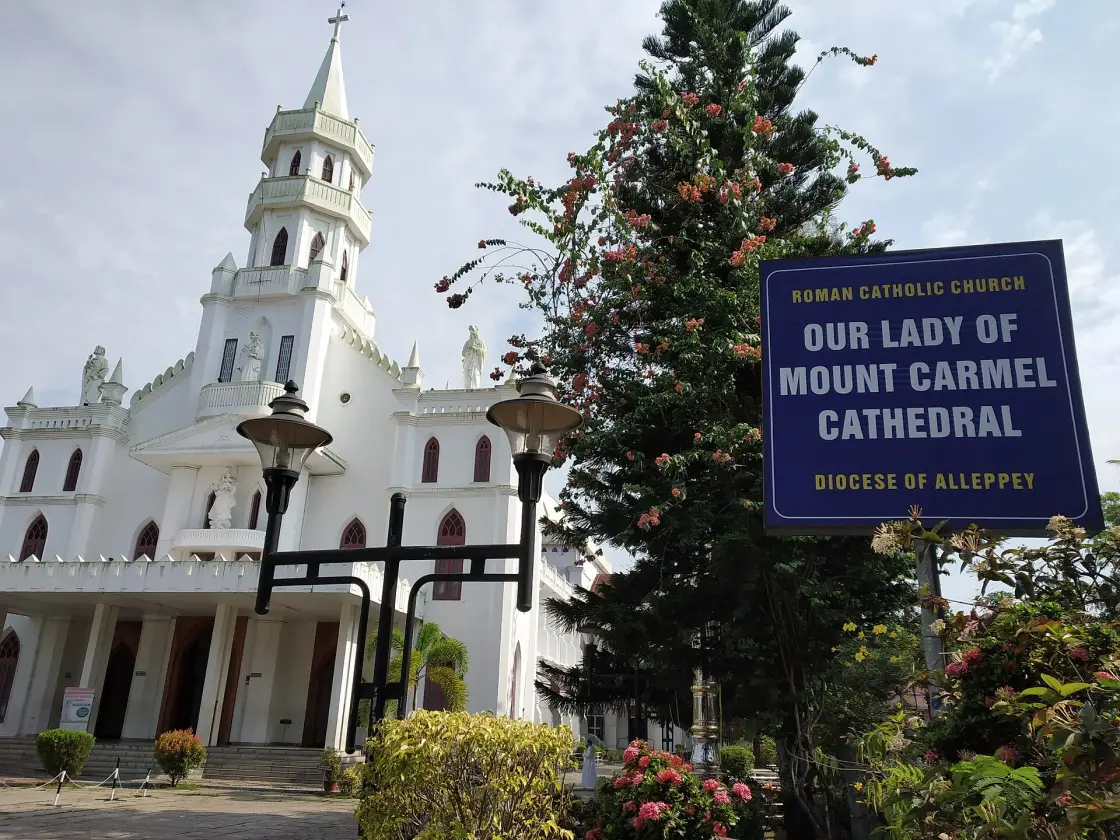
Check entry arrangements. Ask the church about visiting times around services and any dress or photography rules. During worship, keep voices low and follow staff directions.
Dress respectfully and follow the institution’s admission and photography rules.
The parish register at Mount Carmel opens in 1809 — which is to say that this church is almost exactly as old as Alappuzha itself. Raja Kesavadas had opened the port in 1762 and laid the town out on its two canals; within a generation there was a Latin Catholic parish at what is now Convent Square, and it has been there ever since. It became a cathedral in 1952, when Pope Pius XII cut a new diocese out of the northern end of Cochin along the line of a canal. Today it is small — 550 families — running a women's college, an orphanage with its own printing press, and half a dozen schools. It has no legend attached to it at all, which on this coast makes it unusual.
Start with the date, because it reframes the building. The Diocese of Alleppey's own parish directory lists Mount Carmel Cathedral, Alappuzha, as established in 1809, and GCatholic independently gives the same year. That places it within about half a century of the port's founding in 1762 — early enough that it belongs to the making of the town rather than to its later furnishing.
Then the name, which is not decorative. A Marian title like Our Lady of Mount Carmel is Carmelite, and it lands on a brand-new Travancore port church in 1809 for a specific reason: this coast was Carmelite mission ground at the time. The Jesuits who had worked here since about 1570 gave way after the Dutch took Cochin, and from the mid-eighteenth century the mission passed to the Carmelites under the Vicariate of Verapoly, where it stayed until the Cochin diocese was restored in 1886. The dedication is a jurisdictional fingerprint.
Underneath both is an older layer that the cathedral did not begin. St Andrew's at Arthunkal dates to 1581, St Michael's at Kattoor to 1590, St Thomas' at Thumpoly to 1600, St George's at Manakodam to 1640. The towering figure of that period is Fr Giacomo Fenicio, an Italian Jesuit who was vicar at Arthunkal from 1584 to 1602 and again from 1619 until his death in 1632, and who wrote one of the earliest European accounts of Hindu religion — the diocese calls him a pioneer in Indology. After the Coonan Cross Oath, the St Thomas Christians of this mission were reconciled to Rome by Msgr Giuseppe Sebastiani in 1662.
⚠ So this is not the oldest Latin Catholic church in Alappuzha, and it is worth saying plainly because the claim circulates. St Peter's at Vattayal, in the same forane, is listed by the diocese as established in 1760 — 49 years older, with 1,038 families against the cathedral's 550. Older still are the sixteenth- and seventeenth-century foundations up and down the shore. What the cathedral is, is the parish of the port town.
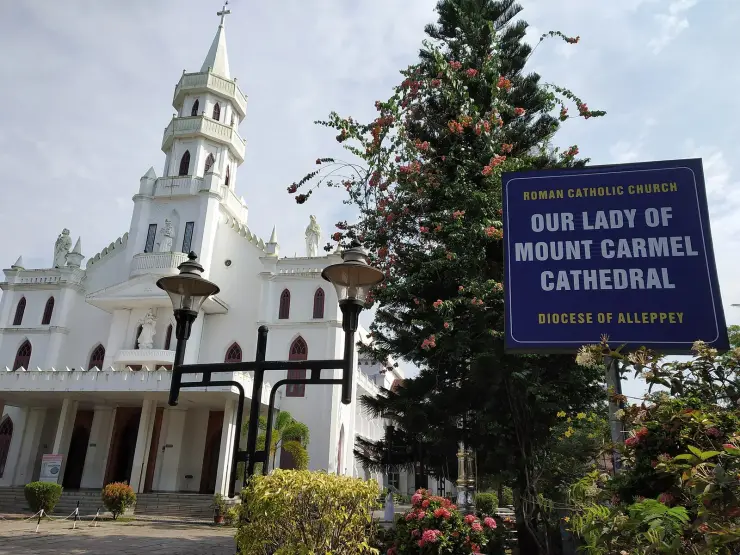
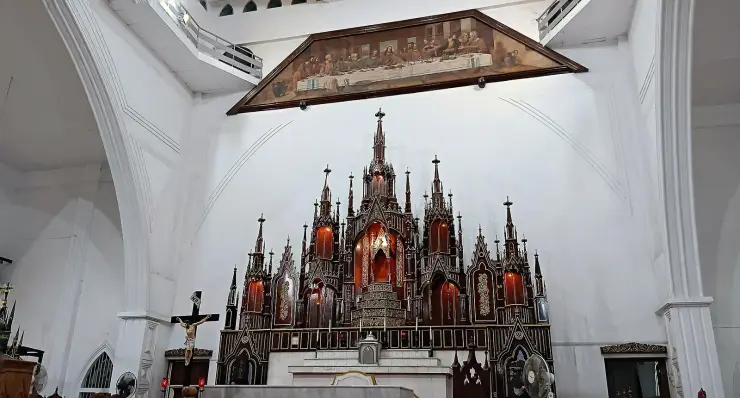
The building itself is harder to date than the congregation, and no document has been produced for it. No source we can locate gives a construction year for the present structure; the dates of 1858 and 1866 that appear in some listings are not traceable to any source we can find, and one aggregator's 1898 is unsourced. What can be said is what the photographs show: whitewashed masonry, a three-stage octagonal bell tower with balustraded galleries and a slate-grey spire, lancet window heads, pinnacled parapets and free-standing statues along the parapet line — a Kerala colonial-Gothic idiom rather than a Gothic building. Inside, a tall dark-timber reredos of pinnacled spirelets stands against a white apse, with a large framed Last Supper panel hung high above it.
The cathedral's real oddity is institutional. A parish of 550 families and about 2,750 people — with 22 basic Christian community units, 10 pious associations, 314 catechism students and 26 teachers — supports an estate that would not disgrace a small diocese: St Joseph's Women's College; the Leo XIII higher secondary, lower primary and English-medium schools; St Joseph's Girls High School; St Antony's Orphanage for boys, with its own industrial training centre, career-guidance centre and printing press; Irene Home for girls; the Boys' Home; and the Pastoral Centre. Bishop Michael Arattukulam, the diocese's first bishop, is particularly associated with founding St Antony's. Inside the parish bounds there are also seven religious houses, including the generalate — the global headquarters — of the Sisters of the Visitation Congregation.
Some context for why that shape of institution made sense here. Kerala's Latin Catholics are concentrated along the coastal districts — Thiruvananthapuram, Kollam, Alappuzha, Ernakulam and Thrissur — reflecting origins among fishing communities evangelised by Portuguese missionaries, and they have historically been among the poorer Christian communities in the state. A diocese drawn as a strip of shoreline is a diocese whose people work the sea. Schools, an orphanage, a girls' home and a women's college are what a church builds when its congregation's main asset is its children's education, and they are a more accurate index of this parish than its architecture is.
The sea is also a physical threat rather than a metaphor. The diocese runs a standing programme on sea erosion, and its own historical account records that a number of the churches founded along this coast in the sixteenth and seventeenth centuries no longer exist, having been destroyed either by wars or by the sea itself. That is an unusual sentence to find in a diocesan history, and it is worth carrying to the shoreline a few streets away: this is a coast that has taken buildings back.
That is the answer to what a mid-century coastal Latin diocese thought a cathedral parish was for. Not primarily a monument, and not primarily a pilgrimage destination: a base from which to run schools, an orphanage and a college on a shoreline whose Catholic population was largely a fishing community.
There is no legend here, and after a genuine search in English and in Malayalam we are confident enough to say so rather than hedge it.
We looked for an apparition, a miracle, a founding vision, a wonder-working image, a healing tradition, a story about the bell or the tower — the ordinary furniture of a well-loved Kerala church. The diocese's own site carries none. Neither does GCatholic, the Church news agencies, Wikipedia, Kerala Tourism or the district administration, and neither does the Malayalam-language record.
It is worth being careful about what that means, because an absence is a claim and needs evidence like any other. It does not mean nothing has ever been told about this church. It means that nothing has been written down anywhere we can reach, and that in a district where almost every shrine we write about arrives with three competing origin legends, this one arrives with none.
Two things fill the space where a legend would sit, and both need labelling rather than dressing up. The first is the devotion itself. Our Lady of Mount Carmel, the scapular, and the feast on 16 July are observances of the universal Church, held in exactly the same form in Naples and in Dublin. They are not folklore attached to Alappuzha, and presenting them as local colour would be a small dishonesty.
The second is the jurisdictional history, which is genuinely peculiar and is the nearest thing this cathedral has to a story with a twist. The Diocese of Alleppey was erected on 19 June 1952 by the bull Ea Redemptoris Verba of Pius XII, splitting the northern territory of the old Diocese of Cochin along the line of the Kuthiathodu canal. Its boundaries are worth reading literally: north, that canal line; south, a straight line drawn from the bend of the Pampa at Viyapuram to the Arabian Sea through Thottappally; east, the middle of Vembanad Lake, continued south by the Pallathuruthy canal; west, the sea. The result is a diocese shaped like a ribbon of shoreline, roughly 333 square kilometres of it.
Then, on 8 September 1952, an Executorial Decree gave Alleppey and Cochin supplementary personal jurisdiction over certain parishes lying inside each other's territory — approved by Propaganda Fide on 24 September and effective from 11 October that year. In plain terms, two bishops were given overlapping authority over particular congregations rather than particular ground, which is an unusual solution and one no travel writing about this cathedral has ever mentioned.
🚫 We are also declining, deliberately, to borrow. There is no shortage of legend within twenty kilometres of this door: the Veluthachan tradition and the Ayyappa pilgrims at Arthunkal, the boat-race origin story at Champakulam, the Marian traditions at Thumpoly, and the votive snakes offered to St George at Edathua. Every one of those belongs to a specific church of a specific rite, and any of them could be quietly slid onto this page to fill a gap. None of them is Mount Carmel's, and none appears here.
There is one more thing worth recording in this space, because it is the closest this church comes to a founding story and it is entirely documentary. The parish appears in the diocesan directory with a set of numbers rather than a narrative: 550 families, 2,750 Catholics, 22 basic community units, 10 pious associations, 314 catechism students, 26 catechism teachers, three shrines, and two mission stations — St Antony's Chapel at Vazhichery and the Sacred Heart Chapel at Sarcarveli. Feast: 16 July. Telephone: 0477-2244629. That is what two hundred years of continuous parish life has left behind here: not a legend, but a directory entry and an orphanage.
A cathedral with no myth is not a lesser building. It is a parish that has spent two centuries running schools instead of accumulating stories, and that is its own kind of record.
The parish was established in 1809, per the Diocese of Alleppey's parish directory and GCatholic. The coast was then Carmelite mission territory under the Vicariate of Verapoly, which is why a new Travancore port parish received a Carmelite Marian dedication.
The Diocese of Alleppey was erected on 19 June 1952 by the papal bull Ea Redemptoris Verba of Pope Pius XII, dividing the northern territory of the Diocese of Cochin at the Kuthiathodu canal line — the north remaining Cochin, the south becoming Alleppey. It is a Latin Church, Roman Rite diocese, suffragan to the province of Thiruvananthapuram, with a Catholic population of roughly 163,000 across about 66 parishes and six foranes: Punnapra, Alleppey, Kattoor, Arthunkal, Manakodam and Kandakkadavu.
Its bishops have been Michael Arattukulam, the first, from 19 June 1952 until 1984 — a 32-year founding episcopate; he died on 20 March 1995 — then Peter Michael Chenaparambil from 28 April 1984, Stephen Athipozhiyil from 11 February 2001, and James Raphael Anaparambil, the fourth bishop, from 11 October 2019.
⚠ It is a cathedral and parish church, not a basilica. The diocese's basilica is St Andrew's at Arthunkal, raised to that rank by Pope Benedict XVI on 21 May 2010 and solemnly proclaimed by the Apostolic Nuncio, Most Rev. Salvatore Pennacchio, on 11 October 2010. The two are 21 km apart and are frequently confused.
One detail says a great deal about how this diocese understands itself: its community radio station is called Radio Neythal — neythal being the Sangam-era tinai, or landscape-mode, meaning the seashore. The diocese also runs a standing programme on sea erosion, which is not a symbolic concern here: its own history records churches on this coast destroyed either by war or by the sea.
Because the parish is as old as the town. Founded in 1809, within a generation of Raja Kesavadas laying out the port, it is a founding institution of Alappuzha rather than an ornament added later.
For the bell tower — three octagonal stages with balustraded galleries and a slate-grey spire, the most distinctive silhouette in the town centre after the temple street.
For the interior: a tall dark-timber reredos of pinnacled spirelets against a white apse, with a large framed Last Supper panel hung high above the sanctuary.
Because the name is a piece of evidence. A Carmelite Marian title on an 1809 Travancore parish records the fact that this coast was Carmelite mission ground under Verapoly at the time.
For the 16 July feast of Our Lady of Mount Carmel, the parish's principal day.
Because it sits at Convent Square in the middle of town, a short walk from the canals — easily folded into a morning that also takes in Mullakkal and the waterfront.
Road km to Alappuzha; ghat roads and traffic vary — allow extra.
Morning or late afternoon for quieter visits and better light.
Live forecast loads in your browser.
Sun and moon are calculated for this location and shown in IST. Photography windows are the hour around sunrise and sunset; the sunset bearing is degrees clockwise from true north. Moon phase is accurate to about half a day.
Browse listed stays, food, activities, sights, shops and rentals around Our Lady of Mount Carmel Cathedral. Check each listing’s locality and contact the business directly for current arrangements.
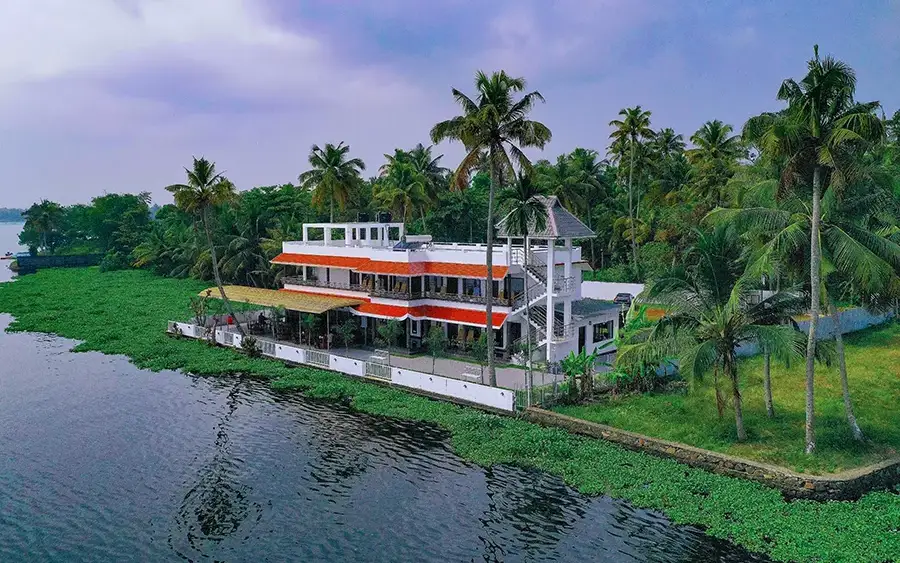
Lake Canopy is at Komalapuram on Aspinwall Road, North Aaryad, Alappuzha. Its operator publishes Royal Creek Pool Villa, Creek Jacuzzi, Lagoon Deluxe and Aqua Premium choices. Choose the exact category before enquiring; a Jacuzzi room is not the same booking as a private-pool villa.
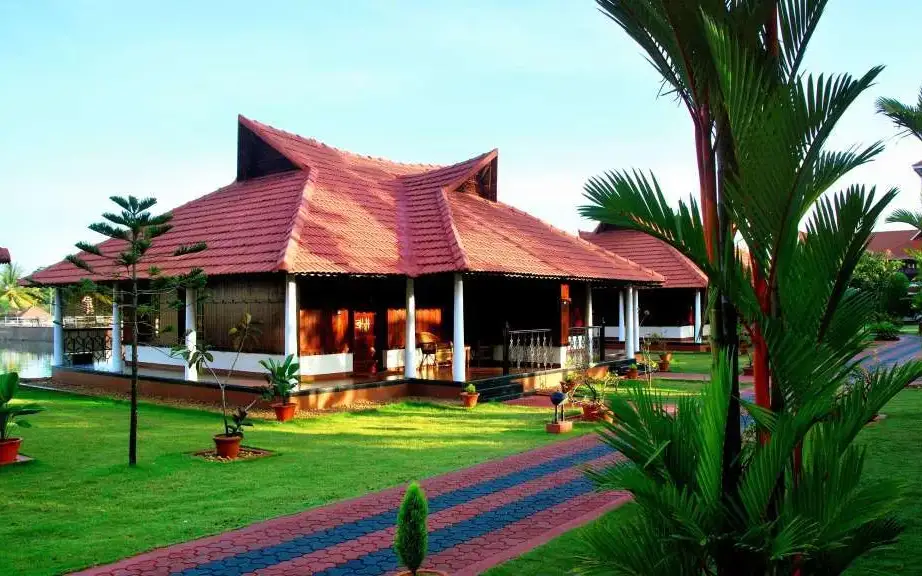
Lakeside resort with heritage-style villas on the banks of Punnamada Lake, Alappuzha. It sits in the Nehru Trophy ward of Punnamada, on the Vembanad backwater fringe.
Backwater resort with pagoda-style cottages and an indoor pool at Chungam, Mullackal, Alappuzha town.
Lakefront backwater resort run by EGH Resorts, with lake-view rooms and cottages near North Aryad, Alappuzha. The property faces Vembanad Lake on the northern edge of the district.
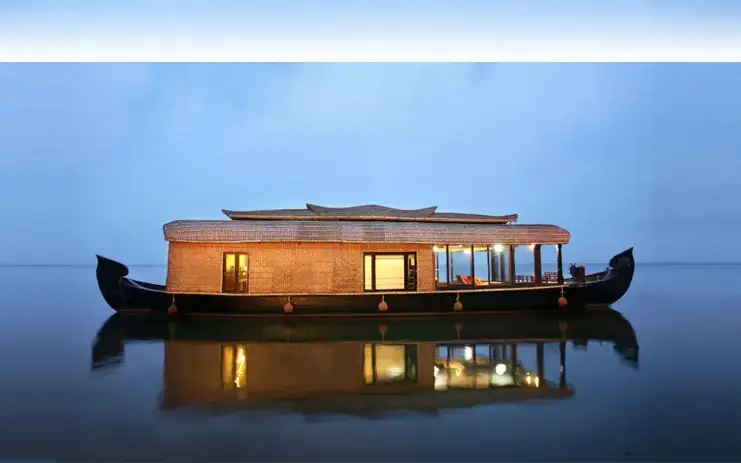
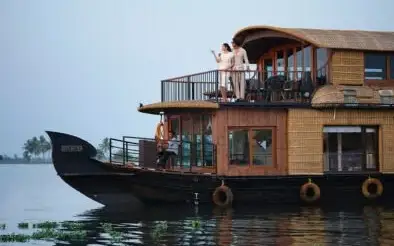
Alleppey houseboat operator offering Deluxe, Premium and Luxury boats, with reservations through its Avalookunnu office.
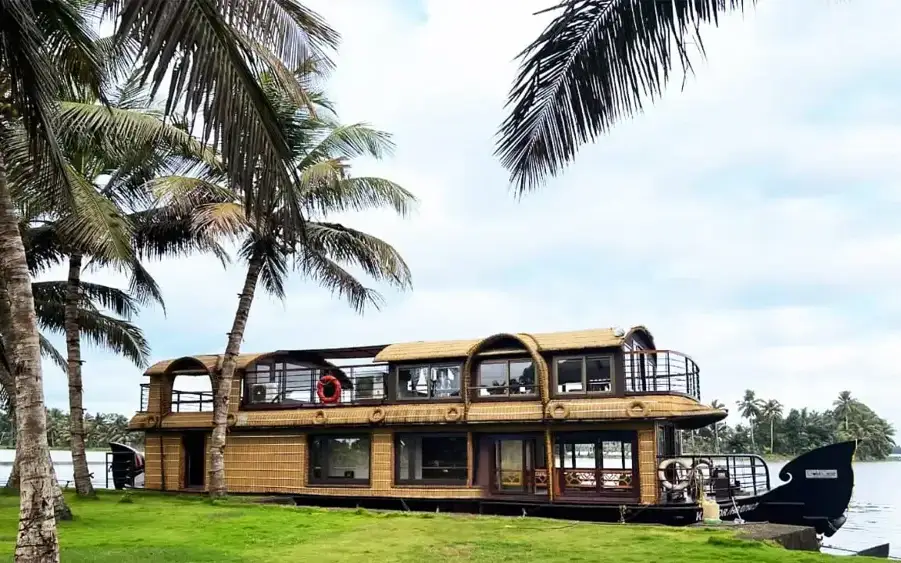
Kerala Houseboat offers day cruises and overnight houseboat stays from the Alappuzha backwaters. Its website distinguishes Deluxe, Premium and Luxury categories. Compare the named boat and bedroom count for your party, and ask how the air-conditioning schedule differs for the option offered.
Ultra-luxury houseboat operator running spice-named kettuvallams through the Alleppey backwaters, based at Chennamkary, Alappuzha.
Sterling’s current property page identifies Sterling Lake Palace Alleppey at Thirumala Ward, Chungam, Alappuzha 688011. The earlier Kerala Tourism owner-submitted Lake Palace Resort record uses this same address. This Alappuzha resort is separate from KTDC Lake Palace in Thekkady.
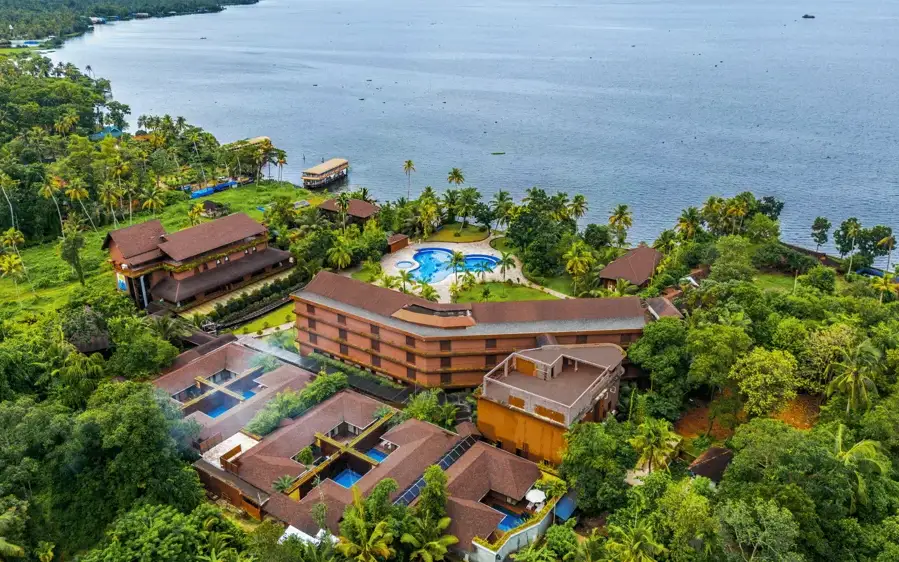
Backwater resort on the shores of Vembanad Lake at Kottankulangara, Punnamada, Alappuzha. Punnamada, Backwater resort, UDS Hotels.
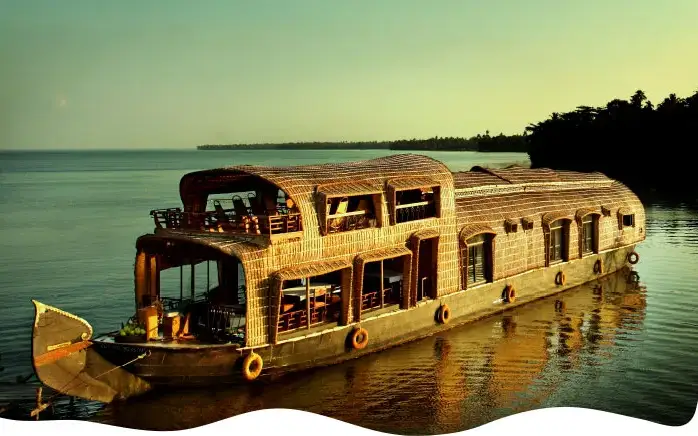
Fleet of luxury air-conditioned kettuvallam houseboats cruising the Alleppey backwaters, based near Pallathuruthy Bridge, Alappuzha.
Large Ramada by Wyndham hotel facing Punnamada backwaters at the Nehru Trophy Boat Race finishing point, Alappuzha.
Arcadia Regency is a town hotel near Iron Bridge in Alappuzha. Its address is useful for a stay centred on the town, with a houseboat boarding point or beach visit arranged separately. The operator lists an on-site restaurant and a travel desk that can help with transport and outing enquiries.
Matthews Palmy Residency is listed off Finishing Point Road in Alappuzha. Confirm the exact location, available room category and arrival time directly before booking. Ask for an itemised quote and the facilities included in that room; the listing does not establish a current room count or tariff.
ISO-certified houseboat cruise operator running a fleet of luxury kettuvallams in the Alleppey backwaters. It is based at the DTPC building, Sanathanapuram, Pallathuruthy, Alappuzha.
Bag2Bag lists Keralan Homestay at Sreevalsam Inn on Punnamada Finishing Point Road. Confirm the room and host contact before booking; the linked platforms use their own terms.
Backwater resort with heritage villas and houseboats overlooking Punnamada Lake at Kottankulangara, Alappuzha.
Raheem Residency is a restored 1868 heritage mansion on Alleppey beach, run as a boutique luxury hotel with an infinity pool, antique-furnished rooms and an acclaimed restaurant. It is regularly ranked among Kerala's finest heritage boutique stays and draws an international clientele to the Alappuzha seafront.
Hotel Royale Park is a long-running three-star hotel in central Alleppey with a banquet hall, restaurant and air-conditioned rooms. It sits close to the Boat Jetty and railway station, making it convenient for backwater day trips.
Hotel AJ Park is a budget hotel about 1.5 km from Mullackal Temple in Alleppey, with a garden, restaurant and free parking. It offers value-priced air-conditioned rooms with a 24-hour front desk and room service.
Palm Beach Resort is a three-star property near Alappuzha Beach with a swimming pool, restaurant and sea-facing rooms. Its mid-range rooms suit travellers who want a comfortable base for houseboat cruises and Ayurveda sessions.
Cherukara Nest is a family-run budget heritage guesthouse about a kilometre from central Alleppey. It offers simple air-conditioned and non-AC rooms with home-cooked meals on request at value tariffs.
Book with the place itself. India’s cyber-crime coordination centre warned in April 2025 that convincing copies of hotel and pilgrimage booking sites are being pushed through sponsored search and social ads, taking payment for rooms the property never hears about. Use the contact and source details on each profile to confirm the exact business and booking channel. A directory entry or map pin alone does not establish an operator’s identity or current availability. Roampedia takes no commission and does not collect booking payments. If a booking page reached you through an ad, check the address bar against the property’s own site before you pay. Fraud can be reported on cybercrime.gov.in or on 1930.
Browse food, accommodation and activities across Alappuzha town. Check each address and journey before adding it to your day; these selections are not all beside Our Lady of Mount Carmel Cathedral.
6 more places around Alappuzha town. Open a guide to plan the visit and onward journey.
1.1 km · straight line
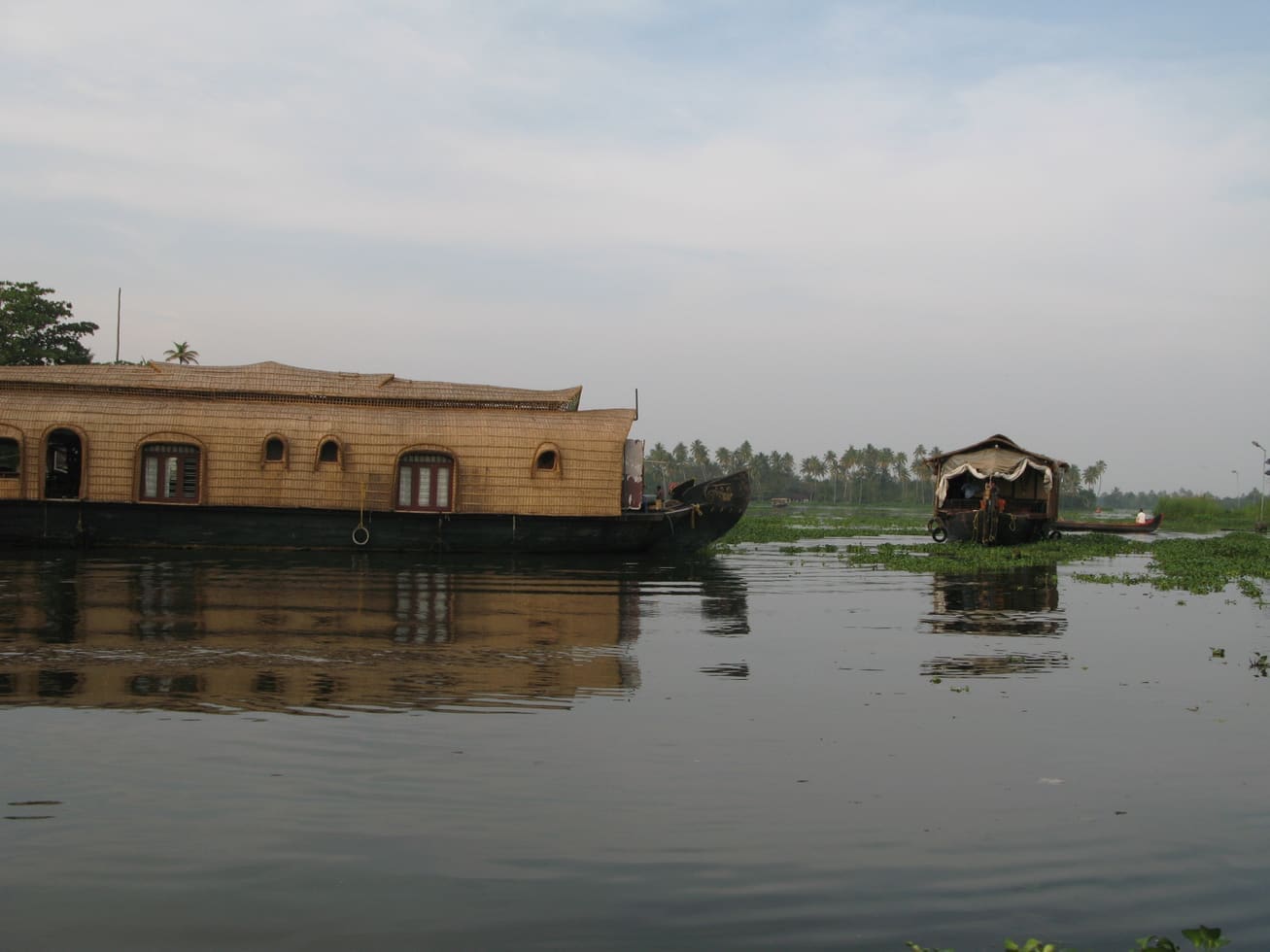
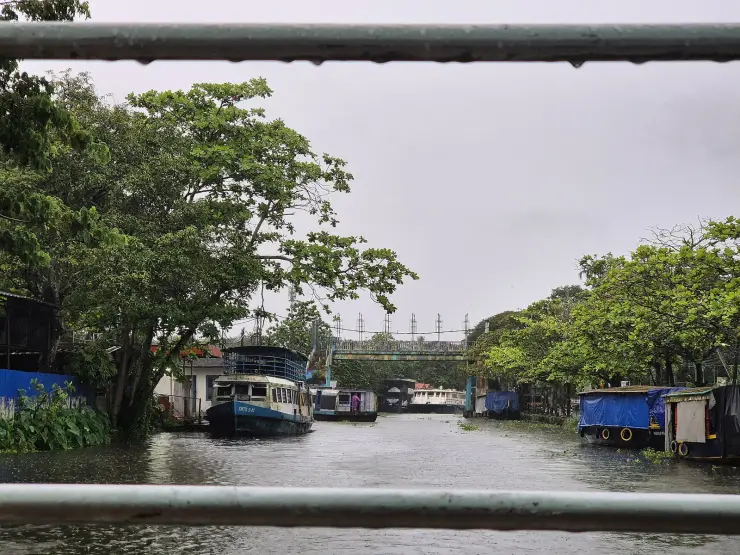
Backwater and houseboat hub with canals, beach, lighthouse and Finishing Point jetty.
1.0 km · straight line
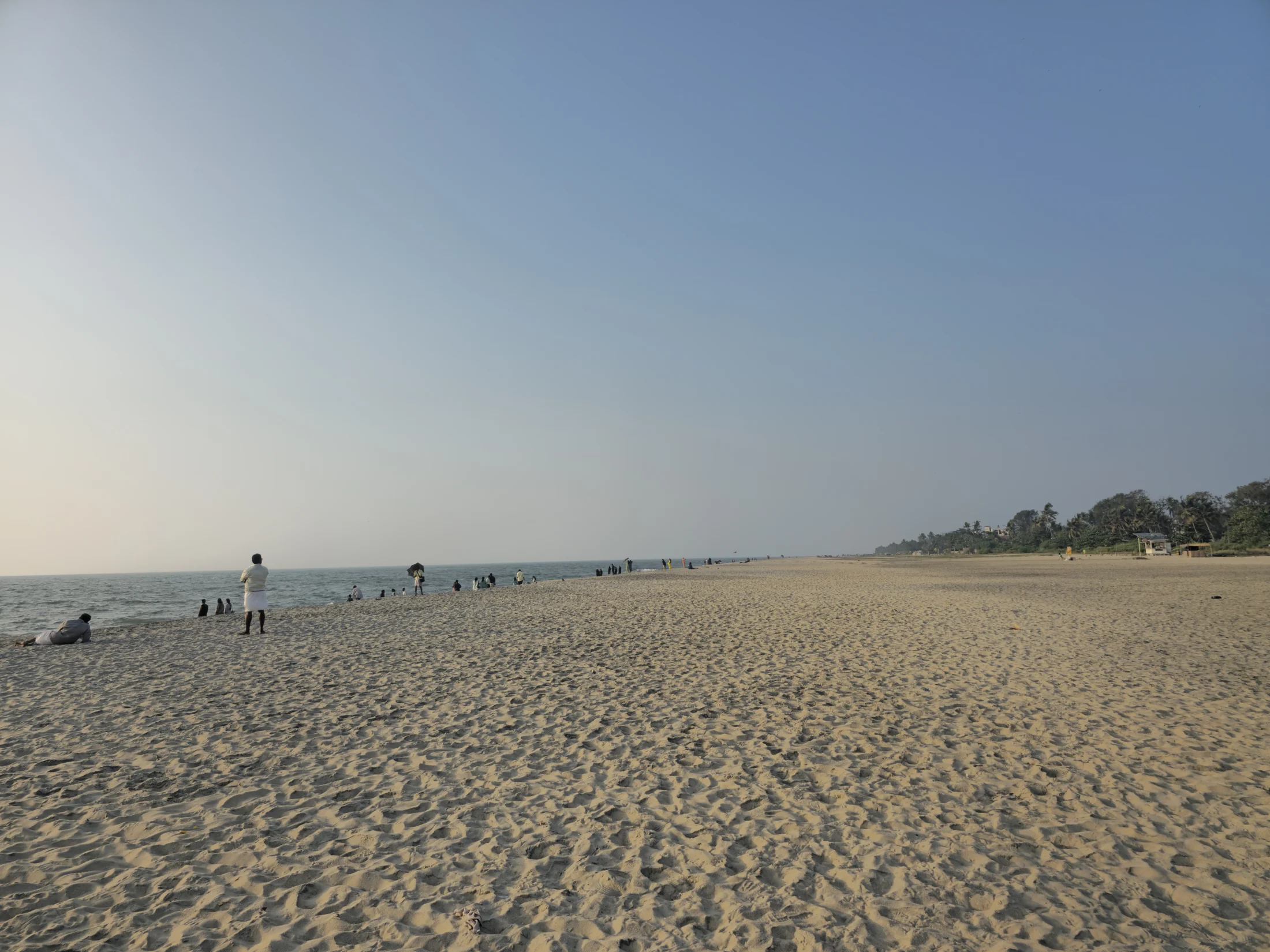
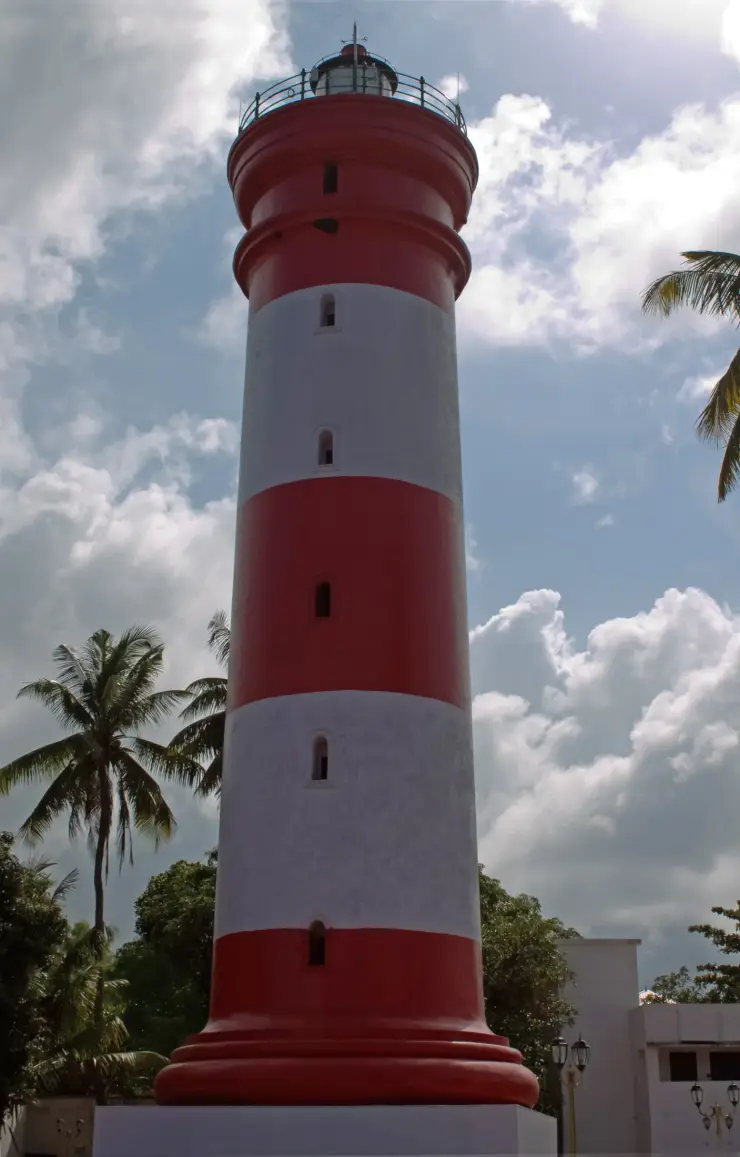
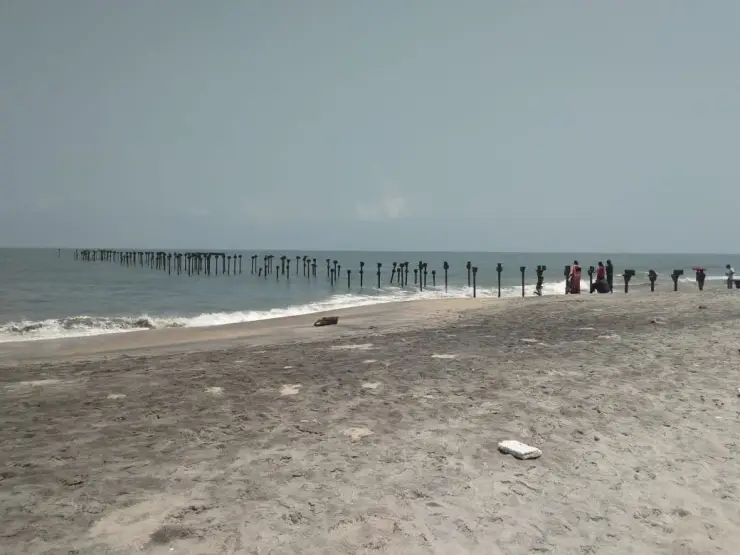
Pair Alappuzha’s broad town beach and old pier remains with the red-and-white lighthouse on C.C.S.B. Road, commissioned in 1862 and still maintained as a navigational light.
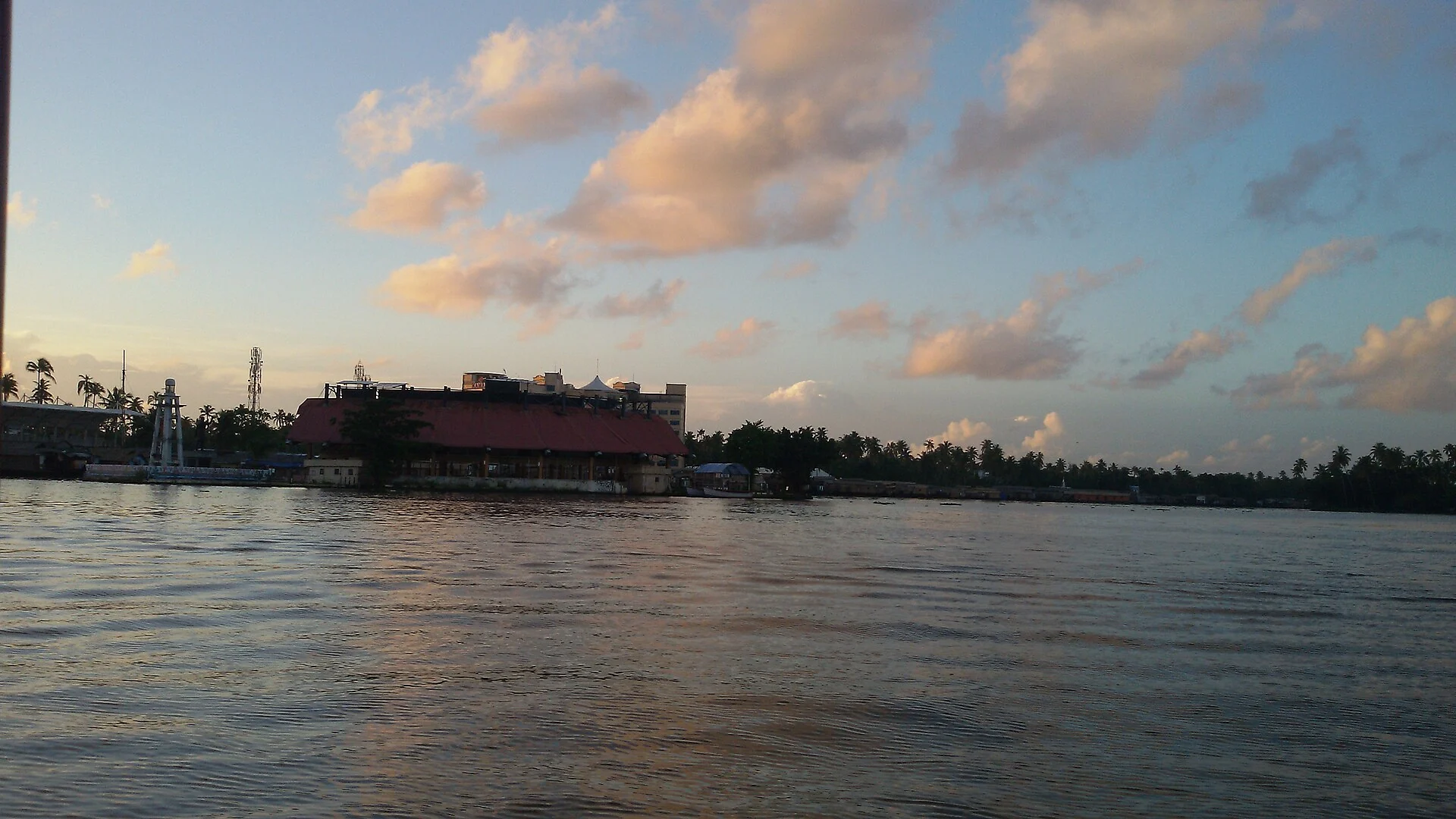
2.8 km · straight line
Finishing-point lake of the Nehru Trophy Boat Race and the main houseboat cruising water off Alappuzha.
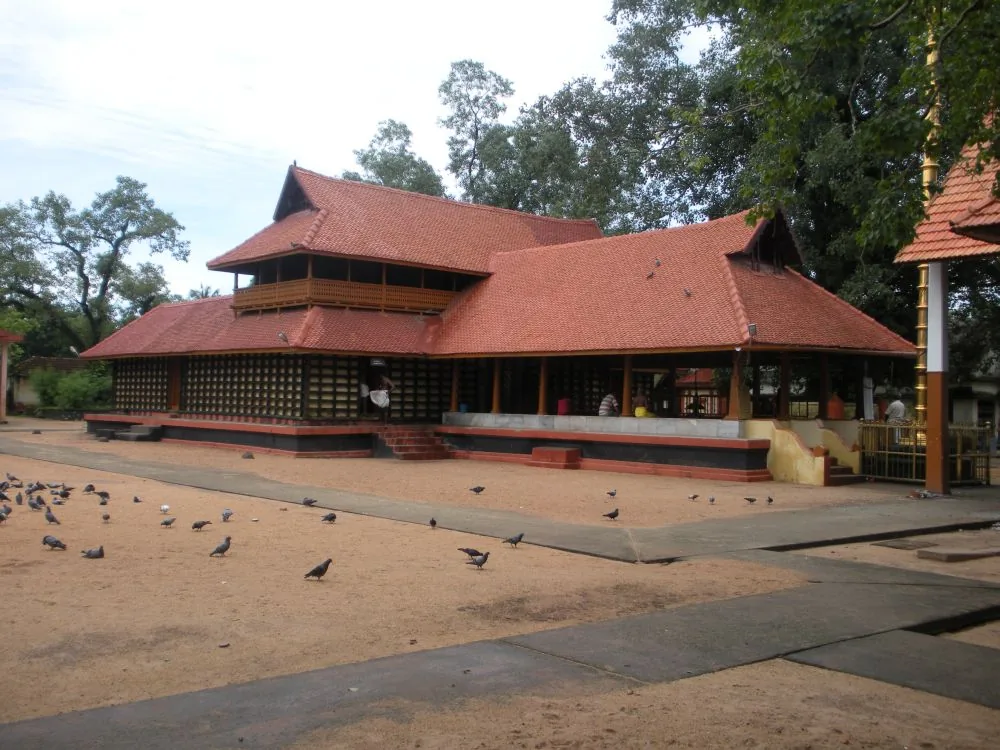
1.5 km · straight line
Central Alappuzha town temple (Mullakkal Rajarajeswari) famous for the annual Mullackal Chirappu festival.
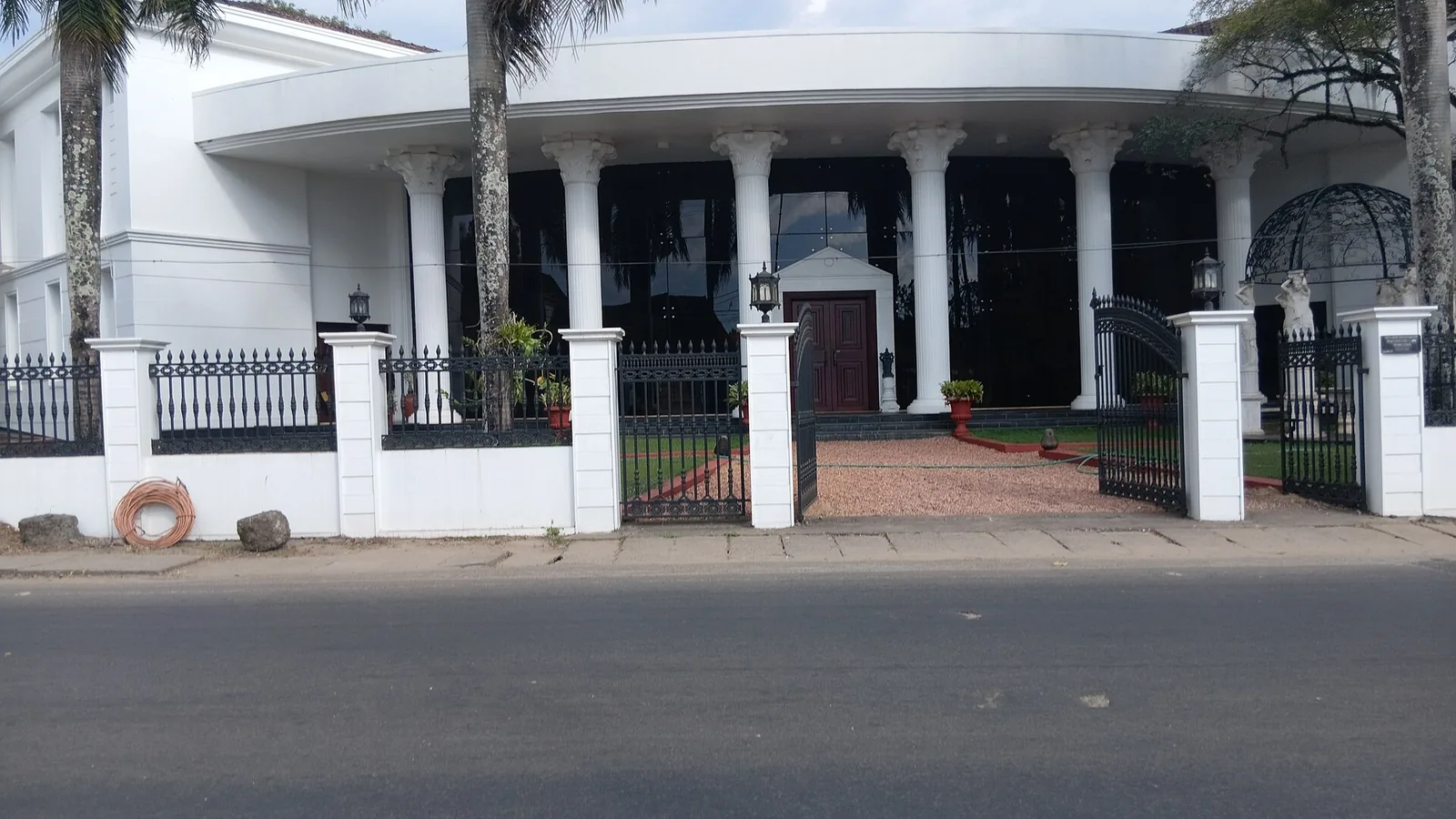
290 m · straight line
Private memorial museum in Thathampally with a large collection of paintings, ivory, crystal and antiques.
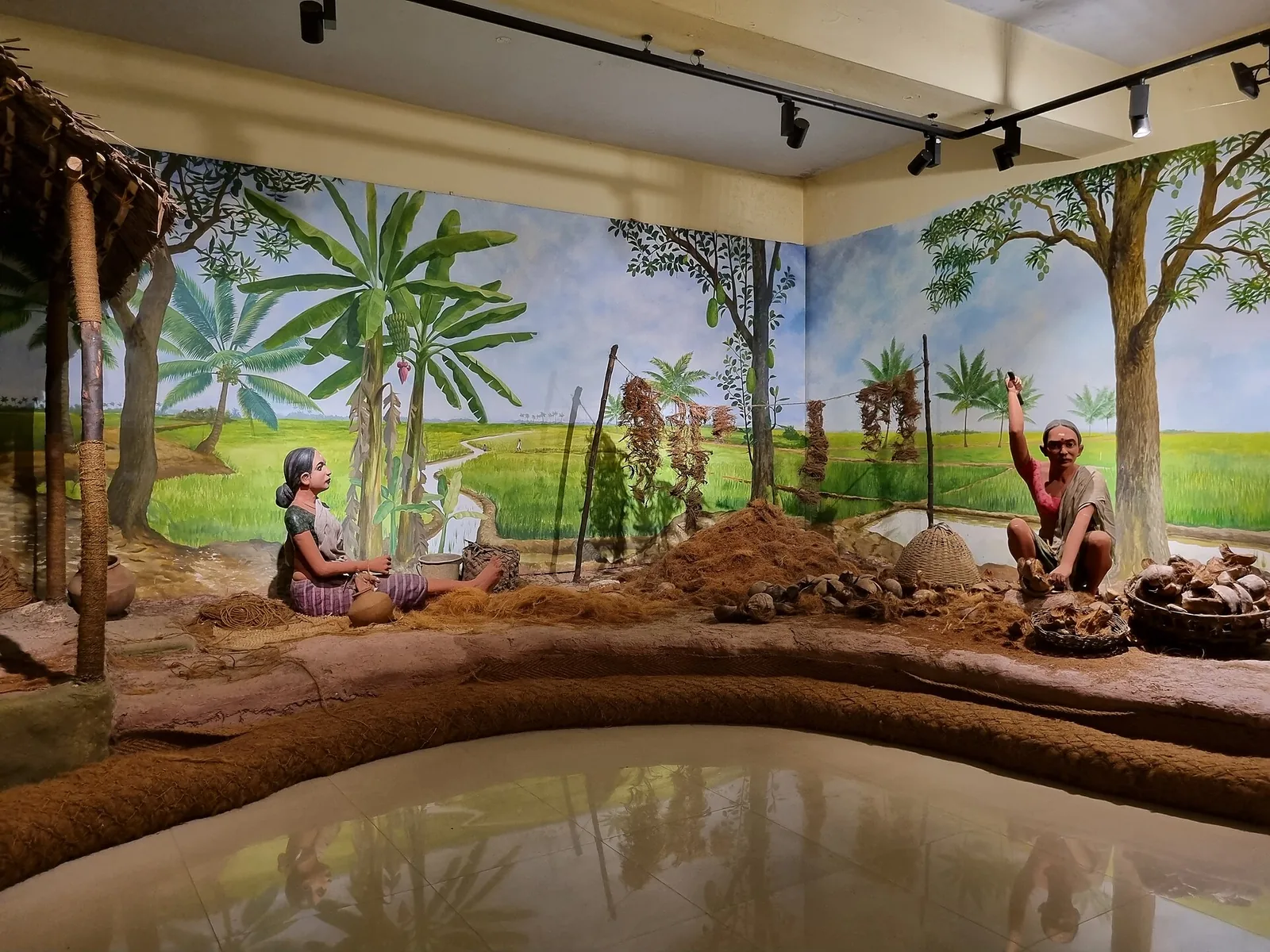
7.4 km · straight line
Museum on Kerala’s coir (coconut-fibre) heritage — the craft Alappuzha built its trade on.
Roampedia is commission-free — own or know a stay, eatery, guide or shop near Our Lady of Mount Carmel Cathedral? Submit public business details for review.
Add a nearby businessEntry: Free. It is a working parish church and cathedral, not a ticketed site.
Dress code: Modest dress with shoulders covered is expected, as at any Catholic church in Kerala. No published rule, but dress as you would for a service rather than for the beach.
Festivals: The feast of Our Lady of Mount Carmel on 16 July. The parish also keeps the ordinary Latin-rite calendar; Holy Week and Christmas are the other peaks.
Photography: Photography is generally tolerated outside services, and the bell tower and the timber reredos are the two things worth framing. ⚠ Do not photograph during Mass or adoration, and ask before photographing worshippers — perpetual adoration means there is very often somebody praying inside.
If you are travelling by bus or ferry, check the return service with the operator before setting out. Leave time to reach the stop or jetty after your visit.
Ask at the bus stand for the time of the last service back, not the next one. If you miss it, an auto or app cab is the fallback — agree the fare before you get in.
If you need step-free access, contact the site before travelling. Ask about a level entrance, steps along the route, the nearest drop-off point, seating and accessible toilets.
Charge cap and free-transaction limits: Reserve Bank of India, ATM FAQ updated 4 July 2025; checked 4 October 2026.
These services are listed within about 1.2 km of Our Lady of Mount Carmel Cathedral. Walking distances follow mapped routes; access and opening hours can change. Other services may be closer but are not included here.
Published emergency and visitor-assistance contacts. For an immediate emergency, call 112. Shared Kerala contact sources checked 4 October 2026; publication does not establish a tested live response.
Private memorial museum in Thathampally with a large collection of paintings, ivory, crystal and antiques.
290 m · straight linePair Alappuzha’s broad town beach and old pier remains with the red-and-white lighthouse on C.C.S.B. Road, commissioned in 1862 and still maintained as a navigational light.
1.0 km · straight lineBackwater and houseboat hub with canals, beach, lighthouse and Finishing Point jetty.
1.1 km · straight lineCentral Alappuzha town temple (Mullakkal Rajarajeswari) famous for the annual Mullackal Chirappu festival.
1.5 km · straight line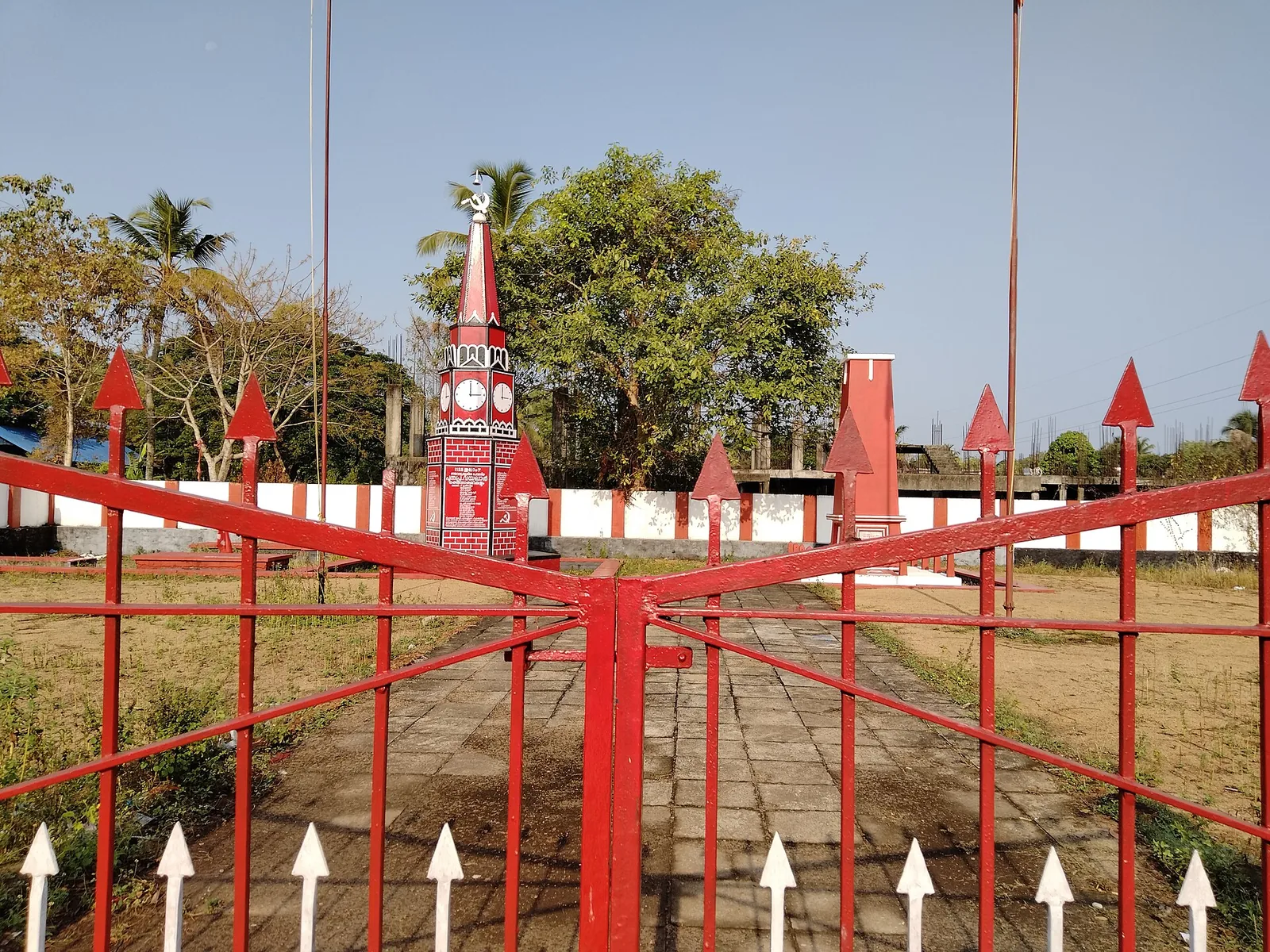
Martyrs’ memorial (Rakthasakshi Mandapam) to the 1946 Punnapra–Vayalar uprising, on the coastal belt north of Punnapra on the Alappuzha side.
2.4 km · straight lineFinishing-point lake of the Nehru Trophy Boat Race and the main houseboat cruising water off Alappuzha.
2.8 km · straight line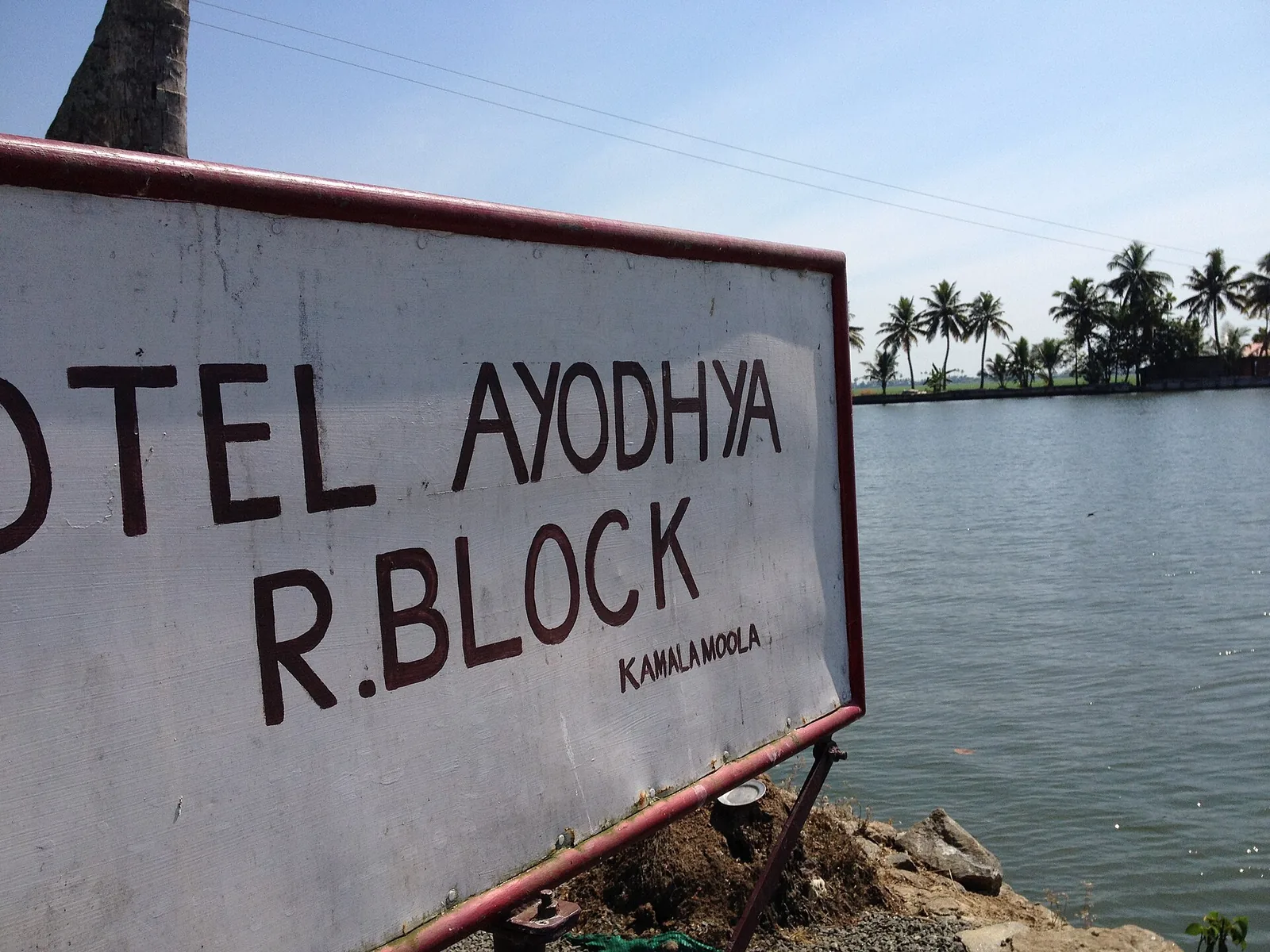
Iconic below-sea-level reclaimed farmland at Kainakary, ringed by bunds with the canal water sitting higher than the paddy fields.
6.8 km · straight lineMuseum on Kerala’s coir (coconut-fibre) heritage — the craft Alappuzha built its trade on.
7.4 km · straight line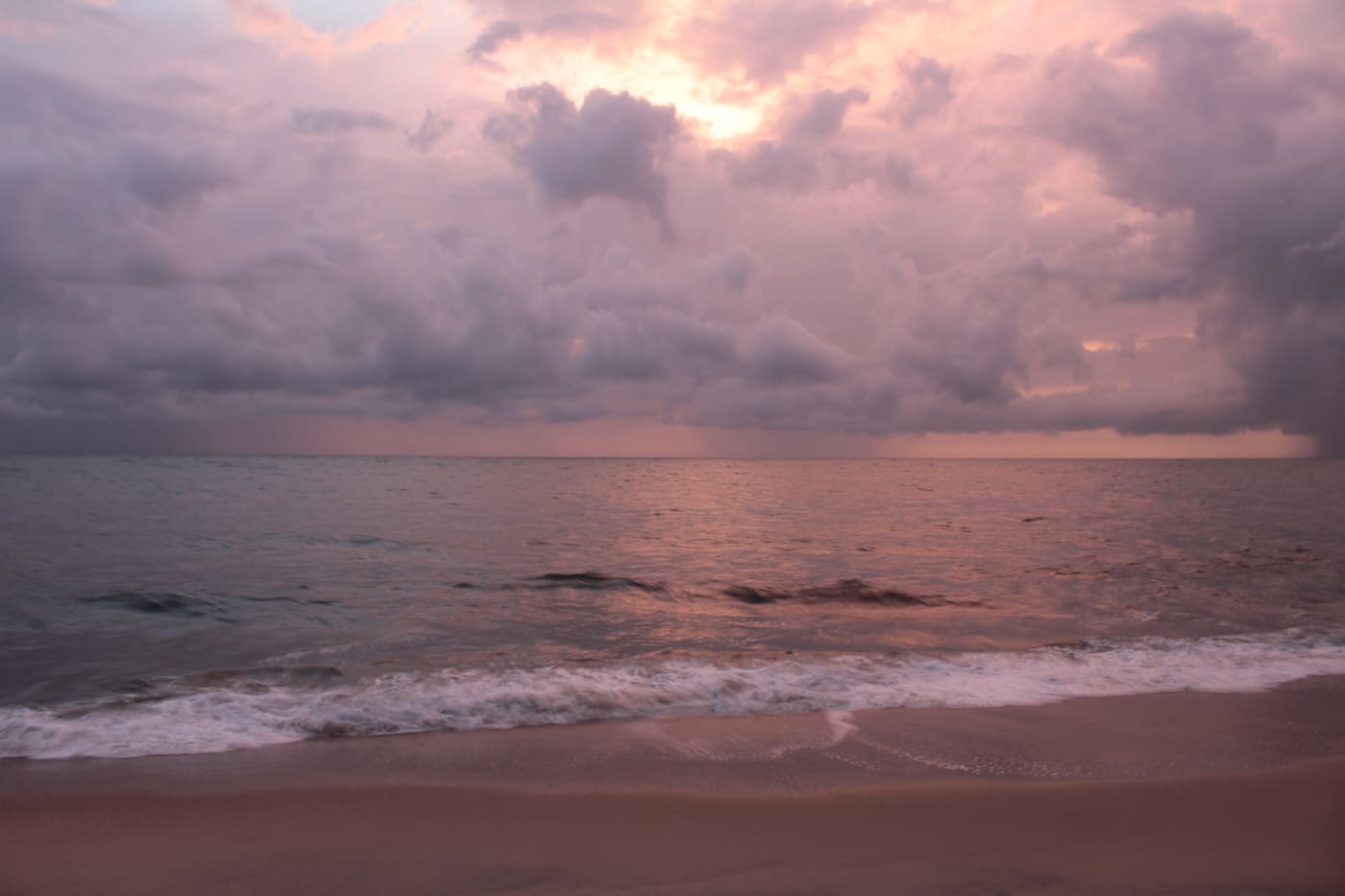
Quiet beach belt north of Alappuzha, popular for relaxed stays.
11.7 km · straight line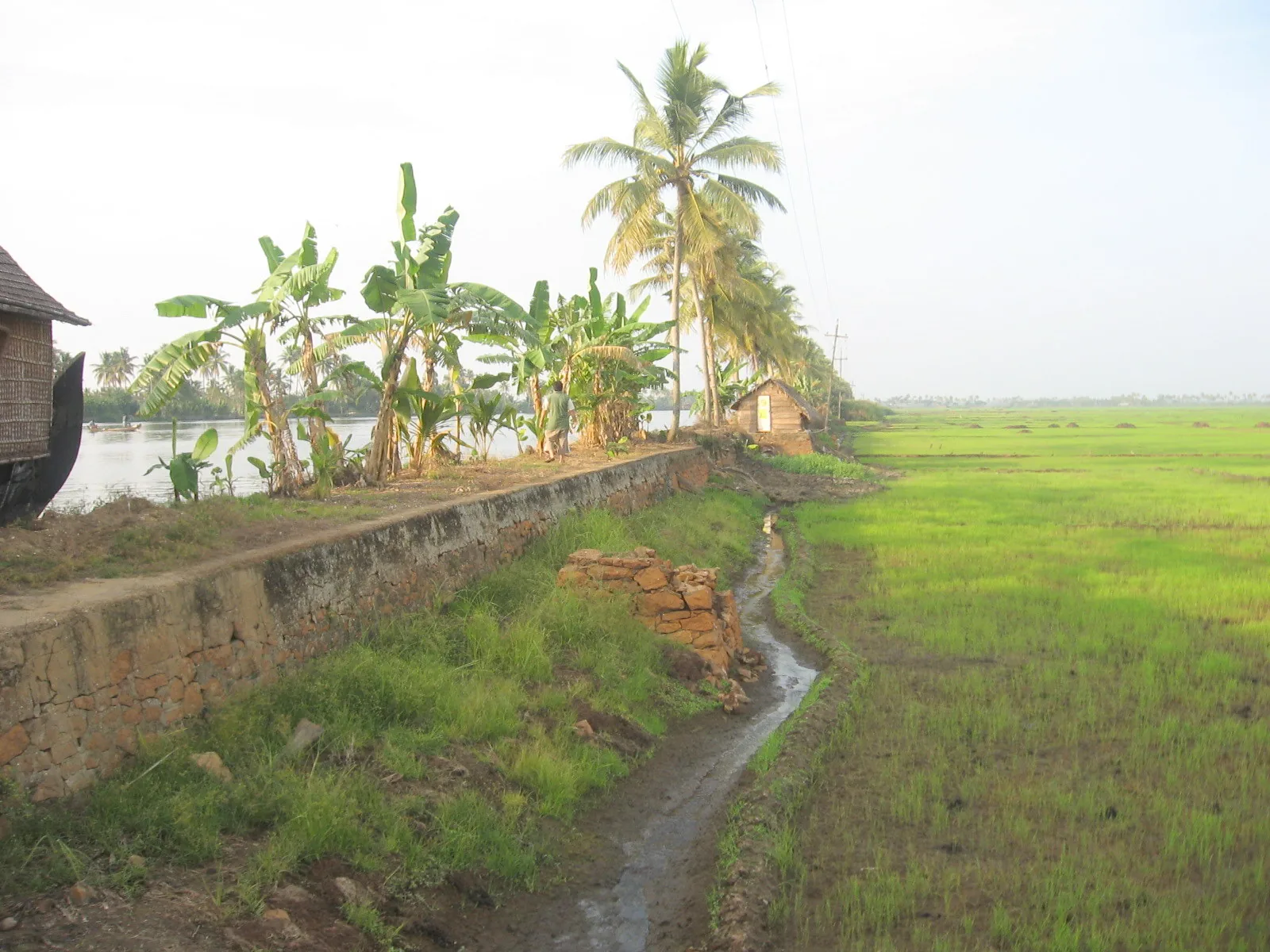
Low-lying paddy and canal region known as Kerala’s rice bowl.
12.2 km · straight line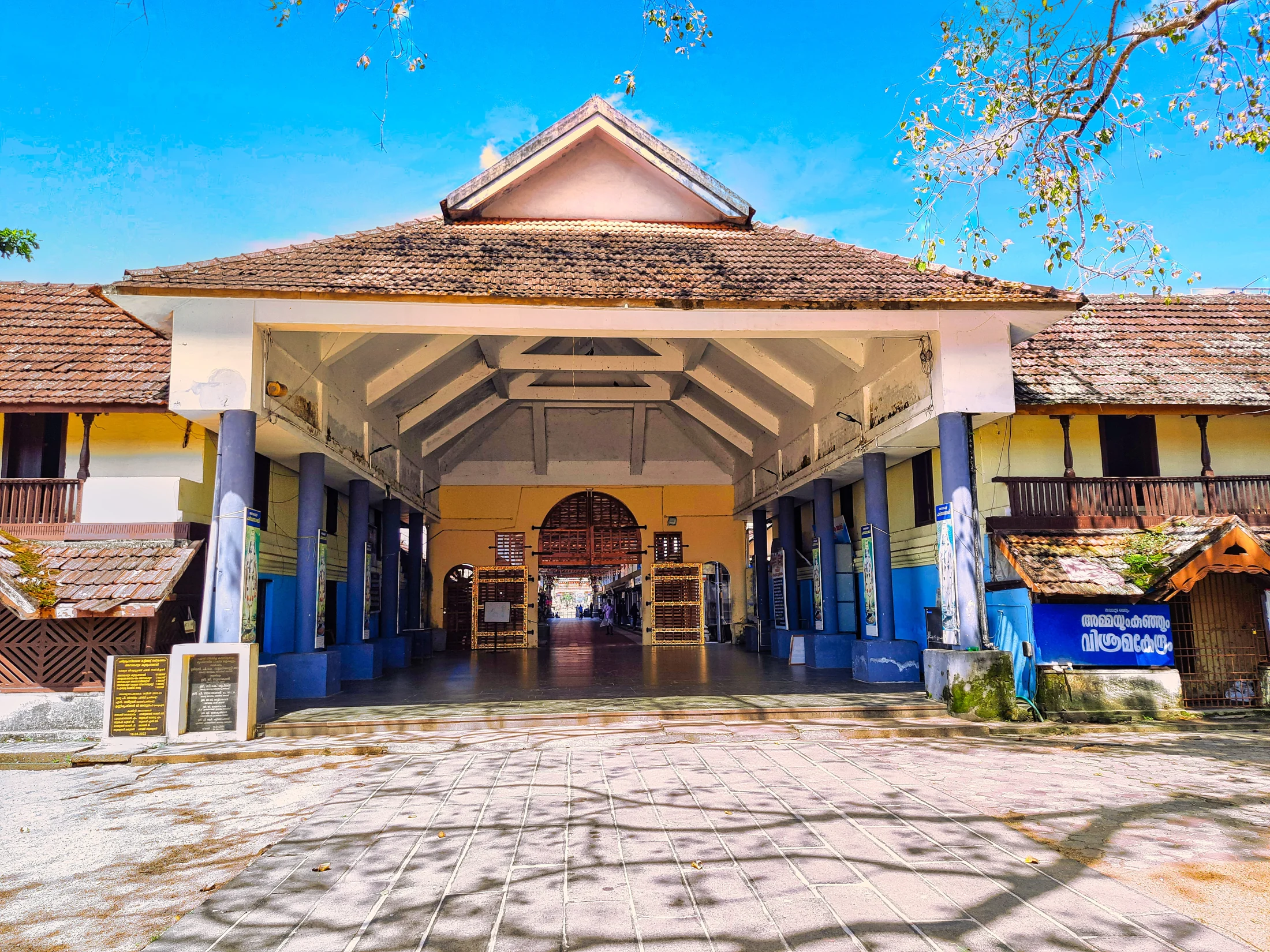
Ambalappuzha Sree Krishna Temple is an active temple in Ambalappuzha town, south of Alappuzha, administered by the Travancore Devaswom Board. Krishna is worshipped here as Parthasarathy, Arjuna’s charioteer. The temple combines a broad tank, tiled courtyards and painted ritual spaces with two enduring cultural associations: Palpayasam offered to the deity, and Kunchan Nambiar’s creation of Thullal. A visit works best when darshan, the permitted exterior spaces and any offering collection are planned around the temple’s morning or evening opening.
13.3 km · straight line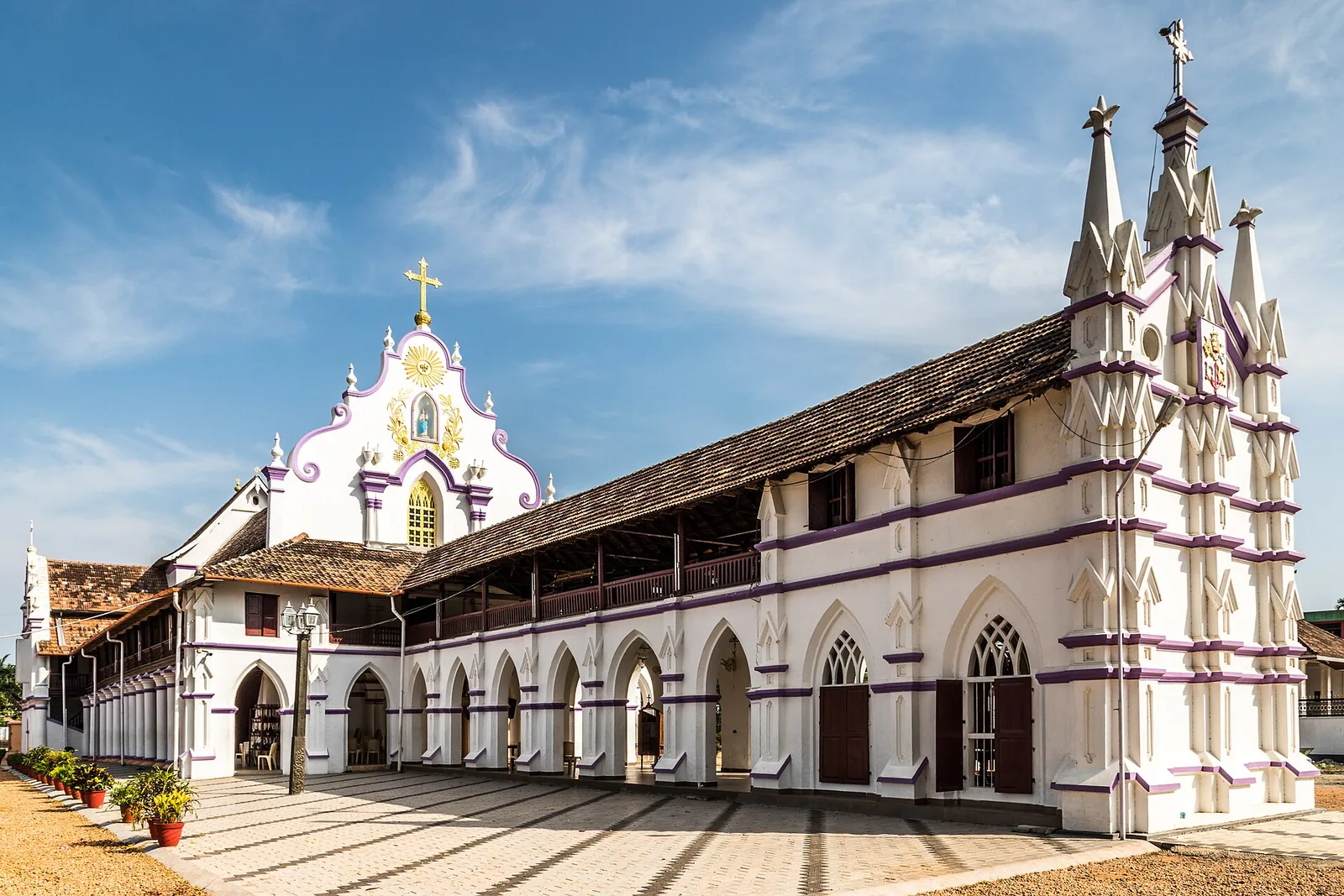
Kuttanad village on the Pamba known for the Champakulam Moolam snake-boat race and Kalloorkad St Mary’s Basilica.
13.3 km · straight lineNearby toilets, pharmacies, ATMs, seating and vets are community-mapped and may be incomplete or out of date. Map data © OpenStreetMap contributors | Walking times © openrouteservice.org by HeiGIT
The Diocese of Alleppey's own parish directory gives 1809, and GCatholic independently gives the same year — within about half a century of the founding of the port town in 1762. ⚠ Dates of 1858 and 1866 appear in some listings but we could not trace them to any source, and we do not publish them. The construction date of the present building does not appear to be documented online.
No. It is a cathedral and parish church. The Diocese of Alleppey's basilica is St Andrew's at Arthunkal, 21 km north, raised by Pope Benedict XVI on 21 May 2010 and proclaimed on 11 October 2010. The two are often confused.
No, though the claim circulates. St Peter's at Vattayal, in the same forane, is listed by the diocese as established in 1760 — 49 years earlier, with roughly twice the families. Older foundations on this coast include Arthunkal (1581), Kattoor (1590), Thumpoly (1600) and Manakodam (1640).
On 19 June 1952, by the bull Ea Redemptoris Verba of Pope Pius XII, which divided the northern territory of the Diocese of Cochin along the Kuthiathodu canal line. It is a coastal ribbon of roughly 333 km², bounded by that canal to the north, the sea to the west, the middle of Vembanad Lake to the east, and a line through Thottappally to the south.
16 July, the feast of Our Lady of Mount Carmel, per the diocese's parish directory.
⚠ As listed by a third-party source in 2018 and not confirmed by the diocese, which publishes no schedule: weekdays 06:00, 07:15 and 18:00; Sundays 05:30, 07:00, 09:00, 17:00 and 19:00 (English); perpetual adoration 08:00 to 18:00. Confirm locally before relying on these — the parish number is 0477-2244629.
Morning or late afternoon for quieter visits and better light.
Entry: Free. It is a working parish church and cathedral, not a ticketed site. Timings: Open daily for prayer. ⚠ Mass timings AS LISTED BY A THIRD PARTY IN 2018 and not confirmed by the diocese, which publishes no schedule: weekdays 06:00, 07:15 and 18:00; Sundays 05:30, 07:00, 09:00, 17:00 and 19:00 (English); perpetual adoration 08:00 to 18:00. Confirm on 0477-2244629 before relying on them.
Base yourself in Alappuzha town or a nearby town in Alappuzha, then confirm the last-mile route locally before leaving. Check mass/prayer timings if visiting for worship; otherwise visit outside service rush. If the visit depends on forest, temple, boat, ferry, weather or seasonal access, check the official/local rule on the day before travel.
30 minutes to 1.5 hours.
Nearby you can pair Revi Karunakaran Museum (290 m, approximate straight-line separation), Alappuzha Beach & Lighthouse (1.0 km, approximate straight-line separation), Alappuzha / Alleppey town (1.1 km, approximate straight-line separation), Mullakkal Temple (1.5 km, approximate straight-line separation).
Expect crowds on feast days and Sundays. Use marked parking and official entry points.
Written about Our Lady of Mount Carmel Cathedral itself — its history, its legends and the arguments about them.
These guides explore Alappuzha town and the surrounding area. Choose a visit that fits your interests, allowing separately for travel between stops.
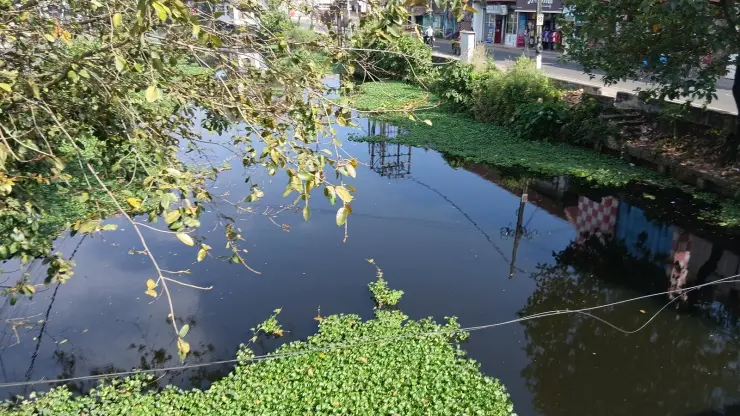
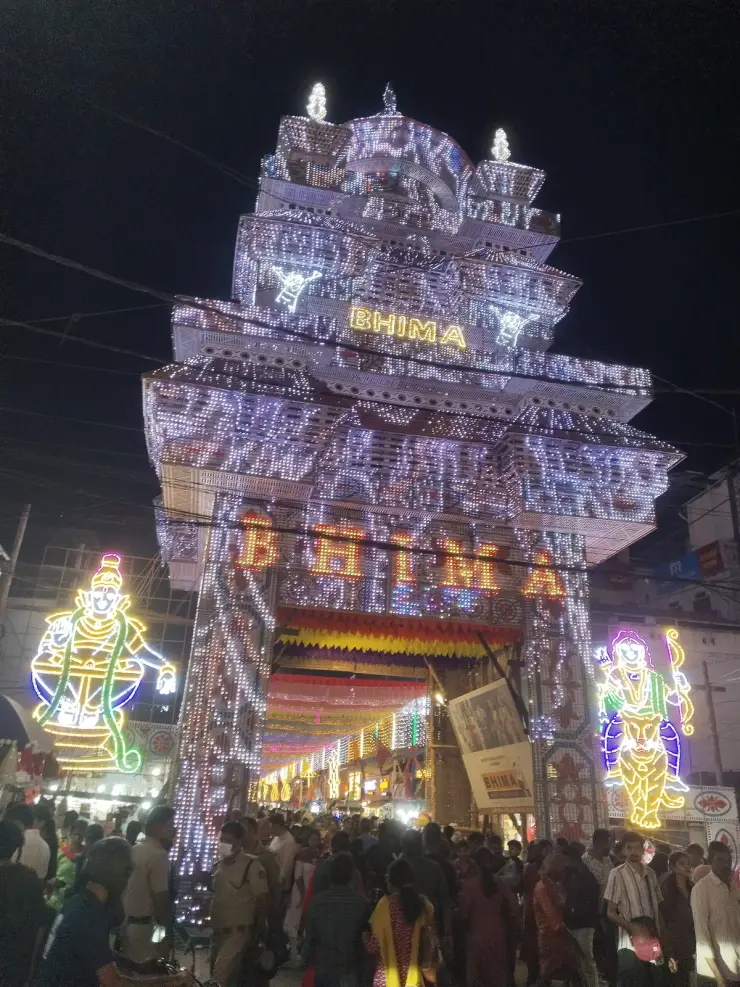
Written about Alappuzha town as a whole rather than about Our Lady of Mount Carmel Cathedral — its history, its streets, and how to spend a day in it.
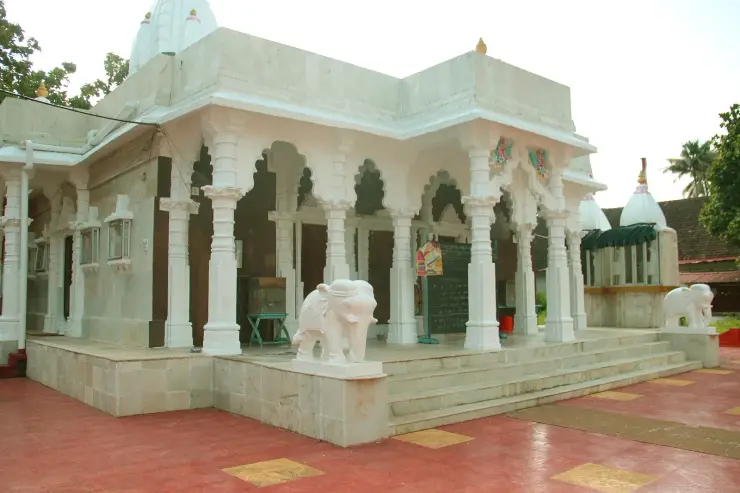
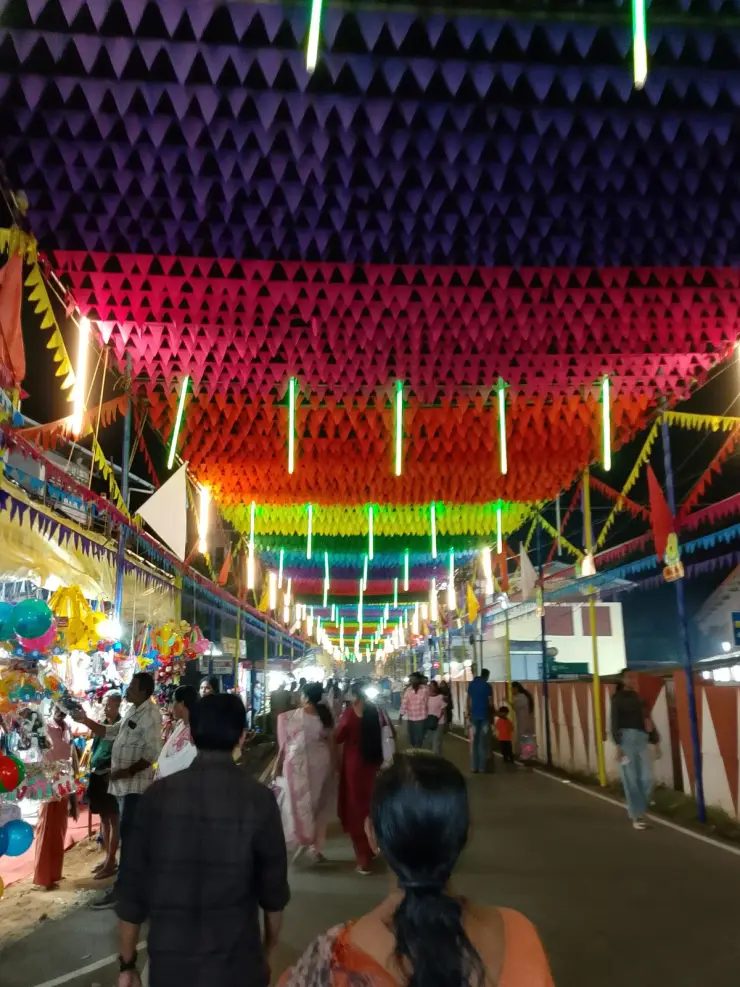
Route-level itineraries and practical guides for the rest of Kerala.
Photographs: Vimaljoseph93 (CC BY-SA 4.0), Jaisonll799 (CC0). Wikimedia Commons.