What to expect
Highlights
- Heritage experience at Karumadikuttan
- Architecture, local stories and old trade/cultural routes
- Good fit for guided walks and nearby cafes/shops
Ancient black-granite Buddha statue at Karumadi near Ambalappuzha, a relic of Kerala’s Buddhist past.
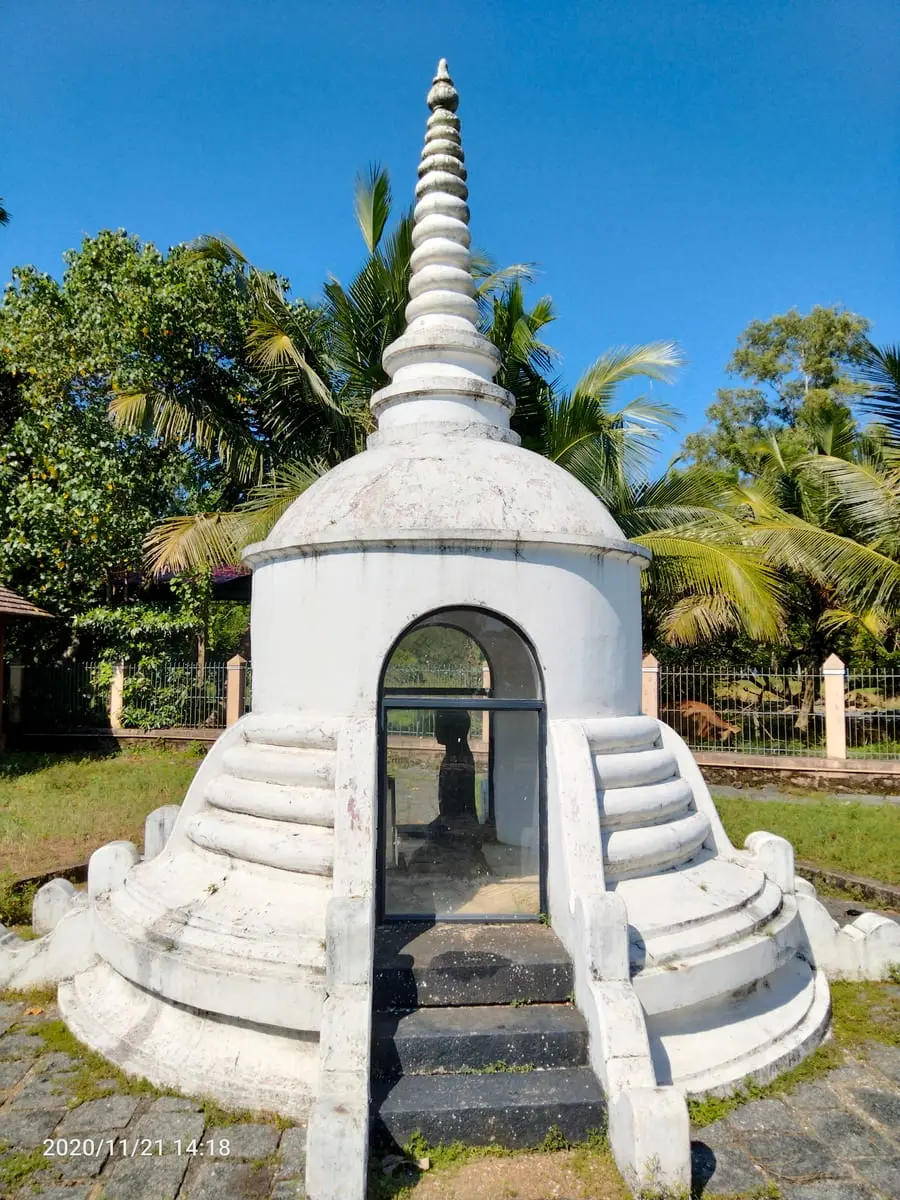
A black granite Buddha, seated, close to twelve centuries old, missing its left arm and part of its left side — pulled out of a canal, set up on a plinth by a British engineer, and now sitting inside a small white stupa in a fenced yard at Karumadi, where people still leave coconuts and turmeric at its feet.
Karumadi is a village on the Kuttanad edge of Ambalappuzha taluk, about 2 km from the Ambalappuzha Sree Krishna temple, and there is very little to it: a road, a canal, paddy, houses. What it has is the statue, and the statue is one of the most important objects in Kerala.
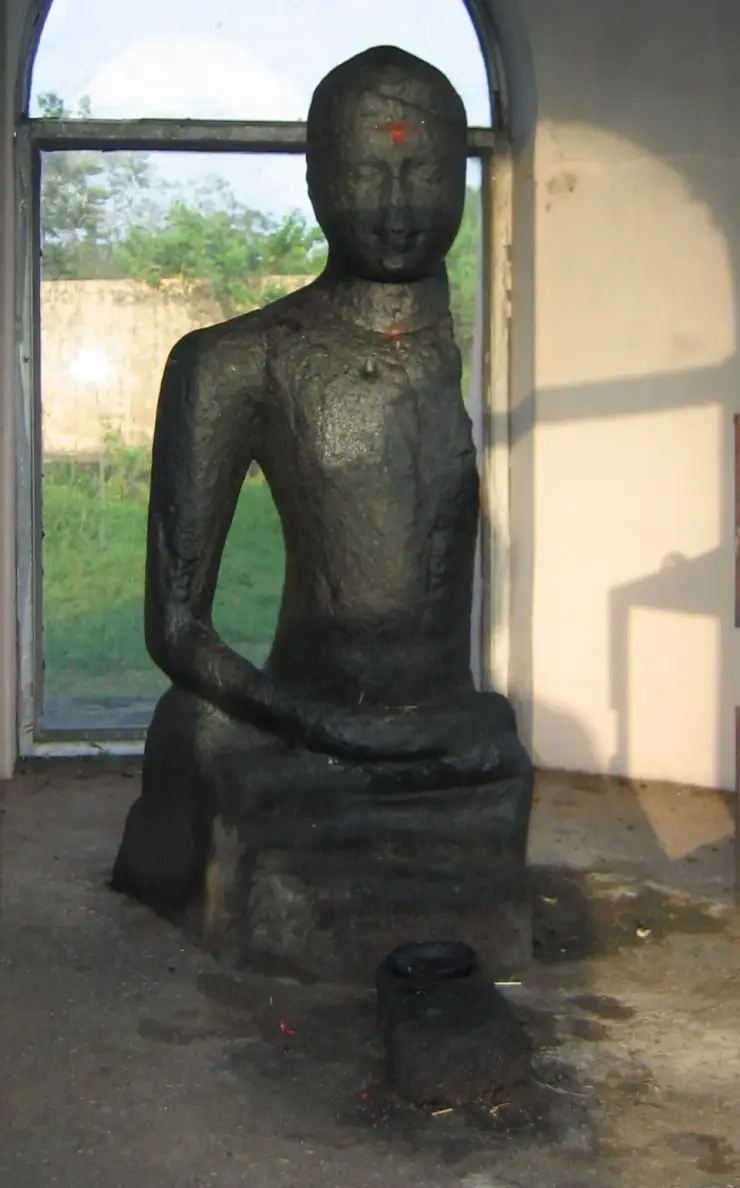
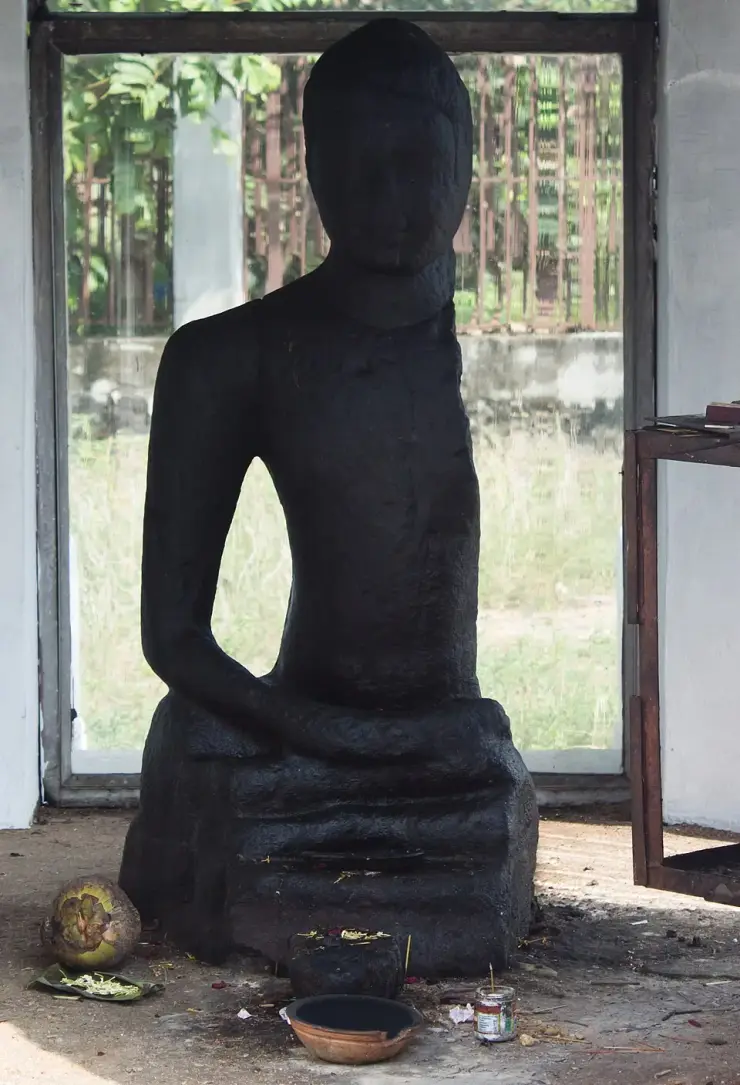
The Karumadikuttan is a seated Buddha in black granite, in padmasana, the right hand laid over the left and the hands resting on the feet. The face is worn nearly smooth but the expression survives — eyes closed, a faint downturn of the mouth that reads as neither smiling nor sorrowful. The head carries the rounded ushnisha. And the whole of the left arm, from the shoulder down, together with part of the left flank and leg, is simply gone, sheared away on a rough diagonal that leaves the raw broken stone exposed. It is a mutilated figure, and the mutilation is the first thing anyone notices.
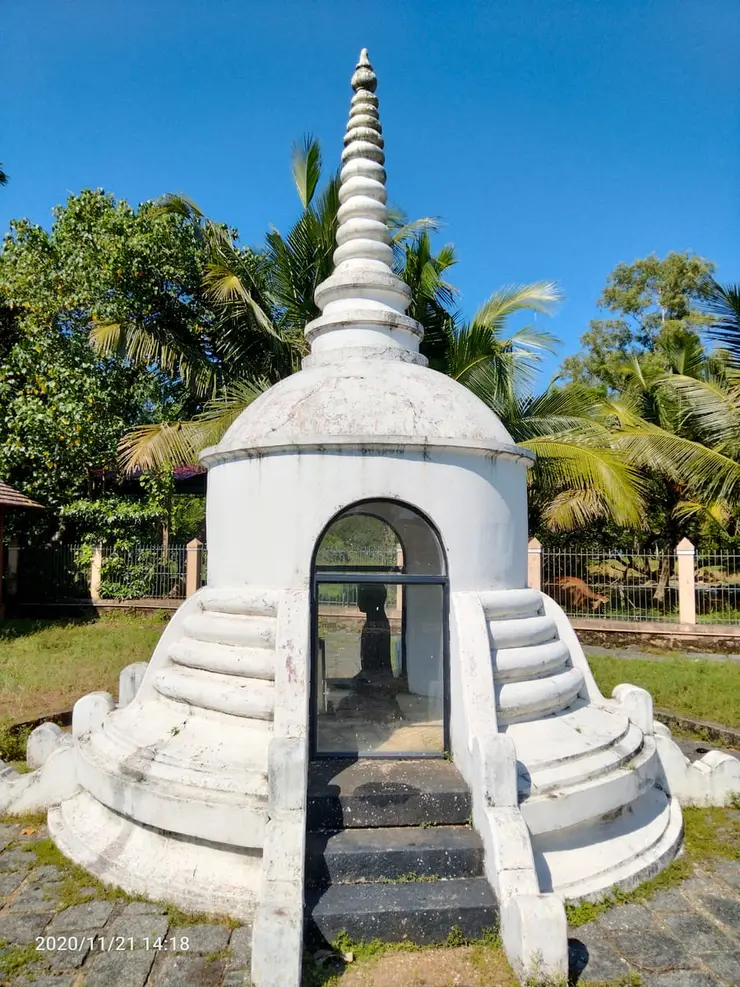
For most of the twentieth century it stood in the open on a plinth. It does not now. It sits inside a small white stupa — a domed structure with stepped rings rising to a finial, in the Sinhalese Theravada idiom rather than any Kerala one — approached up two flights of steps, with a glass door through which the dark figure is visible from outside. Older photographs show that stupa stained, cracked and standing in a rough yard beside a heap of broken white stone; more recent ones show it whitewashed, in a paved and fenced compound. Somebody has been looking after it.
🔑 The thing to look at is not the statue but the floor in front of it. Photographs taken at different times show a split coconut laid on a banana leaf with loose flowers, a small brass bowl, a dark stone lamp, scattered petals — and on the figure itself, kumkumam smeared on the forehead and throat in one photograph, turmeric-yellow marks on the brow and mouth in another. Nobody performs puja here in any formal sense; the Malayalam account says explicitly that there is no puja and no daily observance. And yet the offerings keep appearing.
The local usage tells you what he is to the village. He is not addressed as the Buddha. An external Malayalam source records him as കരുമാടിക്കുട്ടൻ എന്ന വല്യച്ഛൻ — Karumadikkuttan, the grandfather. Kuttan itself means the boy or the little one. So the name people actually use for a twelve-hundred-year-old Buddha is a household one, and it manages to be both diminutive and honorific in the same breath: the little one, who is also the old man of the family. Nothing in the formal record of this object is as informative as that.
Karumadi sits within easy reach of Ambalappuzha and Alappuzha and takes very little time to see. It is not a monument that performs. It is a broken statue in a small building at the side of a road, and it is worth the detour precisely because of how little has been done to dress it up.
Malayalam Wikipedia records four distinct legends about the Karumadikuttan, and none of the first three has anything to do with the Buddha. They are worth setting out in full, because what a place says about an object is evidence of a different kind from what historians say about it.
The first: the brahmins of Chengannur, jealous of the rising fortunes of the Chembakassery king, sent evil spirits to destroy him and his people. One of those spirits was caught by the goddess at the Kamapuram temple and turned to stone. That stone is the Karumadikuttan.
The second: Vilwamangalam Swamiyar was passing this way when a Pulayan polluted him by touch. The sage cursed him, and the man became the stone you see.
The third: during the festival at the Kamapuram temple a Pulayan stole an uruli — the temple's cooking vessel — and the god turned him to stone for it.
The fourth, and last in the list, is given in a single short clause: some tell stories connecting it with the Buddha. That is the whole of it. The identification that every historian who has looked at the object accepts is recorded as one opinion among four, and placed at the bottom.
⚠ Read those four together and the shape of the thing is uncomfortable, and it should be. Two of the four local explanations for this object are caste-punishment stories in which a Pulayan — a member of one of Kerala's most severely excluded communities, historically barred from temple ground altogether — is petrified for pollution or for theft. And the object being explained is, on the historical evidence, an image of the Buddha, from a tradition that rejected caste, which was very probably damaged and thrown into a river during the brahminical ascendancy that displaced Buddhism from this coast.
So the folklore has, in effect, absorbed a broken Buddha into the very system that broke it, and then explained the breakage as a punishment for a Dalit. We are not going to tidy that into a nicer story or present it as quaint. It is the most interesting thing about the site, and the fourth legend — the one that is simply true — comes last on the list.
Two of the four stories turn on the same temple — Kamapuram — which is worth noticing, because it means the folklore is not free-floating. It is anchored to a specific local shrine and to a specific local hierarchy: the goddess of Kamapuram catches a spirit in one telling, the god of Kamapuram punishes a thief in another, and in both the stone is the residue of an authority being exercised. The Vilwamangalam story does the same work with a wandering sage instead of a temple. Three legends, one message, and the message is about who may approach what.
Alongside the legends runs a cult that nobody organised. The Malayalam account records that people living nearby took to making offerings here in the belief that the Karumadikuttan could cure certain diseases in cattle and in children; that Christians and nuns lit candles at the spot; and that some pilgrims on their way to Sabarimala stop and break a coconut here. There is no priest, no puja and no daily rite. What there is is a broken stone figure that a Hindu village, Christian religious and Ayyappa pilgrims have all independently decided is worth bringing something to — a Buddha kept in use by everybody except Buddhists.
The statue was not found standing. It was recovered from the Karumadi thodu, the canal that runs through the village, and set up on a plinth on the bank. The recovery is credited to Sir Robert Bristow, the British engineer who built the modern port of Cochin. ⚠ The Malayalam article names him twice and does not agree with itself: in a second passage he appears as “A. H. Bistro, a European chief engineer”. It is the same man and the same event; we note the inconsistency rather than pick a spelling silently.
What the statue actually is has been argued over for more than a century. The Travancore State Manual and the historian K. P. Padmanabha Menon identified it as a Jain Tirthankara. T. A. Gopinatha Rao, who headed the Travancore Archaeological Survey, argued that it is a Buddha, and that identification is the one that has held. On the date, Gopalakrishnan puts it in the late eighth century and Sreedhara Menon at around AD 700 — so somewhere in the region of twelve to thirteen hundred years old, from the period when Buddhism was still a living presence on this coast.
How it lost its left arm is also contested, and three explanations are on the record. One is prosaic: the arm was broken while the statue was being lifted, using an elephant. The second attributes the damage to British attacks. The third — the one most often repeated locally — is that it was mutilated during the destruction of Buddhist and Jain images in the period of brahminical ascendancy, and then thrown into the water, which is how it came to be in a canal in the first place.
🔑 There is a piece of that arm, and it has a date and a name attached. On 14 May 2014, Rajappan Pilla — a neighbour of the monument — handed over to the Archaeology Department a fragment of the broken arm which had been kept in his family and passed down for generations. It was reported at the time that the fragment would be kept at Krishnapuram Palace, about 29 km south. ⚠ That was the decision as reported in May 2014; we have not been able to confirm that the fragment is on display there, so treat it as a decision taken rather than a thing you can go and see.
It is worth pausing on what that means. A family living next to the statue held a broken piece of it for generations — long enough that nobody involved remembered a time before — and then simply gave it to the state. Whatever else the Karumadikuttan is, it is an object people have kept.
The Dalai Lama has visited Karumadi and made arrangements for the statue's protection, which is the likeliest explanation for why an eighth-century Kerala Buddha now sits inside a stupa built in a Sri Lankan idiom. That building is modern and it is not Keralan; it is an act of care from outside, wrapped around an object the place itself explains with stories about curses.
The wider point is that Kerala's Buddhist centuries are hard to see precisely because they were so thoroughly overwritten. There is no Buddhist architecture left on this coast to speak of, no surviving sangha, and very little text. What there is is a scatter of stone figures — this one, the seated Buddha now at Krishnapuram Palace, and a handful of others across the old Kuttanad and Karappuram country — most of them found in water or in fields rather than in shrines, which is itself the evidence. Objects that end up in canals were put there.
That is the frame worth carrying to Karumadi. The statue is not a ruin in the ordinary sense, because a ruin is a building that fell down. This is a thing that was broken deliberately, disposed of in water, recovered by a colonial engineer, argued over by two schools of archaeology, protected at the suggestion of a Tibetan monk, explained locally by three stories about curses, and fed coconuts by everybody. Its whole history is in the object.
One of the most important surviving Buddhist images in Kerala — black granite, seated, and datable to around the eighth century.
The mutilation itself: the entire left arm and part of the left side sheared away, on a break you can stand in front of.
A working popular cult with no priest and no puja — coconuts, turmeric, kumkumam and candles, left by Hindus, Christians and Sabarimala pilgrims alike.
The stupa: a small white Sinhalese-style dome housing a Kerala Buddha, built to protect it after the Dalai Lama's visit.
Four local legends, two of them uncomfortable, and the historical identification that comes last on the list.
Two kilometres from the Ambalappuzha Sree Krishna temple, so the two go together in a single short trip.
Road km to Alappuzha; ghat roads and traffic vary — allow extra.
November to February and early mornings are best for walking; avoid midday heat where possible.
Live forecast loads in your browser.
Sun and moon are calculated for this location and shown in IST. Photography windows are the hour around sunrise and sunset; the sunset bearing is degrees clockwise from true north. Moon phase is accurate to about half a day.
Verified hotels, homestays, restaurants, experiences, sights, shops and rentals around Karumadikuttan — commission-free, with direct contact. Filter by what you need.
Temple paalpayasam and prasadam counter context for Ambalappuzha Sree Krishna Temple visitors. Ambalappuzha, Temple food and prasadam support, do.
Official DTPC Alappuzha contact for Ambalappuzha, Kuttanad and south-Alappuzha route checks. District Tourism Promotion Council, Boat Jetty Road, Opposite Canara Bank, Alappuzha 688011 · DTPC, Alappuzha, Official contact.
Book with the place itself. India’s cyber-crime coordination centre warned in April 2025 that convincing copies of hotel and pilgrimage booking sites are being pushed through sponsored search and social ads, taking payment for rooms the property never hears about. Every listing here links to the business’s own contact details and its own Google or Bing profile — we take no commission and sit in nobody’s payment path. If a booking page reached you through an ad, check the address bar against the property’s own site before you pay. Fraud can be reported on cybercrime.gov.in or on 1930.
Find food, accommodation and activities across Ambalappuzha. Browse the guides for places to eat, stay and explore along your route.
3 more places around Ambalappuzha. Open a guide to plan the visit and onward journey.
2.0 km · 25 min walk
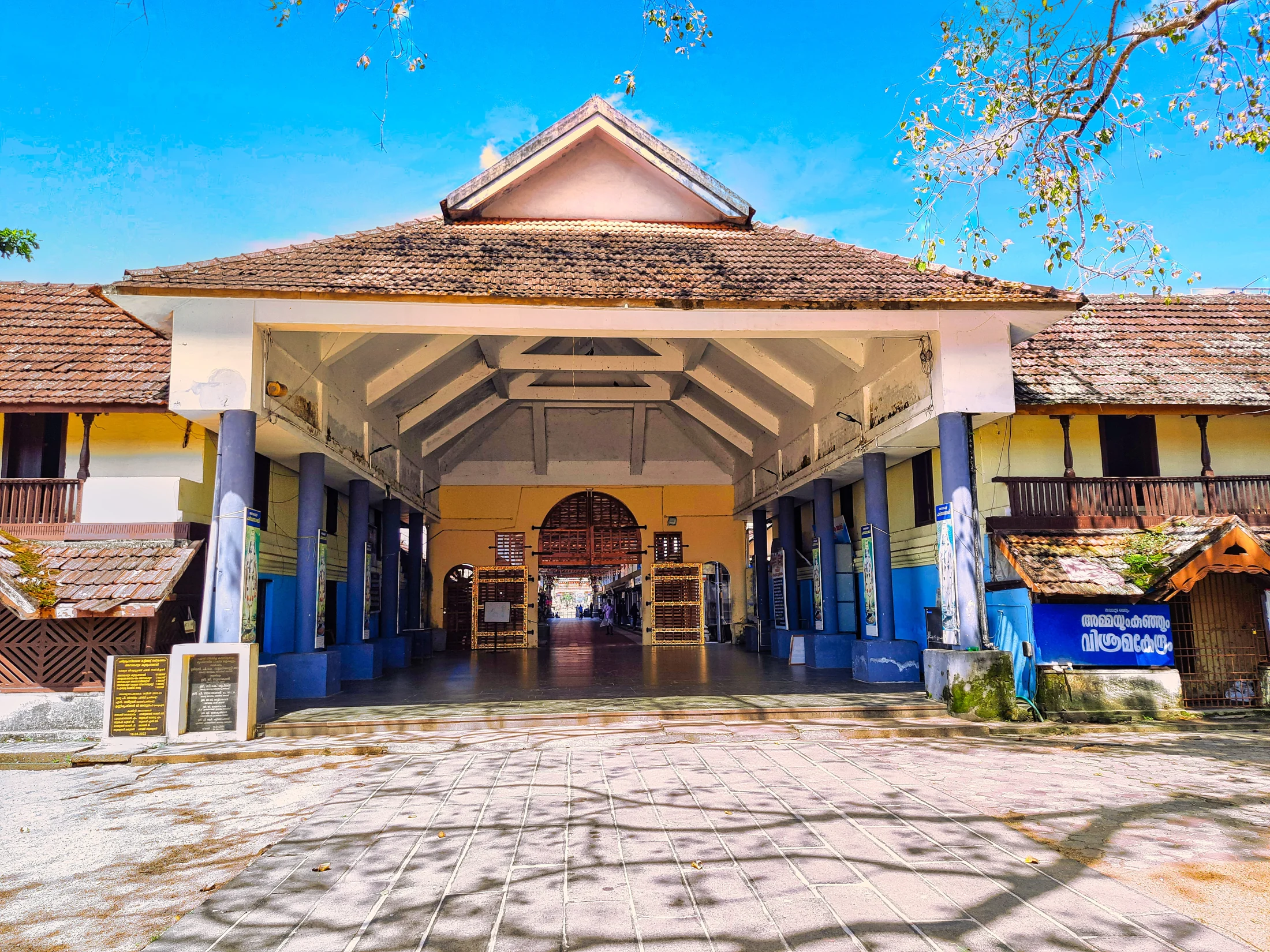
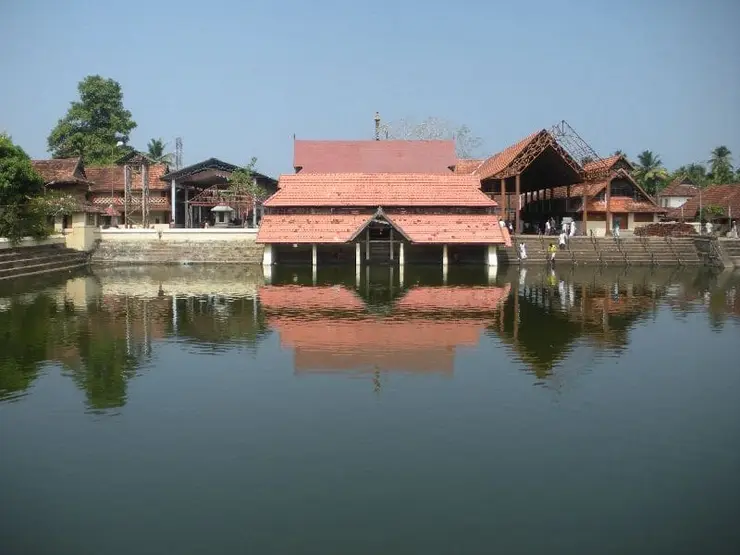
Ambalappuzha Sree Krishna Temple is an active temple in Ambalappuzha town, south of Alappuzha, administered by the Travancore Devaswom Board. Krishna is worshipped here as Parthasarathy, Arjuna’s charioteer. The temple combines a broad tank, tiled courtyards and painted ritual spaces with two enduring cultural associations: Palpayasam offered to the deity, and Kunchan Nambiar’s creation of Thullal. A visit works best when darshan, the permitted exterior spaces and any offering collection are planned around the temple’s morning or evening opening.
7.1 km · ~18 min by auto
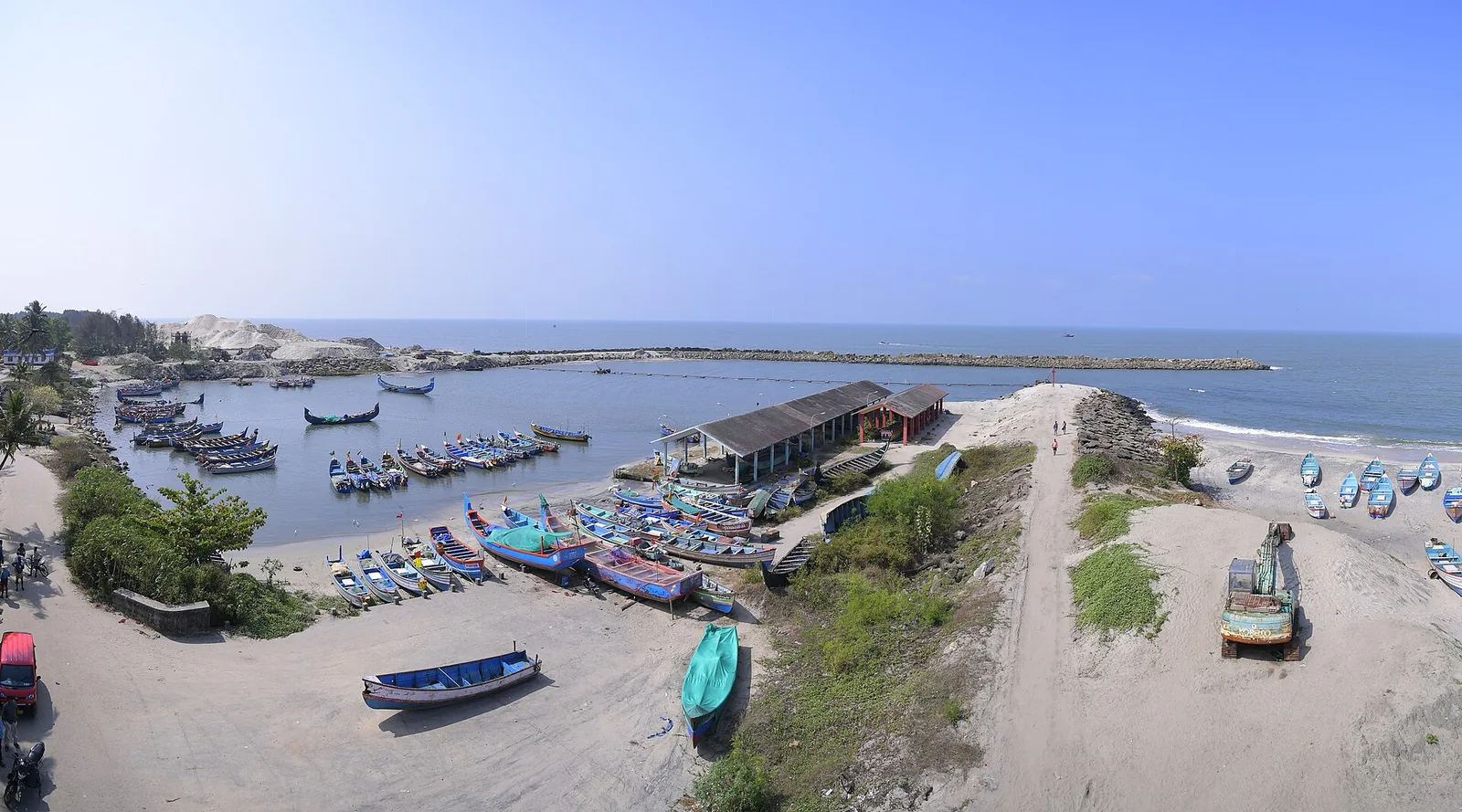
Working fishing harbour and 1955 flood spillway where the Thottappally leading channel meets the sea, south of Ambalappuzha — a painted fleet, two breakwaters and heaps of titanium-bearing black sand, rather than a quiet beach.
12.0 km · ~20 min by cab
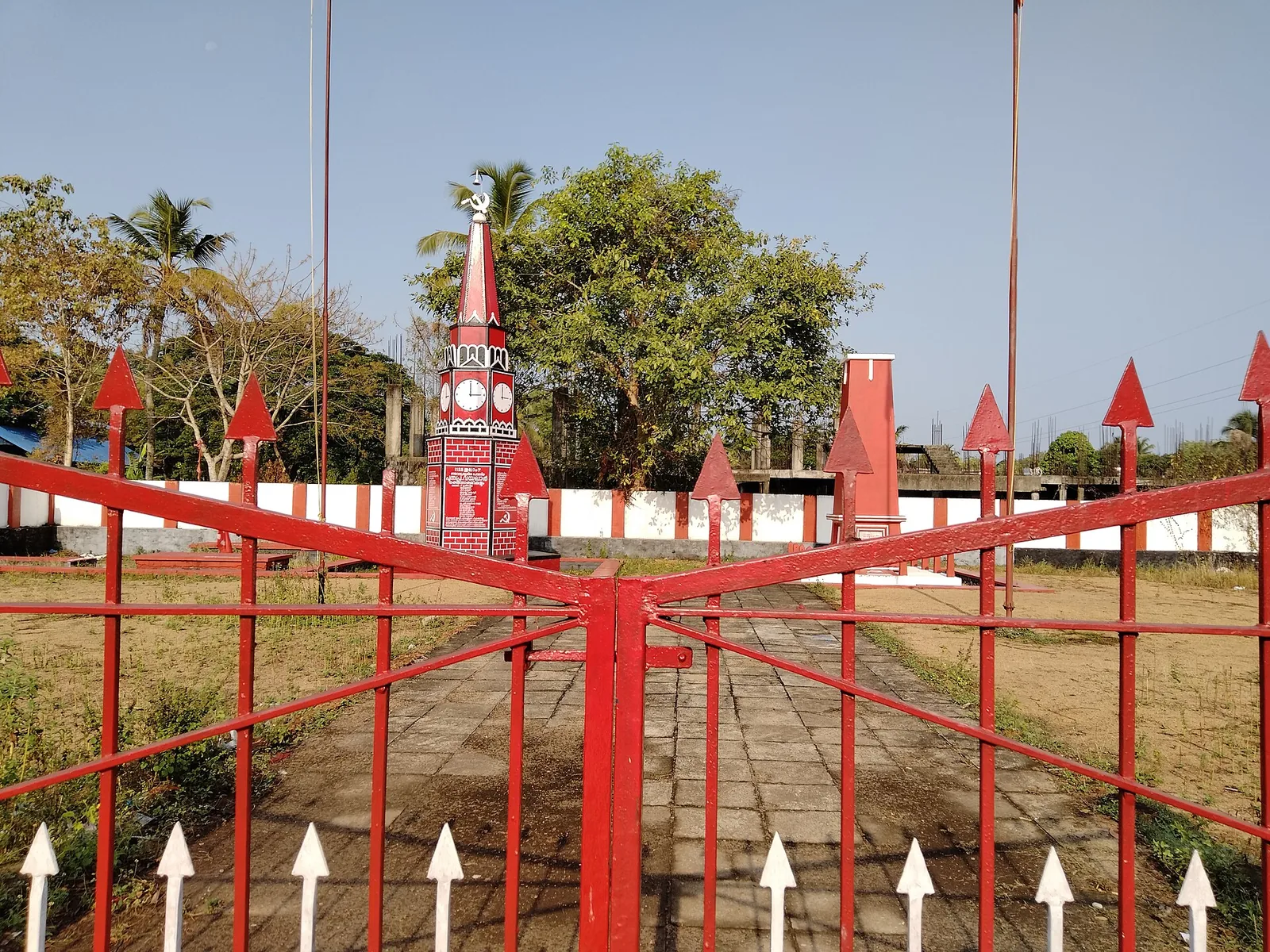
Martyrs’ memorial (Rakthasakshi Mandapam) to the 1946 Punnapra–Vayalar uprising, on the coastal belt north of Punnapra on the Alappuzha side.
Roampedia is commission-free — own or know a stay, eatery, guide or shop near Karumadikuttan? List it and it appears here once verified.
Add a nearby businessEntry: Free. There is no ticket and no custodian.
Dress code: None formally, but people do leave offerings here and treat the figure as sacred without any priest being involved. Dress and behave as you would at a shrine.
Photography: No restriction. The figure is behind glass, so expect reflections — shooting slightly off-axis from the doorway works better than straight on. The break where the left arm is missing is the thing worth photographing, and it reads best in raking light.
If you are travelling by bus or ferry, check the return service with the operator before setting out. Leave time to reach the stop or jetty after your visit.
Ask at the bus stand for the time of the last service back, not the next one. If you miss it, an auto or app cab is the fallback — agree the fare before you get in.
If you need step-free access, contact the site before travelling. Ask about a level entrance, steps along the route, the nearest drop-off point, seating and accessible toilets.
These services are listed within about 1.2 km of Karumadikuttan. Walking distances follow mapped routes; access and opening hours can change. Other services may be closer but are not included here.
Emergency numbers are verified against official government and state tourism sources. 112 works anywhere in India.
Ambalappuzha Sree Krishna Temple is an active temple in Ambalappuzha town, south of Alappuzha, administered by the Travancore Devaswom Board. Krishna is worshipped here as Parthasarathy, Arjuna’s charioteer. The temple combines a broad tank, tiled courtyards and painted ritual spaces with two enduring cultural associations: Palpayasam offered to the deity, and Kunchan Nambiar’s creation of Thullal. A visit works best when darshan, the permitted exterior spaces and any offering collection are planned around the temple’s morning or evening opening.
2.0 km · 25 min walk · straight line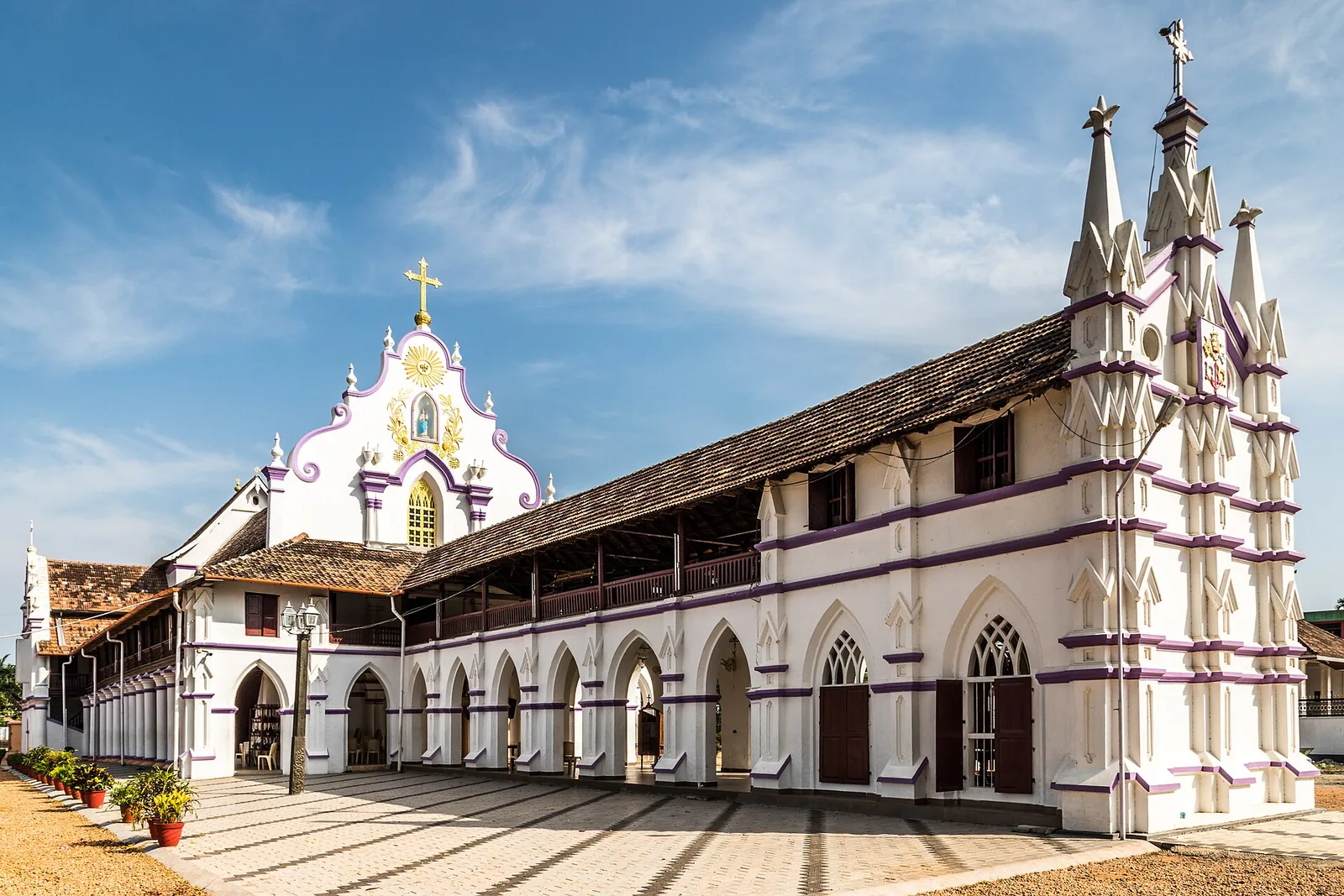
Kuttanad village on the Pamba known for the Champakulam Moolam snake-boat race and Kalloorkad St Mary’s Basilica.
4.2 km · ~10 min by auto · straight lineWorking fishing harbour and 1955 flood spillway where the Thottappally leading channel meets the sea, south of Ambalappuzha — a painted fleet, two breakwaters and heaps of titanium-bearing black sand, rather than a quiet beach.
7.1 km · ~18 min by auto · straight line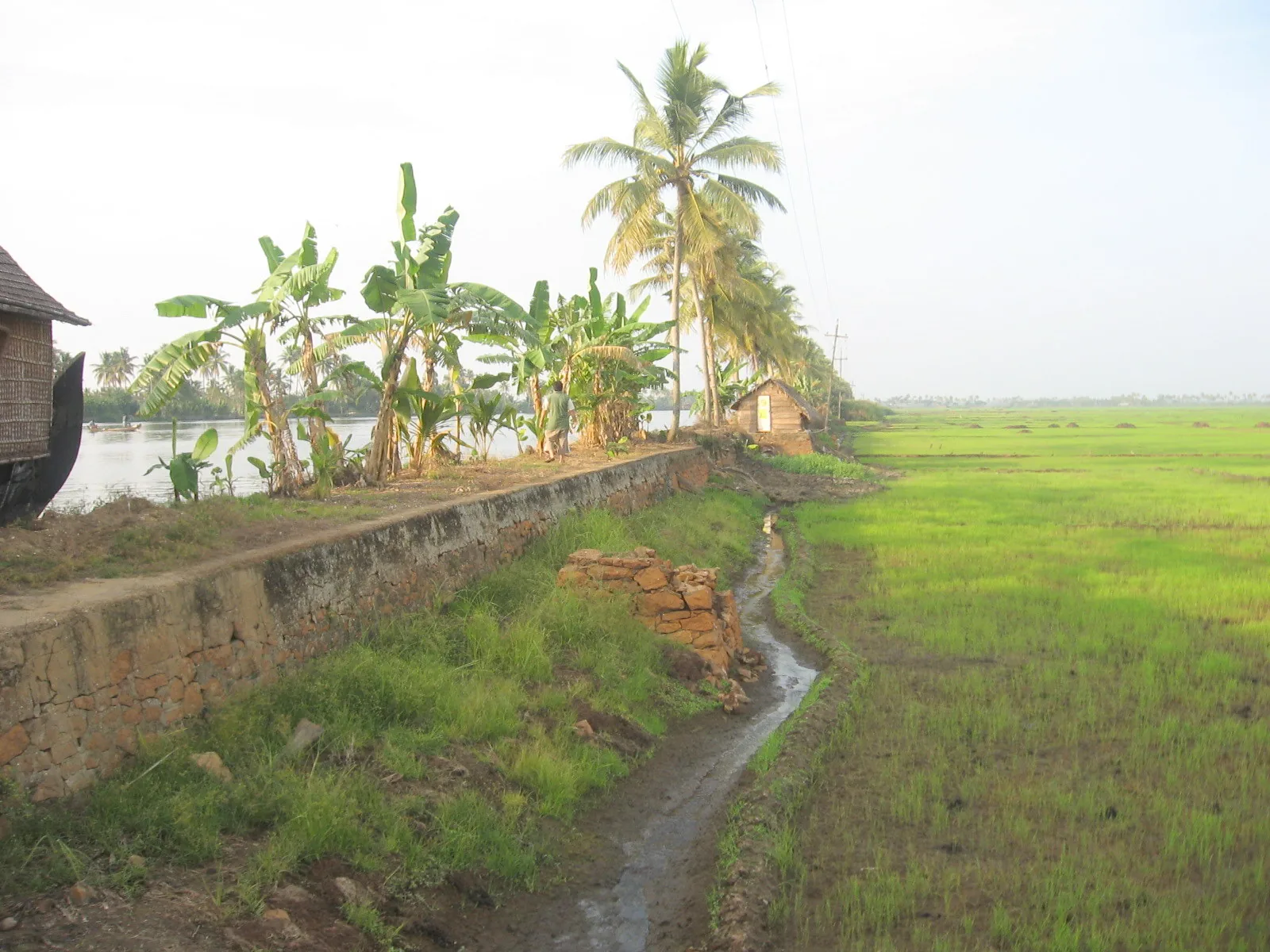
Low-lying paddy and canal region known as Kerala’s rice bowl.
9.2 km · ~15 min by cab · straight line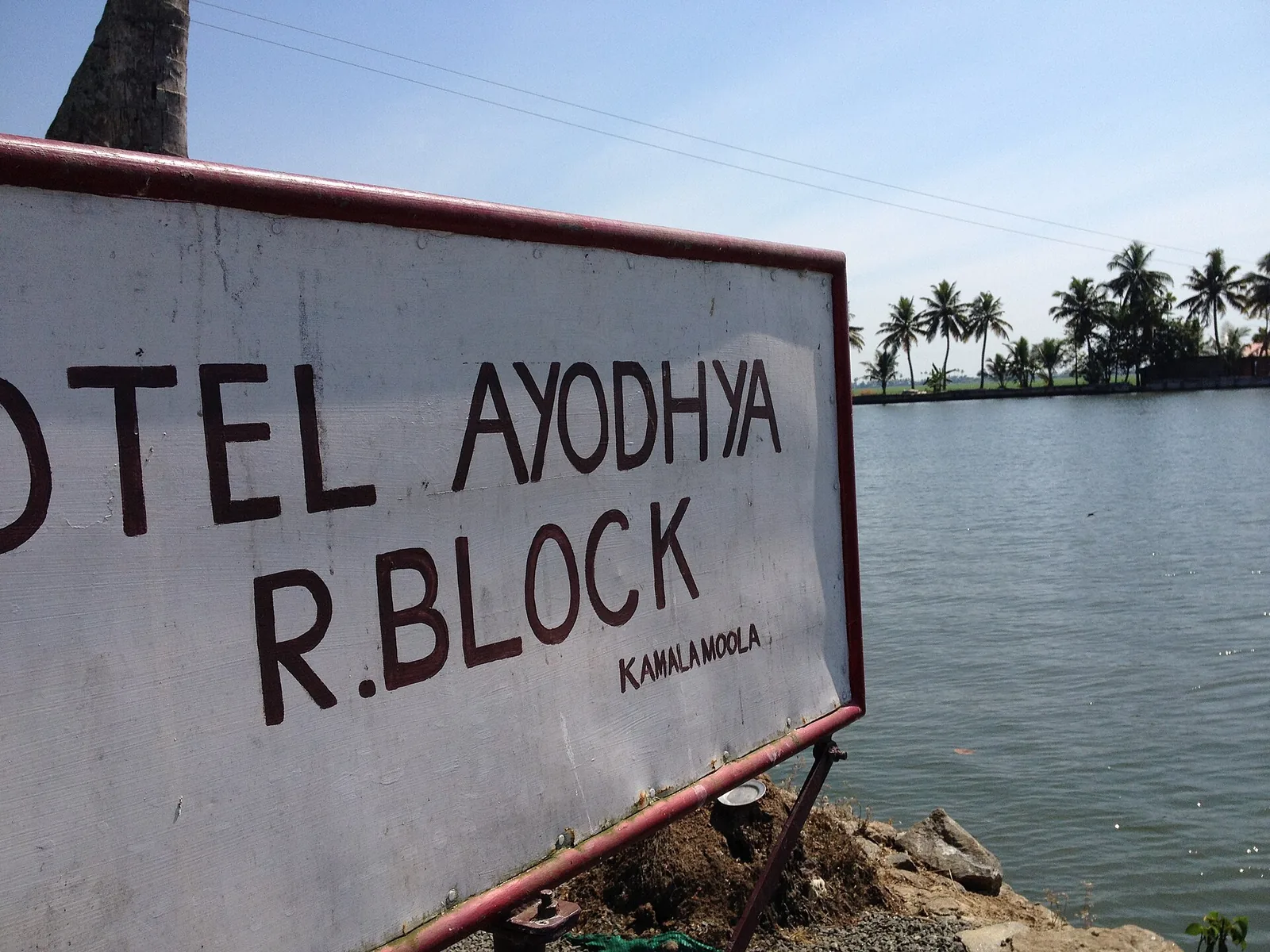
Iconic below-sea-level reclaimed farmland at Kainakary, ringed by bunds with the canal water sitting higher than the paddy fields.
9.6 km · ~16 min by cab · straight line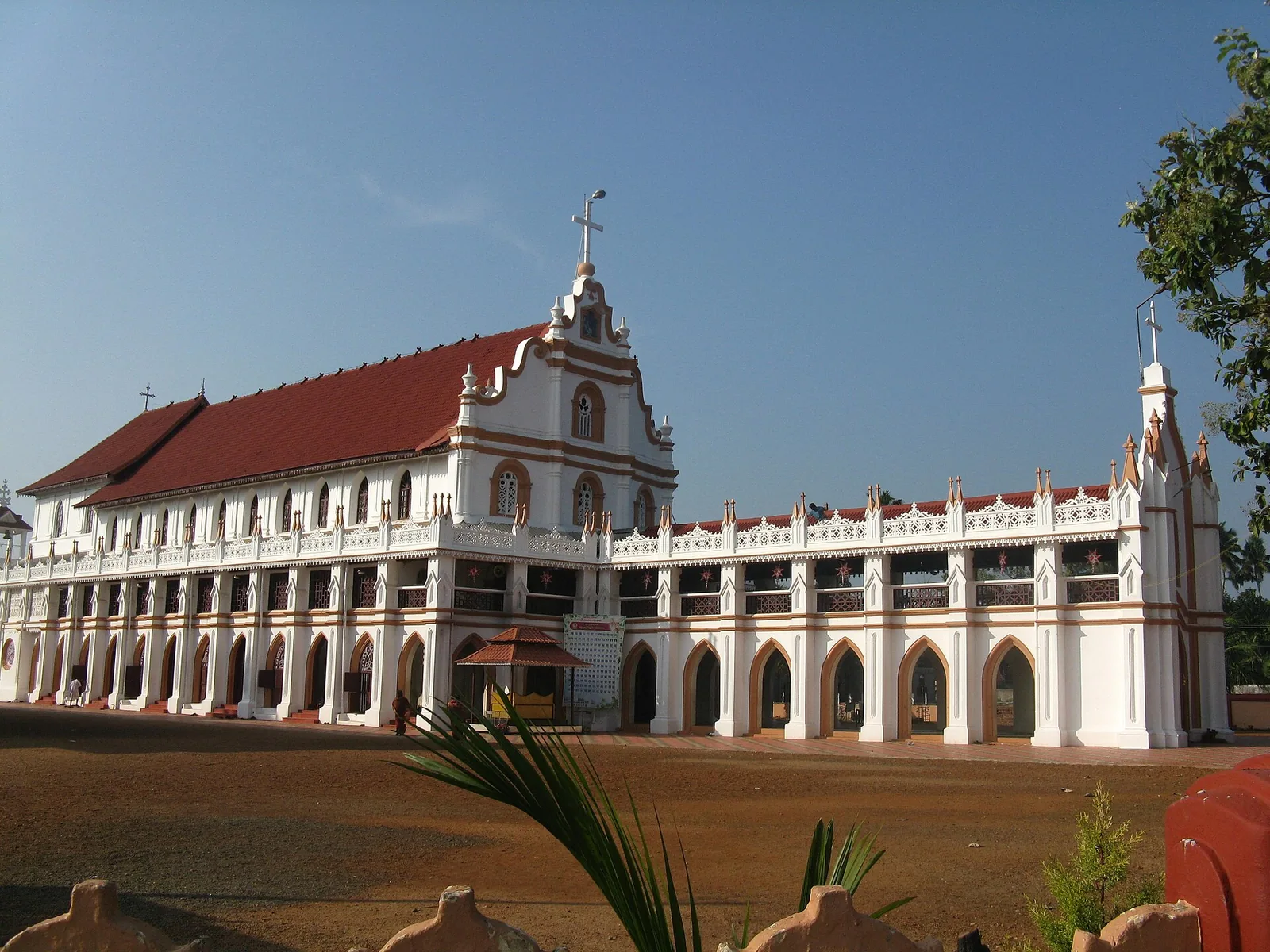
St George Forane Church at Edathua in Kuttanad, known for its large annual pilgrimage feast.
9.8 km · ~16 min by cab · straight line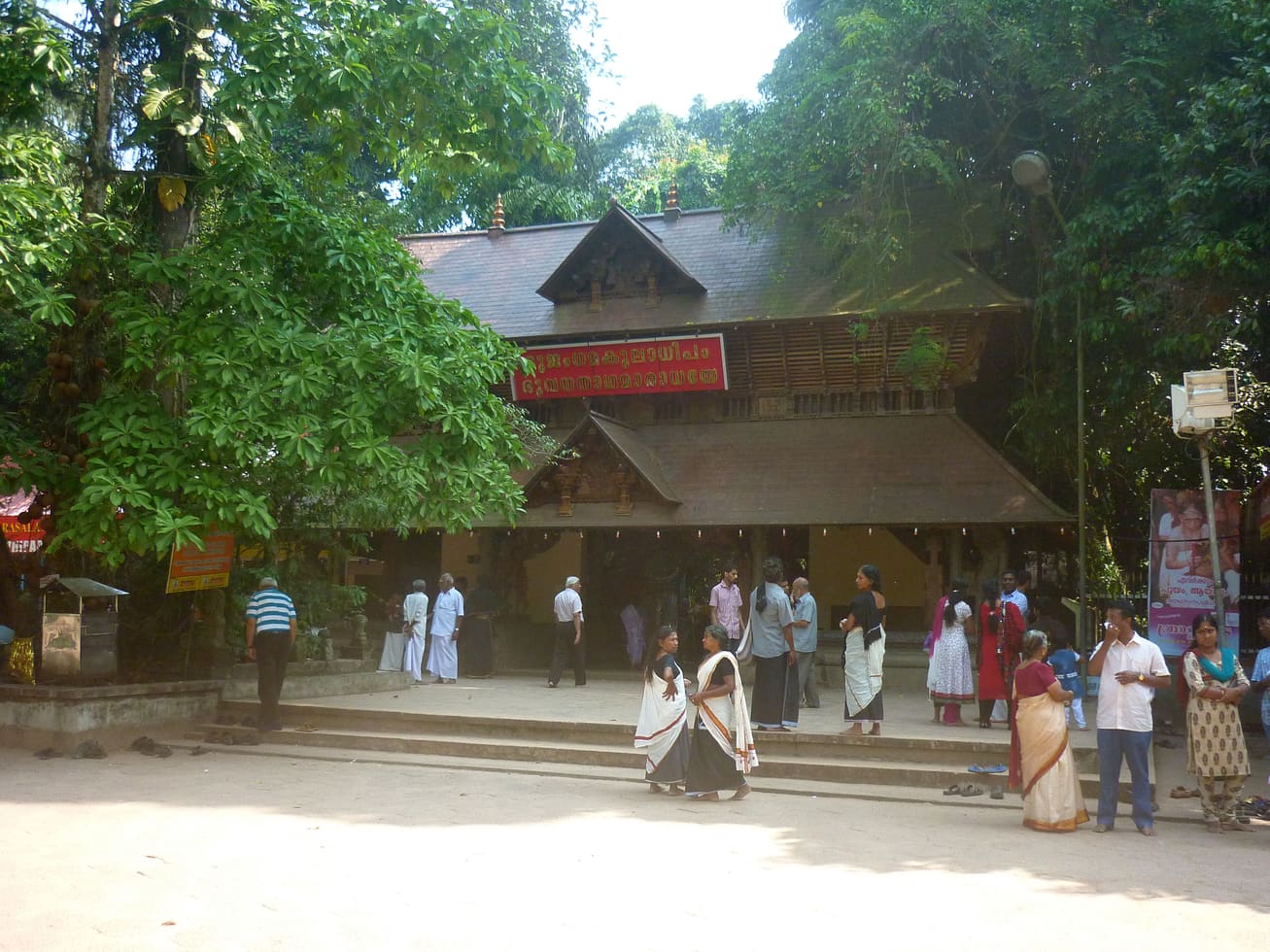
Major serpent shrine set in a sacred grove.
11.9 km · ~20 min by cab · straight lineMartyrs’ memorial (Rakthasakshi Mandapam) to the 1946 Punnapra–Vayalar uprising, on the coastal belt north of Punnapra on the Alappuzha side.
12.0 km · ~20 min by cab · straight line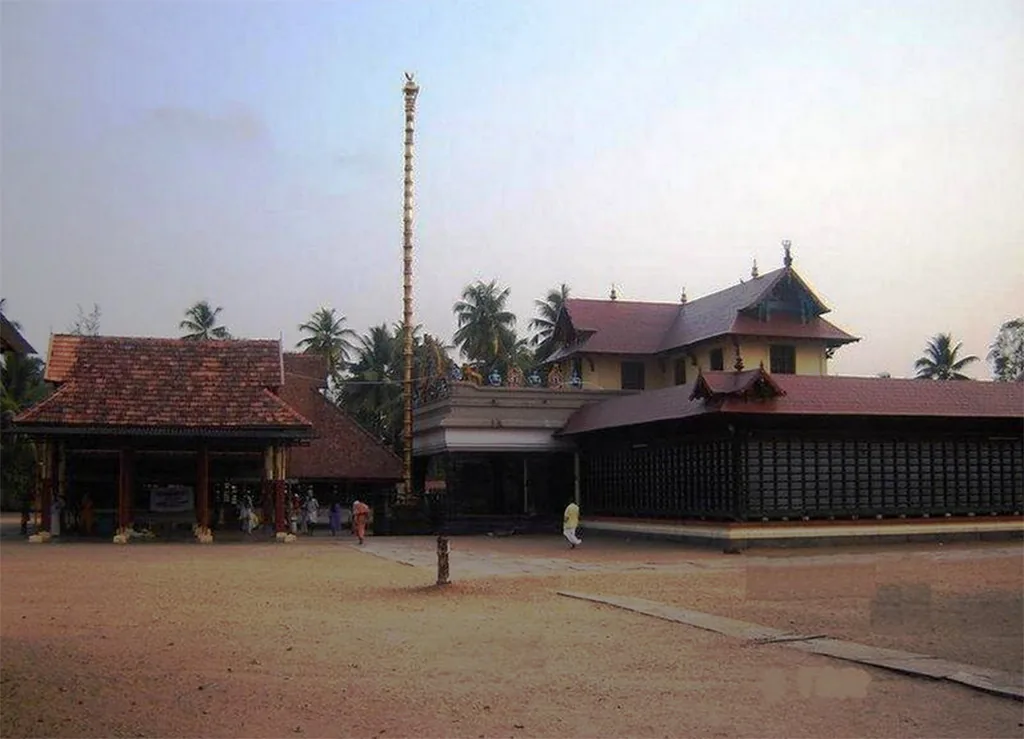
One of Kerala’s oldest Subramanya (Murugan) temples, in the south-Alappuzha town of Haripad.
12.9 km · ~22 min by cab · straight line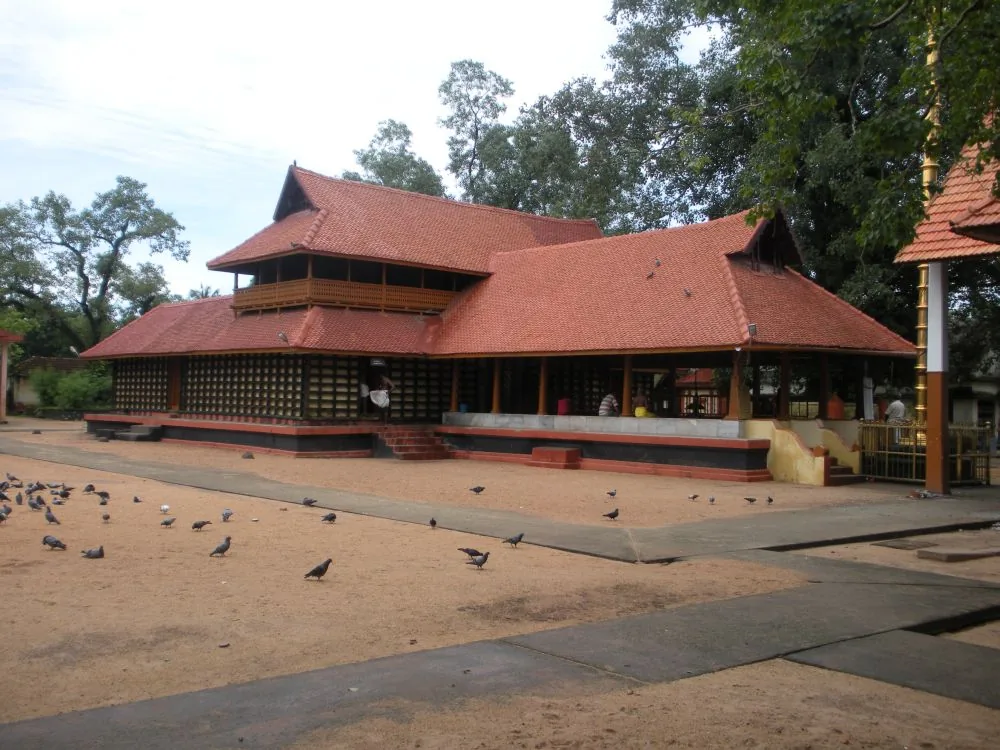
Central Alappuzha town temple (Mullakkal Rajarajeswari) famous for the annual Mullackal Chirappu festival.
13.9 km · ~23 min by cab · straight line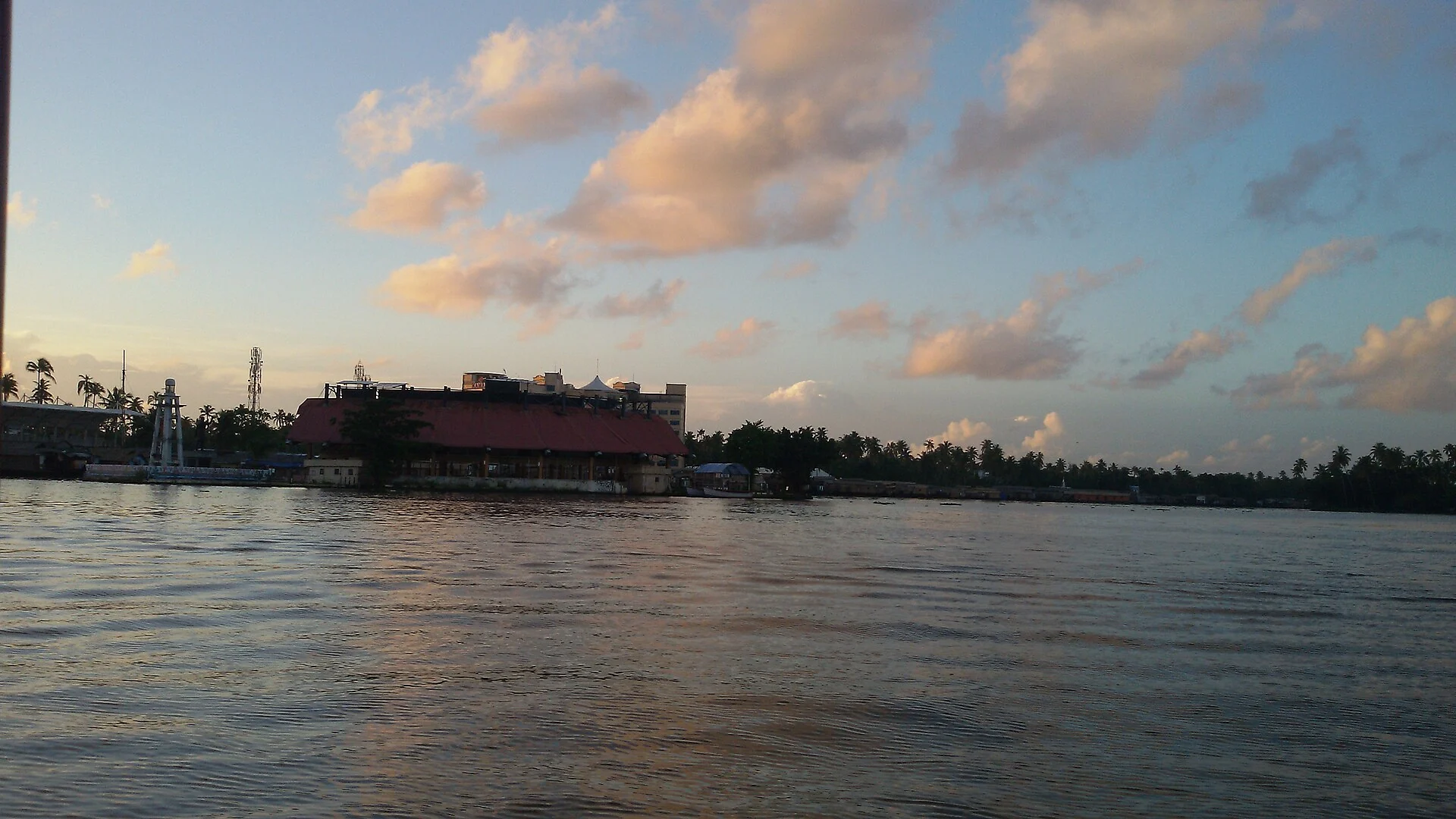
Finishing-point lake of the Nehru Trophy Boat Race and the main houseboat cruising water off Alappuzha.
14.0 km · ~23 min by cab · straight line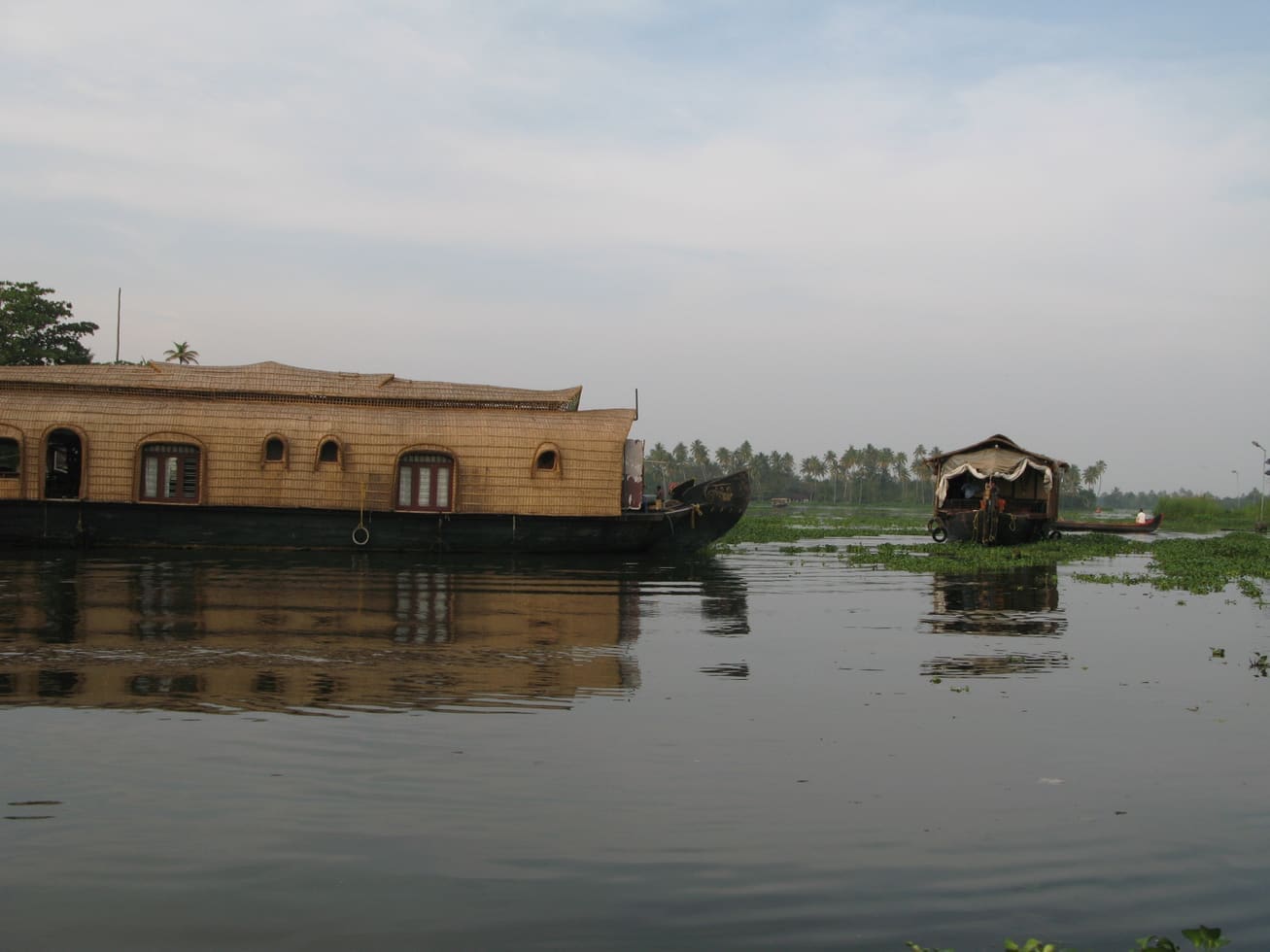
Backwater and houseboat hub with canals, beach, lighthouse and Finishing Point jetty.
14.1 km · ~24 min by cab · straight lineNearby toilets, pharmacies, ATMs, seating and vets are community-mapped and may be incomplete or out of date. Map data © OpenStreetMap contributors | Walking times © openrouteservice.org by HeiGIT
A seated Buddha in black granite at Karumadi, near Ambalappuzha in Alappuzha district, generally dated to around AD 700 or the late eighth century. It is missing its entire left arm and part of its left side. It was recovered from the Karumadi canal and is now housed in a small white stupa.
Three explanations are on the record: that it was broken while being lifted with an elephant; that it was damaged during British attacks; and — the version most often told locally — that it was mutilated during the destruction of Buddhist and Jain images in the period of brahminical ascendancy, and then thrown into the water. On 14 May 2014 a neighbour, Rajappan Pilla, handed a fragment of the arm that his family had kept for generations to the Archaeology Department.
Both identifications have been argued. The Travancore State Manual and K. P. Padmanabha Menon called it a Jain Tirthankara; T. A. Gopinatha Rao, head of the Travancore Archaeological Survey, argued it is a Buddha, and that is the identification generally accepted now.
Not formally. There is no priest, no puja and no daily observance. But offerings appear all the same: people living nearby have long made them in the belief that the figure can cure certain diseases in cattle and children, Christians and nuns have lit candles here, and some Sabarimala pilgrims stop to break a coconut. Photographs show turmeric and kumkumam marks on the figure and offerings on the floor in front of it.
The Dalai Lama visited Karumadi and made arrangements for the statue's protection. The small white domed structure with its stepped finial is in a Sinhalese Theravada idiom rather than a Kerala one — a modern building, put up to shelter the figure, with a glass door through which it can be seen.
Twenty minutes is plenty; there is one object and a small yard. It pairs naturally with the Ambalappuzha Sree Krishna temple about 2 km away, and sits within easy reach of Alappuzha town and the Kuttanad backwaters.
November to February and early mornings are best for walking; avoid midday heat where possible.
Entry: Free. There is no ticket and no custodian. Timings: Daylight hours. The statue stands inside a small white stupa with a glass door in an open, fenced compound at the roadside; there is no gate keeper and no ticket. ⚠ Whether the stupa door itself is unlocked varies, and the figure is clearly visible through the glass either way.
Base yourself in Ambalappuzha or a nearby town in Alappuzha, then confirm the last-mile route locally before leaving. Walkable heritage areas are best done slowly; combine nearby streets, museums, markets and food stops. If the visit depends on forest, temple, boat, ferry, weather or seasonal access, check the official/local rule on the day before travel.
1 to 3 hours.
Nearby you can pair Ambalappuzha Sree Krishna Temple (2.0 km), Champakulam (4.2 km), Thottappally Beach (7.1 km), Kuttanad (9.2 km).
Watch traffic on narrow heritage streets. Keep valuables close in crowded markets.
Written about Karumadikuttan itself — its history, its legends and the arguments about them.
These guides explore Ambalappuzha and the surrounding area. Choose a visit that fits your interests, allowing separately for travel between stops.


Route-level itineraries and practical guides for the rest of Kerala.
Photographs: Vijayanrajapuram (CC BY-SA 4.0), Tootapi (CC BY-SA 3.0), Sanandkarun (CC BY-SA 3.0), Drajay1976 (CC BY 3.0), Vinayaraj (CC BY-SA 3.0), Arunssindian (Public domain). Wikimedia Commons.