What to expect
Highlights
- Heritage experience at Munambam harbour
- Architecture, local stories and old trade/cultural routes
- Good fit for guided walks and nearby cafes/shops
One of Kerala’s biggest fishing harbours, at the northern tip of Vypin — a working quay of steel trawlers, ice plants and a dawn auction, and the yard where much of the south-west coast’s trawler fleet is actually built.
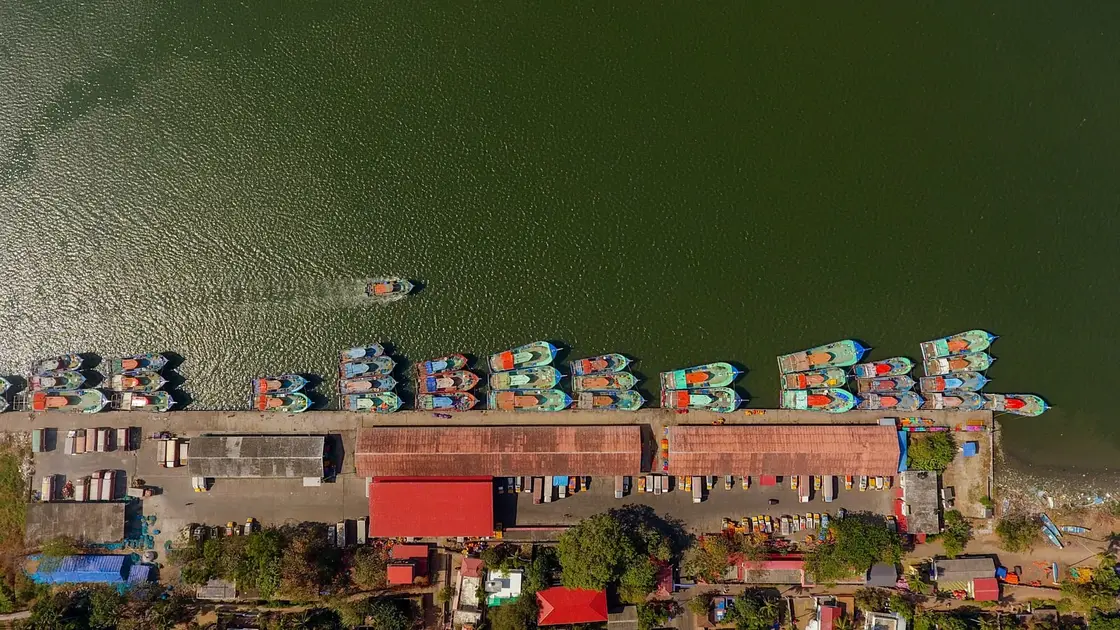
At four in the morning the northern tip of Vypin is the loudest place in Ernakulam. Steel trawlers up to a hundred and twenty feet long come alongside, ice goes down a funnel into the hold, and a catch that has been at sea for a fortnight is sold in lots before the sky is light. Munambam is one of Kerala's biggest fishing harbours and one of the few places where you can watch the whole modern fishery — the boats, the ice, the auction, the boatyards that built the fleet — in a single hour, standing on a wet quay.
Come at the right hour and the sequence reads itself. A boat that has been out for ten days to three weeks comes in with something in the order of fifteen tonnes in insulated compartments. The catch is landed, sorted into trays, and auctioned in lots — at the mini-harbour towards Pallipuram the auction starts around four in the morning, and the money is settled in cash at the office by early afternoon. The first boat back with fresh fish gets the best price of the day, which is why the run home is a race.
The crews are not what most visitors expect. A boat carries roughly fifteen to eighteen people — the syrang, who is the captain, an assistant, an engine driver, a net specialist, a cook and general crew — and very few of them are Malayali any more. As education and other work opened up locally, the trawler crews came increasingly from Tamil Nadu, particularly Colachel, and from West Bengal, Odisha and Andhra Pradesh, brought in by daily van. The harbour runs on migrant labour, and that is one of the more honest things you can learn standing here.
Munambam does not only send boats out; it builds them. Trawlers made here go to Tamil Nadu, Karnataka and Goa, and the yards are worth as much of your attention as the quay. The scale of the change is easy to state: the first trawlers of the Indo-Norwegian Project, built at Kollam in 1954, were about twenty-two feet long and went out for one to three days. Seventy years on, boats built at Munambam run to a hundred and twenty feet, tow nets around two hundred and forty feet long, and stay out for ten to twenty-five days on six-hundred-horsepower engines.
The supporting machinery is half the interest. Ice plants crush and funnel ice into the holds; hulls are insulated with foam and fibreglass; navigation is GPS, echo sounders, wireless and satellite phones, with crews passing each other coordinates and a standing Munambam meeting point known as 'ten-ten'. Steel frames and hulls replaced timber about twenty-five years ago. Master builders — mesthris — run the yards, and the knowledge passes by apprenticeship rather than down families.
Read the boats and you can read the coast. Hulls are painted by home state — Kerala blue, Karnataka red, Tamil Nadu green — with licence numbers painted up and renewed annually. Once you know that, a row of moored trawlers stops being a wall of colour and becomes a map of where the south-west coast's fleet actually comes from.
And then the part the brochures leave out. Trawling is why this harbour is big, and it is also why Kerala's inshore fishery is in trouble: an estimated eighty per cent decline in some varieties along this coast, nets that take juveniles, eggs and migratory shoals, and damage across a couple of hundred non-target species. The state's answer is the monsoon trawl ban, roughly fifty-two days across June and July, when the fleet ties up. Local fishermen will tell you the ban has helped. Munambam is genuinely impressive and genuinely contested, and you should stand on the quay knowing both.
Look north-east across the river mouth from the harbour wall. That low green shore on the far bank is Kodungallur, and standing a short way inland on it is a building that claims to be the first mosque ever raised in India — and, by one reading, the first outside the Arabian peninsula. The legend attached to it is the strangest and most consequential story on this coast, and Munambam is the closest working place to where it is supposed to have begun.
The tale is told of a Cheraman Perumal, one of the last Chera kings of Kerala. Standing on his palace balcony one night, he watched the moon split in two and rejoin. He called his astrologers, who could not explain it. Then Arab travellers passing through his port told him that a prophet in Mecca had cleft the moon as a sign. The king, so the story goes, divided his kingdom among his chieftains, abdicated in secret, took ship for Arabia, met the Prophet, accepted Islam — and died on the voyage home, having sent his companions ahead with instructions to build mosques along the Malabar coast. The first of them, tradition says, went up at Kodungallur in 629 CE, in the Prophet's own lifetime.
Historians are not persuaded by the date. The Cheraman Juma Masjid is commonly attributed by scholarship to the eleventh century, four hundred years later than the legend claims, and some accounts place the episode itself a full two centuries after the Prophet. The moon-splitting, the abdication and the voyage belong to a genre of conversion narrative rather than to a chronicle. What is not in dispute is the thing underneath: Arab traders were on this coast in the seventh century, Islam arrived here by sea and by commerce rather than by conquest, and it arrived early — centuries before it reached northern India by land. Kerala's Muslim history begins with merchants stepping off a boat at a river mouth, and this is the river mouth.
That is worth carrying while you watch the fleet come in, because it is the same trade. The boats crossing the bar at Munambam at six in the morning are the last working end of a sea route that carried pepper north and brought a religion south, and did so long before any European reached India. The harbour is not a monument to that. It is simply what is left of it, still running.
One much smaller claim comes with the harbour and is worth getting right, because the sources blur it. Munambam is regularly called the largest fishing harbour in Kerala. What the record supports is that it is the largest in Kochi. Kerala has a long coast and a good many harbours, and the state-wide superlative is not one we can stand behind — the Kochi one is impressive enough and has the advantage of being true.
The other thing worth correcting is on this page and it is ours. We wrote that the trawler crews come from Tamil Nadu, West Bengal, Odisha and Andhra Pradesh. The survey figures say Assam, not Andhra — and they say a great deal more than that. Munambam has the highest concentration of migrant labour of any mechanised fishing harbour in Kerala: about 78 per cent, against roughly 58 per cent across the state's fisheries sector as a whole. The present composition of that migrant workforce is about 43 per cent from Tamil Nadu, 31 per cent from West Bengal, 13 per cent from Odisha and 10 per cent from Assam. The Bengal, Odisha and Assam share is recent, arriving largely after the pandemic, while workers from Colachel in Tamil Nadu — who dominated these boats until about 2020 — increasingly prefer harbours closer to home.
So the honest description of what you are watching at four in the morning is not a Kerala fishery. It is a fleet owned and built in Kerala and crewed, four times out of five, by men from somewhere else — and that has happened within about two decades, as education and other work drew local men off the boats. It is the single most consequential fact about this harbour and it appears on no board at the gate.
Until the middle of the twentieth century fishing on this coast was artisanal — small boats, traditional gear, and communities holding collective rights to inshore waters. The mechanised sector arrived later and changed everything about the scale, the range and the economics.
The turning point usually cited is the Indo-Norwegian Project, which built the first trawling boats for offshore fishing at Kollam in 1954. Those vessels were roughly twenty-two feet and stayed out one to three days. Everything about the modern harbour — multi-day voyages, ice holds, steel hulls, hired crews from other states — descends from that introduction.
Munambam grew into one of the major landing centres on the Kerala coast, and now operates as two harbours: the main harbour, and a mini-harbour towards Pallipuram which is privately run and holds the early auction. More than ninety per cent of the boats working from here are mechanised trawlers.
The environmental reckoning came with the scale. The monsoon trawl ban across June and July was introduced to protect spawning and juvenile fish, and it now shapes the harbour's year — a dead two months, then a single dramatic morning when the ban lifts at the start of August and the fleet goes out together.
It is the most genuinely unstaged thing in Ernakulam. Nothing here exists for visitors, and the four a.m. auction is exactly what it would be if you were not there.
You can see the entire modern fishery in one place — boats, ice, auction, and the yards that build the fleet for three states.
It is a kilometre from Munambam Beach and could not be more different: sand and a breakwater at one end, steel and ice at the other.
The boat-colour code alone changes how you look at every harbour on this coast afterwards.
It is an honest introduction to what Kerala's seafood economy actually costs, rather than the version printed on a menu.
The Munambam–Azhikode ferry runs from beside it, and is a lovely short crossing to the Thrissur side.
Road km to Ernakulam; ghat roads and traffic vary — allow extra.
November to February and early mornings are best for walking; avoid midday heat where possible.
Live forecast loads in your browser.
Sun and moon are calculated for this location and shown in IST. Photography windows are the hour around sunrise and sunset; the sunset bearing is degrees clockwise from true north. Moon phase is accurate to about half a day.
Verified hotels, homestays, restaurants, experiences, sights, shops and rentals around Munambam harbour — commission-free, with direct contact. Filter by what you need.

Restaurant at Cherai Beach Resorts for Vypin Island and Cherai beach visitors. Cherai-and-vypin, eat, Beach resort restaurant.
Book with the place itself. India’s cyber-crime coordination centre warned in April 2025 that convincing copies of hotel and pilgrimage booking sites are being pushed through sponsored search and social ads, taking payment for rooms the property never hears about. Every listing here links to the business’s own contact details and its own Google or Bing profile — we take no commission and sit in nobody’s payment path. If a booking page reached you through an ad, check the address bar against the property’s own site before you pay. Fraud can be reported on cybercrime.gov.in or on 1930.
Find food, accommodation and activities across Cherai and Vypin. Browse the guides for places to eat, stay and explore along your route.
5 more places around Cherai and Vypin. Open a guide to plan the visit and onward journey.
8.1 km · ~13 min by cab
A relatively quiet Vypin Island beach north of Kochi, with an open sandy shore and village approach distinct from Cherai and Puthuvype.
4.7 km · 5 min drive
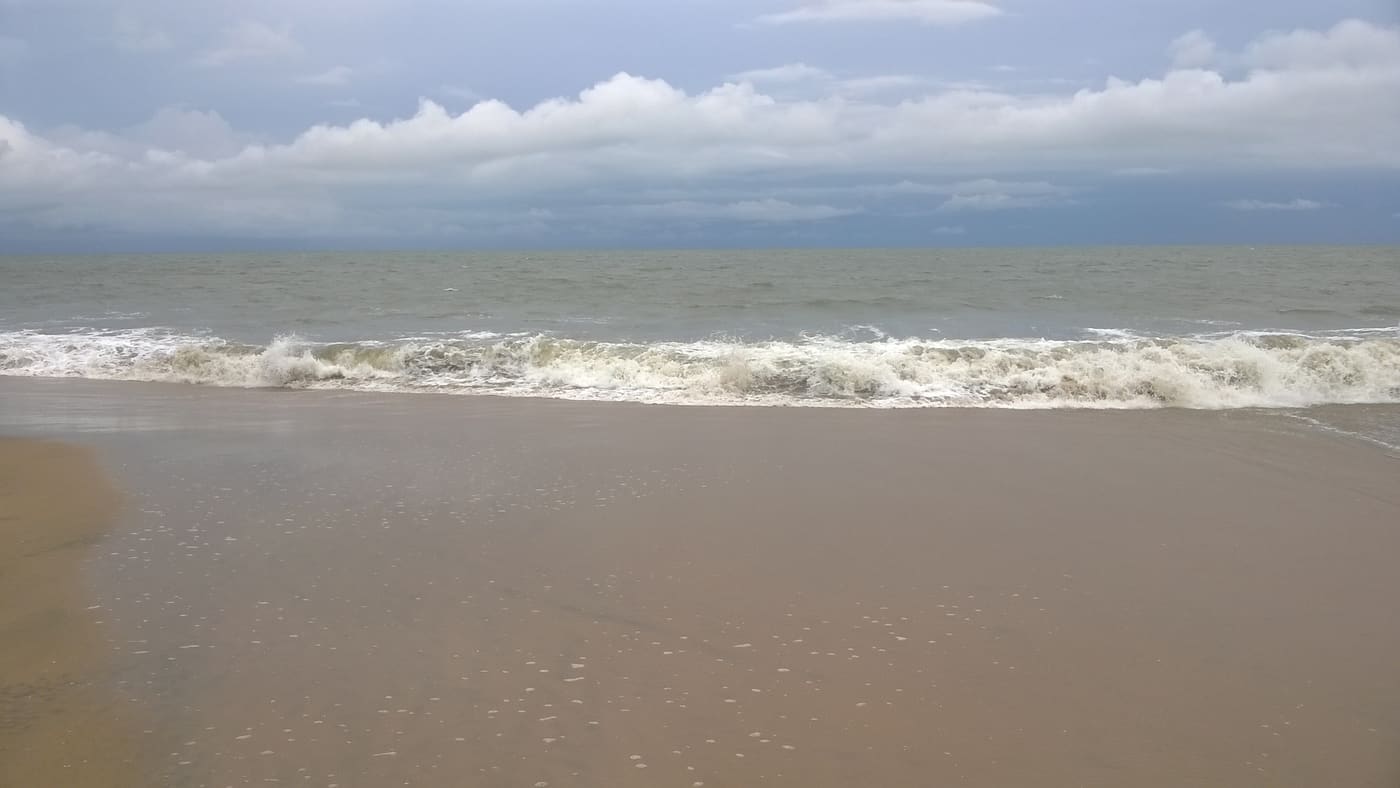
Long beach on Vypin Island, one of Kochi’s easiest beach day trips.
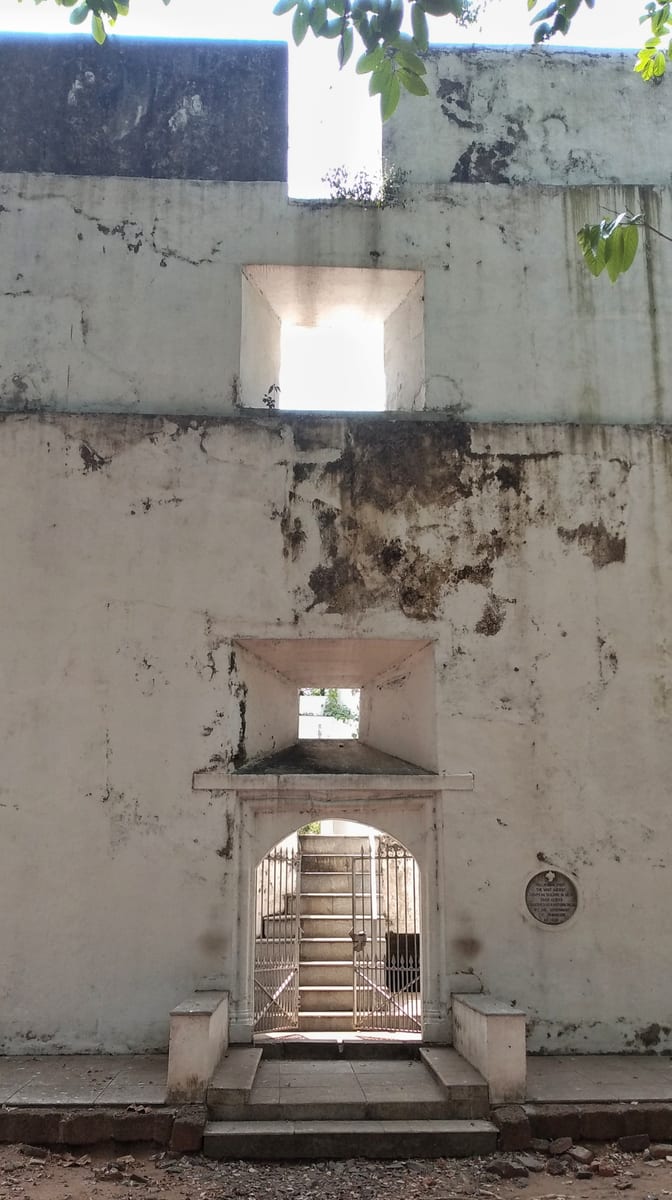
1.8 km · 22 min walk
Built by the Portuguese in 1503 at the north tip of Vypin, the oldest surviving European fort in India — a hexagonal laterite tower now protected as a monument.
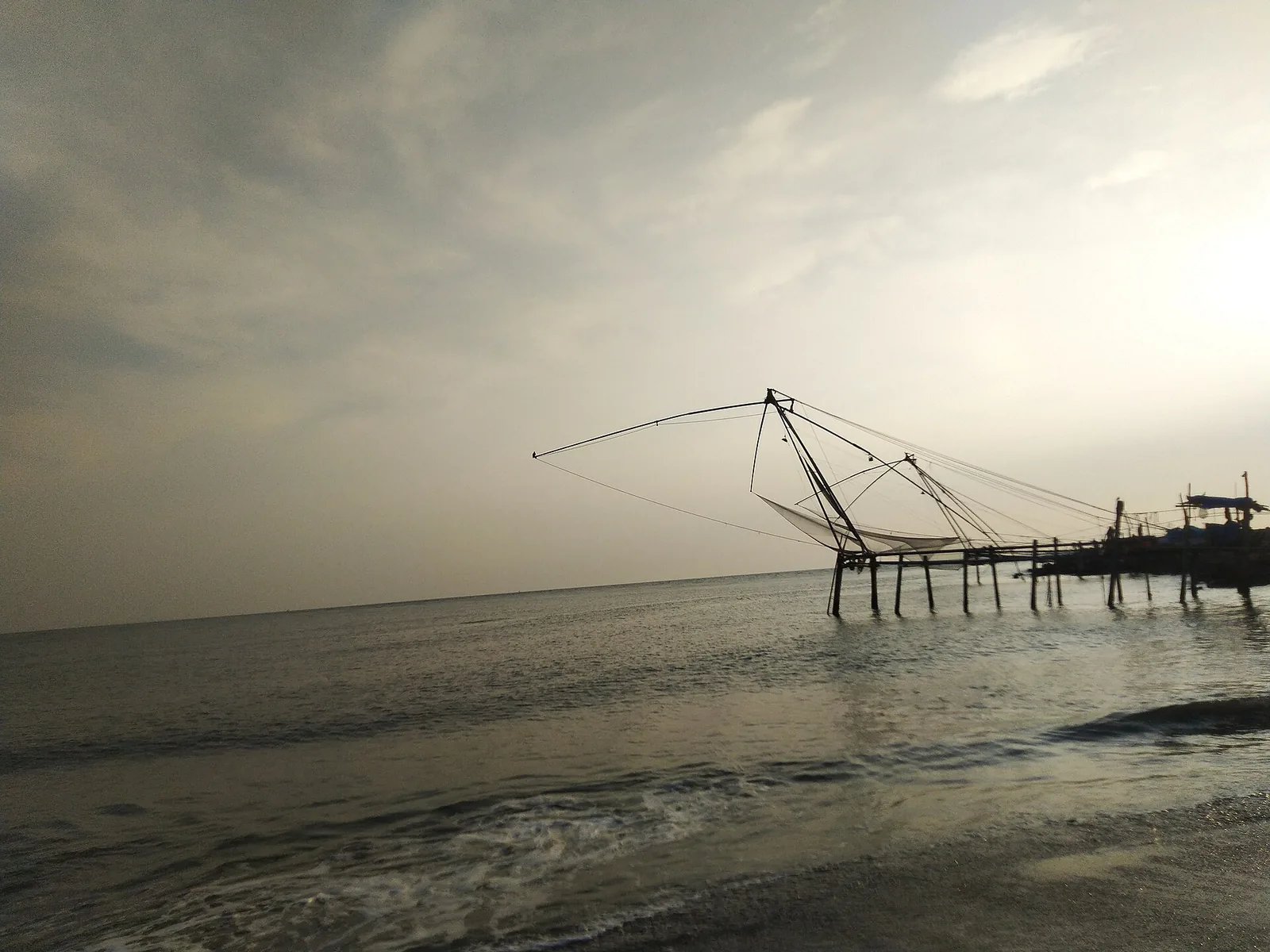
1.5 km · 18 min walk
A quiet sand beach at the northern tip of Vypin where the backwaters meet the sea, with the Pulimuttu breakwater at its end — about a kilometre south-west of the working fishing harbour, and a completely different visit.
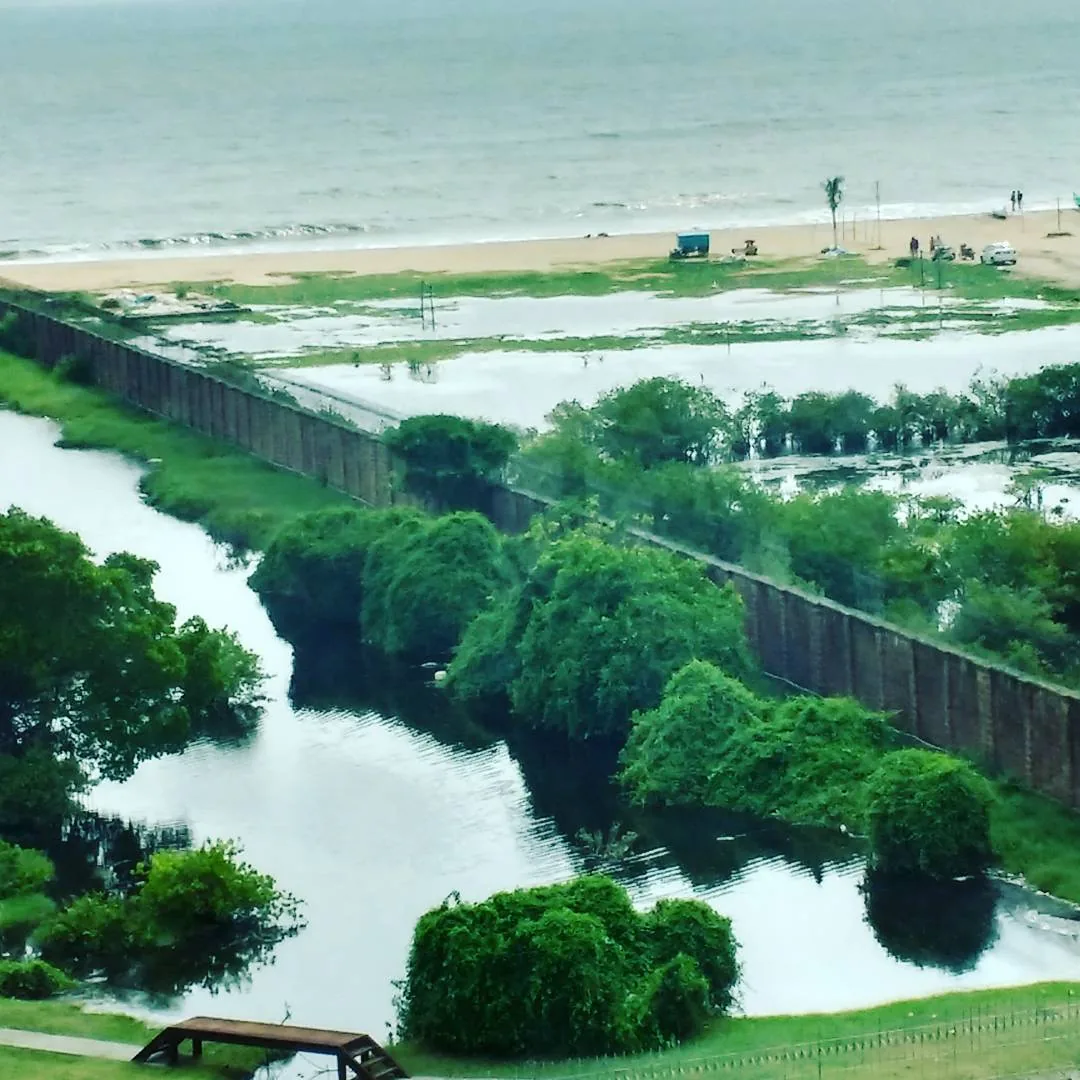
22.3 km · 25 min drive
A quieter Vypin-island beach near the Ochanthuruth lighthouse, reached by ferry or the Goshree bridges from Ernakulam.
Roampedia is commission-free — own or know a stay, eatery, guide or shop near Munambam harbour? List it and it appears here once verified.
Add a nearby businessEntry: Free. It is a working fishing harbour, not an attraction — no ticket, no gate, no guide. Buying fish at the auction is a wholesale transaction in lots, not a retail counter; the retail stalls are separate.
Photography: Everyone here is working and most of them are moving fast with heavy loads. Ask before photographing faces, stay out of the lanes the loaders use, and do not photograph a boat's papers or a buyer's cash. The best pictures are the ice, the hulls and the sorting trays — none of which needs anyone's face in it.
If you are travelling by bus or ferry, check the return service with the operator before setting out. Leave time to reach the stop or jetty after your visit.
Ask at the jetty or stand for the time of the last service back, not the next one. If you miss it, an auto or app cab is the fallback — agree the fare before you get in.
If you need step-free access, contact the site before travelling. Ask about a level entrance, steps along the route, the nearest drop-off point, seating and accessible toilets.
These services are listed within about 1.2 km of Munambam harbour. Walking distances follow mapped routes; access and opening hours can change. Other services may be closer but are not included here.
Emergency numbers are verified against official government and state tourism sources. 112 works anywhere in India.
A quiet sand beach at the northern tip of Vypin where the backwaters meet the sea, with the Pulimuttu breakwater at its end — about a kilometre south-west of the working fishing harbour, and a completely different visit.
1.5 km · 18 min walkBuilt by the Portuguese in 1503 at the north tip of Vypin, the oldest surviving European fort in India — a hexagonal laterite tower now protected as a monument.
1.8 km · 22 min walkLong beach on Vypin Island, one of Kochi’s easiest beach day trips.
4.7 km · 5 min driveA relatively quiet Vypin Island beach north of Kochi, with an open sandy shore and village approach distinct from Cherai and Puthuvype.
8.1 km · ~13 min by cab · straight lineA quieter Vypin-island beach near the Ochanthuruth lighthouse, reached by ferry or the Goshree bridges from Ernakulam.
22.3 km · 25 min drive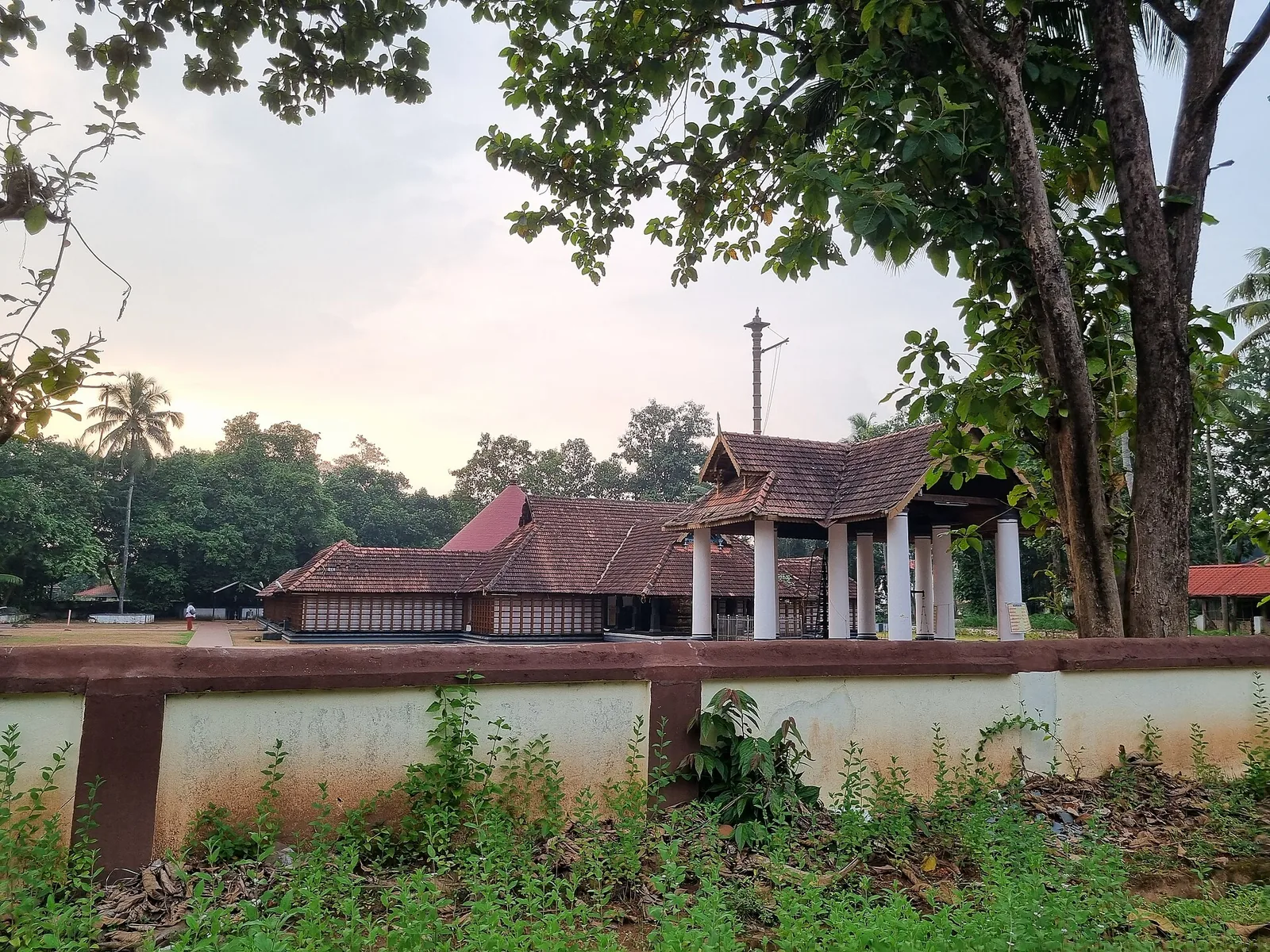
The only major temple to Vamana in Kerala, at Thrikkakara near Kakkanad — traditionally regarded as the origin place of the Onam festival.
23.4 km · ~39 min by cab · straight line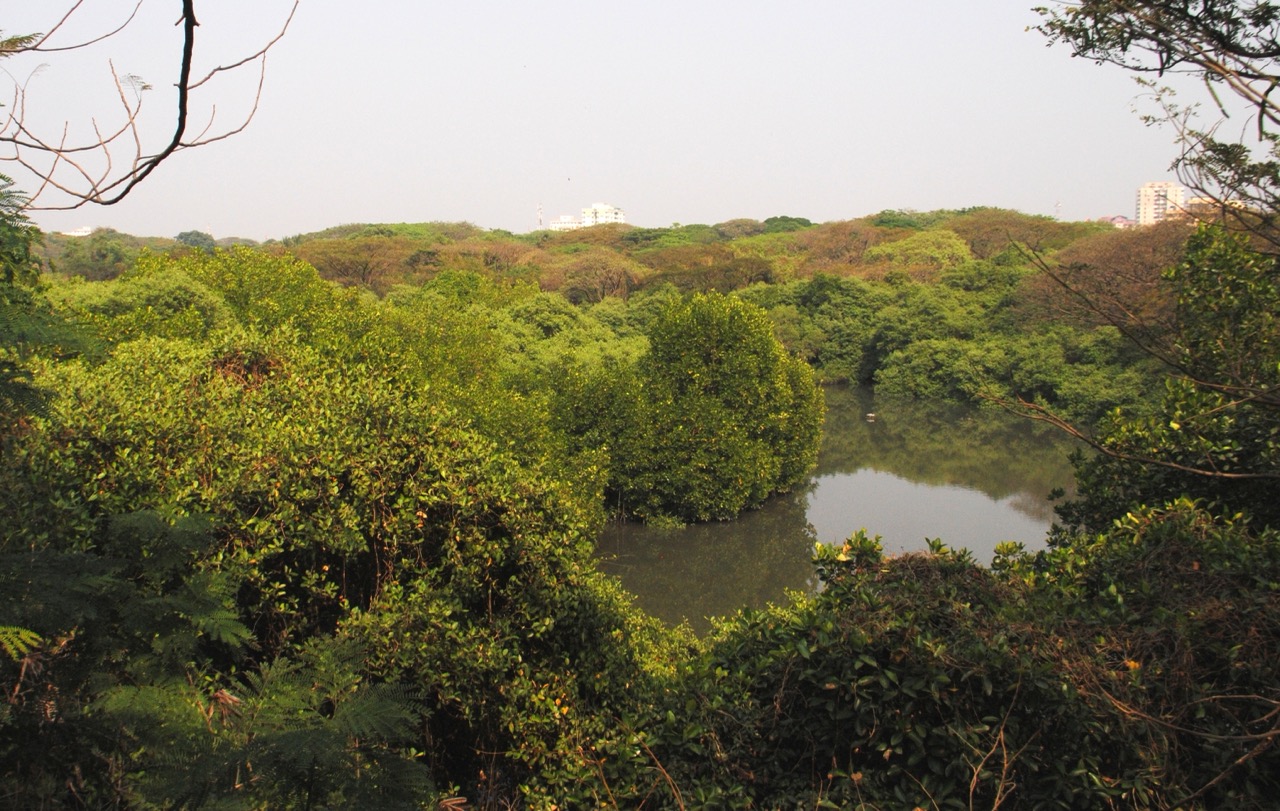
A small mangrove “green lung” behind the High Court in Ernakulam, a nesting site for migratory and resident birds.
23.9 km · ~40 min by cab · straight line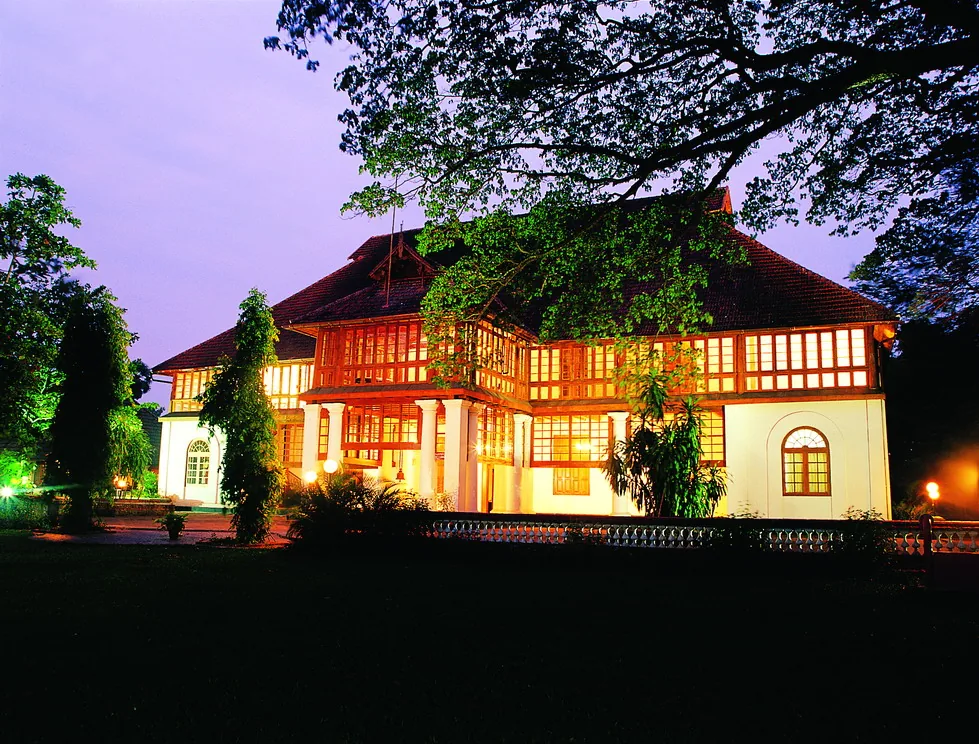
A 1744 Dutch palace on Bolgatty Island, one of the oldest existing Dutch palaces outside the Netherlands, set in island gardens (now a KTDC heritage hotel).
24.1 km · ~40 min by cab · straight line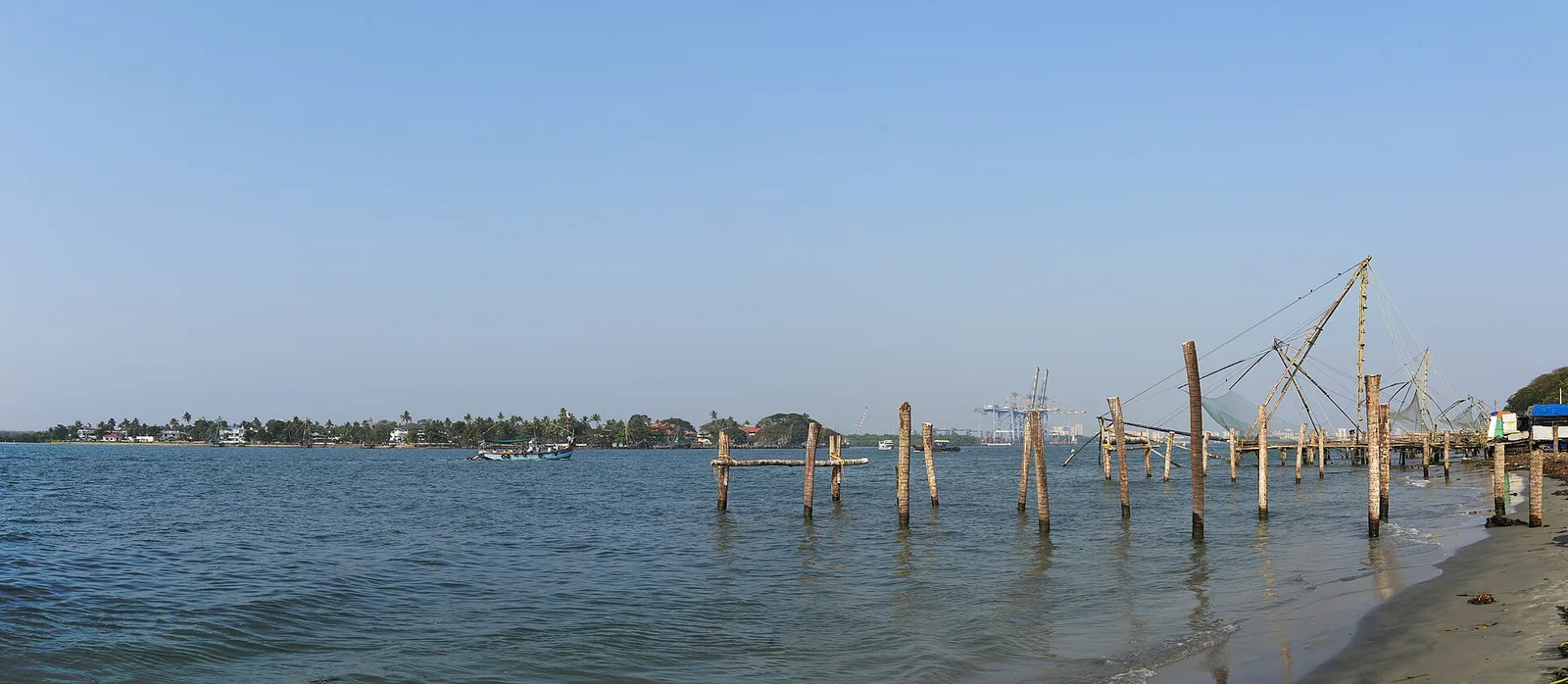
Kochi’s iconic cantilevered shore-operated fishing nets along the Fort Kochi seafront at Vasco da Gama Square, best photographed at sunset.
24.8 km · ~41 min by cab · straight line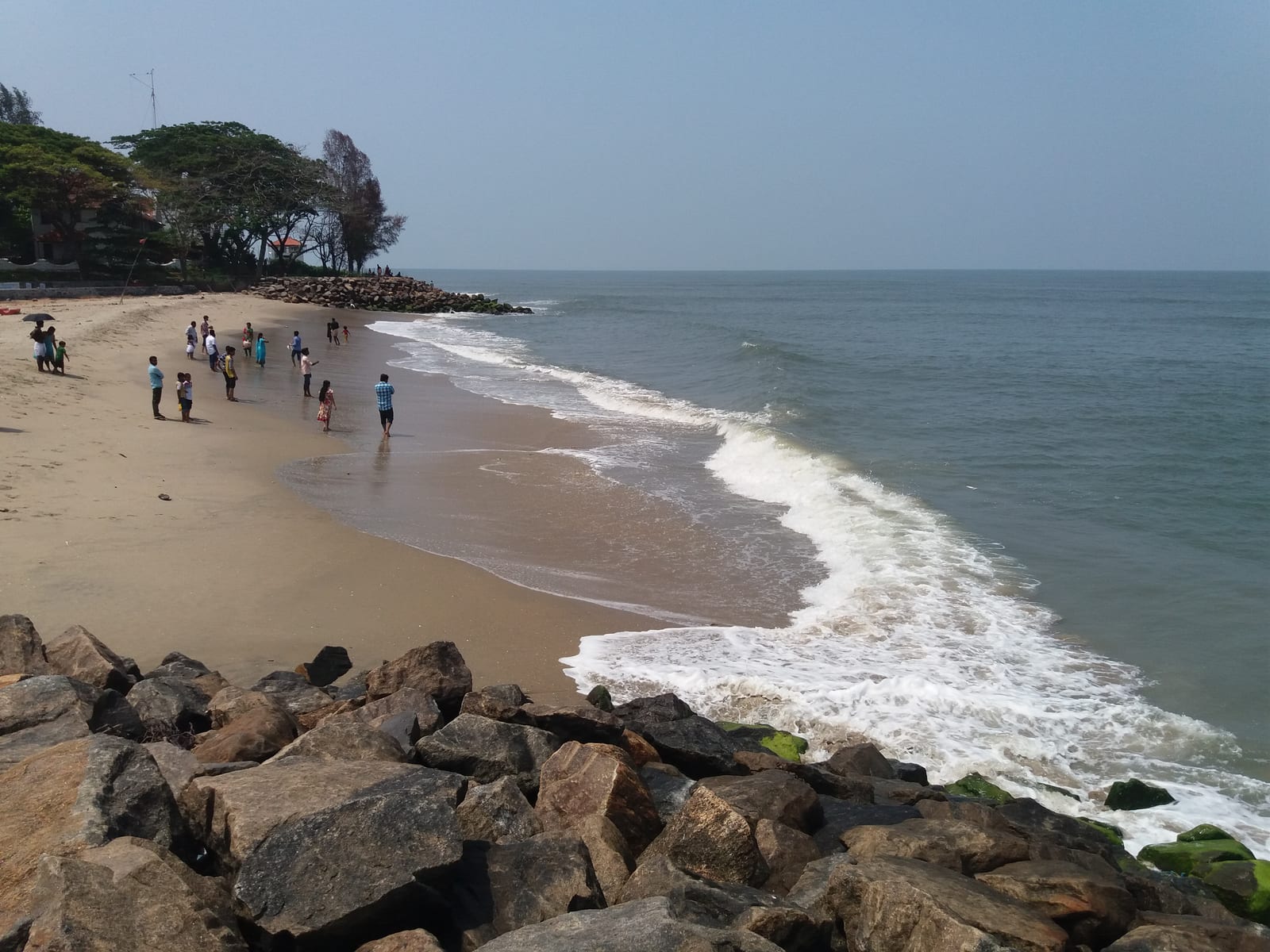
Public seafront beside the Chinese fishing nets — a walking-and-sunset beach, not a swimming beach.
24.8 km · ~41 min by cab · straight line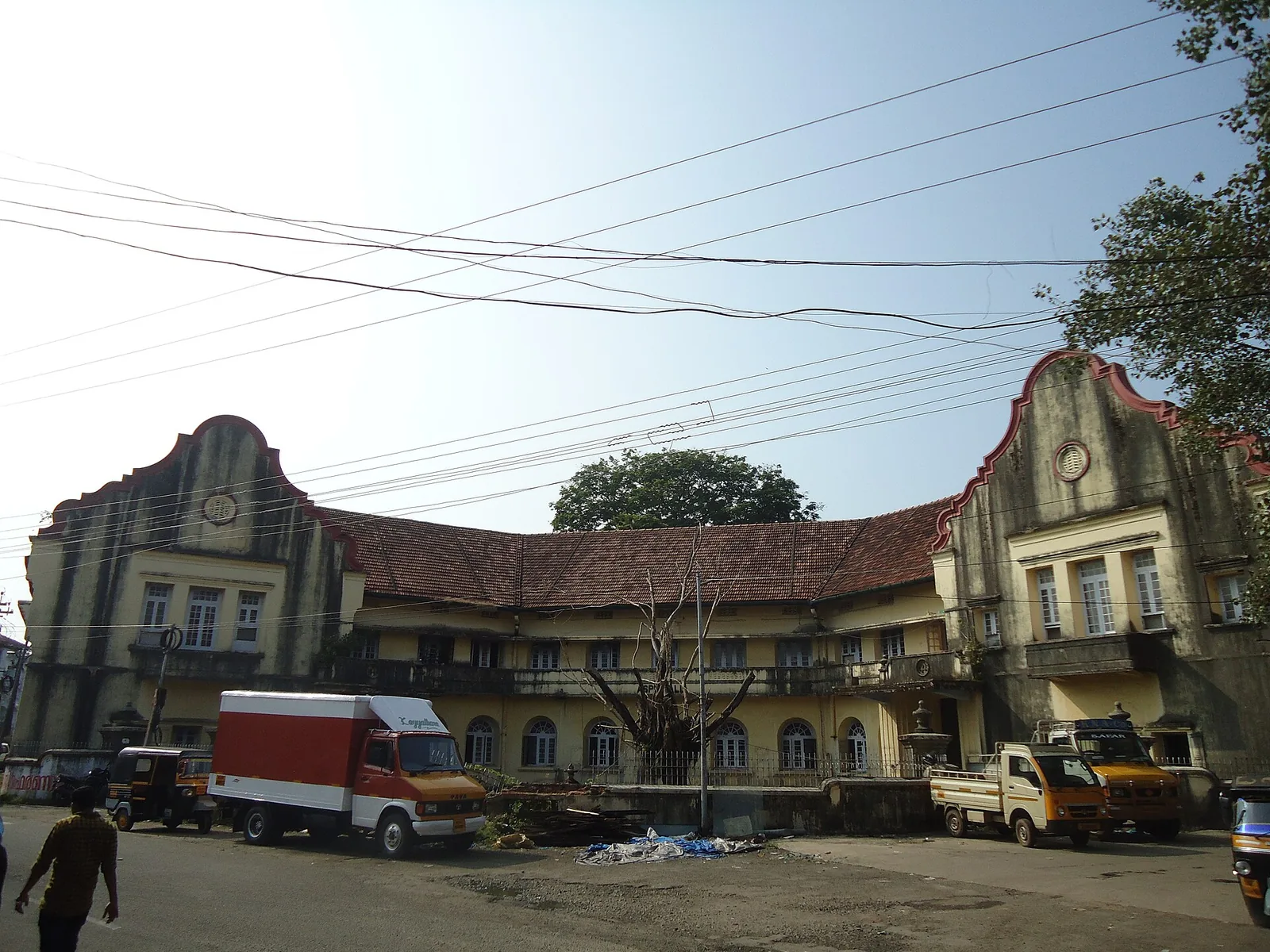
A large 19th-century waterfront trading compound in Fort Kochi, the principal venue of the Kochi-Muziris Biennale.
24.9 km · ~41 min by cab · straight line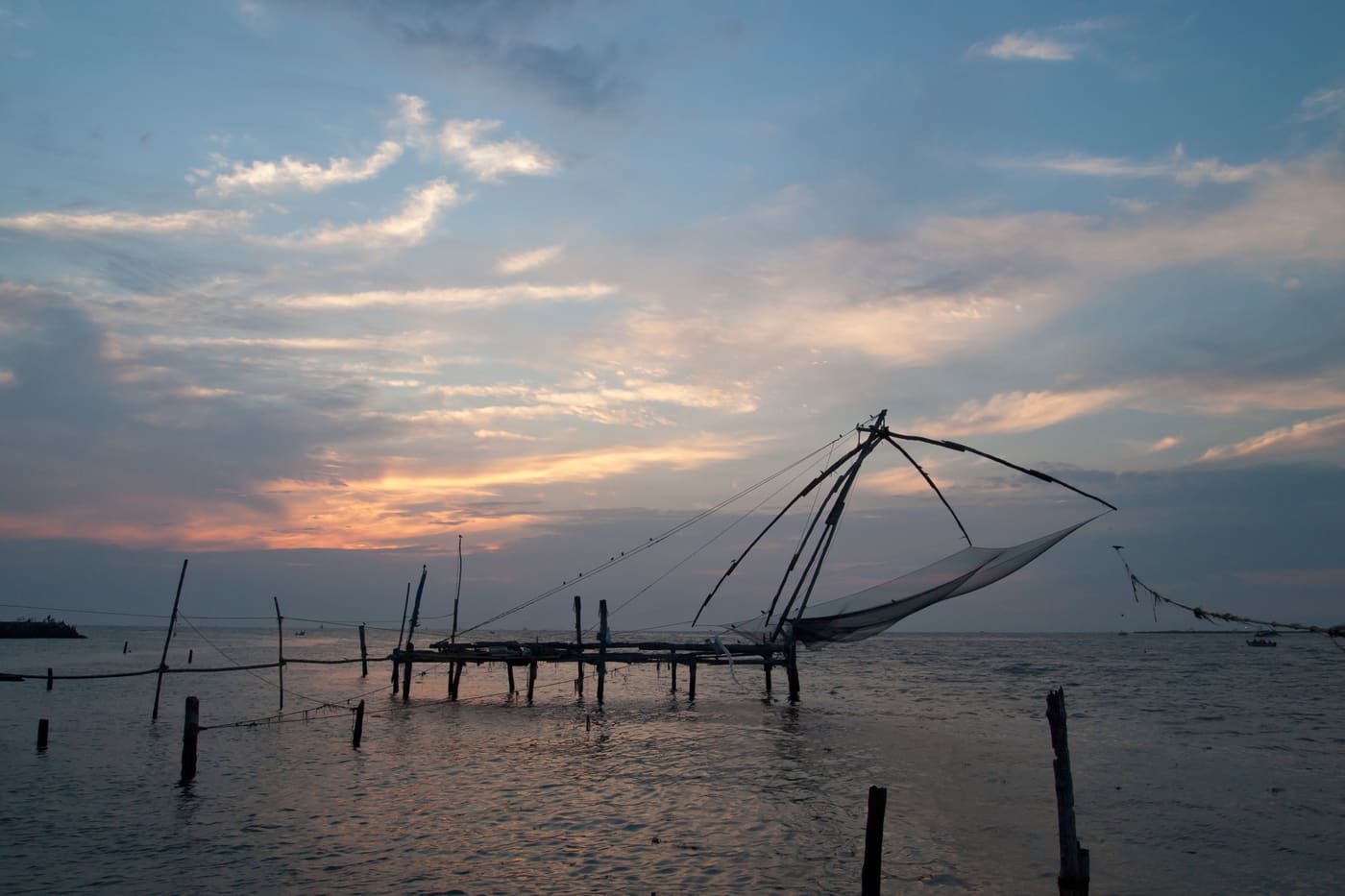
Kerala’s most walkable heritage quarter, with Chinese fishing nets, colonial churches, art cafes and Mattancherry nearby.
25.0 km · ~42 min by cab · straight lineWalking and driving times are real routed distances, except the few marked “straight line”, which are direct-line estimates and will read short. Fare figures are estimates from Kerala’s notified auto/taxi tariff and exclude waiting and night charges. Routing: © openrouteservice.org by HeiGIT | Map data © OpenStreetMap contributors
Nearby toilets, pharmacies, ATMs, seating and vets are community-mapped and may be incomplete or out of date. Map data © OpenStreetMap contributors | Walking times © openrouteservice.org by HeiGIT
Mostly people from outside Kerala. Munambam has the highest concentration of migrant labour of any mechanised fishing harbour in the state — about 78 per cent, against roughly 58 per cent across Kerala's fisheries sector as a whole. The present split of that workforce is around 43 per cent from Tamil Nadu, 31 per cent from West Bengal, 13 per cent from Odisha and 10 per cent from Assam. Workers from Colachel in Tamil Nadu dominated these boats until about 2020 and now often prefer harbours nearer home; the Bengal, Odisha and Assam share arrived largely after the pandemic.
The captain of a fishing boat, and the word is older than the boat by centuries. It is the Anglo-Indian serang, from the Persian sarhang, meaning commander — the term used across the Indian Ocean for the native boatswain in charge of a lascar crew. Most serangs on the Munambam fleet are now from Tamil Nadu, many having learned the trade from Malayali serangs before them. A boat carries roughly fifteen to eighteen people: the syrang, an assistant, an engine driver, a net specialist, a cook and general crew.
Around four in the morning, which is when the mini-harbour auction starts, and the quay stays intense for two or three hours after. This is not a preference — it is the visit. By late morning the boats are moored, the work is done and there is essentially nothing to see. If you cannot make four, aim for first light and accept you have missed the peak.
It is a working harbour with no gate and no ticket, and visitors are generally tolerated rather than hosted. There is no guide, no viewing area and nothing signposted. Behave like a guest in someone's workplace — stay out of the loading lanes, ask before photographing people, and do not climb on boats.
Not in the way most visitors imagine. The auction sells in lots to traders, at wholesale, and is not set up for someone who wants a kilo of prawns. There are retail stalls and a fish market separately. If buying is your main goal, go to the market rather than standing in the auction.
They are about a kilometre apart and are two completely different visits. The beach is sand at the northern tip of Vypin with the Pulimuttu breakwater at its end — a quiet, sunset sort of place. The harbour is heavy industry: steel trawlers, ice plants, a dawn auction and boatyards. Doing both in one morning is the best way to see this end of the island.
It needs care rather than nerve. This is industrial work at the water's edge, largely in the dark: unlit and unfenced quay edges, loaders carrying blind, hoists swinging overhead, and concrete made slick by ice and fish. The realistic risk is a fall. Wear grippable shoes you can wash, keep well back from any boat being unloaded, and it is not a good place for young children.
It is never formally closed, but the mechanised fleet is banned from trawling off Kerala for about 52 days across June and July to protect spawning and juvenile fish. Through that ban the boats are tied up and the harbour is quiet. The morning the ban lifts, usually at the start of August, is the most dramatic day of the harbour's year.
November to February and early mornings are best for walking; avoid midday heat where possible.
Entry: Free. It is a working fishing harbour, not an attraction — no ticket, no gate, no guide. Buying fish at the auction is a wholesale transaction in lots, not a retail counter; the retail stalls are separate. Timings: The harbour runs on landings, not opening hours. The auction at the mini-harbour starts around 4 a.m. and the quay is at its most intense in the two or three hours after that; cash settles at the office by early afternoon. By the middle of the day it is quiet. If you come at eleven you will see boats and no work.
Base yourself in Cherai and Vypin or a nearby town in Ernakulam, then confirm the last-mile route locally before leaving. Walkable heritage areas are best done slowly; combine nearby streets, museums, markets and food stops. If the visit depends on forest, temple, boat, ferry, weather or seasonal access, check the official/local rule on the day before travel.
1 to 3 hours.
Nearby you can pair Munambam Beach (1.5 km), Pallipuram Fort (1.8 km), Cherai Beach (4.7 km), Kuzhupilly Beach (8.1 km).
Watch traffic on narrow heritage streets. Keep valuables close in crowded markets.
Written about Munambam harbour itself — its history, its legends and the arguments about them.


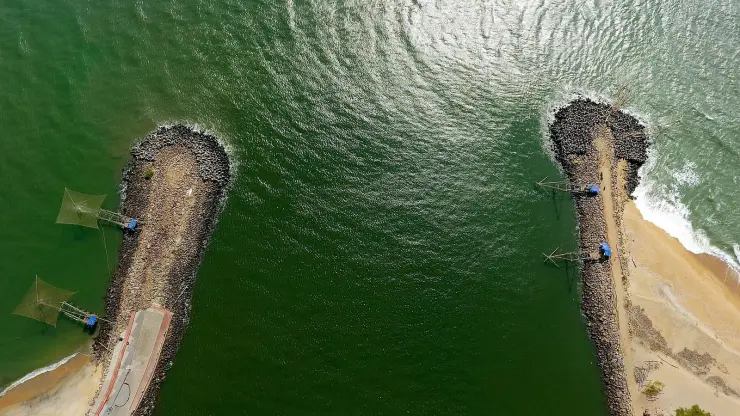
These guides explore Cherai and Vypin and the surrounding area. Choose a visit that fits your interests, allowing separately for travel between stops.


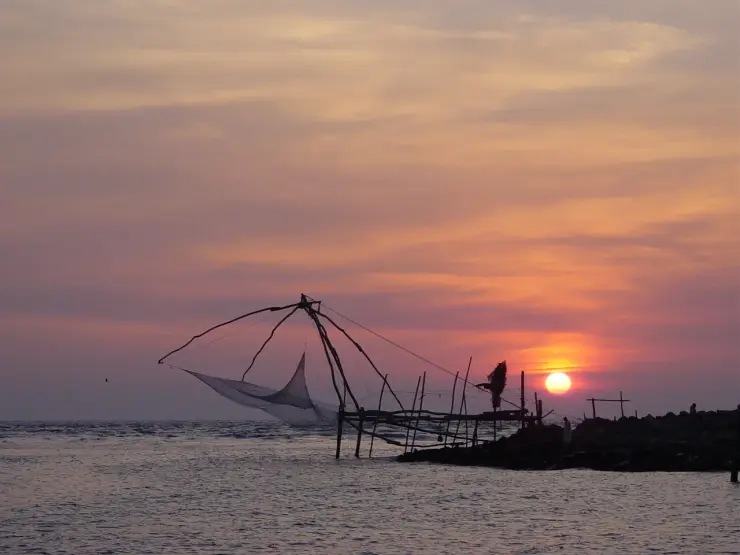
Route-level itineraries and practical guides for the rest of Kerala.
Photographs: Sanu N (CC BY-SA 4.0). Wikimedia Commons.