What to expect
Highlights
- Heritage experience at Chinese nets
- Architecture, local stories and old trade/cultural routes
- Good fit for guided walks and nearby cafes/shops
Kumbalangi’s own cantilevered cheena vala, worked on a village creek instead of a tourist seafront — fewer, quieter and still fished for a living, which is the whole difference from the Fort Kochi row.
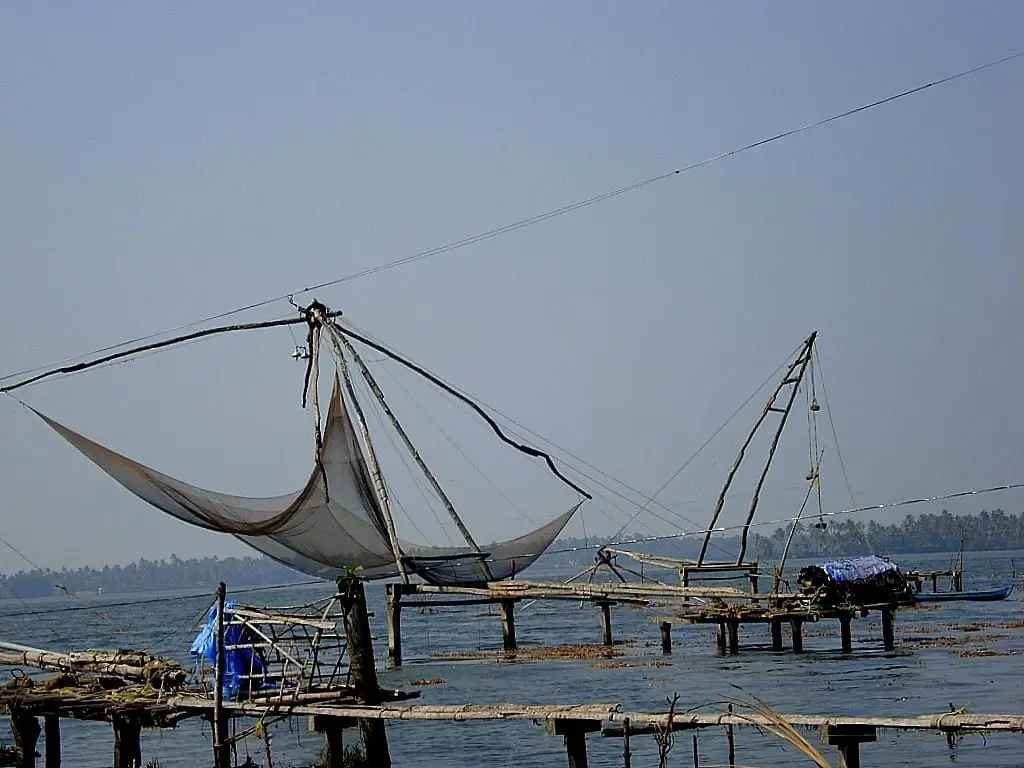
Four men, a frame of teak and bamboo the size of a small crane, a net twenty metres across, and a row of stones tied to ropes at the shore end to make the whole thing liftable. The cheena vala is a machine for taking a big scoop out of shallow water, and Kumbalangi has more than a hundred of them standing along its creeks. The difference from the famous row at Fort Kochi is not the mechanism. It is that here, nobody is watching — the nets are worked because the household needs the fish.
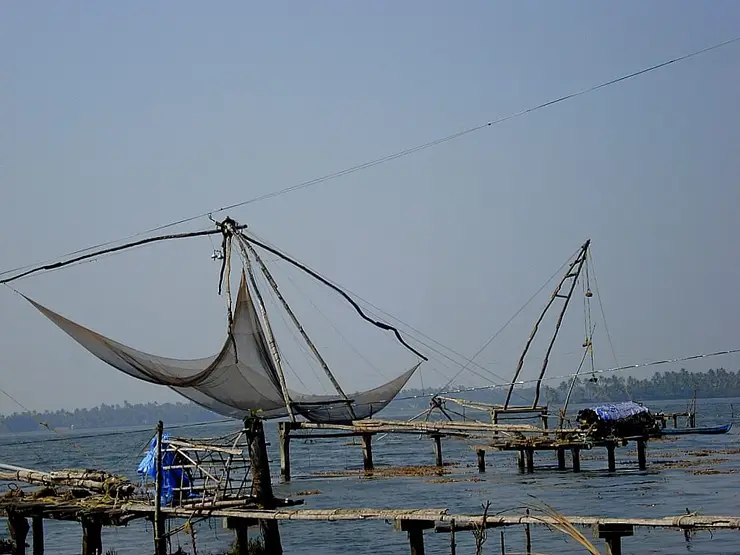
The mechanics are worth watching properly rather than photographing and moving on. The net hangs from cantilevered arms over the water; at the landward end a set of large stones is roped to the frame as a counterweight. The crew walks the beam down, dropping the net flat into the creek, leave it a few minutes, and then haul — running along the platform, hand over hand, using their own weight and the stones together to lift the whole spread clear of the surface. It takes several men and a few minutes, and it cannot be done alone.
Then comes the part the photographs never show, which is that most of the time there is almost nothing in it. A dip might bring up a few small fish. The economics of a shore-operated lift net are the economics of patience and repetition: the net is cheap to run and catches what happens to be passing, so it is dipped again and again through a working tide. If you stay for one lift you will probably see it come up nearly empty, and that is not a bad day — that is the job.
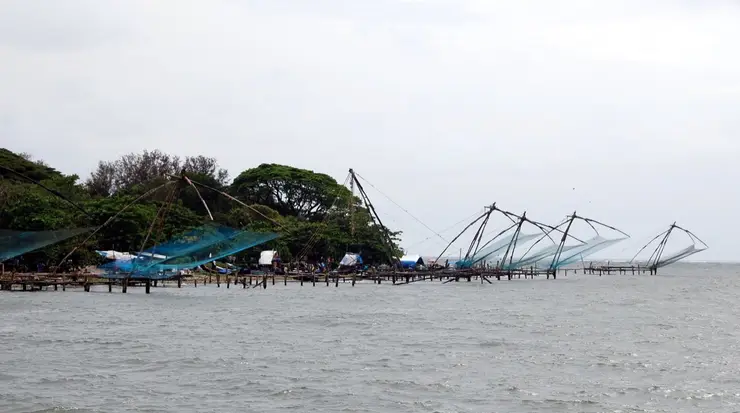
Kumbalangi's nets are spread out rather than lined up. Fort Kochi's are a row on a seafront with a promenade behind them and a crowd at sunset; these stand where the fish are, along creeks and channels around the island, which is why you see a few from any one bank and why the best way to see more is from a canoe. From the water you also get the thing you cannot get from the shore: the full geometry of the cantilever, and how improbable it looks.
They are also getting harder to keep. A net needs a crew, and crews need the catch to be worth the morning. As younger people in the village move into other work and as catches thin, some platforms stand idle. The nets that are still worked here are worked by people for whom this is income, not heritage — and that is precisely the thing that will decide whether they are still standing in twenty years.
The other pressure is the structure itself, and it is the part visitors never think about. A cheena vala is a large timber machine standing permanently in brackish water: the netting perishes and has to be replaced, the ropes chafe through, and the main beams and the uprights rot from the waterline down and eventually have to be cut out and renewed. Good hardwood for that is expensive and increasingly hard to source, which is why you will see repairs made in whatever is available — coconut trunk, salvaged timber, steel pipe — and why an owner who has had a poor season may simply let a platform stand and go quietly derelict rather than spend on it. Almost every idle net you pass here is idle for that reason rather than because the fish left.
Almost everything you will be told about where these nets came from is contested. The popular account — repeated on signboards, in guidebooks and by most guides — is that they were brought to the Malabar coast by traders from the court of Kublai Khan, which is where the name cheena vala, 'Chinese net', is said to come from.
The competing account is that they arrived far later, with the Portuguese, carried from Macau rather than directly from China. It is argued at least as strongly, and the honest position is that the origin is not settled. We have flagged the same disagreement on the Fort Kochi nets, and nothing about the Kumbalangi ones resolves it either way.
One detail settles part of the argument on its own, and almost nobody notices it. Kublai Khan died in 1294. The nets are generally placed on this coast between about 1350 and 1450 — fifty to a hundred and fifty years after him. Whatever brought them, it was not a gift from his court, because his court no longer existed. What does line up is the era of Zheng He, the Ming admiral whose enormous treasure fleets worked these waters in the early fifteenth century, and whose chronicler Ma Huan produced what is thought to be the earliest written reference to Kochi anywhere.
There is a third account, less often repeated and more specific than either, and it is the one that best explains the shape of the thing. On this version the Portuguese did not carry the nets from China at all; they picked up a much smaller shore-operated lift net further east, on the Mekong, where variants of it are still worked, and the enormous cantilevered version is a local enlargement built to suit a wide, shallow, tidal backwater. The detail that keeps the question open is that these nets are found nowhere else in India. A device supposedly introduced by a seafaring trading empire with ports the length of the coast somehow took root in one estuary and nowhere beyond it, which is a strange thing for an import and a very ordinary thing for a local invention with a borrowed name.
What is not in dispute is the name. Malayalam has called them cheena vala — Chinese nets — for a very long time, whatever route they actually took to get here.
It is worth knowing what has happened to the famous row, because it complicates the assumption that the watched nets are the safe ones. Fort Kochi had around 22 net structures three decades ago and is down to roughly a dozen; AFP reporting in 2014 found the surviving crews hauling about a hundred times a day where they once hauled two hundred and fifty, and quoted one of the oldest operators, V R Simon, then 75, saying plainly, "We live like beggars." Kerala Tourism answered with money — ₹1.5 crore initially, and eventually a ₹2.40 crore scheme through the consultancy KITCO to renovate eleven nets and build viewing platforms. Nine years on it was still unfinished: roughly ₹1.20 crore of teak and kalasanti wood had been bought and left stacked since 2017, operators' bills of a few lakh sat uncleared over a GST registration problem, and in the meantime most crews had propped their nets up on lengths of steel pipe because the timber never arrived. The postcard row is now partly a steel structure waiting for its own restoration budget to be spent.
And there is a claim about Kumbalangi's nets specifically that is worth stating, because it inverts what most visitors assume. Fort Kochi has the famous row: a handful of nets on a promenade, photographed several thousand times a day, kept working in significant part because being watched is now part of the business. Kumbalangi has more than a hundred, spread along creeks with nobody looking at them, worked because a household needs the fish. The postcard is at Fort Kochi. The living tradition is here — and the honest corollary is that it is the one more likely to disappear, because nothing about it is being subsidised by an audience.
Shore-operated lift nets of this kind have been part of the Kochi backwater economy for centuries, concentrated where a channel is shallow enough to plant a frame in and productive enough to justify it. Kumbalangi, ringed by creeks and mangrove nurseries, is exactly that kind of ground, and the nets here are a working extension of the village's fishing economy rather than a survival kept for display.
Over a hundred are reported on the water facing the village. That figure has held in accounts of Kumbalangi for years, though how many are actively fished at any moment is a different and smaller number, and nobody publishes it.
The 2003 model tourism village project explicitly built its offer around this working landscape — visitors coming to see fishing done rather than fishing performed. The nets are the most photographed part of that idea and the part that most depends on the underlying trade staying viable.
What has thinned the catch is not one thing. Small motorised boats working their own nets in the same channels take fish before it reaches a fixed platform; industrial effluent and untreated waste entering the Kochi backwaters have degraded water quality for decades; the 2004 tsunami is widely reported by crews here as a break point after which hauls never recovered; and underneath all of it the nursery habitat has gone. Kerala's mangroves, where the juveniles of most of what a lift net catches are reared, fell from something like 700 square kilometres in the 1980s to under 18 by 2020. A cheena vala is a passive machine — it catches what the water brings past it — so it registers every one of those losses directly, and earlier than a boat does.
You get the mechanism without the crowd. At Fort Kochi you are one of a hundred people at sunset; here you may be the only person on the bank.
They are still worked as a job, which changes what you are looking at — a machine in use, not a monument to one.
Seeing a dip come up nearly empty is the most informative thing that can happen on this visit, and it is the thing no photograph of these nets has ever shown you.
From a canoe you see the whole cantilever and counterweight system at once, which you cannot from the shore.
It pairs naturally with everything else here — a net at dawn, a creek, and breakfast in a homestay a few minutes away.
If you have already photographed the Fort Kochi row, this is the version that explains what you photographed.
Road km to Ernakulam; ghat roads and traffic vary — allow extra.
November to February and early mornings are best for walking; avoid midday heat where possible.
Live forecast loads in your browser.
Sun and moon are calculated for this location and shown in IST. Photography windows are the hour around sunrise and sunset; the sunset bearing is degrees clockwise from true north. Moon phase is accurate to about half a day.
Verified hotels, homestays, restaurants, experiences, sights, shops and rentals around Chinese nets — commission-free, with direct contact. Filter by what you need.
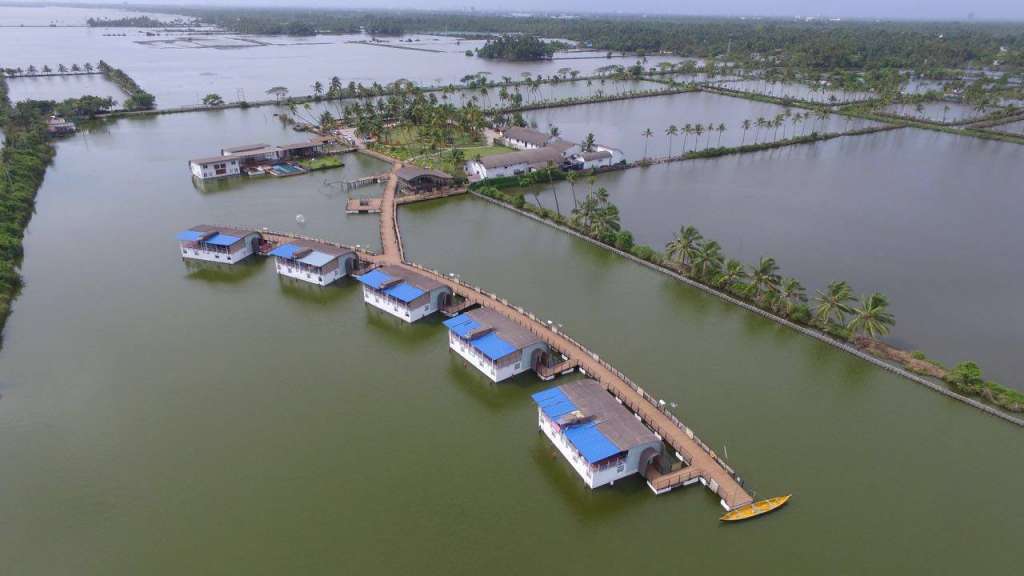
Kerala Tourism-listed floating resort at Puthankary, Kumbalangi. Kumbalangi, Floating resort, Backwaters.
Book with the place itself. India’s cyber-crime coordination centre warned in April 2025 that convincing copies of hotel and pilgrimage booking sites are being pushed through sponsored search and social ads, taking payment for rooms the property never hears about. Every listing here links to the business’s own contact details and its own Google or Bing profile — we take no commission and sit in nobody’s payment path. If a booking page reached you through an ad, check the address bar against the property’s own site before you pay. Fraud can be reported on cybercrime.gov.in or on 1930.
Find food, accommodation and activities across Kumbalangi. Browse the guides for places to eat, stay and explore along your route.
Walking routes start at Chinese nets. Check the route and access before setting out, especially where a road, gate or waterway separates the stops.
4 more places around Kumbalangi. Open a guide to plan the visit and onward journey.
2.9 km · 6 min drive
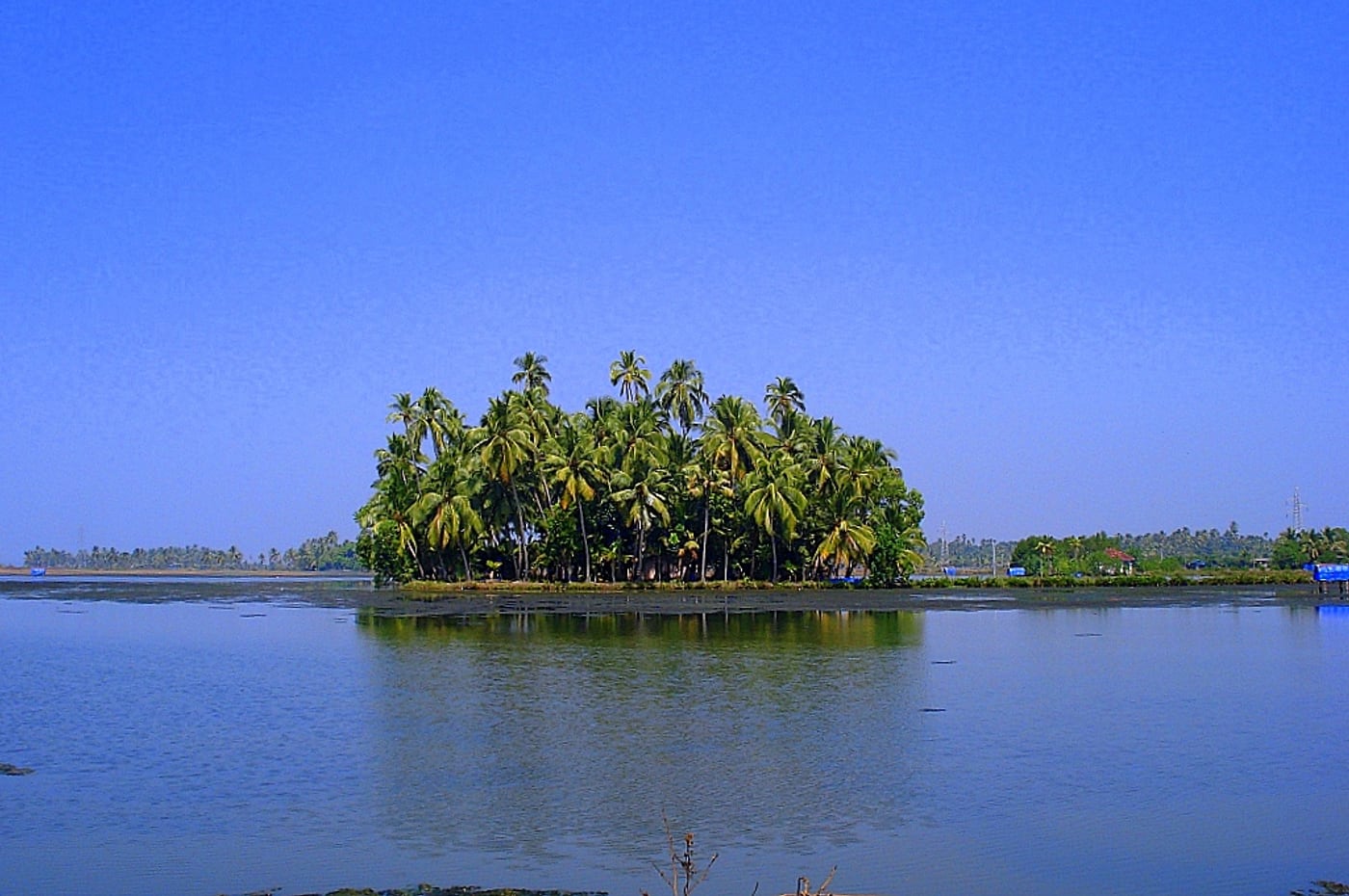
Model tourism village known for backwater life, fishing and village experiences.
2.0 km · 24 min walk
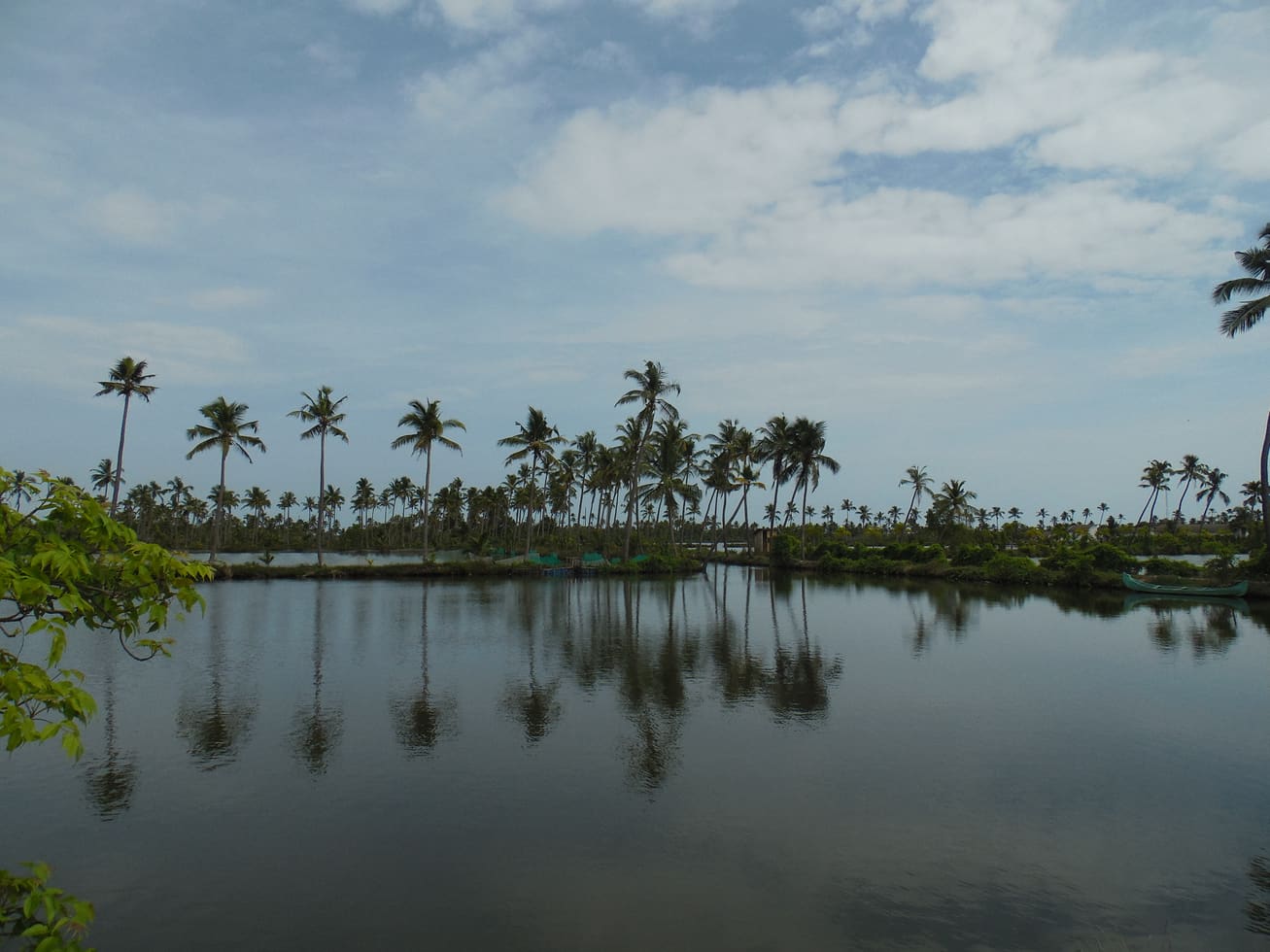
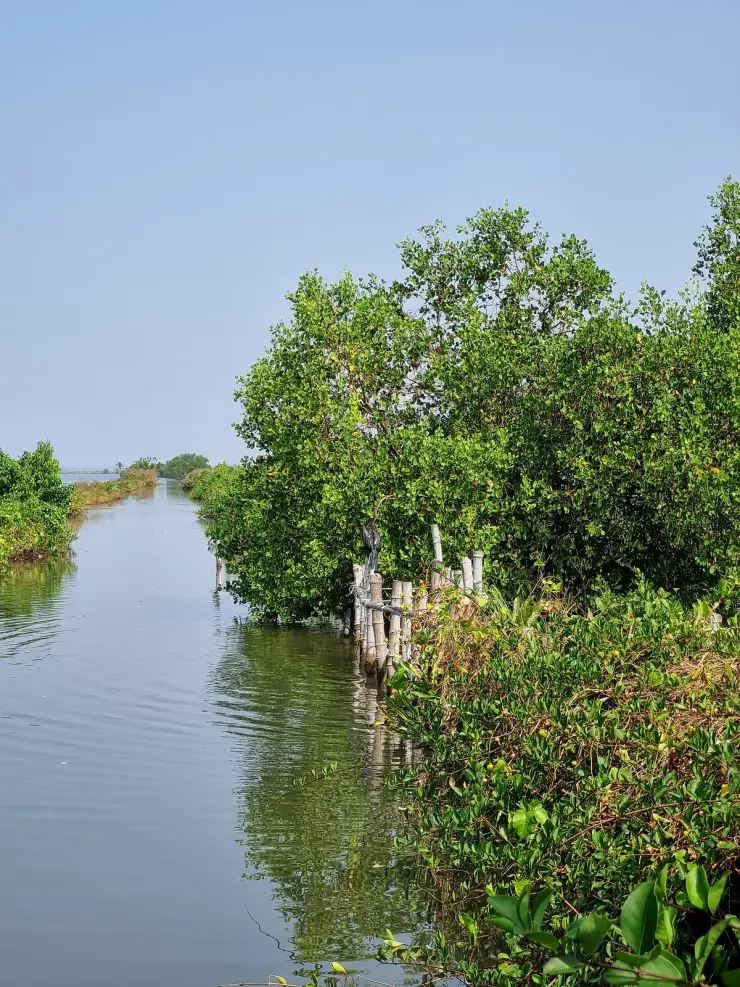
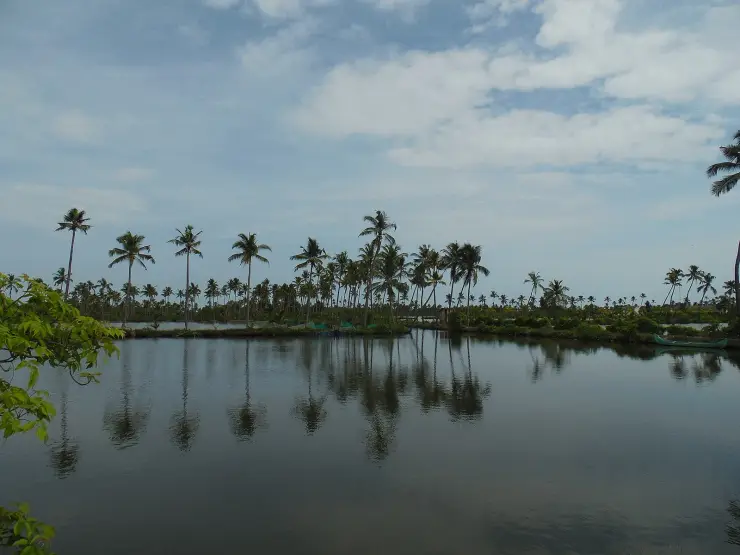
The tidal creeks and pokkali fields that wrap Kumbalangi island — canoe and country-boat water, worked for clam, prawn and crab rather than laid out for houseboats, and calm enough that the far bank mirrors in it at first light.
1.4 km · 16 min walk
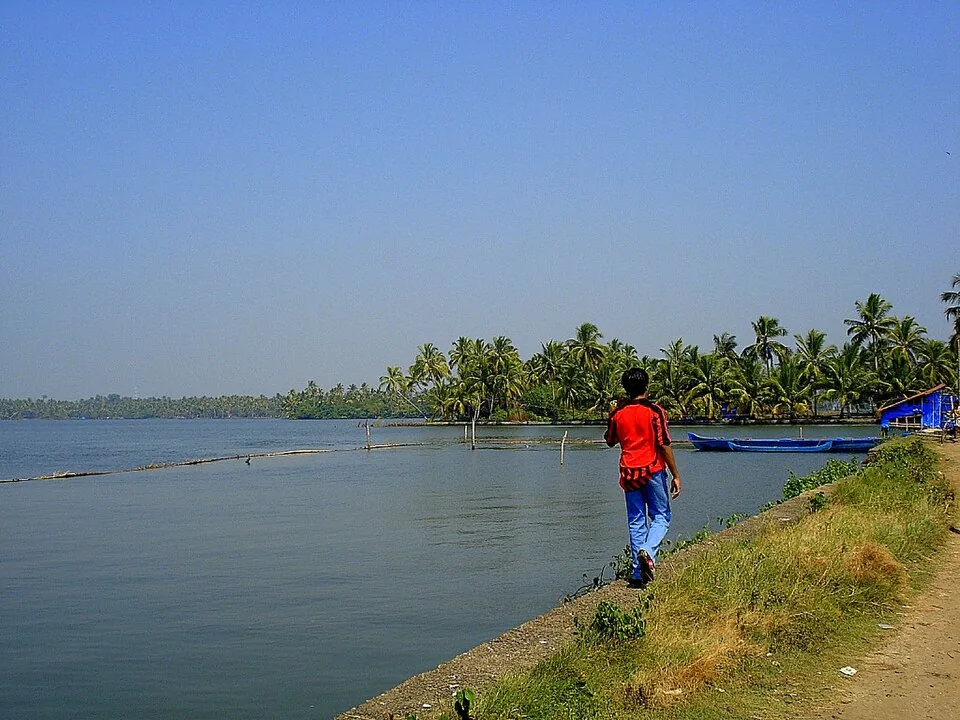
Guided walking routes through Kumbalangi’s lanes and working yards — coir twisting, toddy tapping, clam-shell collecting, prawn-filtration ponds and crab farms — run by the village’s own hosts rather than by an outside operator.
1.5 km · 18 min walk
The North Kumbalangi homestay belt, where the draw is eating karimeen, clam and crab cooked in a family kitchen from that morning’s catch — the food is the reason to stay, not an amenity attached to the room.
Roampedia is commission-free — own or know a stay, eatery, guide or shop near Chinese nets? List it and it appears here once verified.
Add a nearby businessEntry: Free to watch from the bank. Some net crews will let a visitor help work the beam for a tip — that is a private arrangement with the men on the platform, not a ticket, and there is no fixed rate.
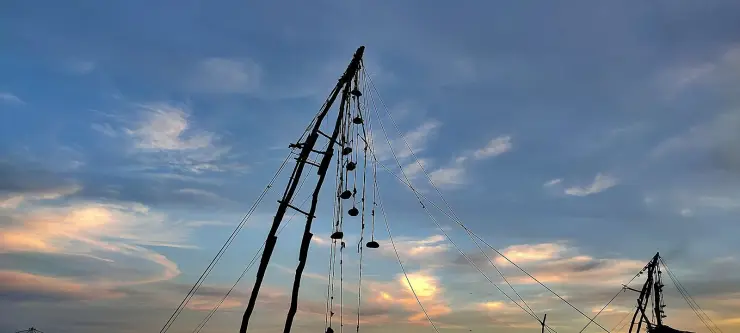
Photography: The classic frame is the net silhouetted against the western sky at dusk. The men are at work — ask before you photograph faces, and do not climb onto a platform for an angle unless you have been invited up.
If you are travelling by bus or ferry, check the return service with the operator before setting out. Leave time to reach the stop or jetty after your visit.
Ask at the jetty or stand for the time of the last service back, not the next one. If you miss it, an auto or app cab is the fallback — agree the fare before you get in.
If you need step-free access, contact the site before travelling. Ask about a level entrance, steps along the route, the nearest drop-off point, seating and accessible toilets.
These services are listed within about 1.2 km of Chinese nets. Walking distances follow mapped routes; access and opening hours can change. Other services may be closer but are not included here.
Emergency numbers are verified against official government and state tourism sources. 112 works anywhere in India.
Guided walking routes through Kumbalangi’s lanes and working yards — coir twisting, toddy tapping, clam-shell collecting, prawn-filtration ponds and crab farms — run by the village’s own hosts rather than by an outside operator.
1.4 km · 16 min walkThe North Kumbalangi homestay belt, where the draw is eating karimeen, clam and crab cooked in a family kitchen from that morning’s catch — the food is the reason to stay, not an amenity attached to the room.
1.5 km · 18 min walkThe tidal creeks and pokkali fields that wrap Kumbalangi island — canoe and country-boat water, worked for clam, prawn and crab rather than laid out for houseboats, and calm enough that the far bank mirrors in it at first light.
2.0 km · 24 min walkModel tourism village known for backwater life, fishing and village experiences.
2.9 km · 6 min drive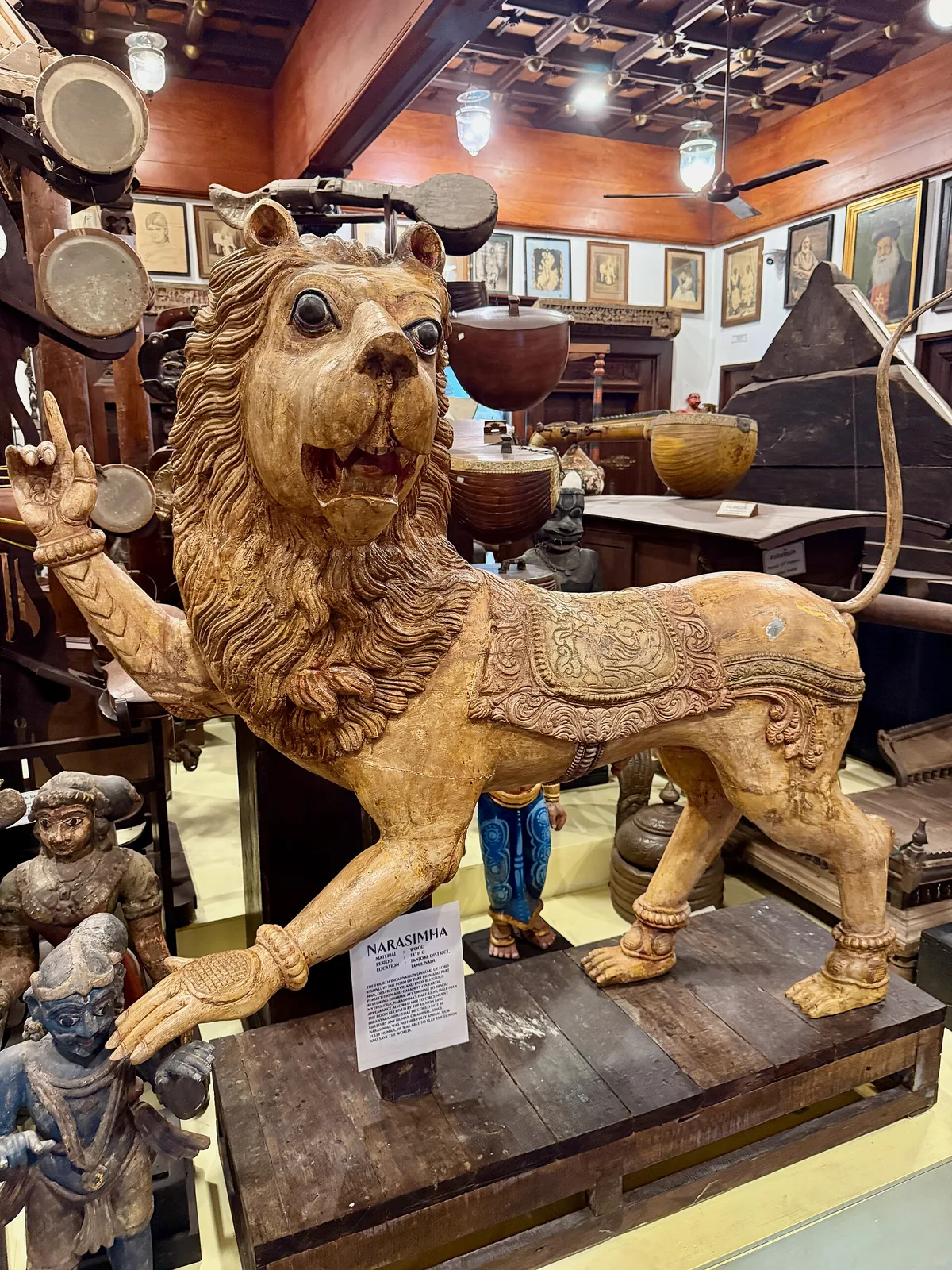
A privately built museum at Thevara with thousands of Kerala folk and ritual artefacts across Malabar, Kochi and Travancore styles.
5.3 km · ~13 min by auto · straight line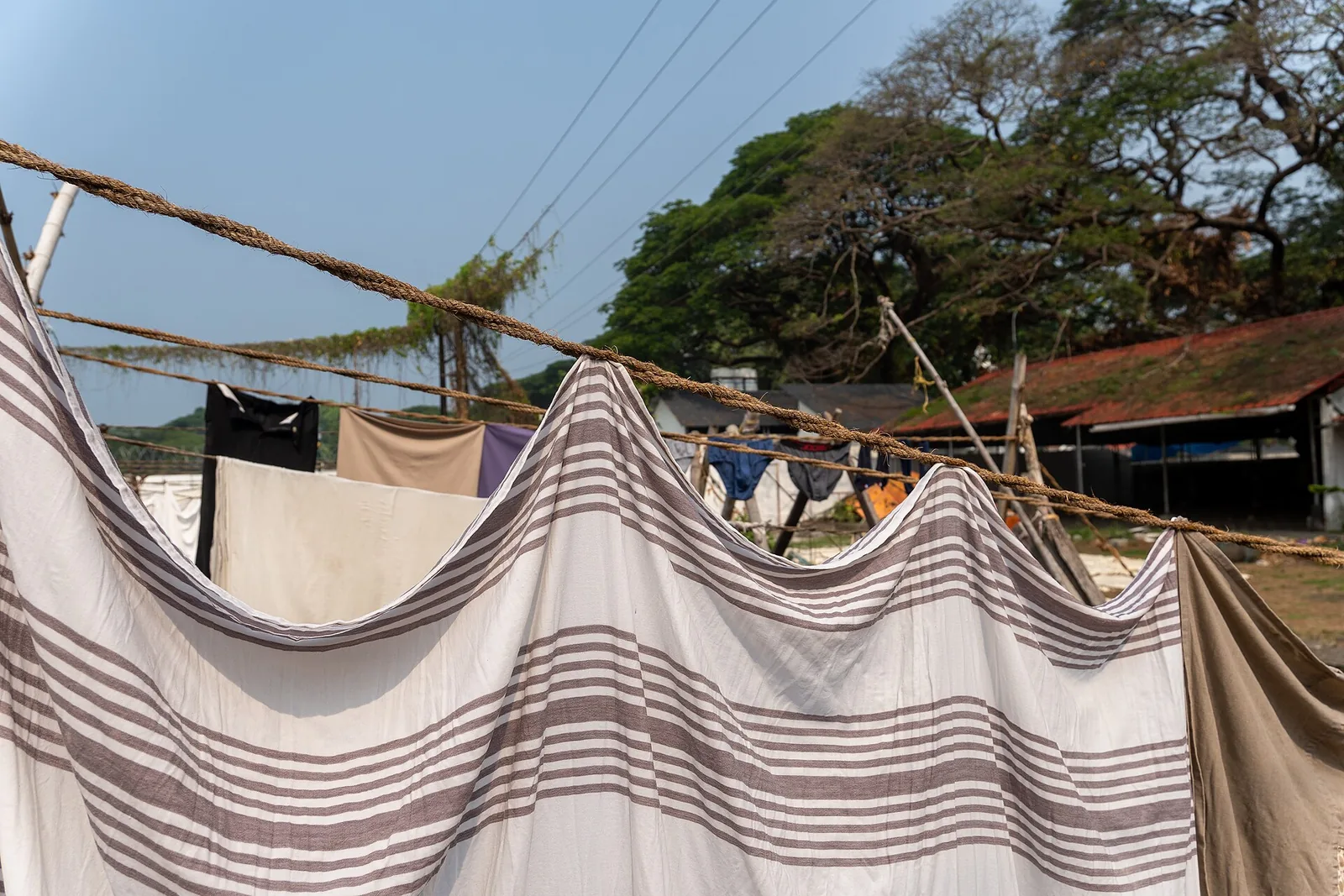
A working colonial-era community open-air laundry in Fort Kochi, still used by traditional washermen families.
7.7 km · ~19 min by auto · straight line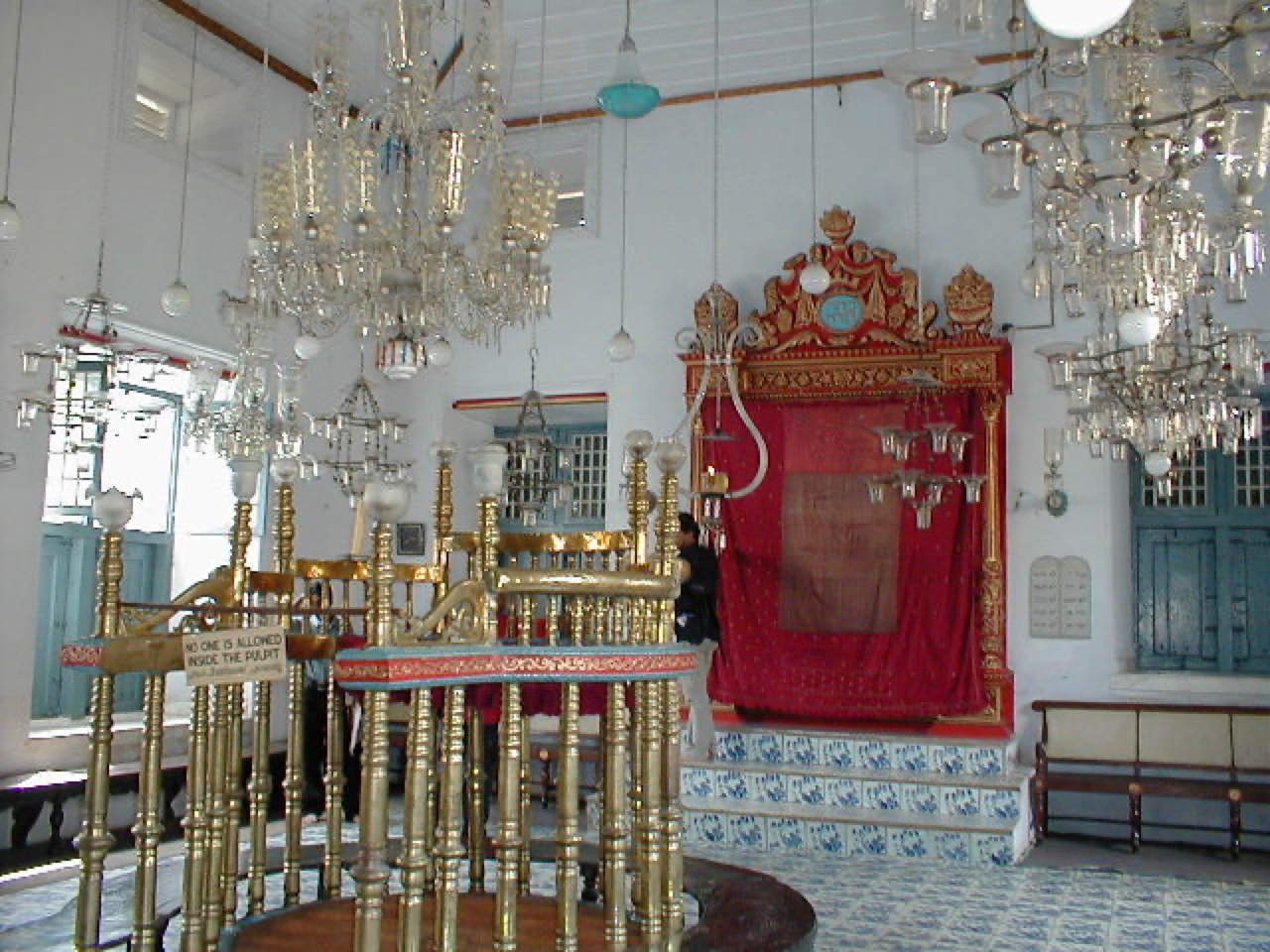
The oldest active synagogue in the Commonwealth (1568), in Jew Town, Mattancherry, with hand-painted Chinese floor tiles.
7.7 km · ~19 min by auto · straight line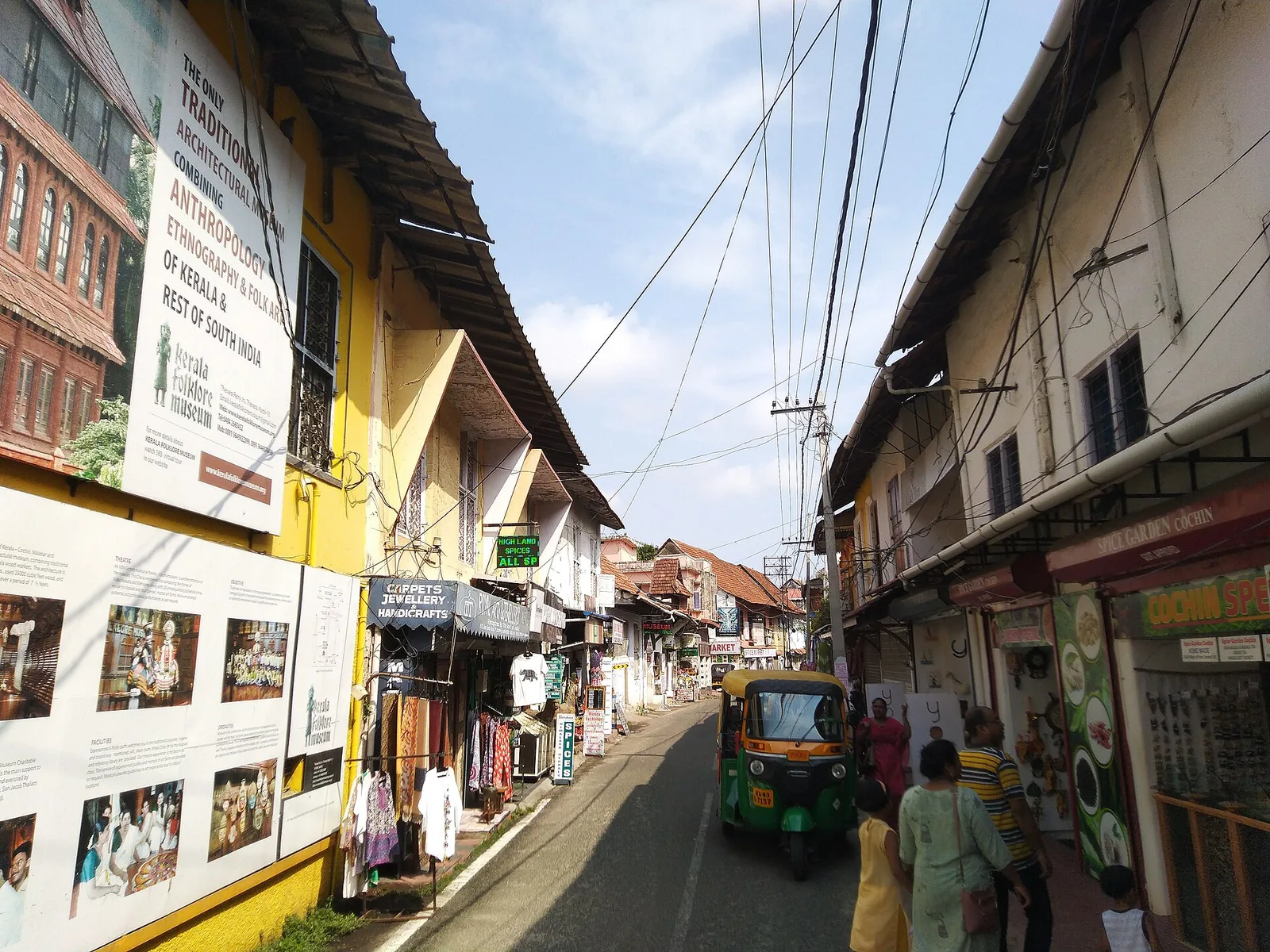
Spice warehouses, antiques, Mattancherry Palace and Paradesi Synagogue.
7.8 km · ~19 min by auto · straight line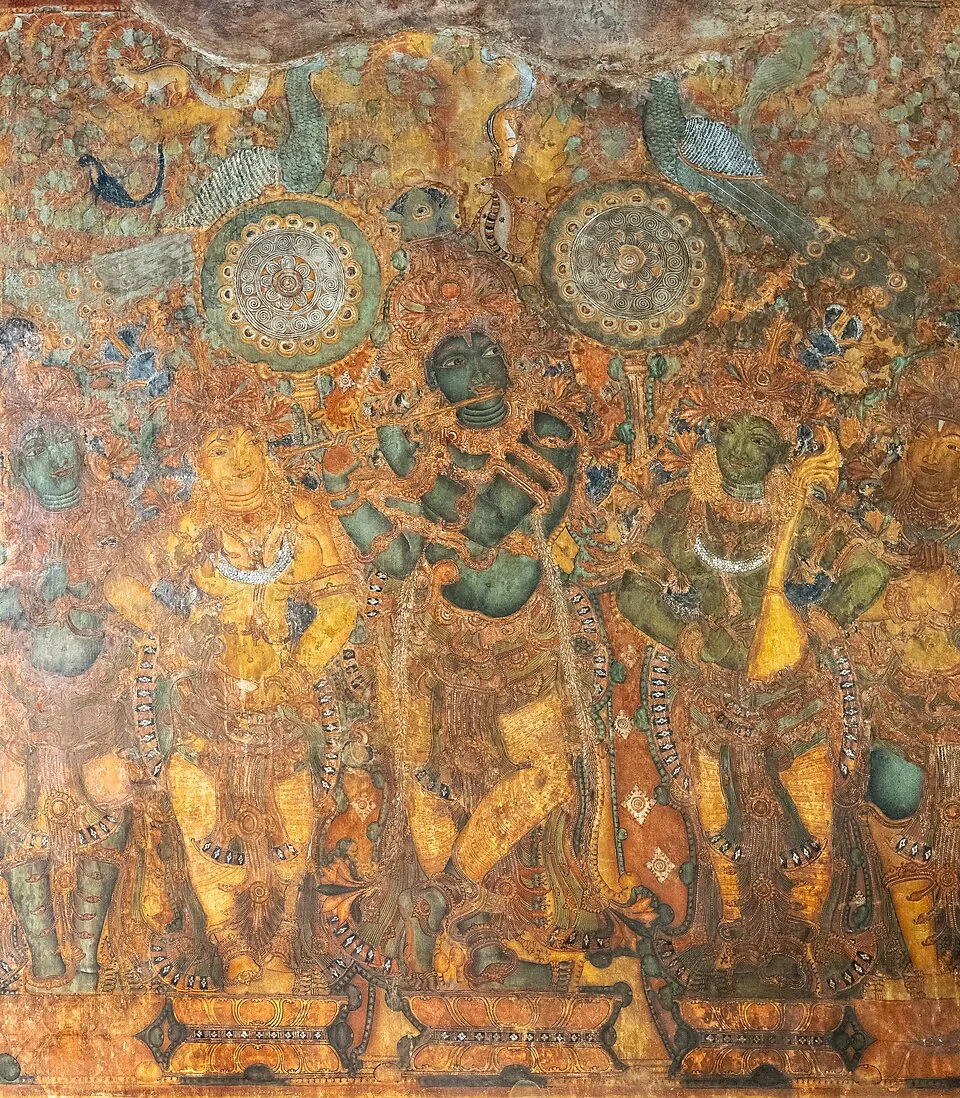
The Mattancherry Palace, known as the Dutch Palace, with celebrated Kerala mural paintings from the Ramayana and royal portraits.
7.8 km · ~20 min by auto · straight line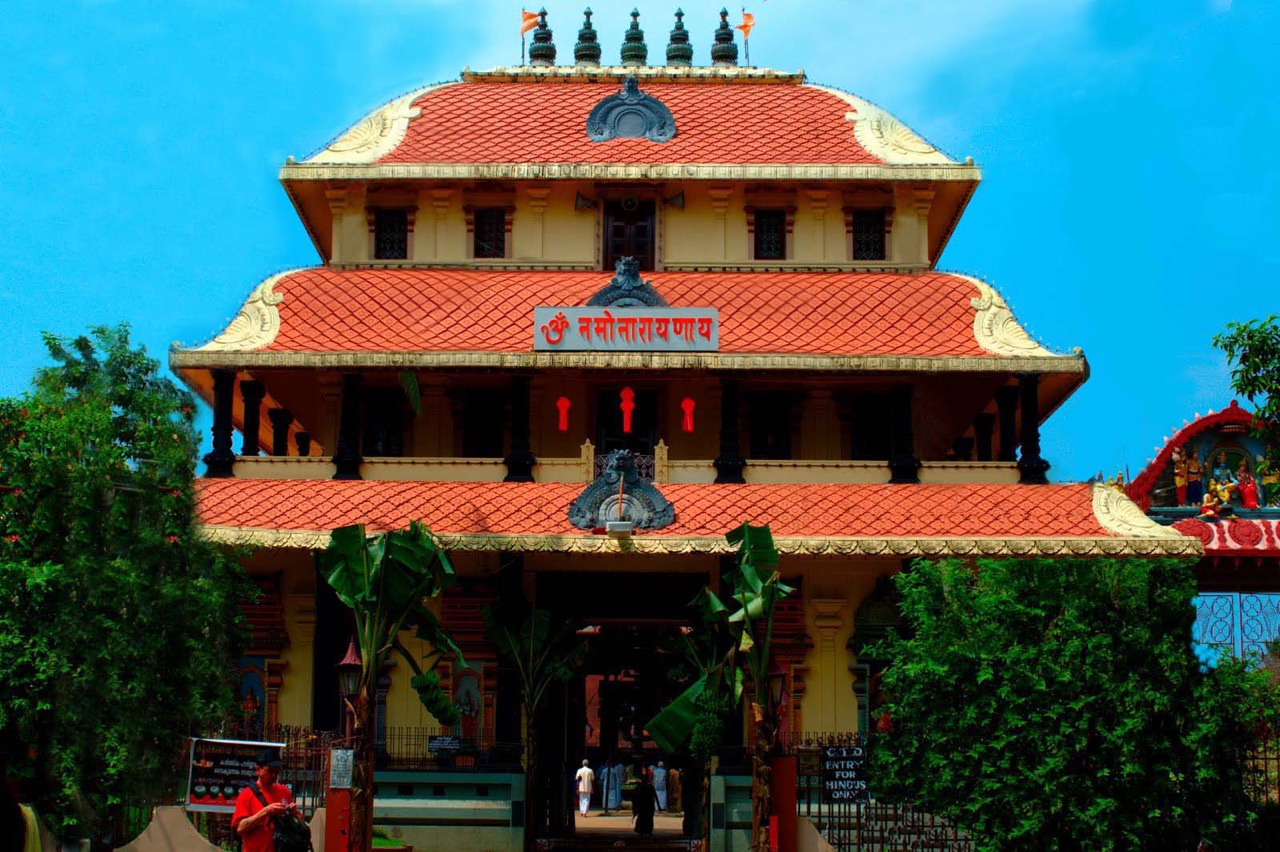
A historic Gowda Saraswat Brahmin temple in Cherlai, Mattancherry, central to Kochi’s Konkani community.
7.9 km · ~20 min by auto · straight line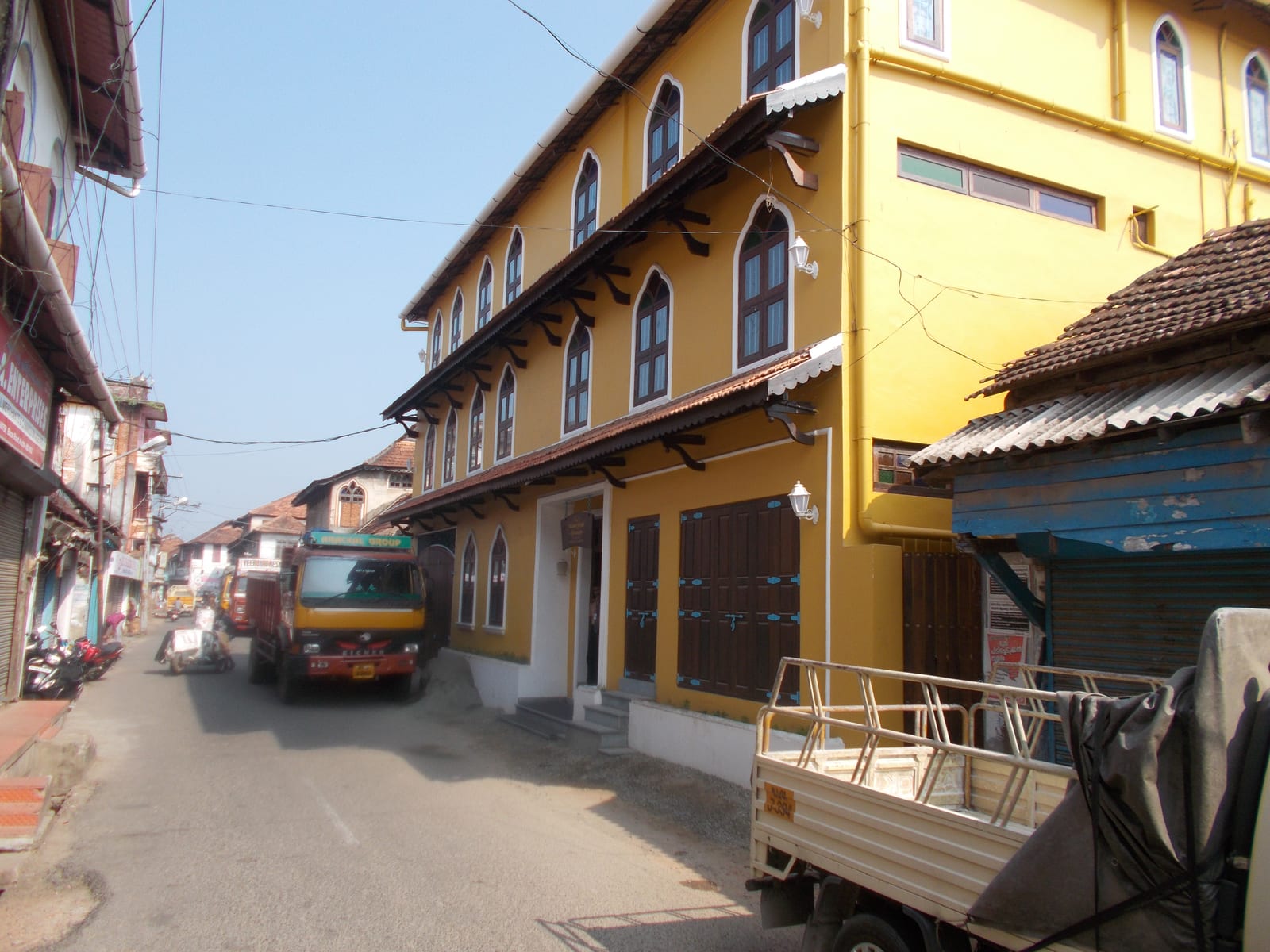
The working spice quarter along Mattancherry’s Bazaar Road — godowns where pepper, ginger, turmeric and cardamom are still graded, sacked and weighed, and where the smell reaches the street before the signage does.
8.1 km · ~13 min by cab · straight line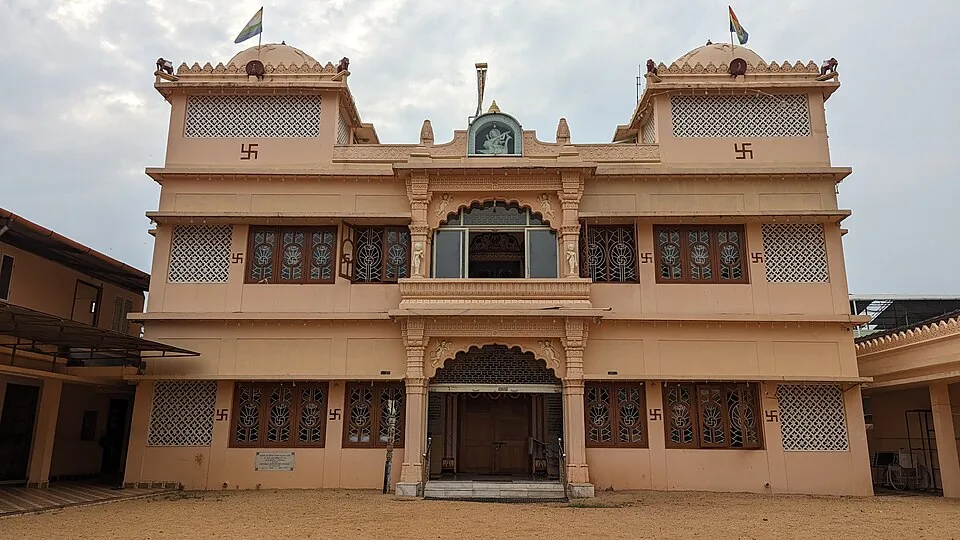
An ornate Jain temple in Mattancherry’s Gujarati quarter, raised in 1904 by Hirubai in memory of her husband Jivraj Dhanji and dedicated to Dharmanatha, the fifteenth Tirthankara — known for its white marble work and the daily midday feeding of the pigeons outside.
8.3 km · ~14 min by cab · straight lineWalking and driving times are real routed distances, except the few marked “straight line”, which are direct-line estimates and will read short. Fare figures are estimates from Kerala’s notified auto/taxi tariff and exclude waiting and night charges. Routing: © openrouteservice.org by HeiGIT | Map data © OpenStreetMap contributors
Nearby toilets, pharmacies, ATMs, seating and vets are community-mapped and may be incomplete or out of date. Map data © OpenStreetMap contributors | Walking times © openrouteservice.org by HeiGIT
The mechanism is the same. Everything around it is different. Fort Kochi's nets stand in a row on a public seafront with a promenade, a crowd and a sunset audience, and much of their income now comes from visitors. Kumbalangi's are spread along working creeks, are fished for a living, and generally have nobody watching. If you want the photograph, Fort Kochi. If you want to understand the thing, come here.
Around the tide, chiefly at first light and again from late afternoon to dusk. There is no schedule — if the tide is wrong the nets sit idle all day. Ask your homestay the evening before; the people who live on the bank know what the water is doing tomorrow.
Sometimes. Some crews will let a visitor pull on the beam for a tip, but that is a private arrangement with the men on the platform, not a ticket, and there is no set rate. If they let you, tip properly — you are costing them working time, and a net that is being demonstrated is a net that is not fishing.
Not uninvited. The platforms are wet timber over open water with no railings, and the beams swing hard and fast when the net is dropped. Do not step on unless a crew member invites you and tells you where to stand, and do not take children onto one at all.
Over a hundred are reported on the water facing the village, but you will not see them in a row — they are distributed along the creeks around the island. From any one bank you will see a handful. A canoe trip is the only way to see a good number of them, and it is the better view anyway.
Genuinely unsettled. The popular story credits traders from Kublai Khan's court, which is where the Malayalam name cheena vala comes from. A competing account has them arriving much later with the Portuguese, from Macau, and a third has the Portuguese carrying a much smaller lift net from the Mekong that was then enlarged here. Both are argued seriously and neither is proven, so we publish the disagreement rather than the tidier version. The awkward fact for every version is that these nets are found nowhere else in India.
Almost always money rather than fish. The frame is timber standing permanently in brackish water, so the netting perishes, the ropes chafe and the uprights rot from the waterline down, and renewing them costs real money at a time when hardwood is expensive and hard to get. An owner coming off a poor season will often leave a platform to stand rather than repair it. You will see the same problem solved visibly on the famous Fort Kochi row, where several nets are now held up by lengths of steel pipe.
Whatever the tide brings through: mostly small mixed backwater fish, prawns, and the occasional better fish, in quantities measured in a bucket rather than a crate. There is no target species — a lift net is passive and takes a slice of whatever is passing. Most of a day's catch is eaten by the household or sold locally the same morning rather than going to a market.
November to February and early mornings are best for walking; avoid midday heat where possible.
Entry: Free to watch from the bank. Some net crews will let a visitor help work the beam for a tip — that is a private arrangement with the men on the platform, not a ticket, and there is no fixed rate. Timings: Worked around the tide and the light, chiefly at first light and again from late afternoon to dusk. There is no schedule; if the tide is wrong the nets sit idle all day.
Base yourself in Kumbalangi or a nearby town in Ernakulam, then confirm the last-mile route locally before leaving. Walkable heritage areas are best done slowly; combine nearby streets, museums, markets and food stops. If the visit depends on forest, temple, boat, ferry, weather or seasonal access, check the official/local rule on the day before travel.
1 to 3 hours.
Nearby you can pair Village walks (1.4 km), Seafood homestays (1.5 km), Kumbalangi backwaters (2.0 km), Kumbalangi (2.9 km).
Watch traffic on narrow heritage streets. Keep valuables close in crowded markets.
Written about Chinese nets itself — its history, its legends and the arguments about them.
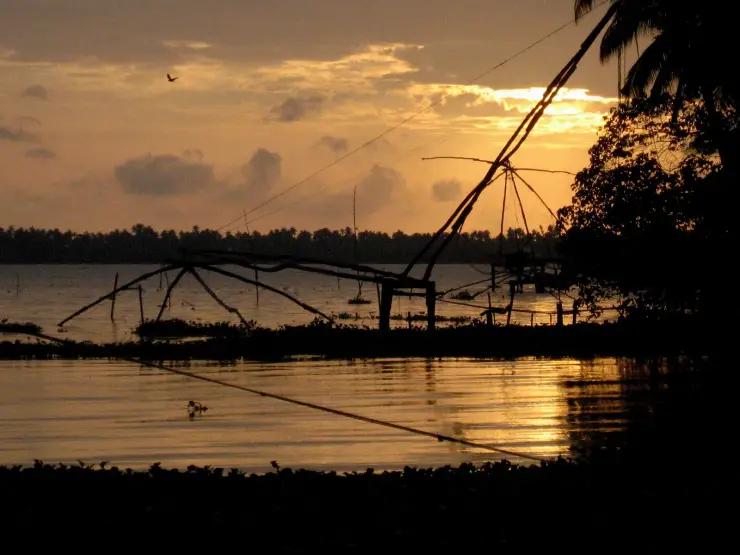
These guides explore Kumbalangi and the surrounding area. Choose a visit that fits your interests, allowing separately for travel between stops.
Route-level itineraries and practical guides for the rest of Kerala.
Photographs: Aruna at Malayalam Wikipedia (CC BY-SA 3.0), ranjith k r from kochin, india (CC BY 2.0), Ganesh Mohan T (CC BY-SA 4.0), Navaneeth Krishnan S (CC BY-SA 4.0). Wikimedia Commons.