What to expect
Highlights
- Cave visit at Kottukal Cave Temple
- Rock formations, archaeology or natural history
- Short hike and viewpoint potential
A monolithic rock-cut cave temple near Anchal/Kadakkal in south Kollam, carved with a Shiva shrine.
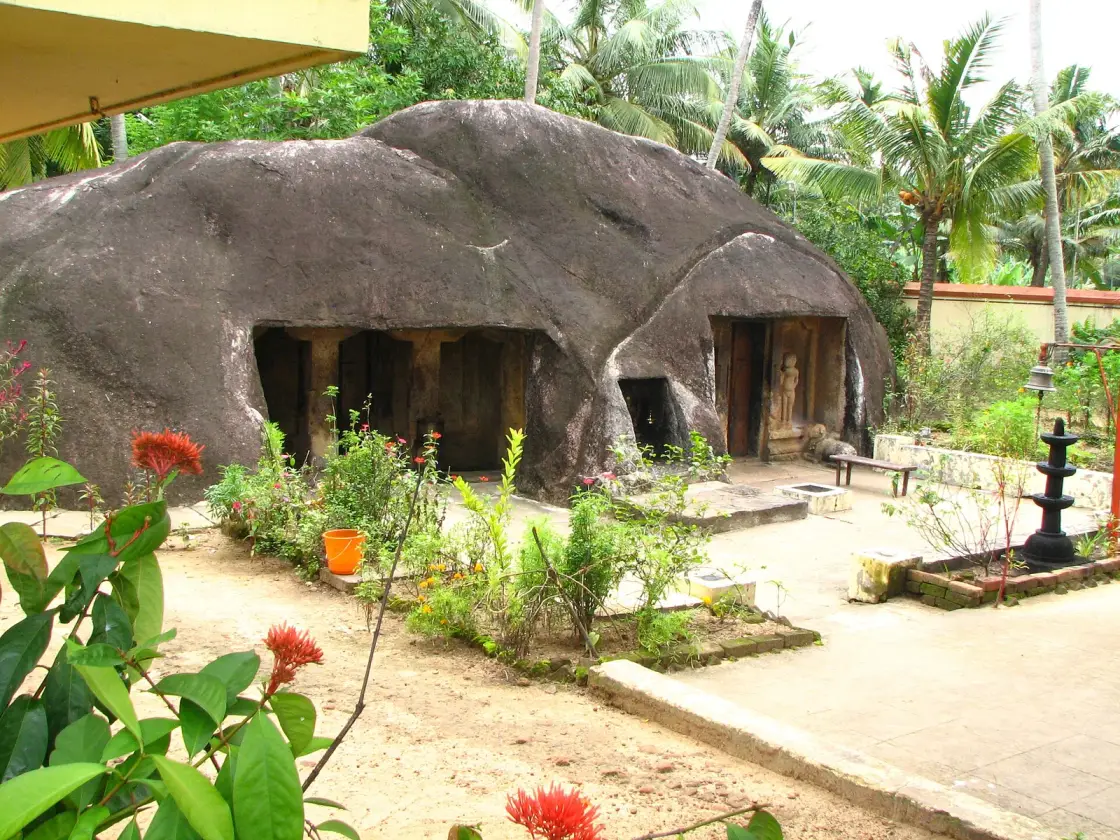
Hewn from a single granite outcrop in the rolling midland country between Anchal and Kadakkal, Kottukal Cave Temple is one of the rarest sights in Kerala — a genuine monolithic rock-cut shrine in a land where almost every temple is built up stone by stone rather than carved down into living rock. Its very name says what it is: Kottukal, from kothiya kallu, the “chiselled stone”. Two chambers scooped from one boulder, a Shivalinga with its Nandi, a niche-set Hanuman and a Ganapathy carved in between — a small monument that carries an outsized weight of archaeology, worship and local legend.
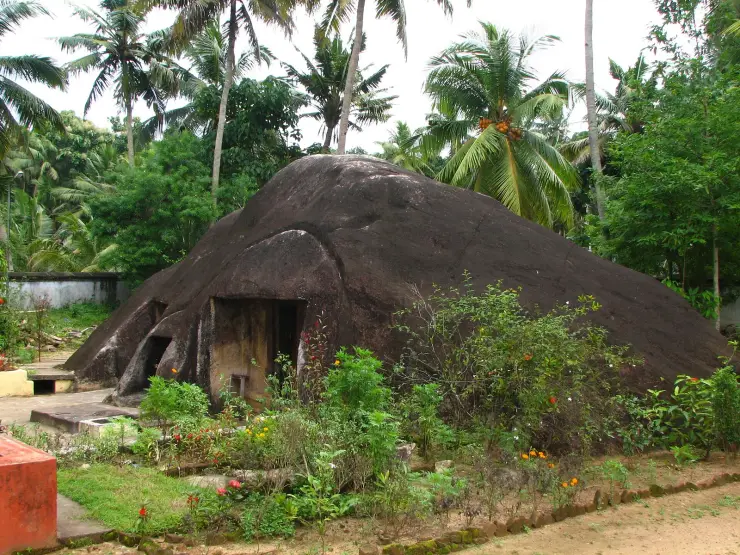
Approach Kottukal and the first thing you notice is the rock itself. A vast, rounded granite mass rises from the greenery, and from a distance the locals will tell you it looks like a sleeping elephant — a low grey bulk at rest among the coconut palms and rubber, inside a walled and swept compound rather than the paddy fields some accounts describe. Into the eastern face of this single stone, some long-ago hands cut not a wall or a plinth but the whole temple: two rectangular chambers, facing east, distinctly unequal in size, both sheltered beneath one continuous slab of the parent rock. Nothing here was assembled. Everything was removed.
That is what makes the place extraordinary. Kerala is overwhelmingly a land of structural temples — timber, laterite and granite fitted together under those famous sloping copper-and-tile roofs. True rock-cut shrines, carved into a cliff or boulder in the manner of the great Tamil and Deccan caves, can be counted on the fingers of two hands across the whole state. Kottukal is one of the finest of that tiny handful, which is why archaeologists speak of it as a foremost example of Kerala’s rock-cut tradition rather than just another wayside temple.
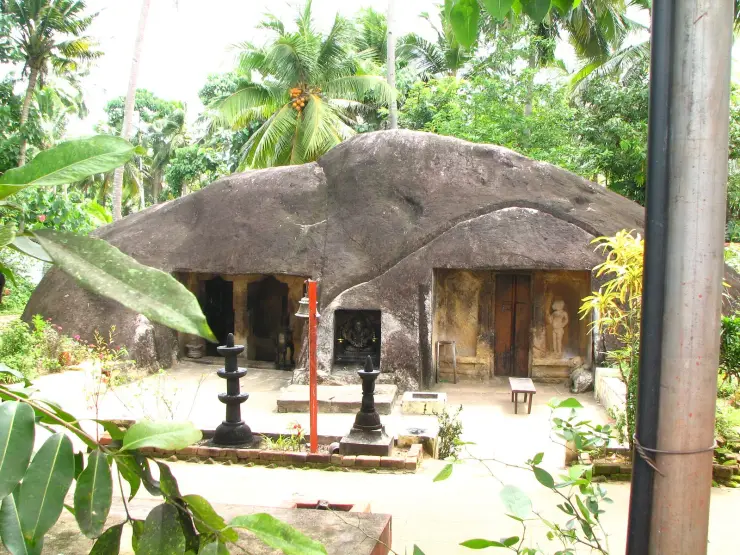
Step to the larger of the two caves and you meet the presiding presence: a Shivalinga, and before it a monolithic Nandi — the bull carved from the same rock, keeping his ancient watch. This is the more fully worked of the two, and the state's own description sets out its parts: a garbhagriha, an ardhamandapa and a pillared façade, with two pillars cut from the living rock in the mukhamandapa. It is spare, weathered and quietly powerful, the sculpture softened by centuries of monsoon and worship.
The smaller chamber is where most descriptions go wrong, and the correction is worth having before you arrive. It is routinely called the Hanuman cave, as though the two chambers divided the gods between them. They do not. The Kerala Department of Archaeology records a monolithic Nandi and a Sivalinga in both cells — the smaller shrine is a Shiva shrine too, simply a plainer one. What the small cell additionally holds is the detail that draws pilgrims and historians alike: a standing figure of Hanuman carved in one of its niches, with a couchant bull at his feet. To find Anjaneya sharing a single carved rock with Shiva and Nandi is genuinely unusual; devotees and local guides describe the grouping as a rare, perhaps singular, combination, and some tie it to the Nandi–Vanara episode remembered in the Puranas. Whether or not one accepts the “nowhere else in India” claim (treat that as devotional tradition rather than settled fact), the arrangement is unlike almost anything else in Kerala.
Between the two caves, in an alcove-like recess, sits Ganapathy — the elephant-faced remover of obstacles carved in relief on the face of the rock, presiding over the threshold between the two shrines. Pilgrims pause here first, as tradition asks, before turning to Shiva and to Hanuman. On ordinary days the temple is hushed, tended by daily rituals under the Travancore Devaswom Board; on Maha Shivaratri it comes alive, the little cave complex filling with lamps, chanting and the steady traffic of the faithful who have come to keep the night-long vigil before the linga.
There is a human, almost tender local touch too. A short way from the great boulder lies a smaller stone that villagers call chummadu para — the “headload rock” — and tradition holds that resting your aching head against it, or against the mother rock, brings relief from headaches. It is the kind of intimate, unofficial belief that grows up around a place people have lived beside for a thousand years or more: the monument may belong to the archaeologists and the Devaswom, but the boulder belongs to the neighbourhood.
The most repeated fact about this temple is that a king called Nedumchadayan built it, and that he ruled Chadayamangalam nearby. It is on Wikipedia, from where it has spread to travel sites, aggregators and a good deal of printed matter. The exact wording on Wikipedia is that "Nedila Paranthaka Nedumchadayan" — "who ruled Chadayamangalam the nearby place" — made the rock-cut temple. It is a satisfying claim because it gives an anonymous monument an author, and because the name so obviously echoes the name of the town up the road.
The trouble is that the man existed and was somebody else entirely. Jatila Parantaka Nedunjadaiyan, also known as Varagunavarman I, was a Pandya emperor who ruled from Madurai in roughly 765 to 815 CE — one of the longest reigns in the dynasty, documented across a large body of inscriptions including the Velvikudi copper plates. He was not a local chief of a Kollam-district village. He was the ruler of a major south Indian kingdom on the other side of the Ghats, and the Velvikudi record credits him with defeating the Pallava king Nandivarman II in battle around 767 CE.
The place-name is not evidence either, and it points the other way. Chadayamangalam carries the element Chadayan, which is the same dynastic name; a settlement named after a Chadayan tells you that the name travelled here, not that a Chadayan lived here and commissioned a shrine. Toponyms are not patronage records. The temple's own name works the same way and is worth pausing on: Kottukal is read as kothiya kallu, the chiselled stone, which describes what was done to the rock and says nothing whatever about who did it. Both names are descriptions that later readers have tried to turn into a signature.
There is a real connection buried underneath the false one, and it is more interesting than the version being repeated. Varaguna I's inscriptions describe campaigns against Venad, in what is now southern Kerala — the defeat of the Venad ruler, the annexation of territory, the taking of elephants and horses. So a Pandya emperor of exactly that name genuinely was operating in this region, by force, inside the very window the Kerala Department of Archaeology assigns to the temple. What the sources will not support is the sentence everyone prints: that he was a nearby ruler who had it made.
The same Wikipedia article carries two further problems worth naming, because they are the reason we treat the dating here as open. It says the temple was "built between 6th and 8th centuries CE" and, in the same breath, that it is "believed to belong to the period of Pallava dynasty (8th century BC)." Eighth century BC is the Iron Age in south India, well over a thousand years before any rock-cut shrine was excavated anywhere in the subcontinent — it is a CE written as BC, and it has been sitting there being copied. And the dynasty named is Pallava, while the king named in the very same article is a Pandya who made his reputation fighting the Pallavas.
Set against all of that, what the Kerala State Department of Archaeology actually publishes is short and careful: the temple dates to the 8th–9th century CE, and no dynasty is named at all. That is almost certainly the honest limit of what can be said about an undated, uninscribed monument, and it is the position this page takes. We would rather leave the builder anonymous than hand him to a Pandya emperor on the strength of a village name.
Kottukal sits in the Ittiva area, Kottarakkara taluk of Kollam district, in the midland belt where the coastal plain begins to climb toward the Western Ghats — the same broad landscape that saw early historic settlement, trade routes inland, and the slow spread of Brahminical and popular Hindu worship through what is now central Travancore. It is set back from the coast — about thirty-two kilometres from Kollam town in a straight line, but roughly forty-five by the MC Road–Ayoor–Anchal–Kadakkal route most people are sent along, which is why published distances for it disagree with one another. That awkwardness of access is part of why it survived so quietly for so long.
The dating of the shrine is genuinely uncertain and you will find it given differently by different authorities, so it is best held loosely. The Kerala State Department of Archaeology dates the rock-cut temple broadly to about the 8th–9th centuries CE. Other popular and secondary accounts place it earlier, variously between the 6th and 8th centuries CE, or specifically in the 7th century, and some link it to a local ruler remembered as Nedumchadayan of nearby Chadayamangalam. All of these should be read as competing estimates rather than a confirmed date.
Stylistically the shrine is often discussed alongside the early medieval South Indian rock-cut movement — the same broad tradition that produced the Pallava caves and the Shore Temple at Mahabalipuram, and which in the far south overlapped with the era of the Ay chieftains who held sway over this part of the Kerala–Tamil borderland. Some writers describe Kottukal as “Pallava-influenced” or roughly contemporaneous with that phase of cave-cutting (an art-historical comparison rather than documented patronage: the Pallava and Ay associations are context, not proven attribution).
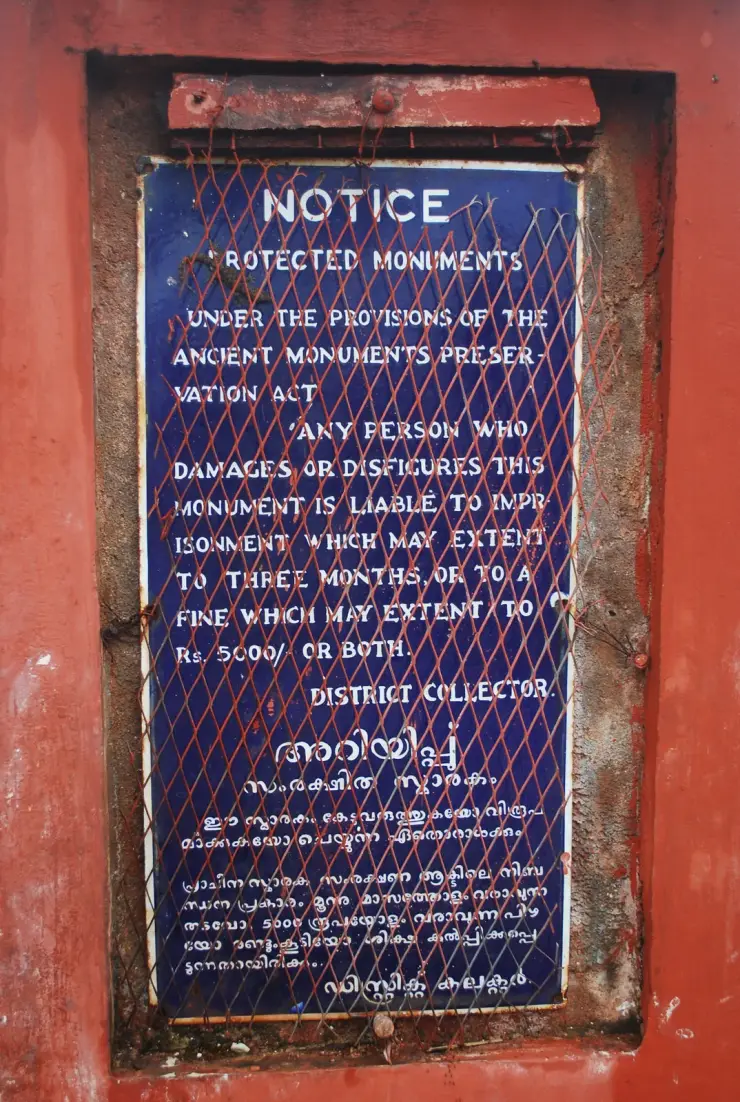
What is not in doubt is its protected status. The Government of Kerala, through the State Department of Archaeology, declared Kottukal a protected monument in 1966, recognising it as a rare survivor of the rock-cut form in a region dominated by structural temples. It remains a living shrine as well as a heritage site — an unusual pairing where daily worship under the Travancore Devaswom Board continues inside walls that are themselves legally protected antiquity.
One point worth fixing clearly, because most sources including our own earlier text got it the wrong way round. There is no rock-cut cave called Kottukal in Thiruvananthapuram district. The coastal cave people mean is the Vizhinjam Rock-Cut Cave Temple, an eighth-century Ay-period shrine of Vinadhara Dakshinamurthy that has been an Archaeological Survey of India protected monument since 1965. What it shares with this place is not a name but an address: Vizhinjam village sits inside Kottukal grama panchayat, in Neyyattinkara taluk. So the two monuments are genuinely different, differently named and differently protected — one is ASI, one is Kerala State Archaeology — and the collision is between a Kollam village and a Thiruvananthapuram panchayat that happen to be called the same thing. If you are navigating, make sure your directions say Anchal or Kadakkal and not Vizhinjam.
It is one of the very few authentic monolithic rock-cut temples in all of Kerala — a chance to stand inside a shrine that was carved out of a single boulder rather than built, in a state where that construction method is genuinely rare. For anyone interested in temple architecture, that alone justifies the detour.
The Shiva–Nandi–Hanuman combination is unusual and atmospheric: a Shivalinga with its monolithic bull in each of the two cells, a niche-set Hanuman with a couchant bull at his feet in the smaller one, and a Ganapathy carved in the alcove between them, all from one continuous rock. The devotional geometry of the place is unlike a typical Kerala temple layout.
It is a protected State Archaeology monument (declared 1966) that is still a working shrine — so you get both the hush of an ancient site and the living reality of daily ritual, incense and lamp-flame, rather than a fenced-off ruin.
The setting is quiet, rural and un-touristy. This is Kollam’s green midland country of rubber, coconut and small towns; you are unlikely to share the rock with crowds outside festival days, which makes for a contemplative, unhurried visit.
The great boulder itself is a spectacle — the “sleeping elephant” silhouette, the chummadu para “headache rock” beside it, and the sheer physical drama of a temple emerging from stone reward even visitors who come more for the geology and folklore than the worship.
It pairs naturally with a wider Kollam-district exploration — Chadayamangalam and its landmarks, the Anchal–Kadakkal midlands and the run of hill and forest country toward the Ghats — making it an easy add-on to a road trip rather than a destination you must build a whole day around.
Road km to Kollam; ghat roads and traffic vary — allow extra.
Dry months are easiest; avoid heavy rain due to slippery approaches.
Live forecast loads in your browser.
Sunset is in about 2 hours.
Sun and moon are calculated for this location and shown in IST. Photography windows are the hour around sunrise and sunset; the sunset bearing is degrees clockwise from true north. Moon phase is accurate to about half a day.
Browse listed stays, food, activities, sights, shops and rentals around Kottukal Cave Temple. Check each listing’s locality and contact the business directly for current arrangements.
A family homestay reached by a short boat ride on Munroe Island in the Ashtamudi backwaters. Offers two AC rooms with home-cooked breakfasts.
Boutique hotel with 28 rooms and original artwork in the heart of Kollam, overlooking the city's Clock Tower.
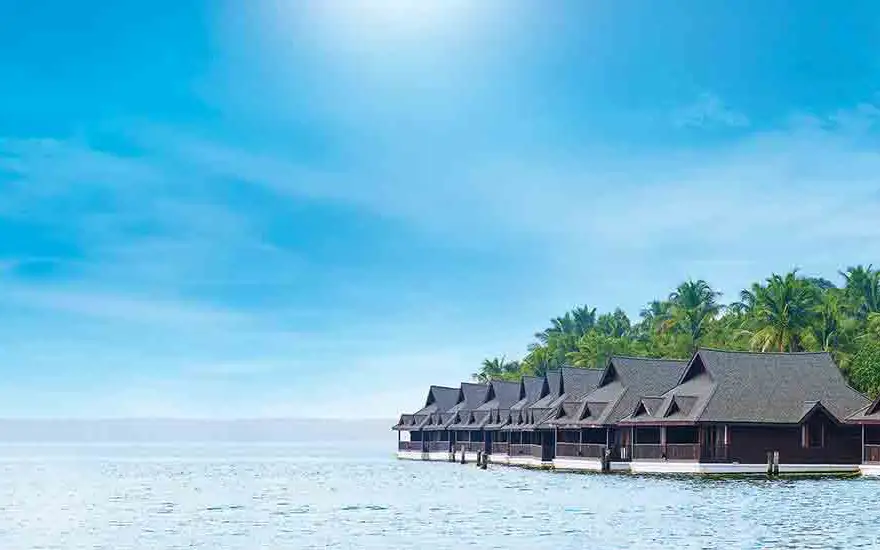
A lakefront resort where all 20 rooms and suites face Ashtamudi Lake. Runs its own houseboat cruises and shoreside Ayurveda treatments.
A backwater resort where Ashtamudi Lake meets the Kallada River. Named after Colonel John Munroe, it offers canoe tours and houseboat cruises.
Hotel in Kollam town. Luxury beach hotel and convention centre · Kollam Beach, Hotel, Convention centre.
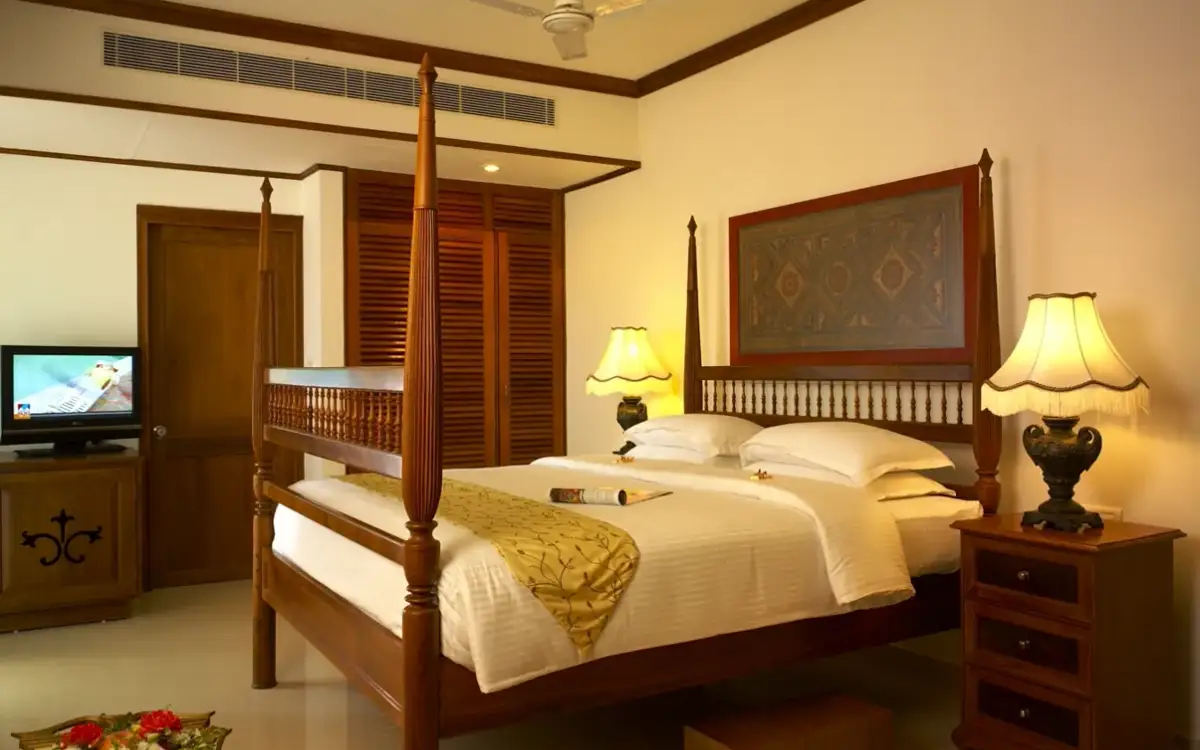
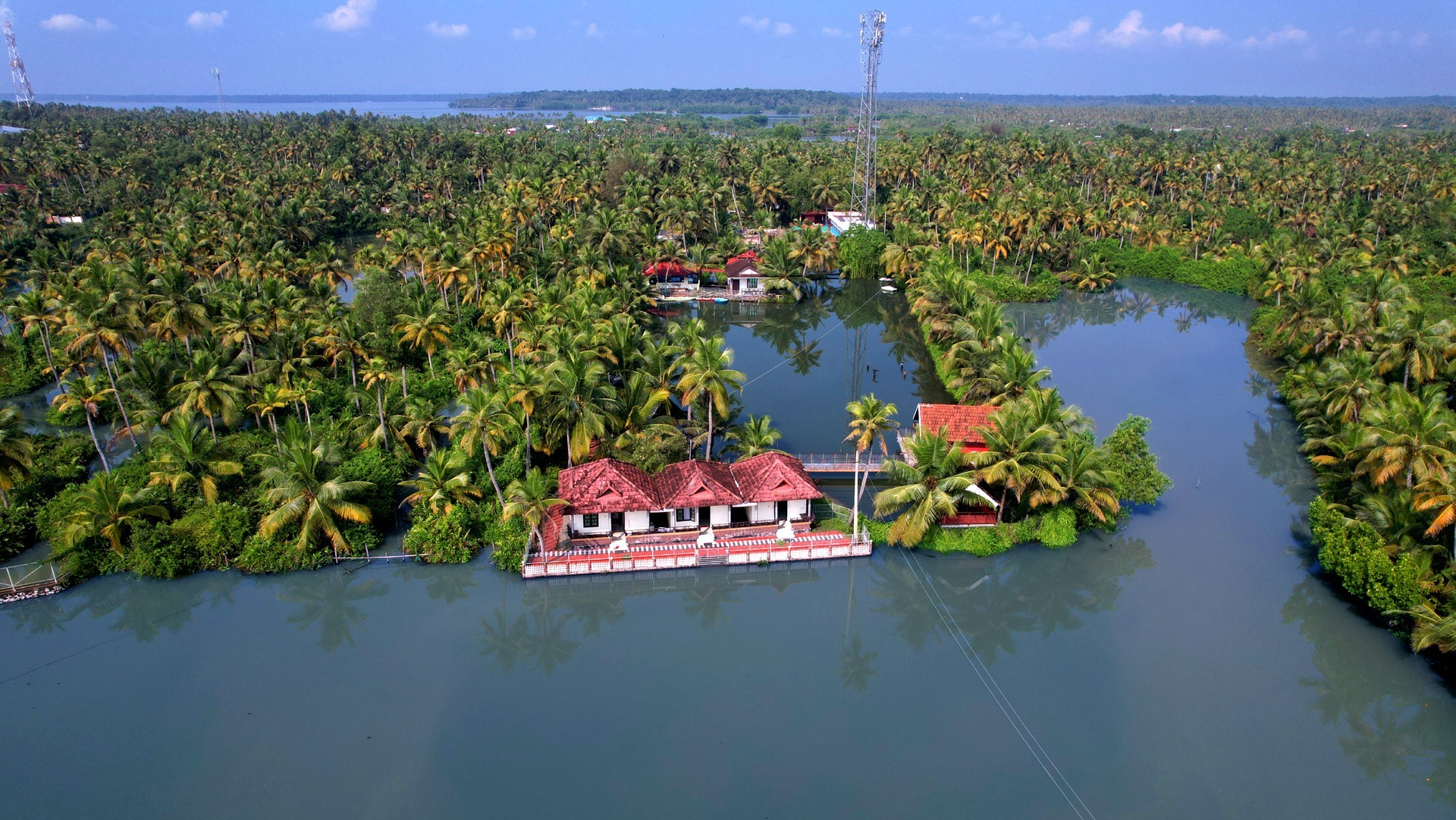
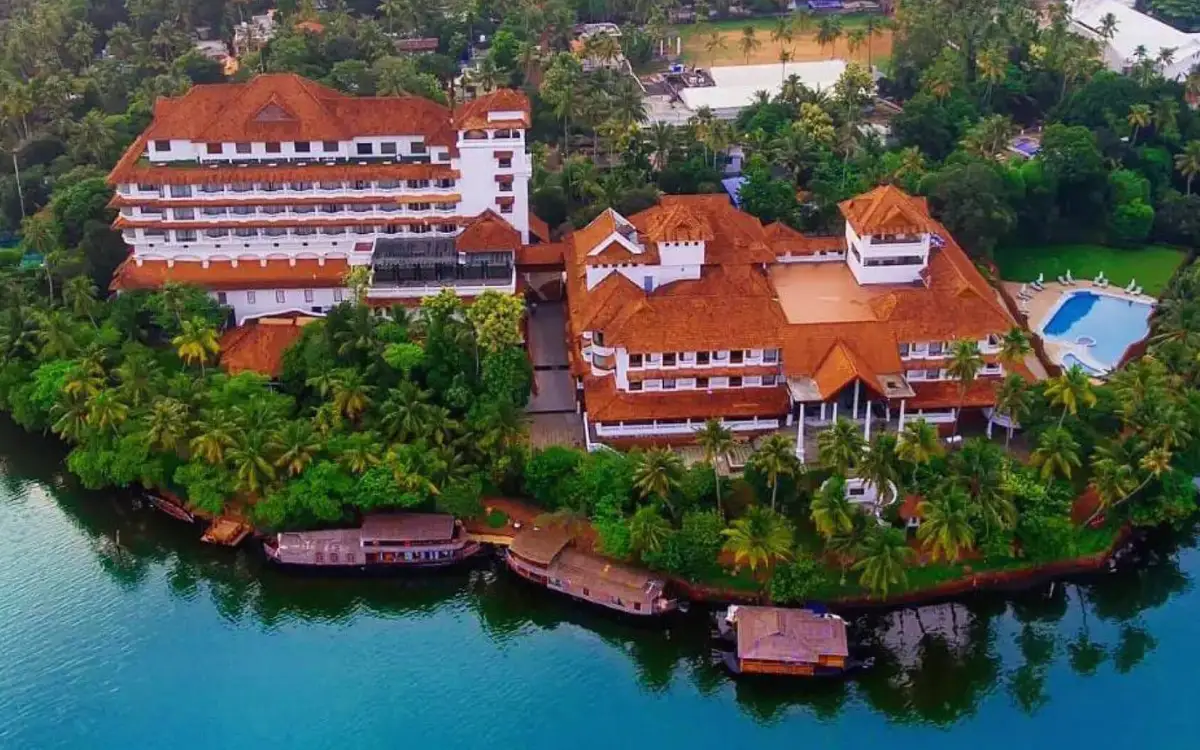
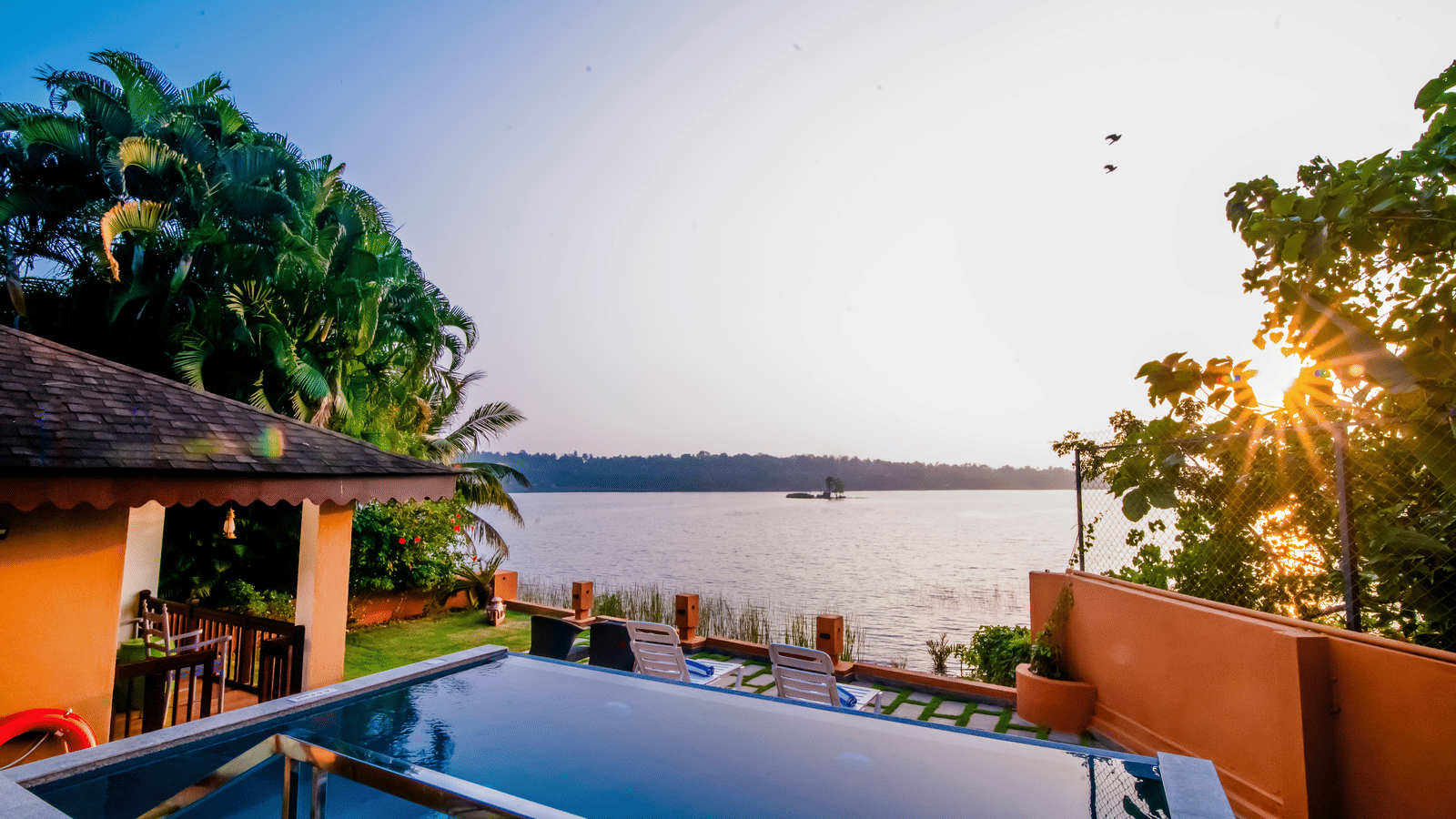
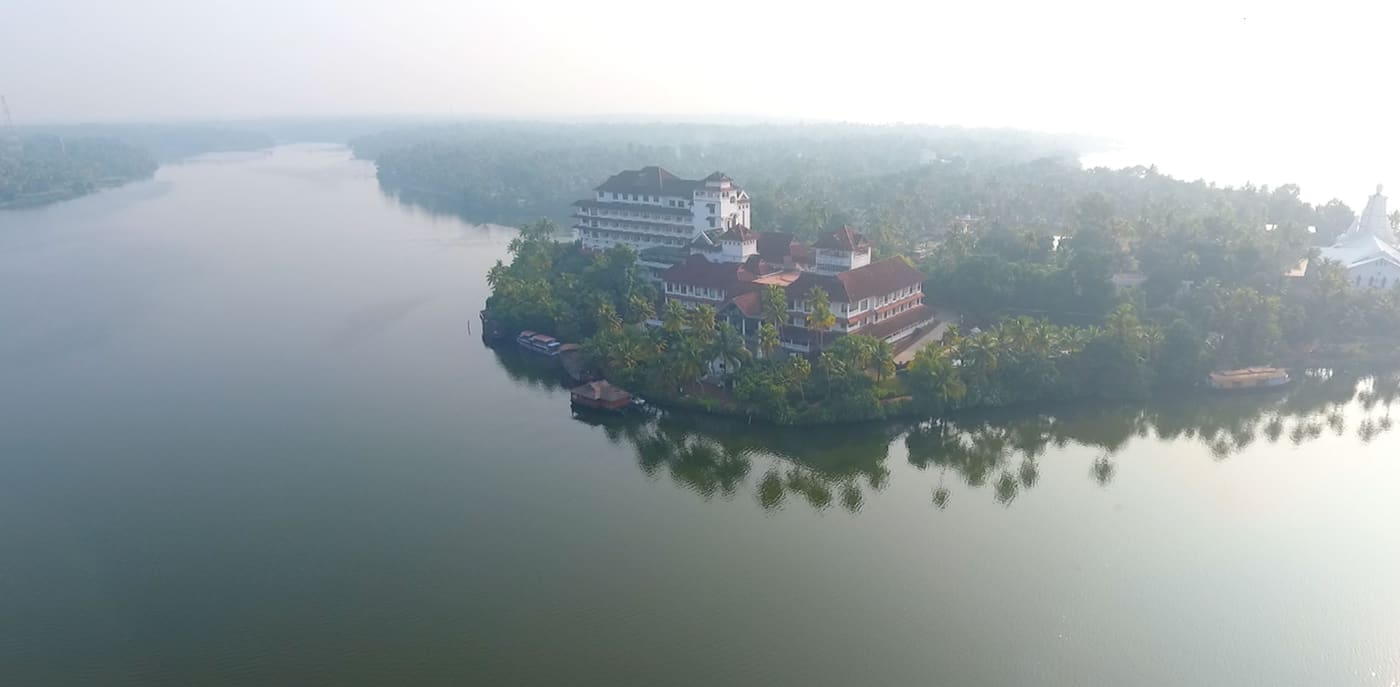
The Leela Ashtamudi is a lakefront heritage resort at Thevally Bridge, with several room types, houseboat categories and on-site dining. Its correct hotel entrance is at Thevally/Mathilil, separate from the Raviz corporate-office address previously displayed. Compare the named room or houseboat, lake view, meals, transfer, activity inclusions, total price and cancellation terms. The operator's aerial photograph shows the whole property, not a promise that every room has the same view.
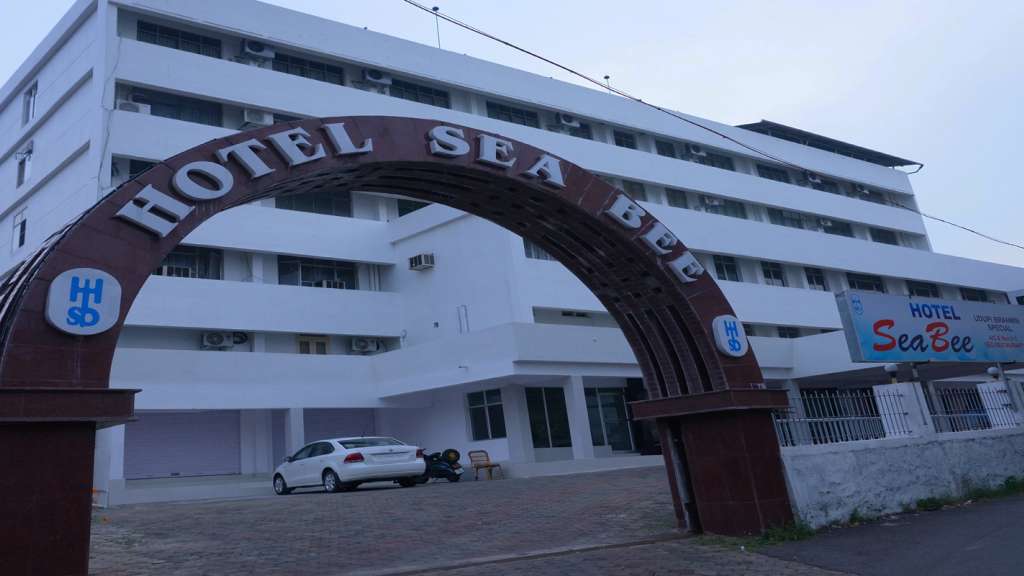
Modern budget hotel at Aadichanalloor on the Kollam–Thiruvananthapuram highway side of Kollam district, south of the town. It offers clean, value air-conditioned rooms with a restaurant and parking, a low-cost highway base for travellers passing through greater Kollam.
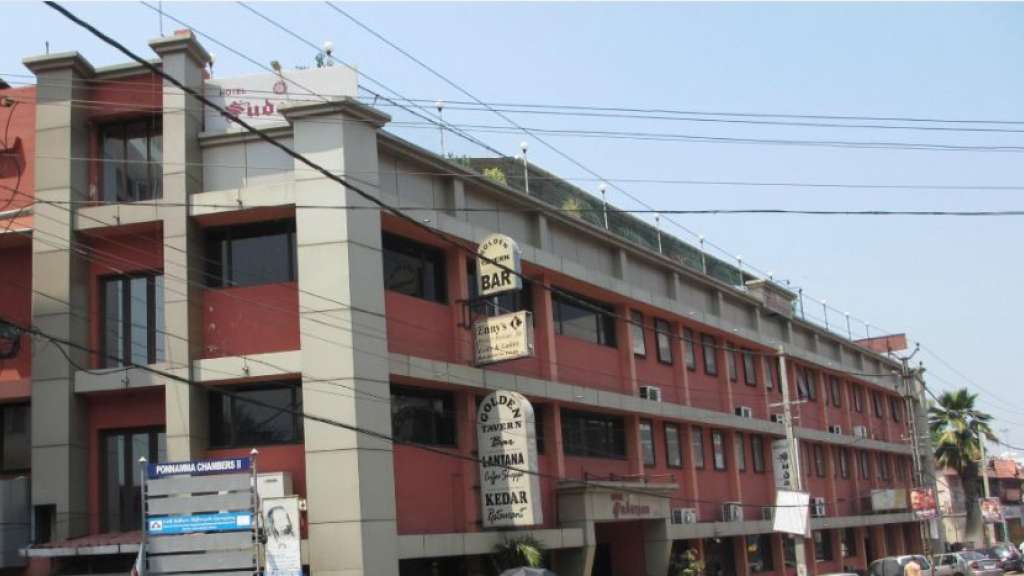
Long-running budget hotel at Parameswar Nagar in central Kollam, rated two-star class by travel directories. It offers value air-conditioned rooms with the Kedar multi-cuisine restaurant and Golden Tavern bar, a practical low-cost town-centre base for transit and business travellers.
Government-run KTDC Easy budget hotel in the Guest House compound at Ashramom, beside Ashtamudi Lake on the quiet edge of Kollam town. It offers simple, low-cost air-conditioned and non-air-conditioned rooms with a restaurant, run under the Kerala Tourism Development Corporation budget brand.
Long-running three-star-class hotel near the KSRTC bus station on Jetty Road in central Kollam, a short walk from the Ashtamudi backwater boat jetty. It offers 44 air-conditioned rooms, a multi-cuisine restaurant, bar, travel desk and boating assistance, a practical mid-range base for backwater and transit travellers.
Kerala Tourism-classified three-star hotel at Kottiyam on the Kollam–Thiruvananthapuram highway, in the southern part of Kollam district. It offers air-conditioned rooms, a multi-cuisine restaurant, bar, banquet hall and travel desk, a comfortable mid-range highway base a short drive south of Kollam town.
Kerala Tourism-classified three-star hotel on NH-47 directly opposite Kollam Railway Station, in the heart of Kollam town. It offers air-conditioned rooms, a multi-cuisine restaurant, bar, banquet and conference halls and 24-hour room service, a convenient mid-range base for rail and business travellers.
Fragrant Nature at Paravur is a lake-side resort outside central Kollam. Allow separate road journeys for Thangassery, city dining and onward rail travel.
D Fort Hotel is a Thangassery stay near the lighthouse neighbourhood. Check room and wellness packages separately from the lighthouse’s own visitor session.
A three-star resort set in a coconut palm forest on the banks of Ashtamudi Lake. Its 26 units include houseboats and floating cottages.
A budget backwater homestay on Munroe Island near Kalluvila Temple. Offers canoe and shikara trips, Ayurvedic massage, and Kerala home cooking.
Kollam houseboat operator with day cruises on Ashtamudi Lake and overnight boat options. Confirm the boarding point, route, boat and inclusions directly.
Ashtamudi resort with both floating and land-based accommodation. Compare the exact room category and booking eligibility; confirm dining and lake activities separately.
A central Kollam homestay near Sankers Hospital. Its own site publishes room choices and direct booking details.
An Asramam homestay for visitors who want a Kollam base away from the railway-station cluster. Ask about the current room and arrival route.
A restored ancestral home in Uliyakovil, Kollam. Ask the host how its room layout and access work for your group.
A Kureepuzha homestay beside Ashtamudi Lake. Ask the host about the room, meals, arrival route and any separately arranged boat trip.
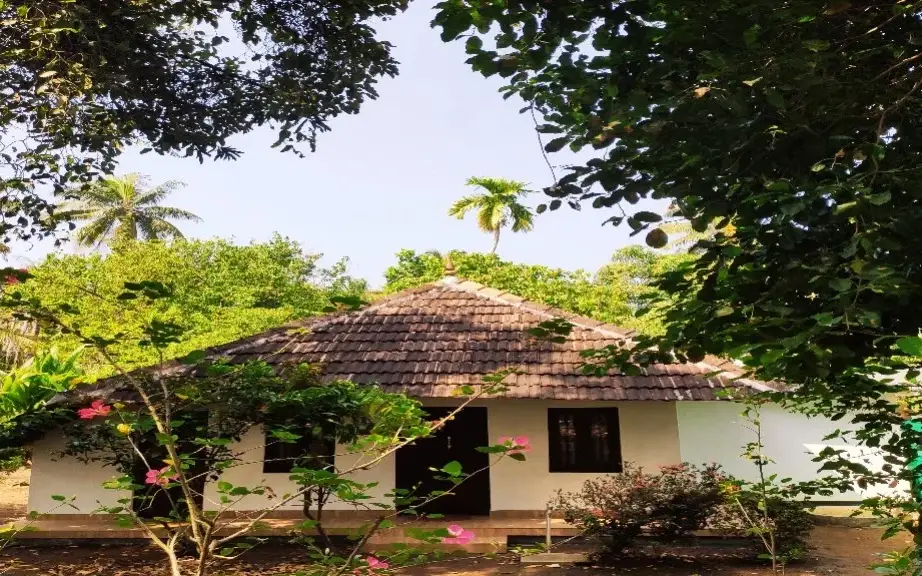
Samiira is a small heritage-style resort at Sarayu Nagar in Asramam, beside Ashtamudi Lake. Its official site distinguishes two Heritage Cottages with separate living rooms from eight Lake Front Verandah Rooms with private verandahs. Choose the layout you need, then confirm the exact room, view, meal plan, transfer and total price. Kayaking and spa experiences are described by the property, but ask whether they operate and whether they are included in your booking. The property's own exterior photograph shows its veranda, not a guarantee of the room you will receive.
Book with the place itself. India’s cyber-crime coordination centre warned in April 2025 that convincing copies of hotel and pilgrimage booking sites are being pushed through sponsored search and social ads, taking payment for rooms the property never hears about. Use the contact and source details on each profile to confirm the exact business and booking channel. A directory entry or map pin alone does not establish an operator’s identity or current availability. Roampedia takes no commission and does not collect booking payments. If a booking page reached you through an ad, check the address bar against the property’s own site before you pay. Fraud can be reported on cybercrime.gov.in or on 1930.
Find food, accommodation and activities across Kollam town. Browse the guides for places to eat, stay and explore along your route.
13 more places around Kollam town. Open a guide to plan the visit and onward journey.
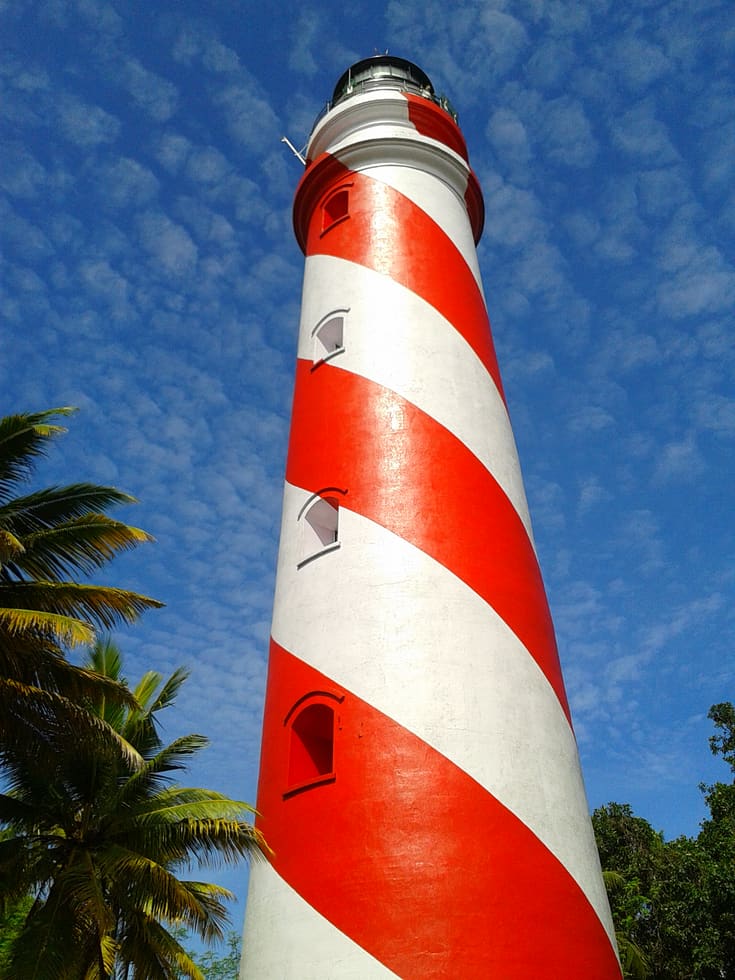
Thangassery Lighthouse raises Kollam’s sea view above a historic coastal neighbourhood. The red-and-white tower is a working navigation landmark with a separate visitor session.
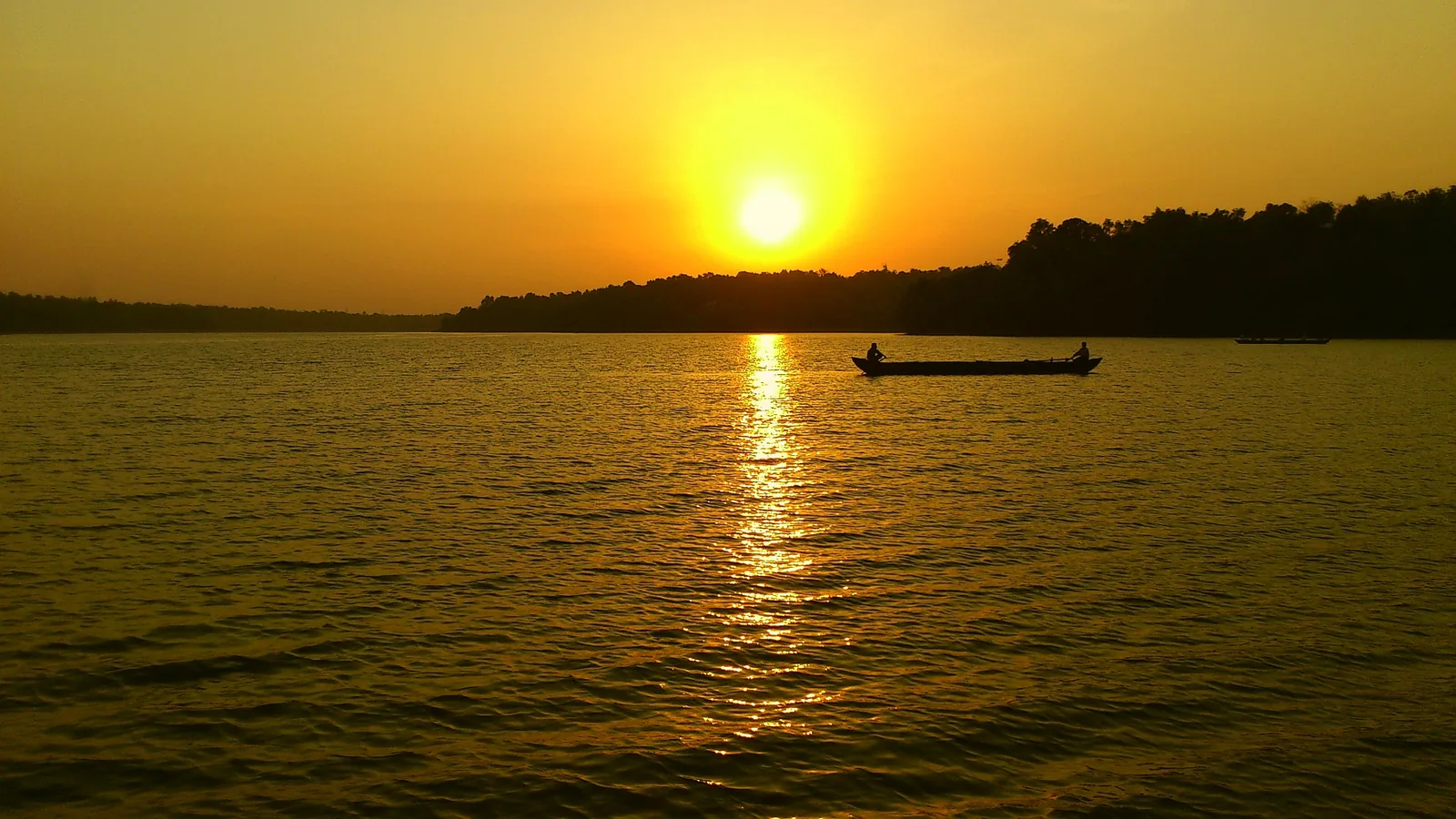
Kerala’s largest freshwater lake, a Ramsar wetland ringed by hills and a Sastha temple, north of Kollam.
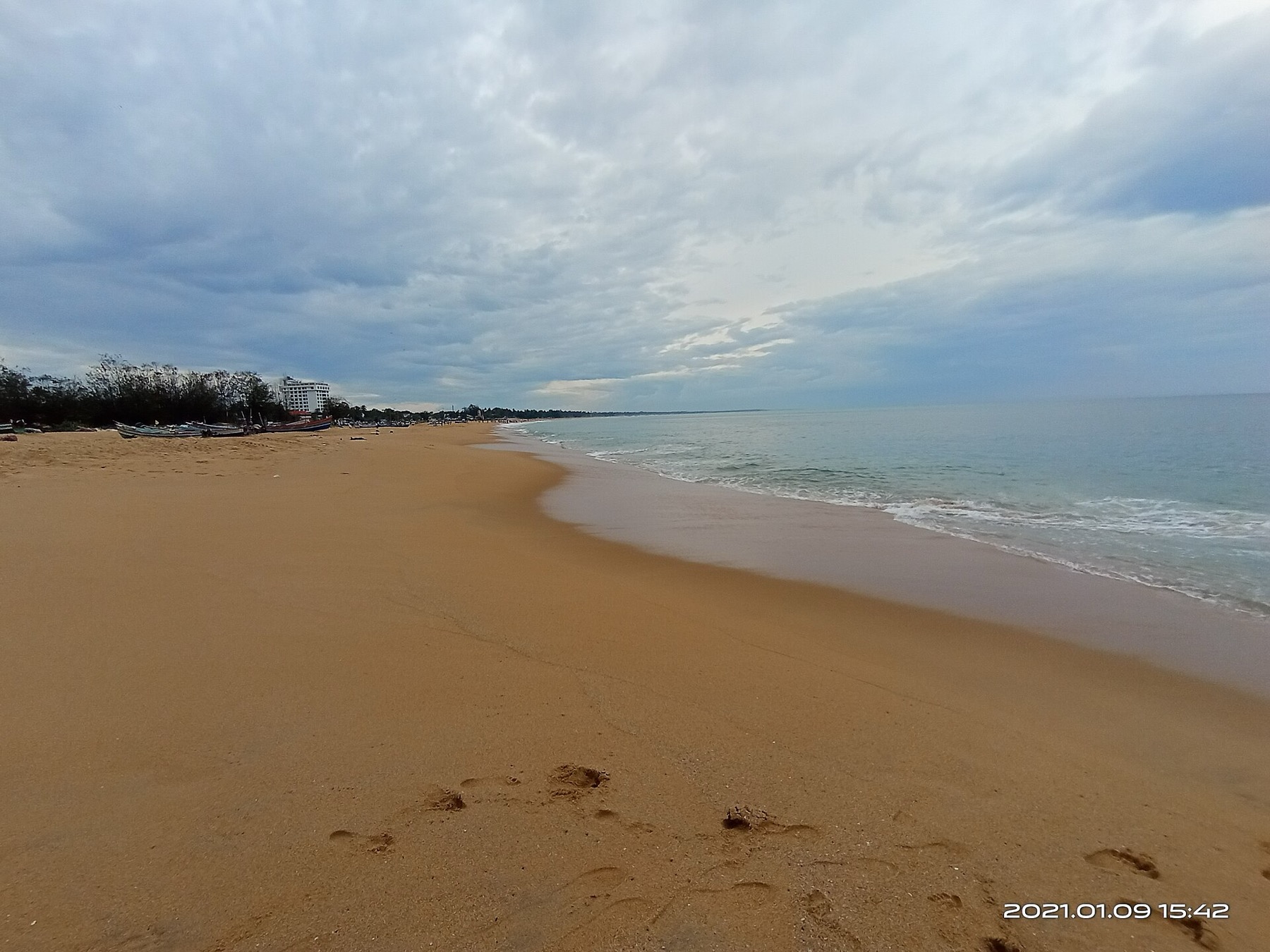
The city’s Mahatma Gandhi beach and park on the Arabian Sea, a popular evening spot near Kollam town.
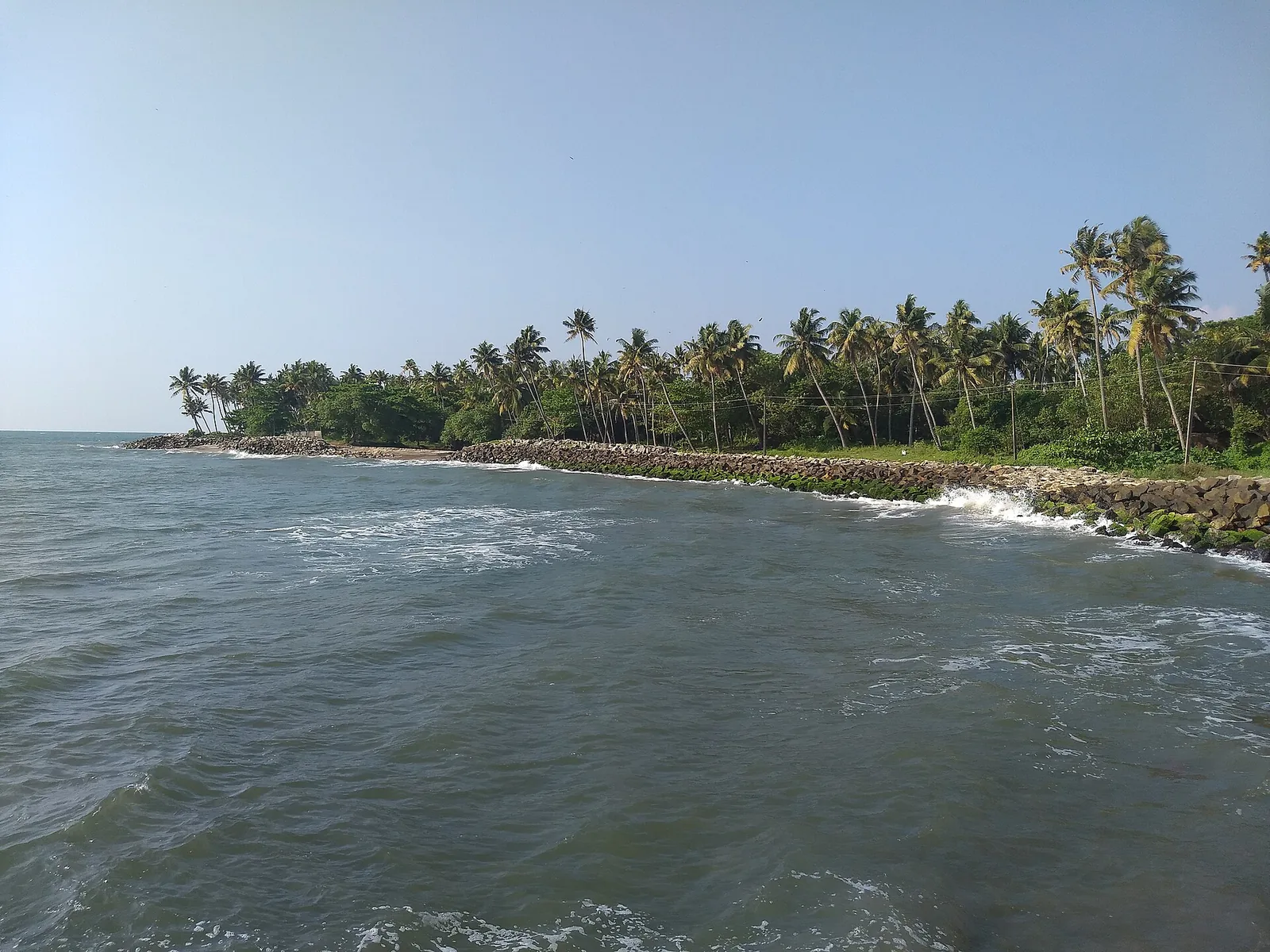
A quiet, curved bay beach west of Kollam town, calmer than the city beach and good for a relaxed evening.
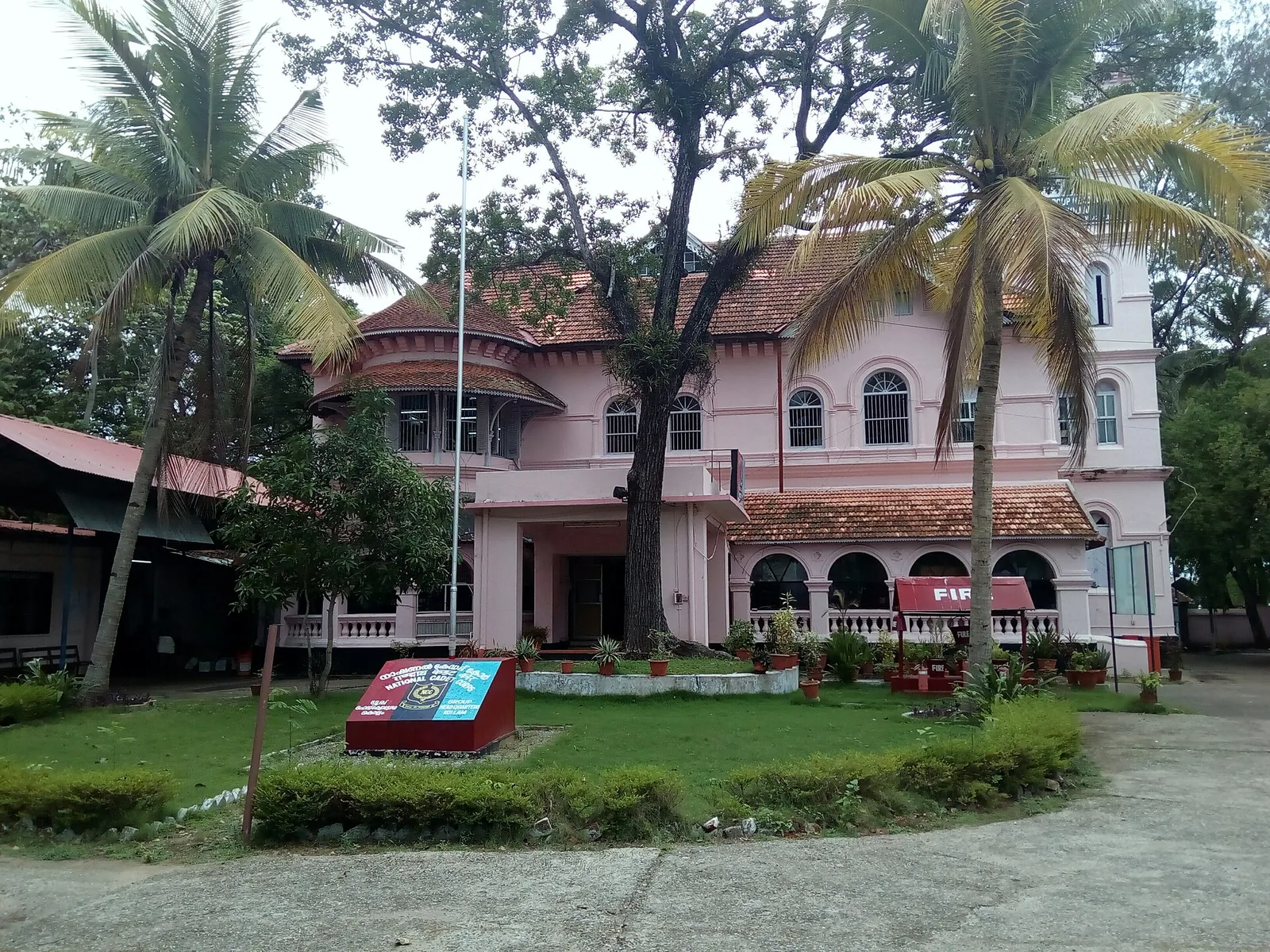
A Travancore royal residence on the Ashtamudi shore in Kollam, built to be arrived at by boat and now a working NCC establishment — viewed from outside or from the water.
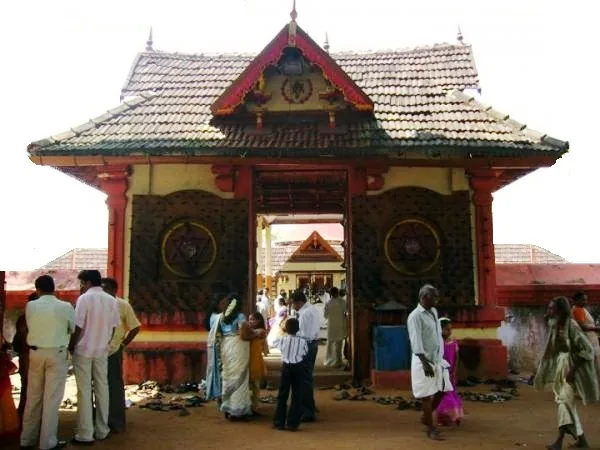
Anandavalleeswaram is an active Shiva temple in Kollam, with an Anandavally shrine and a ten-day annual festival in March or April. Ritual processions and cultural performances bring another dimension to the temple visit. Follow its worship session, admission and photography rules.
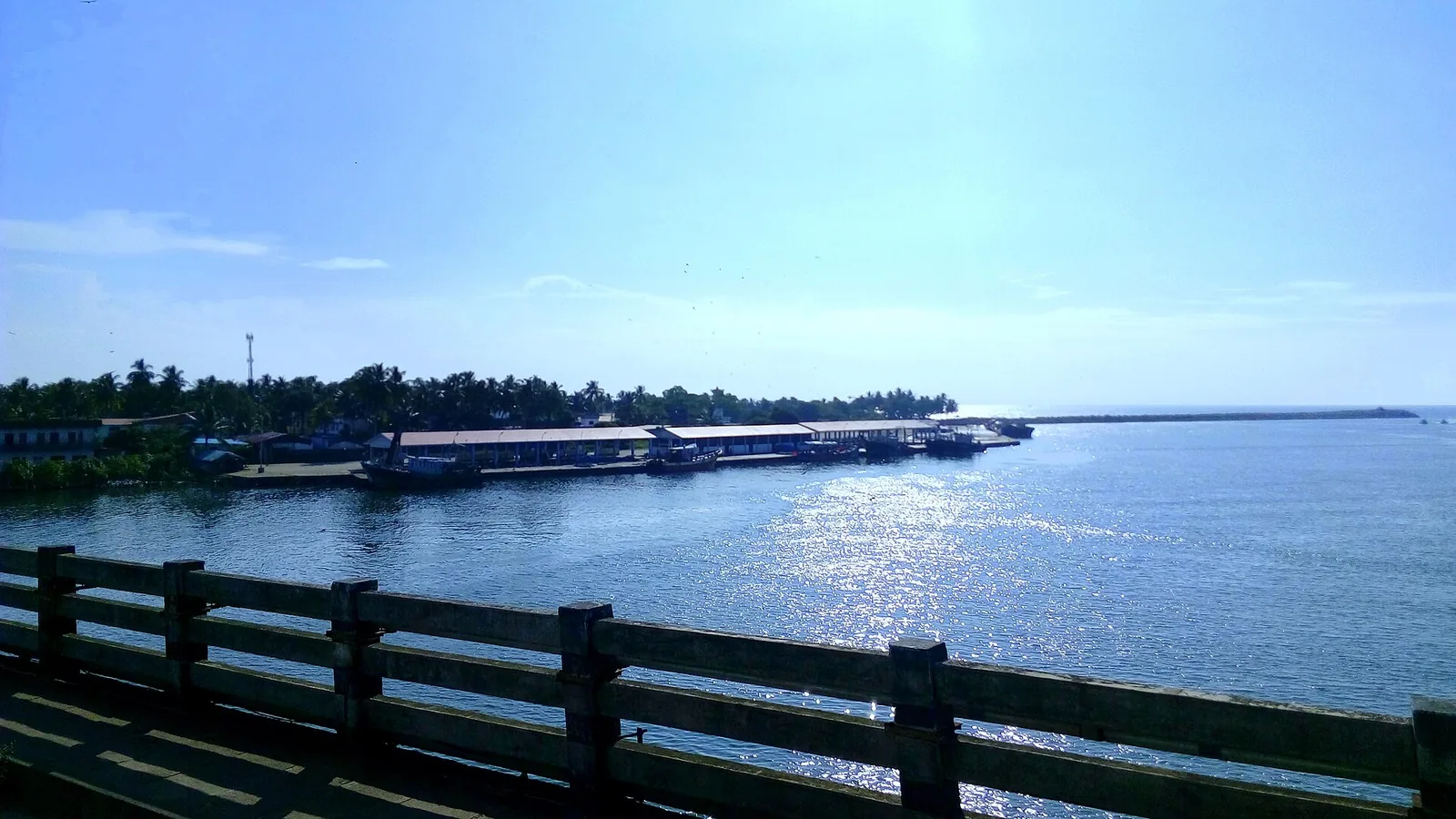
By most accounts Kerala’s largest fishing harbour, at the mouth of Ashtamudi Lake about 9 km from Kollam town, and where Indian fishing was mechanised; two bridges cross the confluence and the early-morning auction is the sight to catch.
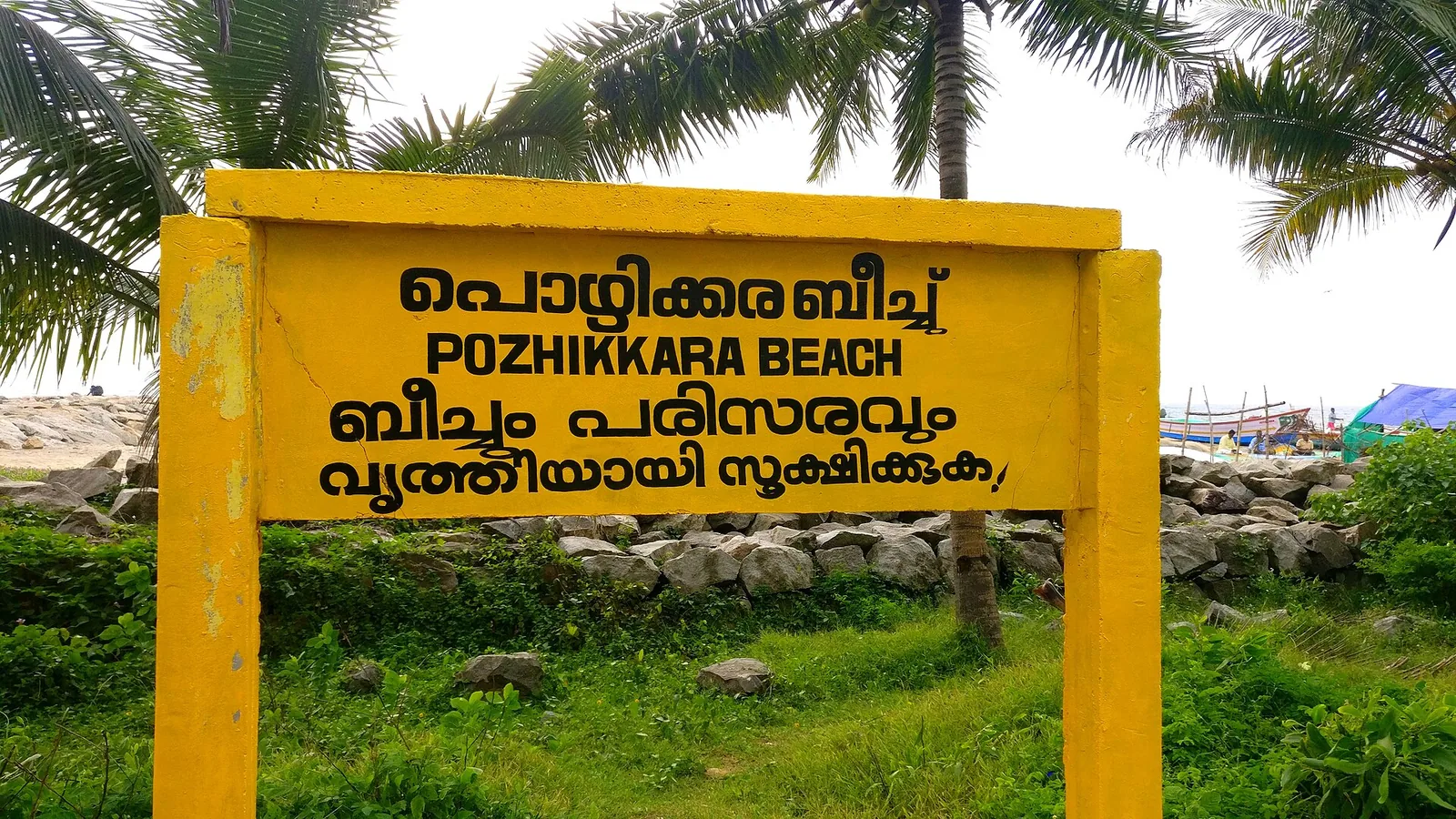
The estuary and beach at Paravur south-east of Kollam, where the Paravur backwaters meet the sea across a sandbar — a quiet spot known for its regulator bridge, the TS Canal and calm backwater-and-sea scenery.
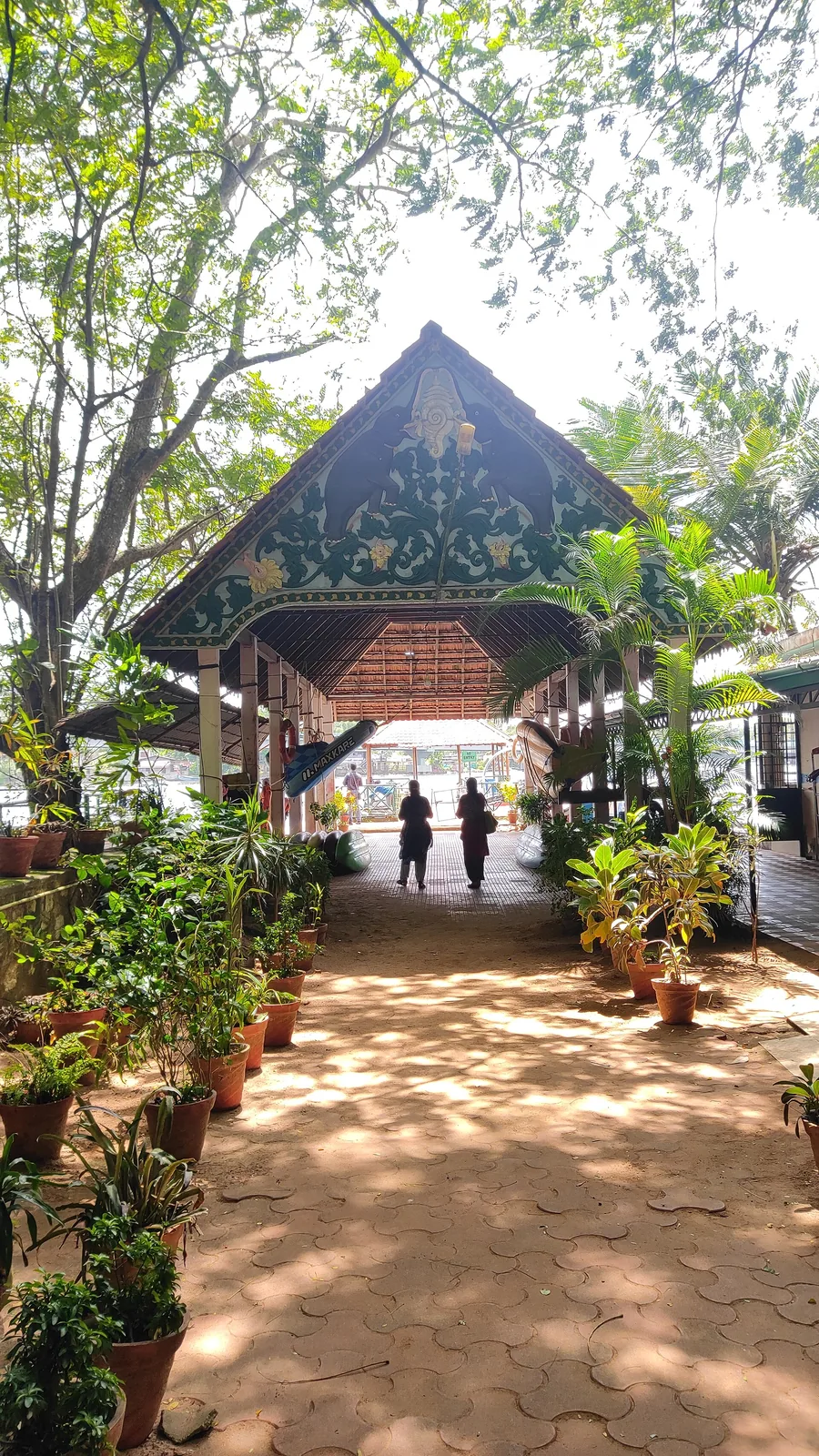
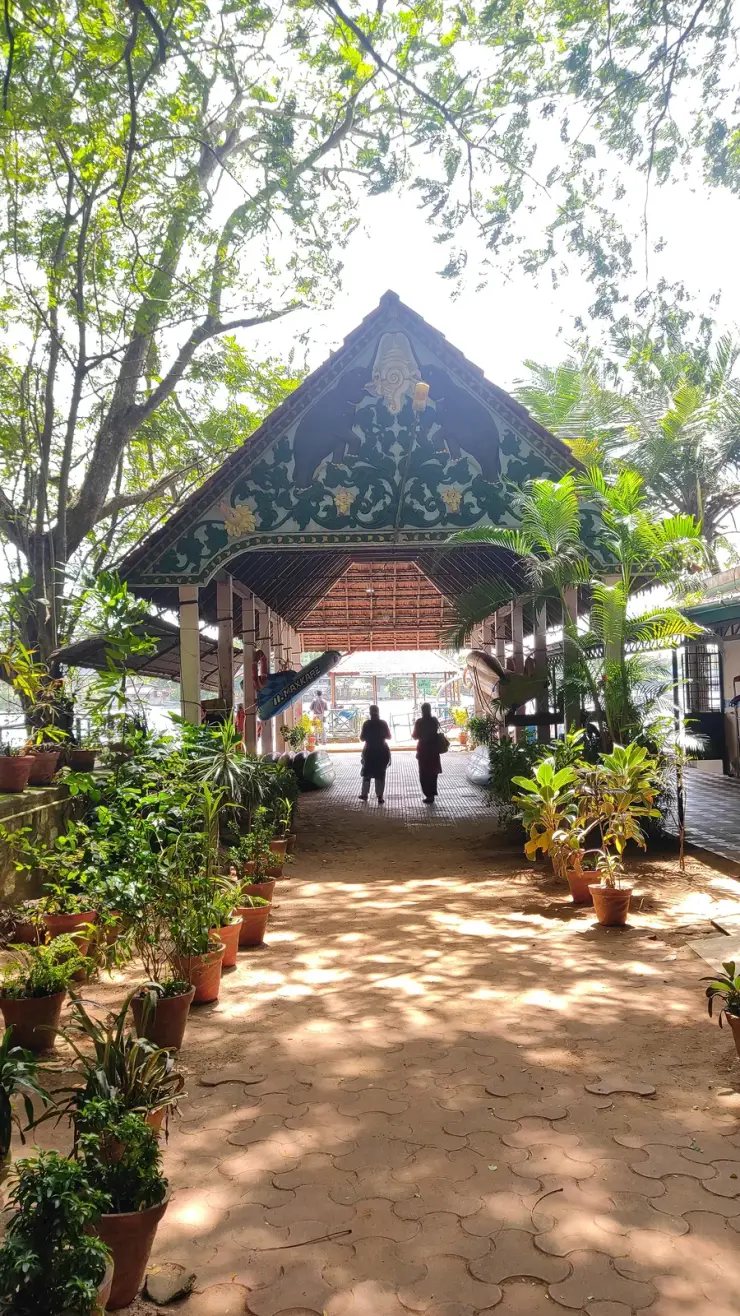
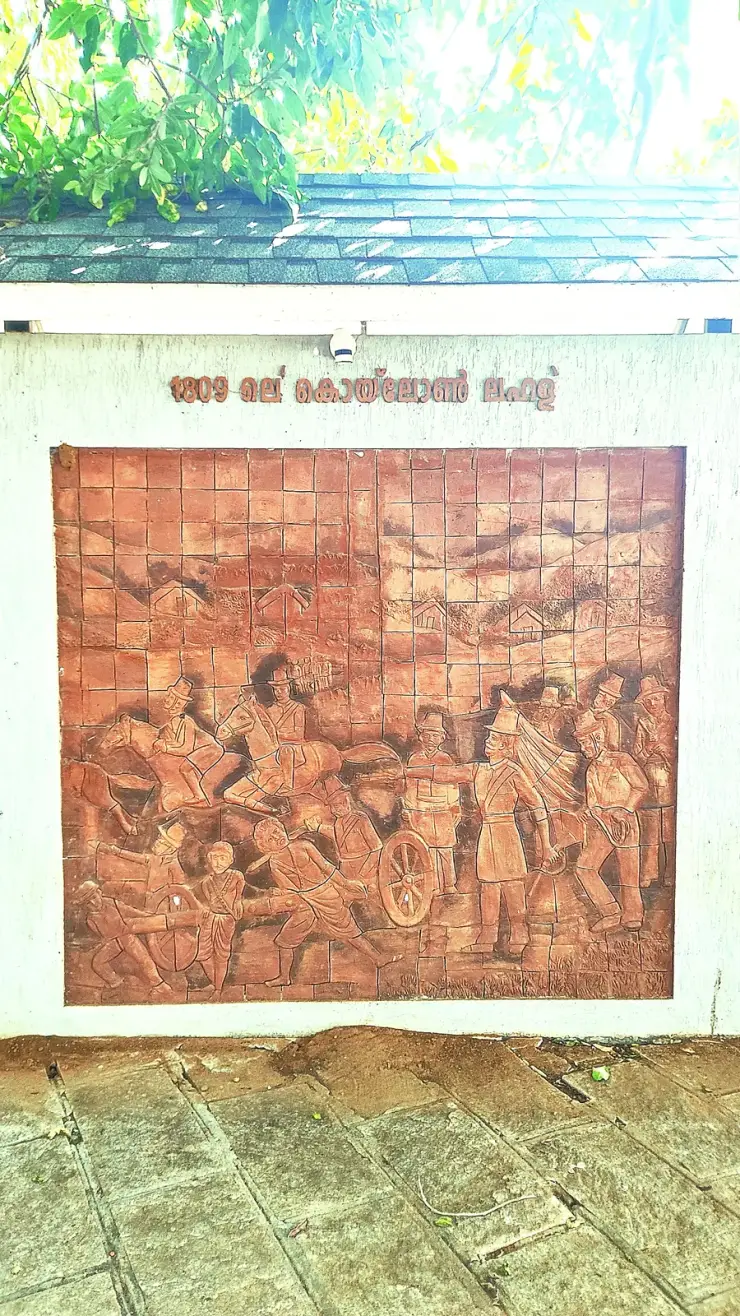
Forty-eight acres of municipal park on the Ashtamudi shore in the middle of Kollam, run by the DTPC — boating and kayaking off a painted jetty, ziplines and rope courses, a heritage walkway of terracotta reliefs, contemporary sculpture left behind by a 2012 festival, and a mangrove wetland with a state biodiversity heritage tag.
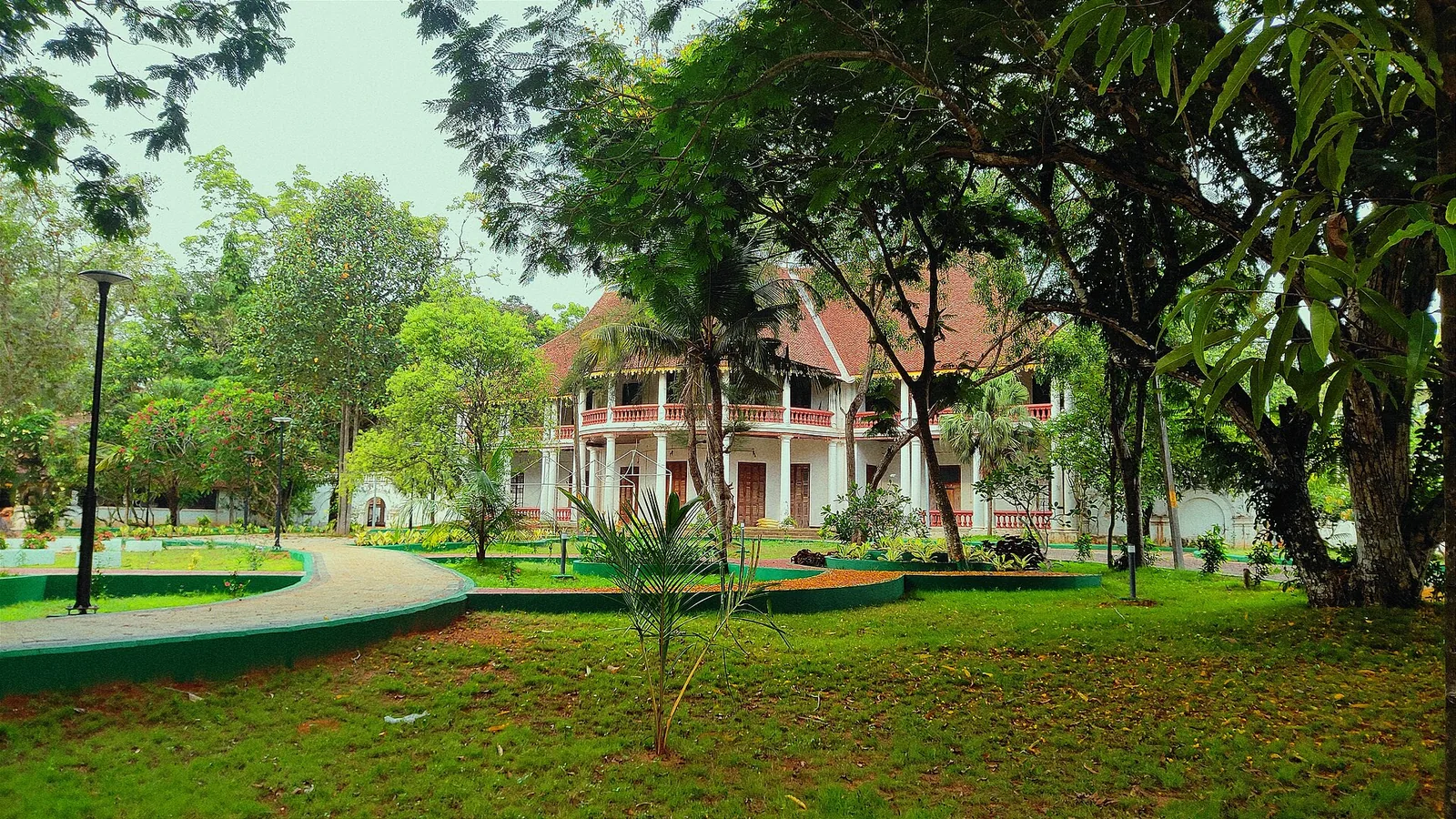
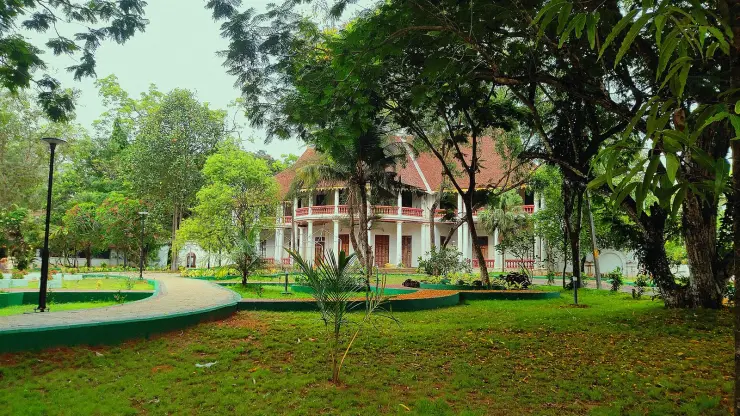
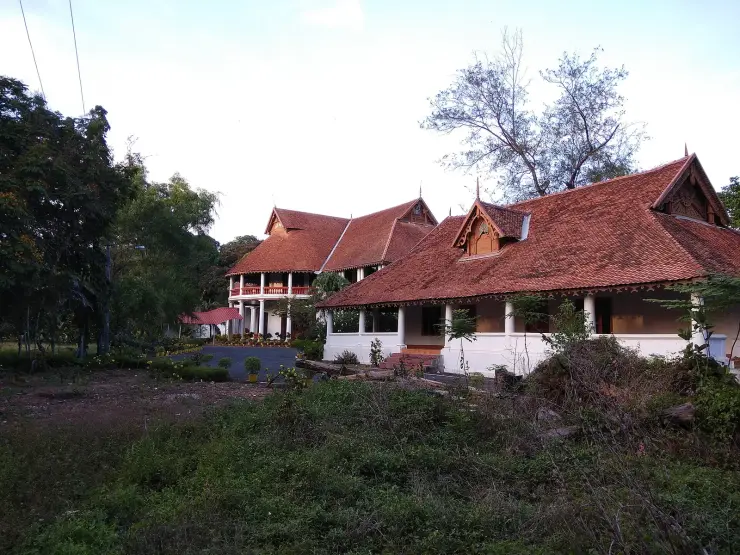
The former British Residency at Asramam survives as a government guest house beside Kollam’s backwater landscape. Its architecture is the attraction, with access governed by its working use.
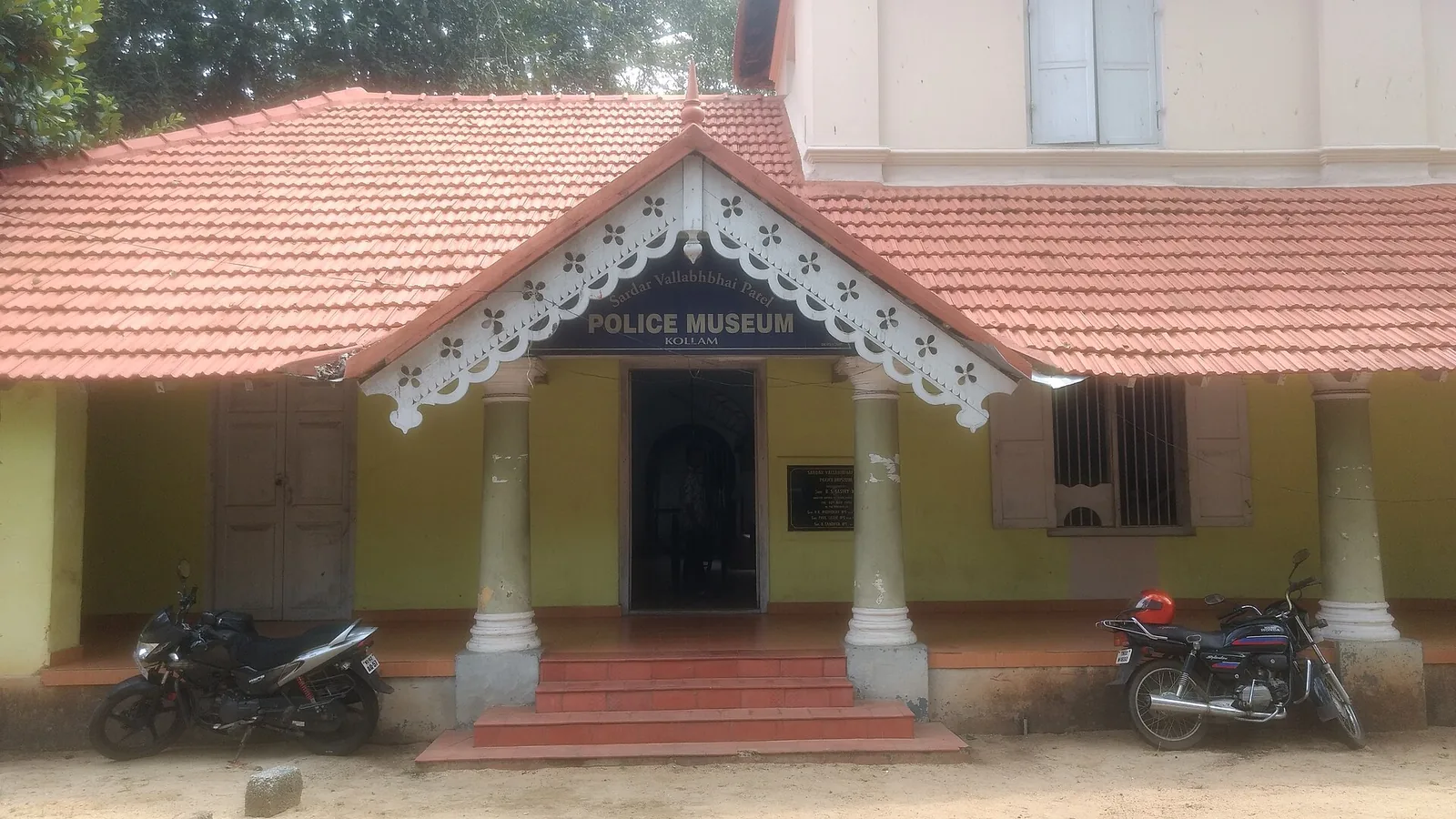
Kollam’s Sardar Vallabhbhai Patel Police Museum introduces the history of policing through arms, equipment and investigation displays. It offers an indoor history stop during a city outing. Check the museum’s session before choosing your day, and leave time to read the displays.
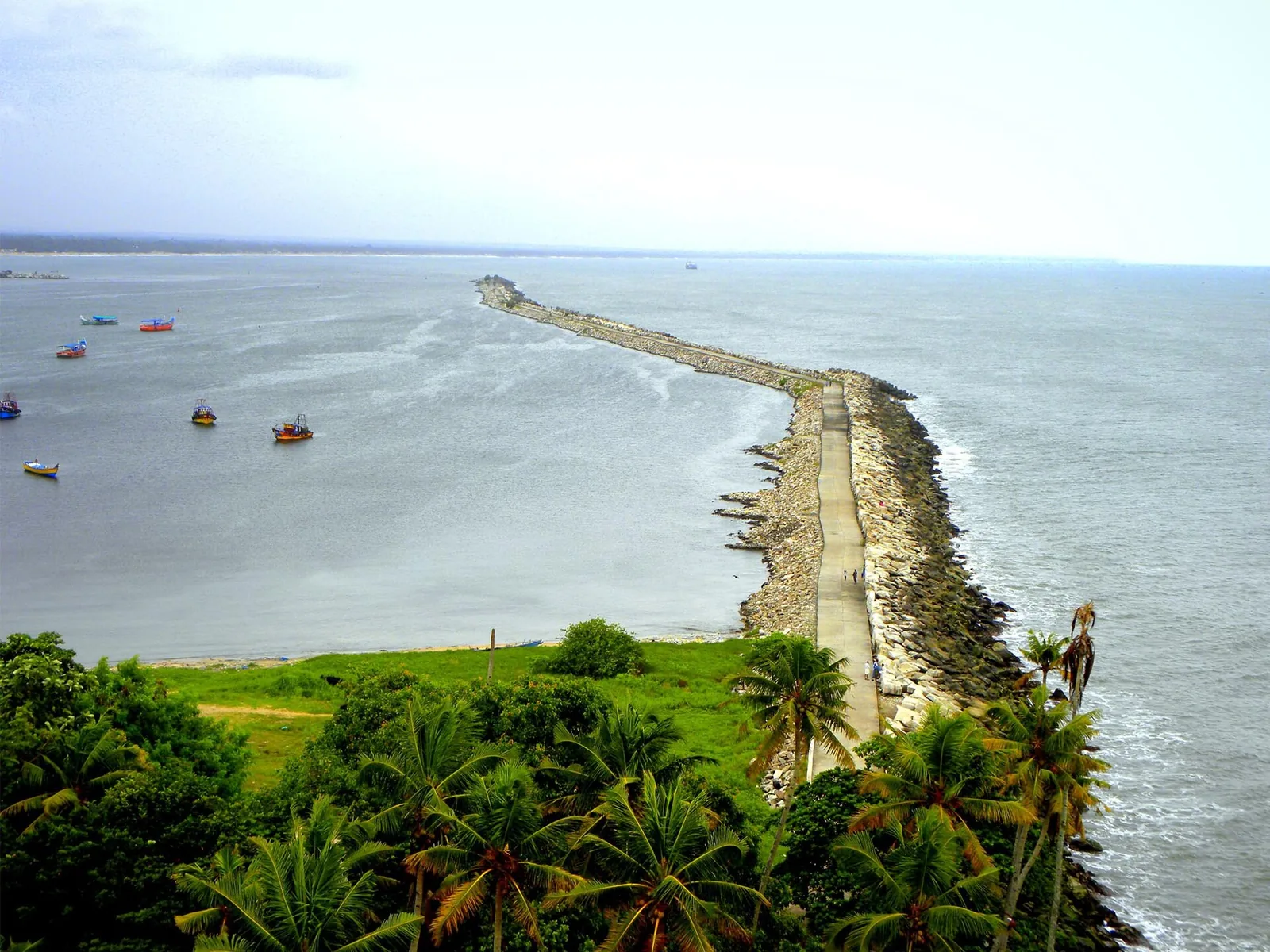
The working wharf and breakwater at Thangassery, conventionally founded in AD 825 — the event the Malayalam calendar counts from. A short cargo quay and a long public breakwater walk, above a seabed that has produced Tang and Song coins and Lower Palaeolithic tools.
Roampedia is commission-free — own or know a stay, eatery, guide or shop near Kottukal Cave Temple? Submit public business details for review.
Add a nearby businessEntry: No entry fee is charged for this protected monument and shrine. Any offerings or poojas are voluntary.
Dress code: Traditional, modest temple attire is expected. As at many Kerala Siva temples, men may be asked to remove their shirt and wear a mundu at the sanctum, and women should dress modestly in a sari or salwar.
Festivals: Maha Shivaratri is the principal festival, marked by night-long worship before the Shivalinga (dates shift yearly with the lunar calendar — confirm locally).
Photography: Photography of the rock and exterior is generally fine and rewarding; photography inside the sanctum may be restricted out of respect for worship — ask before shooting within the caves.
If you are travelling by bus or ferry, check the return service with the operator before setting out. Leave time to reach the stop or jetty after your visit.
Ask at the bus stand for the time of the last service back, not the next one. If you miss it, an auto or app cab is the fallback — agree the fare before you get in.
If you need step-free access, contact the site before travelling. Ask about a level entrance, steps along the route, the nearest drop-off point, seating and accessible toilets.
Charge cap and free-transaction limits: Reserve Bank of India, ATM FAQ updated 4 July 2025; checked 4 October 2026.
These services are listed within about 1.2 km of Kottukal Cave Temple. Walking distances follow mapped routes; access and opening hours can change. Other services may be closer but are not included here.
Published emergency and visitor-assistance contacts. For an immediate emergency, call 112. Shared Kerala contact sources checked 4 October 2026; publication does not establish a tested live response.
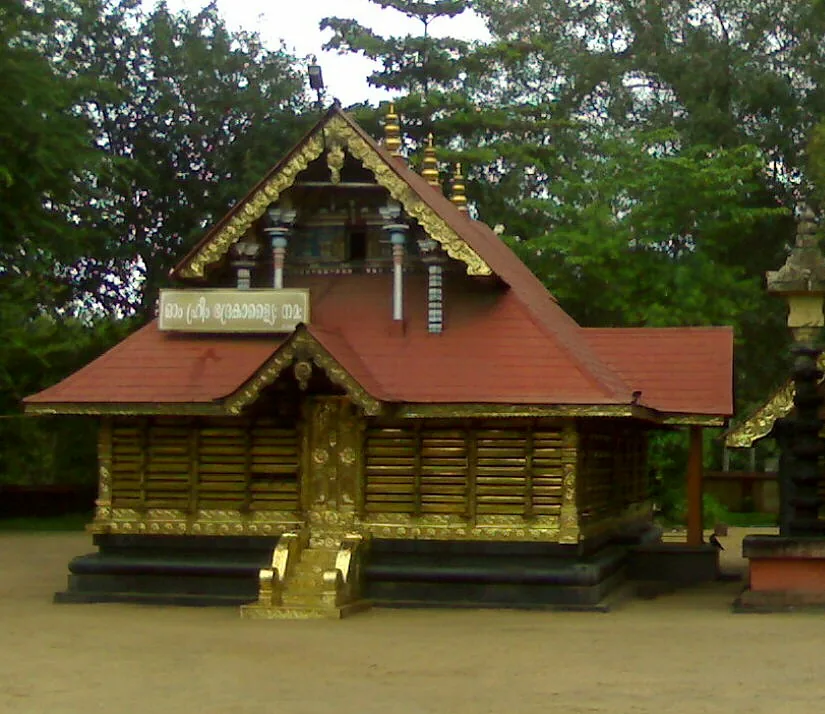
A short drive linking the named temples around Chadayamangalam: the Kottukkal rock-cut cave, the four-temple complex around one pond at Kadakkal, and the sacred groves, serpent shrine and kalari shrine of the surrounding belt.
4.4 km · straight line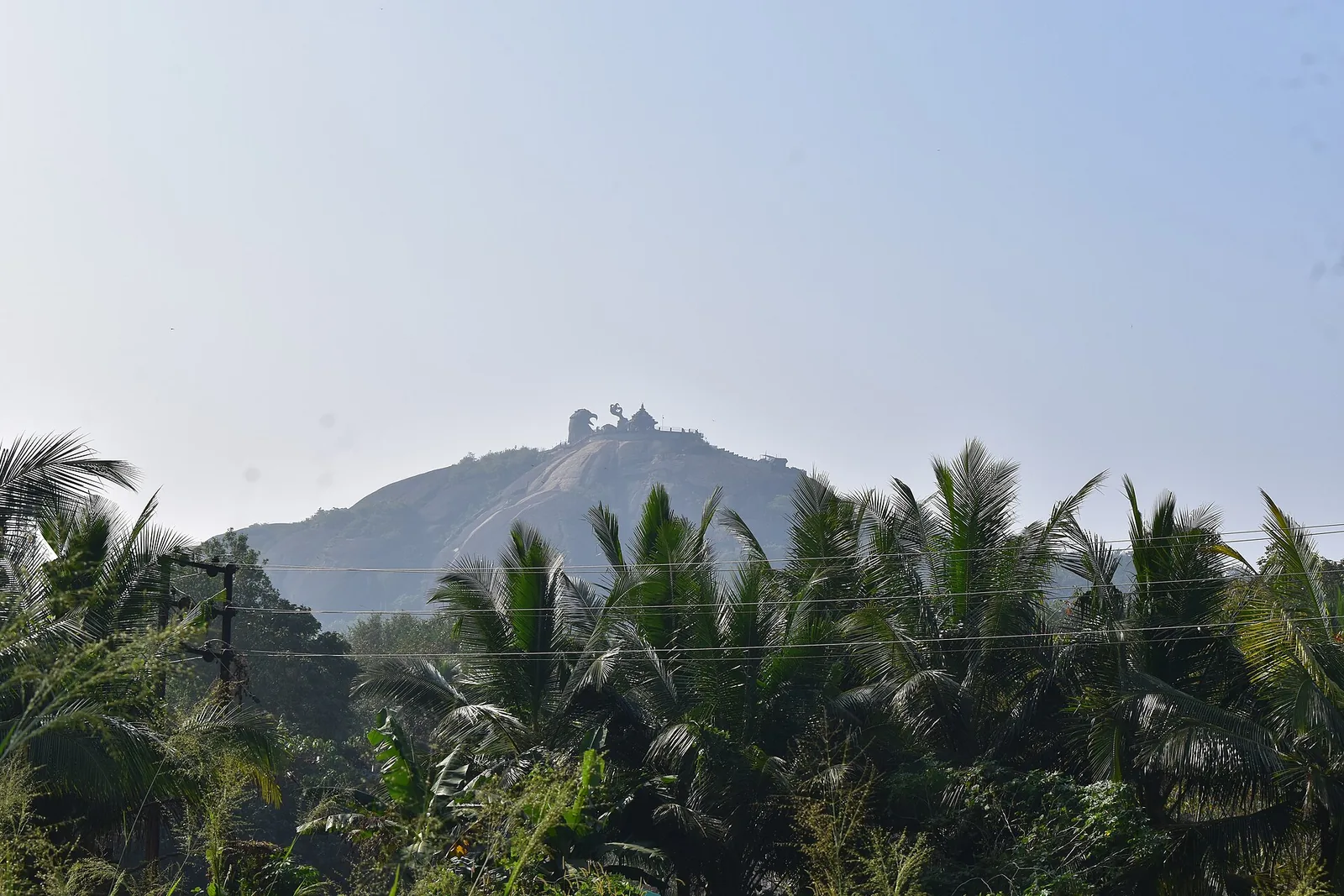
The rock outcrops and open high ground around Chadayamangalam, looking over the country between Kollam and the ghats — the landscape the Jatayu sculpture sits in, seen from ground level and without a ticket. The bare domes here are crystalline basement rock, not the laterite that mantles the ground between them.
4.7 km · straight line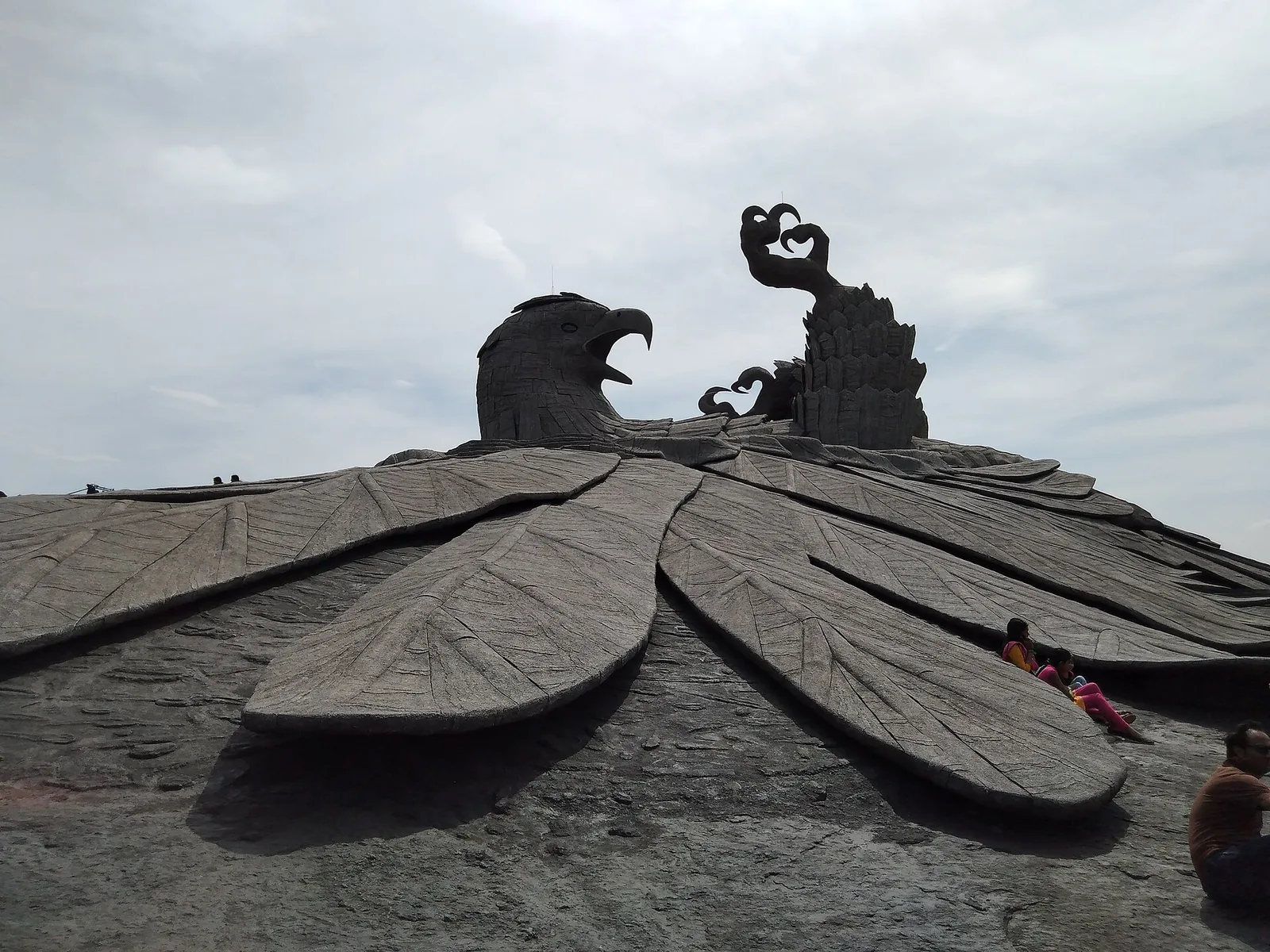
Hilltop sculpture park and viewpoint at Chadayamangalam, home to the world’s largest bird sculpture, reached by cable car.
5.3 km · straight line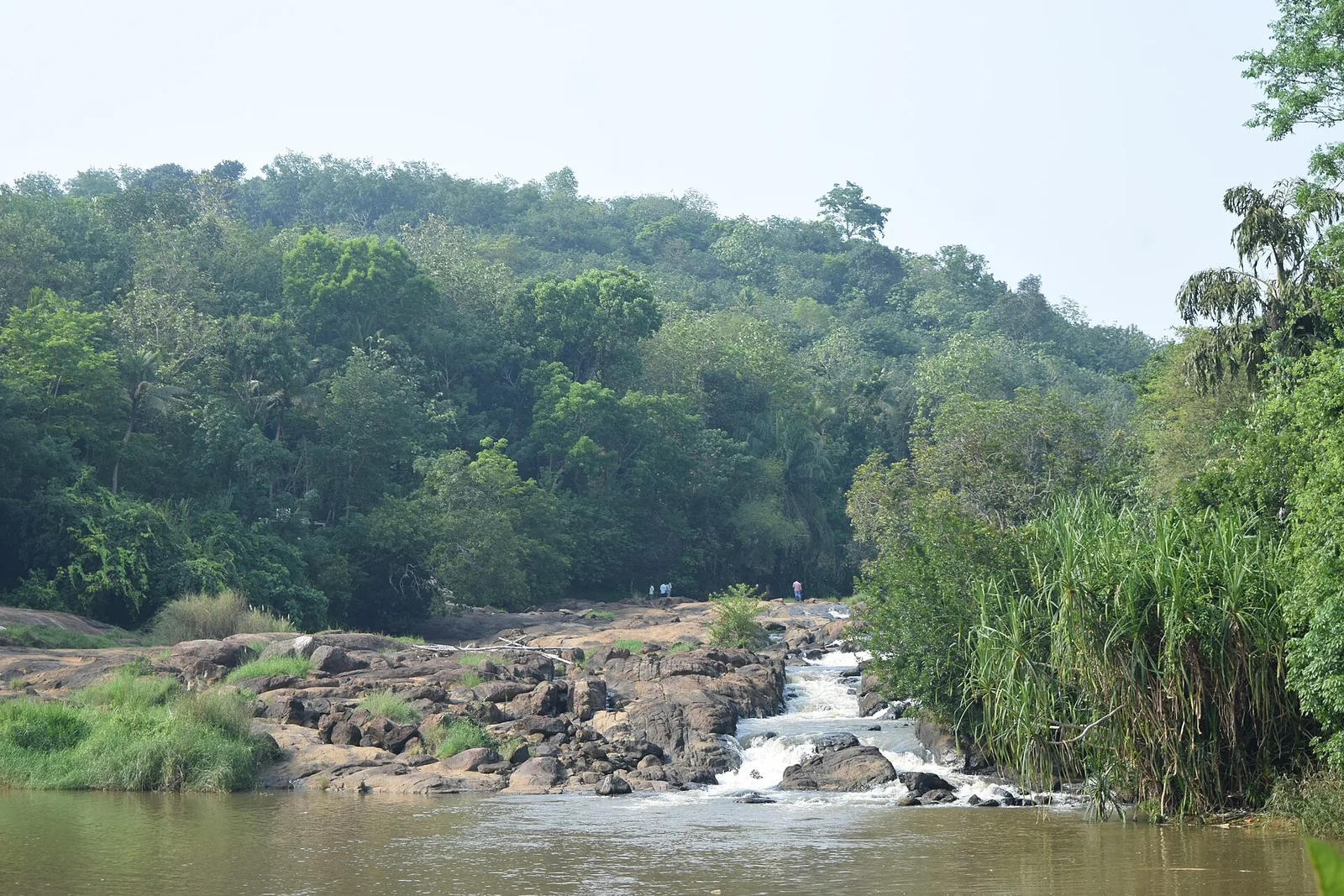
A wide rock apron on the Ithikkara near Kalladathanni, where the river slides and braids rather than plunges — DTPC Kollam’s own description is “a small waterfall that does not particularly fall”. Free, unstaffed and unsigned, about 200 m on foot through a rubber estate. ⚠ No lifeguard and no railings; the local name Vattakayam means the round deep pool.
9.5 km · straight line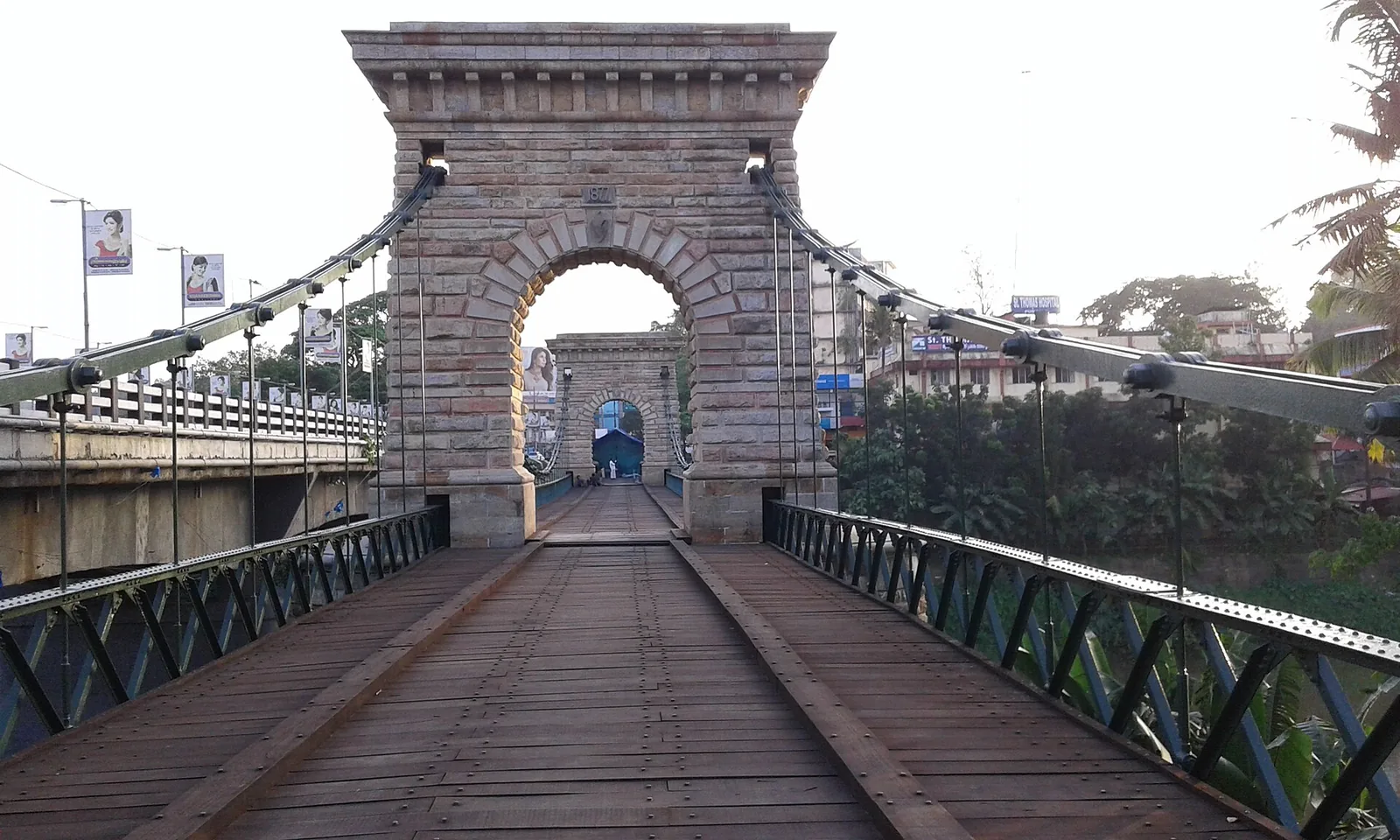
A rare 1877 Travancore-government suspension bridge over the Kallada river at Punalur, in east Kollam on the way to the ghats.
14.5 km · straight lineA community-linked forest and wetland visitor area near Madathara, used for guided birding and nature walks rather than an unrestricted independent forest excursion.
14.9 km · straight line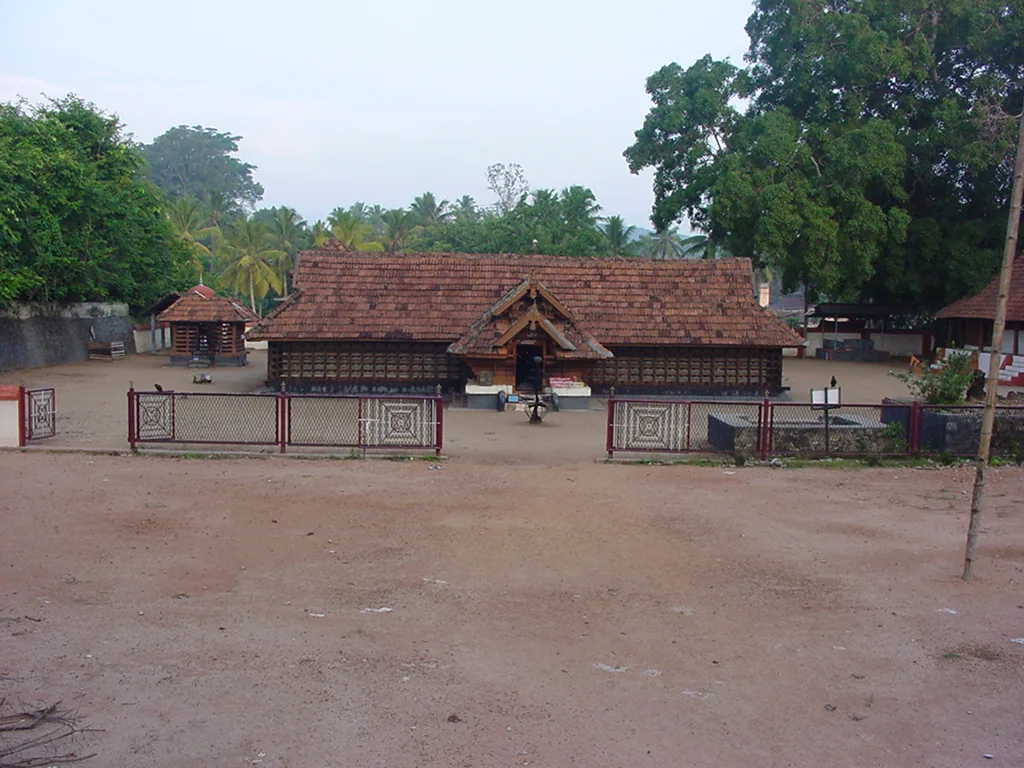
The Sastha temple on the Kollam–Shencottai road where the god is Bala Sastha, the child, and the river alongside is full of protected fish the devotees call Thirumakkal — the sacred children of the lord. Feeding them puffed rice, meenoottu, is the temple’s characteristic offering and fishing is prohibited outright; one of the two species present, Hypselobarbus thomassi, is critically endangered and endemic to the Western Ghats. Named in every published version of the Pancha Sastha. Three 15th-century sculptures from here are in the Napier Museum, Thiruvananthapuram.
16.9 km · straight line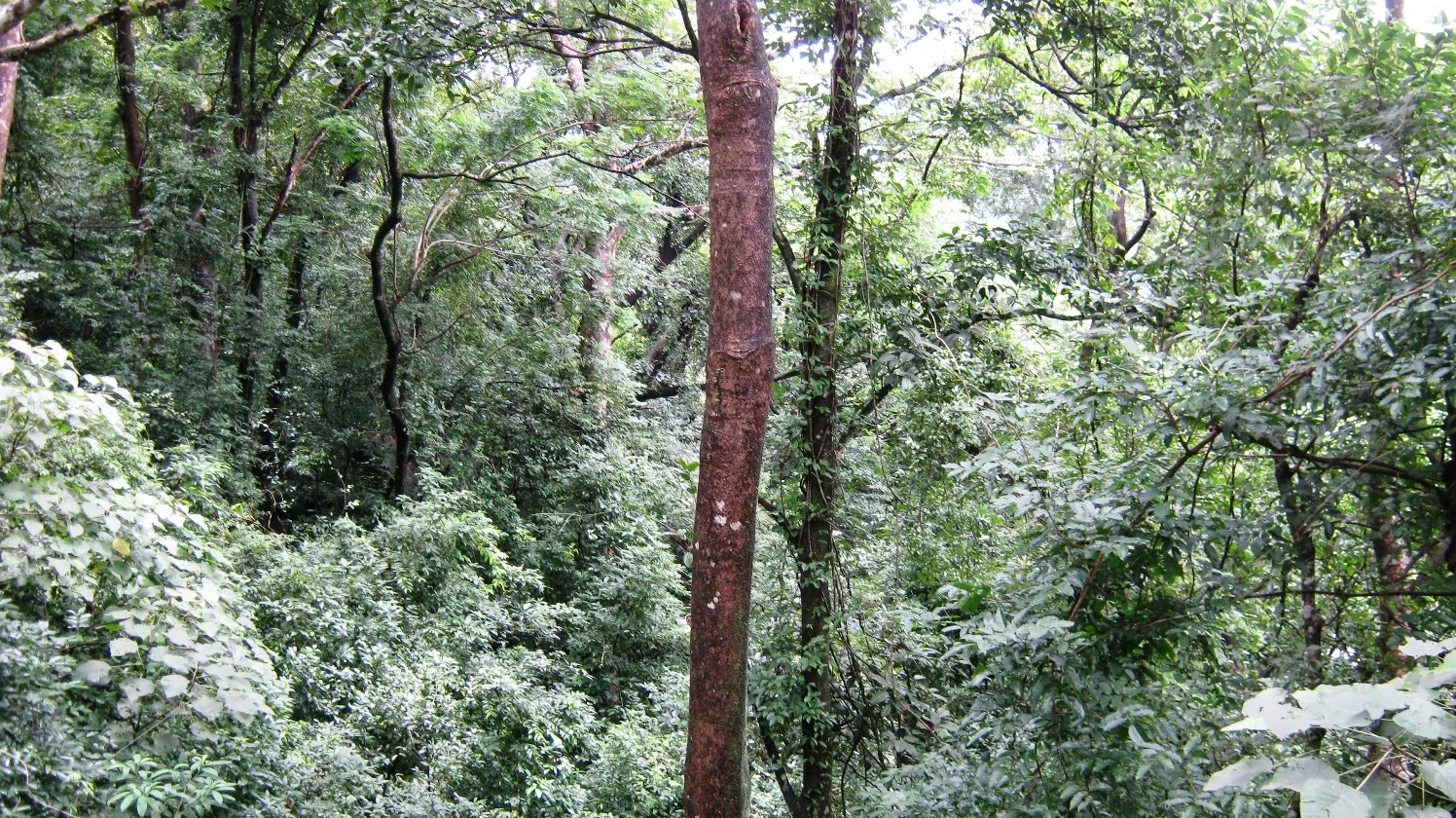
Twenty Forest Department programmes in the Shendurney Wildlife Sanctuary — walks of one to six hours, a dawn birding trail, boat and vehicle safaris and four camps — booked at the wildlife office at Thenmala. Rates are per group and include 18% GST.
18.8 km · straight line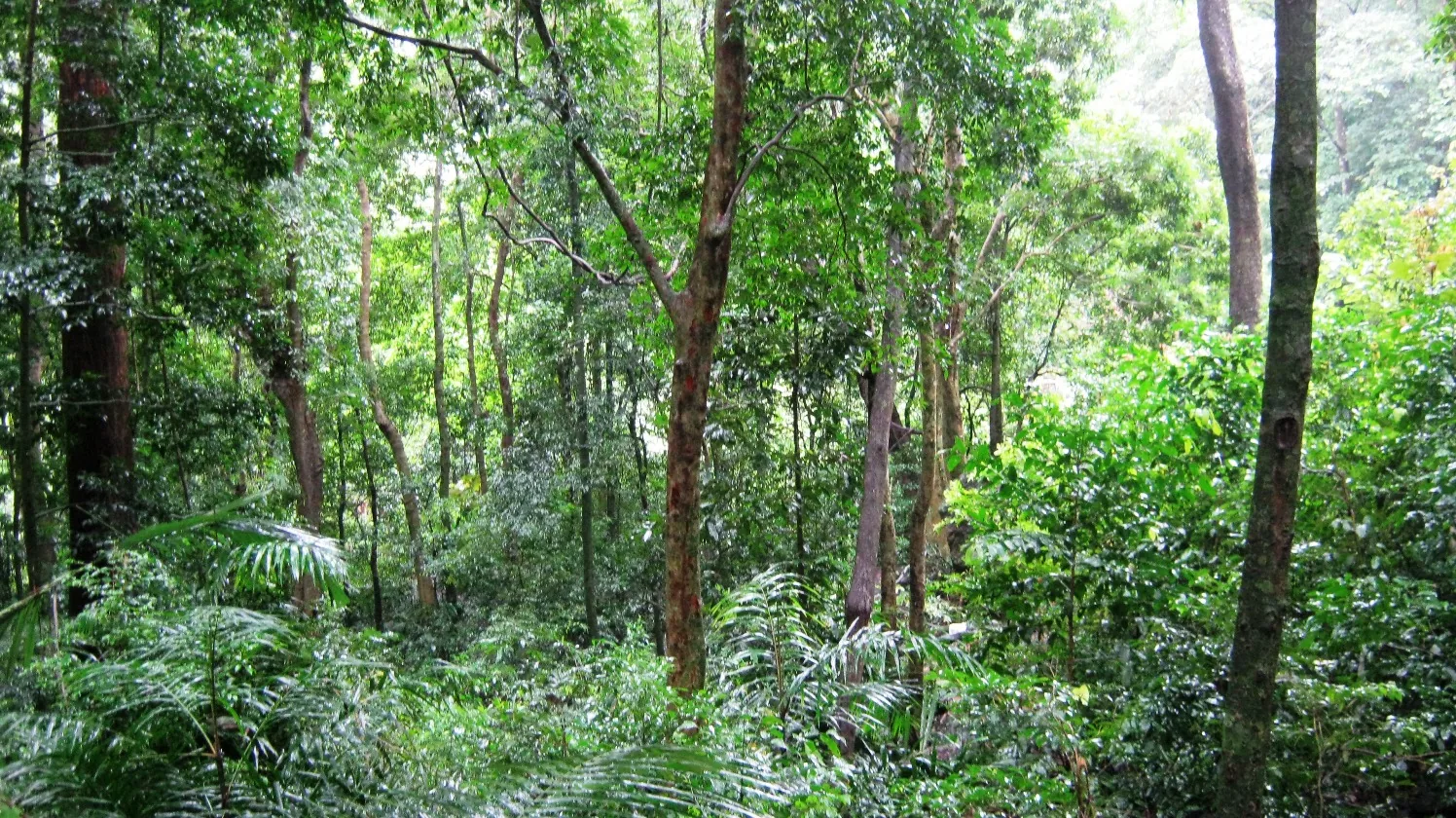
A protected evergreen forest in the Agasthyamalai Biosphere Reserve east of Thenmala, named for the Chenkurinji tree and centred on the Parappar reservoir.
18.8 km · straight line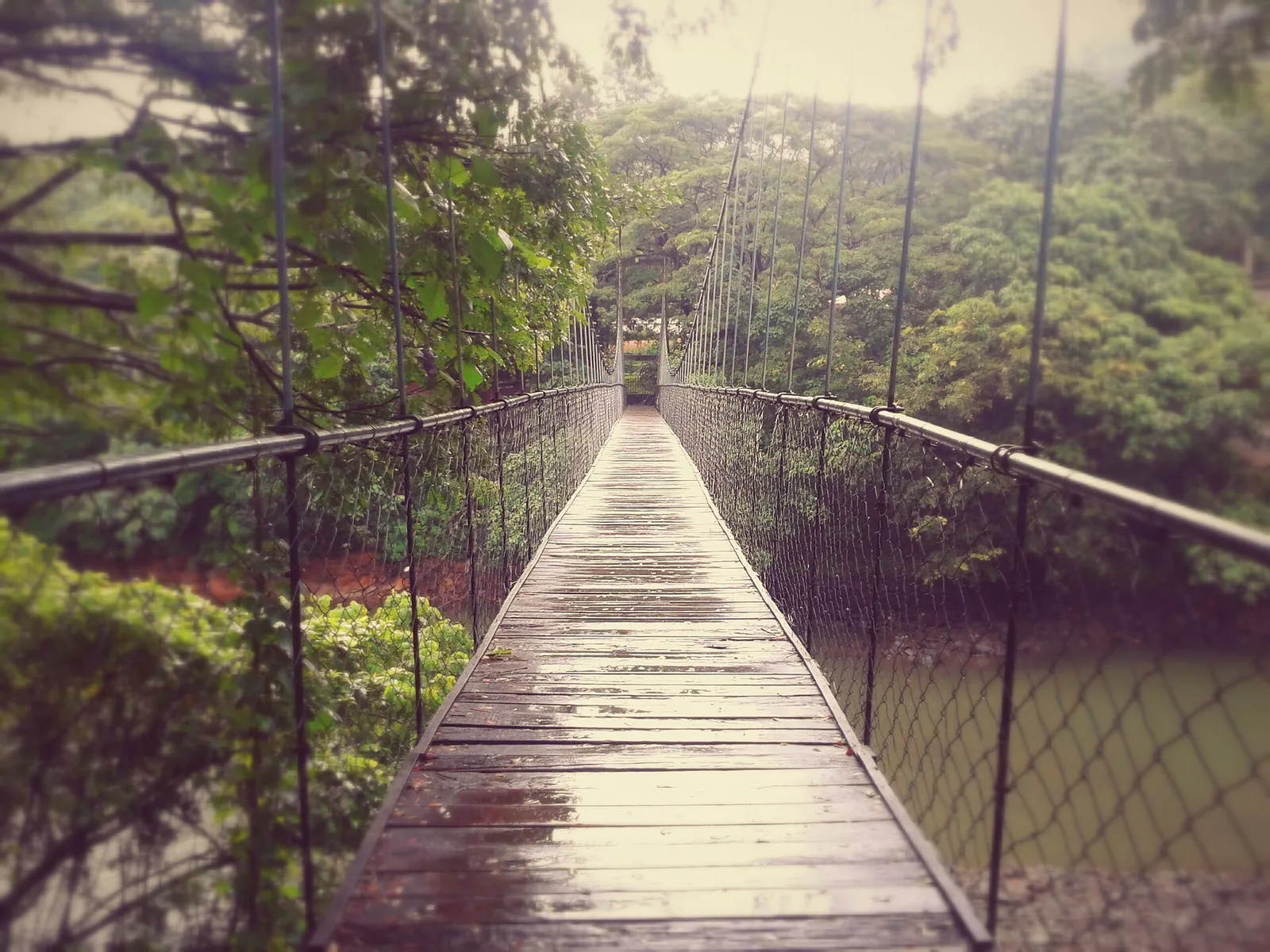
Eco-tourism area with forest walks, dam views and adventure activities.
19.0 km · straight line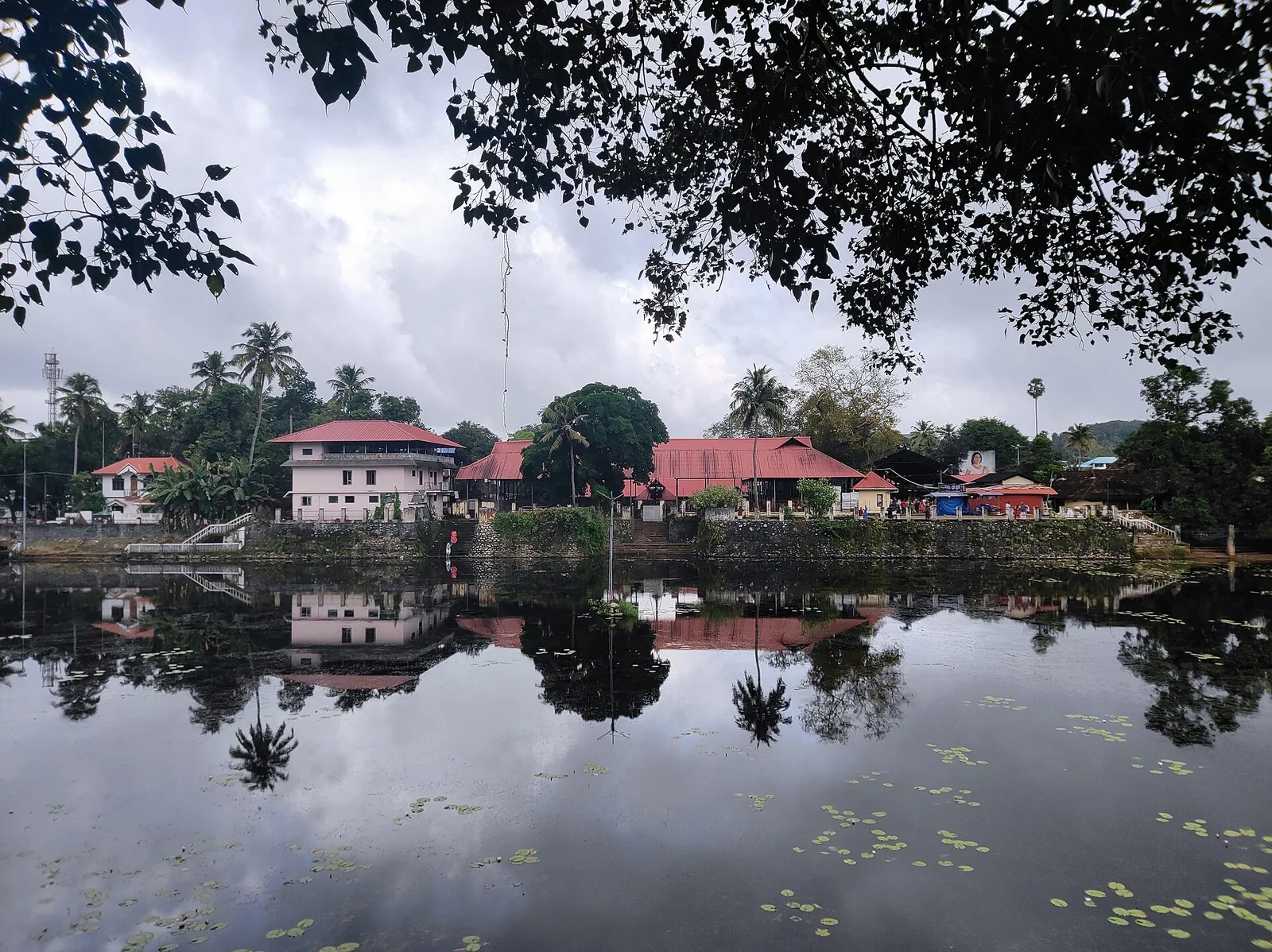
A large temple beside its own tank at Kottarakkara, where the central deity is Shiva but the sub-shrine to his son gives the place its name and its fame; the offering is unniyappam. The Kottarakkara Thampuran credited with Ramanattam, the immediate ancestor of Kathakali, is memorialised in the same town.
19.3 km · straight line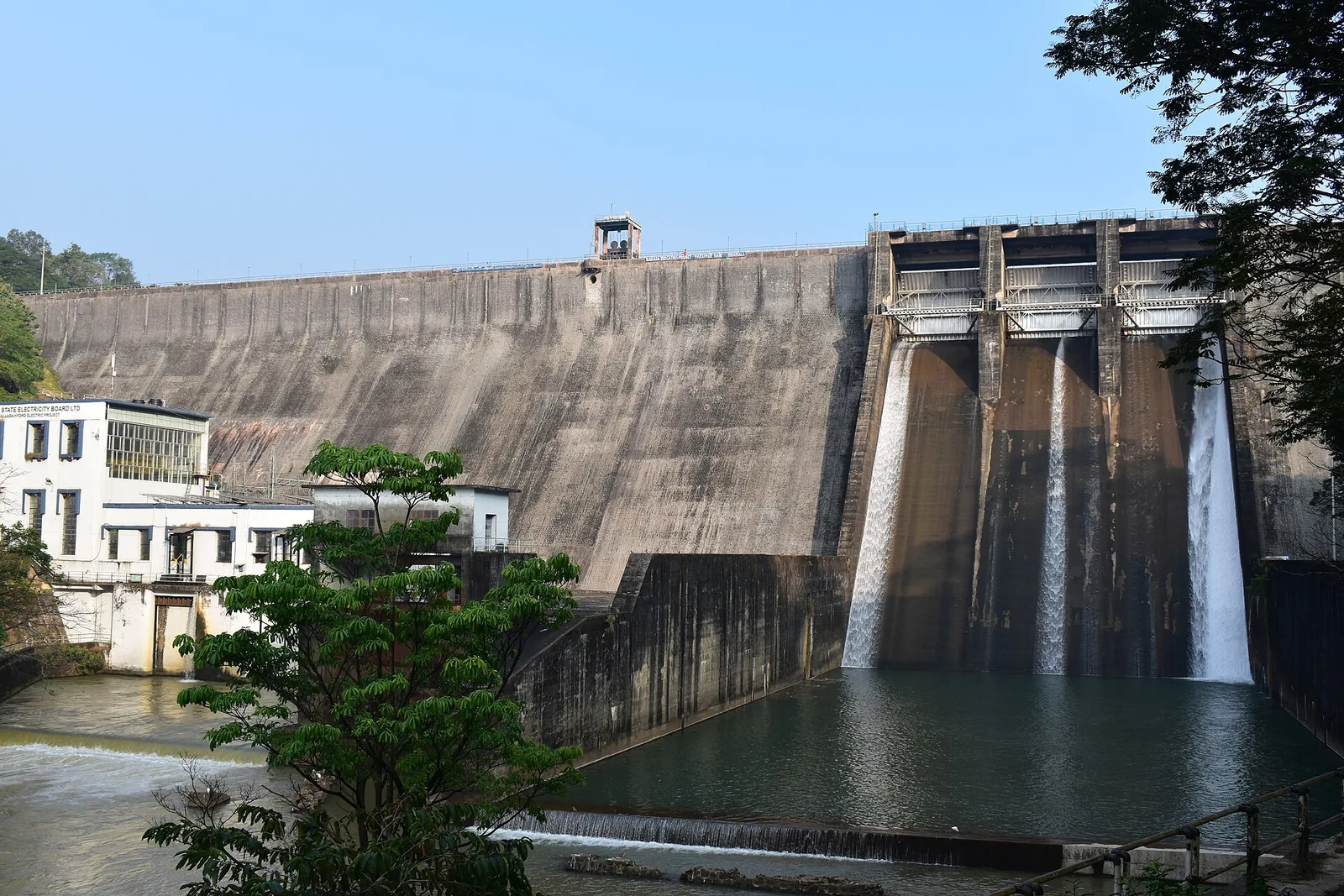
The Parappar dam across the Kallada river at Thenmala, built for irrigation — the reservoir behind it is the water the eco-tourism area is built around, and the catchment upstream is Shendurney sanctuary.
19.4 km · straight lineRoad and walking figures are route estimates, with travel times dependent on access, traffic and conditions. Figures marked “straight line” show direct separation and do not describe a road or walking route. Fare estimates use Kerala’s 26 April 2022 auto/taxi notification and exclude waiting, night and applicable one-way surcharges. Confirm the current meter or operator quote before travelling. Routing: © openrouteservice.org by HeiGIT | Map data © OpenStreetMap contributors
Nearby toilets, pharmacies, ATMs, seating and vets are community-mapped and may be incomplete or out of date. Map data © OpenStreetMap contributors | Walking times © openrouteservice.org by HeiGIT
Shiva in both chambers — the Kerala Department of Archaeology records a Sivalinga and a monolithic Nandi in each of the two cells, so the common description of one as a Shiva cave and the other as a Hanuman cave is wrong. The smaller cell additionally holds a standing Hanuman carved in one of its niches, with a couchant bull at his feet, and a Ganapathy is carved in the alcove between the two chambers. The Shiva–Nandi–Hanuman grouping in one rock-cut shrine is considered rare.
The Kerala Department of Archaeology dates it to the 8th–9th century CE and names no dynasty and no builder. The widely repeated claim that it was built by "Nedumchadayan, who ruled Chadayamangalam nearby" does not survive checking: Jatila Parantaka Nedunjadaiyan (Varagunavarman I) was a Pandya emperor who ruled from Madurai in about 765–815 CE, not a local chief — though his inscriptions do record campaigns into Venad in southern Kerala within that same window. Wikipedia additionally attributes the temple to the Pallavas while dating it to the "8th century BC", which is a CE written as BC by roughly fifteen hundred years. We leave the builder anonymous.
Almost all Kerala temples are structural — built up from timber, laterite and granite. Kottukal is instead carved down into a single granite boulder as a monolithic rock-cut cave, a construction type that is very rare in the state. It is regarded as one of the foremost surviving examples of Kerala’s rock-cut temple architecture and is a protected monument (declared 1966).
No — and the usual way of putting that question has the confusion backwards. There is no cave called Kottukal in Thiruvananthapuram district. The coastal one is the Vizhinjam Rock-Cut Cave Temple, an eighth-century Ay-period shrine of Vinadhara Dakshinamurthy, protected by the Archaeological Survey of India since 1965. It is not similarly named; it simply stands inside Kottukal grama panchayat, in Neyyattinkara taluk, which is where the name clash comes from. This page is the inland Kottukal in Kollam district near Anchal and Kadakkal (Ittiva area, Kottarakkara taluk), which is a Kerala State Archaeology protected monument declared in 1966.
The dry, cooler months of roughly November to February are the most comfortable for the drive and the walk to the rock. The principal festival is Maha Shivaratri (usually February–March), when the shrine is busiest and most atmospheric; the exact date shifts each year with the lunar calendar, so verify before planning around it.
The monument itself is small and can be seen in around 30 to 45 minutes, including darshan at both caves and time at the great boulder and the nearby chummadu para stone. Most visitors treat it as a one-to-two-hour stop combined with other sights in the Anchal–Kadakkal–Chadayamangalam area rather than a full-day destination.
Dry months are easiest; avoid heavy rain due to slippery approaches.
Entry: No entry fee is charged for this protected monument and shrine. Any offerings or poojas are voluntary. Timings: Broadly open through the day with a likely midday break, as is common for Kerala temples under the Travancore Devaswom Board — expect roughly morning and evening darshan windows.
Base yourself in Kollam town or a nearby town in Kollam, then confirm the last-mile route locally before leaving. Start early and check access rules, trail condition and ticket counter status. If the visit depends on forest, temple, boat, ferry, weather or seasonal access, check the official/local rule on the day before travel.
1.5 to 3 hours.
Nearby you can pair Local temple trails (4.4 km, approximate straight-line separation), Chadayamangalam hill views (4.7 km, approximate straight-line separation), Jatayu Earth’s Center (5.3 km, approximate straight-line separation), Vattathil Waterfalls (9.5 km, approximate straight-line separation).
Do not enter closed sections. Avoid slippery rock surfaces during rain.
Written about Kottukal Cave Temple itself — its history, its legends and the arguments about them.
These guides explore Kollam town and the surrounding area. Choose a visit that fits your interests, allowing separately for travel between stops.
Route-level itineraries and practical guides for the rest of Kerala.
Photographs: Sugeesh (CC BY-SA 4.0), Fotokannan (CC BY-SA 3.0). Wikimedia Commons.