Napier Museum

Napier Museum and the adjoining zoo form Thiruvananthapuram city's classic museum-quarter visit, with the Indo-Saracenic museum building, natural-history context, Sree Chitra Art Gallery nearby and shaded grounds that work well for families.

Napier Museum, Thiruvananthapuram city
Practical guide

Plan Napier Museum

Who's going?Tailor Napier Museum to your trip
Typemuseum
AreaThiruvananthapuram city
DistrictThiruvananthapuram
Best timeMorning or late afternoon is most…
Time needed2 to 4 hours depending on whether you…
EntryVaries — see below
Places to visit8Listed businesses75

This is best planned as a half-day culture stop rather than a rushed photo break. The practical value is in checking current museum/zoo timings, closure windows and ticket counters before arrival, then pairing the compound with Kanakakkunnu Palace, Palayam or city food stops.

The story

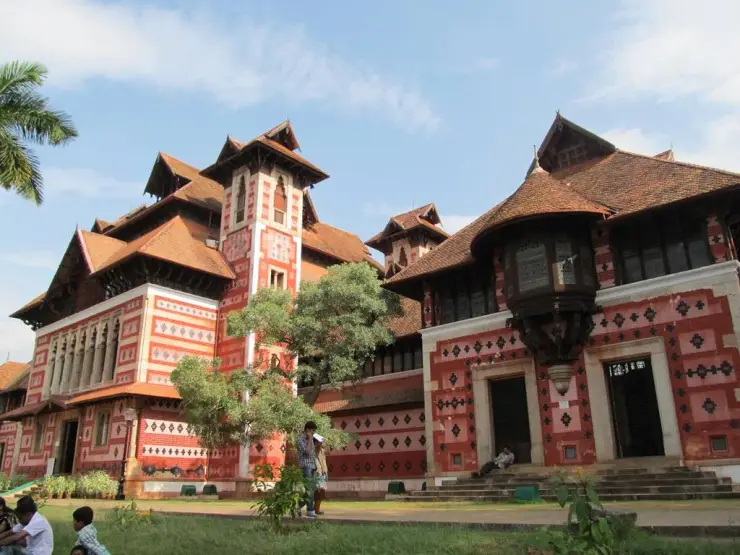
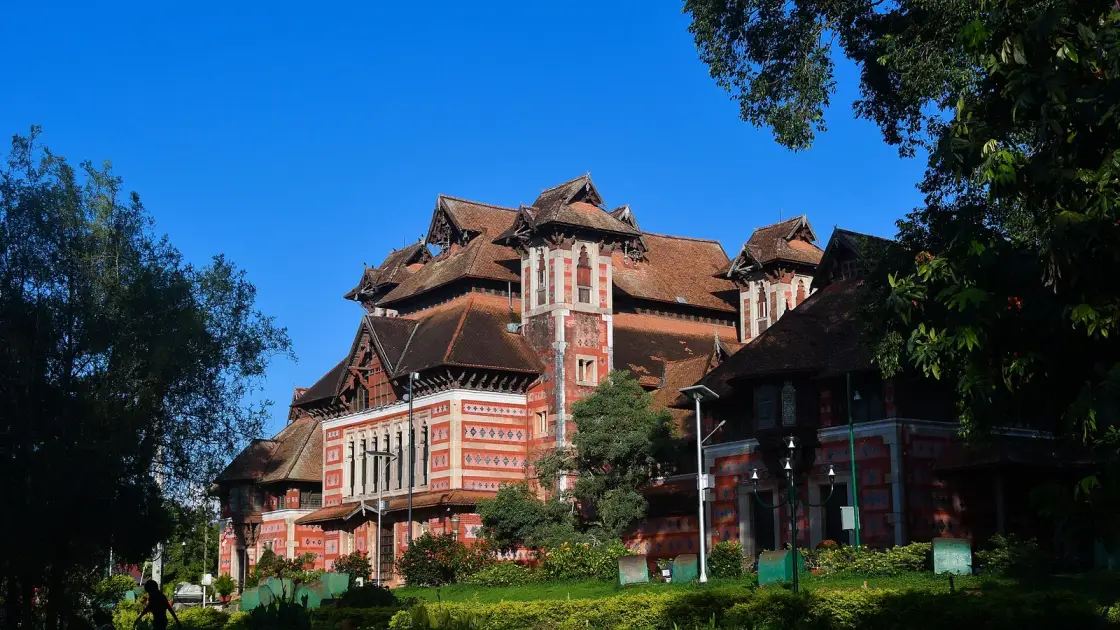
Rising like a painted casket of red, black and ochre amid the green lung of Thiruvananthapuram, the Napier Museum is one of India’s most flamboyant pieces of Victorian architecture — a 19th-century art and natural-history museum whose gabled, minaret-crowned silhouette is as much a treasure as the bronzes and ivories it shelters. Designed by the British architect Robert Fellowes Chisholm and named after Lord Napier, Governor of Madras, it anchors the leafy Museum & Zoo complex on the city’s northern high ground.

The story of Napier Museum

Approach the museum from the wide lawns of the complex and it looks less like a gallery than a jewel-box that has been magnified a hundred times. Bands of terracotta red, brick black, salmon and buttery yellow ripple across the walls; steeply pitched gables borrowed from Kerala’s temple roofs meet slender minarets that would not be out of place on a Mughal tomb; and the whole confection is stitched together with pointed arches, fretwork and finials. It is theatrical, and quite deliberately so — a building designed to be a spectacle before you have even stepped inside.

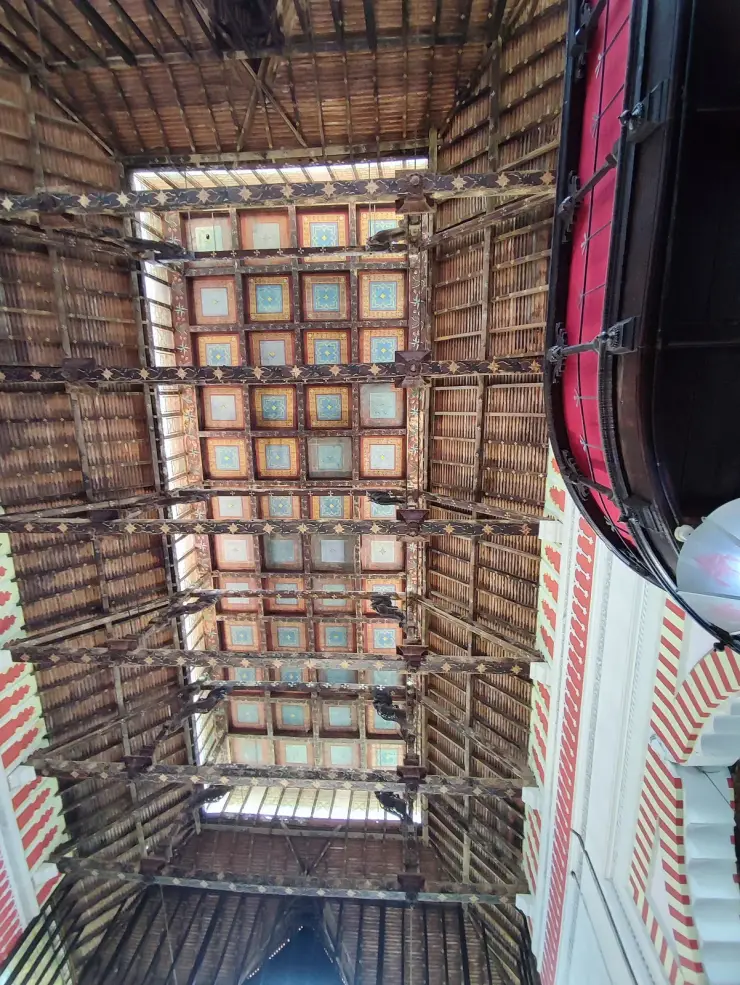
The genius of the place, though, is not only skin deep. Long before the age of air conditioning, Chisholm engineered the museum to breathe, and the mechanism is cleverer than the one usually credited. The building is double-walled: a cavity runs between an outer and an inner skin, intercepting the heat before it ever reaches the halls. The soaring layered roof, the high ceilings and the placed openings then move air through what the cavity has already kept cool. Between them they hold the interior at a temperature that still surprises visitors in coastal heat, and it is worth knowing that the invisible half of the system is the half doing most of the work. Look up and the underside of that roof reveals a riot of colour and joinery, a ceiling worth craning your neck for.

Inside, the collections read like a wander through southern India’s craft traditions. Glass cases and open plinths hold bronze idols of Nataraja, Surya, Parvati and Venugopala, ivory carvings of astonishing delicacy, wood sculpture, lamps, textiles, Kathakali figures, koftgari metalwork and old musical instruments. Among the bronzes is a Vishnu image said to be the oldest metal image in the state, gathered from a temple in the backwater country to the north — a reminder that these are not curios but survivors of living worship.

Among the largest objects in the halls is a carved wooden temple chariot — a rath of the kind once hauled through festival streets by hundreds of hands, now stilled beneath the museum’s painted ceiling, where every joist and beam is picked out in colour. Standing under it is the quickest way to grasp the scale at which Kerala’s temple carpenters worked.

The museum does not stand alone. It is the centrepiece of a walled parkland shared with the Thiruvananthapuram Zoo — one of the oldest in the country — and with the Sree Chitra Art Gallery a short stroll away. There, canvases by Raja Ravi Varma, the Travancore prince-painter who taught India to see its gods and heroines in oil, hang alongside work by the Russian mystic Nicholas Roerich and his son Svetoslav, and miniatures from the Tanjore, Mughal, Rajput and Bengal schools, with further pieces from Japan, China, Bali and Tibet. A single afternoon here can carry you from bronze deities to big cats to oil paintings — and lets you trace Indian painting from courtly miniature to the confident realism that made Ravi Varma a household name.

The gardens themselves are part of the pleasure. Manicured lawns, flowering trees and shaded benches make the grounds a favourite of families, courting couples and photographers, and somewhere among the greenery grows what is claimed to be one of the oldest rubber trees in Kerala, raised from a sapling brought across from Ceylon in the 1870s. There is even an old bandstand where military bands once played to the strollers of colonial Trivandrum.

For all its grandeur, the Napier wears its history lightly. Come at golden hour, when the low sun sets the polychrome walls glowing and the minarets throw long shadows across the lawns, and you understand why locals treat this less as a museum to be ticked off than as a shared living room — a place to sit, to look, and to feel the layered past of Travancore all around you.

Legend & myth

There is no folklore attached to the Napier, but there is a persistent muddle, and it is worth untangling because almost every account of the museum repeats some version of it. Three different things get called the founding. The institution was founded in 1855, by Uthram Thirunal Marthanda Varma, as a public museum in the Travancore capital. The name arrived later: Francis Napier, 10th Lord Napier, was Governor of Madras and visited Travancore in 1872, and the museum was named in his honour after he encouraged the building of something that would showcase native art. The building itself came later still — the foundation stone is usually recorded for 1873, and Chisholm's museum was completed in 1880. So the Napier Museum is a fifty-five-year-old institution wearing a twenty-five-year-old name in a brand-new building, as of the day it opened. A sentence like 'the Napier Museum was founded in 1855' is true of the institution and false of both the name and the building.

The foundation year itself is not quite settled. 1873 is the date most often recorded for the laying of the foundation stone, but a number of accounts place it in 1872, and we have not seen a primary document that decides it. We flag it rather than picking, as with the completion date, which is consistently given as 1880 and which we are reasonably confident of.

The cooling deserves a correction rather than just praise. The museum's ability to stay cool without machinery is the single fact everyone repeats about it, and it is true — but the mechanism usually described, a tall layered roof with high ceilings and well-placed openings, is only part of it. The building is double-walled, and that cavity is the substantial part of the system: it intercepts the heat load before it reaches the interior, with the roof and the openings then moving air through. Describing the ventilation without the double wall credits the visible features and misses the one doing most of the work.

Two claims in the halls and grounds we would treat with more caution than the labels do. The Vishnu bronze is commonly described as the oldest metal image in Kerala, which is a strong claim about a whole category of objects across a state with a very deep bronze tradition; we have not found the dating that would establish it, and it is best read as a long-standing attribution rather than a settled fact. The same goes for the rubber tree in the grounds, said to be among the oldest in Kerala and grown from a sapling brought from Ceylon in the 1870s — a good story, entirely plausible for the period, and not something we can verify.

The zoo next door is on firmer ground, and the relationship is the opposite of what visitors assume. The Thiruvananthapuram Zoo is one of the oldest in India and is older than the museum building beside it, so the parkland was not laid out around Chisholm's masterpiece — the masterpiece was inserted into an existing institutional landscape. It is a small point that changes how the complex reads: this is a Victorian public-culture campus that accumulated over decades, not a single conception.

Read the full history of Napier Museum 731 more words

History

The museum’s story begins in 1855, when Uthram Thirunal Marthanda Varma, the reforming Maharaja of Travancore, established a public museum in his capital — an early, ambitious act of civic culture in a princely state that prided itself on learning. An initial building went up in the late 1850s but proved unsatisfactory, and the search for something grander soon followed.

The turning point came in 1872, when Francis Napier, 10th Lord Napier and then Governor of Madras, visited Travancore. Struck by the region’s distinctive timber-and-tile temple architecture, he encouraged the building of a museum that would honour and promote native art, and the new institution was named in his honour. To design it, the commission went to Robert Fellowes Chisholm, the consulting architect to the Madras government and a pioneer of what became known as the Indo-Saracenic style.

Chisholm studied Kerala’s vernacular building traditions closely before drawing his plans, fusing local gabled roofs and joinery with Mughal arches, Chinese and Gothic touches and a bold polychrome skin. The foundation date is not quite settled: 1873 is the year most often recorded for the laying of the foundation stone, though a number of accounts place it in 1872, and we have seen no primary document that decides between them. What is not in dispute is the ending — the earlier structure was cleared away, and after several years of work the museum was completed and opened to the public in 1880 under Ayilyam Thirunal, the reigning king of Travancore.

Over the following century the collections grew into one of South India’s richest holdings of religious and decorative art — bronzes, stone and wood sculpture, ivory, lamps, textiles and traditional instruments — and the surrounding parkland gathered further institutions around it. The Thiruvananthapuram Zoo shares the same historic grounds and is older than the museum building itself, dating to the 1850s and usually given as 1857; it was laid out from the start as a botanical garden as much as an animal collection, which is why its oldest trees are as much of a draw as its enclosures. In 1935 the Sree Chitra Art Gallery was inaugurated nearby under Maharaja Chithira Thirunal Balarama Varma, to house the royal collection of paintings and add a celebrated painting collection to the complex.

Chisholm’s building was completed in 1880 — twenty-five years after the institution it houses was founded, and eight after the visit that gave it its name. It opened with four watchtowers, stained glass, a polychrome skin of terracotta, black, salmon and yellow, and the double-walled construction that keeps it cool without machinery. That gap between institution, name and building is the single thing most accounts of the Napier get wrong, and the myth section above sets out why the three should be kept apart.

Today the Napier Museum is administered by Kerala’s Department of Cultural Affairs and is protected as a heritage landmark, its silhouette a much-loved emblem of the city. Chisholm’s naturally ventilated masterpiece remains, nearly a century and a half on, both the building people come to admire and the vessel that guards Travancore’s artistic memory.

Why visit

It is architecture as spectacle — a full-blooded Indo-Saracenic fantasy in red, black and ochre, with gabled roofs, minarets and pointed arches that make the exterior alone worth the trip, especially in the warm light of late afternoon.

The collection is a genuine treasure house of South Indian craft: bronze deities including Nataraja and Surya, exquisite ivory carvings, a temple chariot, wood sculpture, Kathakali figures, koftgari work and old musical instruments, including what is said to be the oldest metal image in Kerala.

You get three attractions in one gated complex — the museum, the historic Thiruvananthapuram Zoo and the Sree Chitra Art Gallery — so a single visit can span sculpture, wildlife and painting without leaving the grounds.

The Sree Chitra Art Gallery next door is a draw in its own right, hanging works by Raja Ravi Varma and Nicholas Roerich alongside Tanjore, Mughal and East Asian art.

The landscaped gardens, shaded benches, old bandstand and heritage trees make the grounds a relaxing green retreat in the middle of the city — as much a park as a museum.

Entry is inexpensive and the museum sits right in the heart of Thiruvananthapuram, close to the zoo and the PMG junction, making it one of the easiest and most rewarding half-day outings in the capital.
What to expect

Highlights

  • Historic museum compound, zoo grounds and art-gallery cluster in central Thiruvananthapuram.
  • Good indoor/outdoor choice for hot or mixed-weather city days.
  • Useful anchor for verified city hotels, family restaurants, autos/taxis and local heritage guides.
Getting there

How to visit

  • Base in Thiruvananthapuram city, Kovalam or Varkala depending on the wider trip.
  • Check current opening days and ticket timings because museums commonly have weekly/partial closure periods.
  • Combine with Kanakakkunnu, Palayam, Padmanabhaswamy Temple or city food stops rather than crossing the city repeatedly.

Distance by road

  • Kochi208 km
  • Madurai271 km
  • Kozhikode375 km
  • Coimbatore383 km
  • Mysuru541 km

Road km to Thiruvananthapuram; ghat roads and traffic vary — allow extra.

Timing

Best time

Morning or late afternoon is most comfortable for the zoo and gardens; midday can still work for museum galleries.

Weather in Napier MuseumSeasonal guide

Live forecast loads in your browser.

Today at Napier Museum
Sunrise6:12 am
Sunset6:21 pm
Golden hour best light5:21 pm–6:21 pm
Blue hour after sunset6:21 pm–6:46 pm
Sun sets toward compass bearingW · 272°
Moon tonight🌓 First quarter · 53%
South-west monsoon. June to September is the south-west monsoon in Kerala. Expect heavy showers, mostly in bursts rather than all day — carry rain cover, allow extra time for getting around, and note that ferries and open-air sites are the first things affected.

Sun and moon are calculated for this location and shown in IST. Photography windows are the hour around sunrise and sunset; the sunset bearing is degrees clockwise from true north. Moon phase is accurate to about half a day.

Visitor notes

  • Families should allow more time than a museum-only visit.
  • Photography and gallery rules can differ by building.
  • Use city transport or autos if parking around the museum zone is tight.
Safety

Good to know

  • Follow zoo barriers and staff instructions.
  • Keep children close in crowded ticket and garden areas.
  • Use official counters and marked crossings around the city roads.
Stay · eat · do · rent · see · shop

Stays, food & things to do near Napier Museum

Verified hotels, homestays, restaurants, experiences, sights, shops and rentals around Napier Museum — commission-free, with direct contact. Filter by what you need.

3 things to do near Napier Museum

Thiruvananthapuram International Airport — Airport in Thiruvananthapuram city
Verified
Airport · Thiruvananthapuram city
Thiruvananthapuram International Airport
4.4 km · ~11 min by auto

Thiruvananthapuram International Airport serves the city and southern Kerala’s coast. Match your airline’s terminal to your pickup point when booking an airport-side stay or meeting a driver.

Directions Commission-freeView details
Mango Cabs Trivandrum — Taxi, airport transfer and rental service in Thiruvananthapuram city
Verified
Taxi, airport transfer and rental service · Thiruvananthapuram city
Mango Cabs Trivandrum
1.6 km · 20 min walk

Mango Cabs arranges taxi journeys, airport transfers and vehicle hire around Thiruvananthapuram. Request a quote covering the route, waiting time and return before booking.

Directions Commission-freeView details
V
Vinz Fitness Centre
Things to do
Do · Thiruvananthapuram city
Vinz Fitness Centre
4.6 km · 7 min drive ~₹70–90 by auto

Do on Eanchakkal Westfort Rd, J P Nagar, VKK Nagar, Pazhavangadi in Thiruvananthapuram City.

Directions Commission-freeView details

Book with the place itself. India’s cyber-crime coordination centre warned in April 2025 that convincing copies of hotel and pilgrimage booking sites are being pushed through sponsored search and social ads, taking payment for rooms the property never hears about. Every listing here links to the business’s own contact details and its own Google or Bing profile — we take no commission and sit in nobody’s payment path. If a booking page reached you through an ad, check the address bar against the property’s own site before you pay. Fraud can be reported on cybercrime.gov.in or on 1930.

Ranked

More ways to explore Thiruvananthapuram city

Find food, accommodation and activities across Thiruvananthapuram city. Browse the guides for places to eat, stay and explore along your route.

Nearest to Napier Museum, on foot

Walking routes start at Napier Museum. Check the route and access before setting out, especially where a road, gate or waterway separates the stops.

Across the whole of Thiruvananthapuram city

Ranked guides

Top experiences around Thiruvananthapuram city

22 more places around Thiruvananthapuram city. Open a guide to plan the visit and onward journey.

K
Kilimanoor Palace
Place
heritageKilimanoor Palace

The ancestral palace compound associated with Raja Ravi Varma at Kilimanoor; visitor access concerns the working family estate and must be confirmed before travel.

B
Beemapally Mosque
Place
mosqueBeemapally Mosque

6.3 km · ~16 min by auto

A major coastal Muslim pilgrimage landmark south-west of the city centre, known for the Beemapally Uroos and the tombs honoured within the shrine complex.

heritageMadavoorpara

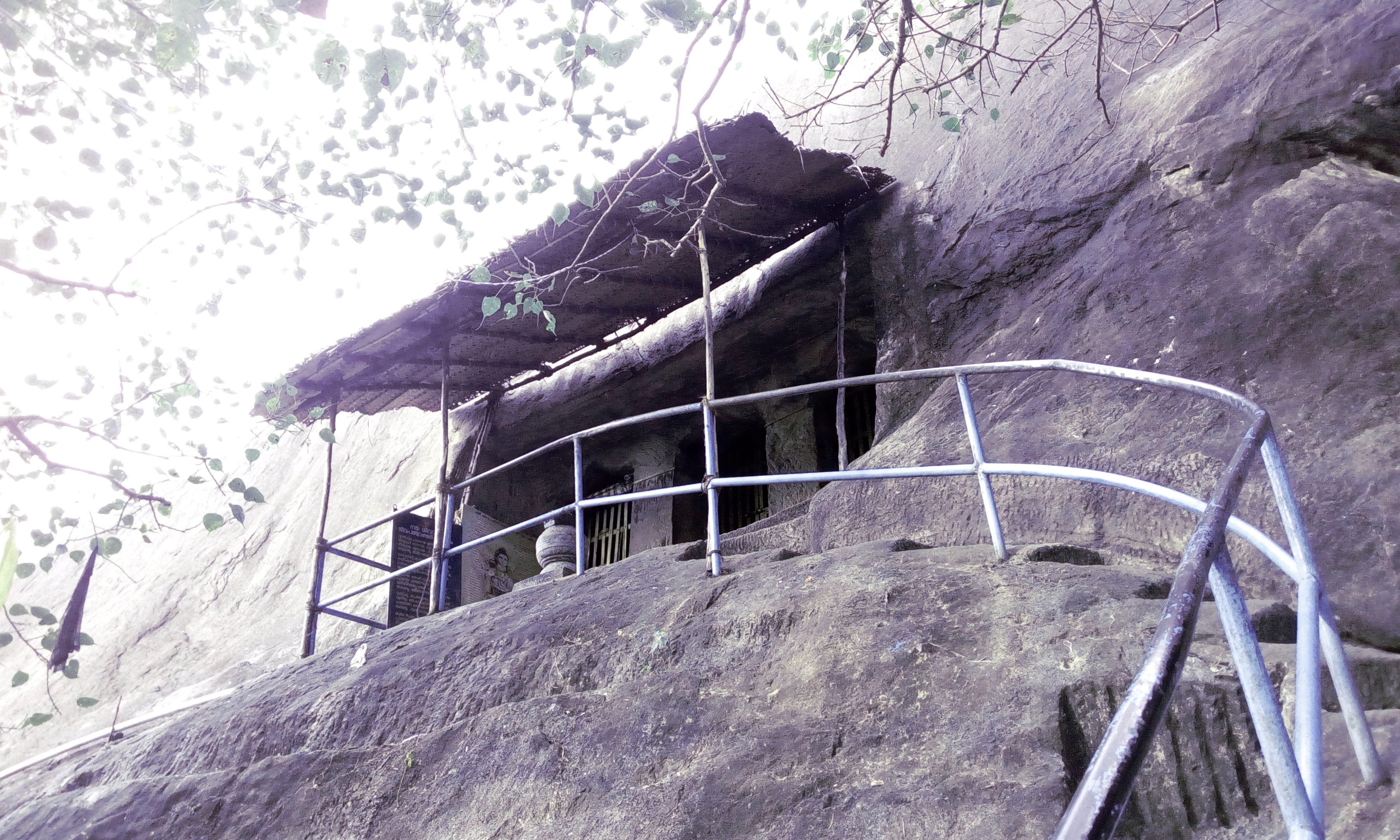
Madavoorpara combines a rock-cut Shiva shrine with a rocky hill landscape on Thiruvananthapuram’s northern edge. The temple and the climb offer different reasons to visit, and both deserve time.

templeSree Padmanabhaswamy Temple

4.4 km · 7 min drive

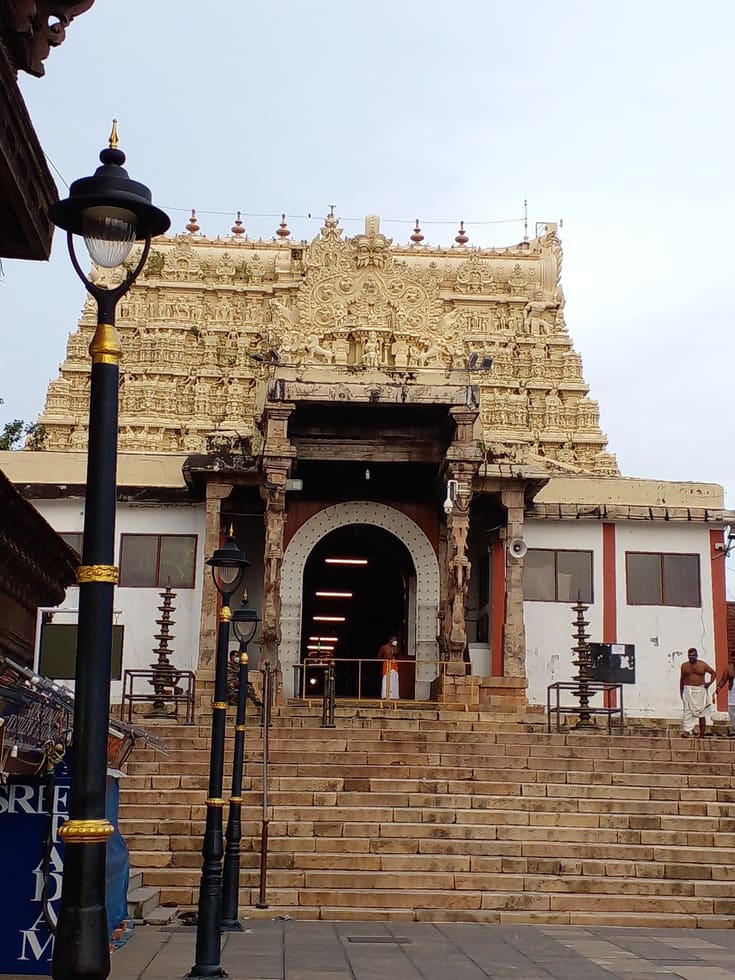
Major Vishnu temple and one of Kerala’s most important pilgrimage landmarks; strict entry and dress rules apply.

zooThiruvananthapuram Zoo

670 m · 8 min walk

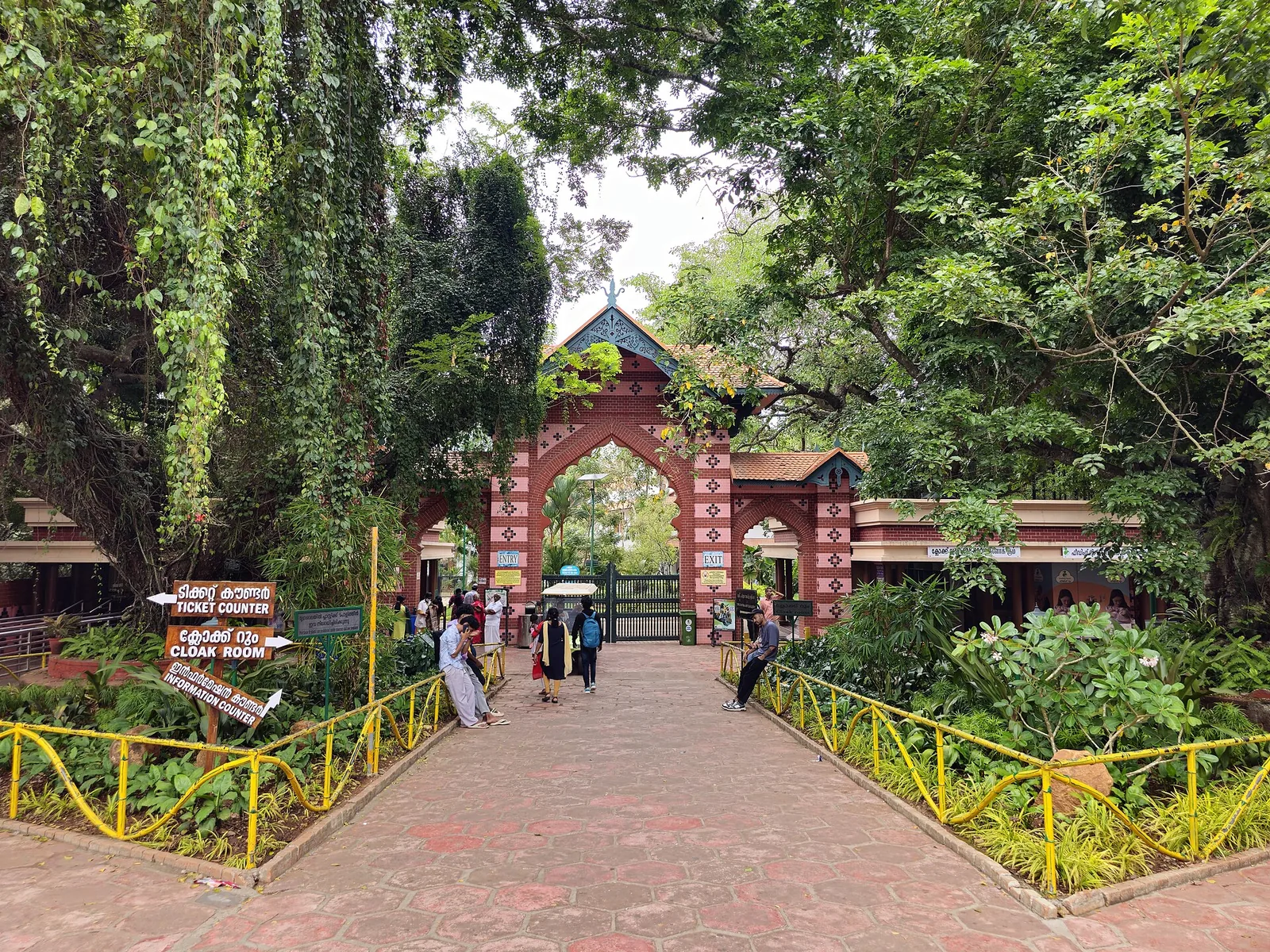
Old trees, winding paths and animal enclosures share the Museum Park at Thiruvananthapuram Zoo, also known as Trivandrum Zoo. Allow time for the garden as well as the collection, with the Napier Museum close by.

trekNeyyar trek

Guided forest trekking in the Neyyar Wildlife Sanctuary near the Agasthyamala foothills, south-east of Thiruvananthapuram.

templeAttukal Bhagavathy Temple

5.6 km · 9 min drive

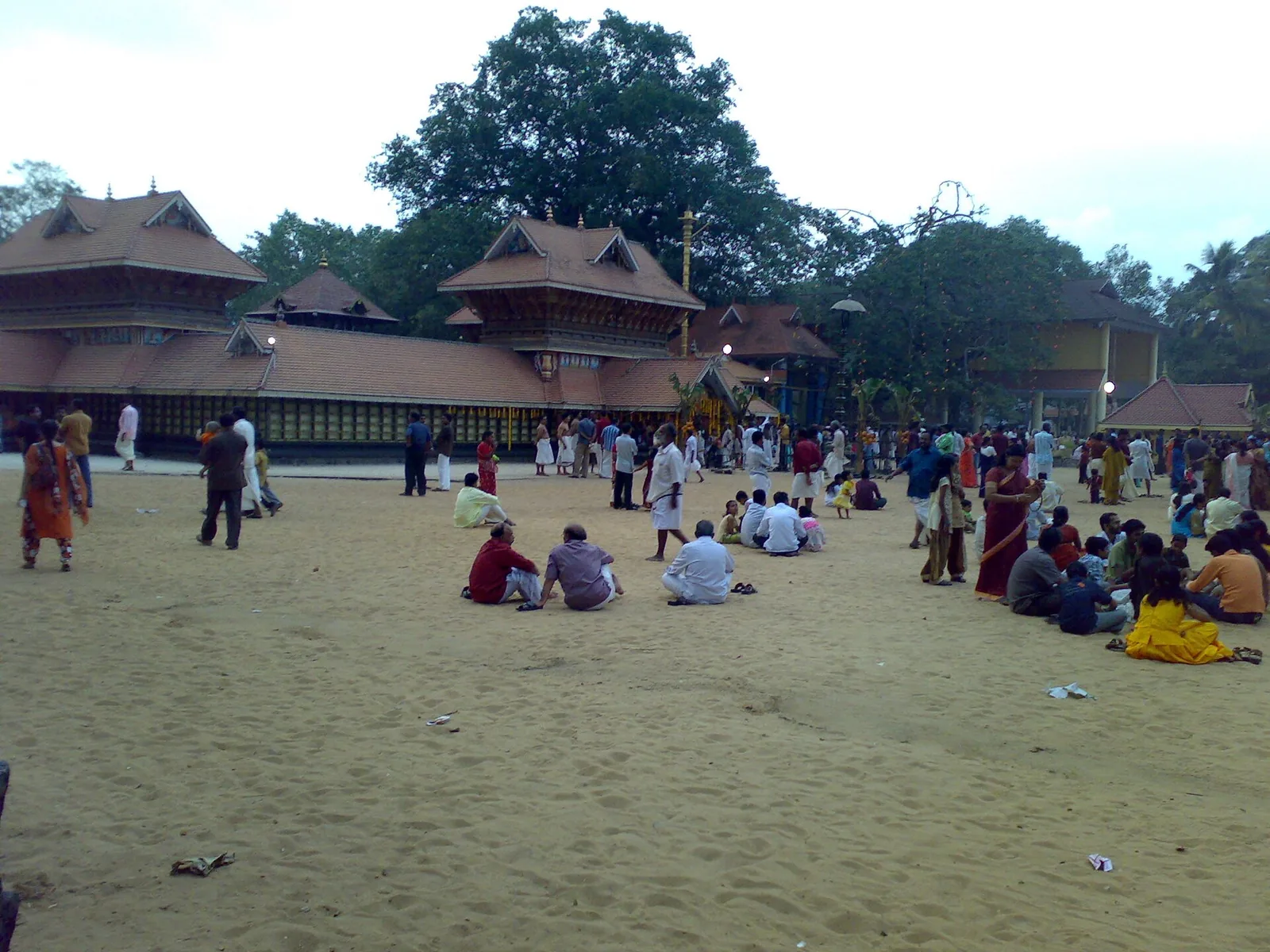
Famous Devi temple in the city, home of the Attukal Pongala — recorded as the largest annual gathering of women.

heritageKuthiramalika Palace

3.9 km · 6 min drive

A row of carved wooden horses gives Kuthiramalika its name. Beside Sree Padmanabhaswamy Temple, this Travancore palace museum brings timber craftsmanship and royal collections into one compact visit.

heritageKanakakunnu Palace

540 m · 7 min walk

Kanakakunnu puts a Travancore palace among gardens and cultural venues near Thiruvananthapuram’s Museum Park. Come for an evening walk or choose a date around a performance.

museumKoyikkal Palace

Koyikkal Palace at Nedumangad houses folklore and coin collections inside a traditional Kerala palace. Everyday objects, instruments and currency make this a more intimate museum stop than a grand royal gallery.

backwaterVeli Tourist Village

9.0 km · 12 min drive

Veli Tourist Village brings lake views, gardens and boating to the coast near Thiruvananthapuram. It is a family outing at the meeting of Veli Lake and the Arabian Sea.

templeAazhimala Shiva Temple

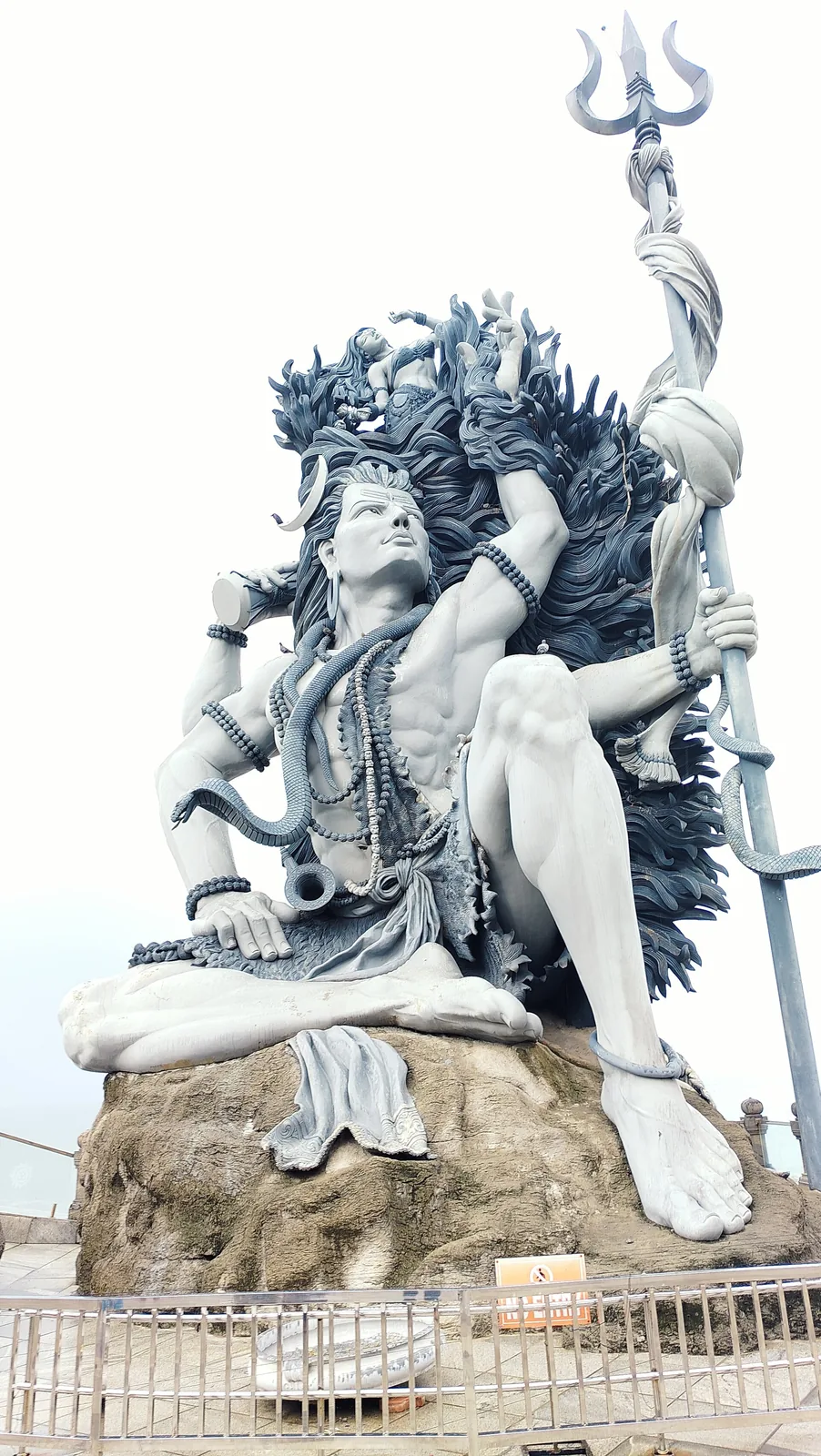
A clifftop seaside temple at Adimalathura near Vizhinjam, known for a giant Gangadhareswara (Shiva) sculpture.

templeThiruvallam Parasurama Temple

An ancient temple on the Karamana river, the district’s main site for ancestral (bali) rituals and rare for its Parasurama deity.

heritageAnchuthengu Fort

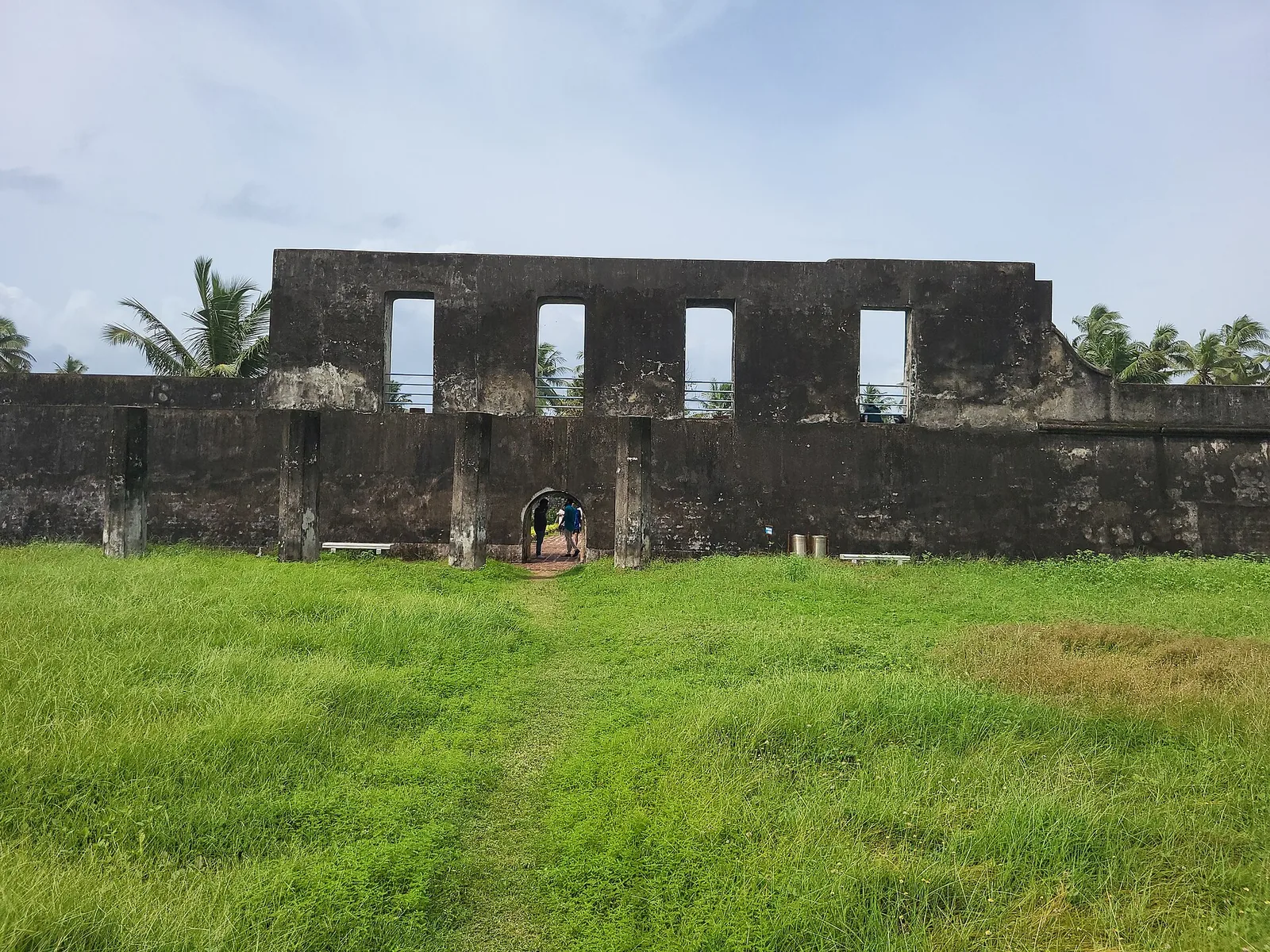
A 1690s English East India Company sea fort (Anjengo) on the coast north of the city, one of the earliest English settlements in Kerala.

damAruvikkara Dam

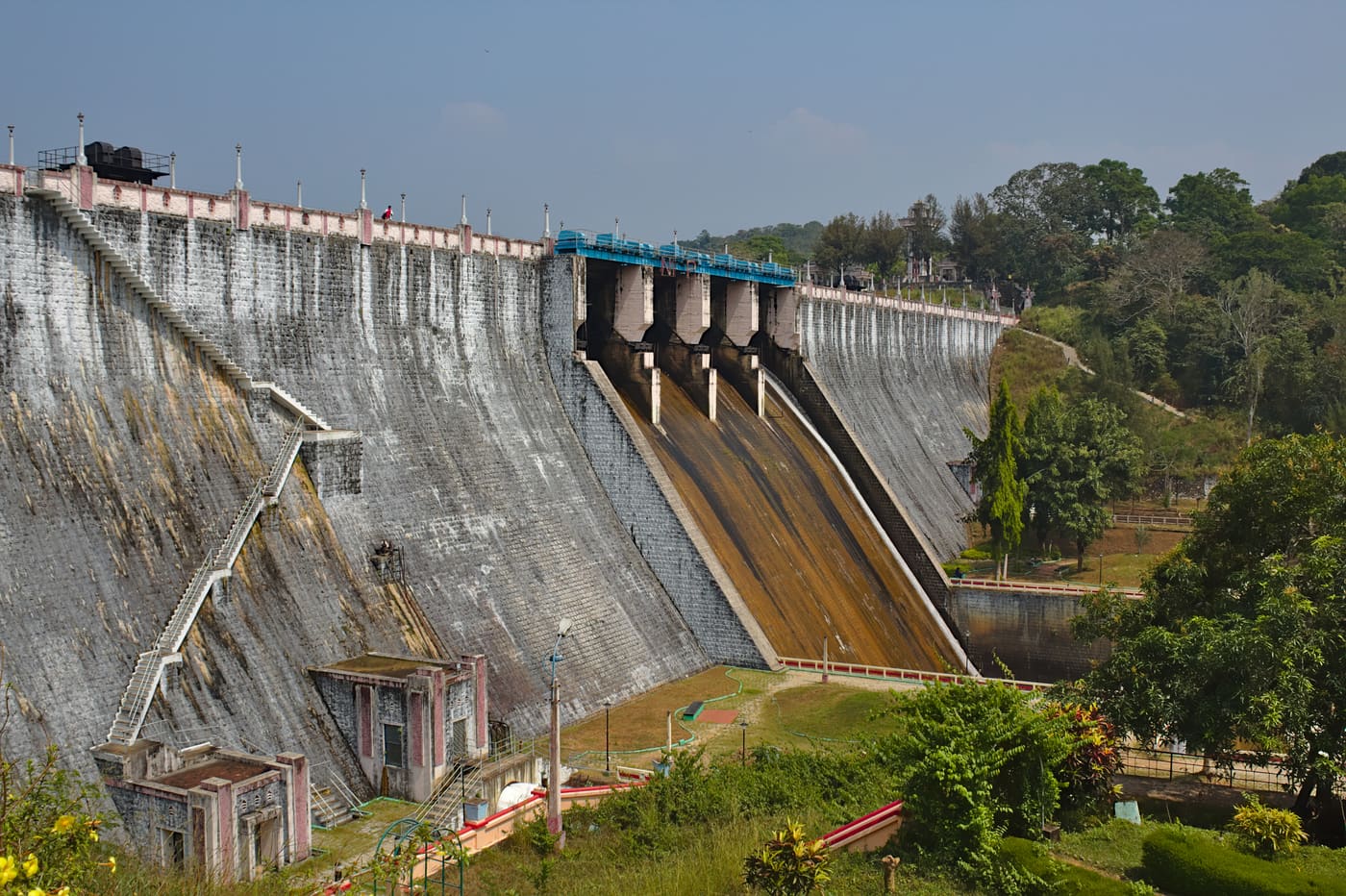
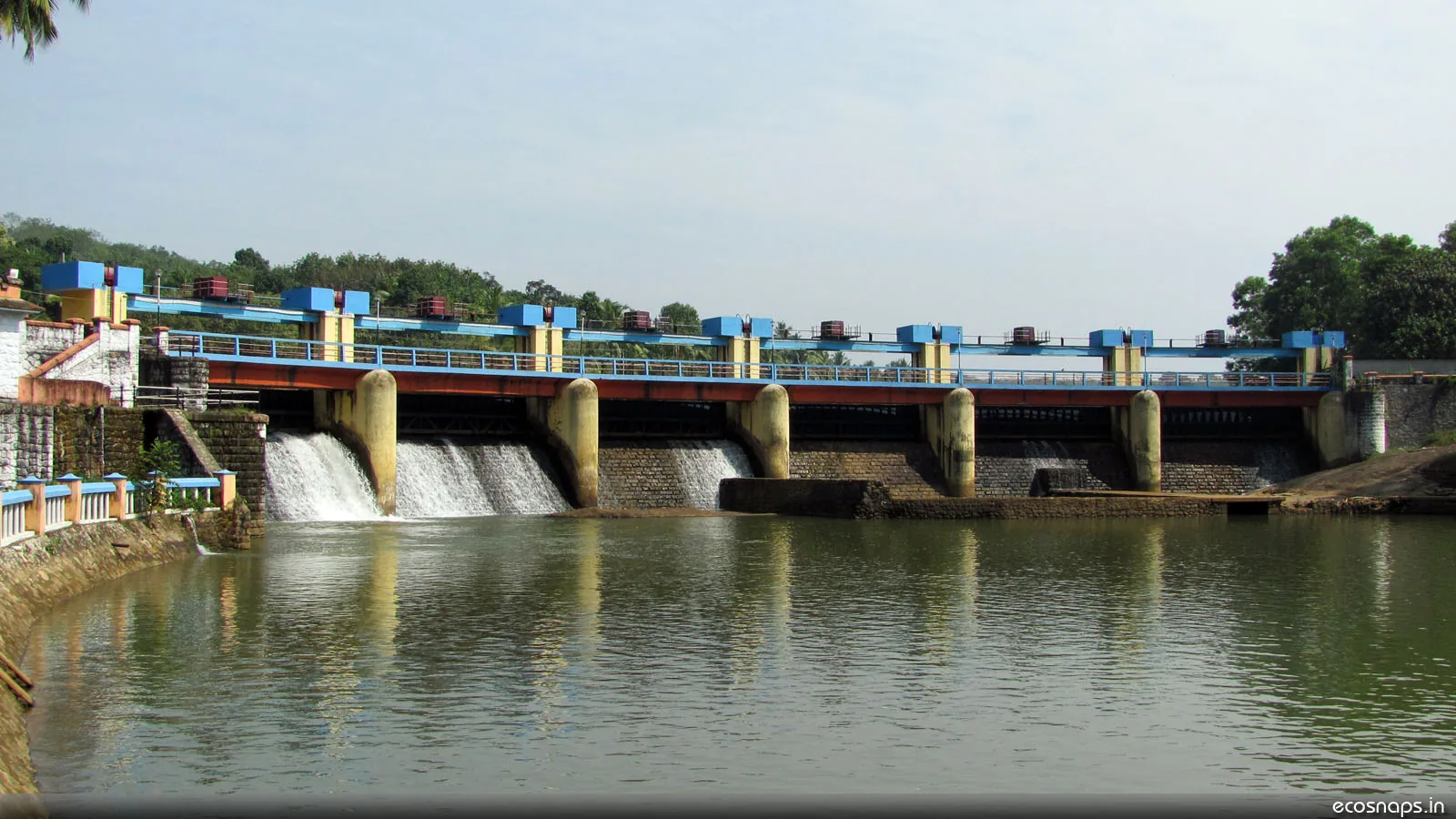
A reservoir, riverside temple and small park on the Karamana river north-east of the city, a popular local picnic spot.

backwaterVellayani Lake

Kerala’s second largest freshwater lake and the district’s only one, near Kovalam, ringed by paddy and popular for sunrise and birdlife.

templeSarkaradevi Temple

A renowned Devi temple at Chirayinkeezhu, famous for the Kaliyoot festival and the Sarkara jaggery legend.

beachShanghumukham Beach

10.4 km · 14 min drive

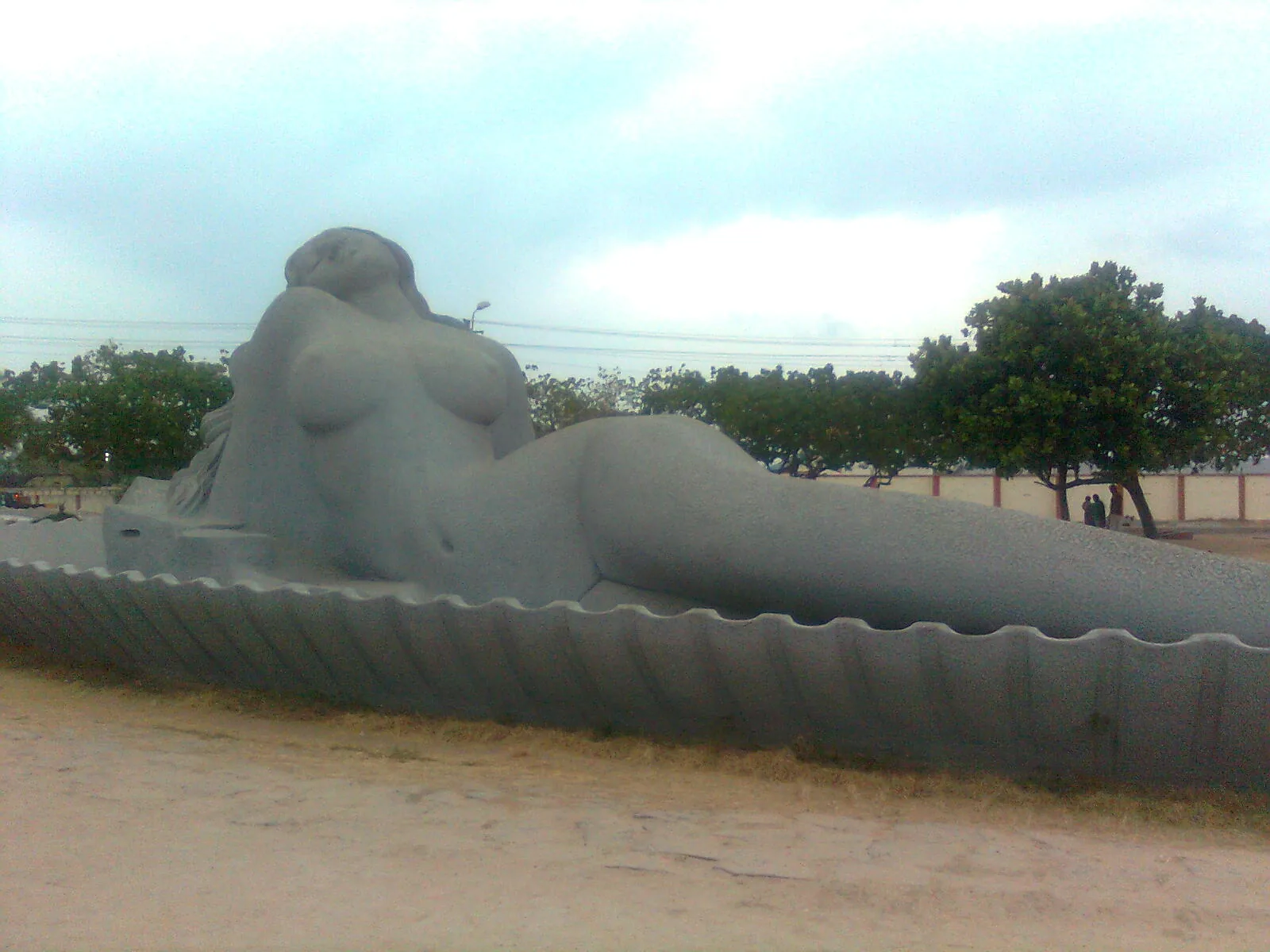
Shanghumukham is Thiruvananthapuram’s evening shoreline: an open sea horizon, airport-side access and Kanayi Kunhiraman’s reclining mermaid sculpture. Come for a coastal walk and the changing light.

templePazhavangadi Ganapathy Temple

3.5 km · 6 min drive

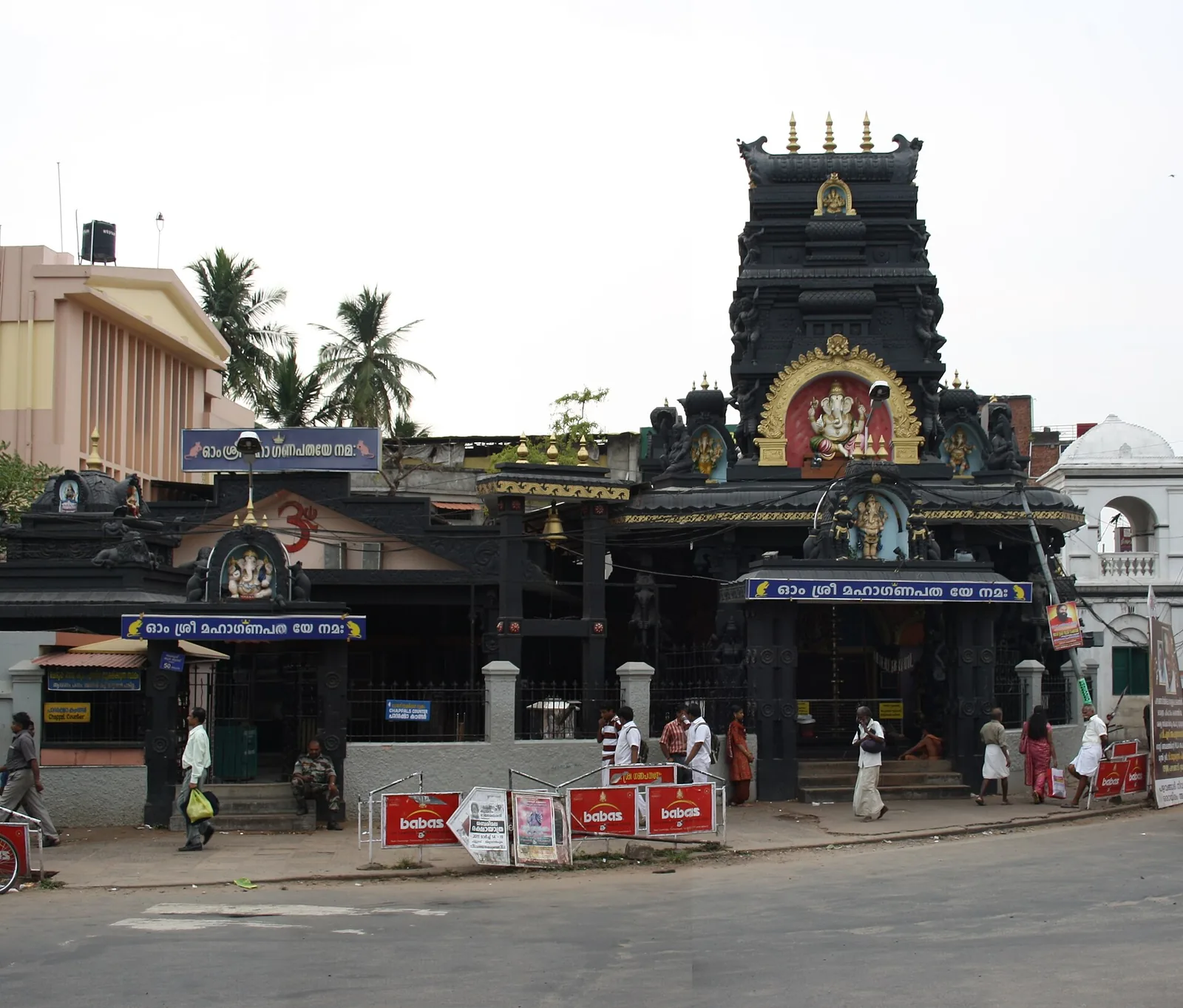
A popular Ganapathy temple near East Fort, known for the coconut-breaking offering; run by the defence services.

backwaterAkkulam Lake

7.7 km · 10 min drive

A calm backwater and boating spot near Veli with a lakeside tourist village and children’s park.

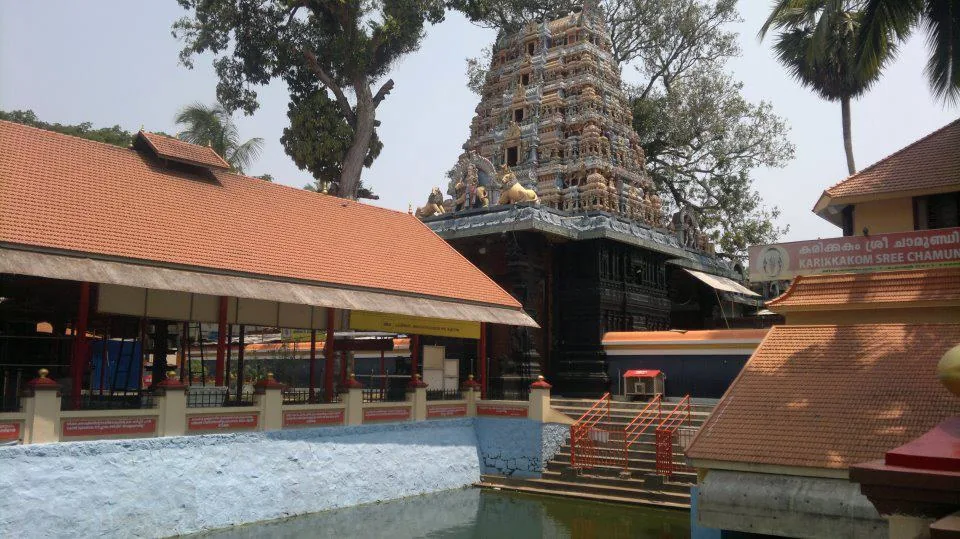
templeKarikkakom Chamundi Temple

7.9 km · 13 min drive

A well-known Chamundi Devi temple on the western edge of the city, busy during its festival season.

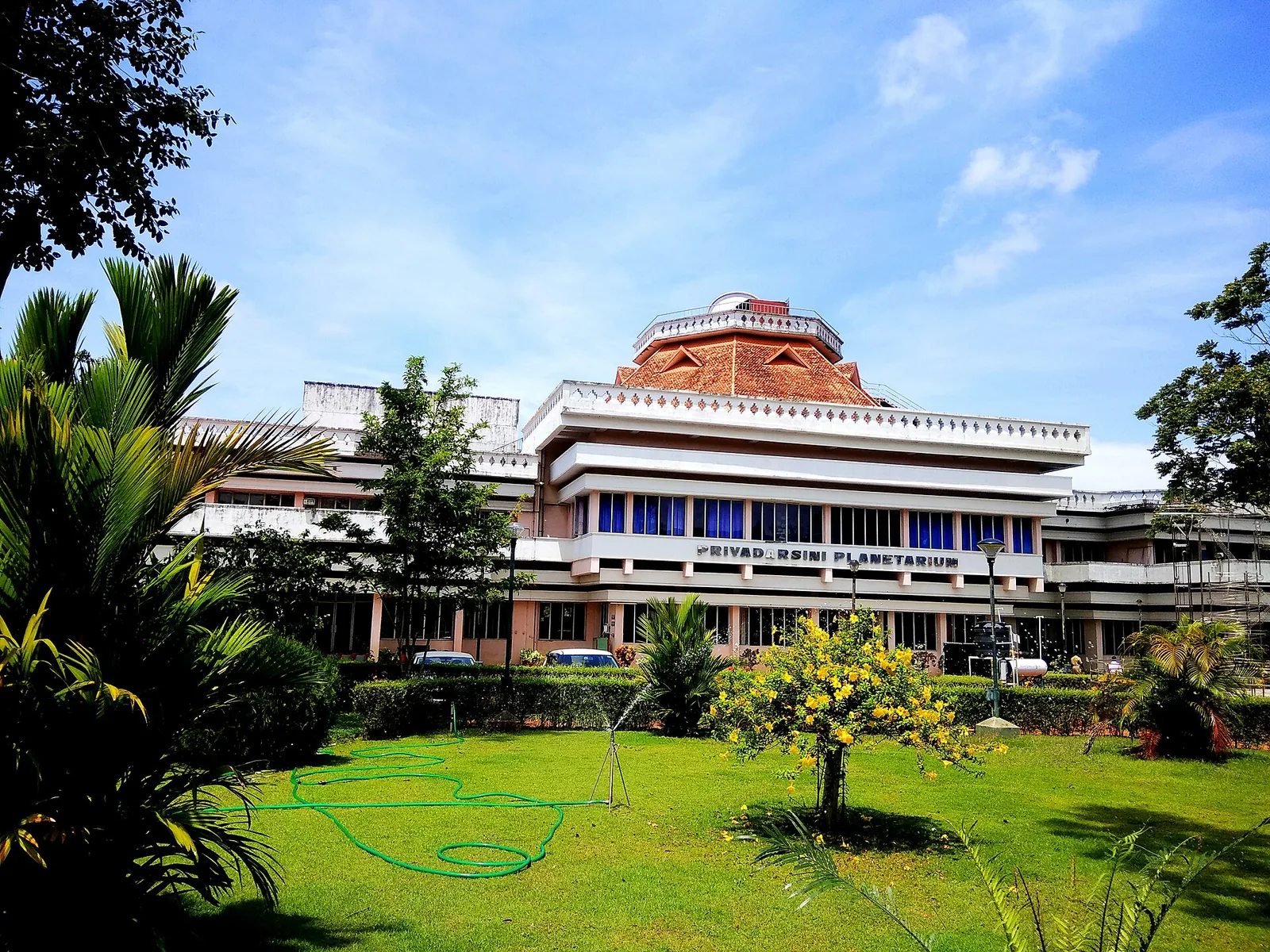
museumKerala Science and Technology Museum

1.2 km · 15 min walk

A hands-on science museum with the Priyadarshini Planetarium, popular with families and school groups.

Roampedia is commission-free — own or know a stay, eatery, guide or shop near Napier Museum? List it and it appears here once verified.

Add a nearby business
Before you go

Napier Museum — at a glance

TimingsGenerally open around 10.00 a.m. to 4.45 p.m., with entry closing shortly before. Note the museum does not open on Wednesday mornings.
Best timeOctober to February brings the coolest, driest weather and is the most pleasant time to wander the museum and its gardens. Late afternoon light is especially good for photographing the polychrome façade. Avoid the heavy monsoon spells of June to September if you plan to enjoy the grounds.

Entry: Nominal — roughly ₹12 per adult and about ₹10 for children, with a separate small charge for the Sree Chitra Art Gallery and additional parking fees for vehicles.

Dress code: No formal dress code, but modest, comfortable clothing and easy walking shoes are sensible for the galleries and the surrounding parkland.

Festivals: The museum keeps to regular gallery hours rather than staging festivals, but it is often busiest during the Onam season (August–September) and school holidays, when families throng the wider Museum & Zoo complex; it typically closes on major public holidays.

Photography: Photography of the exterior and gardens is popular and generally welcomed; policies on photography inside the galleries can vary and may be restricted or carry a fee, so check the current rules at the entrance.

Getting here

How to reach Napier Museum

  • ✈︎ By air Trivandrum International Airport lies roughly 6 km away, about 20–30 minutes by taxi depending on traffic.
  • 🚆︎ By train Thiruvananthapuram Central is the nearest major railhead, a few kilometres away and a short auto-rickshaw or taxi ride to the complex.
  • 🚗︎ By road The museum is in the heart of Thiruvananthapuram within the Museum & Zoo complex, close to the zoo and the PMG junction, and is well signposted from the city centre.
  • 🚌︎ By bus The Thampanoor (Central) bus stand is a short ride away, and numerous city buses pass the Museum/PMG area; auto-rickshaws cover the last stretch easily.
Getting back

If you are travelling by bus or ferry, check the return service with the operator before setting out. Leave time to reach the stop or jetty after your visit.

Ask at the bus stand for the time of the last service back, not the next one. If you miss it, an auto or app cab is the fallback — agree the fare before you get in.

Do

Things to do

  • Admire the Indo-Saracenic exterior — the banded red, black and ochre walls, gabled roofs and minarets — and photograph it in the golden light of late afternoon.
  • Step inside to see the celebrated collection of bronze idols, including Nataraja, Surya and Venugopala, and the Vishnu image said to be the oldest metal image in Kerala.
  • Look closely at the intricate ivory carvings, the temple chariot, wood sculpture, Kathakali figures, lamps, textiles and koftgari metalwork.
  • Notice the naturally ventilated interior and the richly coloured, layered underside of the roof — a piece of climate-clever Victorian design.
  • Walk over to the Sree Chitra Art Gallery to see paintings by Raja Ravi Varma, Nicholas Roerich and Tanjore, Mughal and East Asian works.
  • Combine the visit with the adjoining Thiruvananthapuram Zoo, one of the oldest in India, on the same grounds.
  • Relax in the landscaped gardens, seek out the old bandstand and the heritage trees, and enjoy a shaded stroll in the heart of the city.
Getting around Napier Museum

If you need step-free access, contact the site before travelling. Ask about a level entrance, steps along the route, the nearest drop-off point, seating and accessible toilets.

Practical things near Napier Museum
ToiletsPublic toilet 217 m · 3 min walkOpen 24 hoursCharges a feeMapped Jul 2026DirectionsBus stopsMuseum Bus stop277 m · 3 min walkMapped Jun 2024DirectionsTaxi & auto standsTaxi stand 1.1 km · 13 min walkMapped Jul 2019DirectionsParkingParking 206 m · 2 min walkCharges a feeMapped Jan 2020DirectionsFuelSupplyco Pump Fuel station607 m · 7 min walkOpen 24 hoursMapped Oct 2019DirectionsPharmacyMedical Shop 1.0 km · 12 min walkMapped Apr 2020DirectionsHospitalNims health care Hospital722 m · 9 min walkMapped Jun 2026DirectionsClinicPrecise Eye Hospital 984 m · 12 min walkMapped Aug 2021DirectionsPolice stationPolice Station, Museum 203 m · 2 min walkMapped Jun 2024DirectionsATMSBI Cash Deposit & ATM 374 m · 4 min walkMapped Sept 2024DirectionsBankState Bank of India - Nanthancode - NRI 366 m · 4 min walkMon–Sat 10:00–16:00Mapped Jul 2025DirectionsWater & snacksAroma Fresh Supermarket1.2 km · 14 min walkMapped May 2020DirectionsGroceries & bakeryHorticorp Greengrocer639 m · 8 min walkMapped Dec 2015DirectionsBarber & salonHairdresser 1.3 km · 16 min walkSurveyed Jan 2020DirectionsPost officeWomen PO Post office1.1 km · 13 min walkMapped Dec 2015DirectionsSomewhere to prayMateer Memorial Church 505 m · 6 min walkMapped Jan 2020DirectionsSomewhere to sitBench 74 m · 1 min walkMapped Sept 2021DirectionsPark or gardenRose Garden 228 m · 3 min walkMapped Nov 2023DirectionsPublic art & memorialsC Keshavan Public artwork209 m · 3 min walkMapped Feb 2021Directions
What the cash actually costs
  • Withdrawing from a bank that is not your own is free for a set number of times a month, then costs up to ₹23 plus GST — about ₹27 a withdrawal. This is not one of the RBI’s six metro centres, so the allowance here is the higher one: at least five free other-bank withdrawals a month, and at least five at your own bank.
  • That free allowance belongs to Indian bank accounts. On a card issued abroad your own bank’s international withdrawal and exchange charges apply instead. If the machine offers to bill you in your home currency, choose rupees — the conversion rate on that offer is set by the machine, not by your bank.
  • Choose a well-lit ATM, preferably at a bank branch. Shield your PIN, avoid help from strangers and use your bank’s support number if a withdrawal fails or the machine retains your card.

Charge cap and free-transaction limits: Reserve Bank of India, in force since 1 May 2025.

These services are listed within about 1.2 km of Napier Museum. Walking distances follow mapped routes; access and opening hours can change. Other services may be closer but are not included here.

Nearby

What’s near Napier Museum

heritageKanakakunnu Palace

Kanakakunnu puts a Travancore palace among gardens and cultural venues near Thiruvananthapuram’s Museum Park. Come for an evening walk or choose a date around a performance.

540 m · 7 min walk
zooThiruvananthapuram Zoo

Old trees, winding paths and animal enclosures share the Museum Park at Thiruvananthapuram Zoo, also known as Trivandrum Zoo. Allow time for the garden as well as the collection, with the Napier Museum close by.

670 m · 8 min walk
museumKerala Science and Technology Museum

A hands-on science museum with the Priyadarshini Planetarium, popular with families and school groups.

1.2 km · 15 min walk
templePazhavangadi Ganapathy Temple

A popular Ganapathy temple near East Fort, known for the coconut-breaking offering; run by the defence services.

3.5 km · 6 min drive
heritageKuthiramalika Palace

A row of carved wooden horses gives Kuthiramalika its name. Beside Sree Padmanabhaswamy Temple, this Travancore palace museum brings timber craftsmanship and royal collections into one compact visit.

3.9 km · 6 min drive
templeSree Padmanabhaswamy Temple

Major Vishnu temple and one of Kerala’s most important pilgrimage landmarks; strict entry and dress rules apply.

4.4 km · 7 min drive
templeAttukal Bhagavathy Temple

Famous Devi temple in the city, home of the Attukal Pongala — recorded as the largest annual gathering of women.

5.6 km · 9 min drive
B
Beemapally Mosque
Place
mosqueBeemapally Mosque

A major coastal Muslim pilgrimage landmark south-west of the city centre, known for the Beemapally Uroos and the tombs honoured within the shrine complex.

6.3 km · ~16 min by auto · straight line
backwaterAkkulam Lake

A calm backwater and boating spot near Veli with a lakeside tourist village and children’s park.

7.7 km · 10 min drive
templeKarikkakom Chamundi Temple

A well-known Chamundi Devi temple on the western edge of the city, busy during its festival season.

7.9 km · 13 min drive
backwaterVeli Tourist Village

Veli Tourist Village brings lake views, gardens and boating to the coast near Thiruvananthapuram. It is a family outing at the meeting of Veli Lake and the Arabian Sea.

9.0 km · 12 min drive
beachShanghumukham Beach

Shanghumukham is Thiruvananthapuram’s evening shoreline: an open sea horizon, airport-side access and Kanayi Kunhiraman’s reclining mermaid sculpture. Come for a coastal walk and the changing light.

10.4 km · 14 min drive

All 8 places to visit in Thiruvananthapuram city →

Walking and driving times are real routed distances, except the few marked “straight line”, which are direct-line estimates and will read short. Fare figures are estimates from Kerala’s notified auto/taxi tariff and exclude waiting and night charges. Routing: © openrouteservice.org by HeiGIT | Map data © OpenStreetMap contributors

Nearby toilets, pharmacies, ATMs, seating and vets are community-mapped and may be incomplete or out of date. Map data © OpenStreetMap contributors | Walking times © openrouteservice.org by HeiGIT

On the map

Where Napier Museum is

Good to know

Napier Museum — frequently asked

What is the Napier Museum famous for?

It is famous both for its flamboyant Indo-Saracenic architecture — designed by Robert Fellowes Chisholm and named after Lord Napier, Governor of Madras — and for its rich collection of bronze idols, ivory carvings, a temple chariot, wood sculpture and traditional artefacts. The building is also celebrated for its naturally ventilated interior, which stays cool without air conditioning.

Who designed the Napier Museum and when did it open?

It was designed by the British architect Robert Fellowes Chisholm, consulting architect to the Madras government. The museum was established in 1855; the foundation stone for the present building is recorded as laid in 1873, and it was completed and opened to the public in 1880.

Is the museum closed on any days?

Yes — the museum is generally closed on Mondays and on Wednesday forenoons (mornings), as well as on certain public holidays such as Republic Day, Independence Day, Thiruvonam and Mahanavami.

What else can I see in the same complex?

The grounds also hold the historic Thiruvananthapuram Zoo and, a short walk away, the Sree Chitra Art Gallery, which displays paintings by Raja Ravi Varma, Nicholas and Svetoslav Roerich and works of the Tanjore, Mughal, Rajput and Bengal schools alongside East Asian art. Together they make a full half-day of sightseeing.

Are the museum, the art gallery and the zoo on one ticket?

No. They share one walled campus in the Museum Park but are generally ticketed separately — a modest ticket each for the museum, the Sree Chitra Art Gallery and the zoo, bought at the respective entrances. Most visitors simply buy two or three and treat the compound as a single outing.

How much time should I plan for a visit?

Around one to one and a half hours for the museum itself; allow half a day if you also want to explore the Sree Chitra Art Gallery, the zoo and the gardens in the same complex.

Is the Napier Museum easy to reach from the city centre?

Yes — it sits on the northern high ground of Thiruvananthapuram near the PMG junction and the zoo, only a few kilometres from the central railway station and bus stand, and readily reached by auto-rickshaw, taxi or city bus.

When is the best time to visit Napier Museum?

Morning or late afternoon is most comfortable for the zoo and gardens; midday can still work for museum galleries.

What are the entry fee and timings at Napier Museum?

Entry: Nominal — roughly ₹12 per adult and about ₹10 for children, with a separate small charge for the Sree Chitra Art Gallery and additional parking fees for vehicles. Timings: Generally open around 10.00 a.m. to 4.45 p.m., with entry closing shortly before. Note the museum does not open on Wednesday mornings.

How do I reach Napier Museum?

Base in Thiruvananthapuram city, Kovalam or Varkala depending on the wider trip. Check current opening days and ticket timings because museums commonly have weekly/partial closure periods. Combine with Kanakakkunnu, Palayam, Padmanabhaswamy Temple or city food stops rather than crossing the city repeatedly.

How much time do I need for Napier Museum?

2 to 4 hours depending on whether you include the zoo and art gallery.

What else is near Napier Museum?

Nearby you can pair Kanakakunnu Palace (540 m), Thiruvananthapuram Zoo (670 m), Kerala Science and Technology Museum (1.2 km), Pazhavangadi Ganapathy Temple (3.5 km).

What should I know before visiting Napier Museum?

Follow zoo barriers and staff instructions. Keep children close in crowded ticket and garden areas. Use official counters and marked crossings around the city roads.

Read before you go

Napier Museum guides, stories & itineraries

Stories & history of Napier Museum

Written about Napier Museum itself — its history, its legends and the arguments about them.

Around Thiruvananthapuram city

These guides explore Thiruvananthapuram city and the surrounding area. Choose a visit that fits your interests, allowing separately for travel between stops.

Kerala-wide guides & itineraries

Route-level itineraries and practical guides for the rest of Kerala.

See all 129 Thiruvananthapuram guides & stories →

Image credits

Photographs: Shagil Kannur (CC BY-SA 4.0), Ajeeshcphilip (CC BY-SA 3.0), Shyamal (CC0). Wikimedia Commons.