What to expect
Highlights
- Heritage experience at Bolgatty Palace
- Architecture, local stories and old trade/cultural routes
- Good fit for guided walks and nearby cafes/shops
A 1744 Dutch palace on Bolgatty Island, one of the oldest existing Dutch palaces outside the Netherlands, set in island gardens (now a KTDC heritage hotel).
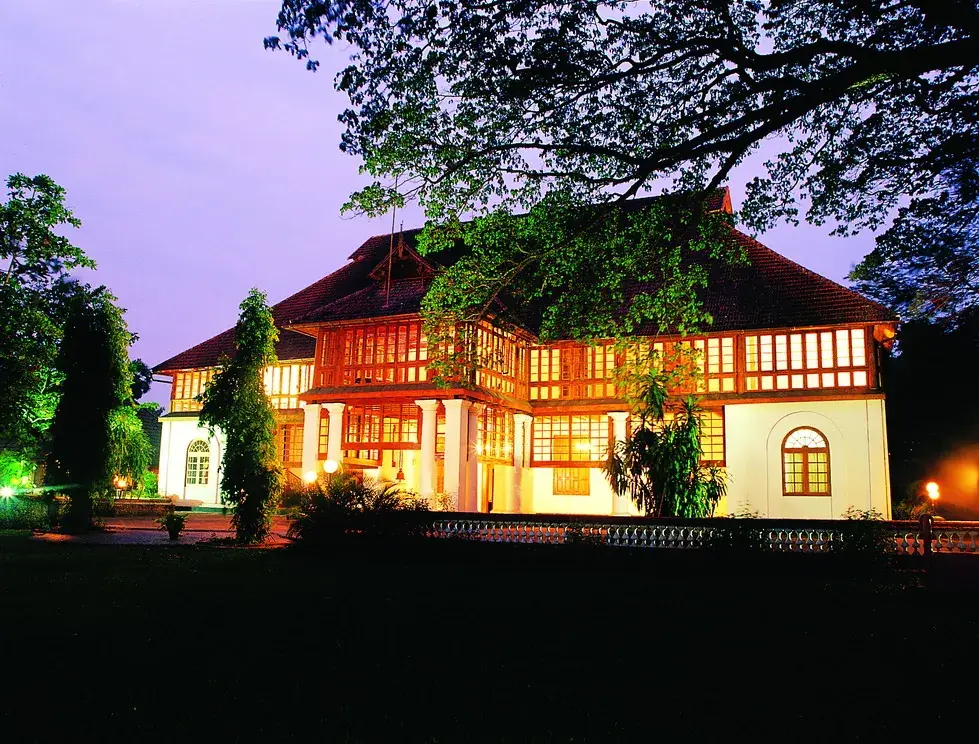
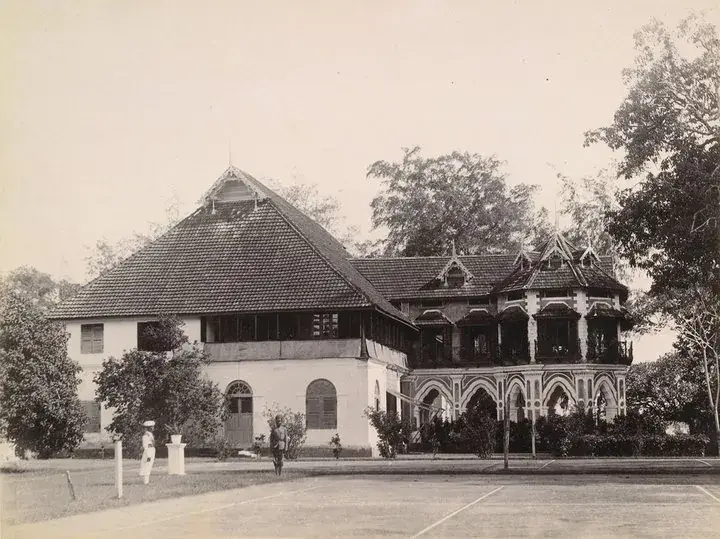
On a green island in the middle of Kochi’s backwaters stands one of the oldest Dutch palaces surviving anywhere outside the Netherlands — a whitewashed, tile-roofed mansion built in 1744 that has watched empires come and go across Vembanad Lake. Once a Dutch governor’s residence, then the seat of the British Resident of Cochin, Bolgatty Palace is today a KTDC heritage hotel wrapped in lawns, mature trees and a nine-hole golf course laid out in 1923, gazing out at the harbour, the cruise terminal and the ships bound for Vallarpadam.
Reaching Bolgatty is part of the pleasure. From the High Court jetty in Ernakulam a short ferry glides across the water in under ten minutes, and the palace rises out of the greenery of Mulavukad island — also called Ponjikkara or Bolgatty Island — like a stage set left over from the age of sail. Alternatively you cross by road over the Goshree bridges, but arriving by boat, with the harbour opening around you, is truest to the palace’s history as a waterborne colonial outpost.
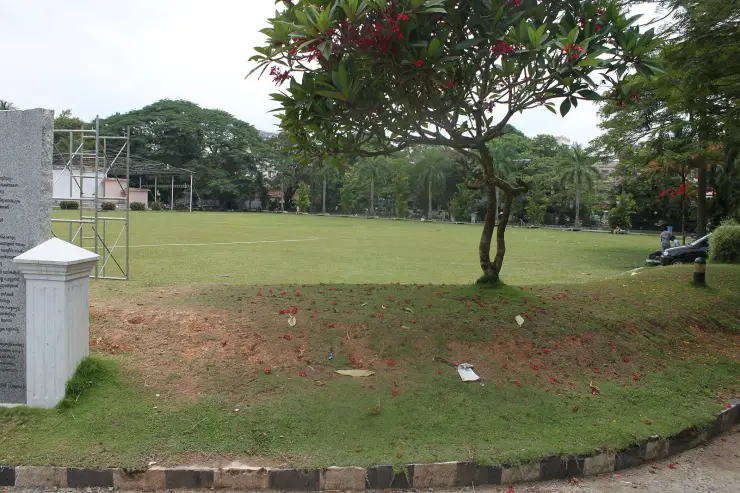
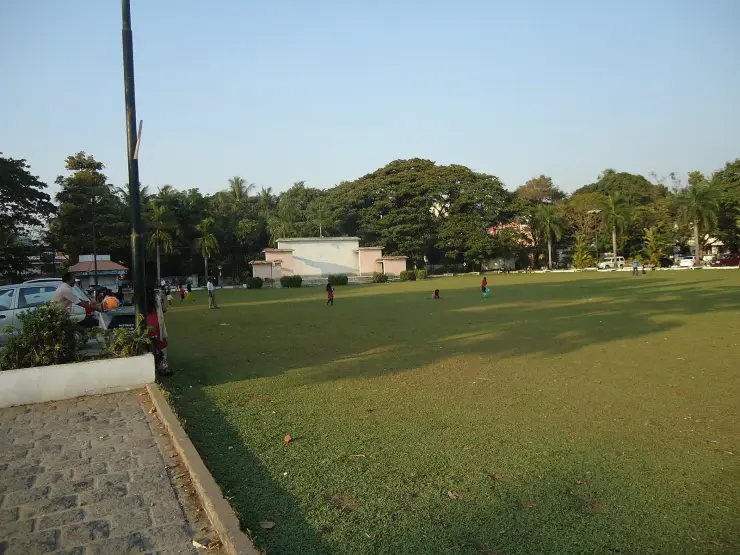
The setting is what stops most visitors first. The mansion sits on about eight acres of manicured lawns shaded by old rain trees, ringed by a nine-hole golf course that slopes down toward the lake, laid out in 1923 for the British Residency. It is often called one of the oldest courses in India; it is not, and we explain why below. It is, however, one of the more unusual places in the country to hit a golf ball. Beyond the fairways the water is always busy: country boats, tourist cruisers, the big vessels working the container terminal at Vallarpadam, and the low green line of Fort Kochi and Willingdon Island across the channel.
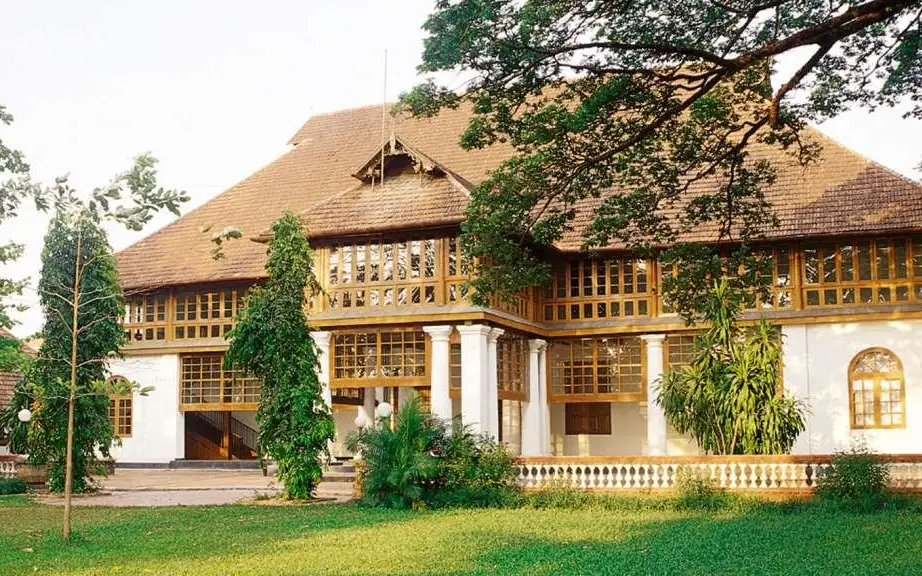
Architecturally the palace is a rare, legible piece of Dutch colonial building in India. The main block keeps its thick load-bearing pillars, generous halls, sloping tiled roofs and tall wooden-framed glass windows made to catch the lake breeze, with later British-era additions of gardens, causeways and roads laid around it. Inside, the heritage suites — carrying names like the Governor’s and the Resident’s — are furnished with antique pieces that nod to the two colonial households that once ran the island.
Because Bolgatty is a working heritage hotel run by the Kerala Tourism Development Corporation (KTDC), the palace and its grounds are, in the main, the preserve of resident guests. Day visitors are generally welcome to arrive by ferry, walk portions of the grounds and dine at the restaurant, but access to the palace interiors and the golf course may be limited to patrons and can depend on how busy the property is (confirm locally before planning a visit).
Even a short stop rewards you. Wander the lawns as the light softens over the water, watch cormorants and egrets work the shallows of the lake, take a boat out onto the backwaters, or simply sit with a coffee and let the harbour traffic drift past. For those who stay, waterfront cottages and cruises turn the island into a quiet retreat a stone’s throw from the bustle of mainland Kochi.
At heart, Bolgatty offers something few heritage properties can: the chance to stand inside three centuries of Malabar coast history — Dutch, then British, then independent India — while ships still slide past the same windows that once framed the view for a Dutch commander of Malabar.
Start with the name, because it is not Dutch and it is not Malayalam. The island is said to have been known to Arab traders as Gol-jetty — the round island — and Bolgatty is what that became in Dutch mouths. If the derivation holds, the name on the KTDC signage is an Arabic-derived description of a shape, filtered through the Netherlands, printed in English, on an island Malayalis mostly call Mulavukad.
That is a fair summary of Kochi in one word, and it is worth knowing before you decide the place is simply a Dutch relic.
The second thing to hold loosely is the guest list. Local accounts and tourism histories name a remarkable roll-call of people said to have stayed or been received here — Lord Curzon and Lord Mountbatten from the colonial period, and later Mahatma Gandhi, Jawaharlal Nehru and Indira Gandhi. It is repeated confidently and it may well be broadly true, but it circulates as tradition rather than with documentation attached, and we present it that way.
The third claim is the one on every brochure: that this is one of the oldest Dutch palaces surviving anywhere outside the Netherlands. That is very likely right and it is also doing careful work — Dutch, palace, outside the Netherlands. It is not a claim about the oldest European building in India, and it should not be read as one.
What is solid: it was built in 1744 by traders of the Dutch East India Company as the residence of the commander of Dutch Malabar, leased to the British in 1909 as the seat of the British Resident of Cochin, and opened by KTDC as a heritage hotel in 1976 — among the earliest palace-to-hotel conversions in India.
There is a hole in that sequence that almost every telling leaves open. Dutch to British reads as one handover; it was not. Dutch power on this coast ended with the British conquest of Malabar in 1795, formalised when the Netherlands ceded Cochin under the Anglo-Dutch Treaty of 1814. The British did not take the palace then. It was leased to them only in 1909 — and, in the accounts that specify, the lessor was the King of Kochi. Which means that for something in the order of ninety-five years, between the Dutch losing the coast and the British taking the house, this building was the property of the Cochin royal family. Nearly a century of the palace's life is skipped by almost every telling, ours included, because the Dutch-then-British story is tidier. It also quietly changes what the 1909 lease was: not a conquest and not an inheritance, but a transaction between an Indian ruler and the empire that had recognised him.
The golf course is the claim we would now retract outright. It is regularly called one of the oldest golf courses in India, and we have repeated that. It is not. Kerala Tourism dates the nine-hole layout here to 1923, with some sources saying 1925 — but the Royal Calcutta Golf Club was founded in 1829, the first golf club anywhere outside Great Britain, and Bangalore followed in 1876 with what is reckoned the oldest course in continuous use outside the British Isles. By the time anyone laid out a fairway on Bolgatty, India had had golf for the better part of a century. What is here is a charming, unusual and genuinely old-ish course on an island in a backwater. That is enough. It does not need the superlative, and the superlative is wrong.
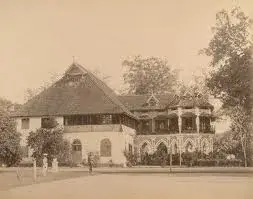
Bolgatty Palace was built in 1744 by Dutch traders of the Dutch East India Company (VOC), who then held sway over Kochi and much of the Malabar coast. Conceived as a stately mansion set in landscaped grounds, it became the governor’s palace — the residence of the commander of Dutch Malabar — a status symbol of Dutch commercial and naval power on the Kerala coast. It survives today as one of the oldest Dutch palaces standing anywhere outside the Netherlands.
Through the eighteenth century the palace anchored Dutch authority over the harbour, its position on an island in the middle of the backwaters giving its occupants command of the waterways into Cochin. As Dutch fortunes on the coast waned and the British East India Company rose to dominance, the building’s role shifted with the changing balance of European power in the region.
Dutch control did not end at the palace door in one moment. The British conquest of Malabar in 1795 broke Dutch power on the coast, and the Netherlands formally ceded Cochin under the Anglo-Dutch Treaty of 1814. The palace, however, did not pass to the British then. Accounts that specify the transaction have the King of Kochi leasing it to them, and that lease is dated 1909 — which puts the building in the hands of the Cochin royal family for roughly ninety-five years in between. That period is the least documented in the palace's life and is skipped by most accounts, which run the Dutch straight into the British as though the two were consecutive tenants.
In 1909 the palace was leased to the British, and it became the seat of the British Resident of Cochin during the Raj — the residence of the Crown’s representative to the Cochin kingdom. Under British occupancy the grounds were extended and improved, with gardens, a network of roads and causeways added around the old Dutch core, and the island took on the character of a genteel colonial residency looking out over the harbour.
The palace is said to have hosted a roll-call of eminent figures over its colonial and post-colonial life, with local accounts naming visitors such as Lord Curzon and Lord Mountbatten and, later, national leaders including Mahatma Gandhi, Jawaharlal Nehru and Indira Gandhi (as recorded in tourism histories; treat the guest list as tradition rather than firmly documented).
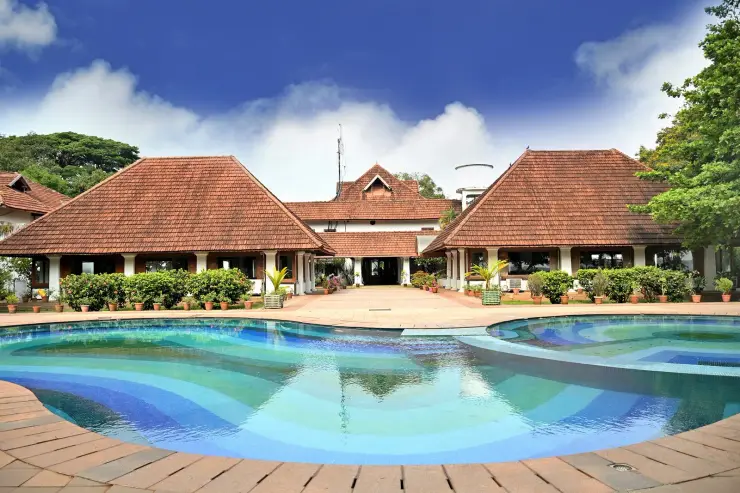
After India gained independence in 1947 the palace passed to the state, and in 1976 the Kerala Tourism Development Corporation (KTDC) opened it as a heritage hotel — among the earliest of India’s palace-to-hotel conversions. Today, as Bolgatty Palace and Island Resort, it pairs the restored Dutch mansion with modern rooms, a swimming pool, an Ayurvedic centre, cultural performances and the historic nine-hole golf course, keeping the island in public hospitality use while preserving its colonial architecture.
It is a genuinely rare survivor — a 1744 Dutch colonial palace, one of the oldest outside the Netherlands, that you can actually walk up to rather than only read about.
The layered history is legible on the ground: Dutch governor’s mansion, British Residency of Cochin, and one of independent India’s first heritage hotels, all in a single building and its grounds.
The island-and-backwater setting is superb, with lawns and old trees running down to Vembanad Lake and wide views of the Kochi harbour, the cruise terminal and shipping bound for Vallarpadam.
It holds a nine-hole golf course laid out around the palace in 1923 for the British Residency — not one of India's oldest, whatever the brochures say, but certainly one of its odder settings for a round.
The short ferry crossing from the High Court jetty is a lovely mini-voyage that puts you on the water among boats, birds and ships within minutes of central Ernakulam.
For a stay, the heritage suites and waterfront cottages, cultural performances and boat cruises make it a calm island retreat a short hop from the energy of mainland Kochi and Fort Kochi.
Road km to Ernakulam; ghat roads and traffic vary — allow extra.
November to February and early mornings are best for walking; avoid midday heat where possible.
Live forecast loads in your browser.
Sun and moon are calculated for this location and shown in IST. Photography windows are the hour around sunrise and sunset; the sunset bearing is degrees clockwise from true north. Moon phase is accurate to about half a day.
These are official or public-sector eco offerings that match this place, town or forest destination. Confirm availability, permits, tariffs and reporting times with the official operator before travel.
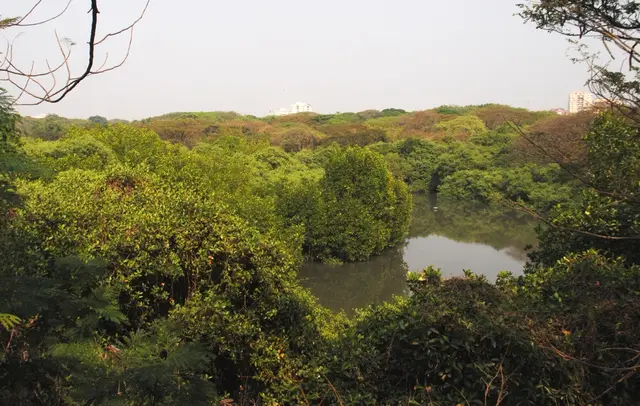
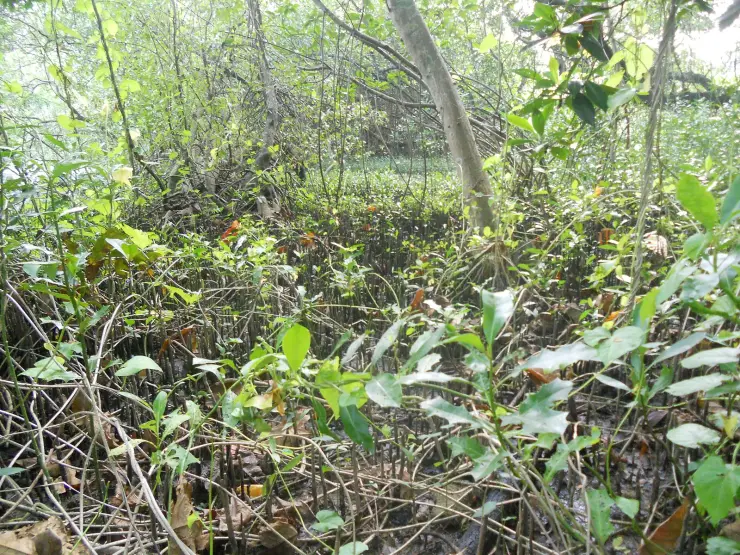
Urban bird sanctuary and mangrove pocket in central Kochi, useful as a short nature stop.
Official source →Browse listed stays, food, activities, sights, shops and rentals around Bolgatty Palace. Check each listing’s locality and contact the business directly for current arrangements.
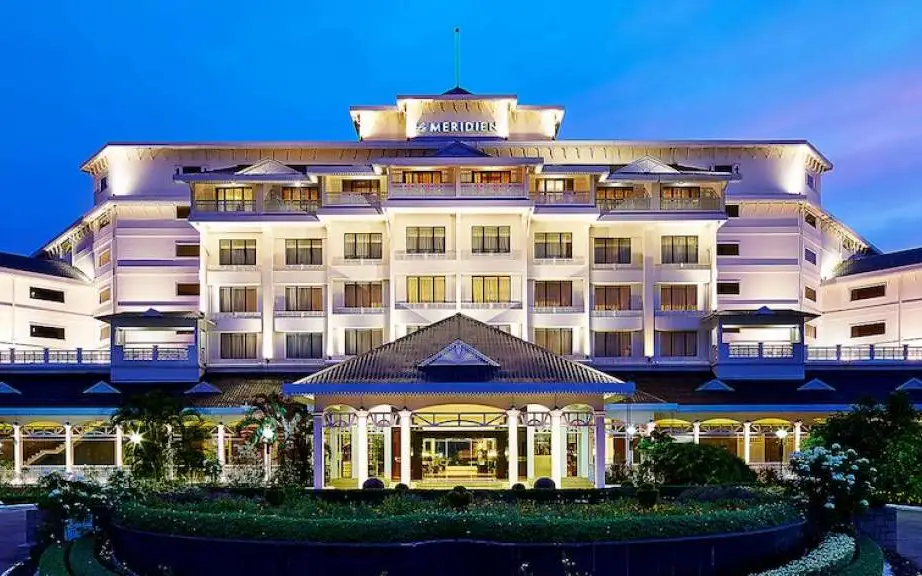
Marriott hotel in Maradu with rooms, restaurants, spa and event facilities. 5-star luxury hotel · Maradu, Ernakulam city, Marriott.
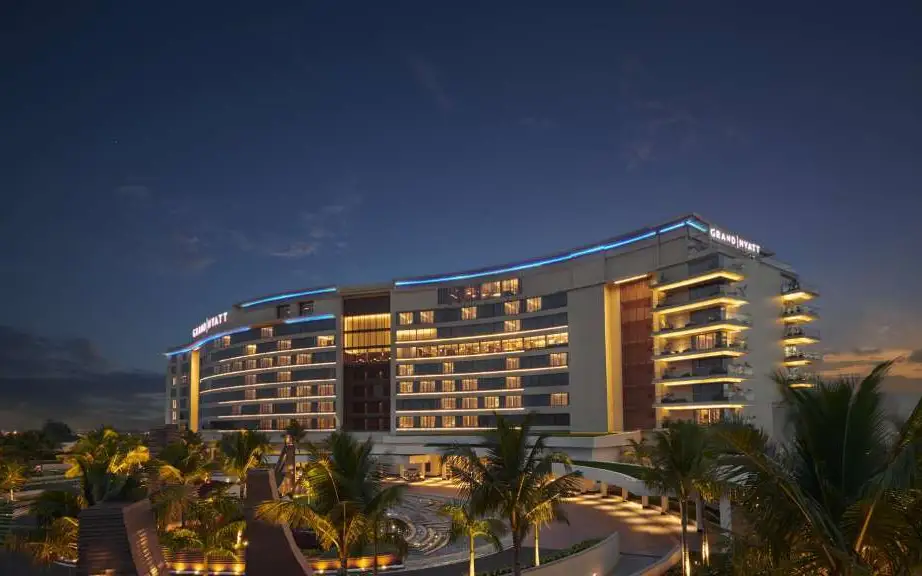
Grand Hyatt Kochi Bolgatty is a waterfront hotel on Bolgatty Island, separate from KTDC’s Bolgatty Palace. Hyatt distinguishes king and twin rooms, Backwater View choices, Club Access categories and named suites and villas. Choose the bed, view and access category before comparing a quote.
Hotel in Kochi City Centre, Ernakulam, Kerala, India. AC, Wheelchair access.
Grand Hotel in Ernakulam: confirm the exact property, room options and total price before planning a stay. No confirmed booking or contact link is available here.
Kochi Marriott Hotel at Edappally houses Quan Spa alongside its accommodation, dining and outdoor pool. Reserve a specific spa service with the hotel, asking about duration, price and access for non-resident guests. A treatment booking does not automatically include pool use.
Kochi Marriott Hotel at Edappally houses Quan Spa alongside its accommodation, dining and outdoor pool. Reserve a specific spa service with the hotel, asking about duration, price and access for non-resident guests. A treatment booking does not automatically include pool use.
Hostel in Kochi City Centre, Ernakulam, Kerala, India. WiFi.
ATS Willingdon Hotel is listed on Willingdon Island near Cochin Port. Its owner-submitted Kerala Tourism profile describes single rooms, double rooms and a suite. Ask which category is offered for your dates and how many guests and beds the quote covers.
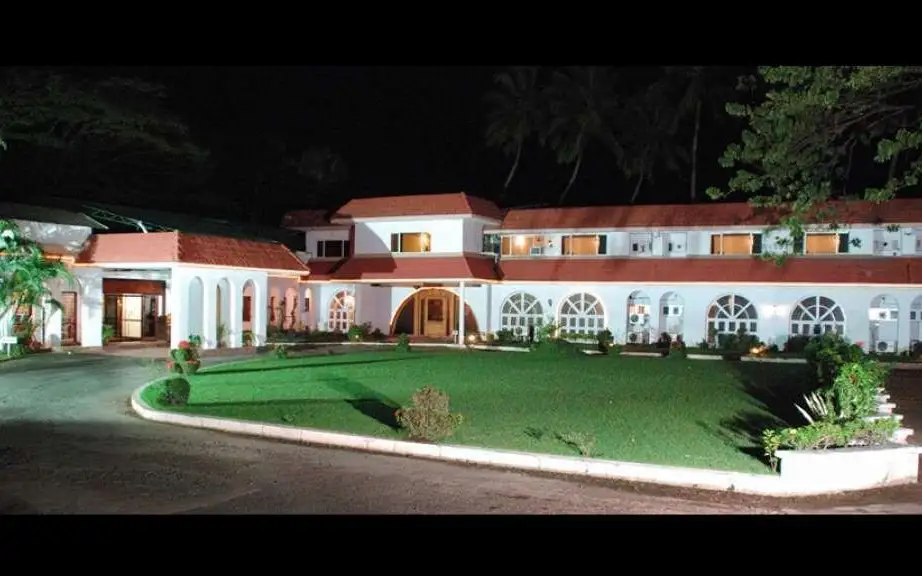
KTDC’s Bolgatty Palace and Island Resort is at Mulavukadu on Bolgatty Island, Kochi. The operator distinguishes the main, mansion and marina blocks. A resort booking should identify the room category and block; it should not be assumed to place you in the historic palace.
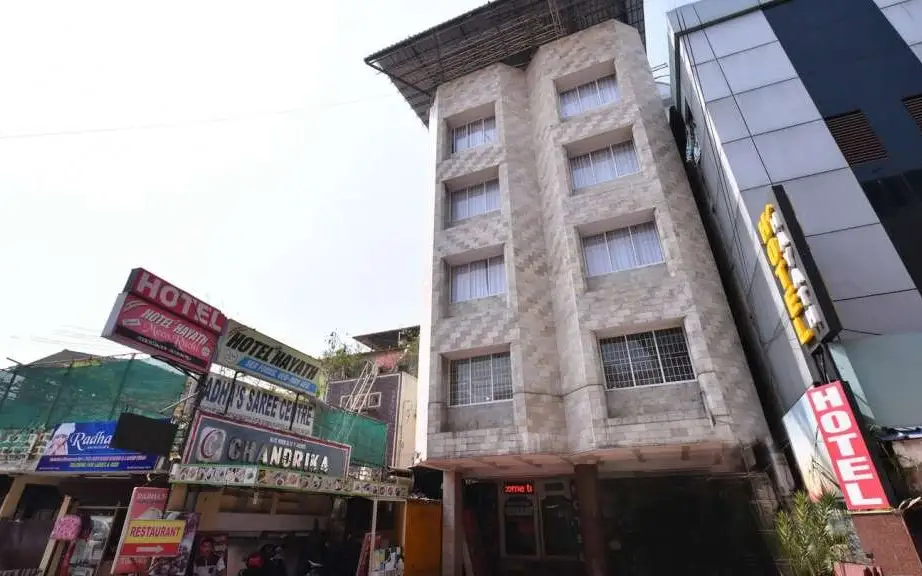
Chandrika Residency is listed near TDM Hall on Diwans Road in Ernakulam, at PIN 682016. Its owner-submitted Kerala Tourism profile mentions a restaurant and parking, but it does not establish the room category, meal package or present facilities available for your stay.
The operator’s listing describes Hotel Millennium Continental as having a 40-seat multi-cuisine restaurant, centrally controlled VRV air conditioning, on-site parking and rooms furnished in a contemporary style.
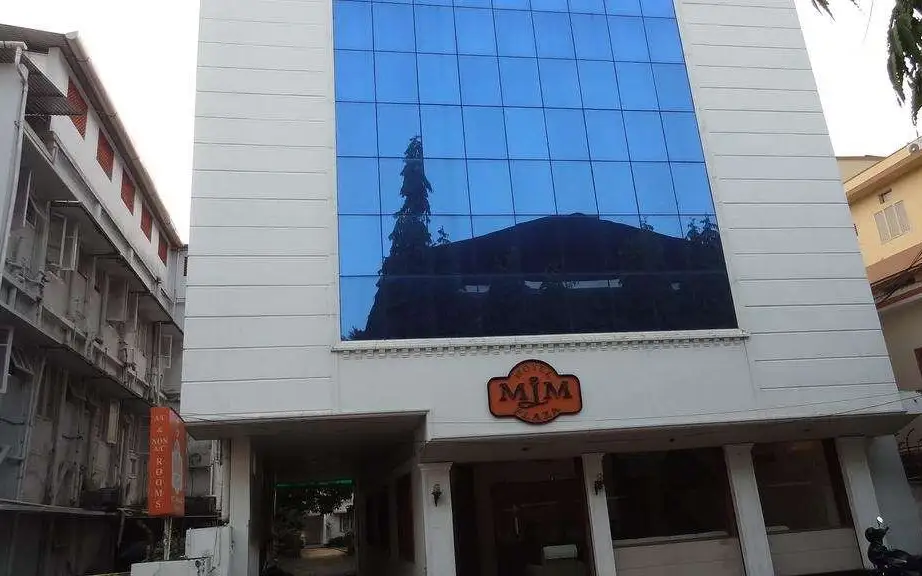
Hotel MJM Plaza is listed on T. D. Road in Ernakulam, Kochi. The operator presents it as a centrally located hotel aimed in part at business travellers.
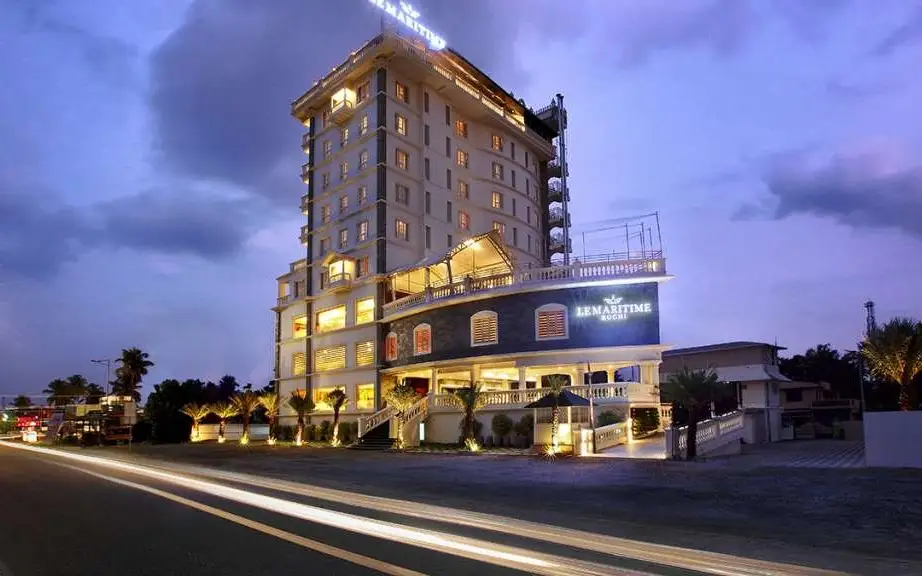
Le Maritime is a hotel at Goshree Junction in Vypin, Kochi. Its address is the first detail to keep in mind when planning a city stay: the operator describes it as off Marine Drive, while identifying the property itself with Vypin and the Goshree junction. Use that exact location when arranging a transfer or comparing travel to meetings and sightseeing stops.
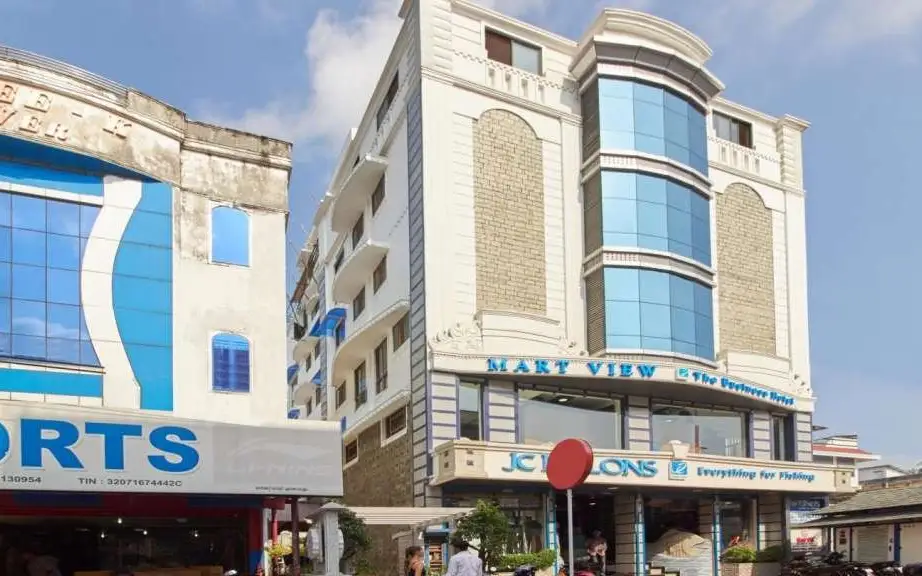
Mart View is listed at Panakkal Towers, near Saritha Theatre on Market Road in Ernakulam, Kochi. The operator describes it as a business hotel with access to Marine Drive and M. G. Road.
Nanda Inn is listed at Minn Shenoy Center on T. D. Road in Ernakulam, behind Padma Theatre and opposite City Hospital. The operator describes it as a smaller city hotel with air-conditioned and non-air-conditioned rooms and modern in-room amenities.
Padamadan Homestay offers rooms with breakfast in Bolgatty, Kochi. According to owner Mani Padamadan, the property is within walking distance of Lulu Convention Centre and near Bolgatty Palace Hotel.
An older operator-submitted listing places Saas Tower on Cannon Shed Road near the boat jetty in Ernakulam and describes 72 rooms with satellite television, telephones, internet access and air conditioning.
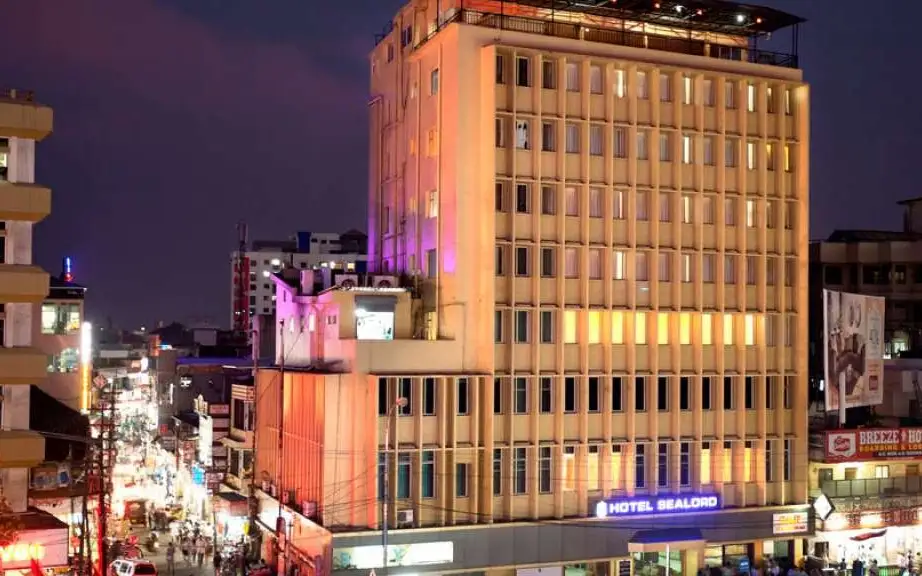
Sealord Hotel is on Shanmugam Road on the Marine Drive and Menaka side of central Kochi. Its operator website identifies Hotel Sealord as the Kochi property within the Sealord group. Use the Kochi address when enquiring, since the group also promotes properties in other Kerala destinations.
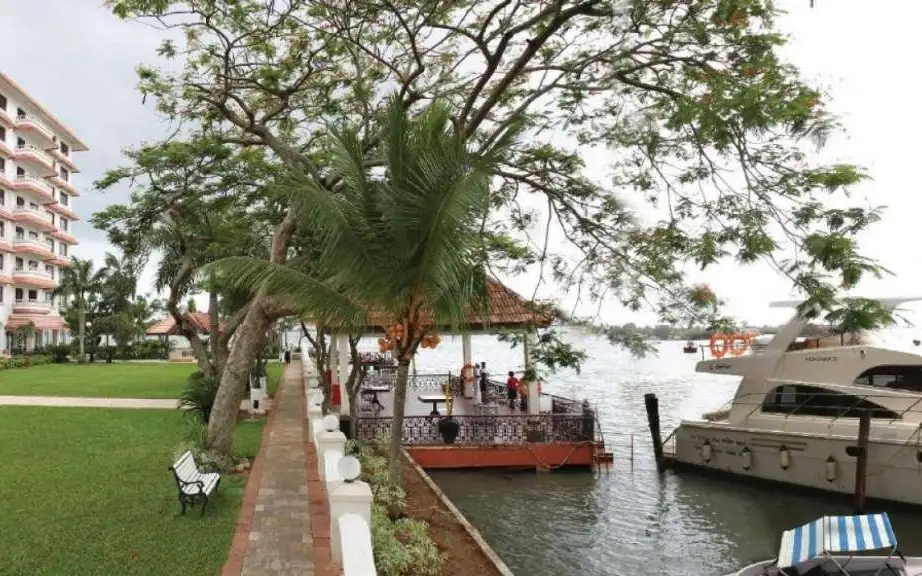
Taj Malabar Resort & Spa, Cochin is on Willingdon Island, at Willingdon harbour and across the water from central Ernakulam. The operator’s listing describes coconut trees, a harbour setting and old-world character.
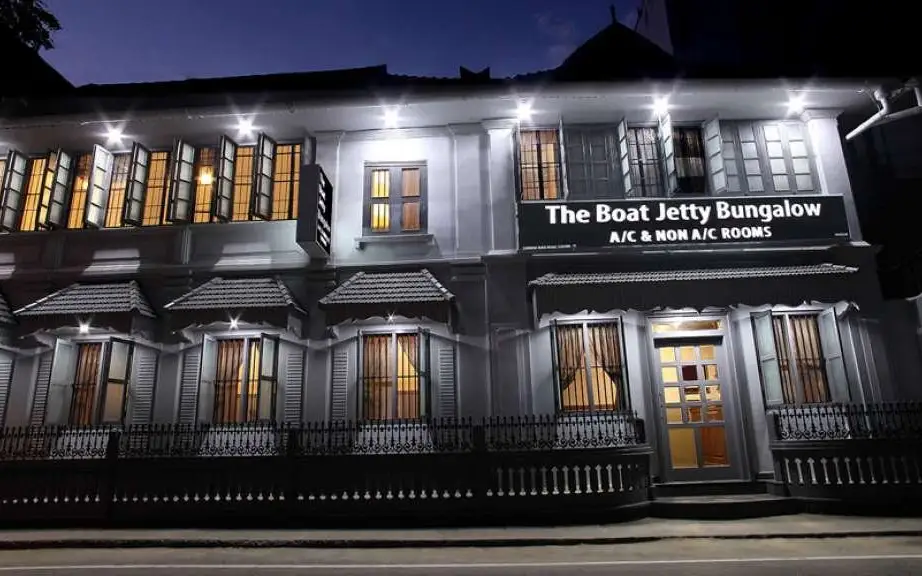
The Boat Jetty Bungalow occupies a former family home opposite Ernakulam's main boat jetty on Cannon Shed Road. According to the operator's history, the building began as P.K.V House, built in 1891 for P.K. Varughese of the Puthenpurackal family. It passed through later generations before becoming a heritage hotel.
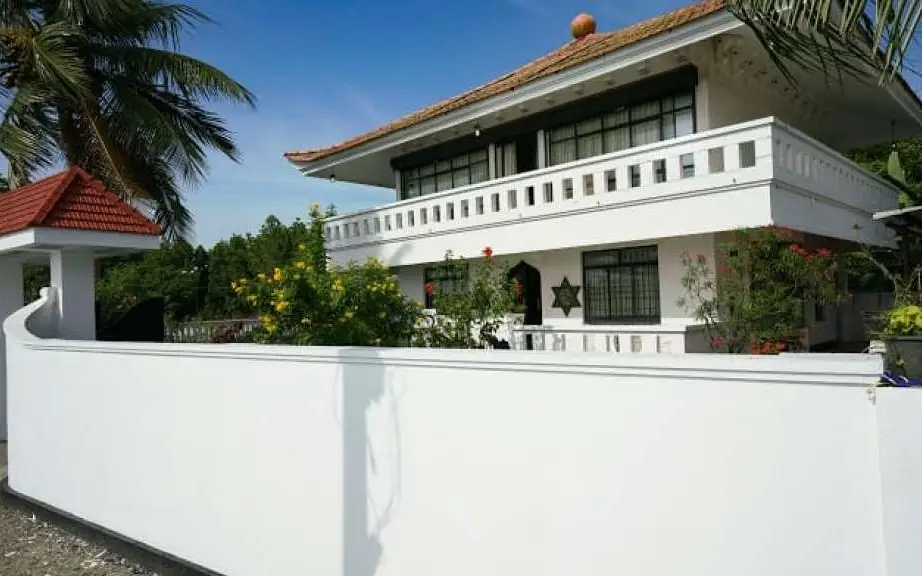
Bedrooms at The Island House Home Stay feature poster beds, wooden furniture and wallpaper, while the Vallarpadam property’s decor includes a retro staircase styled after the 1920s. The living area has French windows that bring in natural light, alongside framed photographs and other wall decorations.
Book with the place itself. India’s cyber-crime coordination centre warned in April 2025 that convincing copies of hotel and pilgrimage booking sites are being pushed through sponsored search and social ads, taking payment for rooms the property never hears about. Use the contact and source details on each profile to confirm the exact business and booking channel. A directory entry or map pin alone does not establish an operator’s identity or current availability. Roampedia takes no commission and does not collect booking payments. If a booking page reached you through an ad, check the address bar against the property’s own site before you pay. Fraud can be reported on cybercrime.gov.in or on 1930.
Find food, accommodation and activities across Kochi City. Browse the guides for places to eat, stay and explore along your route.
Walking routes start at Bolgatty Palace. Check the route and access before setting out, especially where a road, gate or waterway separates the stops.
12 more places around Kochi City. Open a guide to plan the visit and onward journey.
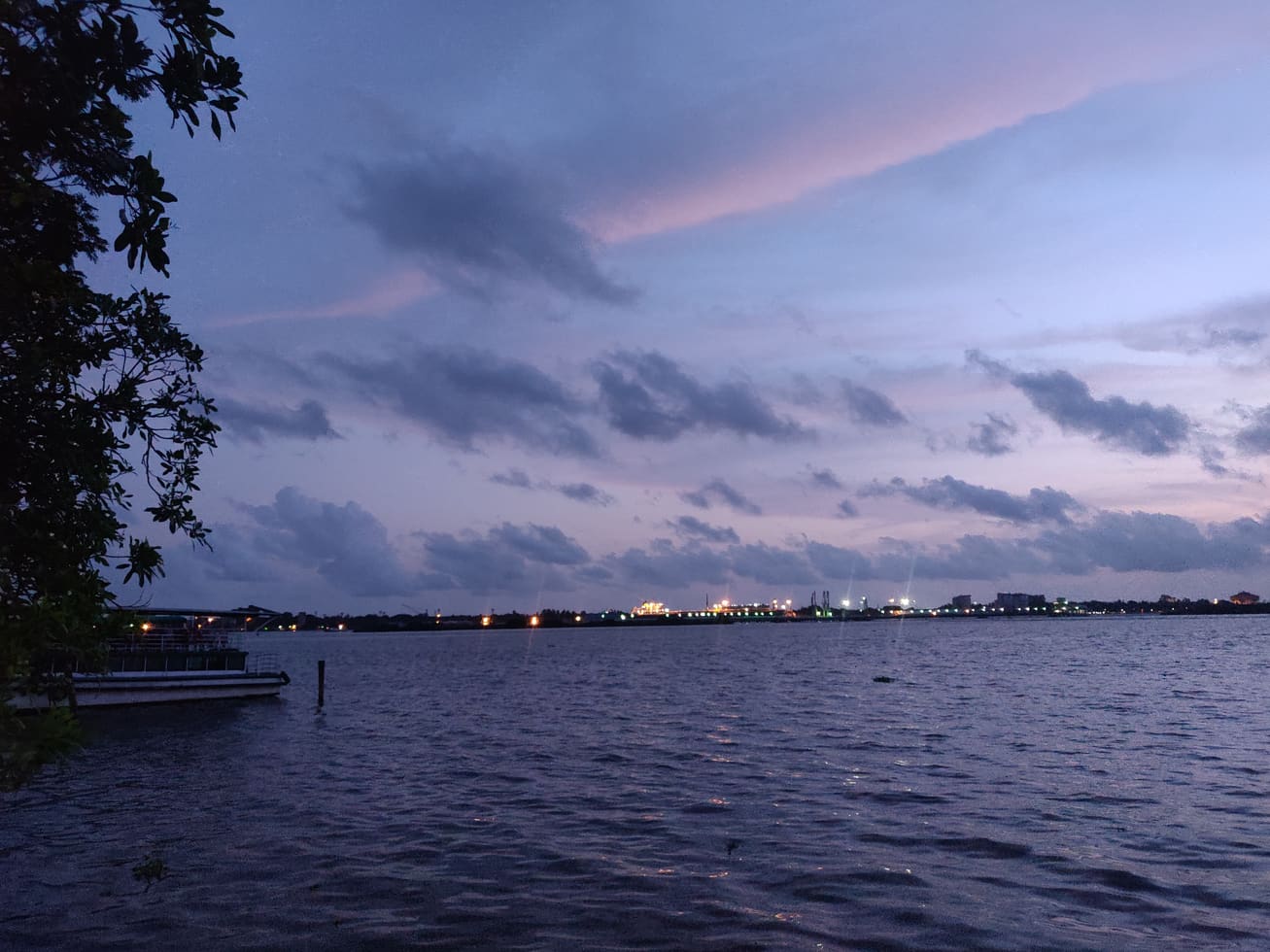
3.4 km · 7 min drive
Waterfront promenade in mainland Kochi, good for evening walks and ferries.
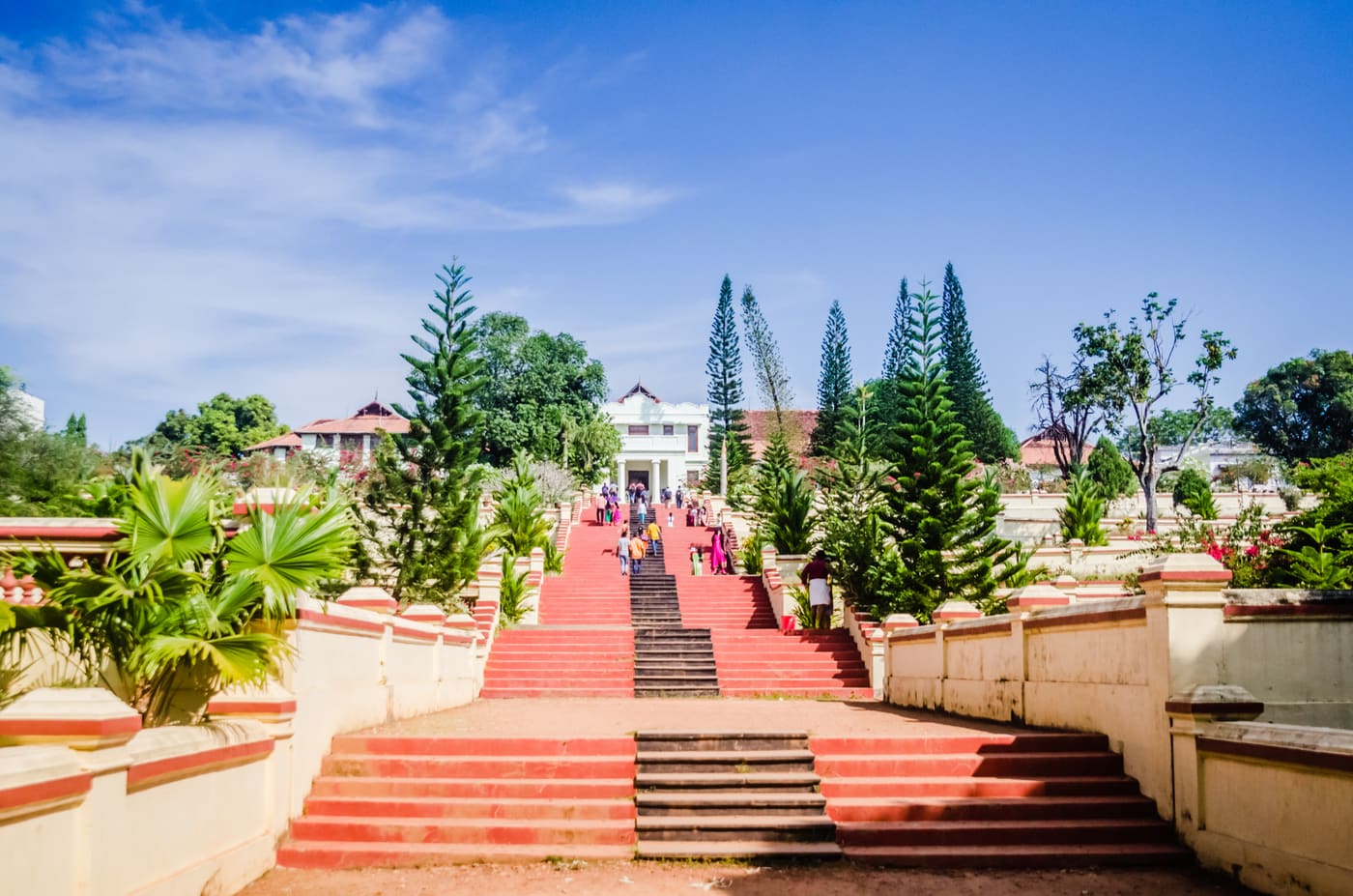
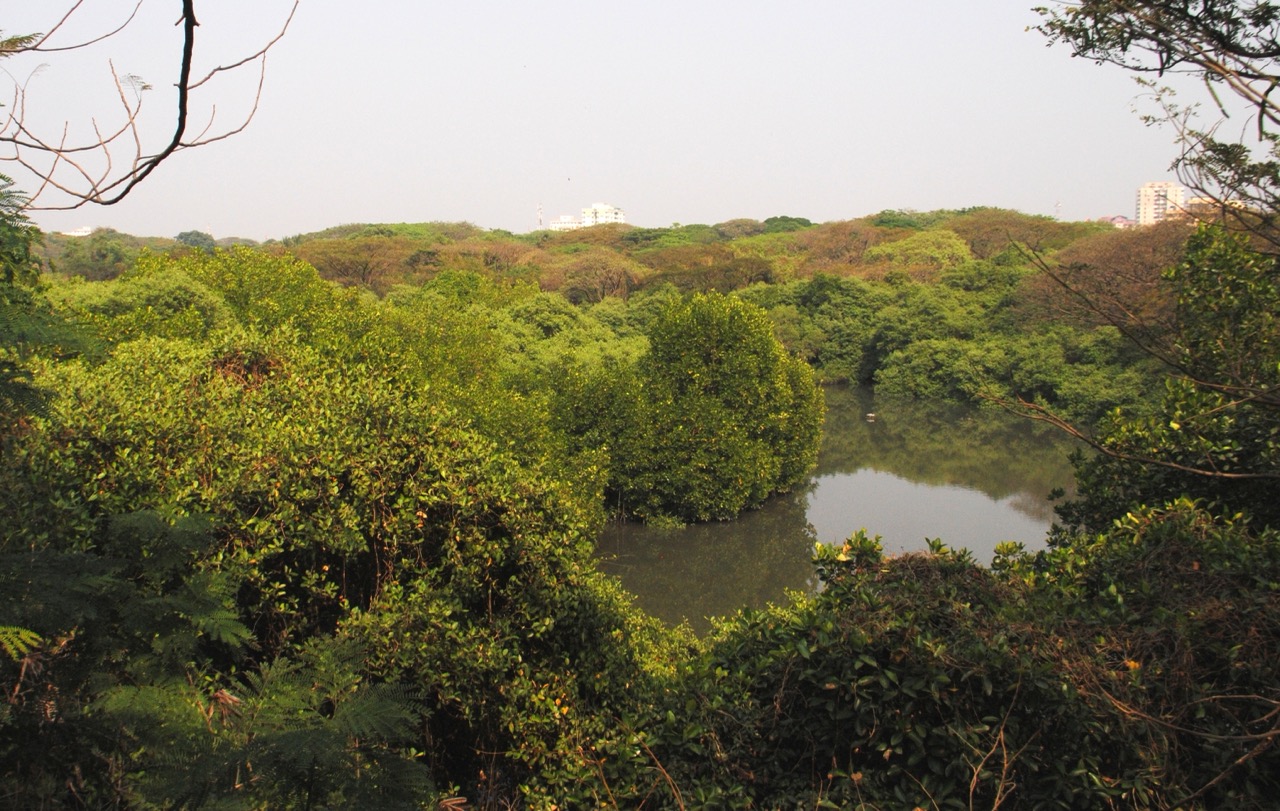
2.5 km · 30 min walk
A small mangrove “green lung” behind the High Court in Ernakulam, a nesting site for migratory and resident birds.
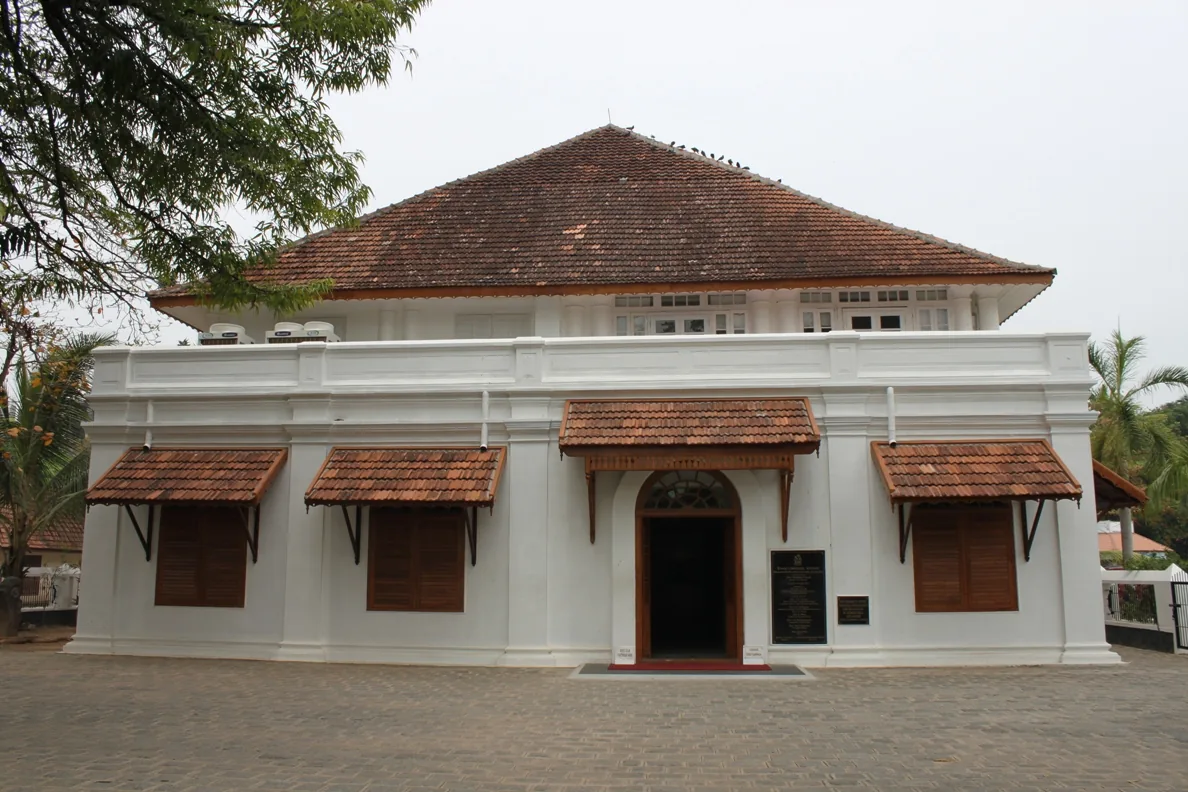
5.9 km · 11 min drive
A heritage hall in Ernakulam run as a contemporary art gallery by the Kerala Lalithakala Akademi.
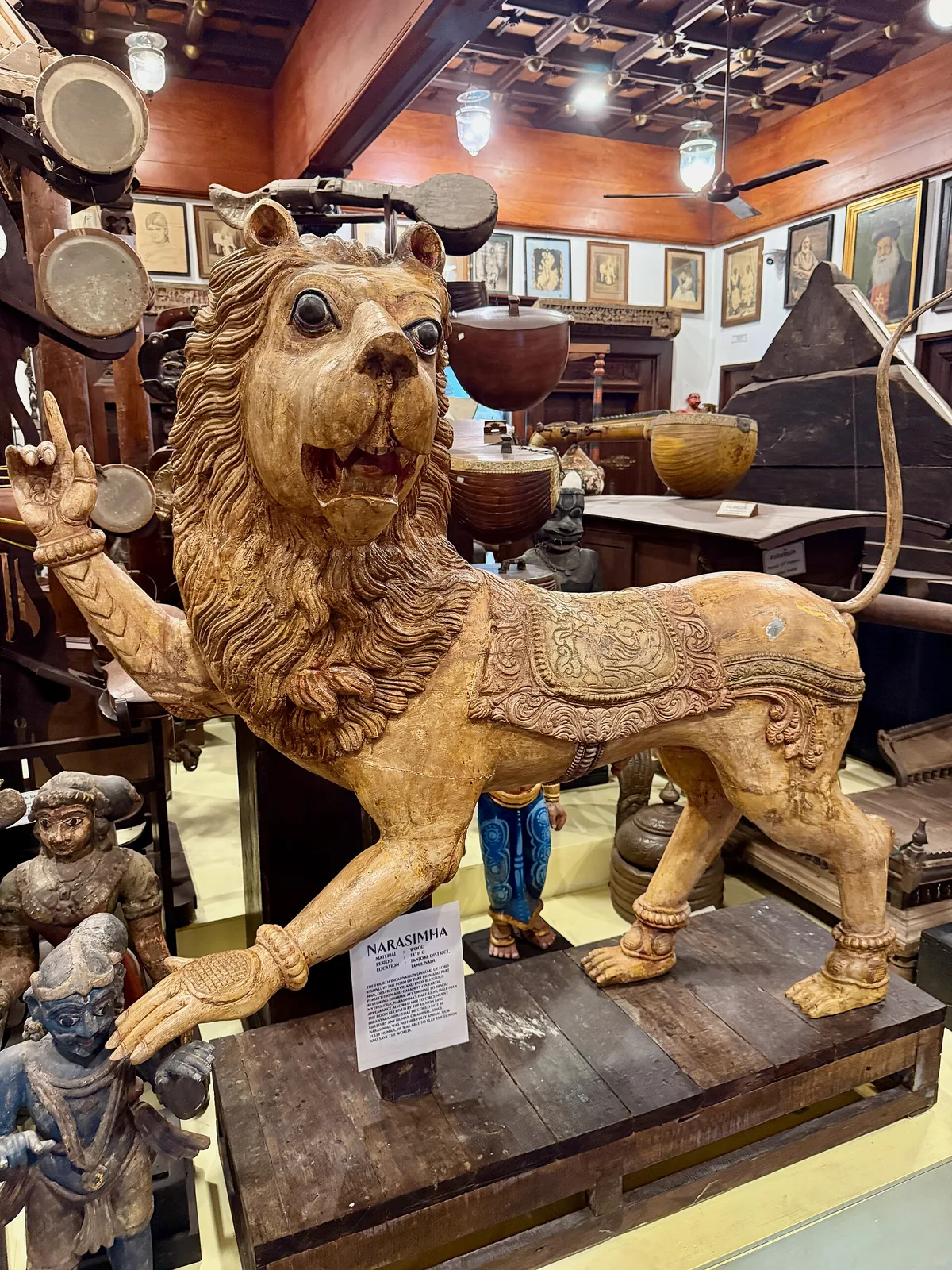
A privately built museum at Thevara with thousands of Kerala folk and ritual artefacts across Malabar, Kochi and Travancore styles.
4.7 km · 10 min drive
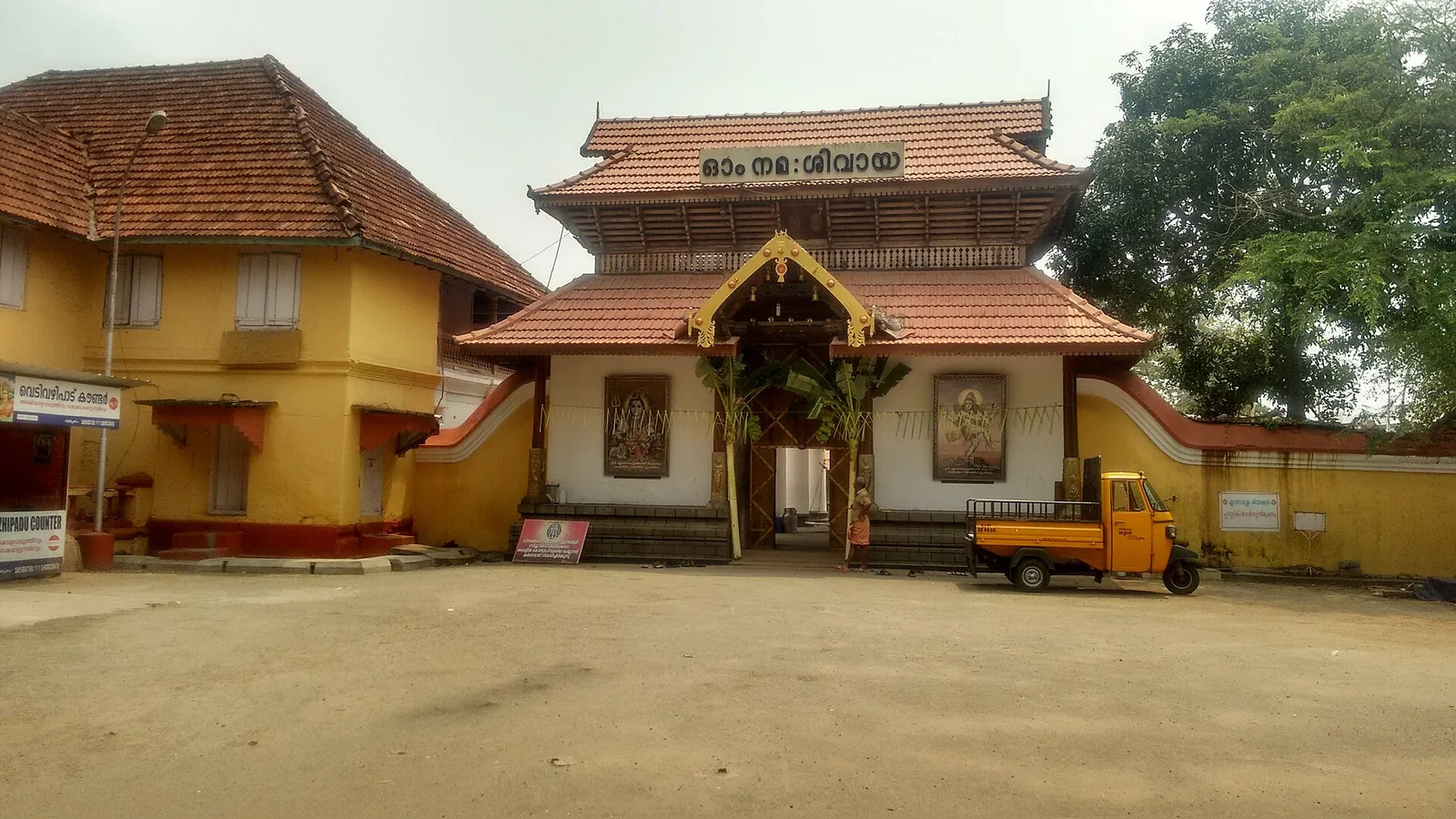
The Ernakulam Shiva temple on Durbar Hall Road, the city’s principal temple and home to the eight-day Ernakulathappan festival.
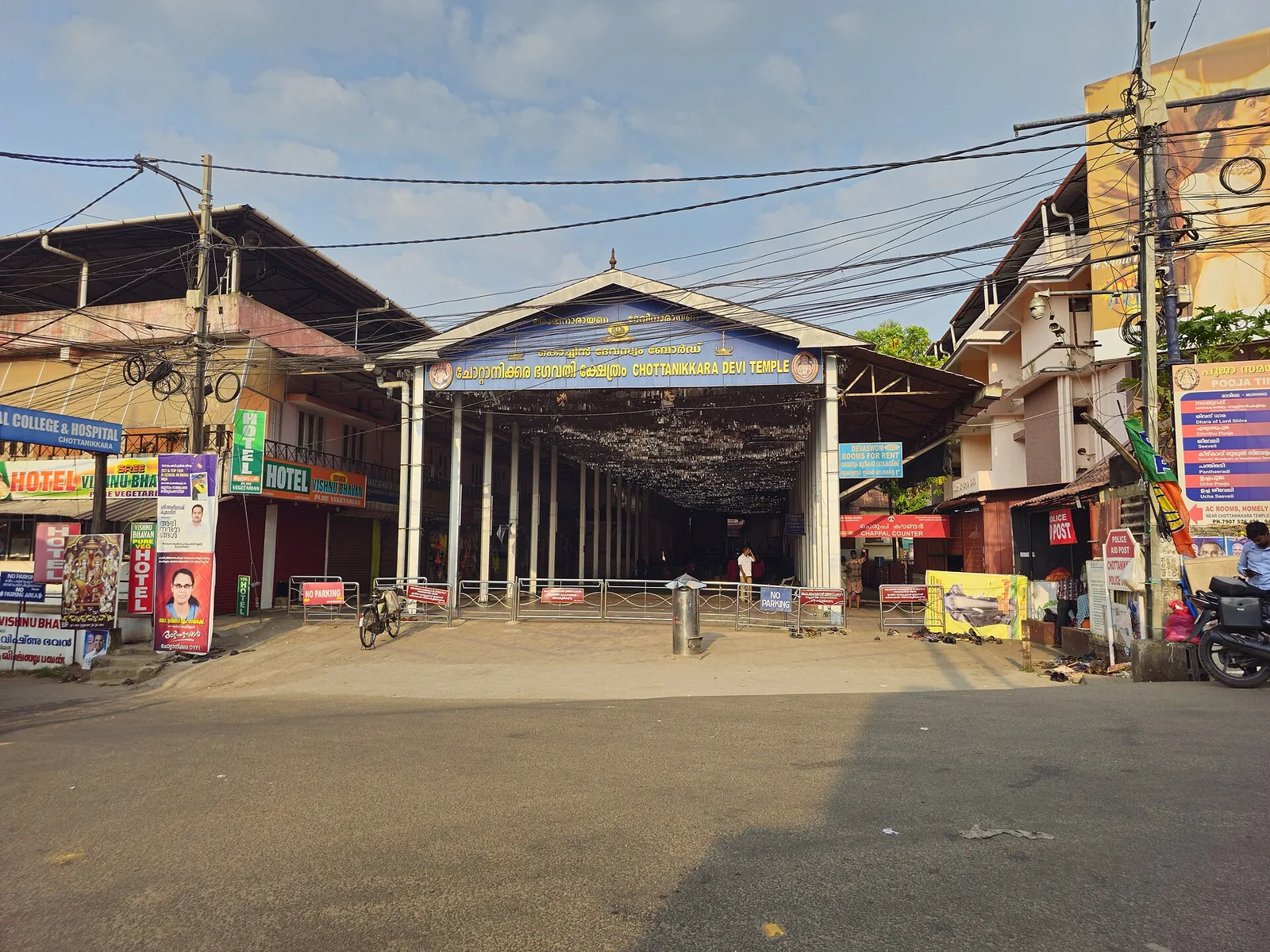
A major Bhagavathy (Devi) temple south-east of Kochi, famous for the dawn Nirmalya Darshanam and its Makam Thozhal festival.
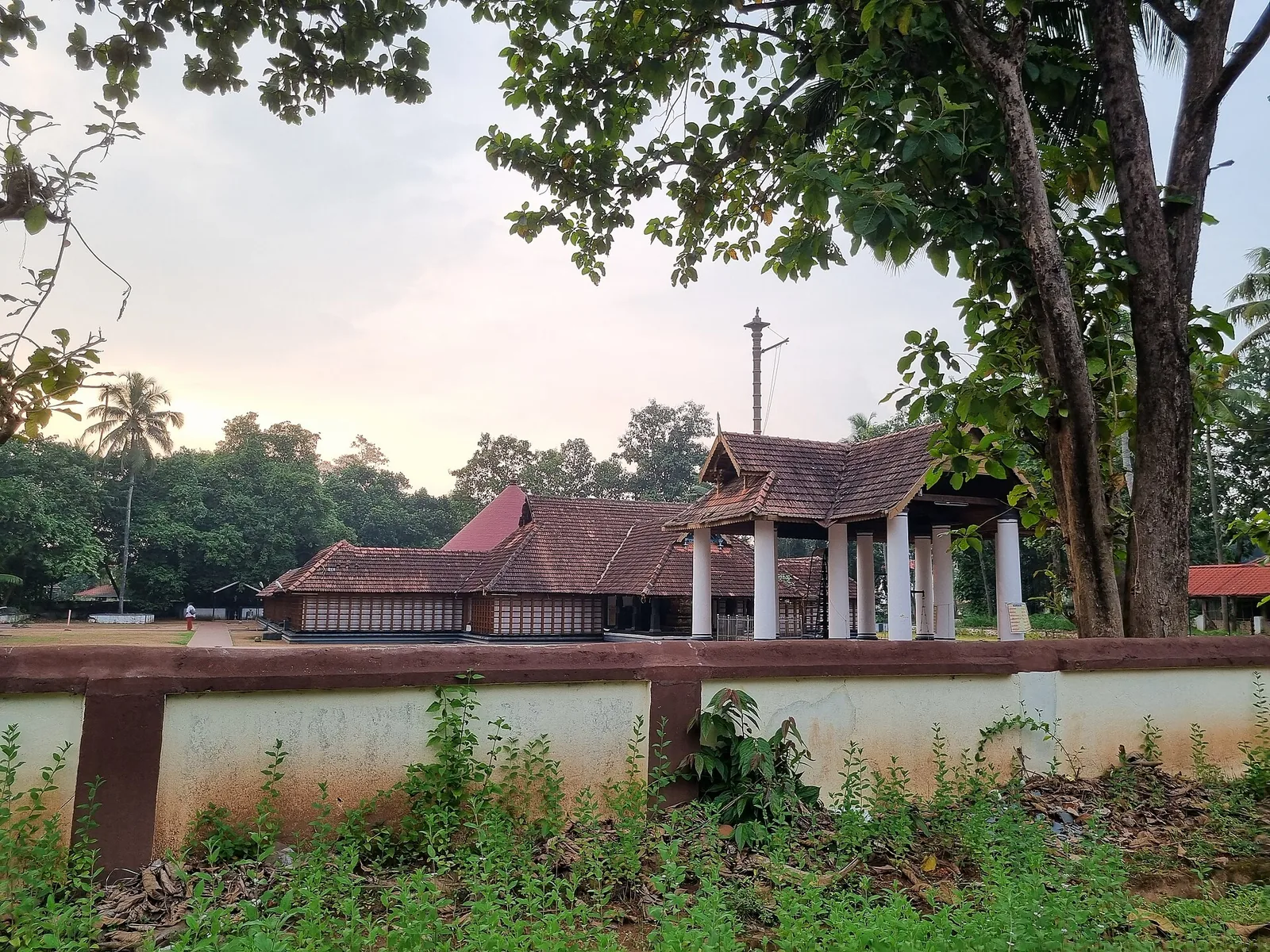
The only major temple to Vamana in Kerala, at Thrikkakara near Kakkanad — traditionally regarded as the origin place of the Onam festival.
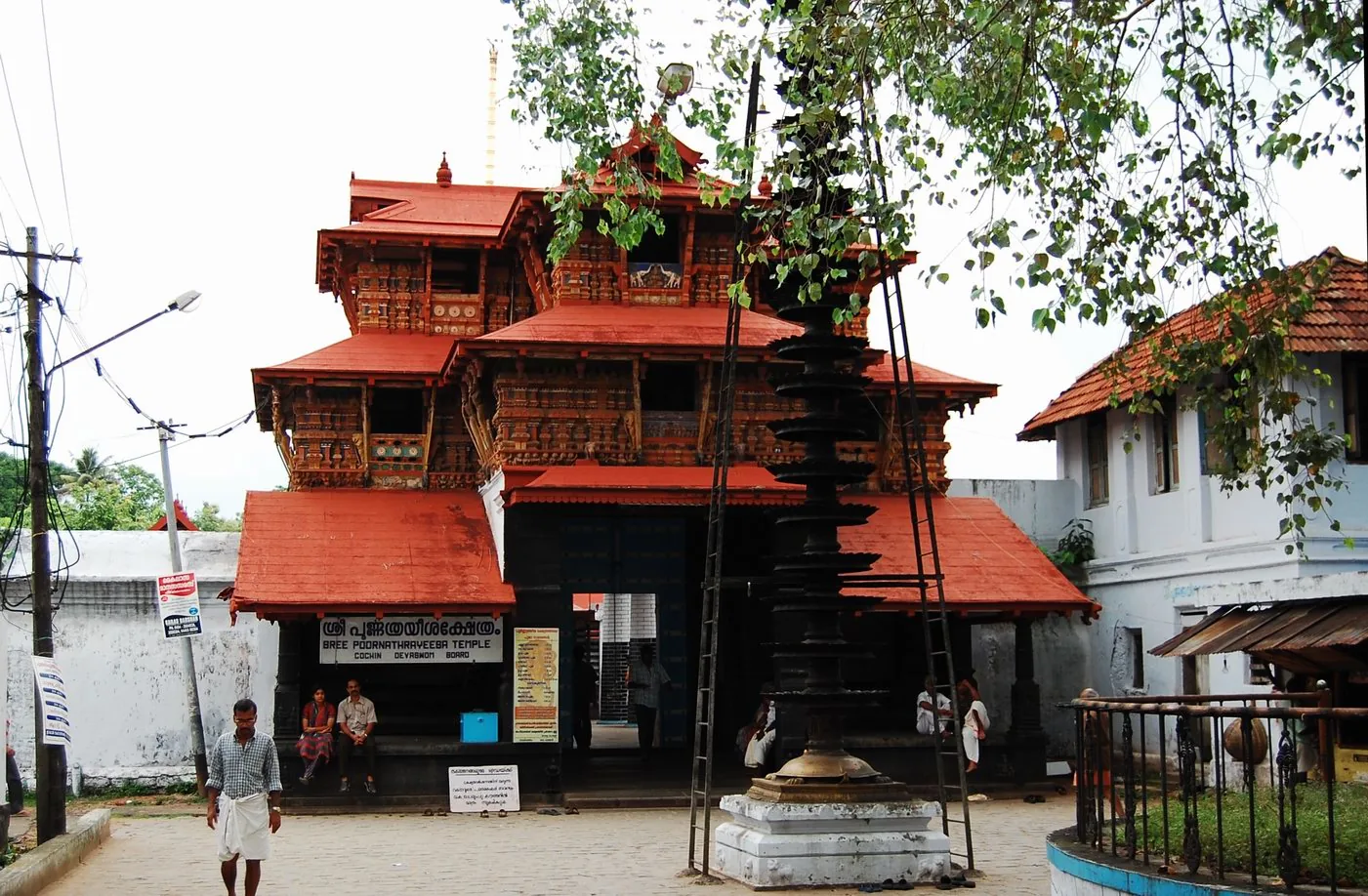
One of the great Vishnu temples of Kerala, at Tripunithura, known for its Vrischikotsavam festival.
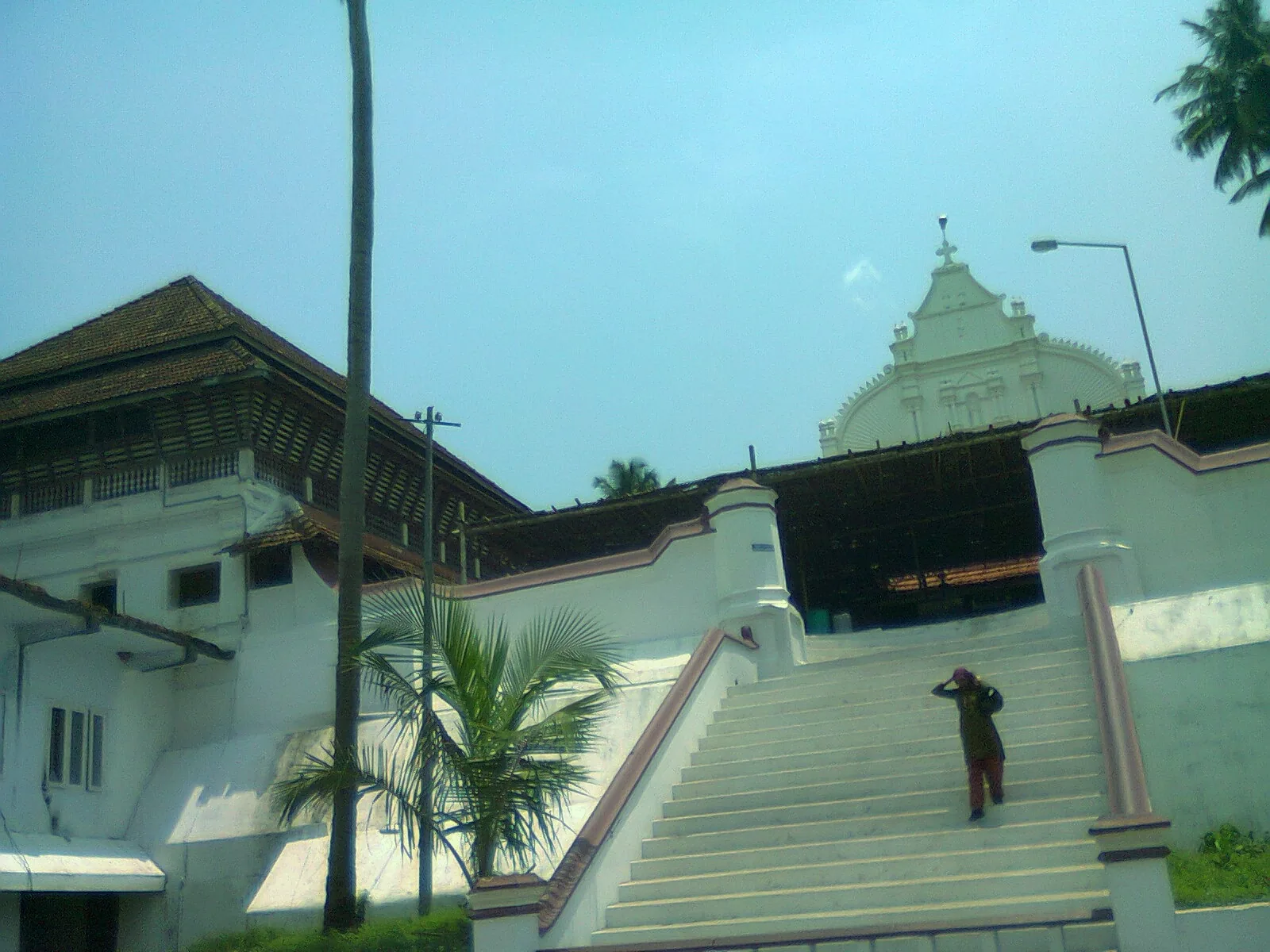
An ancient Orthodox church east of Kochi linked to the legend of the sorcerer-priest Kadamattathu Kathanar, drawing large crowds at its annual feast.
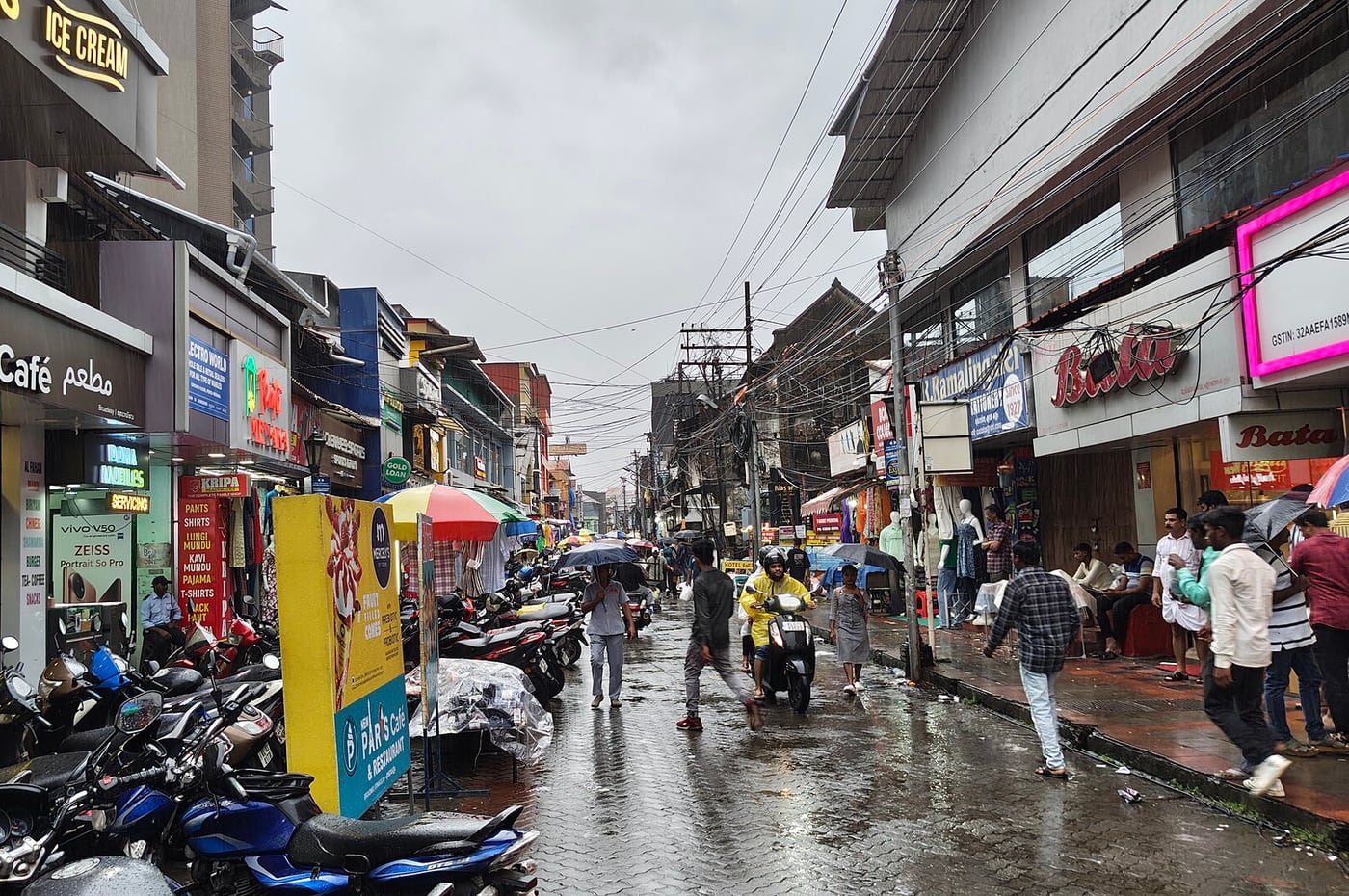
3.2 km · 7 min drive
Mainland Kochi’s old shopping street, a pedestrianised run of textile, provision, spice and gold shops between MG Road and the boat jetty — the city’s everyday market rather than a heritage set piece.
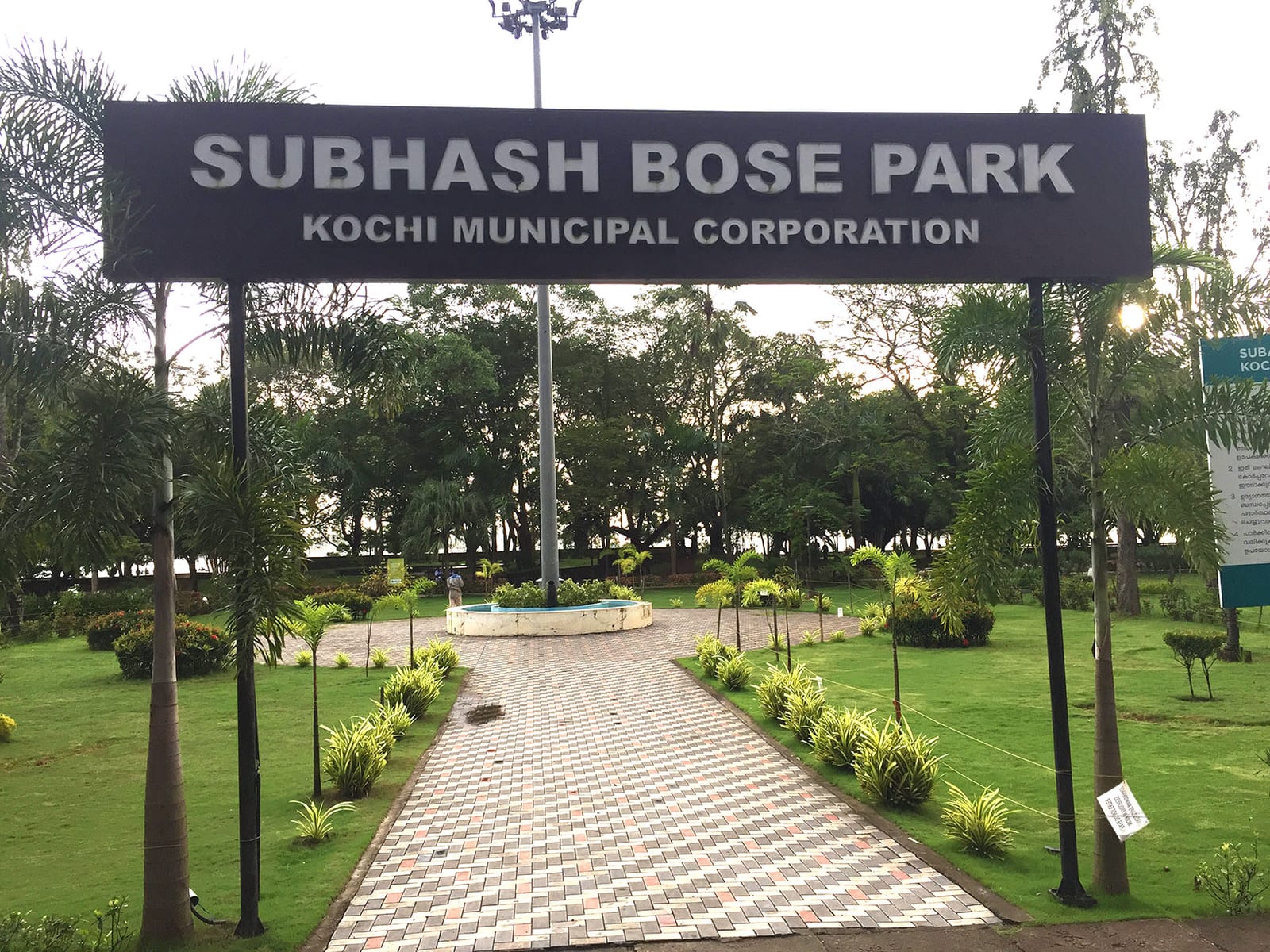
4.3 km · 9 min drive
The waterfront park beside Ernakulam Boat Jetty, at the southern end of the Marine Drive walkway — a short, shaded green break between the ferries, the market streets and the backwater.
Roampedia is commission-free — own or know a stay, eatery, guide or shop near Bolgatty Palace? Submit public business details for review.
Add a nearby businessEntry: There is no formal monument entry ticket; the palace is a hotel. Reaching the island by public ferry costs only a few rupees per person, while grounds access, dining, golf and rooms are on a hotel/pay basis.
Dress code: No strict dress code; light, modest and comfortable clothing suited to the humid coastal climate is ideal, along with sun protection for the open lawns.
Festivals: No temple-style festival is tied to the palace; KTDC arranges cultural programmes such as Kathakali and other performances for guests. The property is a popular vantage point during Kochi’s waterfront and harbour occasions.
Photography: Photography of the grounds, lake and harbour views is generally fine; be considerate of hotel guests and check before photographing interiors or private areas.
If you are travelling by bus or ferry, check the return service with the operator before setting out. Leave time to reach the stop or jetty after your visit.
Ask at the bus stand for the time of the last service back, not the next one. If you miss it, an auto or app cab is the fallback — agree the fare before you get in.
If you need step-free access, contact the site before travelling. Ask about a level entrance, steps along the route, the nearest drop-off point, seating and accessible toilets.
These services are listed within about 1.2 km of Bolgatty Palace. Walking distances follow mapped routes; access and opening hours can change. Other services may be closer but are not included here.
Published emergency and visitor-assistance contacts. For an immediate emergency, call 112. Shared Kerala contact sources checked 4 October 2026; publication does not establish a tested live response.
A small mangrove “green lung” behind the High Court in Ernakulam, a nesting site for migratory and resident birds.
2.5 km · 30 min walk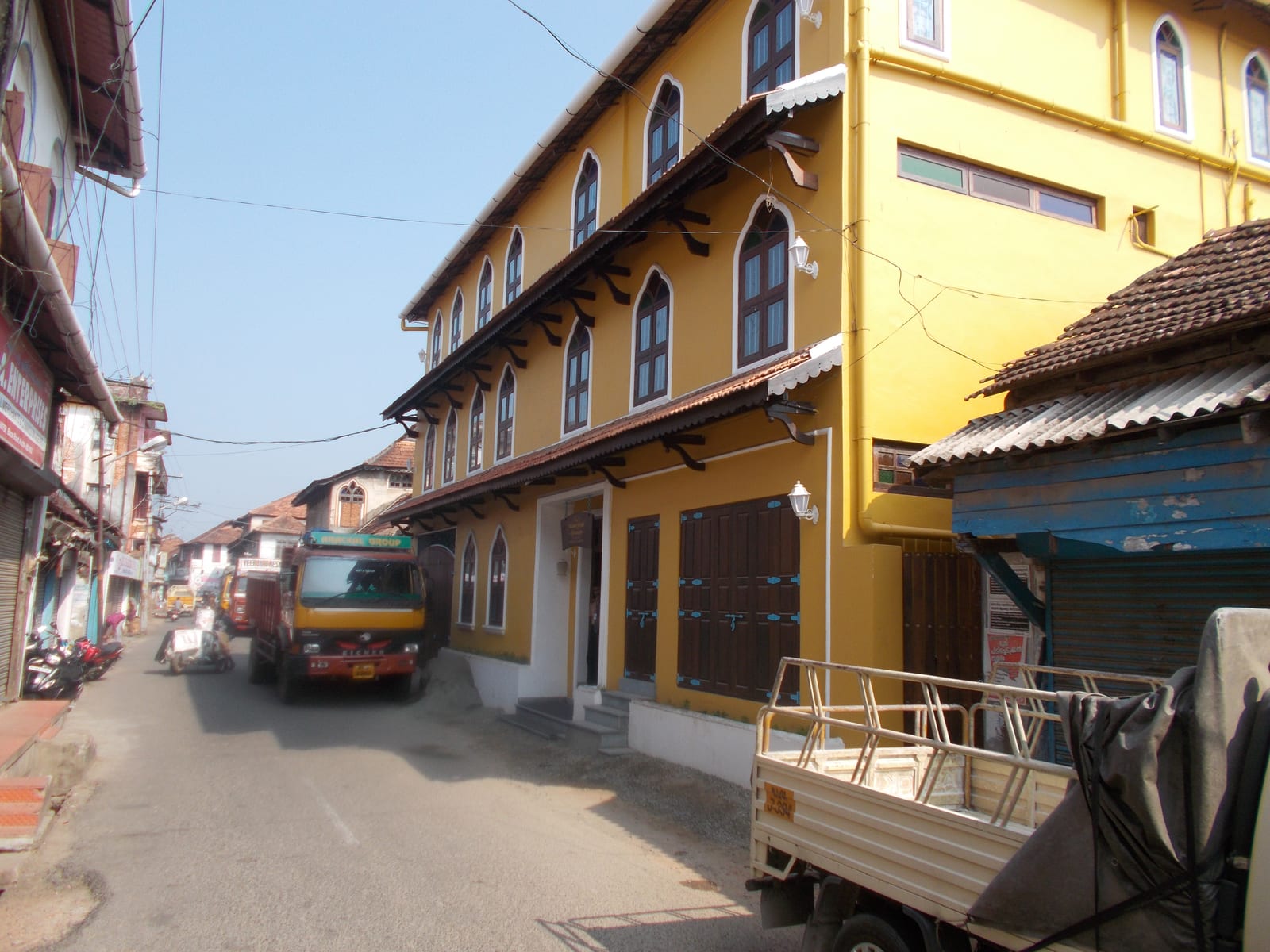
The working spice quarter along Mattancherry’s Bazaar Road — godowns where pepper, ginger, turmeric and cardamom are still graded, sacked and weighed, and where the smell reaches the street before the signage does.
2.8 km · straight line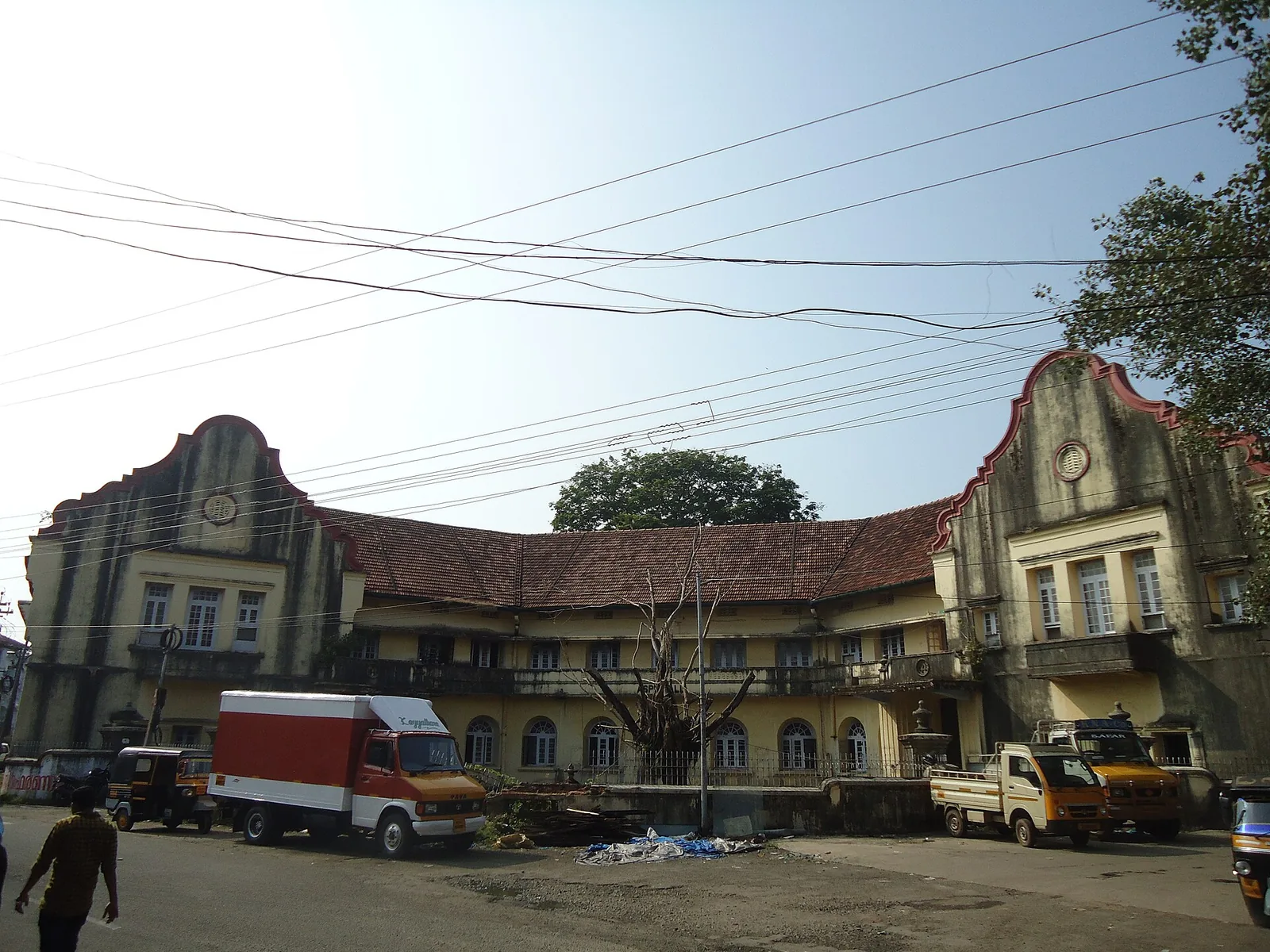
A large 19th-century waterfront trading compound in Fort Kochi, the principal venue of the Kochi-Muziris Biennale.
2.8 km · straight line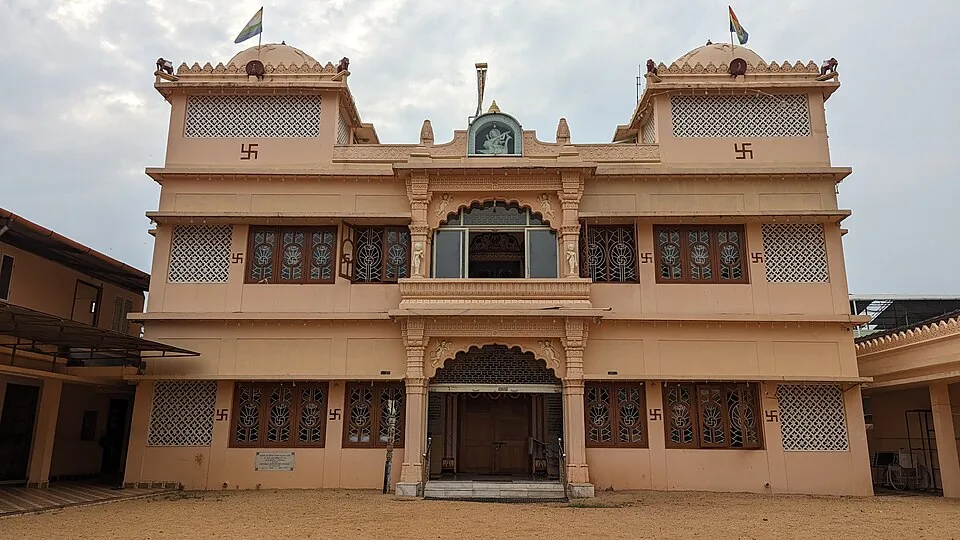
An ornate Jain temple in Mattancherry’s Gujarati quarter, raised in 1904 by Hirubai in memory of her husband Jivraj Dhanji and dedicated to Dharmanatha, the fifteenth Tirthankara — known for its white marble work and the daily midday feeding of the pigeons outside.
2.9 km · straight line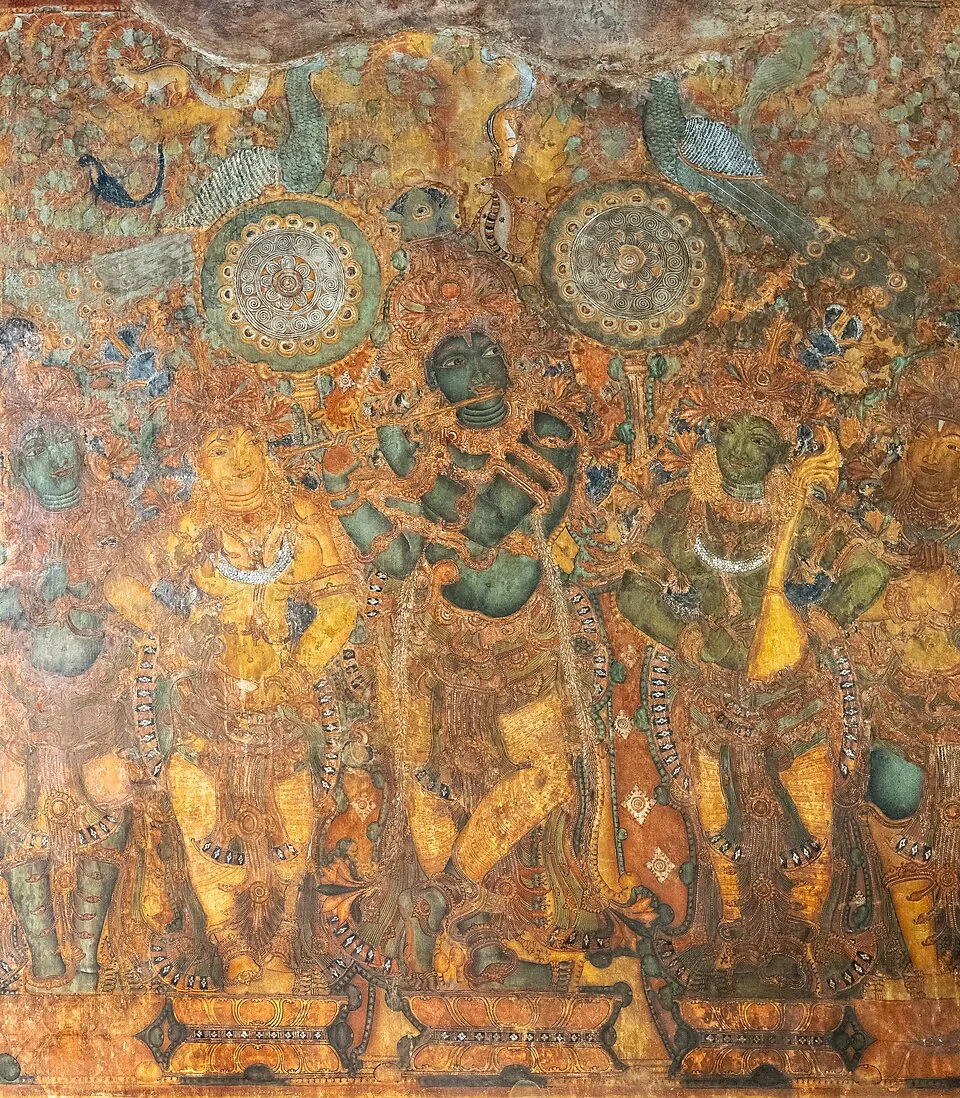
The Mattancherry Palace, known as the Dutch Palace, with celebrated Kerala mural paintings from the Ramayana and royal portraits.
3.0 km · straight line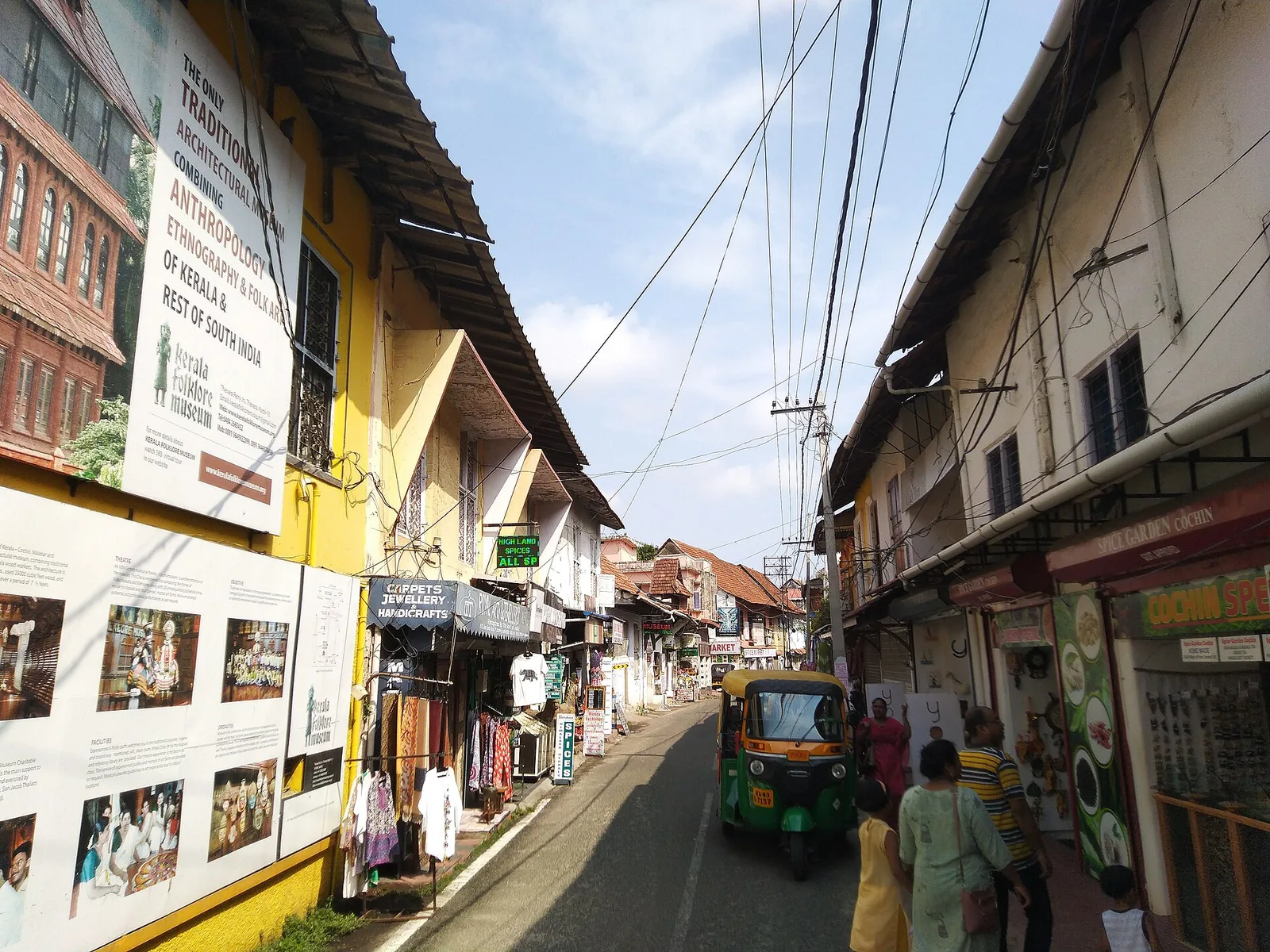
Spice warehouses, antiques, Mattancherry Palace and Paradesi Synagogue.
3.1 km · straight line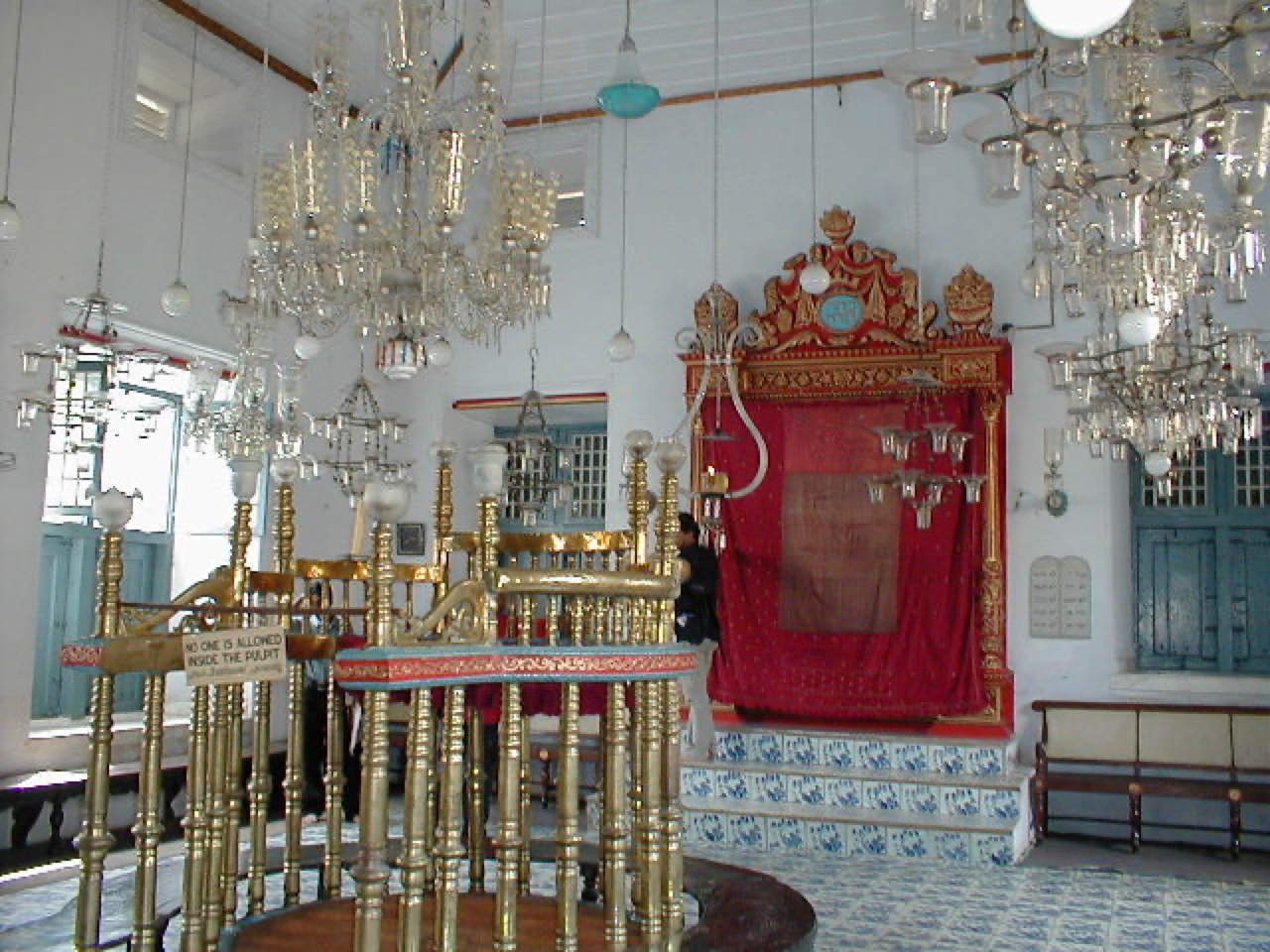
The oldest active synagogue in the Commonwealth (1568), in Jew Town, Mattancherry, with hand-painted Chinese floor tiles.
3.1 km · straight lineMainland Kochi’s old shopping street, a pedestrianised run of textile, provision, spice and gold shops between MG Road and the boat jetty — the city’s everyday market rather than a heritage set piece.
3.2 km · 7 min driveWaterfront promenade in mainland Kochi, good for evening walks and ferries.
3.4 km · 7 min driveThe waterfront park beside Ernakulam Boat Jetty, at the southern end of the Marine Drive walkway — a short, shaded green break between the ferries, the market streets and the backwater.
4.3 km · 9 min driveThe Ernakulam Shiva temple on Durbar Hall Road, the city’s principal temple and home to the eight-day Ernakulathappan festival.
4.7 km · 10 min driveA heritage hall in Ernakulam run as a contemporary art gallery by the Kerala Lalithakala Akademi.
5.9 km · 11 min driveRoad and walking figures are route estimates, with travel times dependent on access, traffic and conditions. Figures marked “straight line” show direct separation and do not describe a road or walking route. Fare estimates use Kerala’s 26 April 2022 auto/taxi notification and exclude waiting, night and applicable one-way surcharges. Confirm the current meter or operator quote before travelling. Routing: © openrouteservice.org by HeiGIT | Map data © OpenStreetMap contributors
Nearby toilets, pharmacies, ATMs, seating and vets are community-mapped and may be incomplete or out of date. Map data © OpenStreetMap contributors | Walking times © openrouteservice.org by HeiGIT
It was built in 1744 by Dutch traders of the Dutch East India Company (VOC) as the governor’s palace for the commander of Dutch Malabar. It is regarded as one of the oldest Dutch palaces surviving outside the Netherlands.
In 1909 the palace was leased to the British and became the seat of the British Resident of Cochin during the Raj. The British occupants extended the grounds with gardens, roads and causeways around the original Dutch mansion.
Yes. After India’s independence the palace passed to the state, and in 1976 the Kerala Tourism Development Corporation (KTDC) opened it as a heritage hotel — Bolgatty Palace and Island Resort — one of the earliest palace-to-hotel conversions in India. It remains a working heritage hotel.
Bolgatty is a working KTDC hotel, so the palace interiors and the golf course are primarily for resident guests. Day visitors can generally reach the island by ferry, enjoy parts of the grounds and dine at the restaurant, but interior and golf-course access may be limited and can depend on how busy the property is — it is best to confirm locally or with the hotel before visiting.
The quickest way is a short ferry ride (under about ten minutes) from the High Court jetty in Ernakulam. You can also drive to the island by road across the Goshree bridges via Mulavukad. Cochin International Airport is roughly 30–35 km away, and Ernakulam Junction and Town railway stations are the nearest major stations.
The Cochin royal family, for the better part of a century, and almost nobody tells you so. Dutch power on the Malabar coast ended with the British conquest in 1795 and the formal cession of Cochin under the Anglo-Dutch Treaty of 1814 — but the British did not occupy this building until 1909, when, on the accounts that name the parties, the King of Kochi leased it to them. That leaves roughly ninety-five years in which the palace was Indian royal property rather than European. It is the least documented stretch of its history and the one the usual Dutch-then-British summary erases.
No, and it is worth saying plainly because the claim is on a great many listings including, until recently, ours. The course here was laid out in 1923, some sources saying 1925. The Royal Calcutta Golf Club was founded in 1829 — the first golf club anywhere outside Great Britain — and Bangalore Golf Club in 1876, whose course is reckoned the oldest in continuous use outside the British Isles. India had had golf for nearly a century before Bolgatty got a fairway. What is true is that a nine-hole course on a small island in the Kochi backwaters, built for a colonial Residency, is an unusual thing to find anywhere.
Visitors can walk the lawns and lakeside grounds, watch the harbour and backwater traffic, spot water birds, take boat cruises on the backwaters, and enjoy KTDC cultural performances such as Kathakali. Golf, a swimming pool and an Ayurvedic centre are available mainly to hotel guests.
November to February and early mornings are best for walking; avoid midday heat where possible.
Entry: There is no formal monument entry ticket; the palace is a hotel. Reaching the island by public ferry costs only a few rupees per person, while grounds access, dining, golf and rooms are on a hotel/pay basis. Timings: As a working heritage hotel the grounds are broadly accessible to visitors during daylight hours, but there are no fixed sightseeing hours and palace-interior/golf access is largely reserved for hotel guests; the connecting ferry from the High Court jetty typically runs through the day into the evening.
Base yourself in Kochi City or a nearby town in Ernakulam, then confirm the last-mile route locally before leaving. Walkable heritage areas are best done slowly; combine nearby streets, museums, markets and food stops. If the visit depends on forest, temple, boat, ferry, weather or seasonal access, check the official/local rule on the day before travel.
1 to 3 hours.
Nearby you can pair Mangalavanam Bird Sanctuary (2.5 km, route estimate), Spice markets (2.8 km, approximate straight-line separation), Aspinwall House (2.8 km, approximate straight-line separation), Dharmanath Jain Temple (2.9 km, approximate straight-line separation).
Watch traffic on narrow heritage streets. Keep valuables close in crowded markets.
Written about Bolgatty Palace itself — its history, its legends and the arguments about them.
These guides explore Kochi City and the surrounding area. Choose a visit that fits your interests, allowing separately for travel between stops.
Route-level itineraries and practical guides for the rest of Kerala.
Photographs: Renikk (Public domain), Augustus Binu : flickr : Instagram : Contact (CC BY-SA 3.0), Augustus Binu (CC BY-SA 3.0). Wikimedia Commons.