What to expect
Highlights
- Church visit at Kadamattom Church
- Pilgrimage, architecture or local Christian heritage
- Nearby town food and stays
An ancient Orthodox church east of Kochi linked to the legend of the sorcerer-priest Kadamattathu Kathanar, drawing large crowds at its annual feast.
Check entry arrangements. Ask the church about visiting times around services and any dress or photography rules. During worship, keep voices low and follow staff directions.
Dress respectfully and follow the institution’s admission and photography rules.
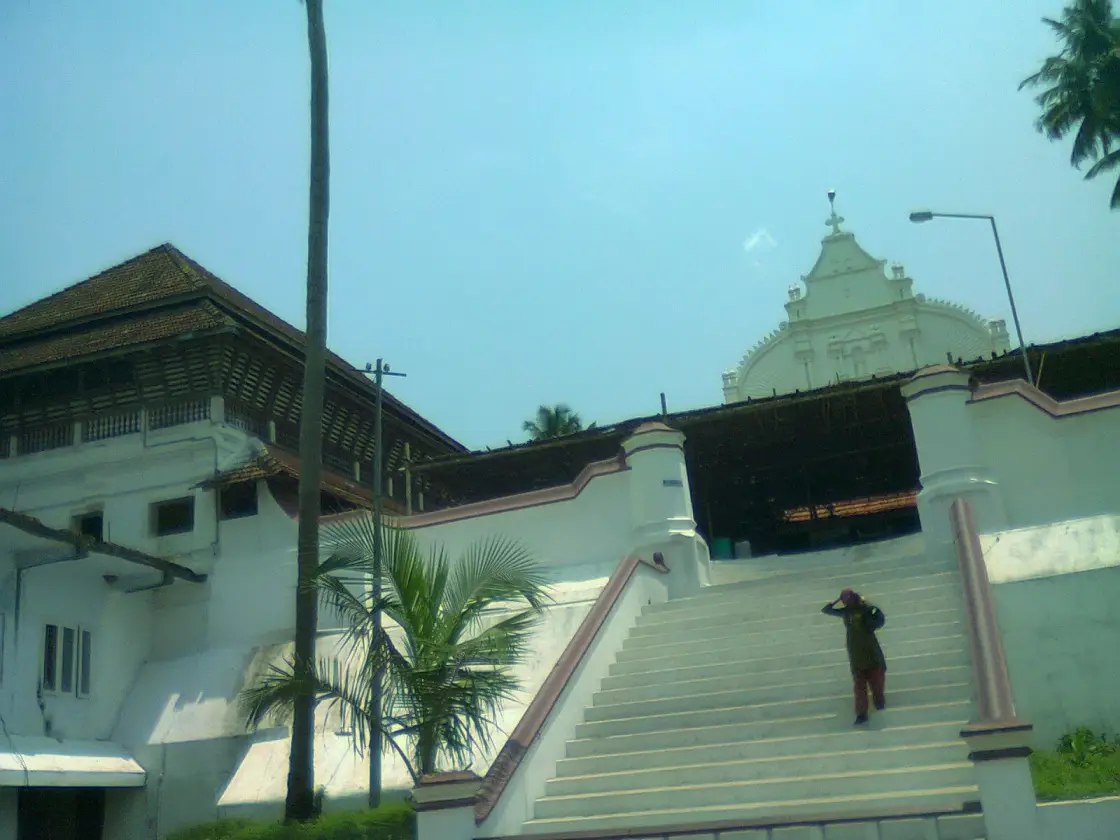
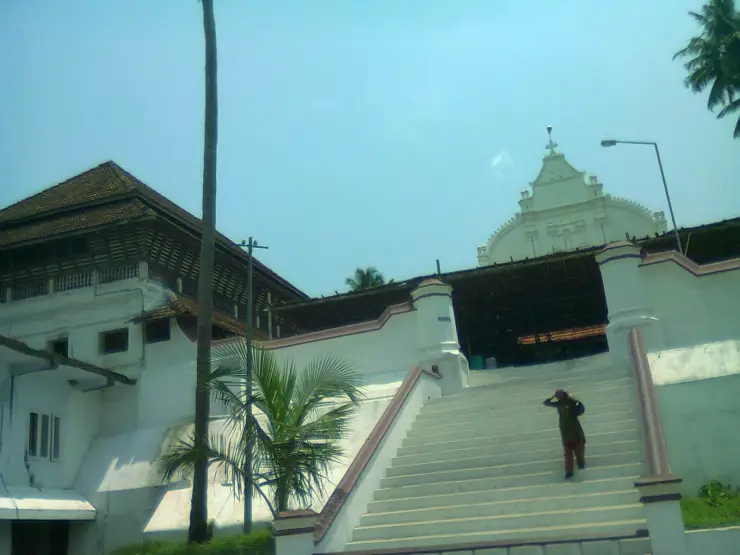
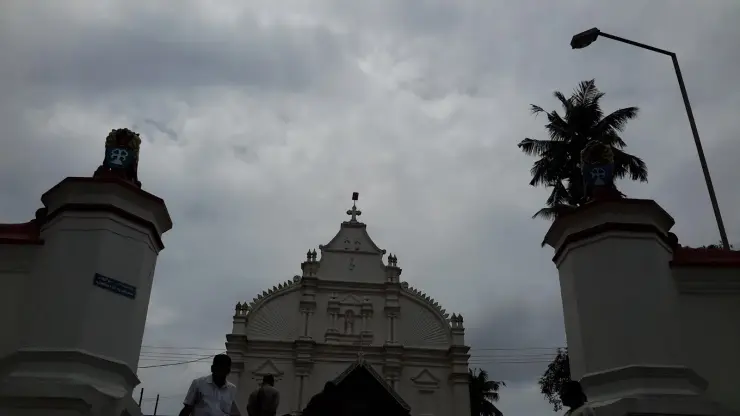
Thirty kilometres east of Ernakulam, on a low hill near Kolenchery, stands a church with two entirely different claims on your attention. Set into the wall of its altar room is a four-armed Persian stone cross with a Pahlavi inscription running round it, dated to the ninth century — hard physical evidence of the East Syriac church reaching Kerala. And attached to the same building is the most famous ghost story in Malayalam: Kadamattathu Kathanar, the priest who commanded spirits. One is documented. The other is not, and we will say which is which.
The church is an active Malankara Orthodox Syrian parish, not a monument, and it behaves like one — services morning and evening, a congregation, and restricted access to the madbaha, the altar room, around them. Footwear comes off at the door, which is the Kerala Christian custom and reliably catches out visitors who have not been told.
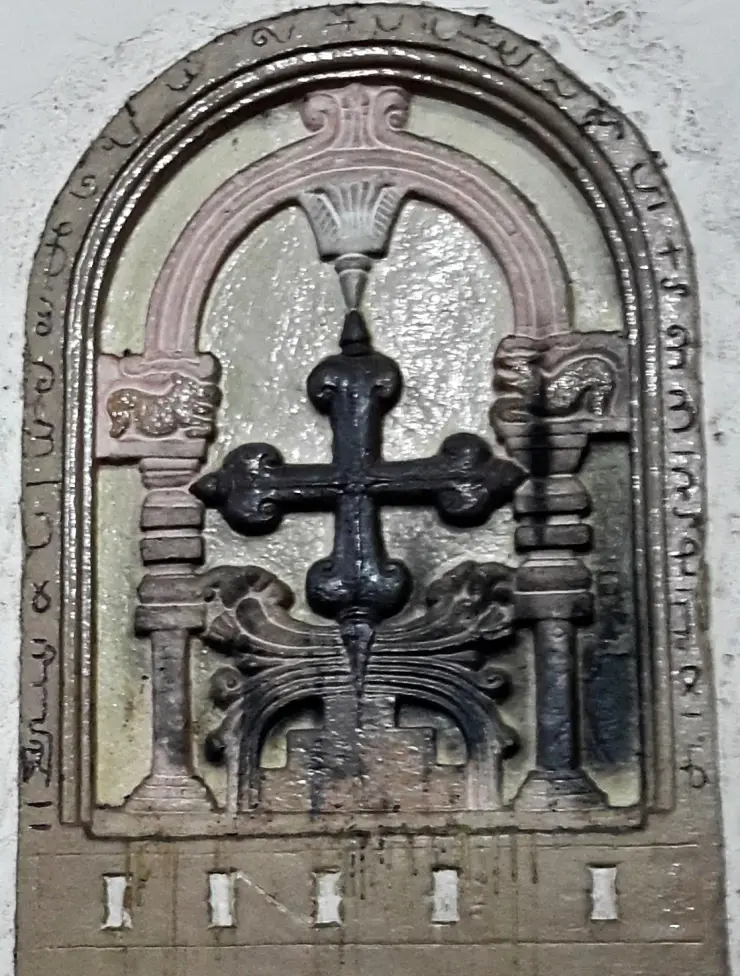
The object to find is the Persian cross. It sits on the right-hand wall of the madbaha: four arms of equal length, the tips finished with floral designs, and a Pahlavi inscription cut around it. Tradition credits it to Mar Abo himself. Crosses of this type are among the most important surviving material traces of the East Syriac connection with the Malabar coast, and they anchor Kerala's Christian history in something firmer than oral tradition.
The other reason people come is Kadamattathu Kathanar. In the stories — carried down through oral tradition and set in print in the Aithihyamala, the nineteenth-century compendium of Kerala legends — he was a priest of this church who acquired supernatural powers, bound and commanded yakshis and spirits, and used sorcery on behalf of ordinary people against things they could not fight themselves. He is one of the most recognisable figures in Malayalam folklore, and has been through television serials, novels and film.
Here is the part most retellings leave out: the historical evidence for him is thin to the point of absence. There is no contemporary ninth-century record documenting his life or his activities. What exists is a body of tradition, first written down centuries later. That does not make the stories worthless — they are a genuine part of Kerala's cultural memory and the church is where they live — but it does mean that the priest and the cross sit at completely different levels of proof, and it is a disservice to the visitor to blur them.
The Makaram feast, in January or February, is when the church is at its fullest: it marks the death anniversary of Mar Abo and draws very large crowds. A quiet weekday visit and a feast-day visit are two different experiences, and it is worth deciding which one you want before you set out.
The Kathanar stories are worth knowing before you come, because the building means something different if you do. In the best-known cycle he is drawn into contact with a yakshi — a female spirit of Kerala folklore — and the tales turn on his binding of spirits and his use of powers a Christian priest is not supposed to have, deployed for the protection of villagers rather than for himself.
He is not a saint of the church and the stories are not doctrine; he is a folk figure who happens to be attached to a real parish. The Aithihyamala is the standard source, and it is a nineteenth-century collection of legends, presented as such.
We frame all of it as legend. It is worth the trip anyway, and the church has never seemed troubled by carrying both a documented ninth-century cross and an undocumented ninth-century sorcerer.
The cycle itself is worth having in full, because it is told in fragments almost everywhere else. In the standard telling the priest begins as Poulose, an orphan raised at this church by Mar Abo — the same Persian figure the parish traces its foundation to — and taught Syriac and the liturgy until he was ordained deacon. Then he is lost. The versions differ on how: carried off by hill people, or wandering after stray cattle and never coming back. What they agree on is that he spent years in the mountains east of here learning mantravadam, the Kerala science of spells and binding, before returning to Kadamattom and being ordained priest anyway.
That is the hinge of the whole thing. He does not stop being a priest in order to become a sorcerer; he is both at once, saying Mass at this altar and binding spirits by night, and nobody in the stories seems able to decide whether that is a scandal or a mercy.
His famous adversary has a name that the retellings often drop: Kalliyankattu Neeli, the yakshi of the Kalliyankattu forest, the most feared female spirit in Malayalam legend. The detail that matters is that he does not destroy her. He subdues and binds her — and the tradition then splits three ways on where she ended up. In one version she is sealed inside his palm-leaf book of spells. In another she is chained beneath the floor of this church. In a third she is nailed to a tree with an iron spike. Ask locally and you may get any of the three, told with equal confidence.
None of this can be pinned to a person. The blunt scholarly position is that there is no certain proof Kadamattathu Kathanar existed at all, though a priest is recorded in this area in the ninth century, which is where the legend anchors itself. The stories reach us mainly through the Aithihyamala, a nineteenth-century collection — a compilation of legend made eight centuries after the events it describes. We tell it because it is the best-known supernatural story in the language and this is where it is set, not because we think it happened.
And now the correction we owe the other half of this page, because we have been telling you the cross is the solid one and that is only three-quarters true. The stone is genuinely old and genuinely important. But it is not, on the scholarly reading, an original. The Pahlavi-inscribed granite crosses of South India form a small family — this one, two at Kottayam Valiapally, Muttuchira, Alangad, Kothanalloor, and the Mount cross at St Thomas Mount in Chennai — and the standard view since C. P. T. Winckworth's work in the 1920s is that all the inscriptions descend from a single original text, copied from cross to cross. The Kadamattom stone has been assessed specifically as a copy of one of the others, most likely the larger Kottayam cross, and not a skilled one: the carver appears not to have read the script he was reproducing. One epigraphic argument puts Alangad closest to the original.
That does not devalue what is on the wall, and we would rather you knew it than not. The inscription itself is legible, and it is not a mystery: Burkitt and Winckworth read it at the International Congress of Orientalists at Oxford in 1925 as “My Lord Christ, have mercy upon Afras, son of Chaharbukht, the Syrian, who cut this” — Winckworth later revising the final phrase to “who preserved this” — and that reading has stood ever since without serious challenge. It is a memorial prayer for a named Persian Christian, and it names him. What the copying tells you is arguably more interesting than an original would: that Kerala's Christians were reproducing a Persian devotional object across the coast, in a script most of them could no longer read, because the object mattered even when the language had gone. The tradition that Mar Abo carved this one himself does not survive that, and should be treated as tradition.
The church is traditionally held to have been founded in the ninth century by Mar Abo, described as an Assyrian monk and Persian high priest, with the help of the Kartha, the local ruler of Kadamattom. Its principal feast, on the 24th and 25th of Makaram in the Malayalam calendar — January or February — marks his death anniversary. A second feast is kept on the 23rd of Medam, in April or May.
The ninth-century Persian cross in the madbaha, with its Pahlavi inscription, belongs to the same context: the presence of East Syriac Christianity on the Malabar coast, and its long connection to the Church of the East in Persia. Crosses of this form survive at a small number of Kerala sites and are among the oldest Christian artefacts in India.
Mar Abo is better known to history as Mar Sabor, and he did not arrive alone. He and Mar Proth — Mar Afroth in some spellings — were Church of the East bishops who reached the Malabar coast with a party of Persian Christian settlers around 825, landing at the port of Kollam, then part of the Venad kingdom. Between them they are credited with a string of foundations along the coast and inland: Kadamattom, Akaparambu, Niranam, churches at Kollam and Kayamkulam, and finally Thevalakkara, where tradition holds they died and were buried. At Kadamattom the ground was obtained from the local ruler, the Kartha, which is why the founding story here is a joint one between a Persian bishop and a Hindu chieftain.
Their afterlife is a small piece of Kerala church politics. The Synod of Diamper in 1599, convened under Portuguese authority to bring the Malabar church under Rome, declared Mar Sabor and Mar Proth heretics and moved to suppress their veneration. It did not take. The Saint Thomas Christians went on honouring them, and the parishes they founded — this one included — still keep their feasts. The Makaram feast at Kadamattom is that observance: a saint condemned by a European synod, commemorated for another four centuries anyway.
The Kadamattathu Kathanar tradition attached itself to the church at some later point and has largely determined its fame since — to the extent that most Malayali visitors arrive knowing the legend and not knowing about the cross, which is precisely the wrong way round.
The Persian cross is one of the oldest Christian artefacts in India and you can stand in front of it, in a working parish church, for nothing.
It is the setting of the best-known supernatural legend in Malayalam, and the stories land differently when you are standing where they are set.
It is a genuine hilltop parish rather than a curated heritage site — no ticket, no interpretation, no shop.
The Makaram feast in January or February is one of the larger Orthodox observances in the district.
It makes a proper excursion into eastern Ernakulam, away from the harbour circuit that absorbs almost every visitor to Kochi.
It is an honest introduction to how old Kerala's Christianity actually is — considerably older than the European arrival that most itineraries imply.
Road km to Ernakulam; ghat roads and traffic vary — allow extra.
Morning or late afternoon for quieter visits and better light.
Live forecast loads in your browser.
Sun and moon are calculated for this location and shown in IST. Photography windows are the hour around sunrise and sunset; the sunset bearing is degrees clockwise from true north. Moon phase is accurate to about half a day.
These are official or public-sector eco offerings that match this place, town or forest destination. Confirm availability, permits, tariffs and reporting times with the official operator before travel.
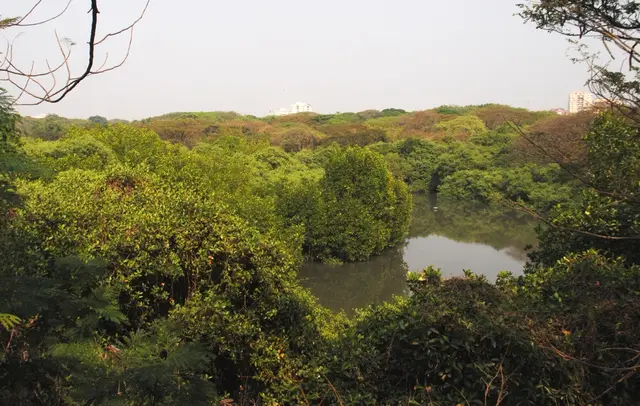
Urban bird sanctuary and mangrove pocket in central Kochi, useful as a short nature stop.
Official source →Browse listed stays, food, activities, sights, shops and rentals around Kadamattom Church. Check each listing’s locality and contact the business directly for current arrangements.
Pepper Kerala Holidays is a Kochi-based tourist transport operator running its own fleet of cars, tempo travellers and coaches for Kerala tour packages and airport transfers. Its office is at Kadavanthra with a garage near Cochin airport, booking direct without commission.
BCabs is an independent Kochi taxi operator running its own fleet of cars, SUVs and vans for airport transfers and outstation trips across Kerala. Registered as BTransport Solutions with a Palarivattom office, it offers 24/7 pickups with direct booking rather than middleman commission.
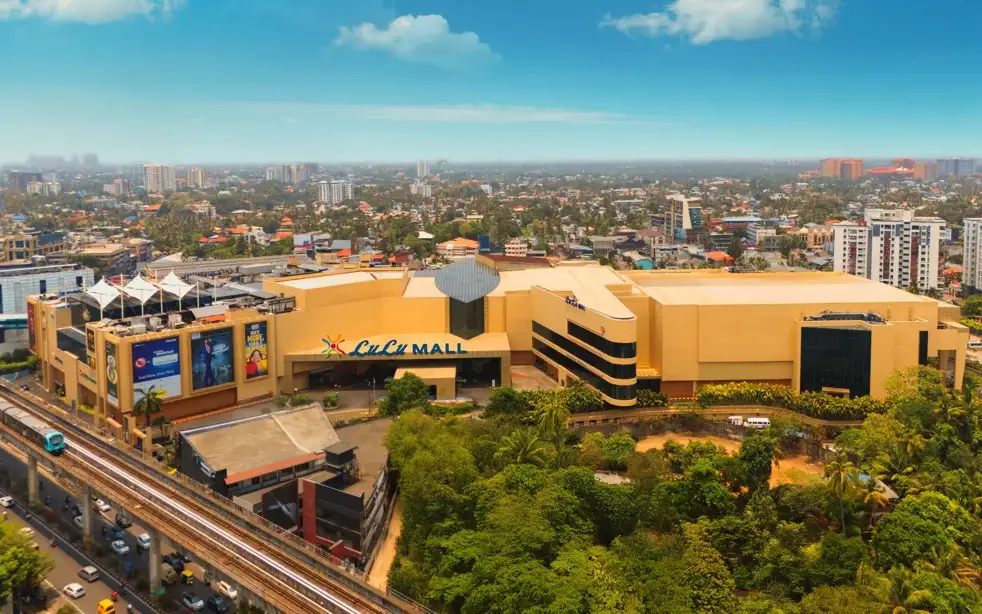
Edappally mall with official helpdesk contact and visitor services. Free entry; pay per shop, cinema or activity · Edappally, Shopping, Family stop.
Marina in Kochi City Centre, Ernakulam, Kerala, India.
Sree Chakra Spa and Beauty Salon at Giri Nagar offers massage and beauty appointments. Compare the specific service, duration and price, and mention any relevant health condition when asking about suitability.
Do in Kochi City Centre, Ernakulam, Kerala, India. Wheelchair access.
Official metro transport support in Kochi City. Kochi Metro, Ernakulam, Kerala · Official metro transport support.
Book with the place itself. India’s cyber-crime coordination centre warned in April 2025 that convincing copies of hotel and pilgrimage booking sites are being pushed through sponsored search and social ads, taking payment for rooms the property never hears about. Use the contact and source details on each profile to confirm the exact business and booking channel. A directory entry or map pin alone does not establish an operator’s identity or current availability. Roampedia takes no commission and does not collect booking payments. If a booking page reached you through an ad, check the address bar against the property’s own site before you pay. Fraud can be reported on cybercrime.gov.in or on 1930.
Find food, accommodation and activities across Kochi City. Browse the guides for places to eat, stay and explore along your route.
12 more places around Kochi City. Open a guide to plan the visit and onward journey.
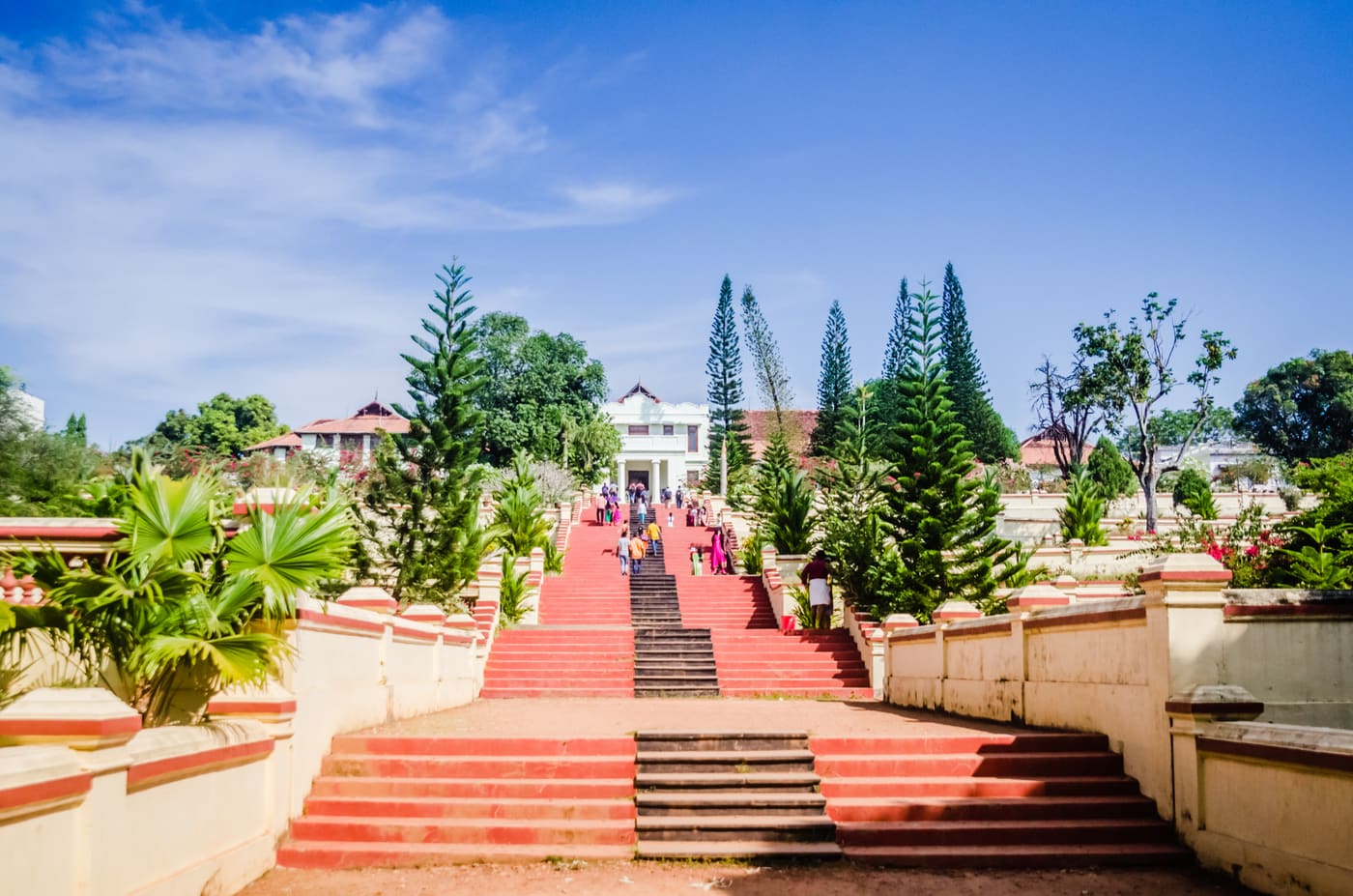
18.5 km · 16 min drive
Large royal palace museum complex east of Kochi city.
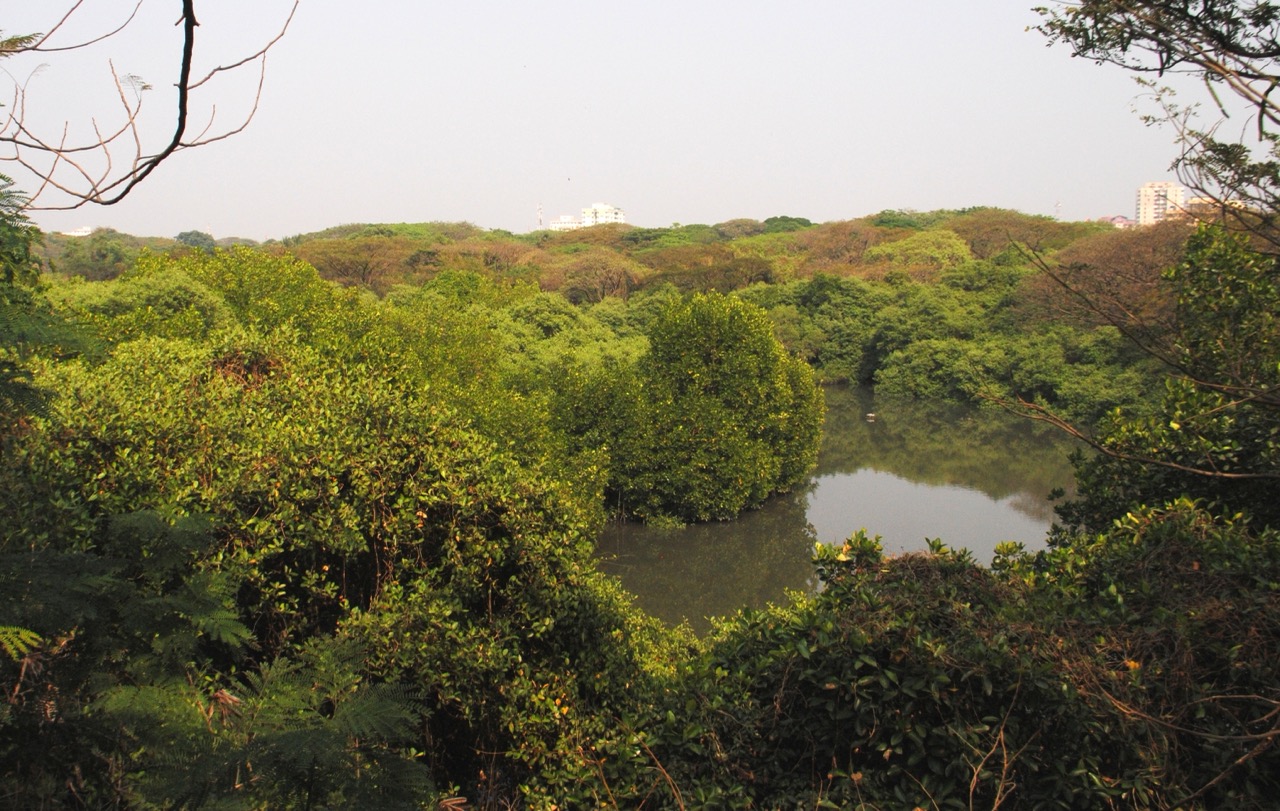
A small mangrove “green lung” behind the High Court in Ernakulam, a nesting site for migratory and resident birds.
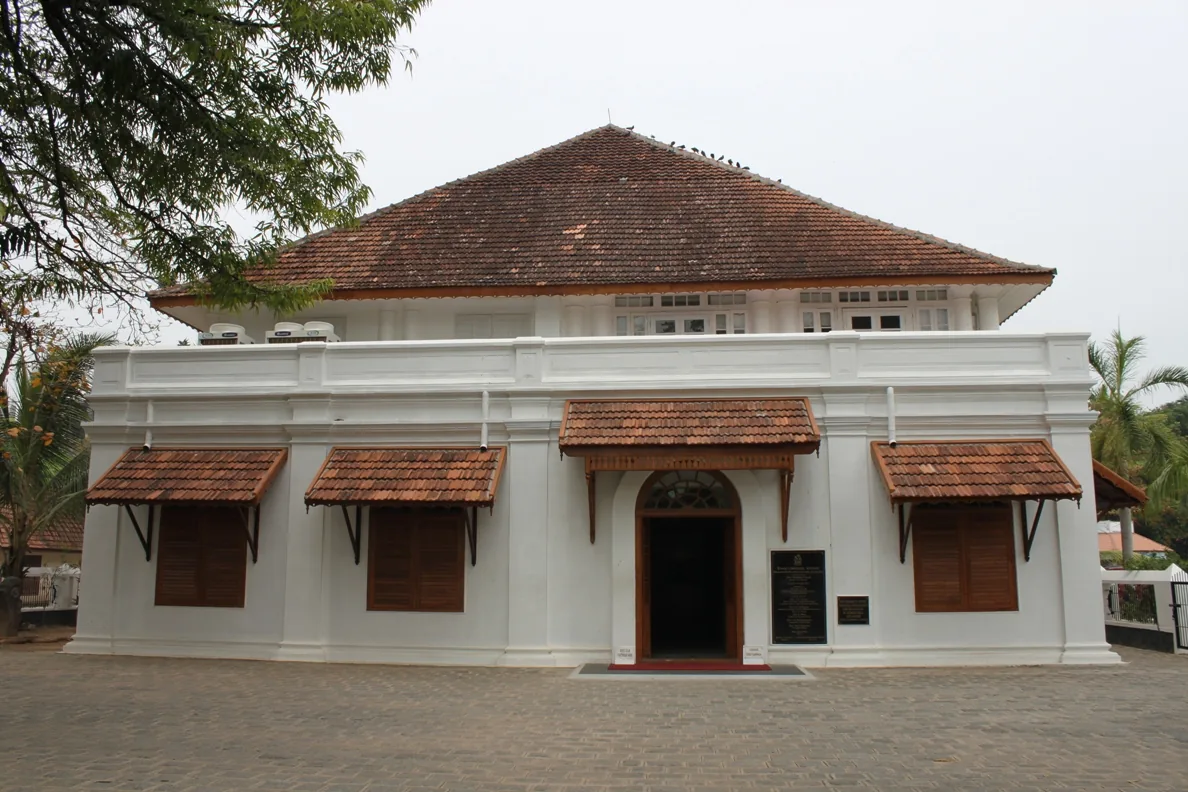
29.7 km · 33 min drive
A heritage hall in Ernakulam run as a contemporary art gallery by the Kerala Lalithakala Akademi.
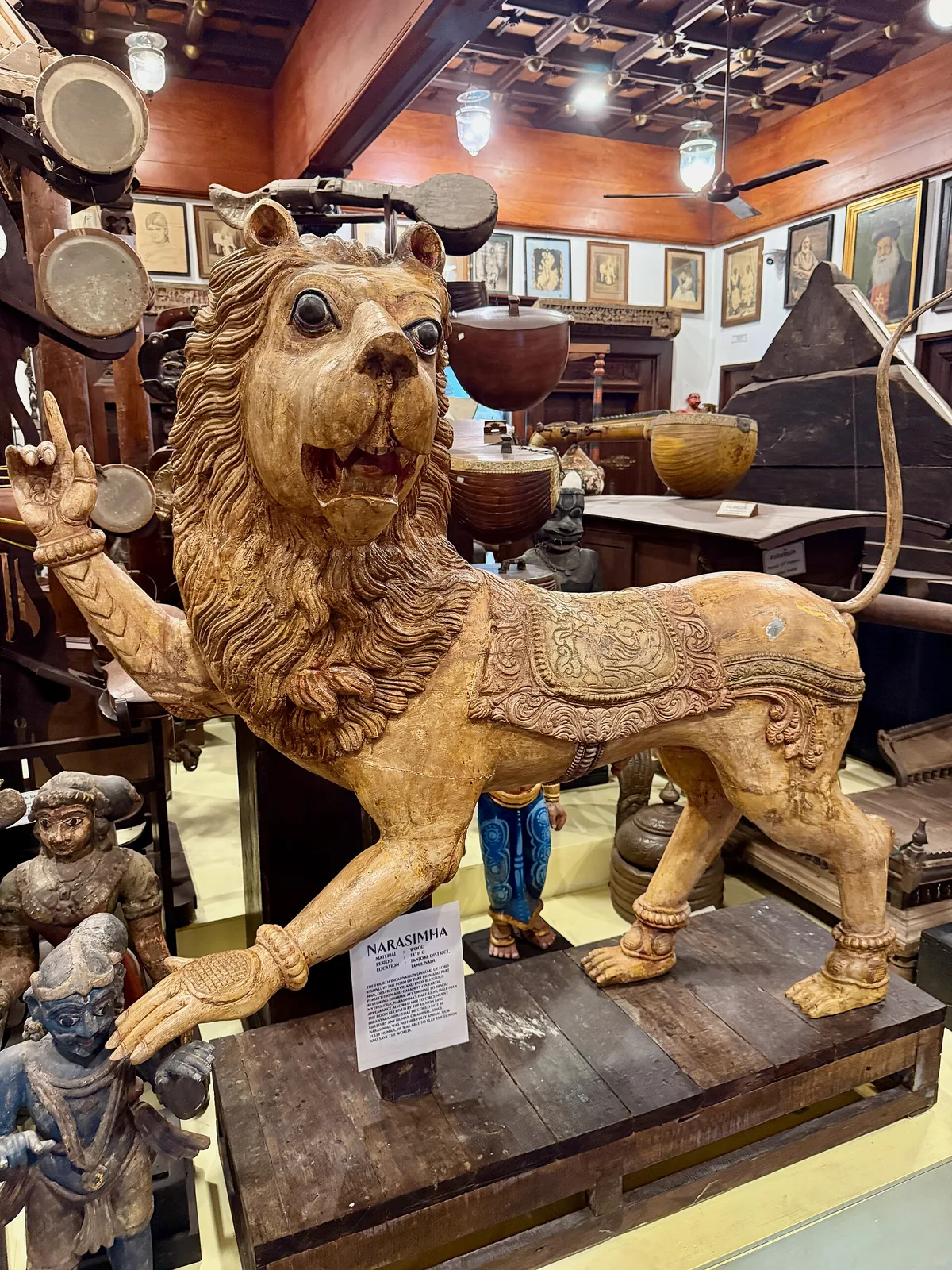
26.8 km · 27 min drive
A privately built museum at Thevara with thousands of Kerala folk and ritual artefacts across Malabar, Kochi and Travancore styles.
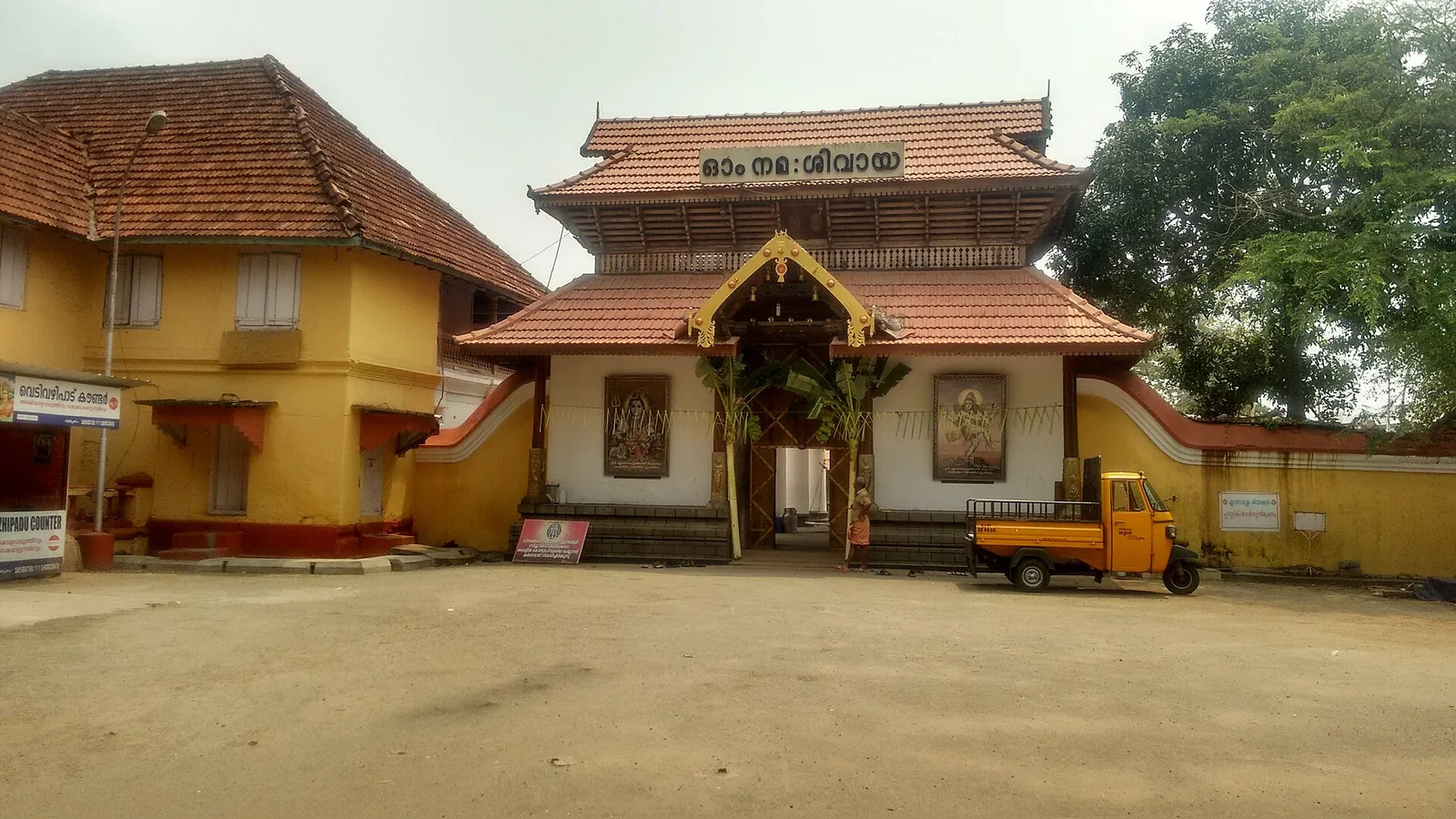
The Ernakulam Shiva temple on Durbar Hall Road, the city’s principal temple and home to the eight-day Ernakulathappan festival.
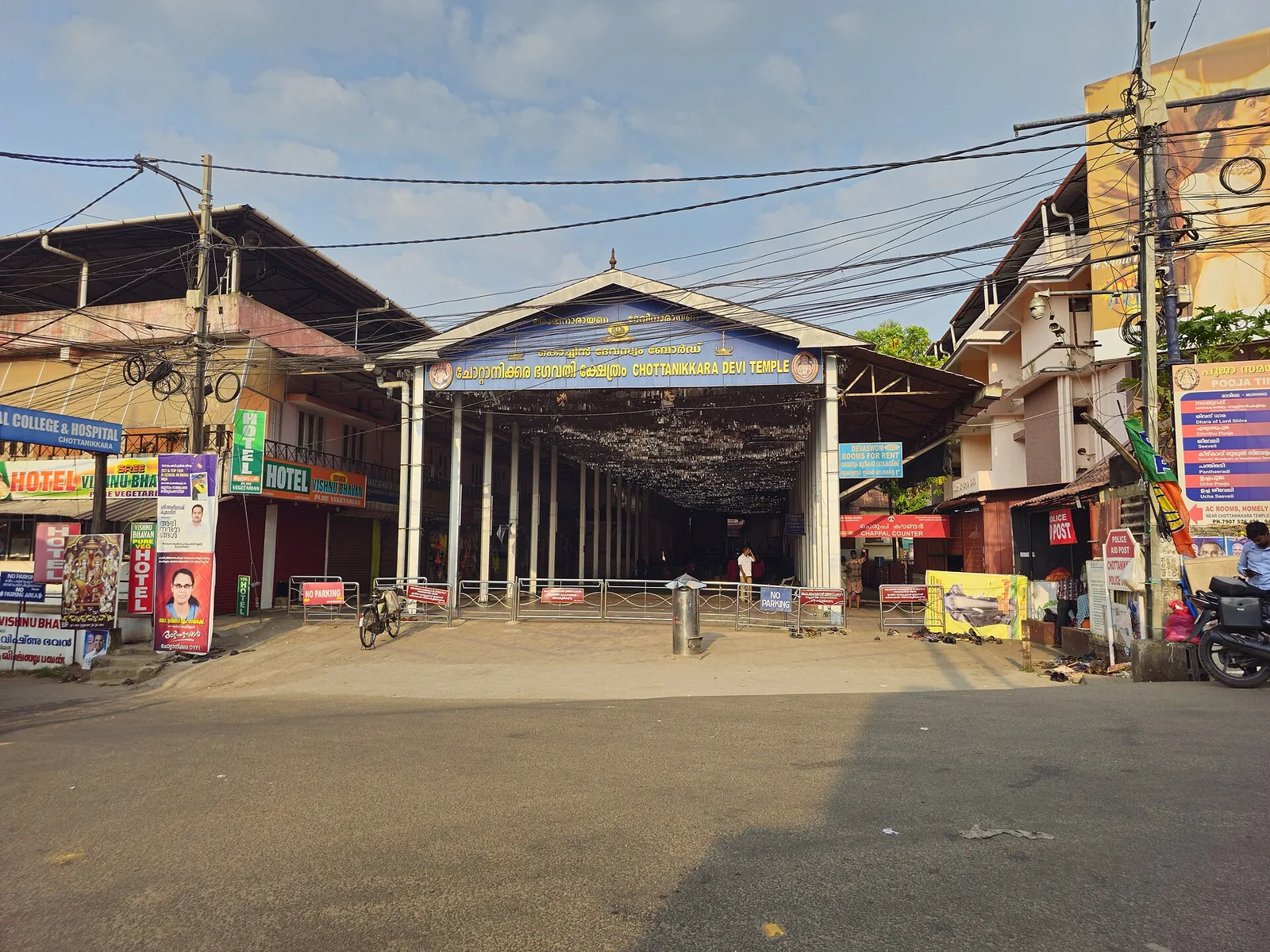
17.6 km · 16 min drive
A major Bhagavathy (Devi) temple south-east of Kochi, famous for the dawn Nirmalya Darshanam and its Makam Thozhal festival.
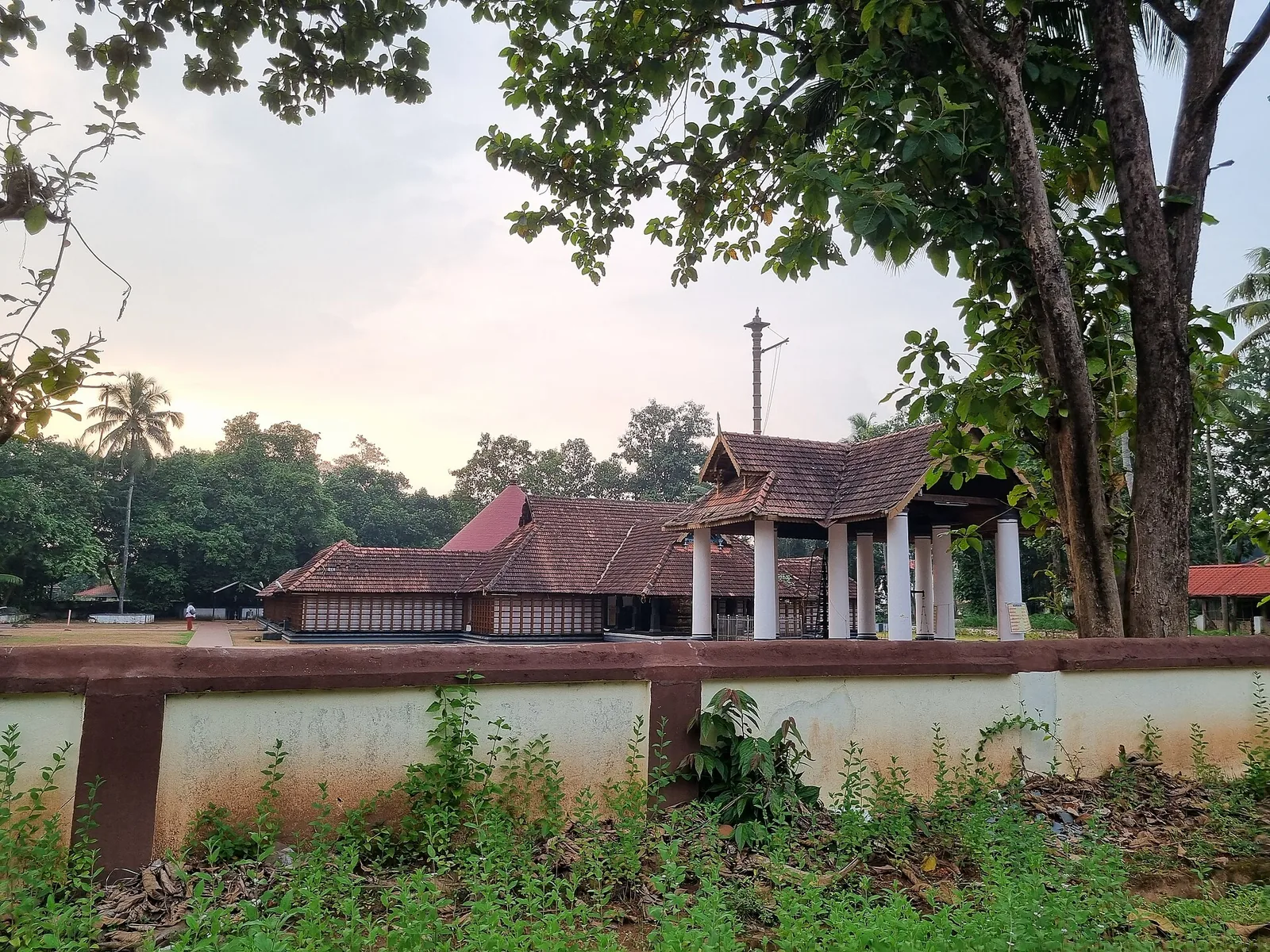
24.9 km · 26 min drive
The only major temple to Vamana in Kerala, at Thrikkakara near Kakkanad — traditionally regarded as the origin place of the Onam festival.
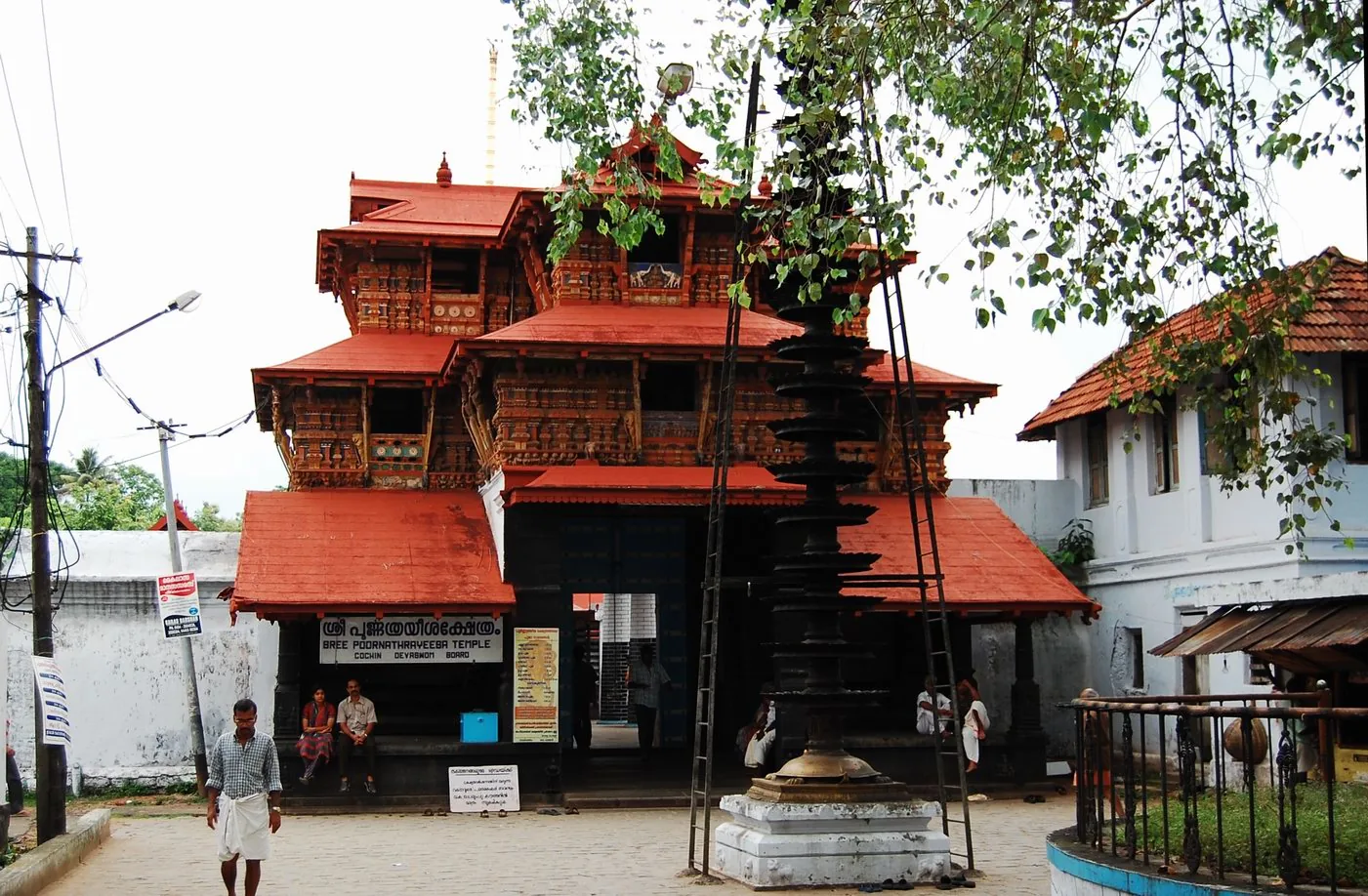
21.8 km · 22 min drive
One of the great Vishnu temples of Kerala, at Tripunithura, known for its Vrischikotsavam festival.
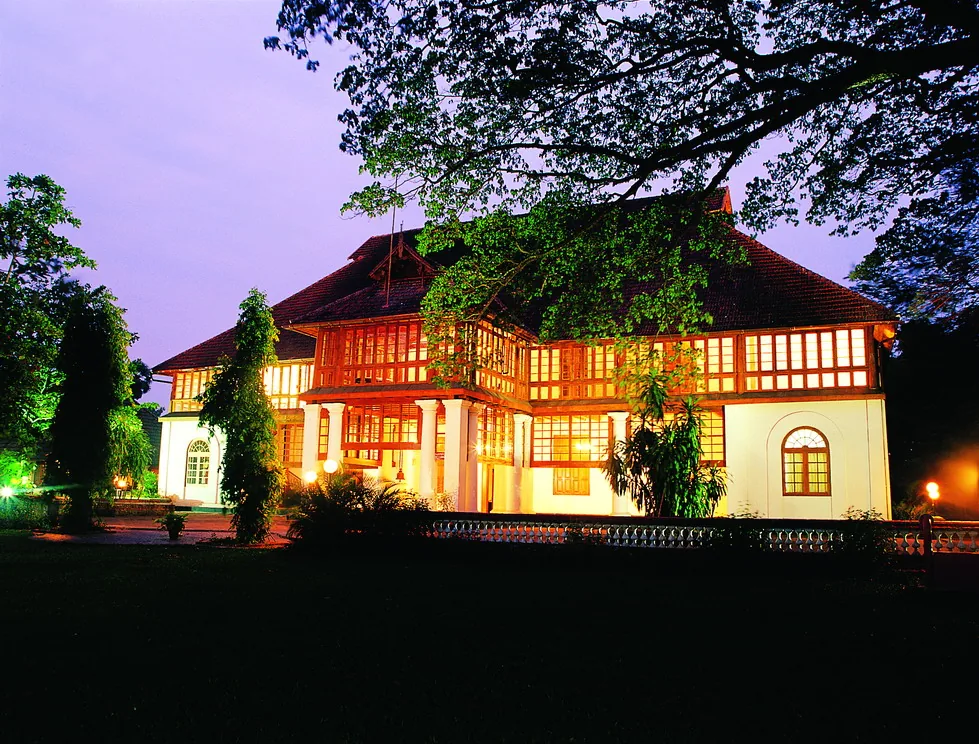
A 1744 Dutch palace on Bolgatty Island, one of the oldest existing Dutch palaces outside the Netherlands, set in island gardens (now a KTDC heritage hotel).
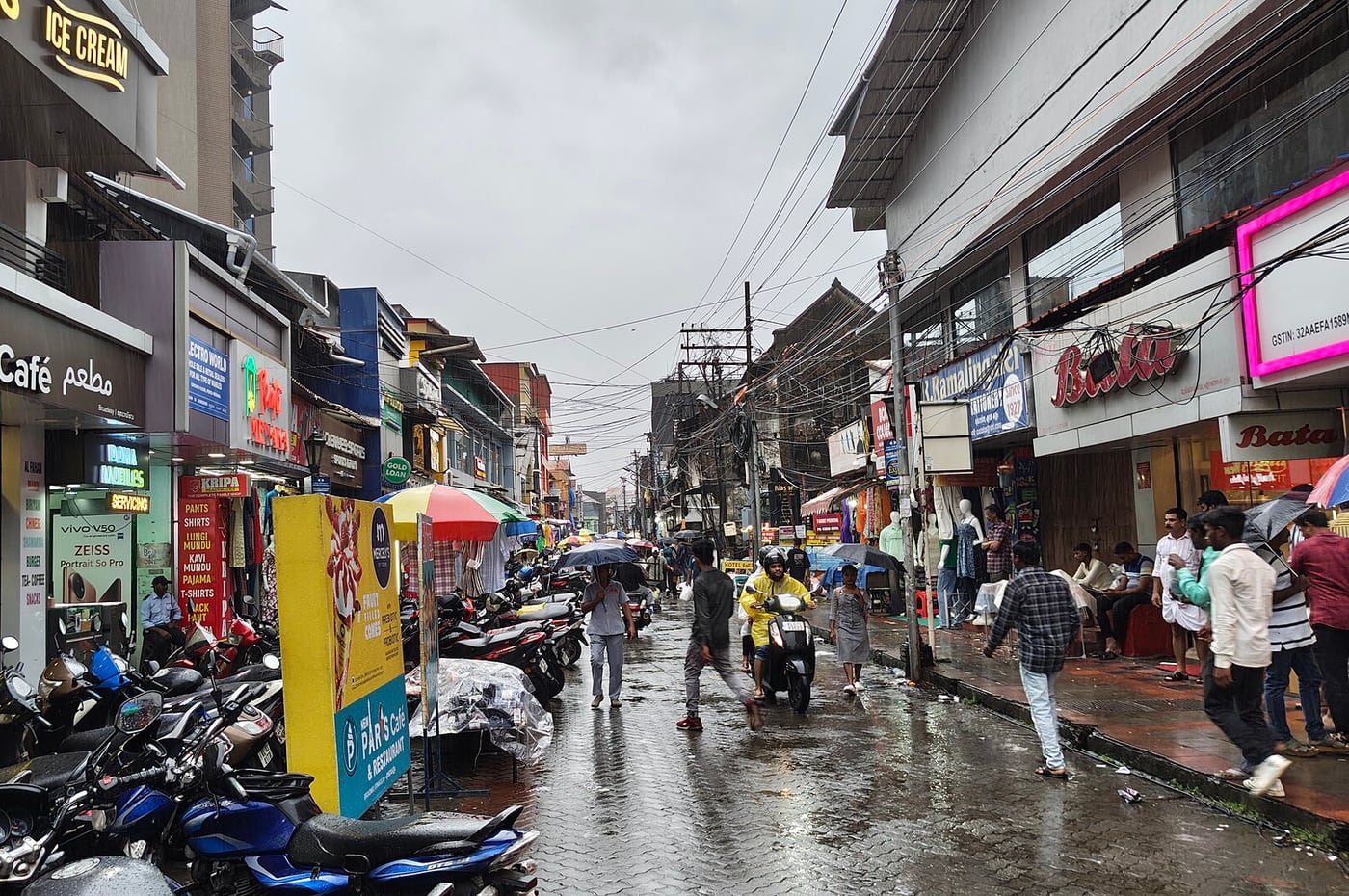
Mainland Kochi’s old shopping street, a pedestrianised run of textile, provision, spice and gold shops between MG Road and the boat jetty — the city’s everyday market rather than a heritage set piece.
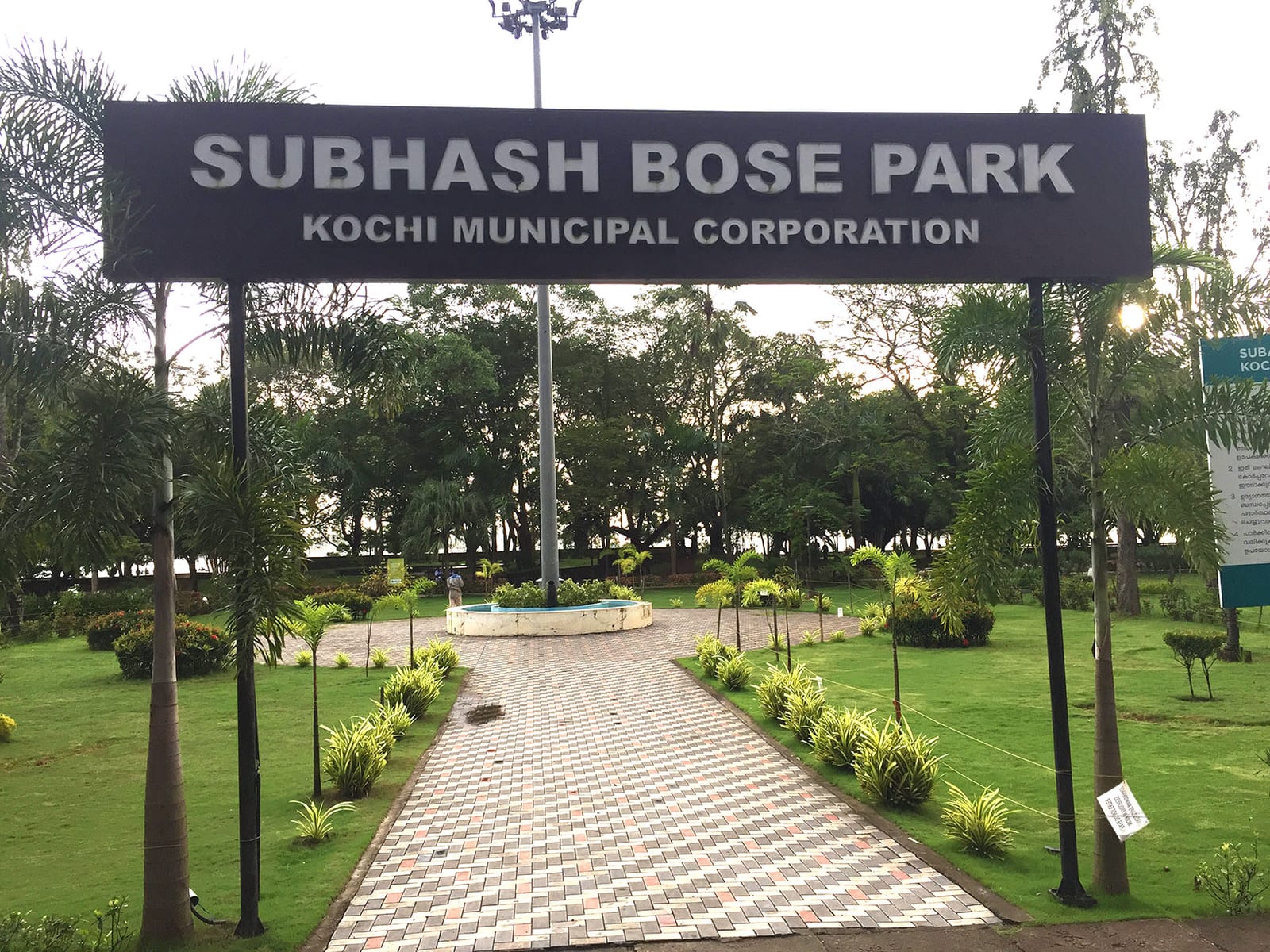
The waterfront park beside Ernakulam Boat Jetty, at the southern end of the Marine Drive walkway — a short, shaded green break between the ferries, the market streets and the backwater.
Roampedia is commission-free — own or know a stay, eatery, guide or shop near Kadamattom Church? Submit public business details for review.
Add a nearby businessEntry: Free, as at any parish church. Donations and offerings are made at the counters inside.
Dress code: Modest dress — shoulders and knees covered. Footwear is removed before entering, which is the Kerala Christian custom and catches visitors out.
Festivals: Two feasts are kept: the principal one on the 24th and 25th of Makaram (January–February), marking the death anniversary of Mar Abo, and a second on the 23rd of Medam (April–May). Dates follow the Malayalam calendar and shift each year.
Photography: Photography is generally tolerated in the church body but not in the madbaha, the altar room, and not during services. Ask before photographing the Persian cross.
If you are travelling by bus or ferry, check the return service with the operator before setting out. Leave time to reach the stop or jetty after your visit.
Ask at the bus stand for the time of the last service back, not the next one. If you miss it, an auto or app cab is the fallback — agree the fare before you get in.
If you need step-free access, contact the site before travelling. Ask about a level entrance, steps along the route, the nearest drop-off point, seating and accessible toilets.
These services are listed within about 1.2 km of Kadamattom Church. Walking distances follow mapped routes; access and opening hours can change. Other services may be closer but are not included here.
Published emergency and visitor-assistance contacts. For an immediate emergency, call 112. Shared Kerala contact sources checked 4 October 2026; publication does not establish a tested live response.
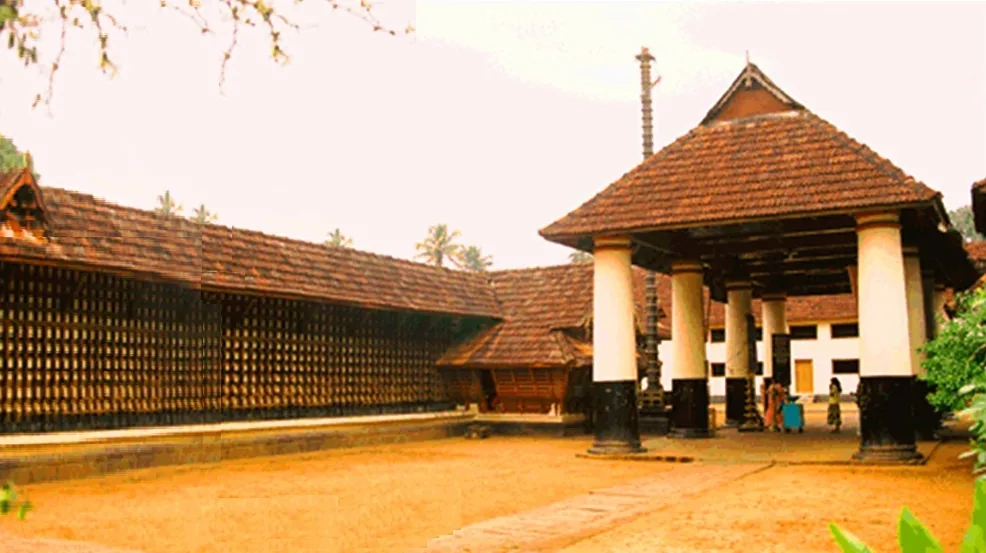
A historic Shiva temple at Kothamangalam near the Thattekkad forests, one of the important ancient temples of the old Kochi region.
17.3 km · straight lineA major Bhagavathy (Devi) temple south-east of Kochi, famous for the dawn Nirmalya Darshanam and its Makam Thozhal festival.
17.6 km · 16 min driveLarge royal palace museum complex east of Kochi city.
18.5 km · 16 min driveOne of the great Vishnu temples of Kerala, at Tripunithura, known for its Vrischikotsavam festival.
21.8 km · 22 min drive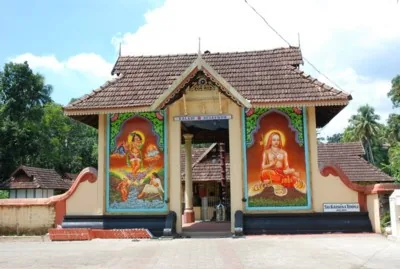
Adi Shankara’s family temple at Kalady, west of the Sringeri Math birthplace complex — the shrine at the centre of the story that gave the village its name.
21.9 km · straight line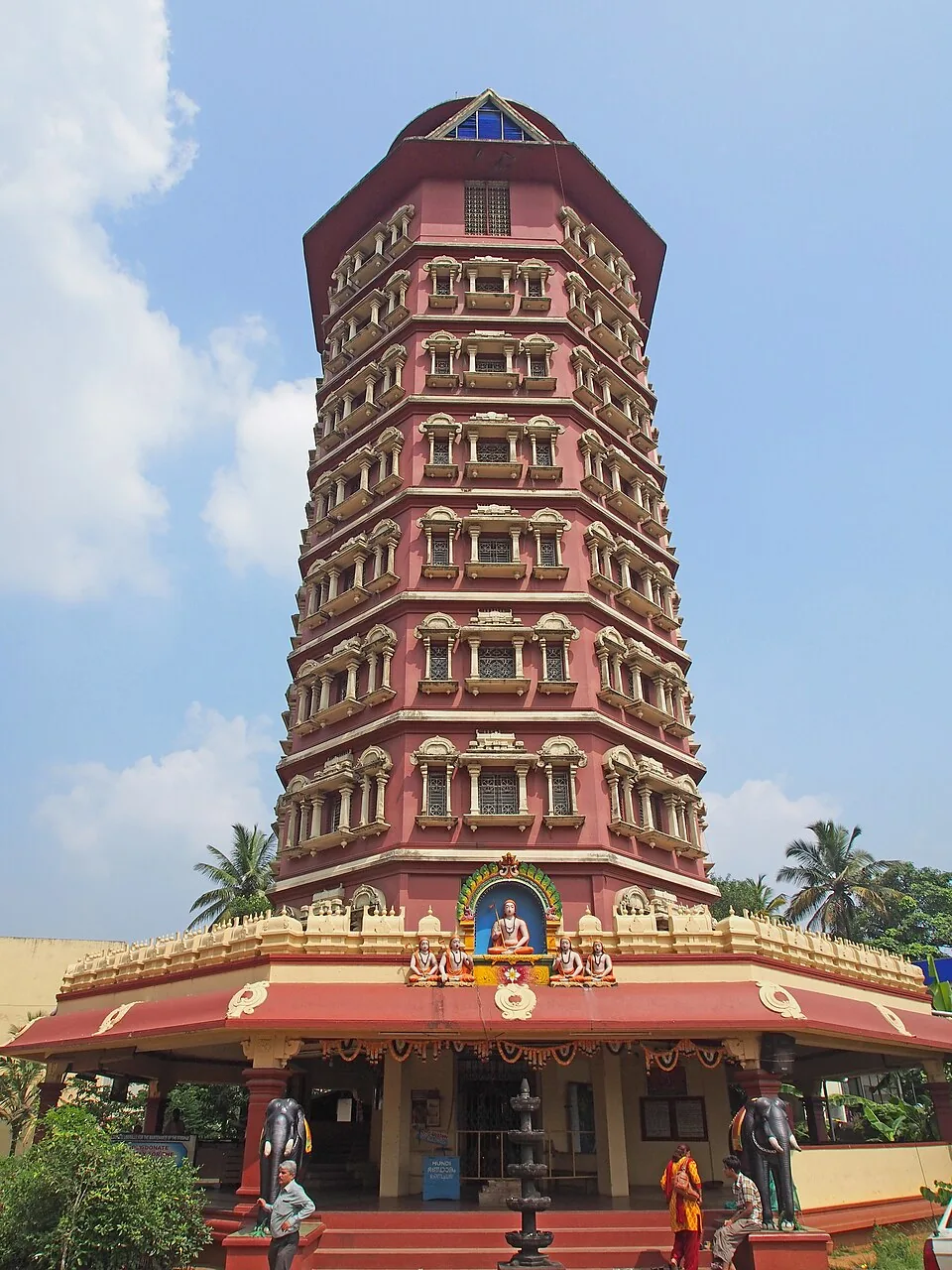
An eight-storey octagonal memorial tower to the philosopher Adi Shankaracharya at his birthplace, Kalady, on the Periyar river, dedicated in 1978 and run by the Kanchi Kamakoti Peetham.
22.2 km · straight line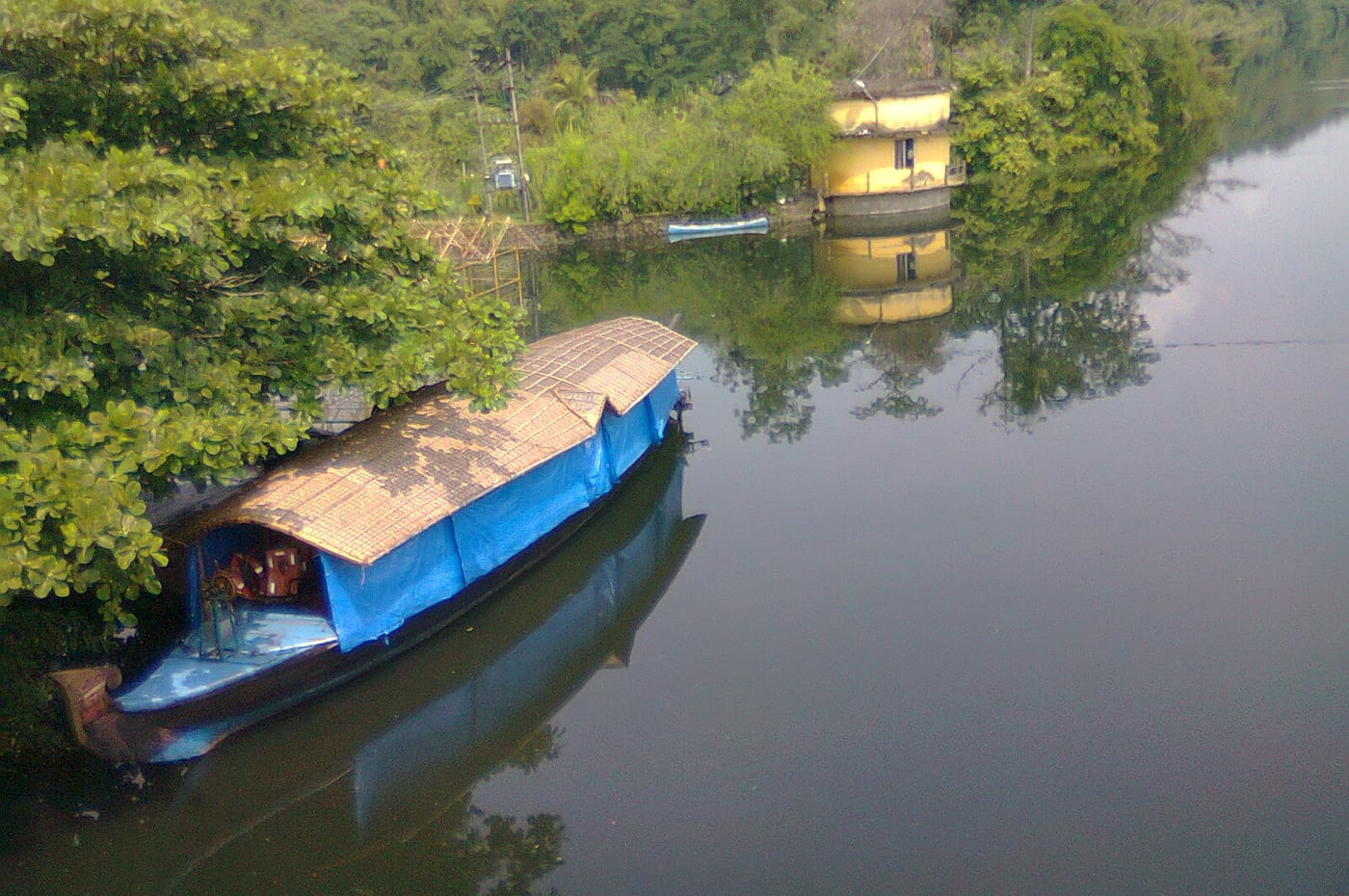
Kerala’s longest river, and the reason Kalady stands where it does — the Adi Shankara traditions of the crocodile and of the river changing course both belong to this water. Ghats and quiet riverside walks beside the birthplace complex.
22.4 km · straight line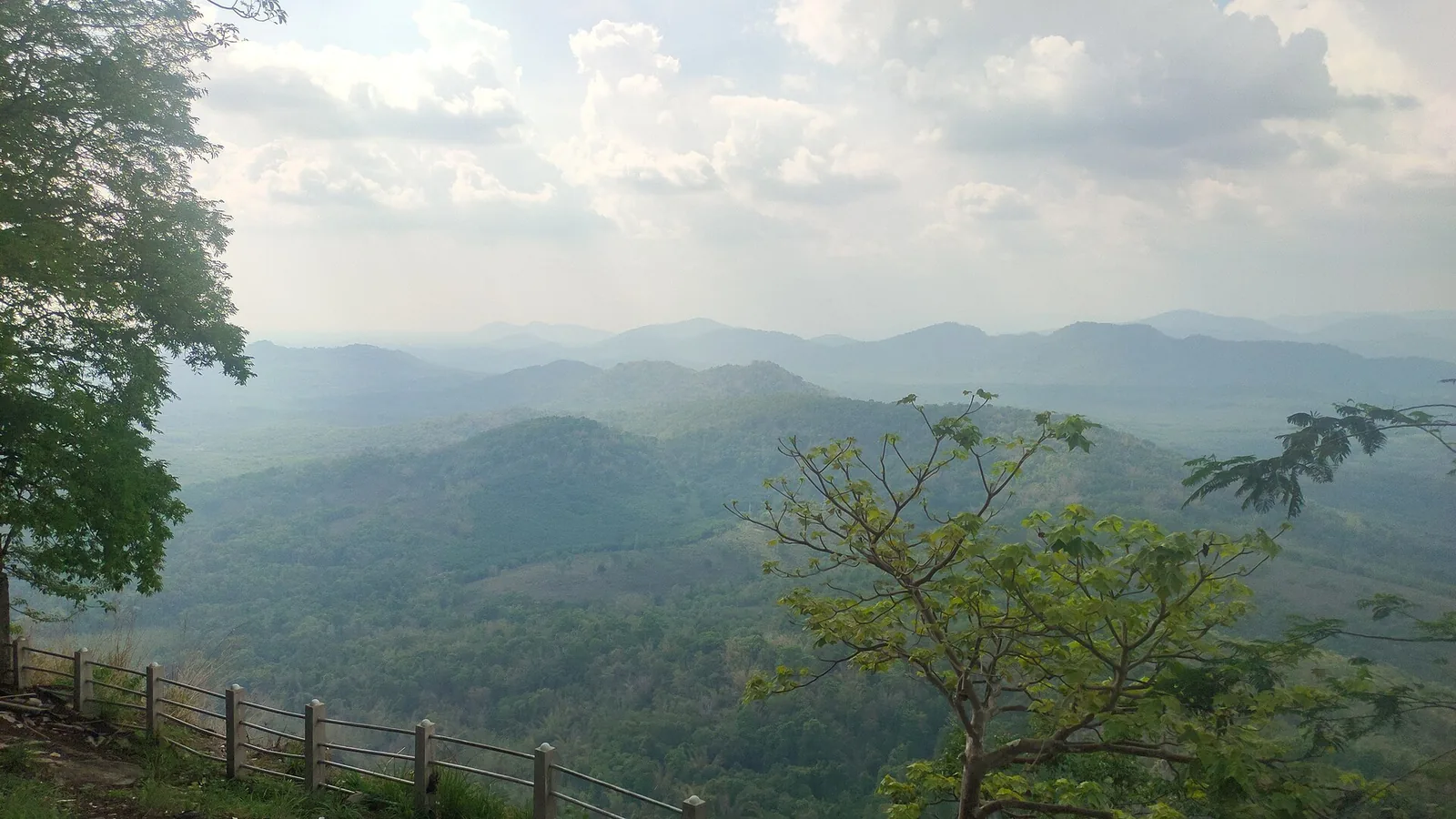
The St Thomas hilltop pilgrimage church near Kalady, a major Christian pilgrimage site drawing large Malayattoor Perunnal crowds.
23.1 km · straight line
The Manickamangalam Devi temple north of Kalady, remembered as the shrine where Adi Shankara’s father Sivaguru served — the family connection, rather than the building, is why pilgrims come.
23.3 km · straight lineThe only major temple to Vamana in Kerala, at Thrikkakara near Kakkanad — traditionally regarded as the origin place of the Onam festival.
24.9 km · 26 min driveA privately built museum at Thevara with thousands of Kerala folk and ritual artefacts across Malabar, Kochi and Travancore styles.
26.8 km · 27 min driveA heritage hall in Ernakulam run as a contemporary art gallery by the Kerala Lalithakala Akademi.
29.7 km · 33 min driveRoad and walking figures are route estimates, with travel times dependent on access, traffic and conditions. Figures marked “straight line” show direct separation and do not describe a road or walking route. Fare estimates use Kerala’s 26 April 2022 auto/taxi notification and exclude waiting, night and applicable one-way surcharges. Confirm the current meter or operator quote before travelling. Routing: © openrouteservice.org by HeiGIT | Map data © OpenStreetMap contributors
Nearby toilets, pharmacies, ATMs, seating and vets are community-mapped and may be incomplete or out of date. Map data © OpenStreetMap contributors | Walking times © openrouteservice.org by HeiGIT
Unproven, and we would rather be straight about it. The stories place him in the ninth century and are preserved in oral tradition and in the Aithihyamala, a nineteenth-century collection of Kerala legends — but there is no contemporary ninth-century record documenting his life or activities. The church, its founder Mar Abo and the Persian cross are on much firmer ground. Enjoy the legend as a legend.
A ninth-century stone cross set into the right-hand wall of the madbaha, the altar room. It has four arms of equal length with floral-tipped ends and a Pahlavi inscription cut around it, and tradition attributes it to Mar Abo. It is physical evidence of the East Syriac church's reach into Kerala and one of the oldest Christian objects in India.
The principal feast falls on the 24th and 25th of Makaram — January or February — marking the death anniversary of Mar Abo, and it draws very large crowds. A second feast is kept on the 23rd of Medam, in April or May. Both follow the Malayalam calendar and shift each year, so confirm the dates locally.
It is about 30 km east of Ernakulam, near Kolenchery on the Muvattupuzha side, and the last approach climbs a hill. Allow two and a half to three hours for the round trip from the city, of which thirty to forty-five minutes is at the church. Do not try to attach it to a Fort Kochi day — it belongs with the eastern side of the district.
Yes, it is open to visitors outside service times, as Kerala churches generally are. Dress modestly with shoulders and knees covered, and take your footwear off at the door — that is the custom here and it surprises people. Access to the altar area is restricted during and around services, and photography inside the madbaha is not appropriate. Ask before photographing the cross.
It is a memorial prayer, and it names a person. Burkitt and Winckworth's reading, presented at the International Congress of Orientalists at Oxford in 1925 and never seriously overturned, gives it as “My Lord Christ, have mercy upon Afras, son of Chaharbukht, the Syrian, who cut this” — Winckworth later preferring “who preserved this” for the closing phrase. Be aware that this text appears, with variations, on several of the South Indian crosses; the scholarly view is that they all copy a single original.
Probably not, and it is worth knowing before you stand in front of it. The Pahlavi crosses of South India — this one, two at Kottayam Valiapally, and others at Muttuchira, Alangad and Kothanalloor, plus the Mount cross in Chennai — are held to descend from one original inscription copied from stone to stone. The Kadamattom carving has been assessed as a copy of one of the others, most likely the larger Kottayam cross, made by someone who could not read the script. That makes it a genuine medieval artefact and a genuine piece of evidence about Kerala's Persian Christian past, just not the first of its kind.
Mar Sabor, one of two Church of the East bishops — the other was Mar Proth — who arrived on the Malabar coast around 825 with a group of Persian Christian settlers, landing at Kollam. They are credited with founding churches at Kadamattom, Akaparambu, Niranam, Kollam and Kayamkulam, and with dying at Thevalakkara. The Synod of Diamper declared them heretics in 1599; Kerala's Christians kept venerating them regardless, which is what the Makaram feast here still is.
Yes, but read the Kathanar stories first — it takes ten minutes and it roughly doubles what the visit gives you. Even without them, a ninth-century Persian cross in a working hilltop parish is a serious piece of Indian Christian history, and there is nothing else quite like it within reach of Kochi.
Morning or late afternoon for quieter visits and better light.
Entry: Free, as at any parish church. Donations and offerings are made at the counters inside. Timings: Open through daylight hours for visitors, with services in the morning and evening; access to the altar area is restricted during and around services. Times change around the feast and Lent.
Base yourself in Kochi City or a nearby town in Ernakulam, then confirm the last-mile route locally before leaving. Check mass/prayer timings if visiting for worship; otherwise visit outside service rush. If the visit depends on forest, temple, boat, ferry, weather or seasonal access, check the official/local rule on the day before travel.
30 minutes to 1.5 hours.
Nearby you can pair Thrikkariyoor Temple (17.3 km, approximate straight-line separation), Chottanikkara Temple (17.6 km, route estimate), Hill Palace, Tripunithura (18.5 km, route estimate), Sree Poornathrayeesa Temple (21.8 km, route estimate).
Expect crowds on feast days and Sundays. Use marked parking and official entry points.
Written about Kadamattom Church itself — its history, its legends and the arguments about them.
These guides explore Kochi City and the surrounding area. Choose a visit that fits your interests, allowing separately for travel between stops.
Route-level itineraries and practical guides for the rest of Kerala.
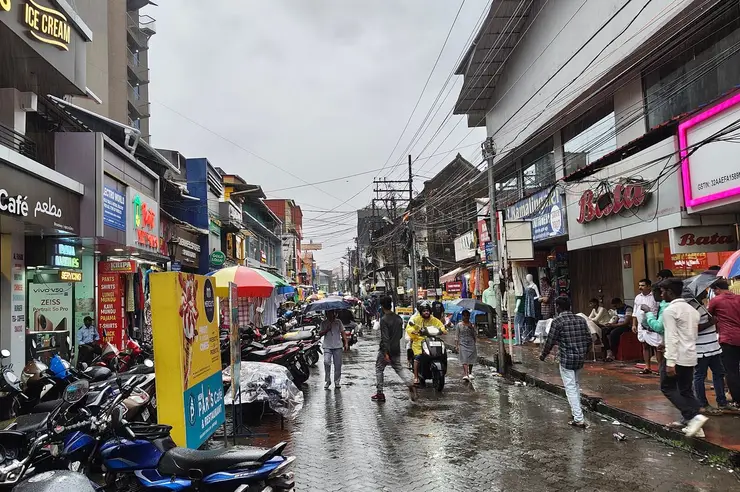
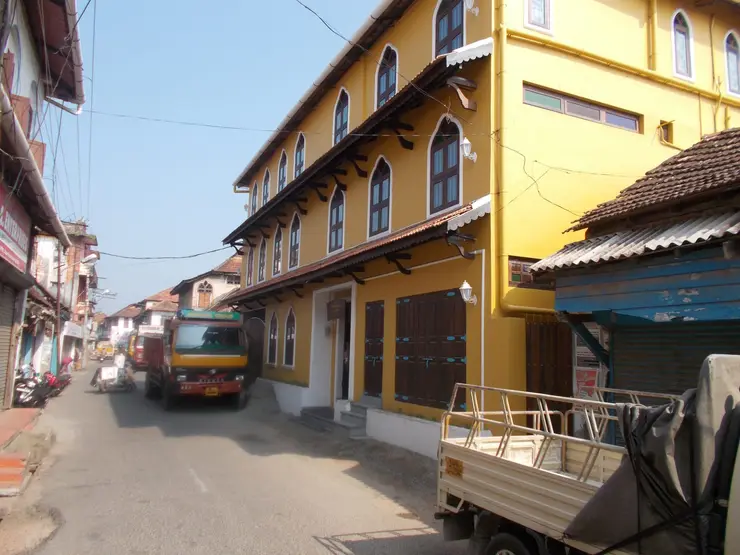
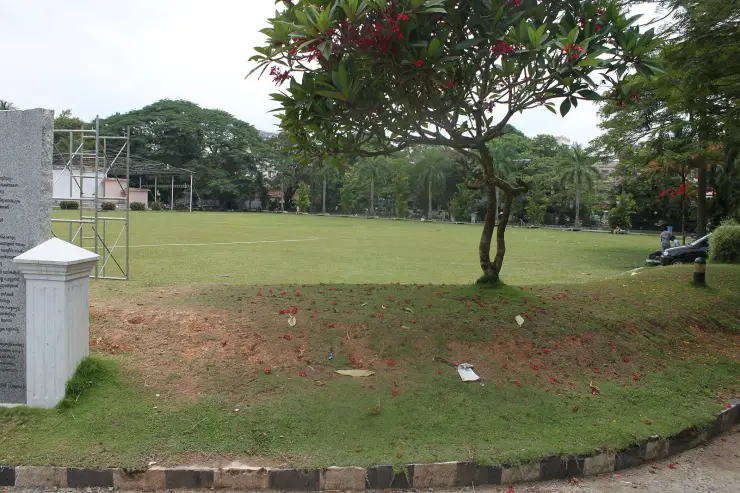
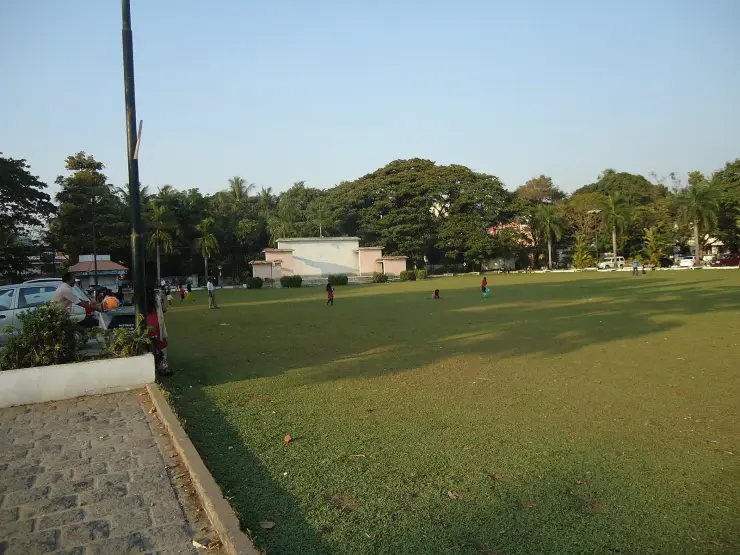
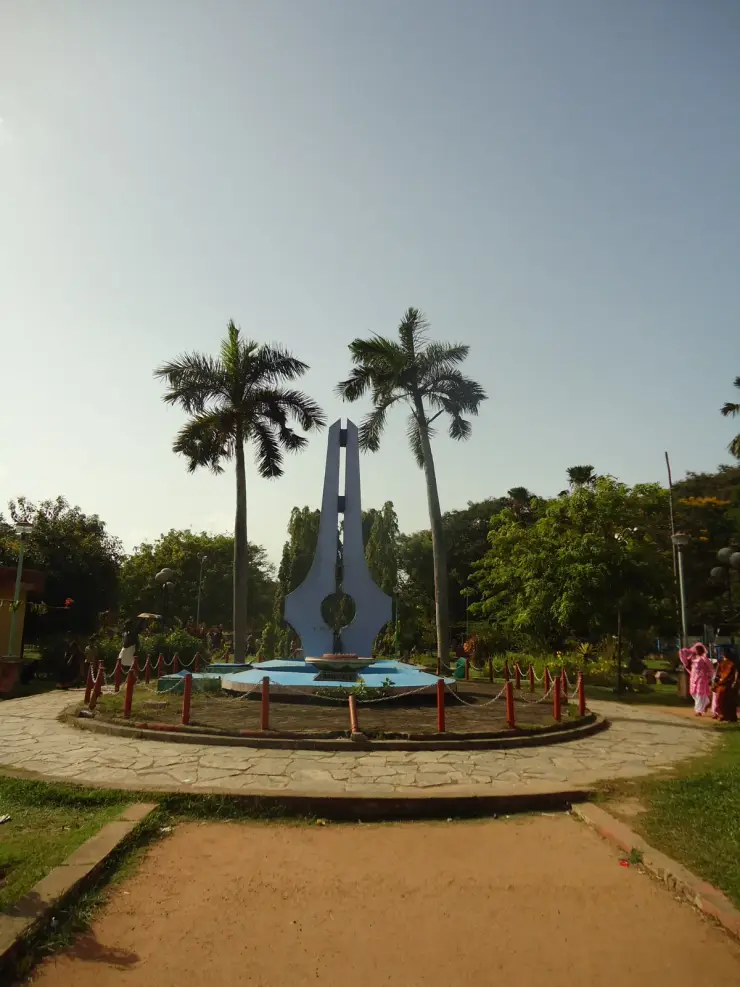
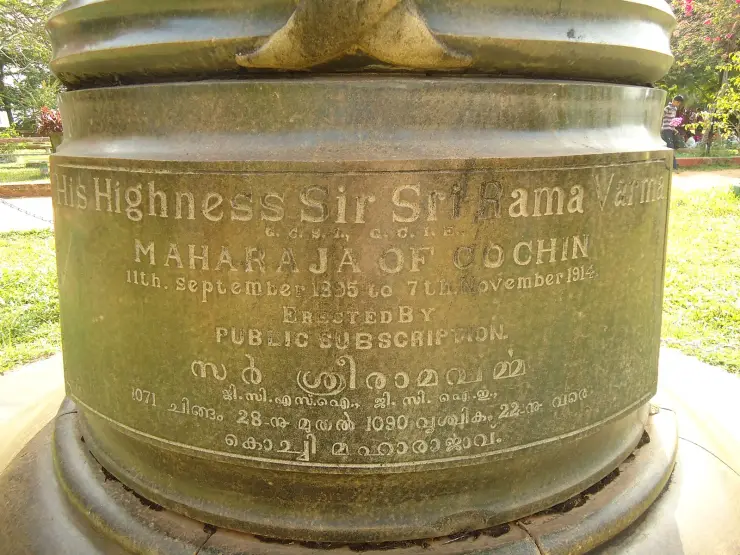
Photographs: Suresh Babunair (CC BY 3.0), Augustus Binu (CC BY-SA 3.0). Wikimedia Commons.