What to expect
Highlights
- Heritage experience at Seafood homestays
- Architecture, local stories and old trade/cultural routes
- Good fit for guided walks and nearby cafes/shops
The North Kumbalangi homestay belt, where the draw is eating karimeen, clam and crab cooked in a family kitchen from that morning’s catch — the food is the reason to stay, not an amenity attached to the room.
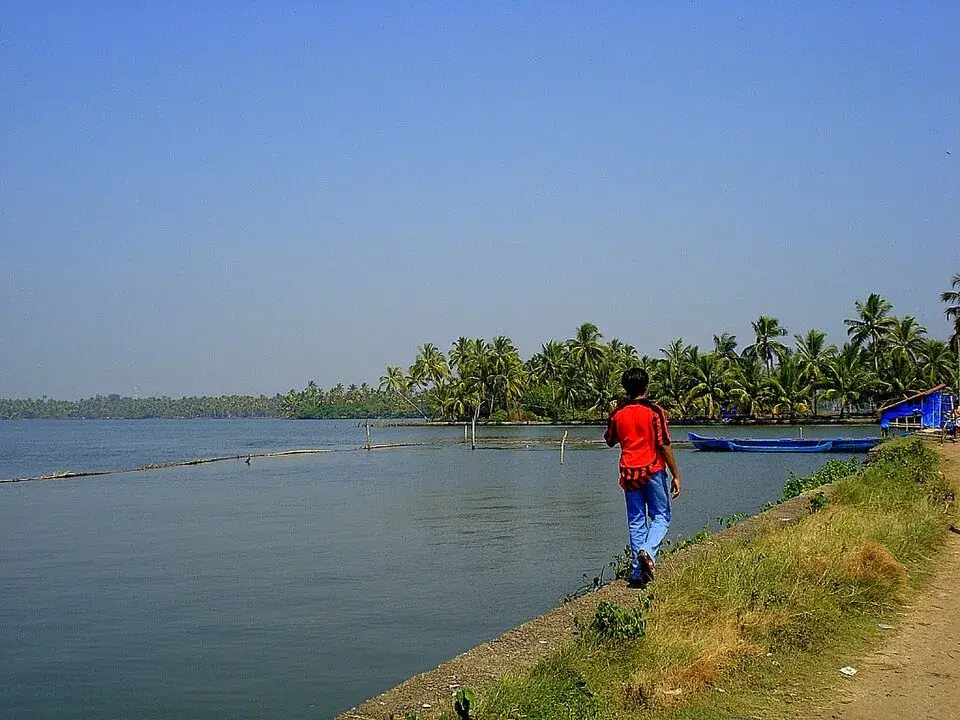
There are no resorts in Kumbalangi, and that is a rule rather than an accident — the model tourism village came with a ban on purpose-built tourist structures. So people stay in and beside existing homes along the northern waterfront, and the thing you are really booking is not a room. It is a kitchen: karimeen from the creek, clams that were in the mud that morning, mud crab, and somebody's grandmother's method. The rooms are simple. The dinner is the reason anyone comes back.
The homestay belt runs through North Kumbalangi, around Kallanchery and the western shore, where the land meets the creek and most houses have their own steps down to the water. Some are a spare room in a family house; some are a separate cottage in the garden of one. None of them is a hotel, and the range in comfort between them is wide — you are choosing a household, not a category.
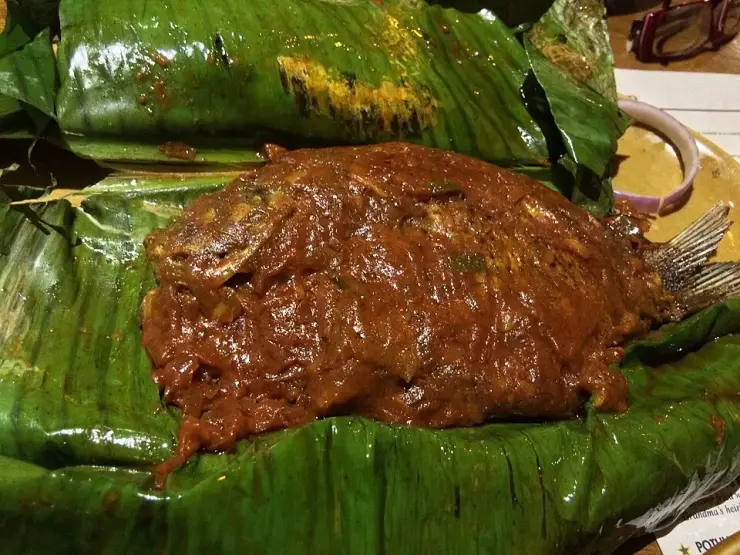
The food is the constant. Karimeen — pearl spot — is the fish this coast is known for, and the classic treatment is karimeen pollichathu: marinated, wrapped in banana leaf and cooked on a griddle so the leaf chars and the fish steams inside it. Clams, kakka, come out of the creek beds and turn up as a dry roast with coconut and curry leaf. Mud crab is the special-occasion dish and needs ordering ahead. All of it is bought that morning, from the water you can see from the table.
Because of that, the kitchen runs on expected numbers rather than a menu. Households shop for the guests they know are coming, which is why walking in at eight o'clock at night and asking for dinner is a genuinely awkward request rather than a normal one, and why confirming your meal that morning matters more here than at any restaurant. It is also why telling your host at the time of booking that you do not eat seafood is important — in this village that is a real constraint on what can be cooked, not a preference to mention on arrival.
Breakfast is worth staying awake for and nobody writes about it, because dinner takes all the attention. It is the standard coastal Kerala repertoire cooked properly: puttu, steamed cylinders of ground rice and coconut, eaten with kadala curry or with a banana crushed into it; appam, the lace-edged fermented rice pancake with a soft middle, usually with a mild coconut stew; or kappa, boiled tapioca mashed with green chilli and grated coconut, which is peasant food and the best thing on the table. Ask the night before if you want a particular one — puttu and appam both need the batter or the flour prepared in advance, so it is not a decision you can make at seven in the morning.
Most hosts will let you into the kitchen, and many run informal cooking sessions if you ask. This is not a packaged 'cooking class' with printed recipes; it is standing next to someone while they do what they were going to do anyway. It is the single best-value thing on offer in Kumbalangi and it is almost never advertised.
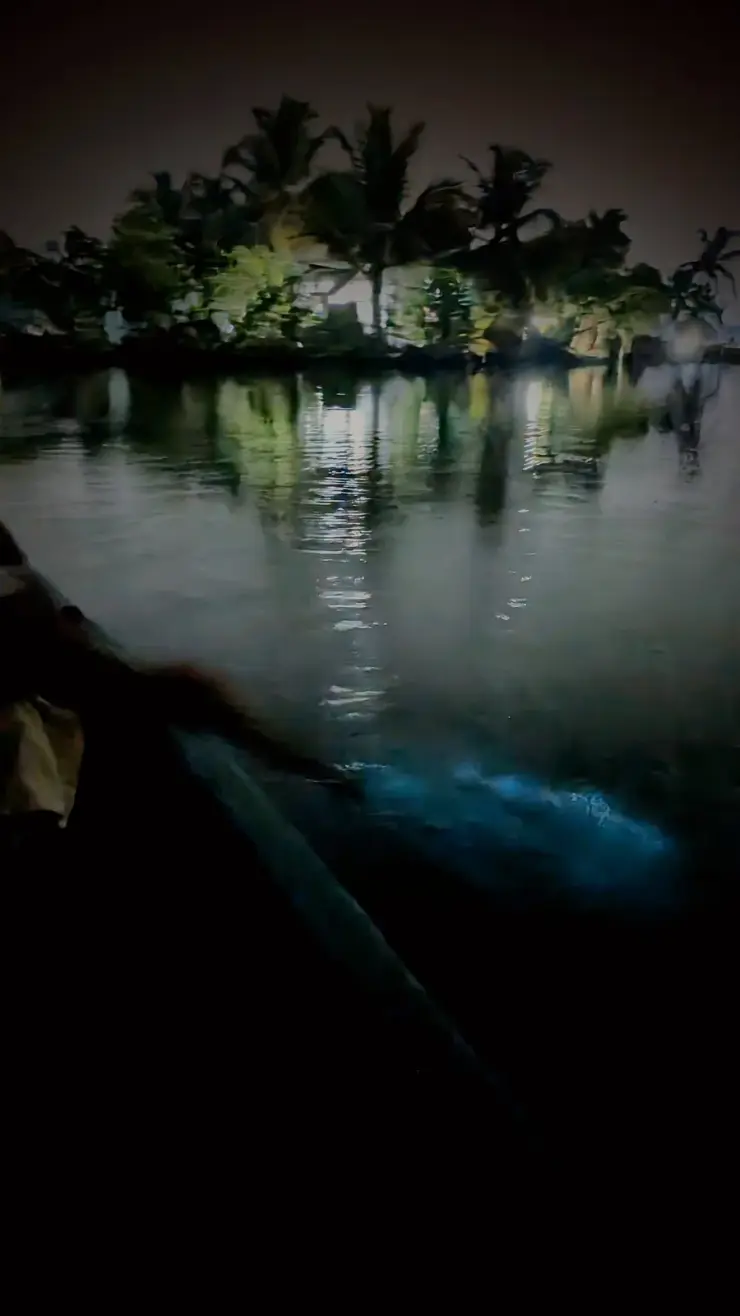
The rhythm of a stay is the point. You arrive in the afternoon, watch the nets worked at dusk, eat late, sit out looking at black water — and in March to May you may see it glow. You take the house canoe out before breakfast while the creek is still flat. Then you leave. A day visit gets you none of that, which is why the belt exists at all.
The rule that shaped every place you can stay in Kumbalangi is that you cannot build one. When the village was designated a model tourism village in 2003, the scheme came with a prohibition on purpose-built tourist structures — no resorts, no cottage blocks, no gated waterfront. Whatever accommodation existed would have to grow inside houses that were already there, run by the families already in them.
It is a genuinely unusual piece of policy and it explains the whole character of a stay here. Your room is somebody's spare room, extended. Your dinner comes out of the household kitchen rather than a commercial one. The person who cooks it very likely also has an opinion about the sluice gate at the end of the lane, because they depend on it. What you are booking is not hospitality as a product; it is hospitality as a side business, which is a completely different experience and not always a smoother one.
Whether the rule has entirely held is a fair question, and reporting on the village describes a project that fell well short of its plan while tourism pressure on the creeks and mangroves grew. What is observably true is that the waterfront has not been built out. There is no resort strip at Kumbalangi, twelve kilometres from a metro city with an international airport, and that is not an accident of the market.
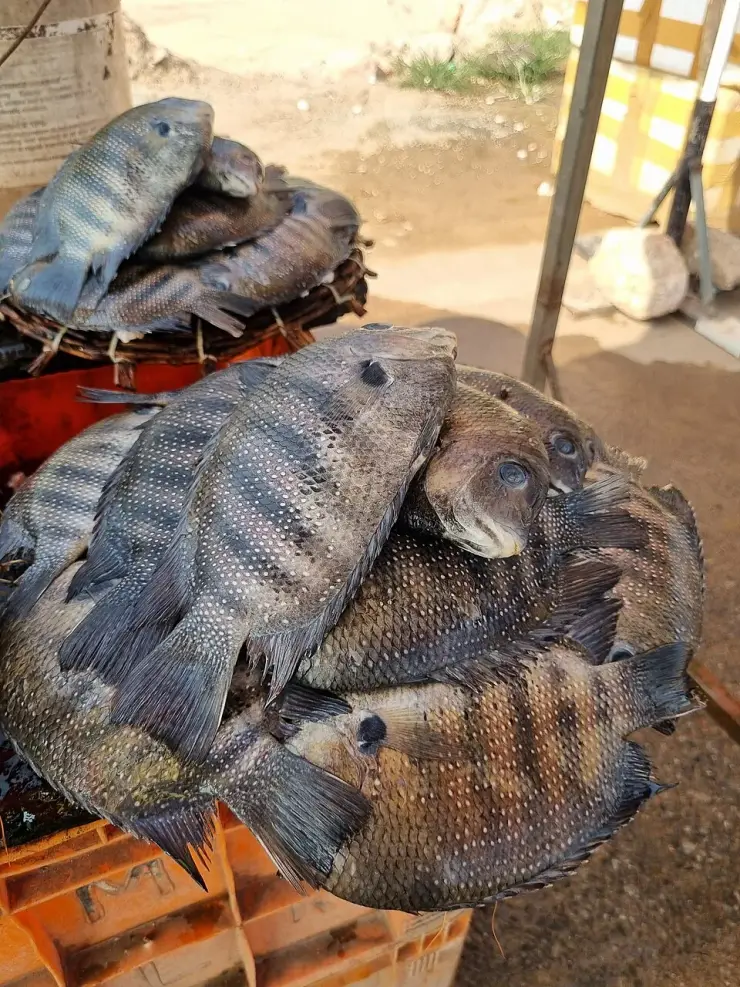
The fish on the plate has a status you would not guess from the price of it. Karimeen — pearl spot, Etroplus suratensis — was declared the state fish of Kerala in 2010, and 2010–11 was formally observed as the Year of the Karimeen to push production up. It is not a sea fish and not a river fish: it lives specifically in brackish water, which is to say in exactly the mixing zone that Kumbalangi's creeks are, and that narrow requirement is the whole reason a village of this kind can put it on a table an hour after it is caught.
It is also, quietly, a fish in trouble, and a homestay kitchen is a good place to hear about it. Landings of karimeen in the Vembanad system fell from around 1,252 tonnes in 1969 to a little over 135 tonnes by 2012–13. Kerala farms roughly 2,000 tonnes a year against a demand nearer 10,000, and the gap gets filled: medium-sized tilapia at three or four hundred grams looks close enough to a pearl spot that restaurants have been caught serving one as the other. Behind all of it sits the habitat — the state's mangroves, the nursery ground for the hatchlings, went from something like 700 square kilometres in the 1980s to under 18 by 2020. Eating karimeen where it was actually caught, from a household that knows which creek it came out of, is one of the few remaining ways to be certain of what is on the plate.
The food carries its own claim, and this one has some real chemistry behind it. The prawns come out of pokkali fields — the same fields that grow salt-tolerant rice through the monsoon and are flooded with brackish water for the prawn season, in a rotation that uses no fertiliser or feed. Prawns raised in a field fertilised only by rice stubble are not the same animal as pond-farmed stock, and the households here will tell you so at some length. The karimeen, the pearl spot, comes out of the creeks; the clams come out of the mud the same morning. It is the shortest supply chain you will eat on in Kerala, and the reason to book a homestay rather than a hotel is not the bed.
Kumbalangi is around three-quarters Latin Catholic, and a fishing village first — the households now hosting visitors are, in most cases, families whose income came off the same water a generation ago. Homestays were one of the few new income streams the 2003 model tourism village project actually delivered, and they were designed into it deliberately: the no-resorts rule meant that if visitors were going to stay at all, they would stay in homes.
That rule has held better than most of the project. Two decades on, the infrastructure programme is roughly 15 per cent built, but the village still has no resort strip — and the caps that follow from that, on both numbers and profits, are the reason the place still feels like a village at seven in the morning.
There is a formal framework underneath all this, and it is worth understanding because it constrains what a Kumbalangi homestay can be. Kerala Tourism classifies homestays in three grades — Diamond, Gold and Silver — and the defining condition is not the fittings: the classification is only granted where the owner and their family are physically living in the same unit. A registered homestay may set aside a minimum of one room and a maximum of six, which is twelve beds. Classification runs for three years before it has to be renewed. So the ceiling on a household here is set twice over, once by the village's no-resorts rule and once by the state's own definition of what a homestay is, and that is why nowhere you can book in Kumbalangi is large.
Pressure has grown since 2019, when the film Kumbalangi Nights put the village and its glowing water in front of a national audience. Bookings rose, particularly in the March–May bioluminescence window, and the village is still working out how much of that it wants. Local reporting has warned specifically against large tourism companies putting up high-rise hotels here, on the grounds that the rustic character is the entire product.
The food is better than the equivalent in Fort Kochi and costs less, because it is a family cooking what they bought that morning rather than a restaurant buying to a menu.
You get the two hours that day visitors never see — dusk on the water and first light on it — because you are already here for both.
Most hosts will have you in the kitchen if you ask, which is the cheapest and best cooking lesson in the district.
Booking direct means the money goes to the household. We take no commission and never have; an OTA's cut comes out of a family's margin, not ours.
The no-resorts rule means the village at dawn looks like a village, not like a resort strip at dawn.
It is twelve kilometres from Fort Kochi. You can spend the day in the heritage quarter and the night somewhere that feels a hundred miles from it.
Road km to Ernakulam; ghat roads and traffic vary — allow extra.
November to February and early mornings are best for walking; avoid midday heat where possible.
Live forecast loads in your browser.
Sunset is in about 3 hours.
Sun and moon are calculated for this location and shown in IST. Photography windows are the hour around sunrise and sunset; the sunset bearing is degrees clockwise from true north. Moon phase is accurate to about half a day.
Verified hotels, homestays, restaurants, experiences, sights, shops and rentals around Seafood homestays — commission-free, with direct contact. Filter by what you need.
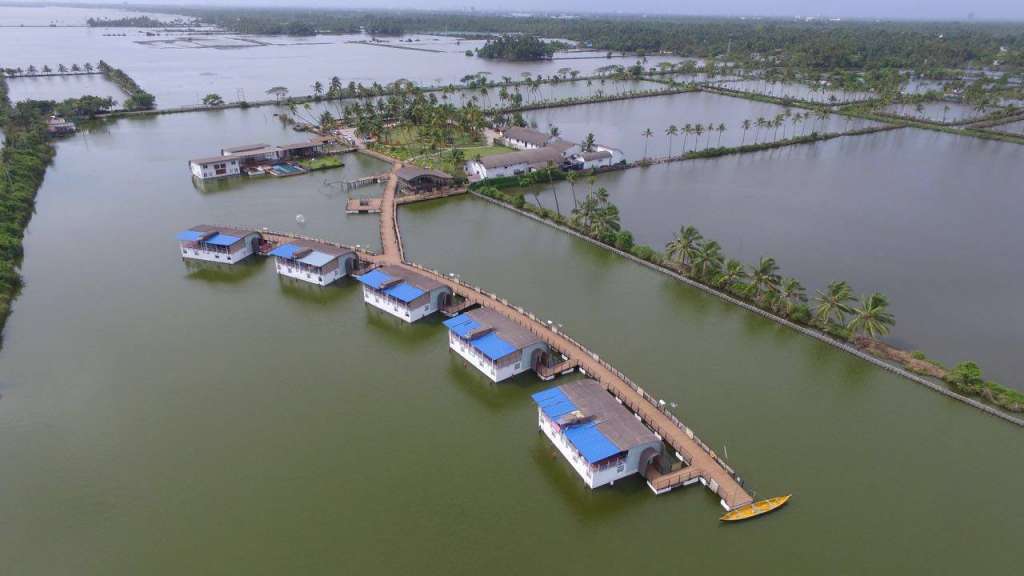
Kerala Tourism-listed floating resort at Puthankary, Kumbalangi. Kumbalangi, Floating resort, Backwaters.
Book with the place itself. India’s cyber-crime coordination centre warned in April 2025 that convincing copies of hotel and pilgrimage booking sites are being pushed through sponsored search and social ads, taking payment for rooms the property never hears about. Every listing here links to the business’s own contact details and its own Google or Bing profile — we take no commission and sit in nobody’s payment path. If a booking page reached you through an ad, check the address bar against the property’s own site before you pay. Fraud can be reported on cybercrime.gov.in or on 1930.
Find food, accommodation and activities across Kumbalangi. Browse the guides for places to eat, stay and explore along your route.
Walking routes start at Seafood homestays. Check the route and access before setting out, especially where a road, gate or waterway separates the stops.
4 more places around Kumbalangi. Open a guide to plan the visit and onward journey.
2.0 km · 23 min walk
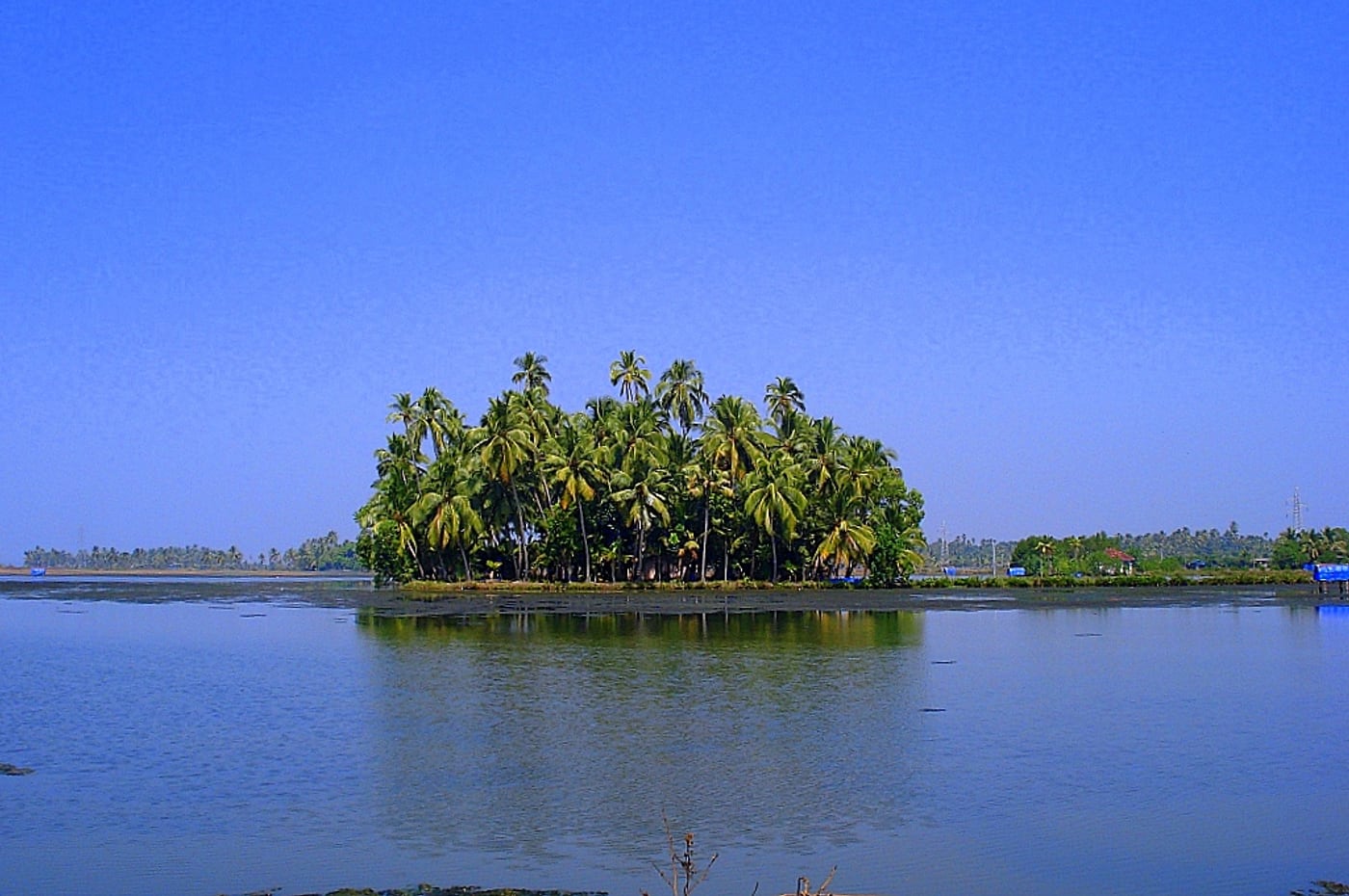
Model tourism village known for backwater life, fishing and village experiences.
2.2 km · 26 min walk
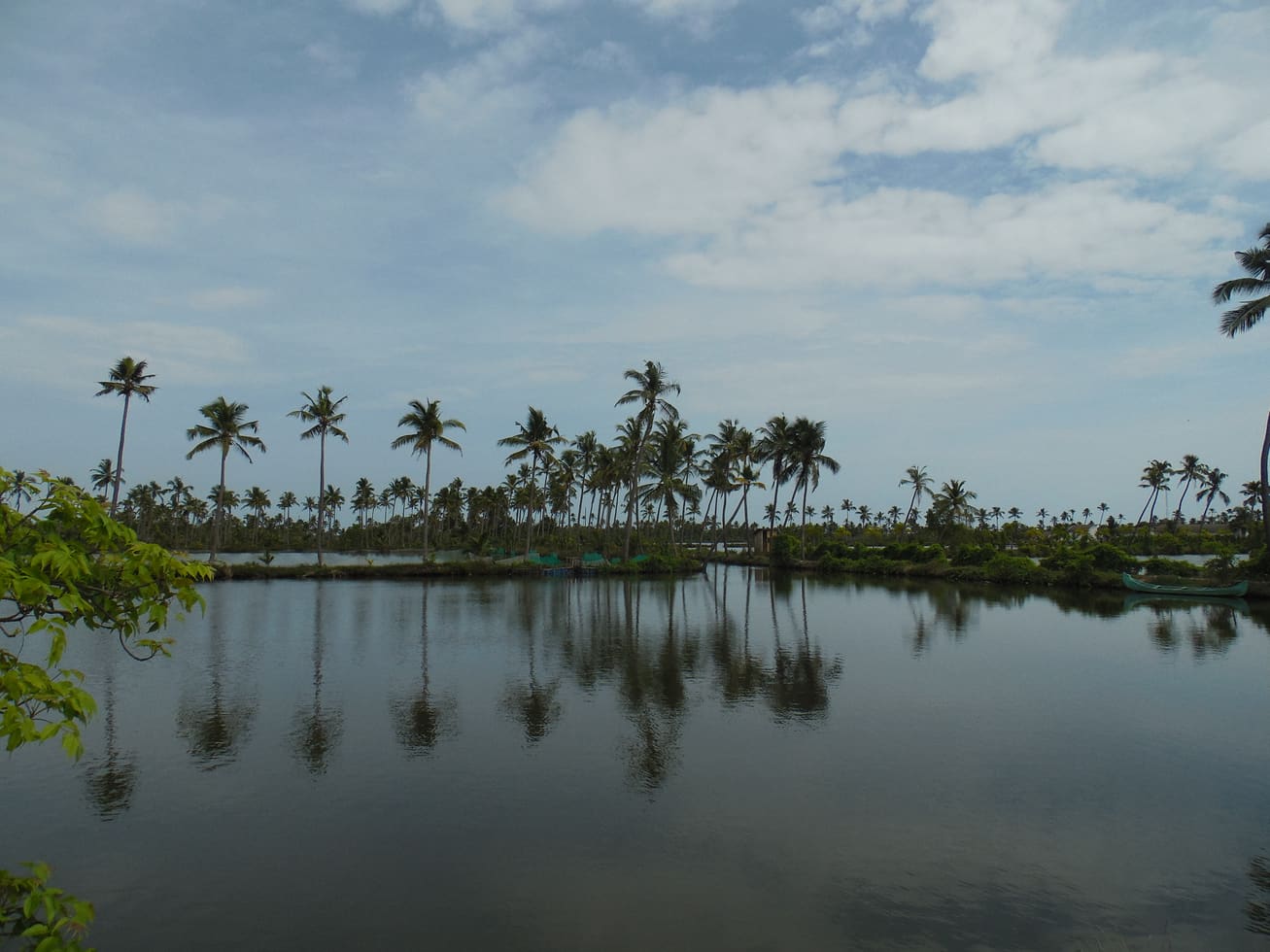
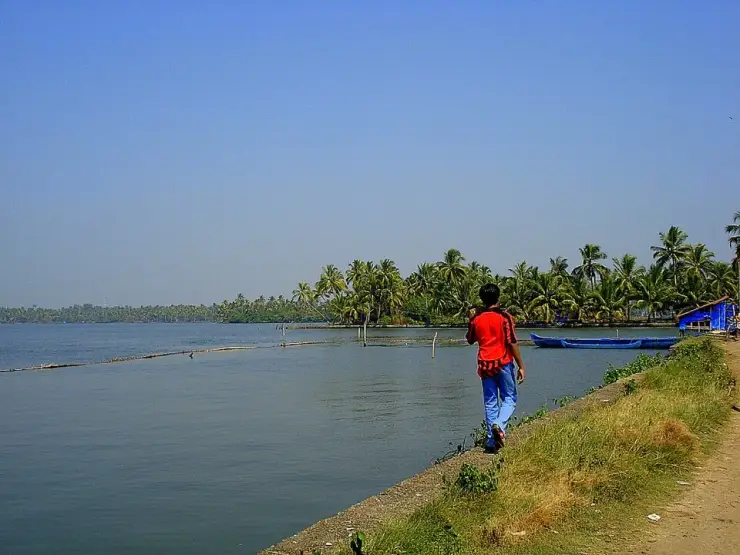
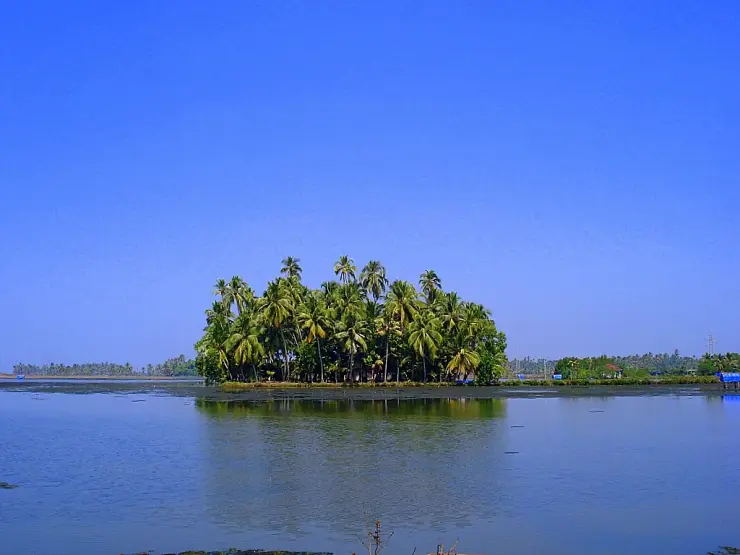
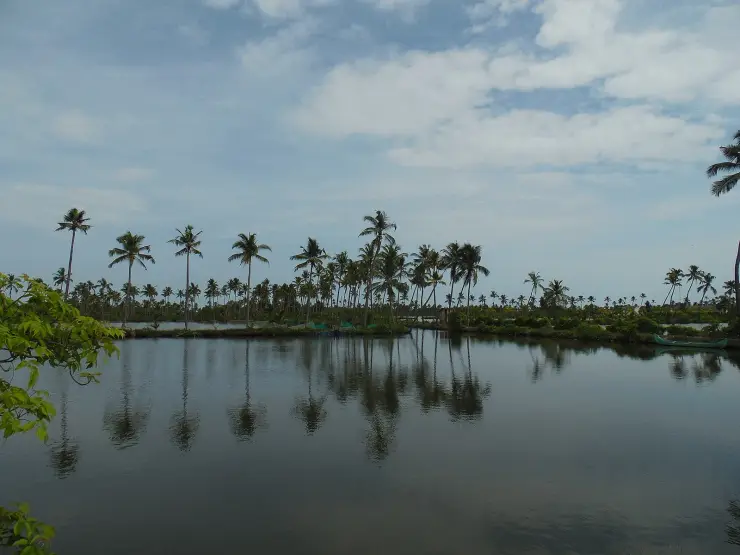
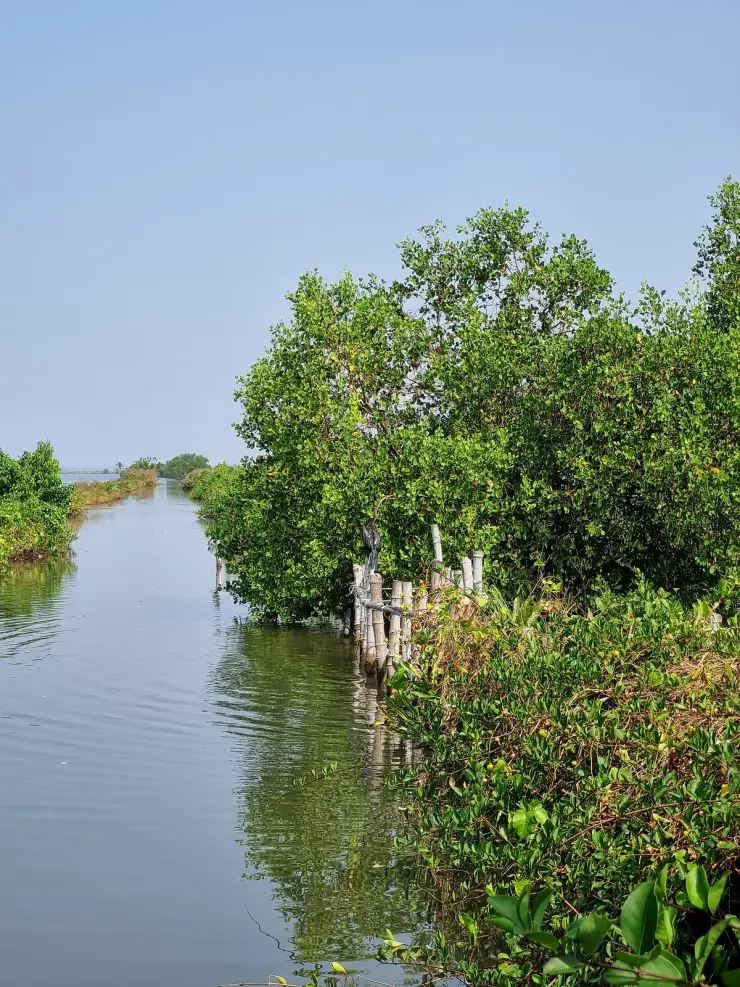
The tidal creeks and pokkali fields that wrap Kumbalangi island — canoe and country-boat water, worked for clam, prawn and crab rather than laid out for houseboats, and calm enough that the far bank mirrors in it at first light.
1.5 km · 18 min walk
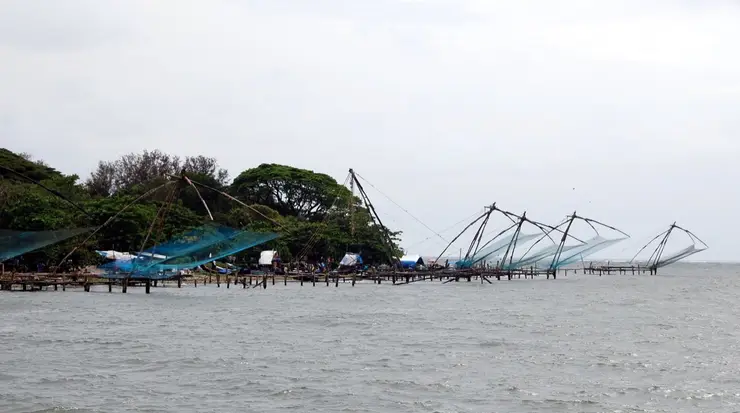
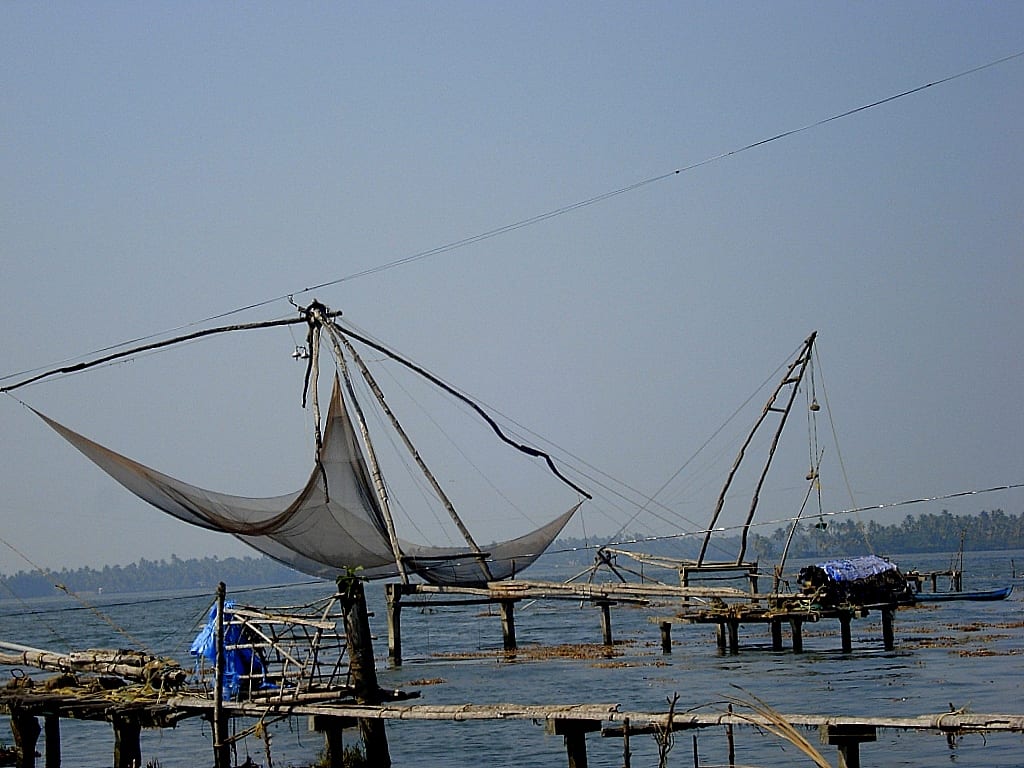
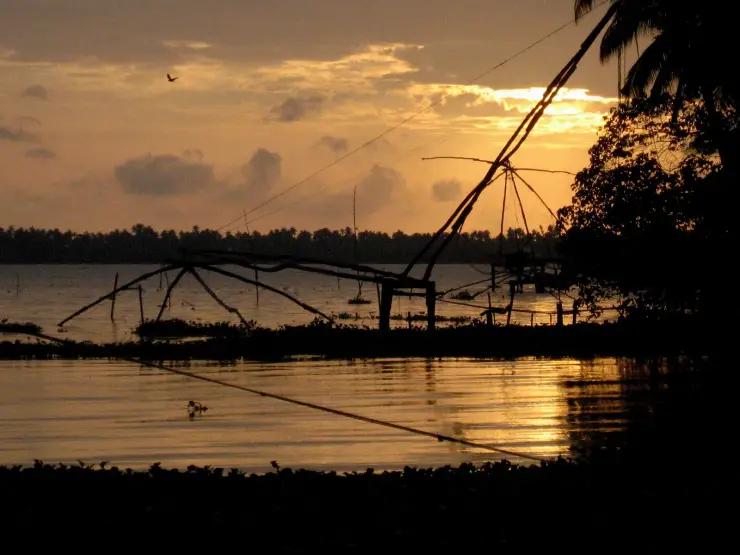
Kumbalangi’s own cantilevered cheena vala, worked on a village creek instead of a tourist seafront — fewer, quieter and still fished for a living, which is the whole difference from the Fort Kochi row.
270 m · 3 min walk
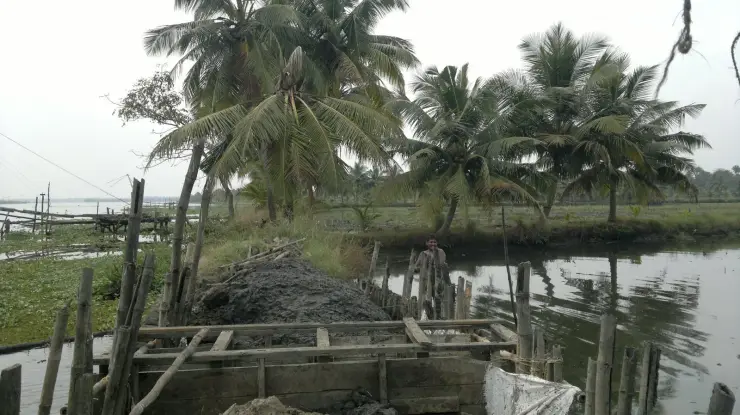
Guided walking routes through Kumbalangi’s lanes and working yards — coir twisting, toddy tapping, clam-shell collecting, prawn-filtration ponds and crab farms — run by the village’s own hosts rather than by an outside operator.
Roampedia is commission-free — own or know a stay, eatery, guide or shop near Seafood homestays? List it and it appears here once verified.
Add a nearby businessEntry: Not a place you enter — a place you book. Room and meal rates are set by each household, vary sharply between a simple room and a waterfront cottage, and are seasonal. We do not publish rates for individual properties and we take no commission.
Dress code: You are staying in somebody's home in a village that is around three-quarters Latin Catholic and conservative in dress. Modest clothing away from your own room is expected and appreciated.
If you are travelling by bus or ferry, check the return service with the operator before setting out. Leave time to reach the stop or jetty after your visit.
Ask at the jetty or stand for the time of the last service back, not the next one. If you miss it, an auto or app cab is the fallback — agree the fare before you get in.
If you need step-free access, contact the site before travelling. Ask about a level entrance, steps along the route, the nearest drop-off point, seating and accessible toilets.
These services are listed within about 1.2 km of Seafood homestays. Walking distances follow mapped routes; access and opening hours can change. Other services may be closer but are not included here.
Emergency numbers are verified against official government and state tourism sources. 112 works anywhere in India.
Guided walking routes through Kumbalangi’s lanes and working yards — coir twisting, toddy tapping, clam-shell collecting, prawn-filtration ponds and crab farms — run by the village’s own hosts rather than by an outside operator.
270 m · 3 min walkKumbalangi’s own cantilevered cheena vala, worked on a village creek instead of a tourist seafront — fewer, quieter and still fished for a living, which is the whole difference from the Fort Kochi row.
1.5 km · 18 min walkModel tourism village known for backwater life, fishing and village experiences.
2.0 km · 23 min walkThe tidal creeks and pokkali fields that wrap Kumbalangi island — canoe and country-boat water, worked for clam, prawn and crab rather than laid out for houseboats, and calm enough that the far bank mirrors in it at first light.
2.2 km · 26 min walk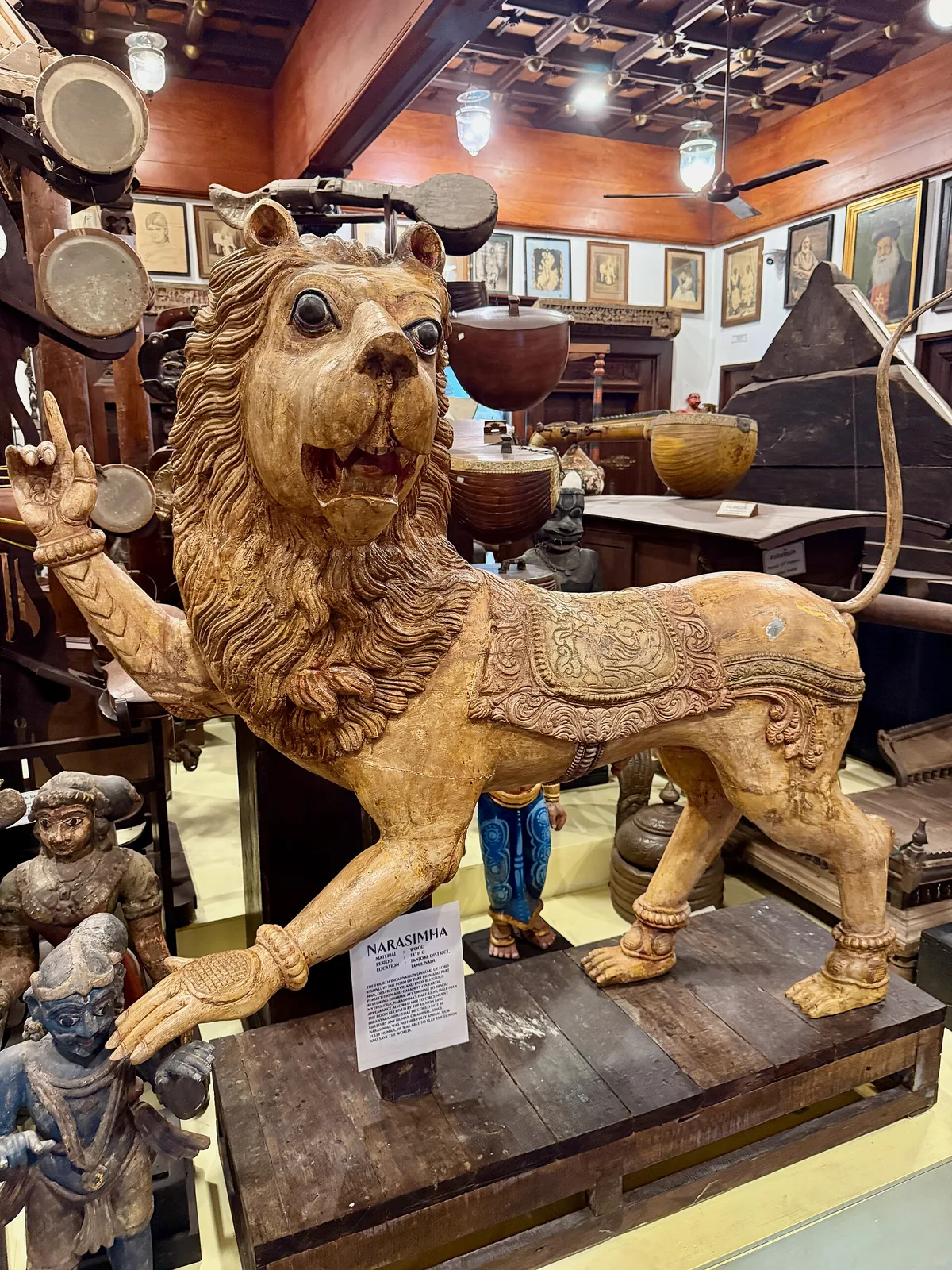
A privately built museum at Thevara with thousands of Kerala folk and ritual artefacts across Malabar, Kochi and Travancore styles.
5.0 km · ~12 min by auto · straight line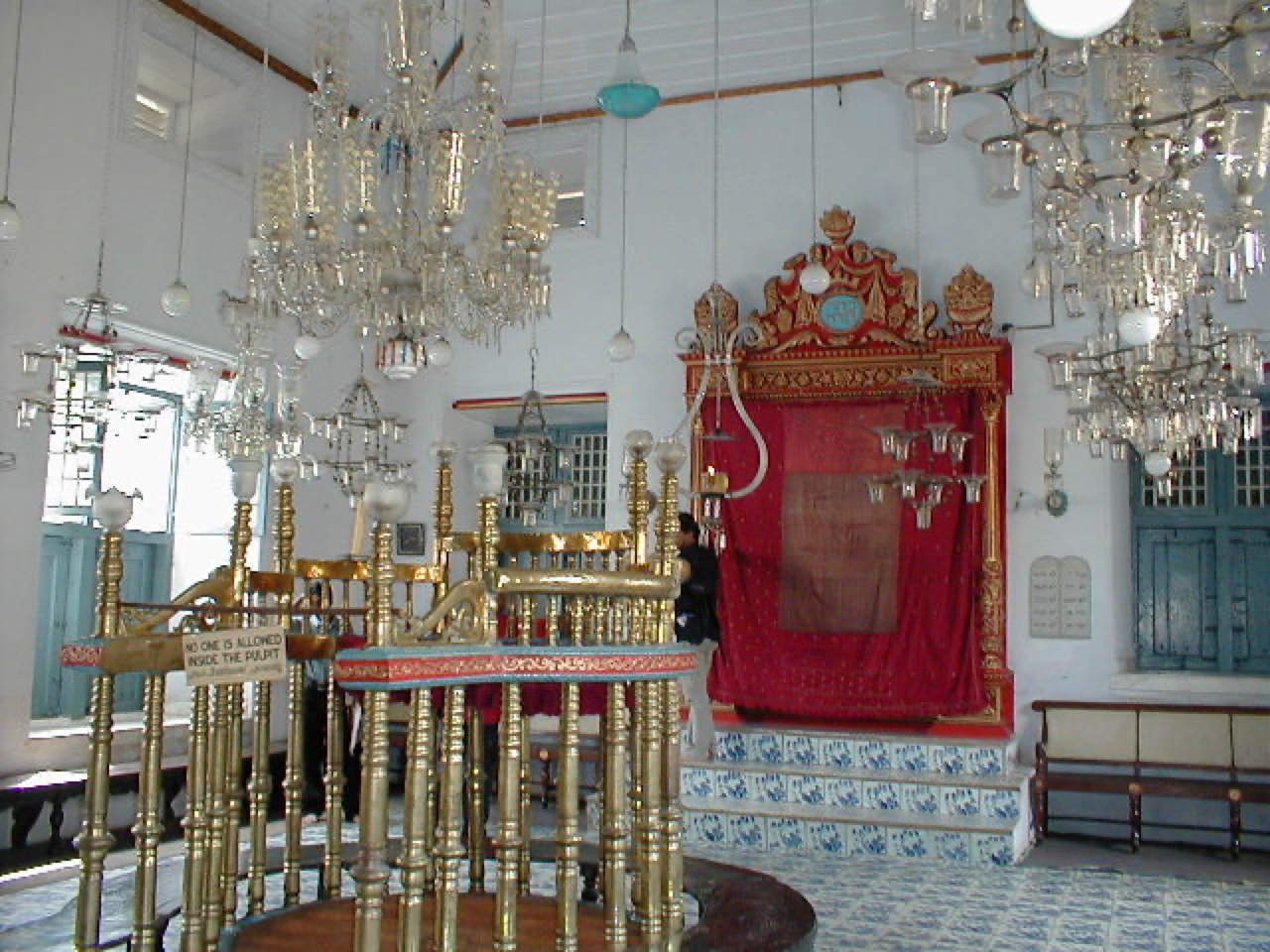
The oldest active synagogue in the Commonwealth (1568), in Jew Town, Mattancherry, with hand-painted Chinese floor tiles.
7.9 km · ~20 min by auto · straight line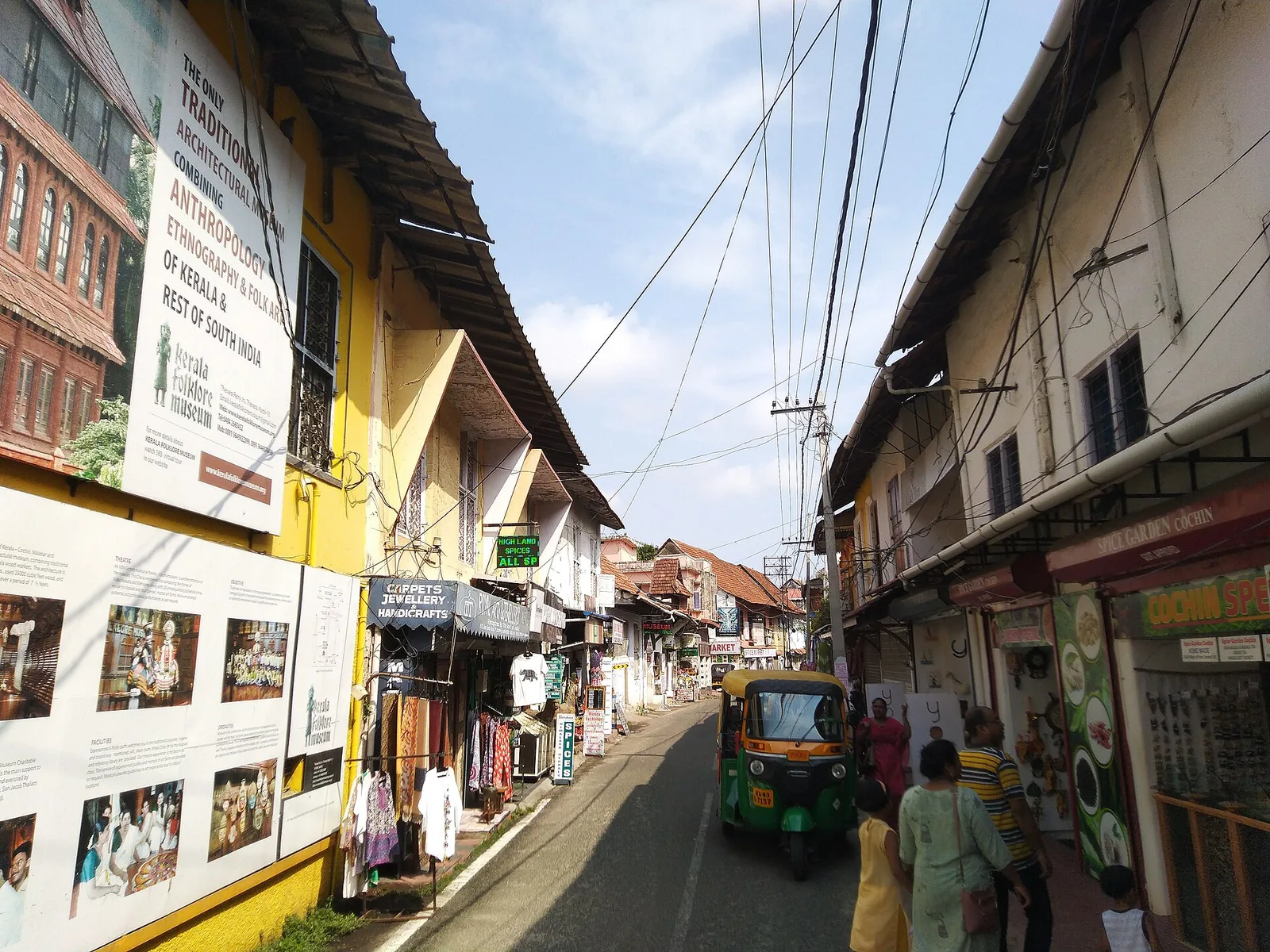
Spice warehouses, antiques, Mattancherry Palace and Paradesi Synagogue.
8.0 km · ~20 min by auto · straight line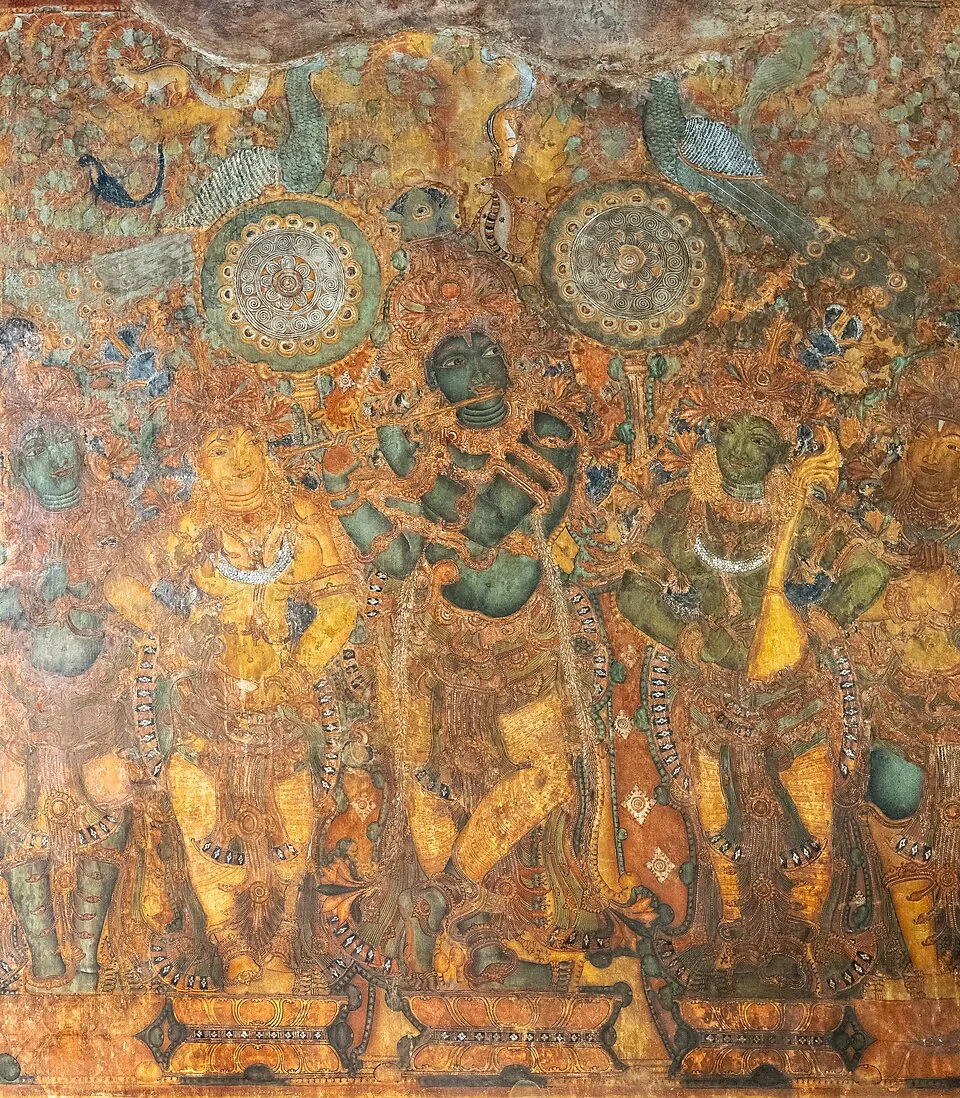
The Mattancherry Palace, known as the Dutch Palace, with celebrated Kerala mural paintings from the Ramayana and royal portraits.
8.0 km · ~13 min by cab · straight line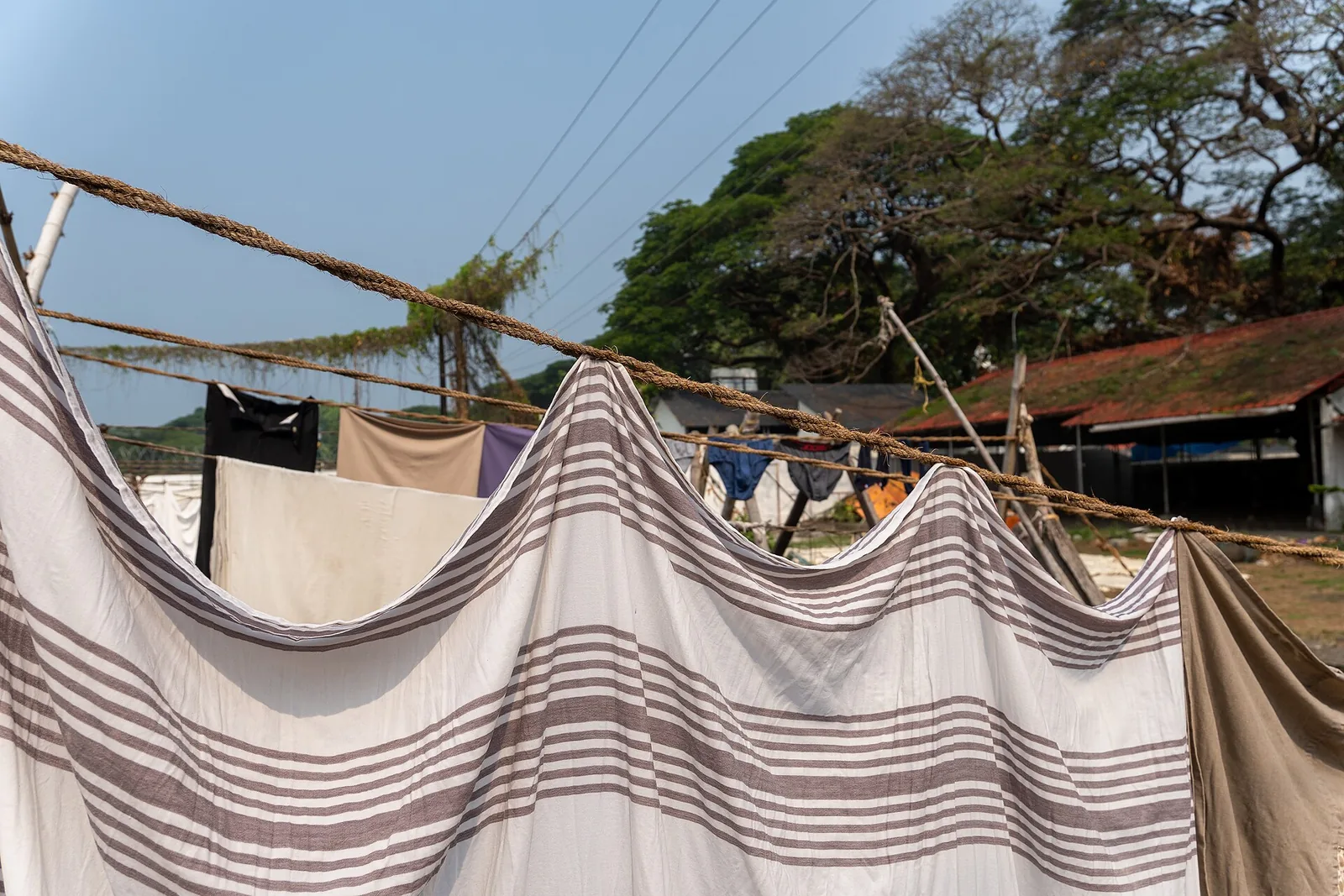
A working colonial-era community open-air laundry in Fort Kochi, still used by traditional washermen families.
8.1 km · ~13 min by cab · straight line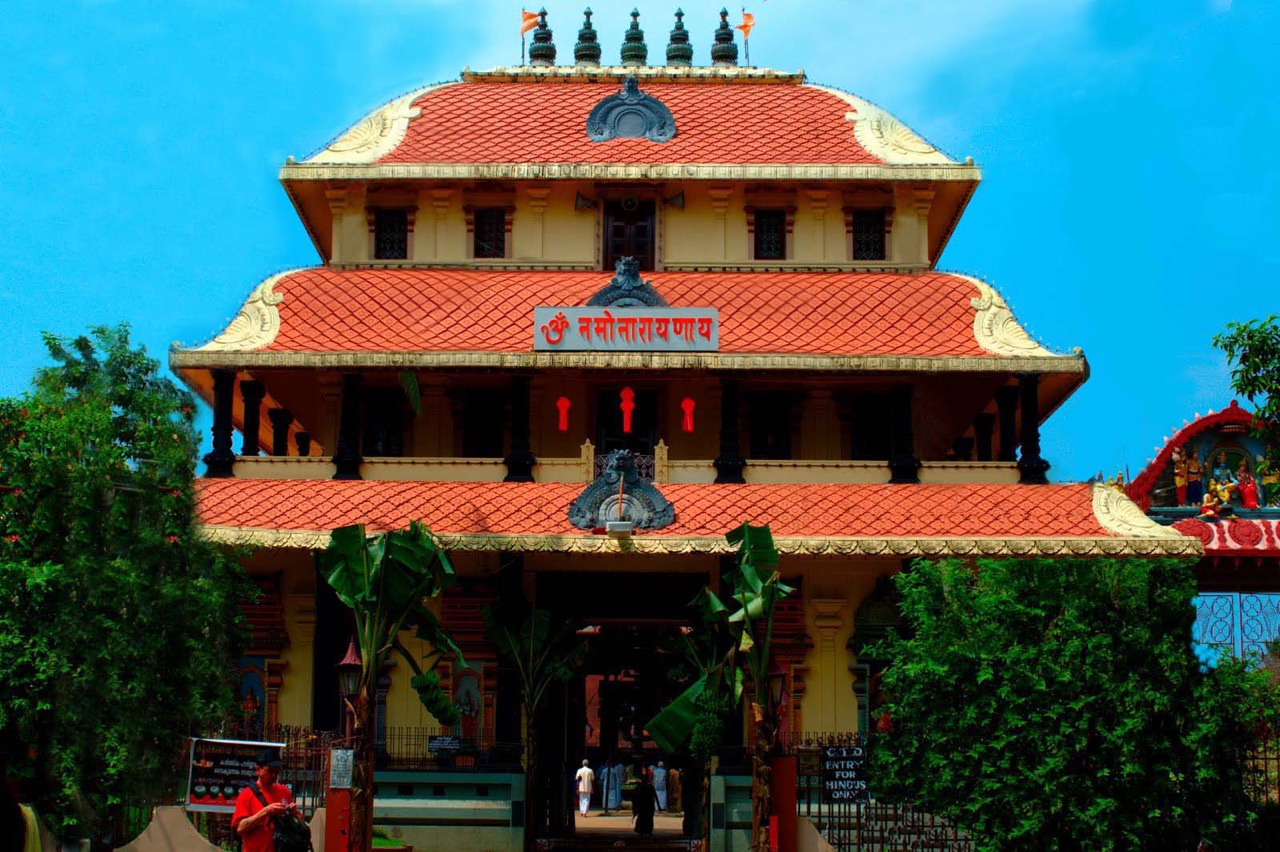
A historic Gowda Saraswat Brahmin temple in Cherlai, Mattancherry, central to Kochi’s Konkani community.
8.2 km · ~14 min by cab · straight line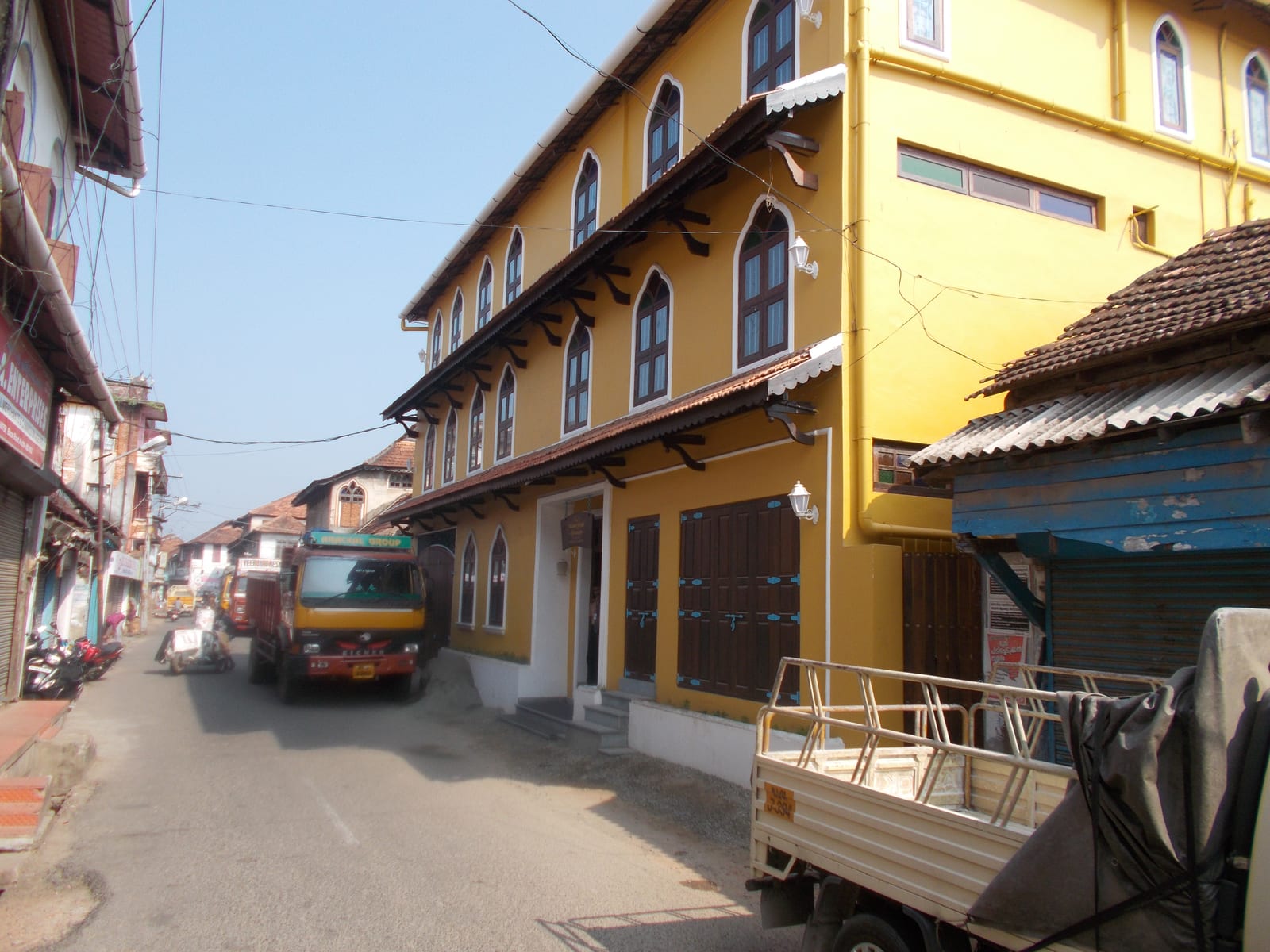
The working spice quarter along Mattancherry’s Bazaar Road — godowns where pepper, ginger, turmeric and cardamom are still graded, sacked and weighed, and where the smell reaches the street before the signage does.
8.3 km · ~14 min by cab · straight line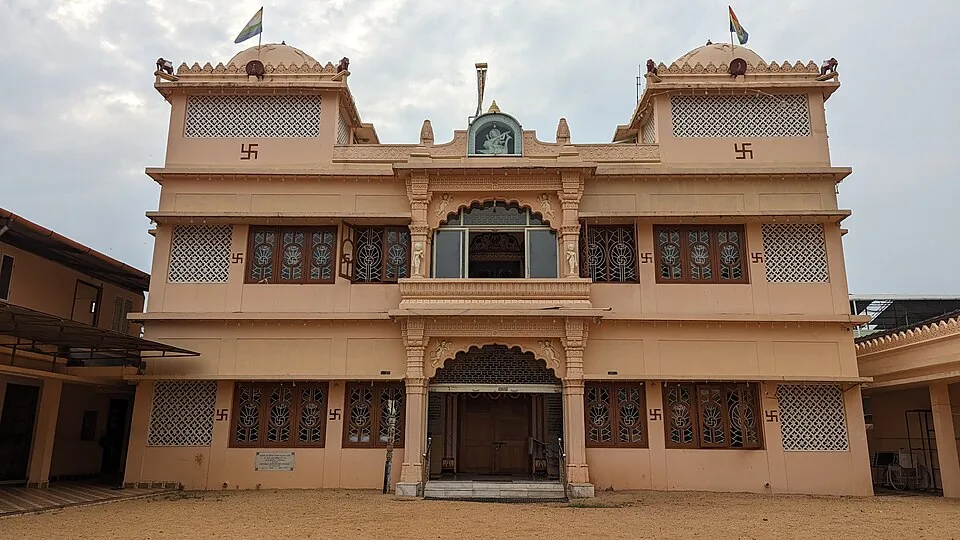
An ornate Jain temple in Mattancherry’s Gujarati quarter, raised in 1904 by Hirubai in memory of her husband Jivraj Dhanji and dedicated to Dharmanatha, the fifteenth Tirthankara — known for its white marble work and the daily midday feeding of the pigeons outside.
8.5 km · ~14 min by cab · straight lineWalking and driving times are real routed distances, except the few marked “straight line”, which are direct-line estimates and will read short. Fare figures are estimates from Kerala’s notified auto/taxi tariff and exclude waiting and night charges. Routing: © openrouteservice.org by HeiGIT | Map data © OpenStreetMap contributors
Nearby toilets, pharmacies, ATMs, seating and vets are community-mapped and may be incomplete or out of date. Map data © OpenStreetMap contributors | Walking times © openrouteservice.org by HeiGIT
Seafood, mostly, and bought that morning. Karimeen (pearl spot), often as karimeen pollichathu — marinated, wrapped in banana leaf and griddled; clams, kakka, usually roasted dry with coconut and curry leaf; mud crab, which generally needs ordering ahead; prawns; and the usual Kerala accompaniments of rice, thoran and coconut. Portions and menu are set by the household, not chosen from a card.
Say so when you book, not when you arrive. Kumbalangi's homestay kitchens are built around what comes out of the creek, and a vegetarian or non-seafood menu is entirely possible but has to be planned and shopped for. Hosts are used to the request; they are not used to it arriving at dinner time.
Yes. Family kitchens buy for the number of guests they expect, so confirm dinner the same morning at the latest. An unannounced late arrival can genuinely mean there is nothing to serve you, and there is no restaurant strip to fall back on.
Variable, and generally simple. The model tourism village rules prohibit purpose-built tourist structures, so accommodation is in and beside existing homes — expect a clean, basic room rather than hotel fittings, and expect the range between properties to be wide. The value here is the kitchen and the water, not the furniture. Check what you are getting directly with the host.
In a Kumbalangi homestay, almost certainly — the household bought it that morning and can tell you which water it came out of. Statewide it is a fair question: Kerala farms roughly 2,000 tonnes a year against demand nearer 10,000, wild landings in the Vembanad system have collapsed since the 1960s, and medium-sized tilapia at 300–400 grams passes for pearl spot convincingly enough that restaurants have been caught substituting it. Eating it at the creek it came from is the simplest way around the problem.
Ask your host rather than assuming. Toddy is tapped in this village — you will very likely watch it being done on a village walk — but selling it is licensed, so what a household can and will arrange varies. Fresh morning kallu is mild, slightly sweet and only lightly fermented; by evening the same pot is considerably stronger and sourer. If you want to try it, say so early in the day rather than after dinner, and treat it as something to taste rather than to drink through an evening.
It differs sharply between households and is the thing people most often get wrong. Many rates cover breakfast and dinner but not the canoe; some include the canoe but not a guided village walk. Ask for an itemised answer before you book rather than assuming a package.
November to February is the comfortable season and fills up around Christmas, New Year and Onam. March to May is hot but is the bioluminescence window and has become busy on that account since 2019. June to September is wet, green and cheap, and canoe trips are frequently cancelled — fine if the kitchen is your priority, frustrating if the water is.
November to February and early mornings are best for walking; avoid midday heat where possible.
Entry: Not a place you enter — a place you book. Room and meal rates are set by each household, vary sharply between a simple room and a waterfront cottage, and are seasonal. We do not publish rates for individual properties and we take no commission. Timings: Meals run to a family kitchen's rhythm, not a restaurant's: breakfast early, lunch around midday, dinner soon after dark. Kitchens buy for the guests they expect, so a late unannounced arrival can genuinely mean no dinner.
Base yourself in Kumbalangi or a nearby town in Ernakulam, then confirm the last-mile route locally before leaving. Walkable heritage areas are best done slowly; combine nearby streets, museums, markets and food stops. If the visit depends on forest, temple, boat, ferry, weather or seasonal access, check the official/local rule on the day before travel.
1 to 3 hours.
Nearby you can pair Village walks (270 m), Chinese nets (1.5 km), Kumbalangi (2.0 km), Kumbalangi backwaters (2.2 km).
Watch traffic on narrow heritage streets. Keep valuables close in crowded markets.
Written about Seafood homestays itself — its history, its legends and the arguments about them.
These guides explore Kumbalangi and the surrounding area. Choose a visit that fits your interests, allowing separately for travel between stops.
Route-level itineraries and practical guides for the rest of Kerala.
Photographs: Aruna (CC BY-SA 3.0), Ganesh Mohan T (CC BY-SA 4.0), Anupama1002 (CC BY-SA 4.0), Arun.pokkalath (CC BY-SA 4.0), Aruna at Malayalam Wikipedia (CC BY-SA 3.0). Wikimedia Commons.