What to expect
Highlights
- Museum visit at Dutch Palace
- Indoor cultural or historical context
- Easy pairing with nearby food and heritage stops
The Mattancherry Palace, known as the Dutch Palace, with celebrated Kerala mural paintings from the Ramayana and royal portraits.
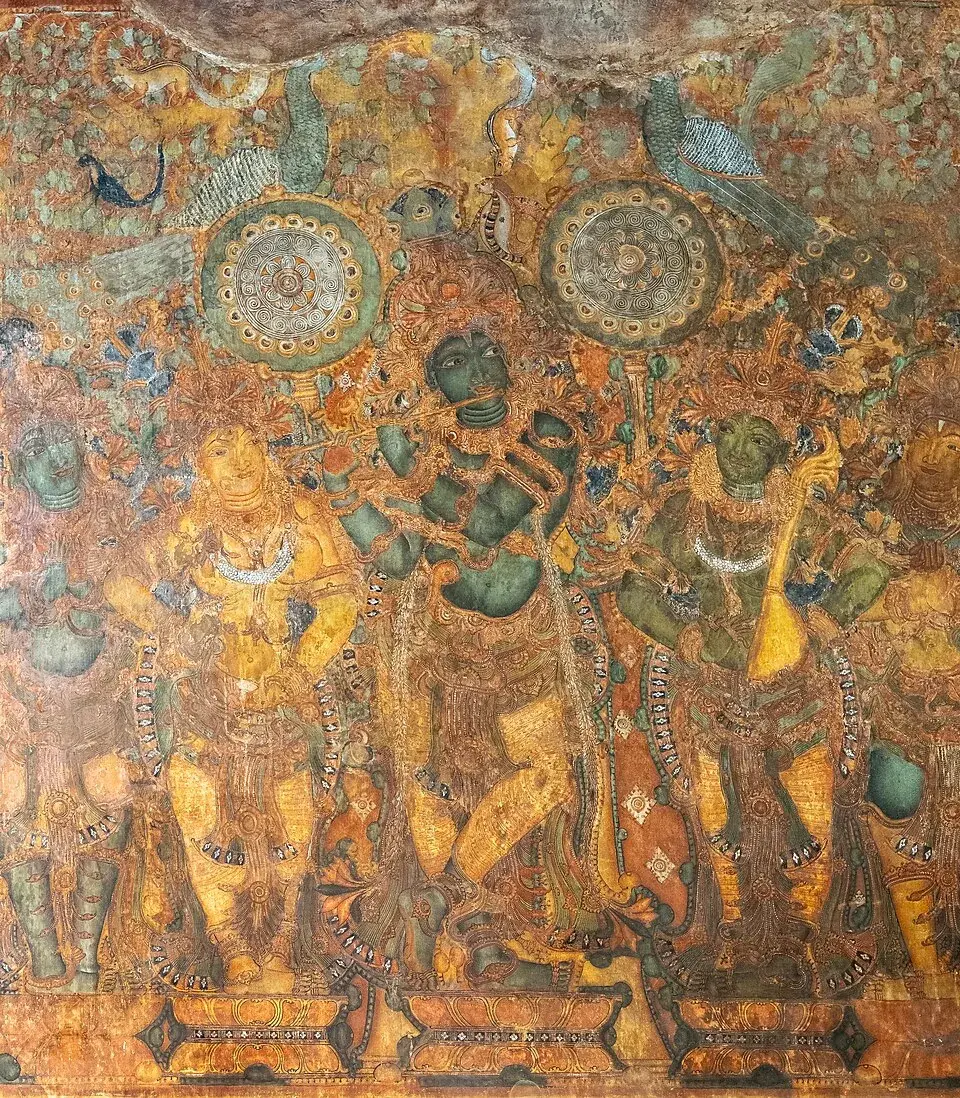
Behind a plain, fortress-like façade in the spice-scented lanes of Mattancherry hides one of India’s great secrets — a royal palace whose walls blaze with some of the finest Hindu mural paintings ever put to plaster.
The Dutch Palace is a study in deception, and that is precisely its charm. From the street it seems almost austere — a long, whitewashed, tile-roofed building that could pass for a colonial warehouse. Step through its doors, however, and you enter the ceremonial heart of the old Kingdom of Cochin, where Rajas were crowned, where sacred epics unfurl across the walls in glowing tempera colour, and where the layered history of Kerala’s spice-coast rulers, Portuguese traders and Dutch merchants is written into the very architecture.
The palace is built on the traditional Kerala plan known as nālukettu — a rectangular structure wrapped around a central open courtyard, with rooms opening onto all four sides. That courtyard shelters a small temple dedicated to Pazhayannur Bhagavati, the protective family deity of the Cochin royal house, and two further shrines to Krishna and Shiva stand on either flank of the palace. The genius of the building is how quietly it blends worlds: an essentially Kerala temple-house layout, softened here and there with European touches such as arches and altered chamber proportions.
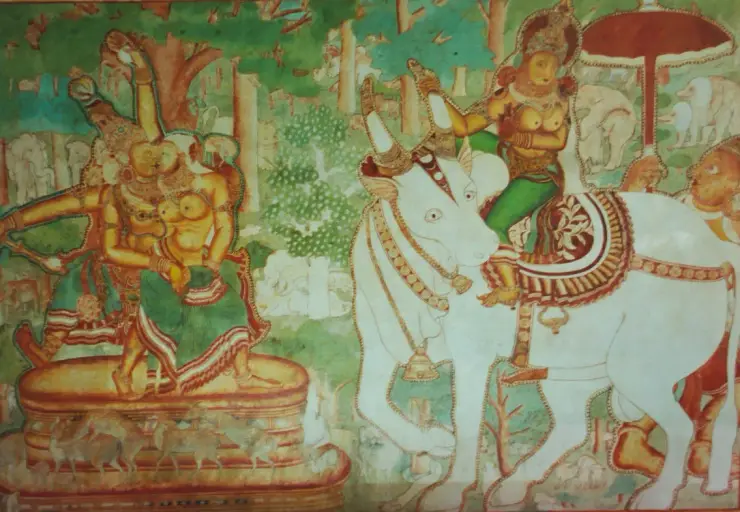
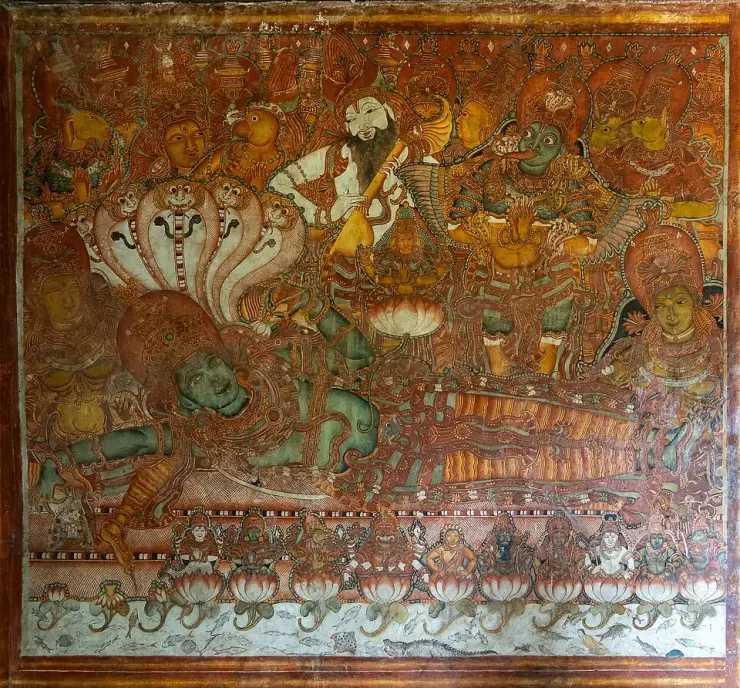
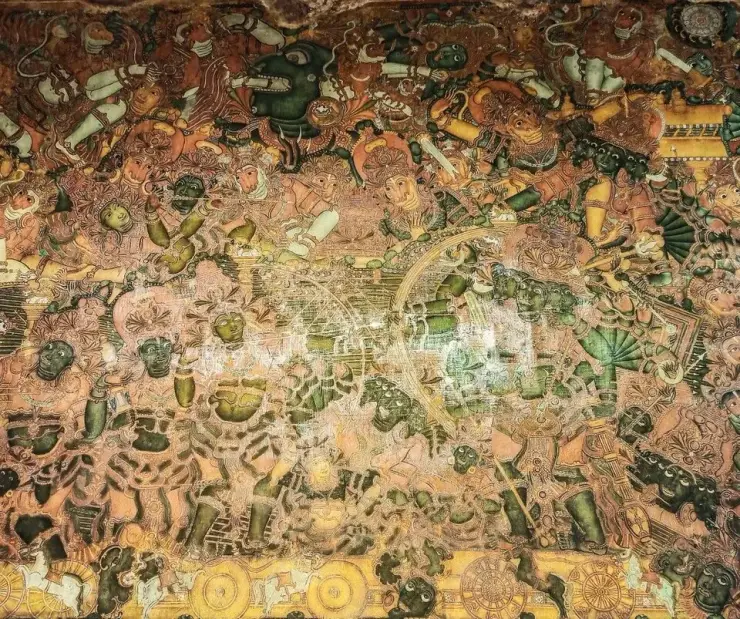
But visitors do not come chiefly for the architecture. They come for the murals. Covering hundreds of square metres across several chambers, these paintings are among the richest surviving examples of Kerala’s temple-mural tradition. Executed in warm mineral pigments and a distinctive tempera technique, they crowd the walls with gods and heroes — the sweeping narrative of the Ramayana, episodes from the life of Krishna, and scenes drawn from the wider body of Hindu myth. The colours glow with ochres, reds and greens, the figures curl and interlock with almost no empty space, and the effect is overwhelming in the best sense.
The most celebrated chamber is the royal bedroom, whose walls carry the entire story of the Ramayana in a dense, continuous sweep of small panels — a visual retelling you can almost walk through scene by scene. Elsewhere, a much-loved painting shows Krishna in an unabashedly sensuous, multi-armed pose surrounded by adoring gopis, while other panels depict Vishnu reclining as Anantha-shayana and the fused form of Shiva and Parvati as Ardhanareeshwara. To stand in these rooms is to understand why art historians speak of Mattancherry in the same breath as Kerala’s great temple walls.
Upstairs lies the Coronation Hall, the room where the Rajas of Cochin were formally invested with power. Along its walls hangs a gallery of royal portraits, painted in a European manner, together with palanquins, ceremonial weapons, coins, stamps, royal dress and other regalia — the material memory of a dynasty. The wooden ceilings, carved with rosette and cupola motifs, are worth tilting your head back for. Together the hall and its treasures turn the palace into a genuine museum of Cochin kingship.
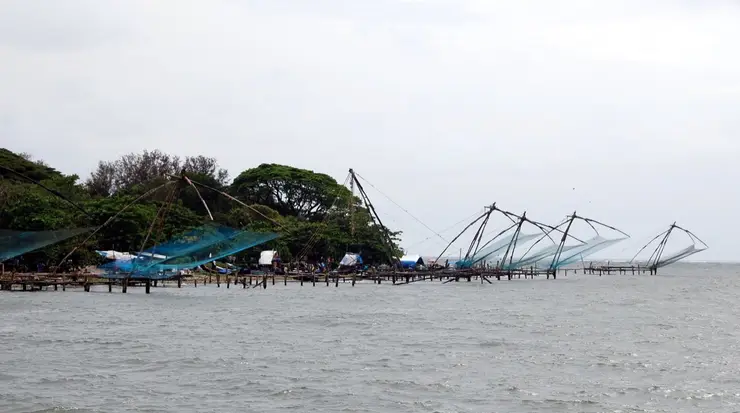
Today the palace survives as a protected monument and museum, cared for jointly by the Archaeological Survey of India and the State, its murals painstakingly conserved. It sits in the thick of Mattancherry’s most atmospheric quarter — a short walk from the Paradesi Synagogue and Jew Town’s antique shops, the Chinese fishing nets and the spice markets — so that a visit here folds naturally into a wider wander through one of the oldest, most cosmopolitan corners of the Indian coast.
The floors are worth looking down at as well as up. They are a lustrous, near-black surface said to be made from burnt coconut shells, charcoal, lime, plant juices and egg-white, polished until they mimic dark marble — a traditional Kerala technique, and one that has kept its shine for centuries.
The museum holds more than paintings. Life-size portraits of the Kochi kings hang in their robes and headgear, with some of the actual costumes displayed alongside; elsewhere there are royal palanquins carved with floral motifs, silk-and-brass ceremonial parasols, sequined gowns, sheathed swords, daggers, feathered spears and old maps of the harbour town.
The Ramayana of the bedchamber covers roughly a hundred square metres of wall. Other chambers carry Krishna Leela and Shiva Leela scenes and episodes drawn from the Kumarasambhavam — Krishna lifting Mount Govardhana, Vishnu reclining on the cosmic serpent, Lakshmi seated on her lotus.
The palace's spiritual heart is the courtyard shrine of Pazhayannur Bhagavathi, the guardian goddess of the Kochi royal house, whom the Rajas revered as the protector of their lineage and their throne. Tradition holds that the family carried their devotion to this Bhagavathi from Pazhayannur, and that her presence at the very centre of the coronation house was what sanctified a new king's rule — the courtyard temple binding the mortal ruler to the divine mother who watched over his dynasty. It is the detail that explains the whole building: a Portuguese-built mansion arranged around a Hindu goddess, because the thing it existed to do was make kings, and kings could only be made in front of her.
The founding story is the one every guide tells and it is tradition rather than record. The Portuguese, so it goes, damaged or destroyed a temple somewhere in the vicinity, and built and gave away this palace to make amends to the Raja — a gift that was also an apology, and also a bid for trading privileges on the pepper coast. It is repeated in almost every account of the building and we can find no contemporary document behind it. It may be true; it is certainly convenient, since it turns a straightforwardly commercial bribe into a moral gesture. Note also which way the reparation runs: the offended party is given a building he did not ask for, in a style he did not choose, by the people who caused the offence.
Even the date is unsettled. The standard figure is 1555, and you will see it on every signboard, but a respectable minority of sources put the construction about a decade earlier, around 1545. Neither camp shows its working. It is a ten-year gap on a building whose entire fame rests on being a precisely datable meeting point between Kerala and Europe, and nobody flags it.
The name is the plainest untruth in Kochi and it has never been corrected because everyone finds it charming. The Portuguese built the palace. The Dutch renovated it after 1663 and got their name on it permanently. Neither of them ever lived in it. A building called the Dutch Palace, built by the Portuguese, occupied by neither, for a Hindu king, around a goddess's shrine, is a reasonable summary of what this coast actually was.
Around the murals has grown a quieter lore. The Ramayana panels of the bedchamber and the Krishna scenes are read by many not merely as decoration but as devotional acts — the walls of a sleeping king wrapped in the deeds of gods, so that royal dreams themselves might be steeped in dharma. Some of the Krishna murals, painted with a frank sensuous tenderness, have long drawn whispered commentary; guides tell visitors these were meant to invoke the amorous, life-giving play of the god rather than to shock — a reminder that in Kerala's temple art the sacred and the sensual were never strangers.
One more thing nobody asks and everybody should: how much of what you are looking at is original paint? These are not frescoes in the Italian sense. Kerala murals are dry fresco — pigment laid onto lime plaster that has already set, rather than into wet plaster — which makes the paint layer thinner, more fragile and far more vulnerable to humidity than a true fresco. The palace was restored and declared a centrally protected monument in 1951, and the Archaeological Survey of India carried out a second major conservation programme between 2007 and 2009. Two documented interventions on a paint surface three or four centuries old, in a coastal climate, is a great deal of careful hands. That is not a reason to trust the walls less. It is a reason to understand that a mural of this age in this climate is a thing that has been kept alive rather than merely left alone.
The palace was raised by the Portuguese, most sources placing its construction around the mid-1550s (commonly cited as 1555, with some accounts a decade earlier), and presented as a gift to the Raja of Cochin — named in most accounts as Veera Kerala Varma. Tradition holds that the Portuguese offered the palace partly as a gesture of goodwill to secure trading privileges on the spice coast, and partly to make amends after damaging a temple in the vicinity — a peace-offering wrapped in diplomacy and self-interest in equal measure.
Despite its later nickname, the building is Portuguese in origin. The name Dutch Palace attached itself only after 1663, when the Dutch supplanted the Portuguese as the dominant European power in Cochin and carried out extensions and substantial repairs and renovations to the structure. It was this Dutch phase of improvement that gave the palace the popular name by which it is still best known, even though the Dutch built comparatively little of the original fabric.
For generations the palace functioned as a ceremonial seat of the Cochin royal house. Its upstairs Coronation Hall was the setting for the investiture of the Rajas, and the portraits ranged along its walls — depicting Cochin rulers from the nineteenth century onward in a Western painterly style — record the dynasty across the decades. The palace thus served less as an everyday residence than as a stage for kingship, ritual and the display of royal legitimacy.
The murals that make the palace famous are generally dated by scholars to roughly the seventeenth and eighteenth centuries, painted in the mature Kerala temple-mural idiom. Spread across the bedchamber, the halls and other rooms, they translate the Ramayana, the Krishna story and other Puranic themes into dense, jewel-toned tableaux. Their survival across some three centuries, in a humid coastal climate, is itself a small marvel of both craft and later conservation.
The technique is specific and worth naming properly. Kerala murals are dry fresco: the wall is built up in layers of lime, sand and water and left to set hard, and the pigment goes on afterwards, bound with vegetable gum, rather than into wet plaster as in an Italian fresco. The palette is the panchavarna, the five colours — red, yellow, green, black and white — and each is a material rather than a tube. Red comes from laterite; yellow from ochre; white from lime or powdered conch; black from collected soot; green from a combination including Garcinia morella and Indigofera tinctoria, the indigo plant. There is no blue in the classical scheme, which is why the walls read as hot rather than cool, and why the figures are packed edge to edge with almost no empty ground.
The conservation history is more precise than 'the mid-twentieth century'. The palace was restored and declared a centrally protected monument in 1951, and the Archaeological Survey of India carried out a second major conservation programme from 2007, completed in 2009. Sources place the murals variously from the sixteenth to the eighteenth centuries, with the seventeenth and eighteenth the most commonly cited range.
In the modern era the palace passed into public custodianship. It was declared a centrally protected monument in the mid-twentieth century and is today looked after under the Archaeological Survey of India, with the murals and structure the subject of careful restoration work — including a major conservation programme carried out in the late 2000s. It now operates as a museum, one of the anchor heritage sites of historic Kochi.
Some of the finest Hindu temple-style mural paintings in all of India, glowing across the palace walls.
The royal bedchamber, where the entire Ramayana unfolds in a single continuous sweep of panels.
The Coronation Hall of the Rajas of Cochin, with its portrait gallery, carved ceilings and royal regalia.
A rare, atmospheric survivor of the Portuguese–Dutch–Cochin encounter on the spice coast.
Traditional Kerala nālukettu architecture wrapped around a serene courtyard temple.
Steps from Jew Town, the Paradesi Synagogue and Mattancherry’s spice markets — an easy add to a heritage walk.
Road km to Ernakulam; ghat roads and traffic vary — allow extra.
Midday works well for museums, especially when outdoor heat is high.
Live forecast loads in your browser.
Sun and moon are calculated for this location and shown in IST. Photography windows are the hour around sunrise and sunset; the sunset bearing is degrees clockwise from true north. Moon phase is accurate to about half a day.
Verified hotels, homestays, restaurants, experiences, sights, shops and rentals around Dutch Palace — commission-free, with direct contact. Filter by what you need.
A heritage hotel in the Ginger House Building on Jew Town Road, Mattancherry, with antique furnishings central to its identity. Compare the specific room photographs and ask about steps and access through the property. Use confirmed direct contact for availability while the website and current room inventory are checked.
Book with the place itself. India’s cyber-crime coordination centre warned in April 2025 that convincing copies of hotel and pilgrimage booking sites are being pushed through sponsored search and social ads, taking payment for rooms the property never hears about. Every listing here links to the business’s own contact details and its own Google or Bing profile — we take no commission and sit in nobody’s payment path. If a booking page reached you through an ad, check the address bar against the property’s own site before you pay. Fraud can be reported on cybercrime.gov.in or on 1930.
Browse food, accommodation and activities across Mattancherry. Check each address and journey before adding it to your day; these selections are not all beside Dutch Palace.
5 more places around Mattancherry. Open a guide to plan the visit and onward journey.
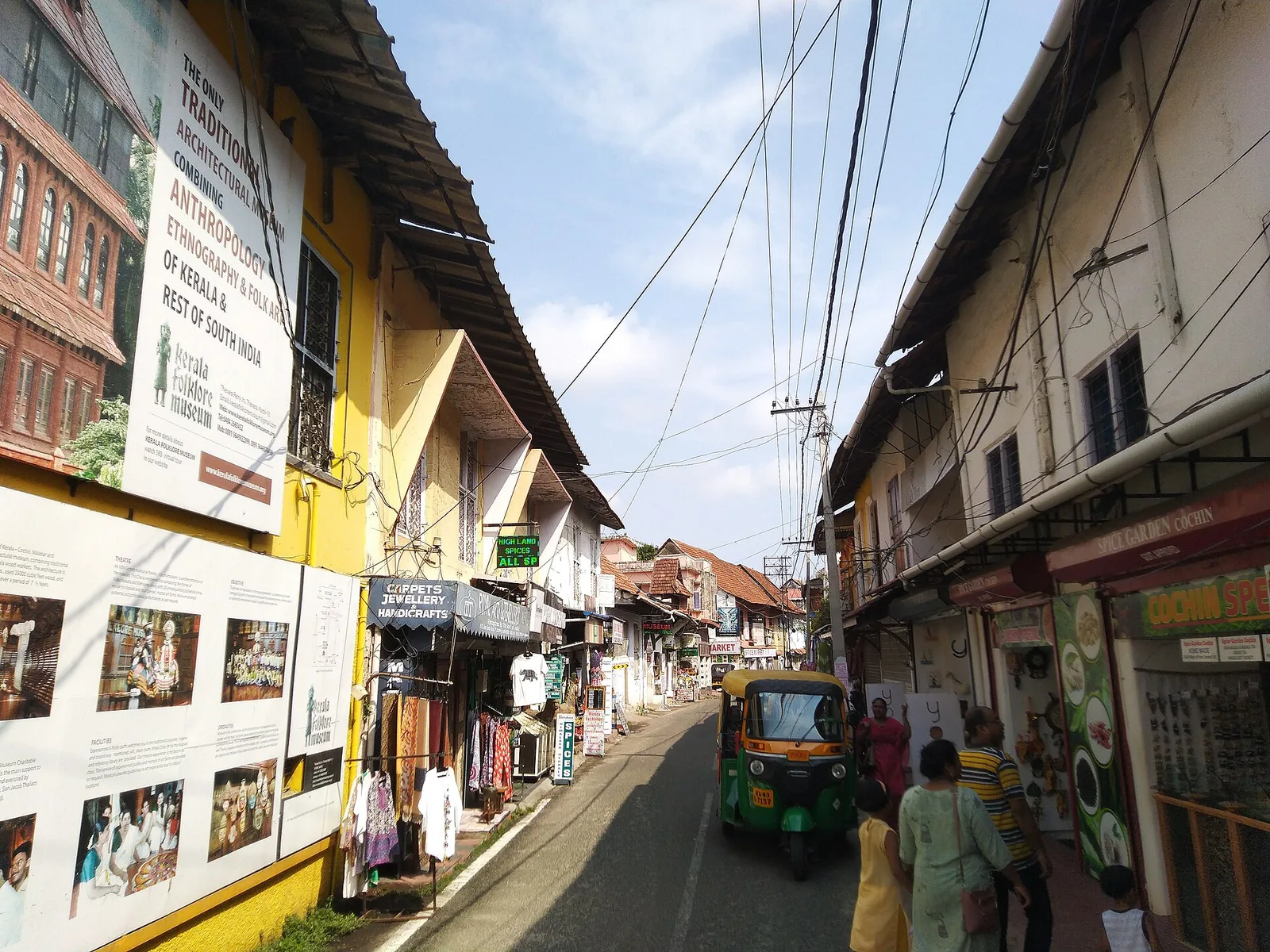
50 m · 1 min walk
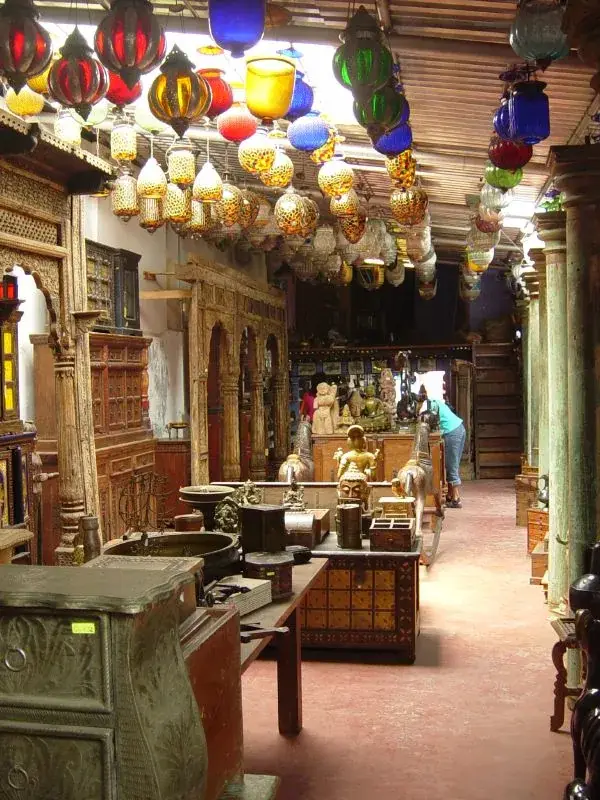
Spice warehouses, antiques, Mattancherry Palace and Paradesi Synagogue.
320 m · 4 min walk
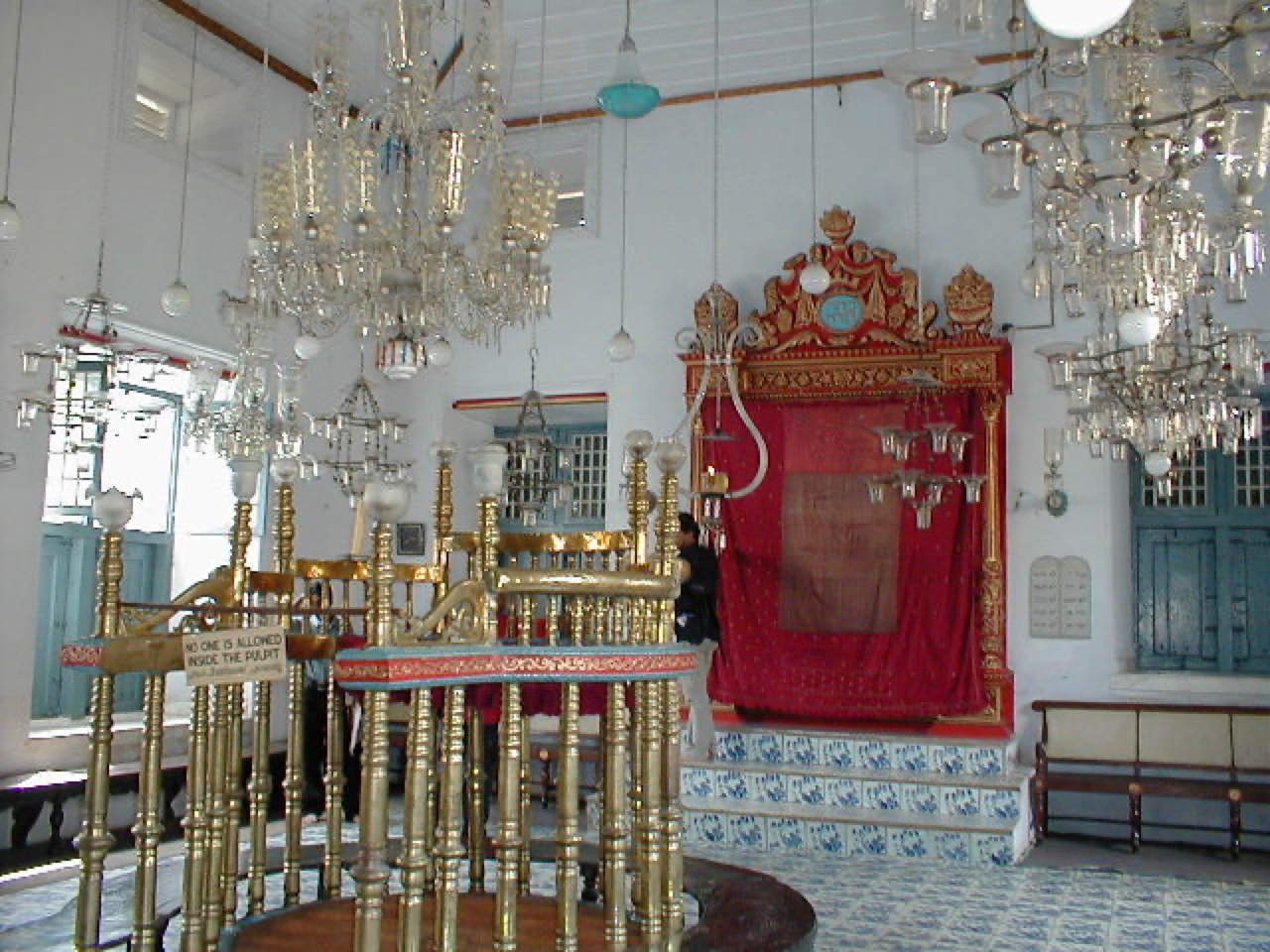
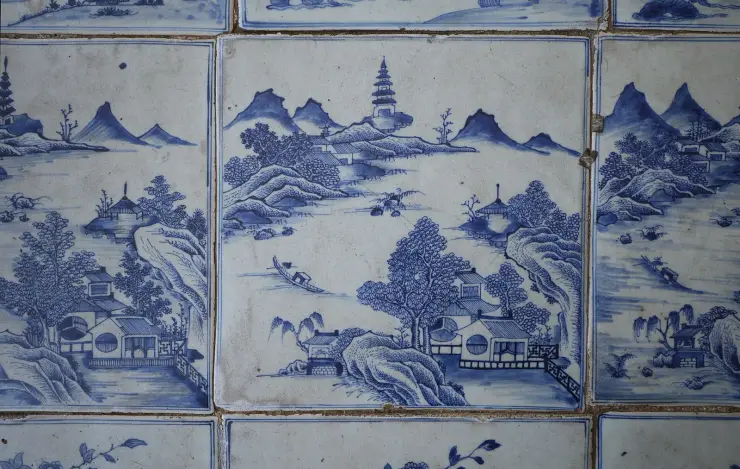
The oldest active synagogue in the Commonwealth (1568), in Jew Town, Mattancherry, with hand-painted Chinese floor tiles.
1.2 km · 14 min walk
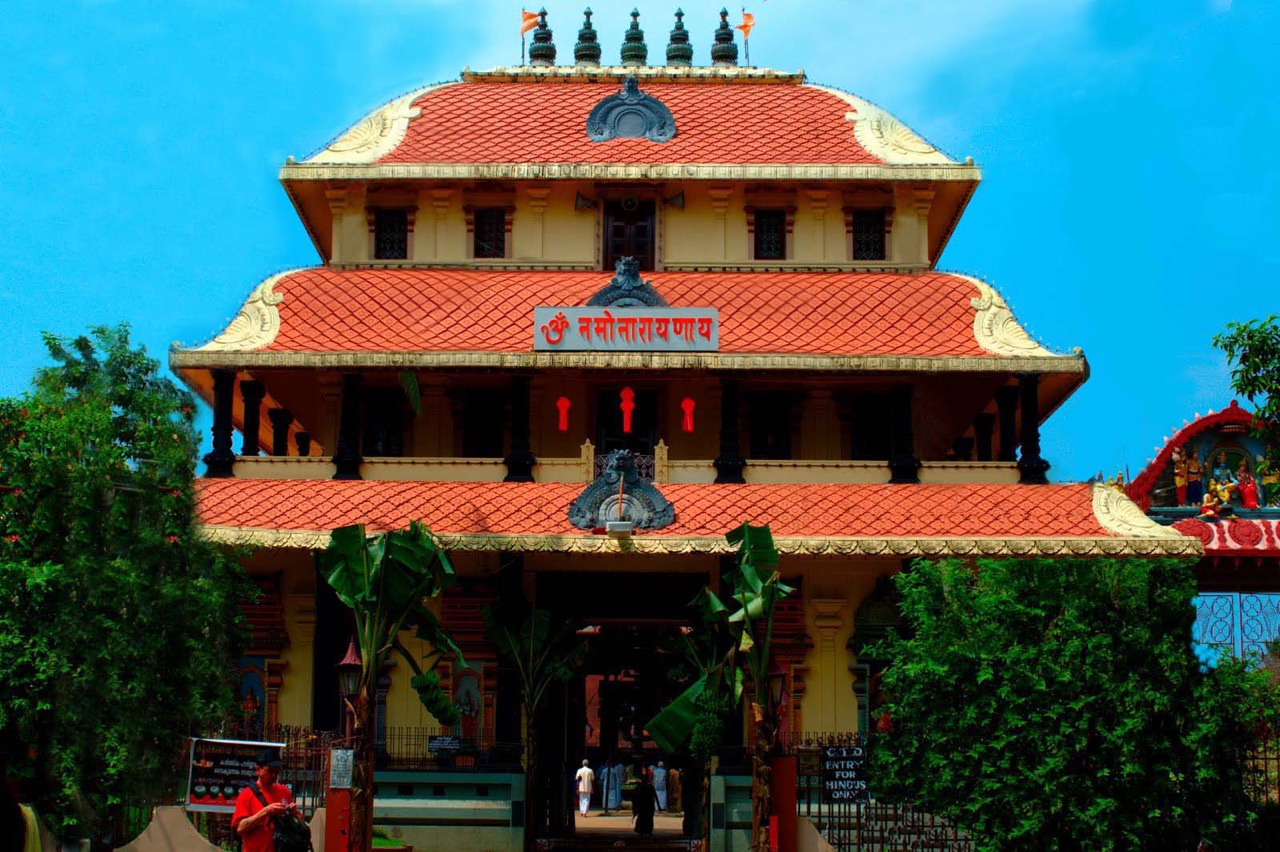
A historic Gowda Saraswat Brahmin temple in Cherlai, Mattancherry, central to Kochi’s Konkani community.
1.0 km · 12 min walk
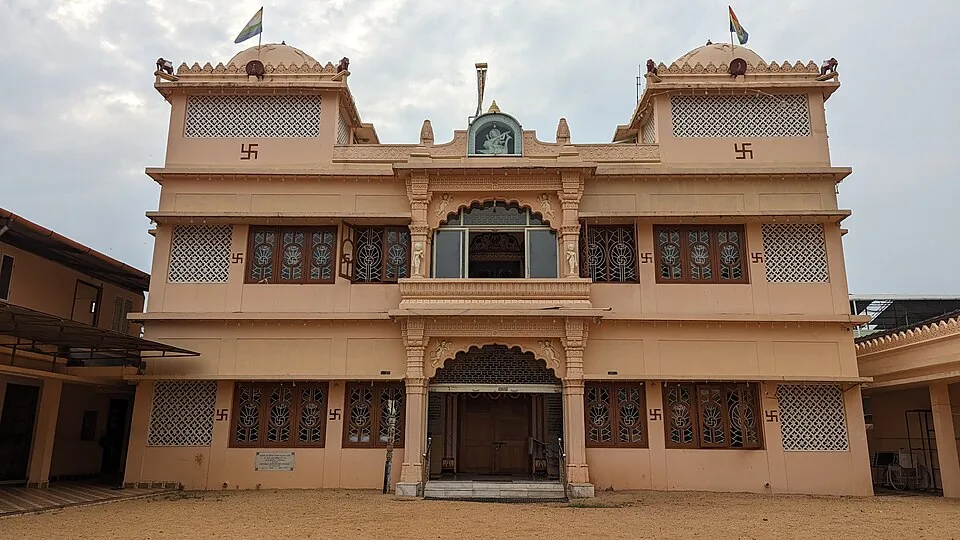
An ornate Jain temple in Mattancherry’s Gujarati quarter, raised in 1904 by Hirubai in memory of her husband Jivraj Dhanji and dedicated to Dharmanatha, the fifteenth Tirthankara — known for its white marble work and the daily midday feeding of the pigeons outside.
490 m · 6 min walk
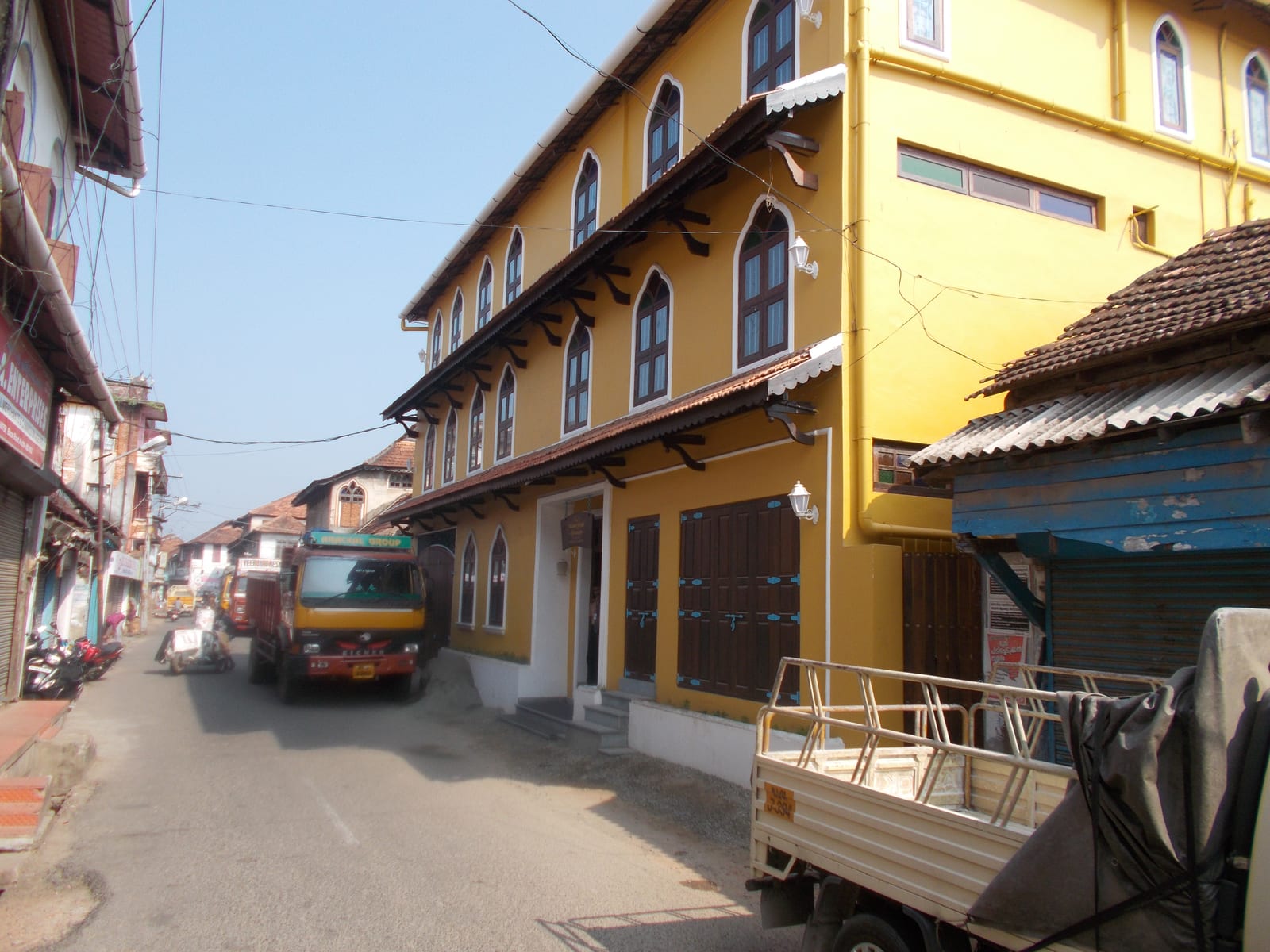
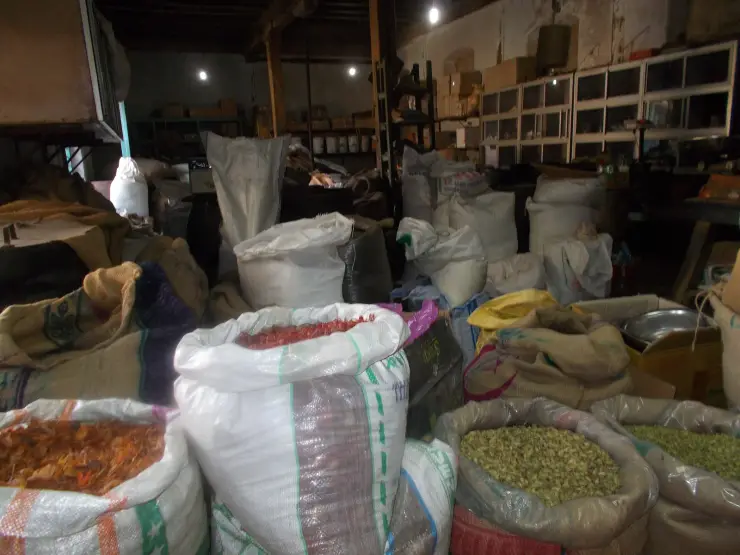
The working spice quarter along Mattancherry’s Bazaar Road — godowns where pepper, ginger, turmeric and cardamom are still graded, sacked and weighed, and where the smell reaches the street before the signage does.
Roampedia is commission-free — own or know a stay, eatery, guide or shop near Dutch Palace? List it and it appears here once verified.
Add a nearby businessFees change without notice. Check the current rate at the counter.
Entry: ₹5 per adult (Archaeological Survey of India rate); children up to 15 free. Rates for foreign nationals are not officially published — check at the counter.
Dress code: Modest, respectful dress is appropriate for this heritage and religiously themed site; comfortable walking shoes help, as the surrounding lanes are best explored on foot.
Festivals: The courtyard shrine of Pazhayannur Bhagavathi and the flanking Krishna and Shiva temples observe their own ritual calendars; festival days at these shrines can bring extra local activity around the palace.
Photography: Photography inside the palace is typically prohibited, especially of the murals, to protect the fragile paintings; follow the posted rules and staff guidance.
If you are travelling by bus or ferry, check the return service with the operator before setting out. Leave time to reach the stop or jetty after your visit.
Ask at the bus stand for the time of the last service back, not the next one. If you miss it, an auto or app cab is the fallback — agree the fare before you get in.
If you need step-free access, contact the site before travelling. Ask about a level entrance, steps along the route, the nearest drop-off point, seating and accessible toilets.
Charge cap and free-transaction limits: Reserve Bank of India, in force since 1 May 2025.
These services are listed within about 1.2 km of Dutch Palace. Walking distances follow mapped routes; access and opening hours can change. Other services may be closer but are not included here.
Emergency numbers are verified against official government and state tourism sources. 112 works anywhere in India.
Spice warehouses, antiques, Mattancherry Palace and Paradesi Synagogue.
50 m · 1 min walkThe oldest active synagogue in the Commonwealth (1568), in Jew Town, Mattancherry, with hand-painted Chinese floor tiles.
320 m · 4 min walkThe working spice quarter along Mattancherry’s Bazaar Road — godowns where pepper, ginger, turmeric and cardamom are still graded, sacked and weighed, and where the smell reaches the street before the signage does.
490 m · 6 min walkAn ornate Jain temple in Mattancherry’s Gujarati quarter, raised in 1904 by Hirubai in memory of her husband Jivraj Dhanji and dedicated to Dharmanatha, the fifteenth Tirthankara — known for its white marble work and the daily midday feeding of the pigeons outside.
1.0 km · 12 min walkA historic Gowda Saraswat Brahmin temple in Cherlai, Mattancherry, central to Kochi’s Konkani community.
1.2 km · 14 min walk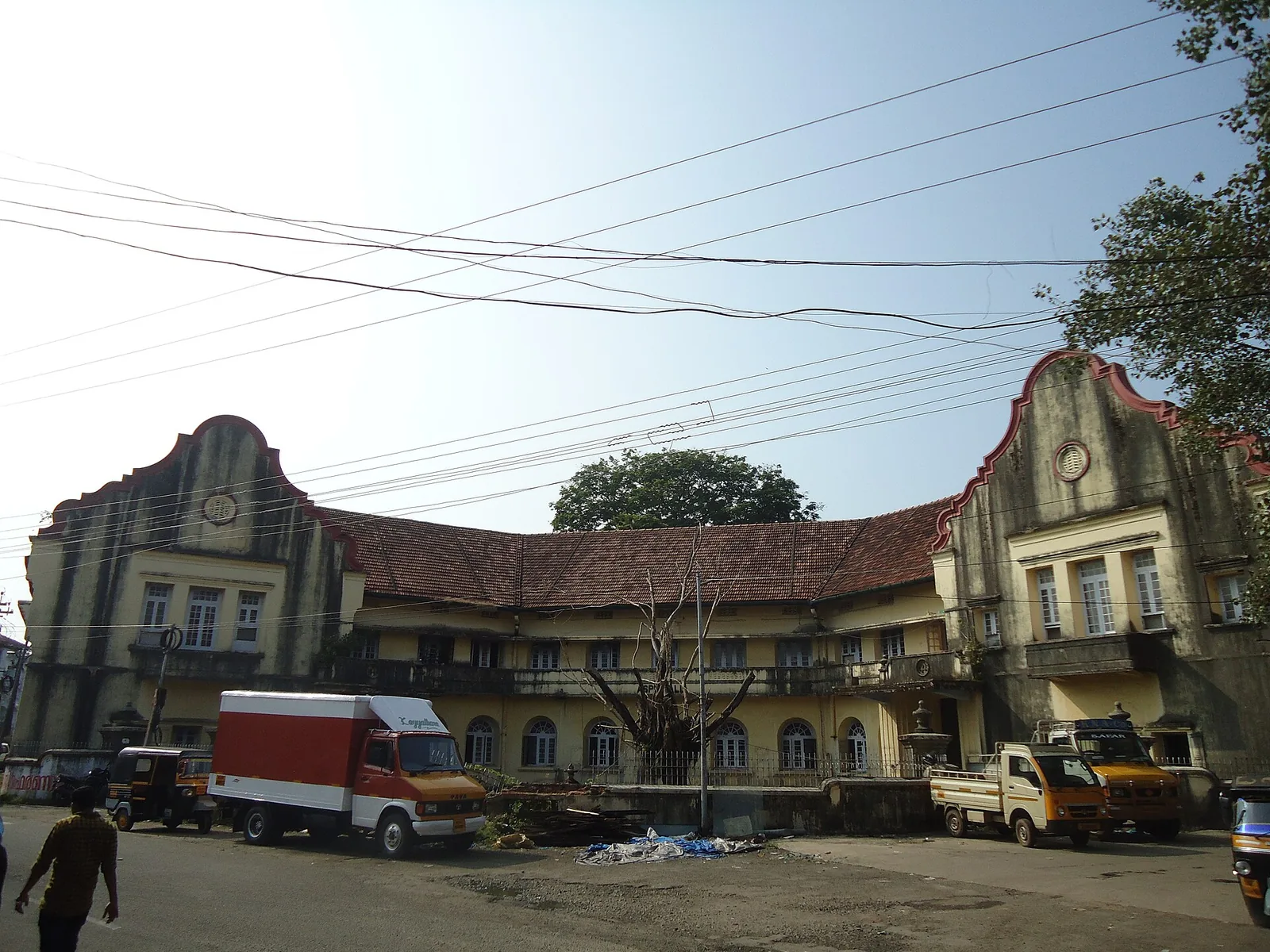
A large 19th-century waterfront trading compound in Fort Kochi, the principal venue of the Kochi-Muziris Biennale.
1.8 km · 22 min walk · straight line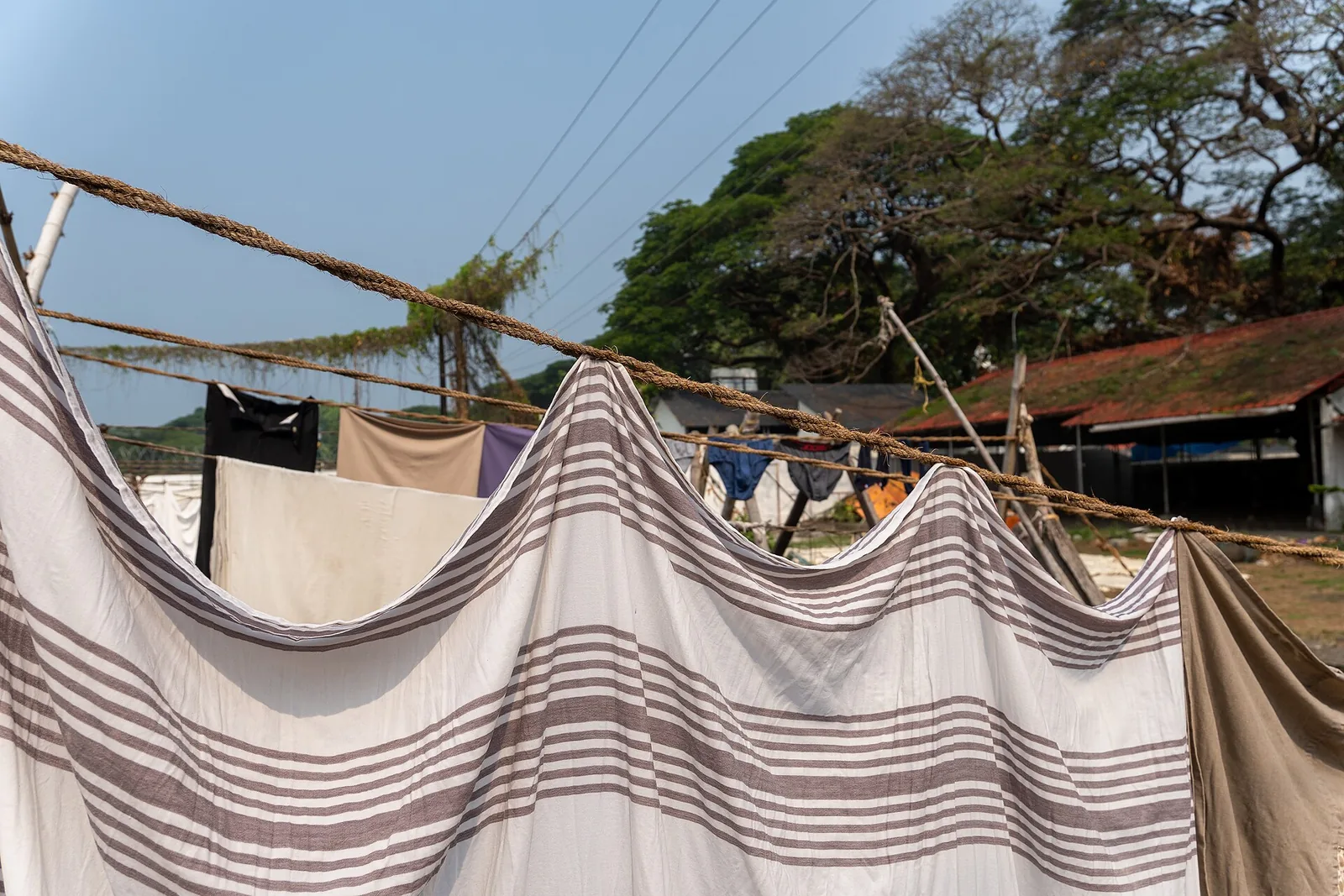
A working colonial-era community open-air laundry in Fort Kochi, still used by traditional washermen families.
1.8 km · 23 min walk · straight line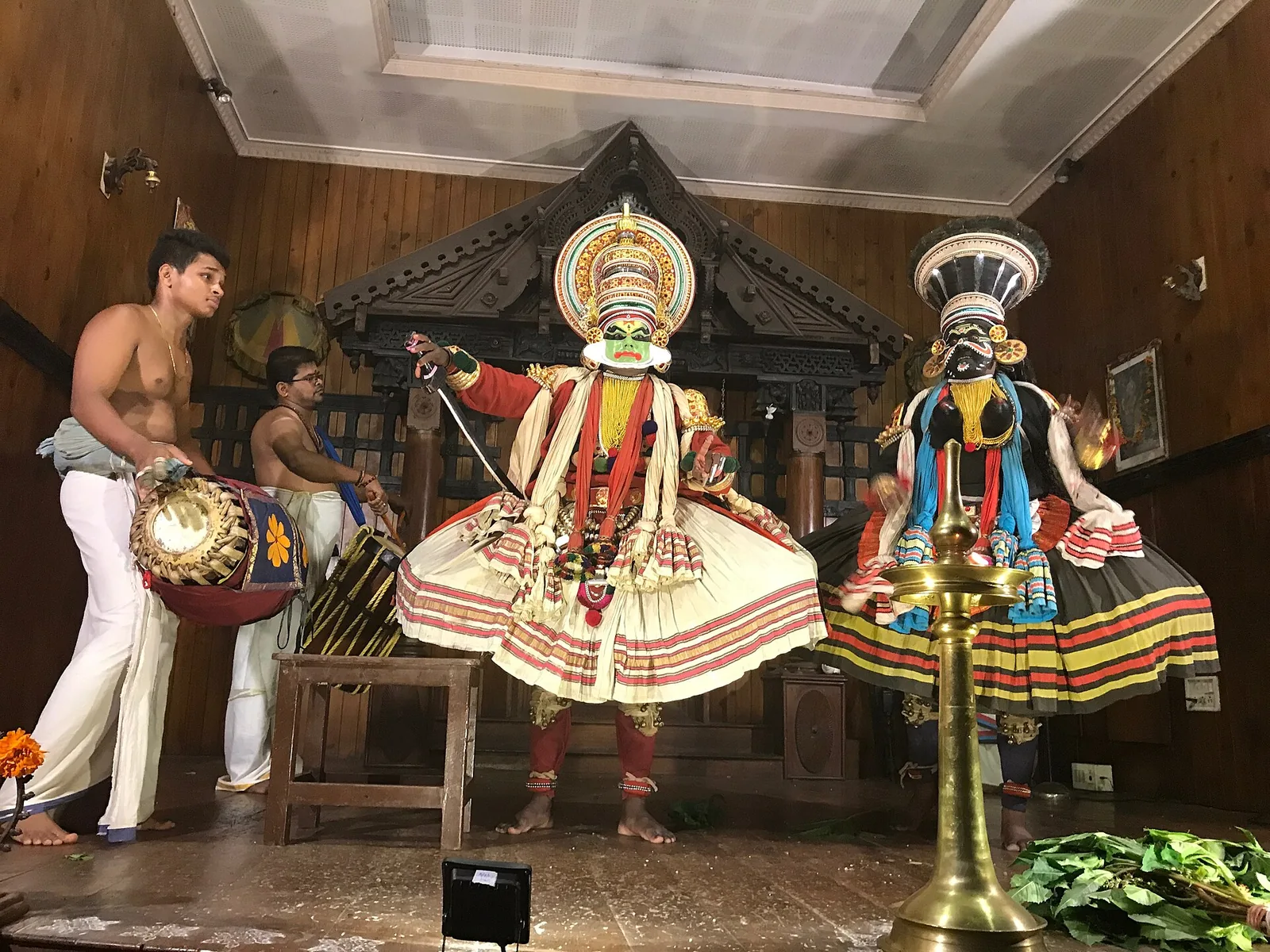
Evening Kathakali and Kerala classical-art performances in Fort Kochi, with make-up shown before the show.
1.9 km · 24 min walk · straight line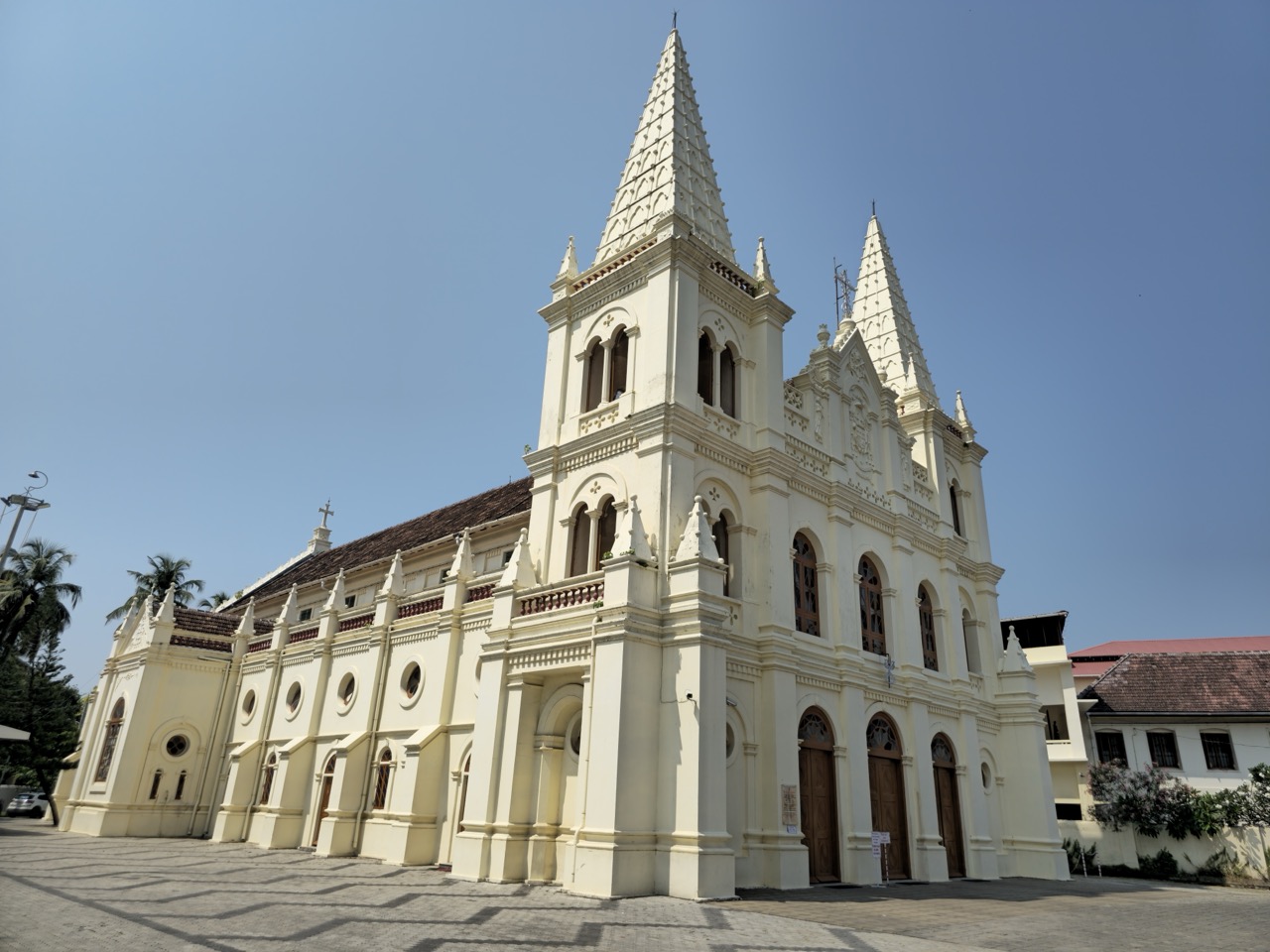
One of the finest churches in Kerala, with a richly painted interior, beside the Kerala Kathakali Centre in Fort Kochi.
1.9 km · 24 min walk · straight line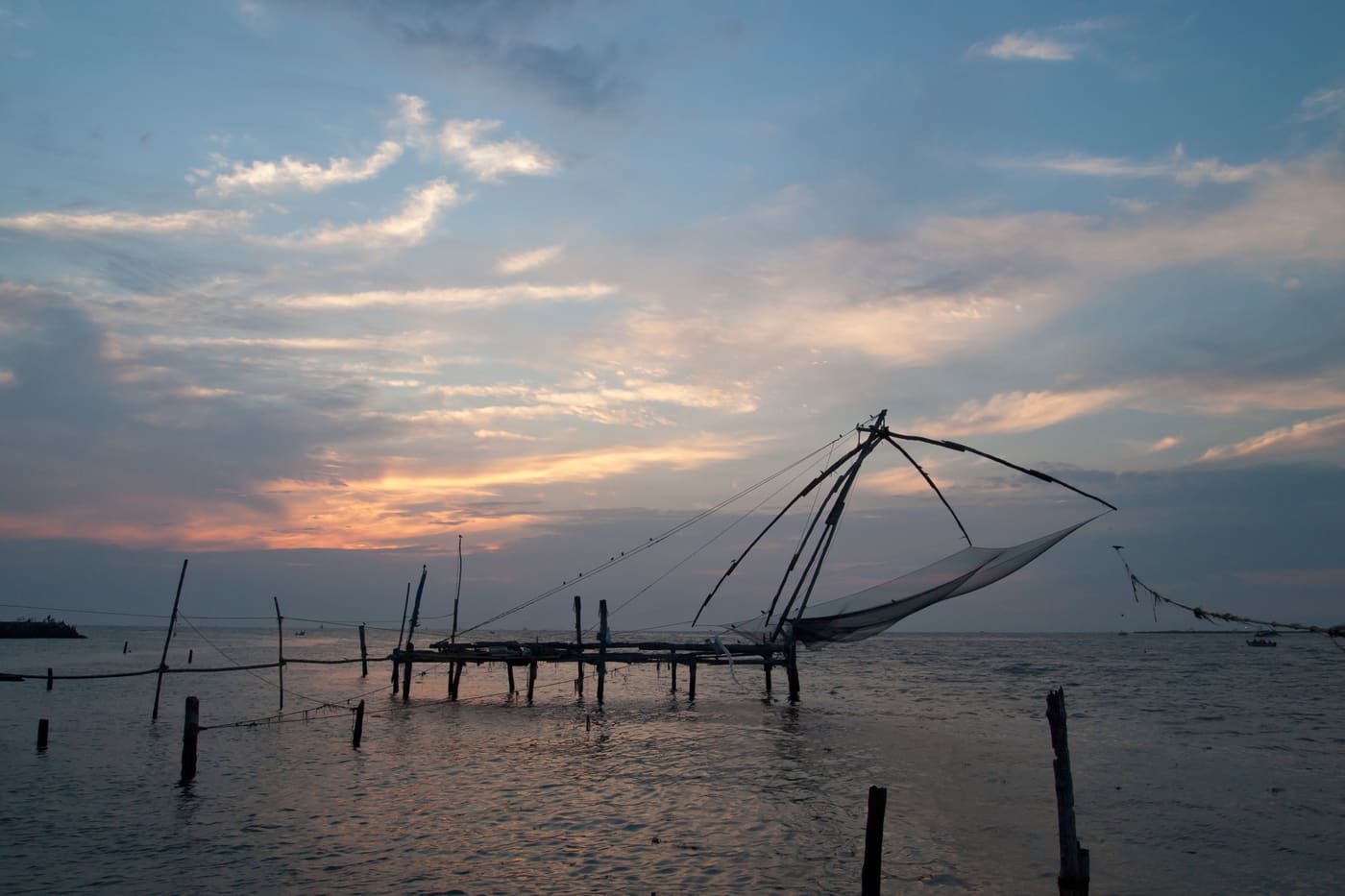
Kerala’s most walkable heritage quarter, with Chinese fishing nets, colonial churches, art cafes and Mattancherry nearby.
2.1 km · 26 min walk · straight line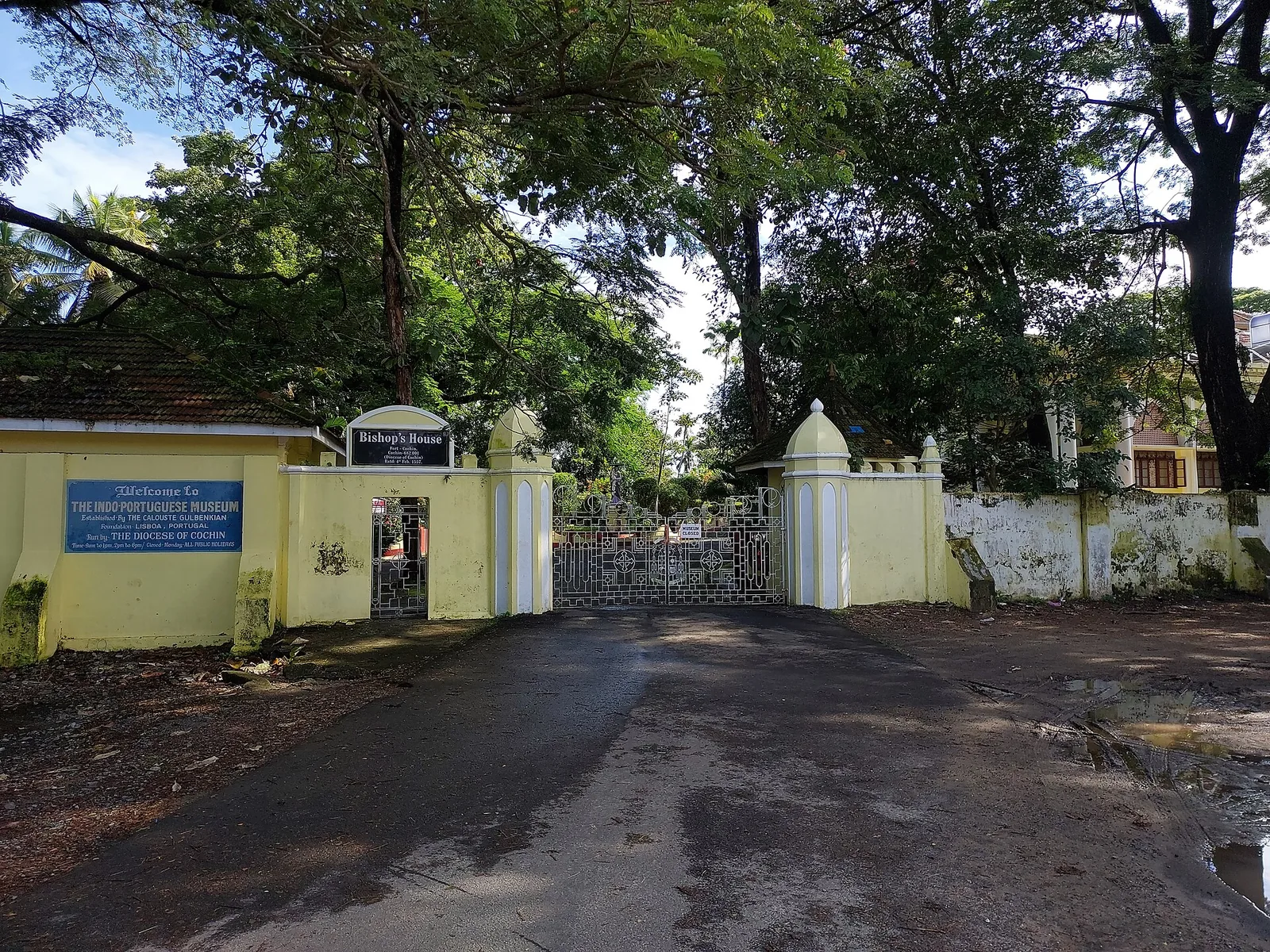
Museum of Kerala’s Indo-Portuguese Catholic heritage in the Bishop’s House garden, Fort Kochi.
2.1 km · 26 min walk · straight line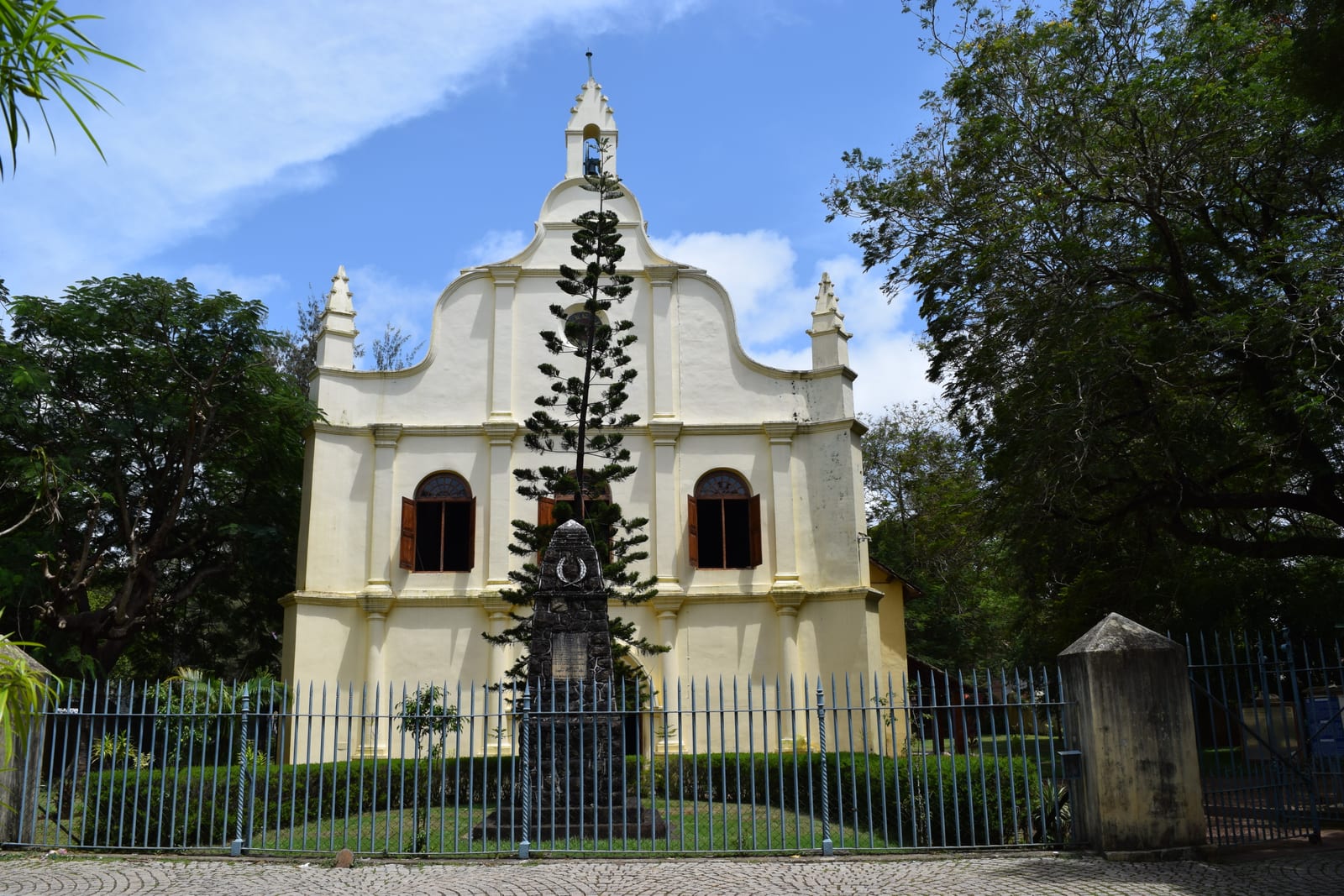
Believed to be the oldest European church in India (1503); Vasco da Gama was buried here before his remains were moved to Lisbon.
2.2 km · 27 min walk · straight lineWalking and driving times are real routed distances, except the few marked “straight line”, which are direct-line estimates and will read short. Fare figures are estimates from Kerala’s notified auto/taxi tariff and exclude waiting and night charges. Routing: © openrouteservice.org by HeiGIT | Map data © OpenStreetMap contributors
Nearby toilets, pharmacies, ATMs, seating and vets are community-mapped and may be incomplete or out of date. Map data © OpenStreetMap contributors | Walking times © openrouteservice.org by HeiGIT
The palace was built by the Portuguese and gifted to the Raja of Cochin around the mid-sixteenth century. The nickname Dutch Palace came later, after 1663, when the Dutch took over Mattancherry and carried out extensions and renovations to the building.
The walls carry an outstanding series of Kerala-style tempera murals depicting the Ramayana, episodes from the life of Krishna and other scenes from Hindu mythology. The royal bedchamber, which portrays the whole Ramayana, is the most celebrated, and there are also striking panels of Vishnu, Shiva-Parvati as Ardhanareeshwara and Krishna with the gopis.
Photography inside the palace is generally prohibited, particularly of the murals, in order to protect the fragile paintings. Please respect the posted rules and follow the guidance of the staff on site.
It is typically open daily except Fridays and certain national holidays, generally from around 10am to 5pm.
Entry has traditionally been very inexpensive, with a nominal ticket for visitors. Fees can change over time and may differ for foreign nationals, so it is best to check the current rate at the ticket counter.
Most visitors spend roughly forty-five minutes to an hour and a half taking in the murals and museum galleries. It sits within easy walking distance of the Paradesi Synagogue, Jew Town antique and spice shops, and the wider Mattancherry–Fort Kochi heritage area, so it pairs naturally with a half-day of exploring.
Midday works well for museums, especially when outdoor heat is high.
Entry: ₹5 per adult (Archaeological Survey of India rate); children up to 15 free. Rates for foreign nationals are not officially published — check at the counter. Timings: Generally open daily except Fridays and certain national holidays, roughly 10am to 5pm.
Base yourself in Mattancherry or a nearby town in Ernakulam, then confirm the last-mile route locally before leaving. Check weekly closure day and ticket counter timings before going. If the visit depends on forest, temple, boat, ferry, weather or seasonal access, check the official/local rule on the day before travel.
1 to 2 hours.
Nearby you can pair Mattancherry & Jew Town (50 m), Mattancherry Paradesi Synagogue (320 m), Spice markets (490 m), Dharmanath Jain Temple (1.0 km).
Use official ticket counters and cloakroom rules. Keep bags and cameras within permitted areas.
Written about Dutch Palace itself — its history, its legends and the arguments about them.
These guides explore Mattancherry and the surrounding area. Choose a visit that fits your interests, allowing separately for travel between stops.
Route-level itineraries and practical guides for the rest of Kerala.
Photographs: Rainer Halama (CC BY-SA 4.0), Mark Hills (CC BY 2.0), Ingo Mehling (CC BY-SA 4.0), Sanandkarun (CC BY-SA 3.0), SpeakingArch (CC BY-SA 4.0). Wikimedia Commons.