What to expect
Highlights
- Vembanad Lake island scenery and migratory-bird interest.
- Useful add-on to Kuttanad, Muhamma, Kumarakom and Alleppey houseboat routes.
- The businesses around this place are boat operators, birding guides and lake homestays.
Pathiramanal Island is a small Vembanad Lake island in Alappuzha district, best treated as a quiet birding and backwater stop rather than a built-up attraction. It sits between the Muhamma/Alappuzha side and the Kumarakom side, so the same island can appear in itineraries from both shores.
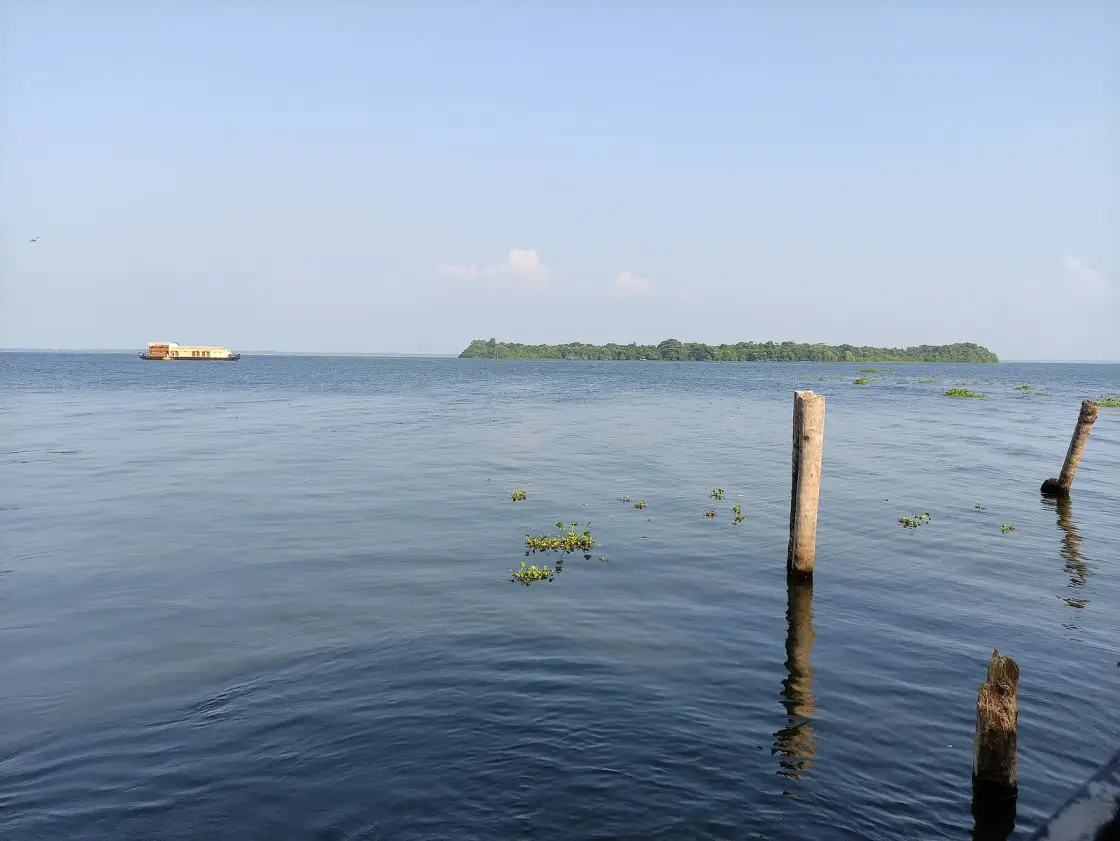
The question is not only whether to go, but which jetty and which boat route. Before you pay, settle the departure point, whether you actually land on the island, life jackets, how long the route takes and when you get back.
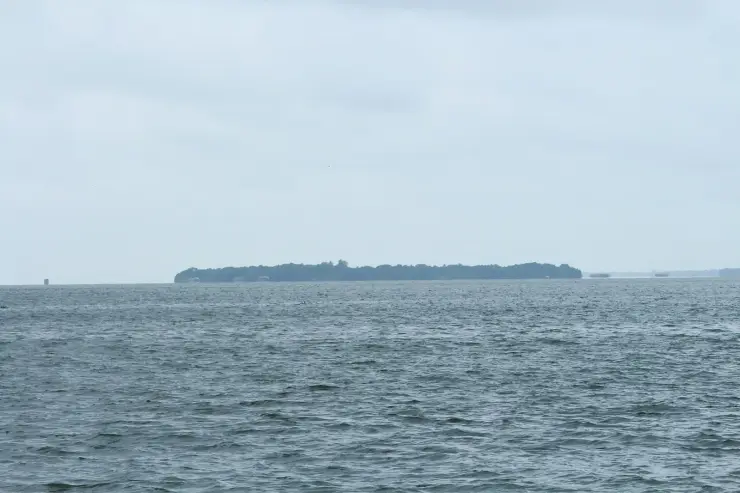
Adrift in the vast sheet of Vembanad Lake, halfway between the paddy waterworld of Kuttanad and the resorts of Kumarakom, lies a tiny green island reachable only by boat — Pathiramanal, whose name whispers of the night. Little more than a leaf of land floating on the backwaters, it is one of Kerala’s most beloved birding havens: an uninhabited, forested speck where cormorants dry their wings, egrets stalk the shallows and, in winter, travellers arrive on wings from as far as Siberia. To reach it you drift out across open water in a houseboat or a low, quiet shikara, the lake widening around you until the mainland thins to a line — and then this hush of trees rises from the water, exactly as a much-loved legend says it once did, at midnight.
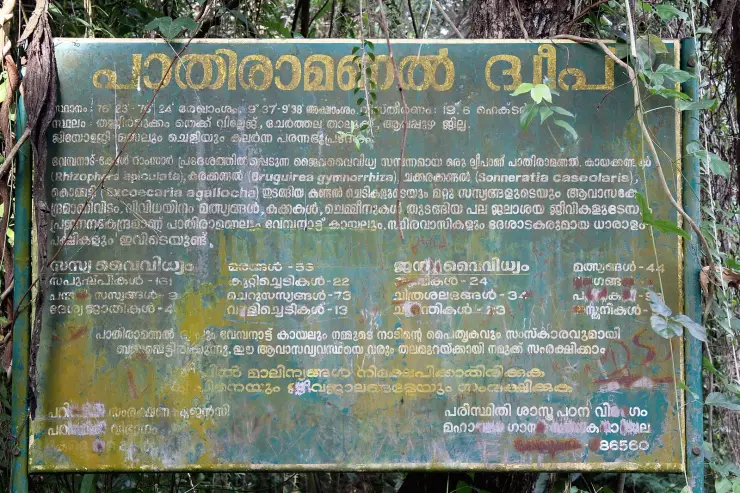
Pathiramanal is small — barely 550 metres from end to end, about 450 metres across and some 1,800 metres around — yet it looms large in the imagination of anyone who loves the Kerala backwaters. Its area is given differently almost everywhere you look: the government’s own interpretive board on the island says 19.6 hectares, the English Wikipedia article manages both 19.6 and 28.5 hectares in adjacent lines, and the mapped shoreline encloses about 28 hectares, or roughly 70 acres. The “10 acres” that Kerala Tourism repeats is not supported by any mapping we can check, and we do not print it. It sits in Vembanad, the longest lake in India, in the stretch of water between Thanneermukkom and Kumarakom. Administratively it is best given in full, because sources abbreviate it inconsistently: the revenue village is Thanneermukkam South, the taluk is Cherthala, the panchayat is Muhamma, and the district is Alappuzha. There are no roads here, no bridges, no jetty-lined promenade. The only way across is over the water itself, and that single fact is the whole charm of the place: Pathiramanal is a destination you must earn by boat, and it rewards you with a stillness that the busier backwater routes have long since lost.
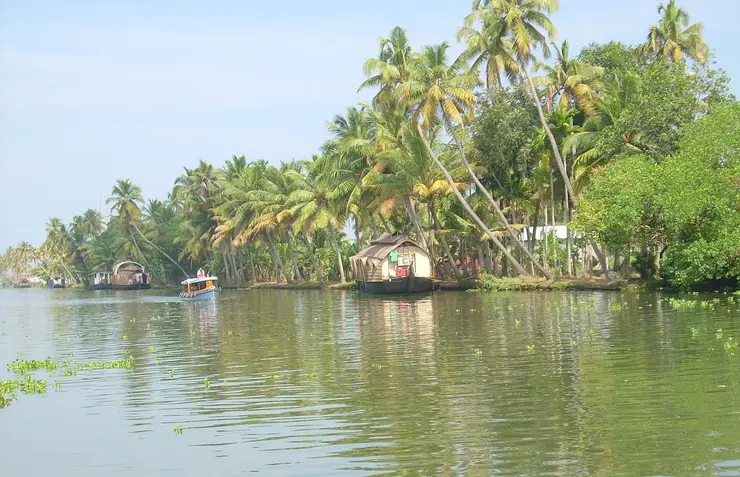
The crossing is half the pleasure. From Muhamma the island is only about 1.5 kilometres out; from the Kumarakom side it is a longer, dreamier ride of roughly twenty to thirty minutes across open lake. Houseboats moor offshore and lower their guests into smaller craft; shikaras — the slim, canopied country boats — nose in close to the reed fringe. All around, Kuttanad life unspools: fishermen tending Chinese-style nets, ducks herded in great rafts across the water, the green geometry of paddy fields lying below sea level behind their bunds. Then the resorts and the traffic fall away astern, and there is only the lake, the sky and the approaching smudge of trees.
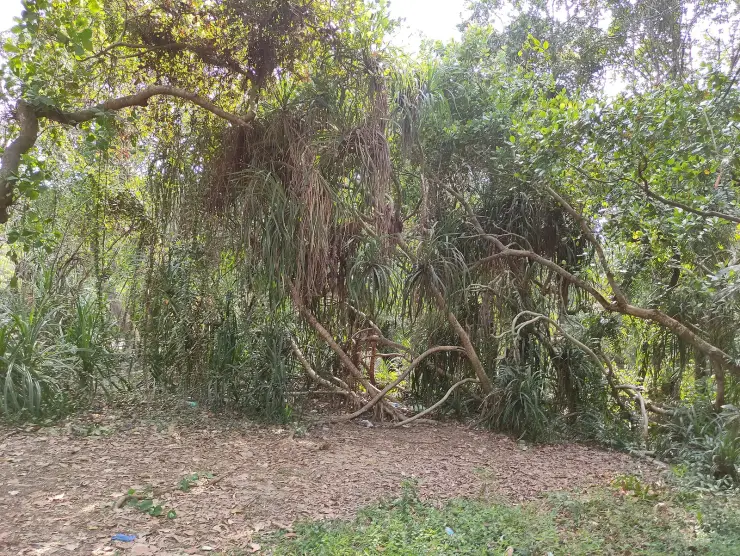
Step ashore and the island turns out to be a pocket wilderness. A narrow track loops through screwpine, mangrove-edged banks and a canopy loud with birds; the ground is soft, often damp, and in the monsoon months distinctly marshy. There are no shops, no cafés, no touts — nothing to buy and nothing to sell. What there is instead is the low continuous soundtrack of a healthy wetland: the creak and chatter of waterfowl, the sudden clatter of a heron lifting off, the plop of a cormorant diving, and, if you are lucky and quiet, the smooth dark back of an otter breaking the surface offshore.
It is as a birdwatchers’ island that Pathiramanal has made its name, though the numbers attached to it need care. Kerala Tourism gives “about 90 species of birds”, alongside roughly 30 butterflies and 160 plants. The interpretive board erected on the island by Mahatma Gandhi University’s environmental sciences department is more conservative and more specific: 24 birds, 34 butterflies, 44 fish, and 161 flowering plants including 53 trees, 22 shrubs, 73 herbs, 13 climbers and 4 endemic species. The likeliest reading is that the smaller figure counts birds recorded on the island itself and the larger one those using the island and the water around it. ⚠ The figure of “91 resident and 50 migratory species”, widely copied onto this island, is not its own — that phrasing belongs to the Ramsar description of the Kol wetlands in Thrissur, some 100 km north and thousands of times larger. We do not print it. The shallow, weed-rich water between the island and the Kumarakom Bird Sanctuary opposite is a famous haunt of visitors from Siberia, the Himalayas and beyond. Darters, egrets in four or five sizes, purple and grey and pond herons, cormorants, teal, jacanas trotting on lily pads, kingfishers flashing along the bank — the roll-call is long, and best appreciated in the soft light just after dawn. (Exact species and their seasons vary year to year — confirm locally.)
The island’s appeal, though, is not only ornithological. For many who come, Pathiramanal is simply the quietest room in the great house of the backwaters — a place to switch off the boat engine, sit under the trees and let Vembanad breathe. Sunrise here, with mist lifting off the water and the birds waking in waves, is the kind of scene that fixes Kerala in the memory. Sunset, watched from a houseboat moored just offshore, does the same in reverse. There is no nightlife, no crowd, no schedule — the island keeps its own slow time.
That slowness is worth protecting, and Pathiramanal wears its fragility openly. It is a small, low, uninhabited island in a lake under real pressure from farming, tourism and shifting water quality, and its birdlife depends on it staying undisturbed. Visitors are asked to tread lightly — to keep voices down, carry their litter back out, and let the birds be birds. Come at dawn, come in winter, come by the gentlest boat you can, and Pathiramanal will give you the backwaters as they were meant to be felt: wild, watery and wonderfully quiet.
The island’s name is where its magic begins. Pathiramanal is usually translated as “sands of midnight” or “midnight sand” — pathira for the dead of night, manal for sand — and the name carries its own legend. As the story is told, a young Brahmin, deep in his devotions, waded into Vembanad Lake at night to perform his ritual ablutions; and at his touch the waters are said to have drawn back and let dry land rise from below, so that an island appeared from the lake at the stroke of midnight. (Told and retold as folklore — framed here as legend, not history.)
A second, plainer-spoken version names the holy man: Vilwamangalathu Swamiyar, the Brahmin sage who recurs throughout Kerala’s temple stories. Kerala Tourism prints it directly — the Swamiyar was crossing Vembanad by boat at night when he needed to answer the call of nature, and there was nothing but open water in every direction, so by his powers he raised the island out of the lake overnight. Because it appeared at midnight, out of sand, it has been called Pathiramanal ever since. Whichever version a boatman tells you, the two agree on the essentials: a holy man, the deep of night, and a lake that briefly parted to raise a scrap of sand. (Legend, not verified fact. ⚠ Vilwamangalathu Swamiyar is attached to many Kerala sites, from Guruvayur to Ambalappuzha; this particular episode is genuinely and specifically attached to Pathiramanal, which is why it is told here and nowhere else on this site.)
The island carries a second name too — Anantha Padmanabhan Thoppu, “the grove of Anantha Padmanabhan”, which points at the tutelary deity of the Travancore royal house. Unlike the midnight legend, no story has attached itself to that name in any source we can reach. It is recorded here as a name and nothing more; we have not invented an explanation for it.
What makes Pathiramanal unusual is that its legend has a documented rival, and Kerala Tourism sets the two side by side itself, noting that the historical records reveal a different narrative. The ledger version of how this island came to be uninhabited is not a miracle at all. It was owned by a landlord named Parayi Tharakan, then bought by Bheemji Devji, a Gujarati merchant of Kochi. From the M/s Bheemji Devji Trust it passed to Chevalier A. C. M. Anthraper, who planted coconut on it and worked it as a plantation, and it stayed in the private hands of the Thaimattathil family until the late 1970s. Then the Land Reforms were enforced in 1979, the island was taken as surplus land above the ceiling, and it passed to the Government of Kerala and thence to the Department of Tourism.
The human half of that ledger is the part the legend cannot match. Fourteen worker families lived on Pathiramanal until the late 1970s and were resettled on the mainland in Muhamma panchayat. The island’s celebrated emptiness — the quality every visitor comes for, the stillness, the absence of shops and lights and voices — is not primordial and it is not the work of a sage. It is about fifty years old, and it was administrative. A place that a legend says was conjured out of nothing was in fact emptied out, deliberately, within living memory. The stone walkway that visitors photograph runs past ground where those families lived.
Behind the folklore, Pathiramanal’s real story is the story of Vembanad — the sprawling brackish lagoon, the longest lake in India, that runs down Kerala’s coast and drains a huge web of rivers into the Arabian Sea at Kochi. The island is one of the small natural rises that stud this vast, shallow, ever-shifting waterbody. Around it lies Kuttanad, the celebrated below-sea-level rice bowl of Kerala, where farmers have for generations grown paddy on land reclaimed from the backwaters and kept dry behind earthen bunds — one of the few places on earth where cultivation happens below sea level.
The wider Vembanad wetland is not merely “commonly cited” as internationally important — it is Ramsar Site 1214, the Vembanad-Kol Wetland, designated on 19 August 2002 and covering 151,250 hectares. (Ramsar’s own site serves an anti-bot challenge; the designation and the figures here follow the Government of India’s MoEF&CC published Ramsar lists.) The island falls inside that site, which the MGU board on Pathiramanal states explicitly. Fed by ten rivers, it is the largest brackish humid-tropical wetland on India’s south-west coast and supports one of the largest wintering waterfowl populations in the country. That status reflects what visitors to Pathiramanal see first-hand: this is one of the most important overwintering and breeding grounds for water birds on the Indian peninsula, drawing tens of thousands of them each year across a mosaic of lake, marsh and paddy. The little island sits like a green stepping-stone in the middle of that ecosystem.
A defining moment in the lake’s modern history was the building of the Thanneermukkom bund — the salt-water barrier, or “salt-water barrage,” thrown across Vembanad not far from Pathiramanal to keep tidal salt out of the Kuttanad paddy during the cultivation season. The barrier reshaped the lake’s ecology, changing its salinity, its water hyacinth growth and its fish and bird life on either side, and it remains central to any conversation about Vembanad’s health. Pathiramanal lies within this managed, much-worked waterscape rather than in true wilderness.
The island did not simply “stay” uninhabited: it was cleared. Worked as a coconut plantation under private ownership into the 1970s, it was taken by the state as surplus land under the 1979 Land Reforms and handed to the Department of Tourism, and the fourteen worker families living on it were resettled at Muhamma. The wooded quiet visitors now prize is what grew back afterwards. ⚠ One correction worth making plainly, because Commons captions, a Wikipedia category and a good many travel pages get it wrong: Pathiramanal is not a notified bird or wildlife sanctuary. Kerala’s declared bird sanctuaries are Thattekad, Kumarakom, Kadalundi, Mangalavanam and Pakshipathalam. This is Tourism Department land managed under a state “Pathiramanal Biodiversity Conservation and Responsible Eco-tourism Development Project”, with the interpretive science supplied by Mahatma Gandhi University — no Forest Department sanctuary notification exists. Today it is best known as a day-trip birding and nature stop woven into houseboat and shikara itineraries out of Alappuzha, Kumarakom and Muhamma.
Pathiramanal’s future depends on the health of Vembanad Lake, which faces silting, shrinking area, pollution, invasive water hyacinth and pressure from heavy tourism. Responsible, low-impact visiting helps protect the wetland that sustains the island’s bird life.
Because it is one of the last genuinely quiet corners of the Kerala backwaters. With no roads, no shops and no crowds, Pathiramanal offers the stillness that busier stretches of Alappuzha and Kumarakom have lost — an uninhabited island where the loudest sound is birdsong.
For the birdwatching. Resident darters, cormorants, herons and egrets share the island and its shallows with winter migrants said to arrive from Siberia and the Himalayas — teal, pintails, jacanas, kingfishers and more (species and seasons vary — confirm locally). A dawn visit in winter can be genuinely memorable, binoculars or not.
For the journey itself. You can only reach Pathiramanal by boat, so a visit means a slow, scenic ride across the open expanse of Vembanad Lake — past Chinese fishing nets, duck flocks and below-sea-level paddy fields — in a houseboat or a low, quiet shikara. The crossing is half the experience.
For sunrise and sunset over the lake. Mist lifting off the water at first light, birds waking in waves, and the long golden calm of evening from a houseboat moored offshore — Pathiramanal serves up the classic, unhurried backwater scenery that Kerala is loved for.
For the legend. Few places wear their name so well: an island said to have risen from the lake at midnight at the touch of a meditating Brahmin. Arriving by boat to find trees floating on the water, the “sands of midnight” story feels less like folklore than a description of the view.
Because it pairs so neatly with the rest of the region. Pathiramanal slots naturally into a Kuttanad houseboat cruise or a Kumarakom stay, sitting almost within sight of the Kumarakom Bird Sanctuary across the water — an easy, rewarding half-day add-on to a bigger backwater trip.
Road km to Alappuzha; ghat roads and traffic vary — allow extra.
November to February is most comfortable and better for birding. Monsoon needs more flexibility because wind and rain can affect lake movement.
Live forecast loads in your browser.
Check the official alert before you travel. Kerala’s beaches, waterfalls and trekking routes close at short notice during heavy rain, and district alert levels change day to day. We do not publish an alert level of our own — read it from the state authority: Kerala State Disaster Management Authority, or the district control room on 1077.
Sun and moon are calculated for this location and shown in IST. Photography windows are the hour around sunrise and sunset; the sunset bearing is degrees clockwise from true north. Moon phase is accurate to about half a day.
Verified hotels, homestays, restaurants, experiences, sights, shops and rentals around Pathiramanal Island — commission-free, with direct contact. Filter by what you need.
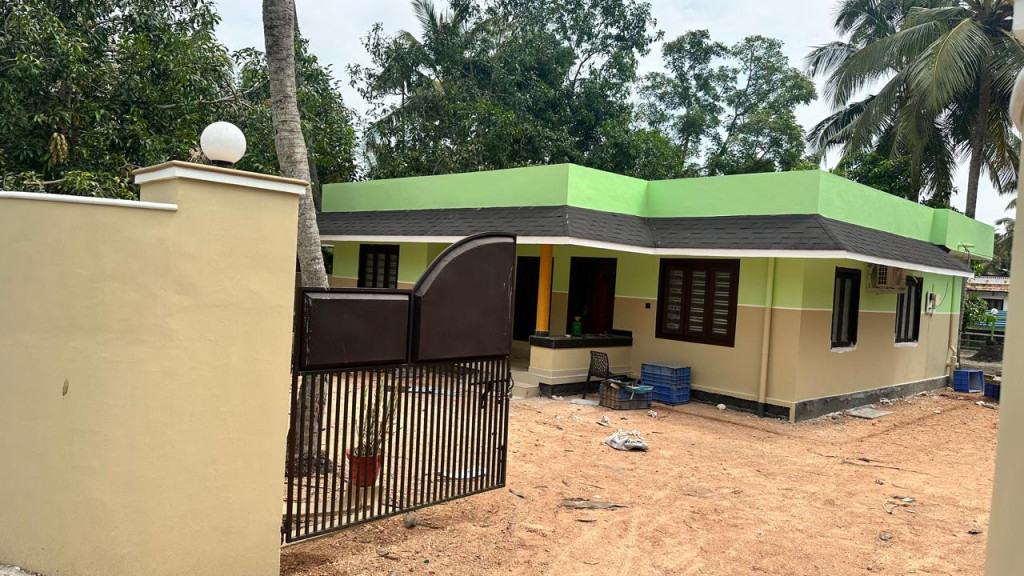
Kerala Tourism-listed homestay option for Kuttanad backwater stays. Kuttanad, Kerala Tourism-listed homestay, stay.
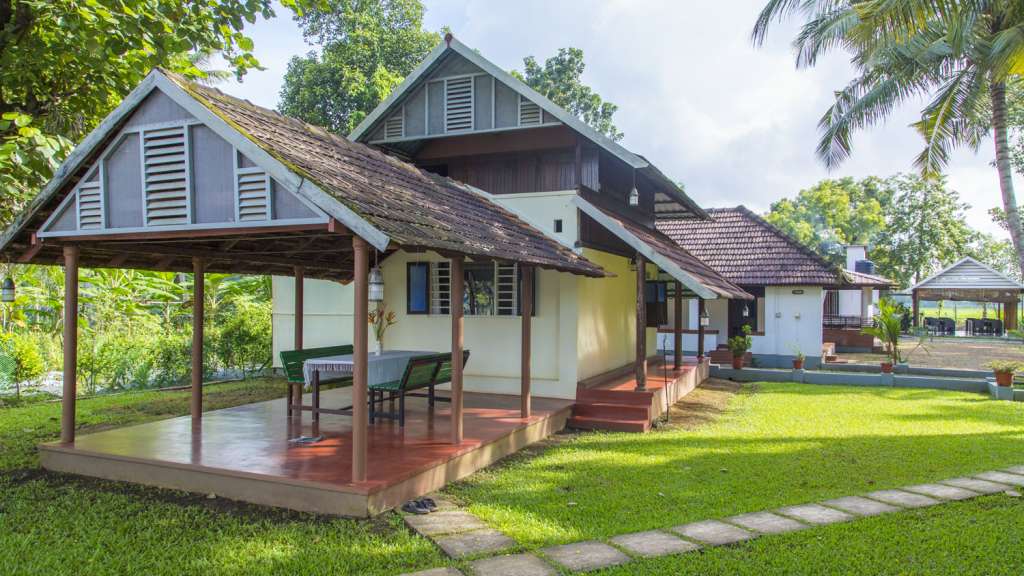
Kerala Tourism-listed Manapra homestay for Kuttanad village and backwater stays. Kuttanad, Kerala Tourism-listed homestay, stay.

Kuttanad Kayak Club arranges kayaking, canoeing and river-side outings. Agree the starting point, guidance, safety equipment and route; accommodation packages may differ.
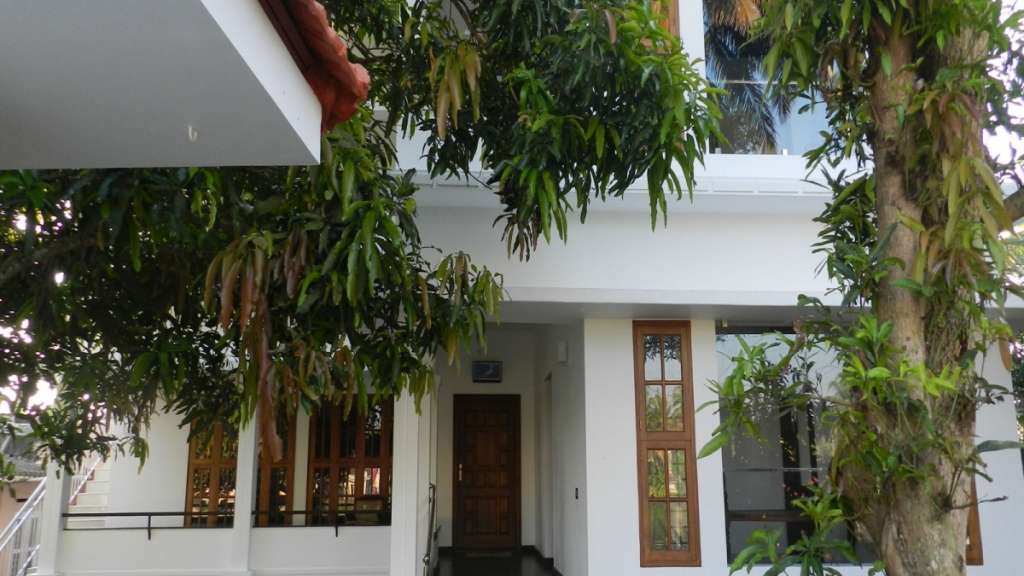
Kerala Tourism-listed Kuttanad homestay at Maliampurackal House, Punnakunnam. Kuttanad, Homestay, Punnakunnam.

Kuttanad’s canals, bunds and fields create a working backwater landscape. Explore from public roads or an agreed boat route, keeping farm entrances clear.
Kuttanad Restaurant is a meal-stop option on the Alappuzha–Changanassery road. Check its location when planning a drive through the backwater villages.
Book with the place itself. India’s cyber-crime coordination centre warned in April 2025 that convincing copies of hotel and pilgrimage booking sites are being pushed through sponsored search and social ads, taking payment for rooms the property never hears about. Every listing here links to the business’s own contact details and its own Google or Bing profile — we take no commission and sit in nobody’s payment path. If a booking page reached you through an ad, check the address bar against the property’s own site before you pay. Fraud can be reported on cybercrime.gov.in or on 1930.
Find food, accommodation and activities across Kuttanad. Browse the guides for places to eat, stay and explore along your route.
5 more places around Kuttanad. Open a guide to plan the visit and onward journey.
The Kainakary birthplace memorial of Saint Kuriakose Elias Chavara, approached through the backwater landscape and maintained as a Christian pilgrimage site.
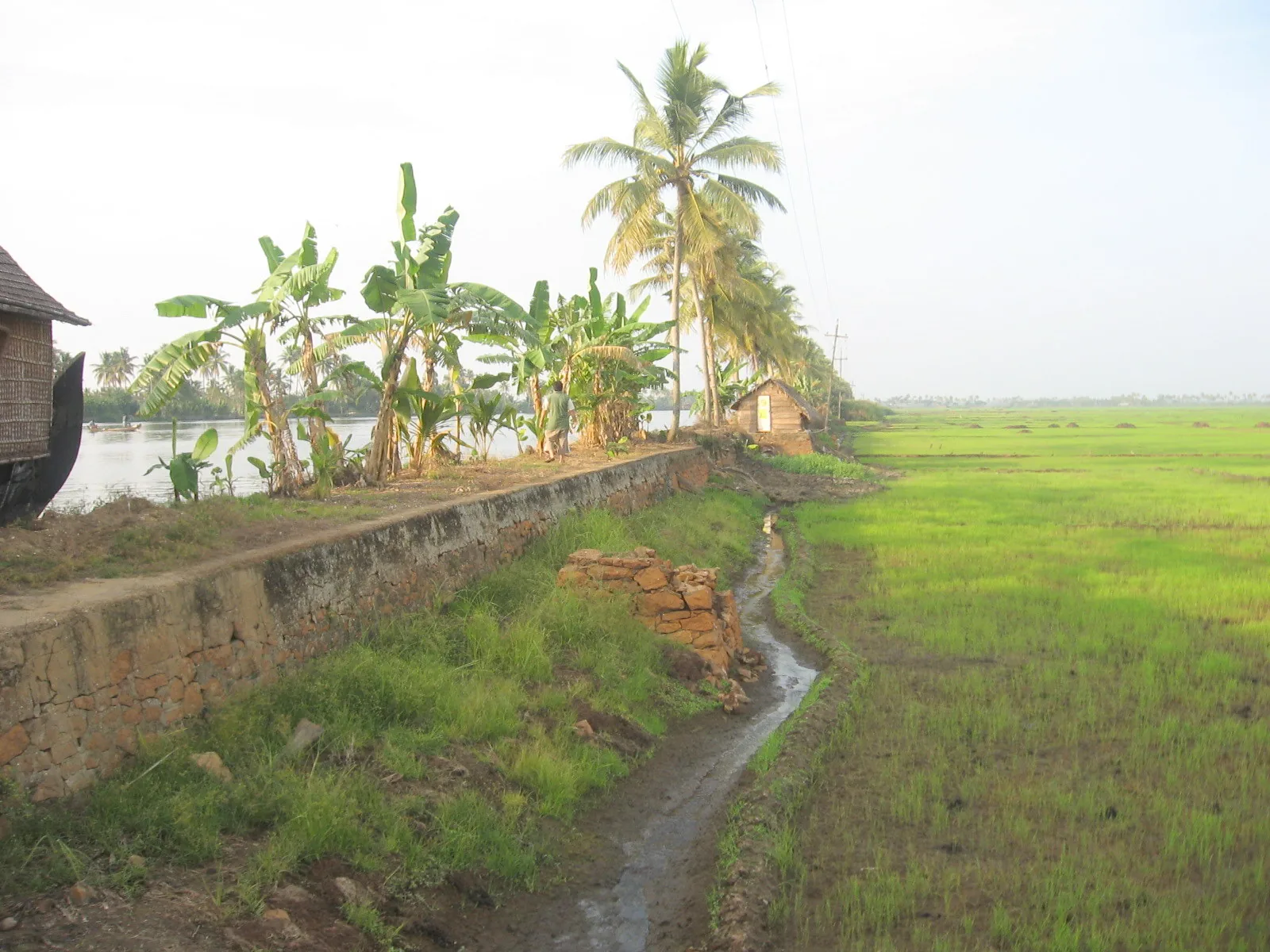
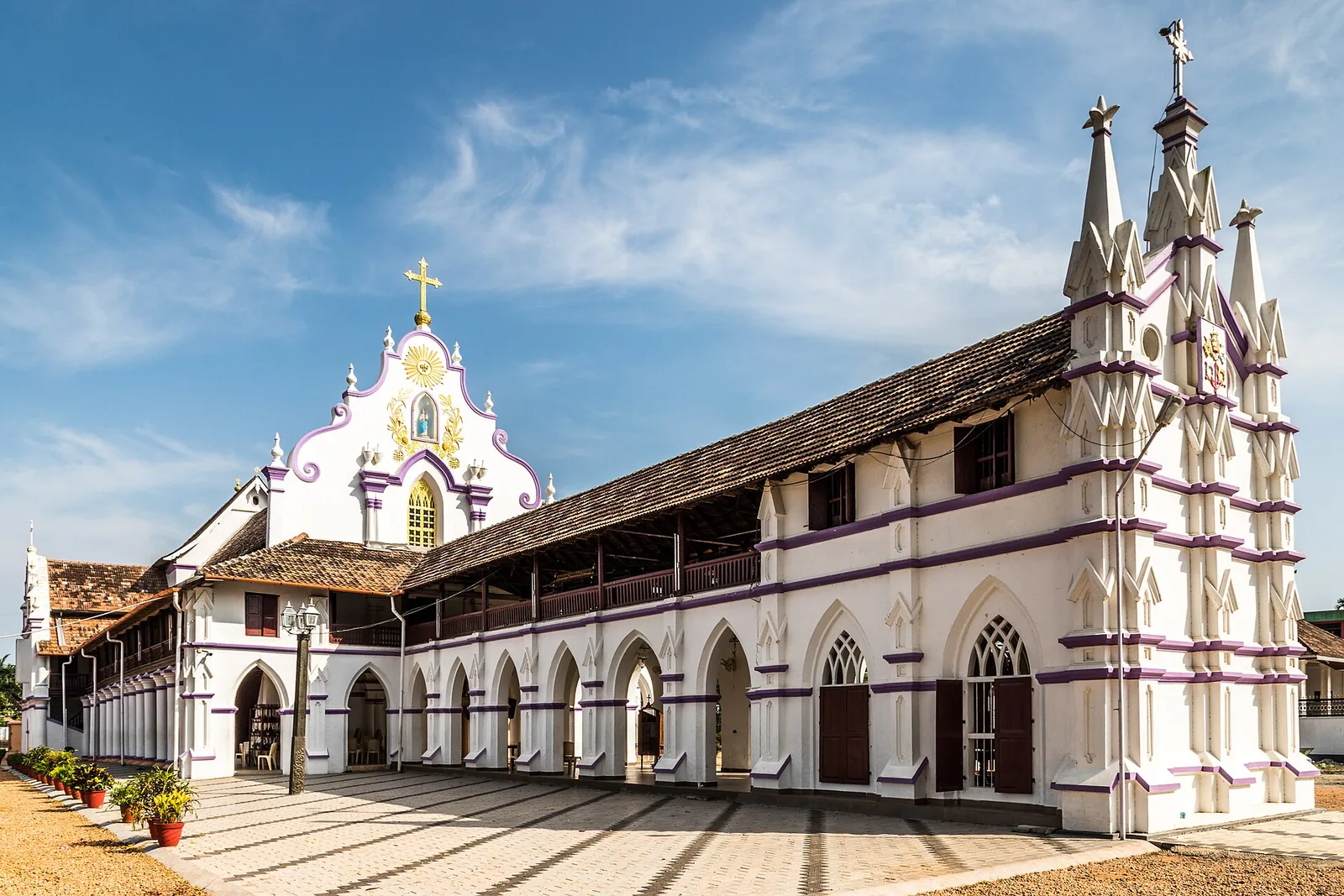
Kuttanad village on the Pamba known for the Champakulam Moolam snake-boat race and Kalloorkad St Mary’s Basilica.
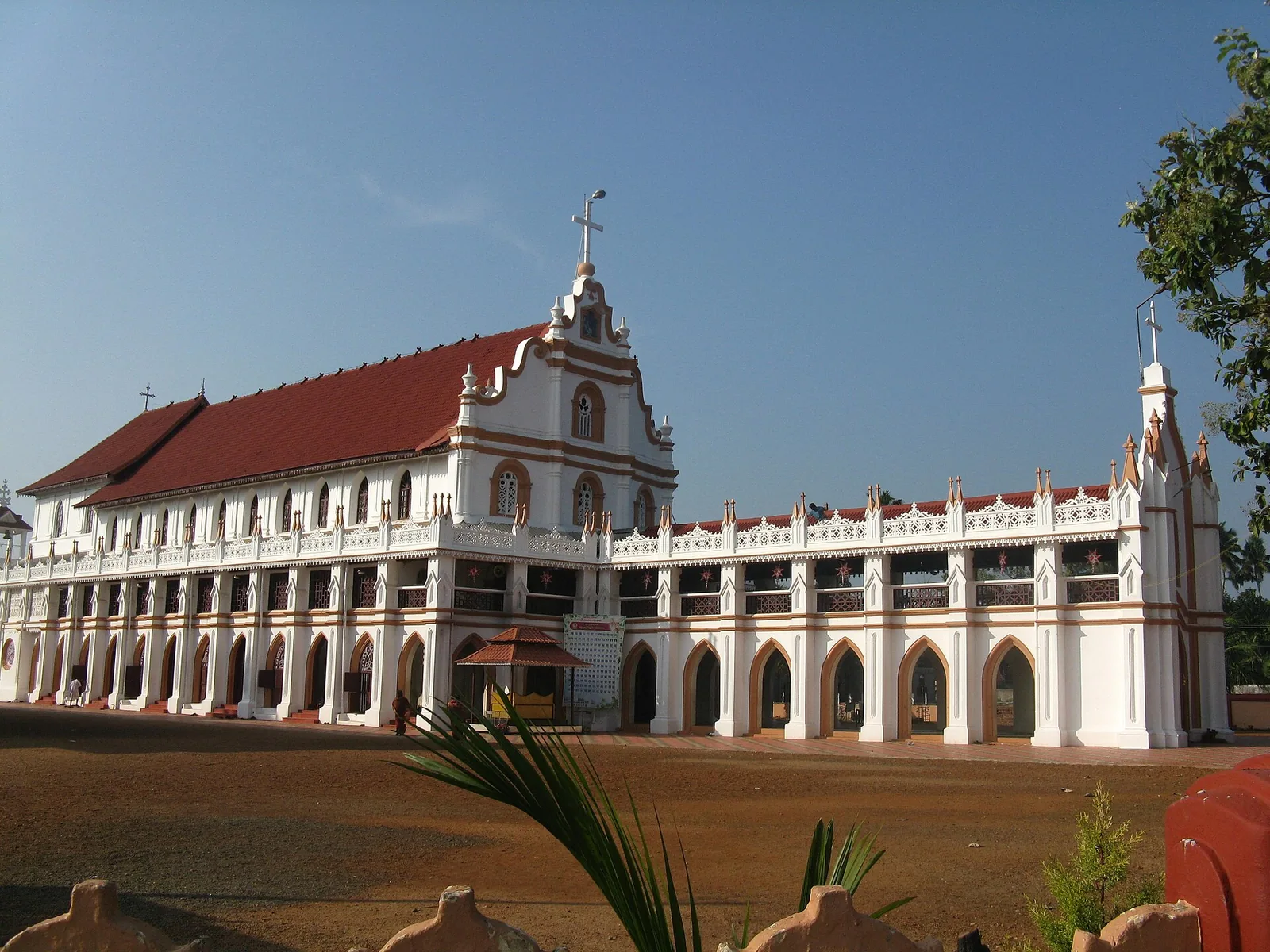
St George Forane Church at Edathua in Kuttanad, known for its large annual pilgrimage feast.
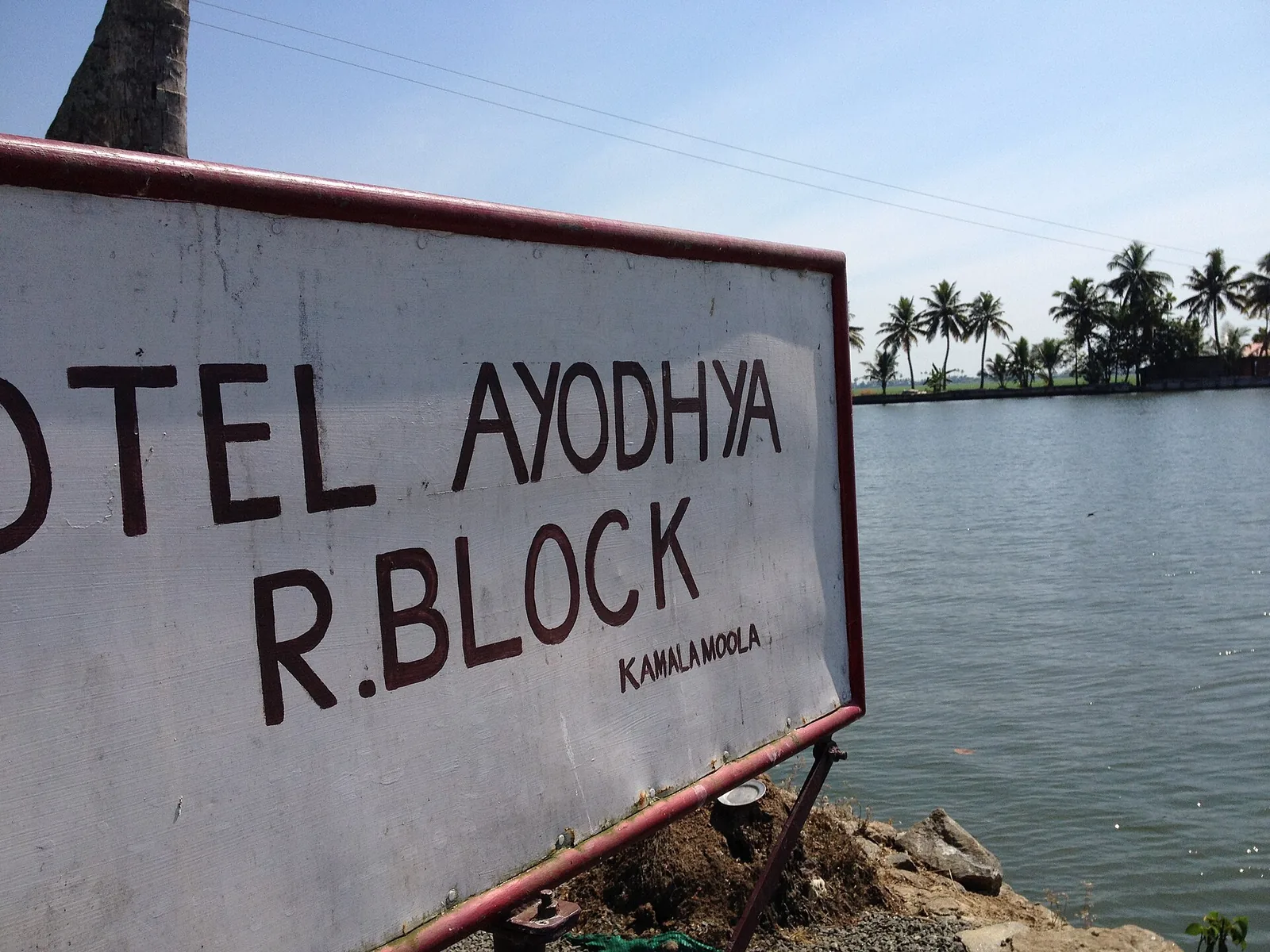
Iconic below-sea-level reclaimed farmland at Kainakary, ringed by bunds with the canal water sitting higher than the paddy fields.
Roampedia is commission-free — own or know a stay, eatery, guide or shop near Pathiramanal Island? List it and it appears here once verified.
Add a nearby businessEntry: Any small island or eco-tourism entry charge is best confirmed locally on the day; the main cost is the boat hire to reach it.
Dress code: No formal dress code; wear light, modest, breathable clothing, a hat and sun protection, and comfortable shoes or sandals that cope with soft, sometimes muddy ground. Muted colours help when watching birds.
Festivals: The island has no festivals of its own; it is uninhabited. It is sometimes busier around the wider Kuttanad backwater tourism season and events such as the Alappuzha snake-boat races, which draw crowds to the region.
Photography: A camera is welcome and a telephoto lens plus binoculars are a real advantage for the birdlife; keep quiet and keep your distance so as not to disturb nesting or feeding birds. Confirm any drone restrictions locally before flying.
If you are travelling by bus or ferry, check the return service with the operator before setting out. Leave time to reach the stop or jetty after your visit.
Ask at the bus stand for the time of the last service back, not the next one. If you miss it, an auto or app cab is the fallback — agree the fare before you get in.
If you need step-free access, contact the site before travelling. Ask about a level entrance, steps along the route, the nearest drop-off point, seating and accessible toilets.
These services are listed within about 1.2 km of Pathiramanal Island. Walking distances follow mapped routes; access and opening hours can change. Other services may be closer but are not included here.
Emergency numbers are verified against official government and state tourism sources. 112 works anywhere in India.
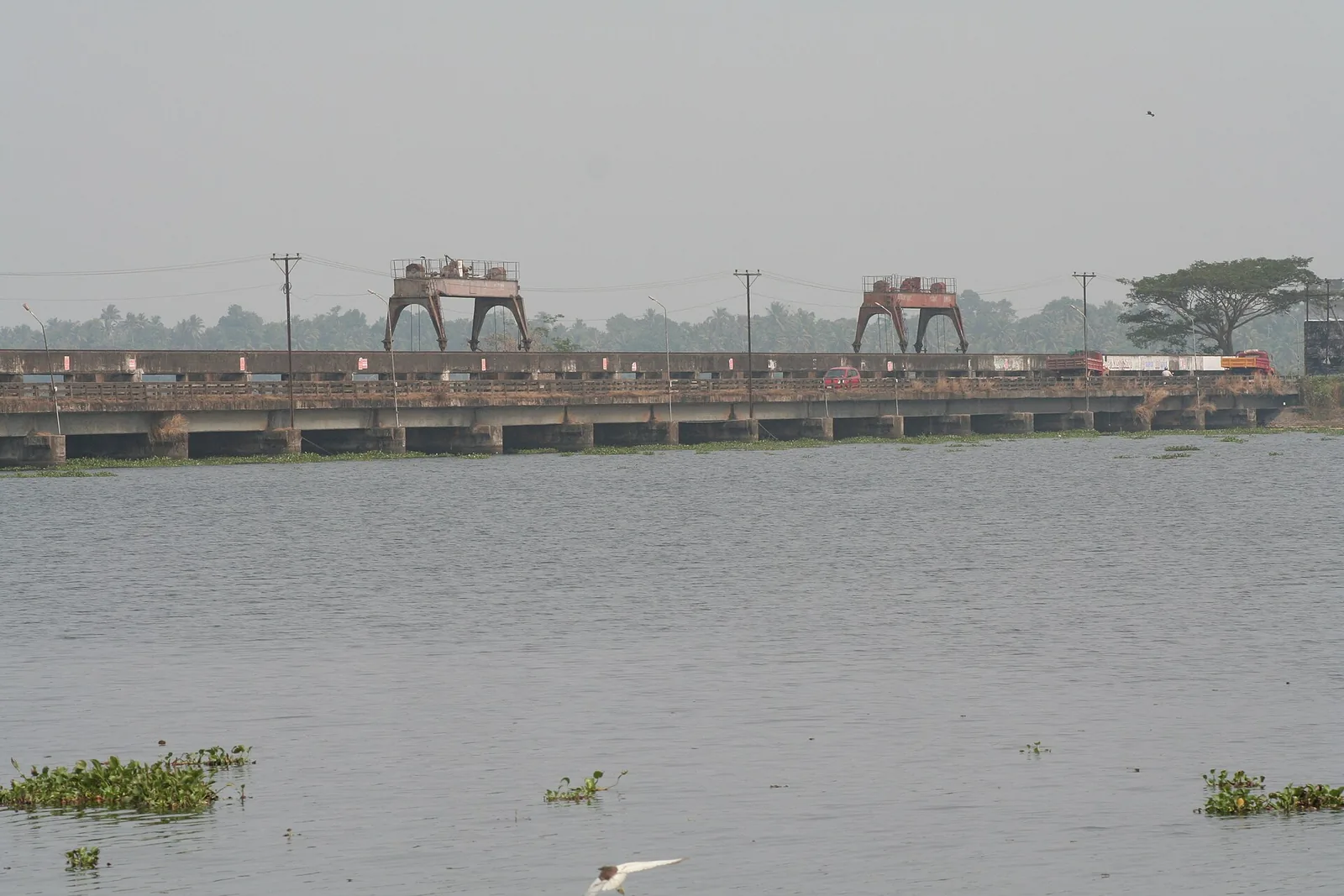
Salt-water barrier and bridge across Vembanad Lake that keeps the sea out of Kuttanad’s paddy in the cropping season — a long causeway with lake views.
6.4 km · ~16 min by auto · straight line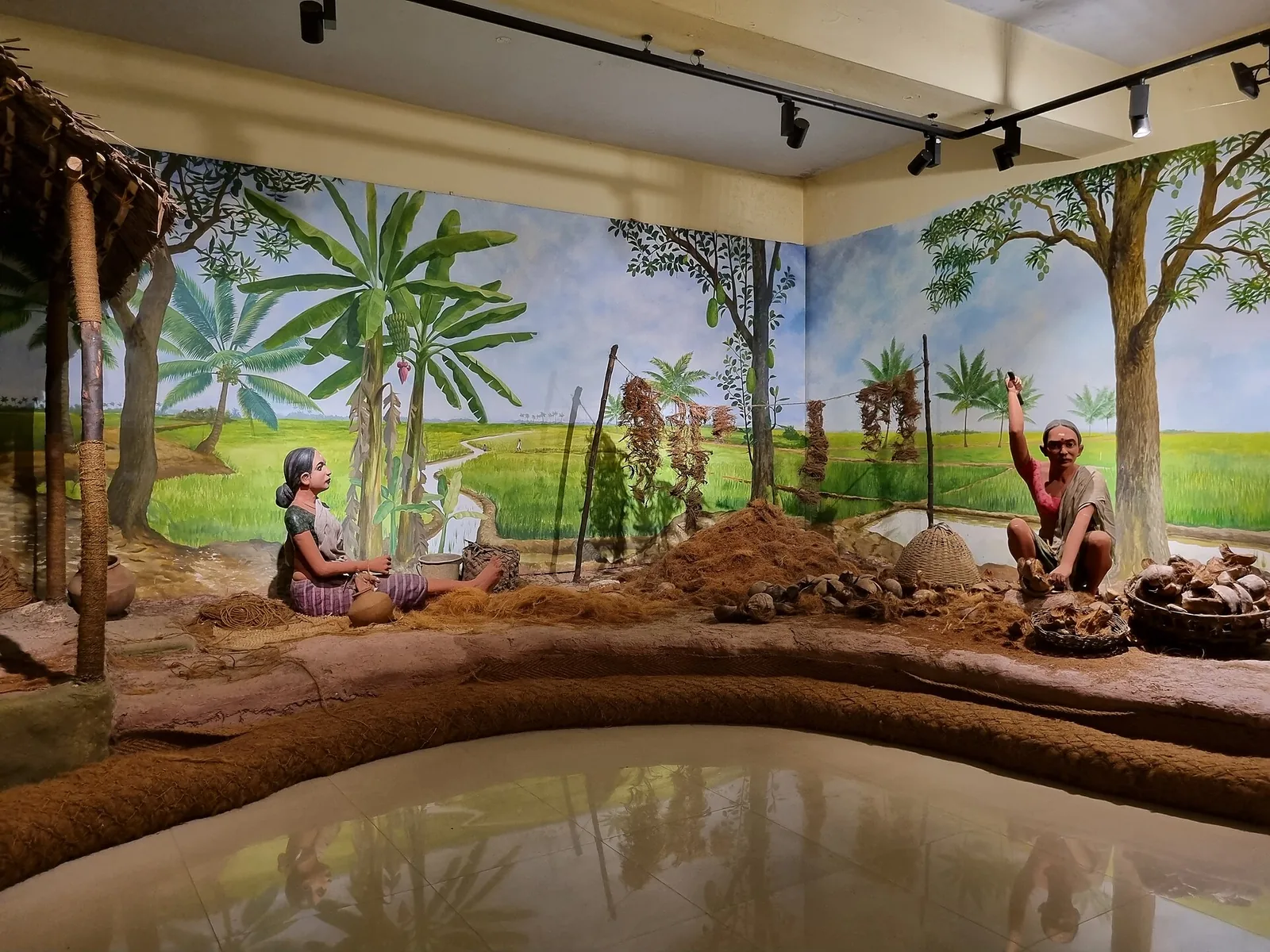
Museum on Kerala’s coir (coconut-fibre) heritage — the craft Alappuzha built its trade on.
8.8 km · ~15 min by cab · straight line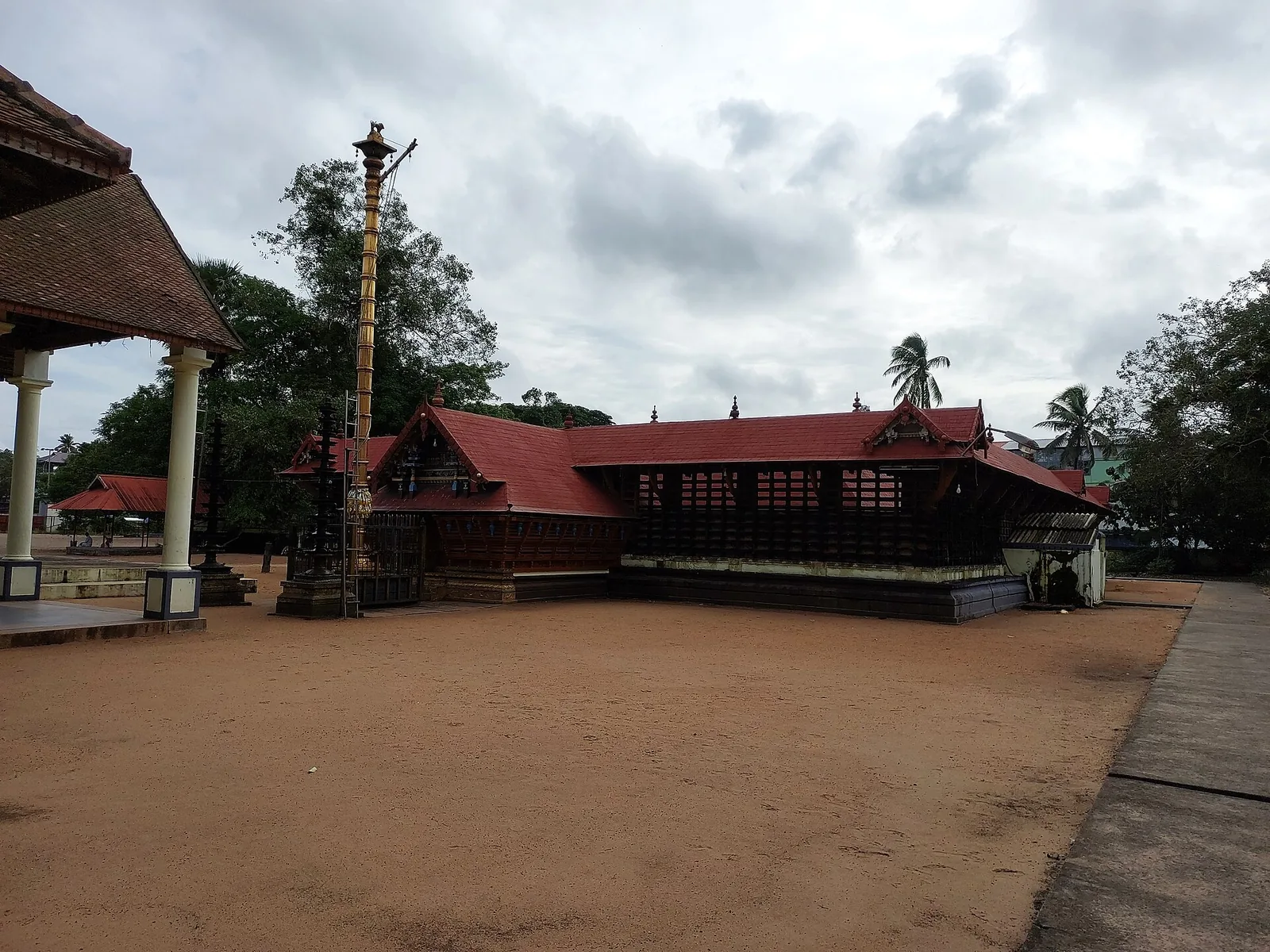
The Devi temple in the middle of Cherthala town, one of the 108 Durgalayas — where the goddess sits about four feet below ground level, hundreds of cockerels released as offerings live in the compound, and the town’s own name is said to come from the legend of her rescue from the mud.
8.9 km · ~15 min by cab · straight line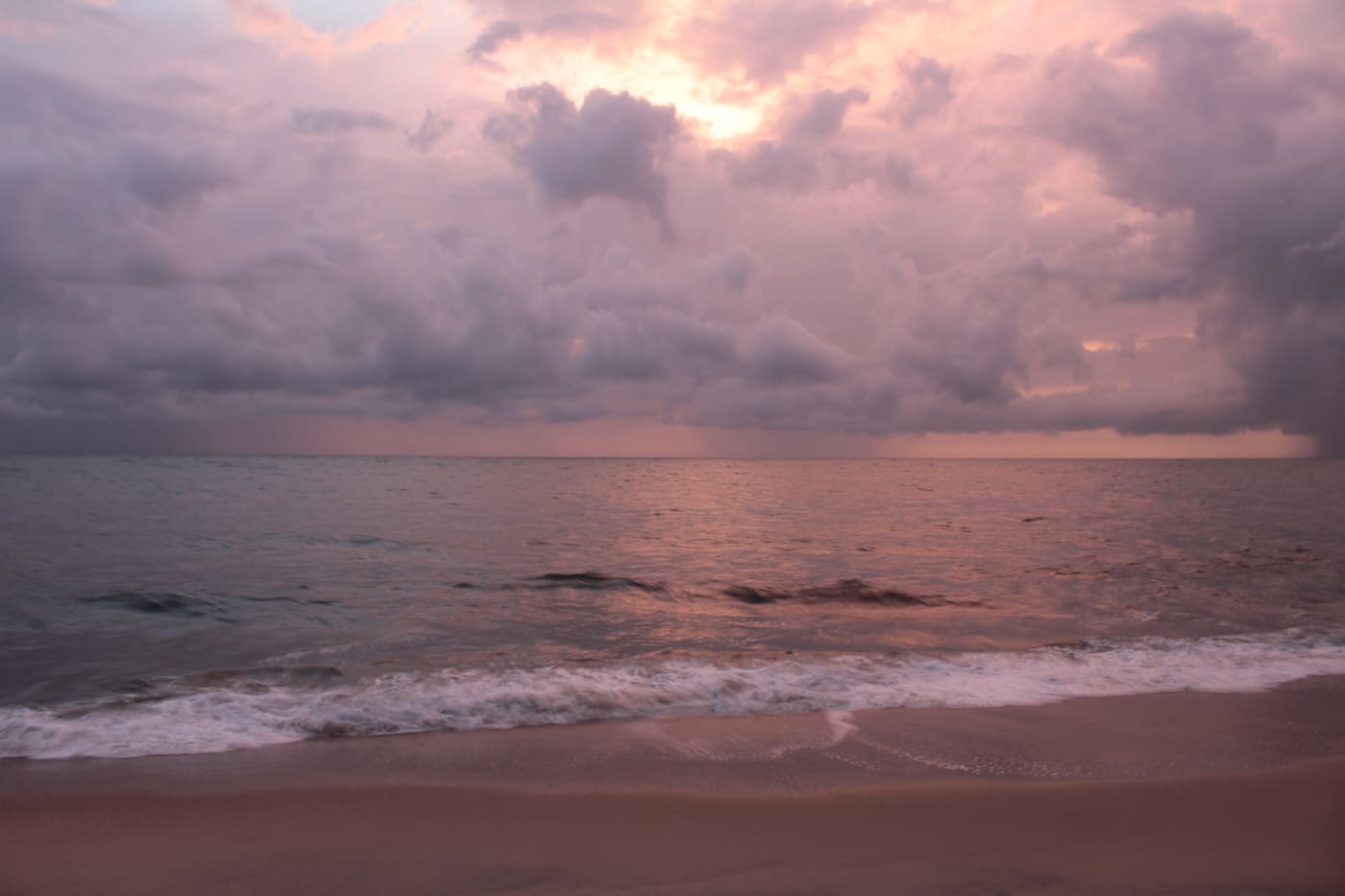
Quiet beach belt north of Alappuzha, popular for relaxed stays.
9.6 km · ~16 min by cab · straight line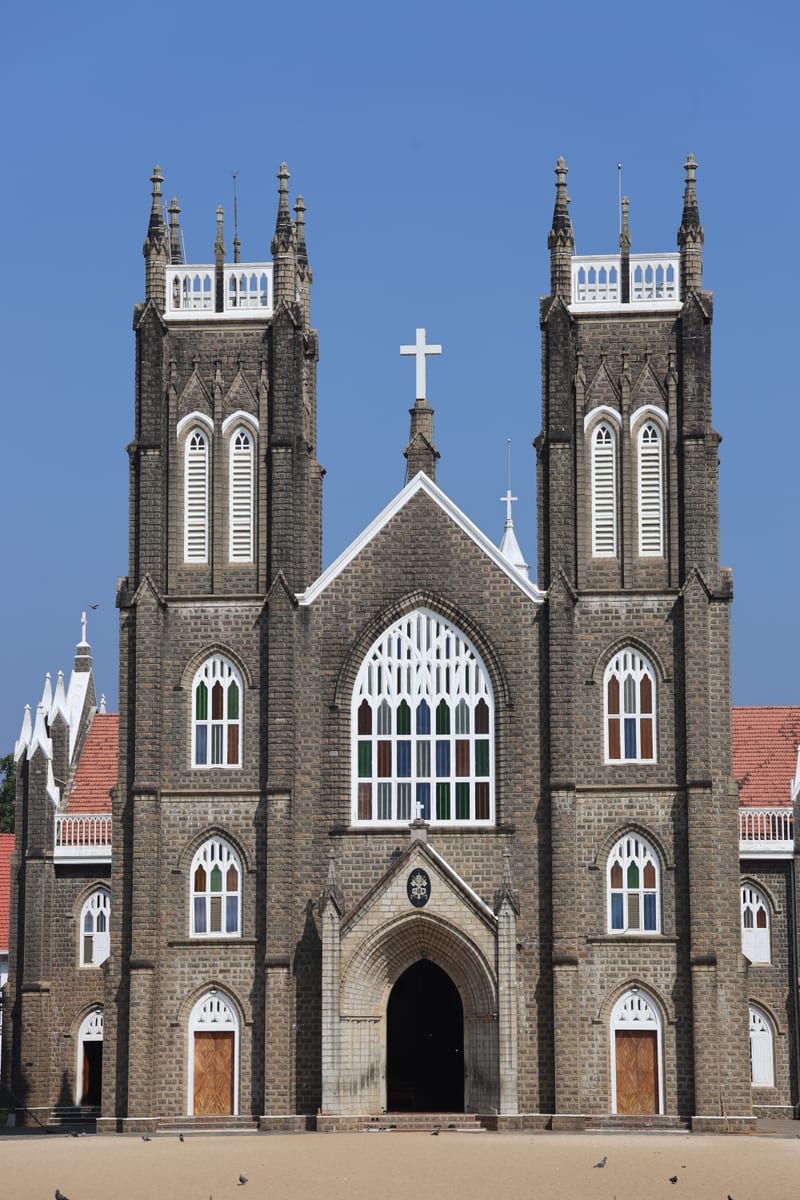
St Andrew’s Forane Basilica at Arthunkal, a major coastal pilgrimage church north of Alappuzha.
10.4 km · ~17 min by cab · straight line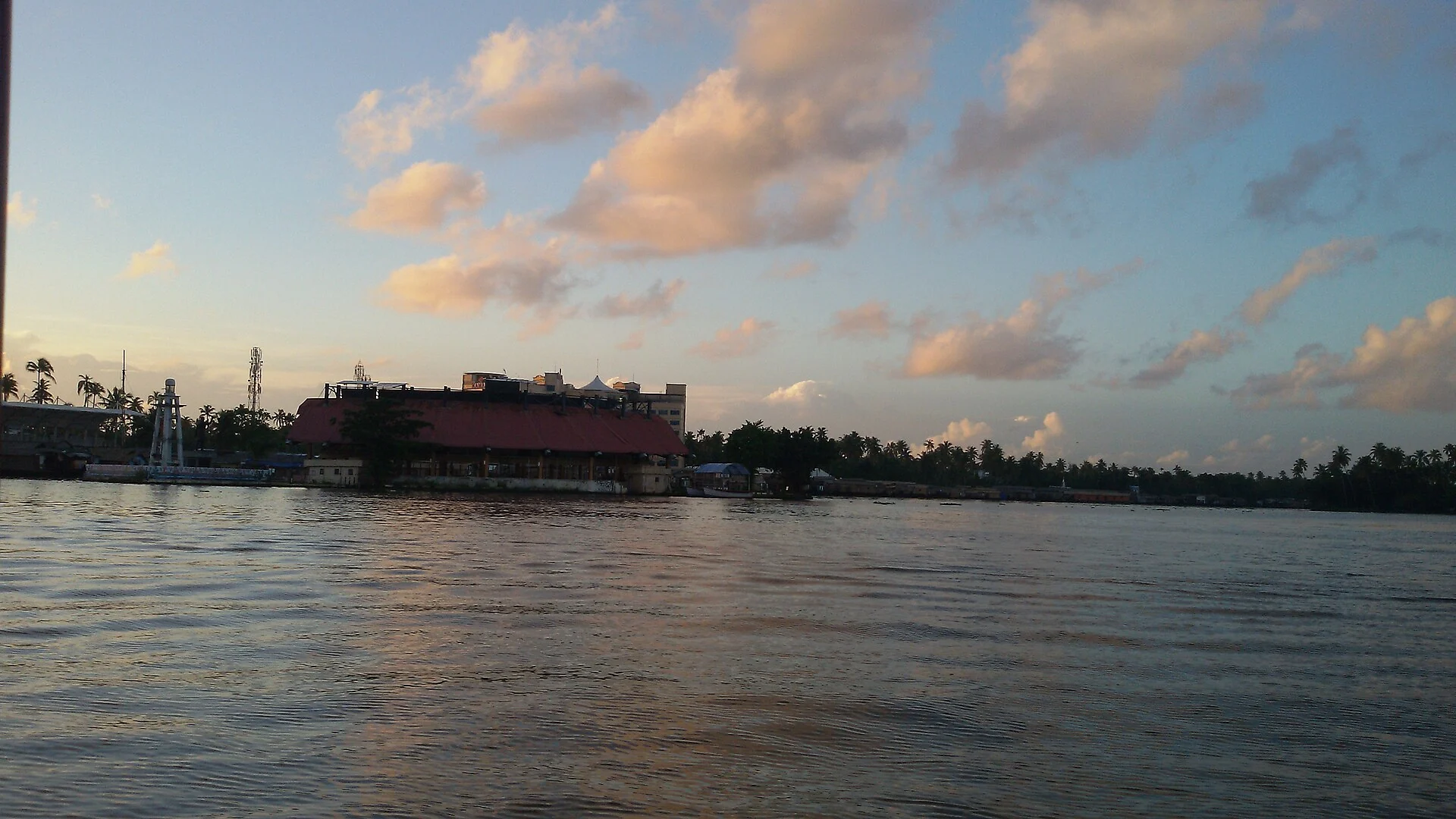
Finishing-point lake of the Nehru Trophy Boat Race and the main houseboat cruising water off Alappuzha.
13.4 km · ~22 min by cab · straight line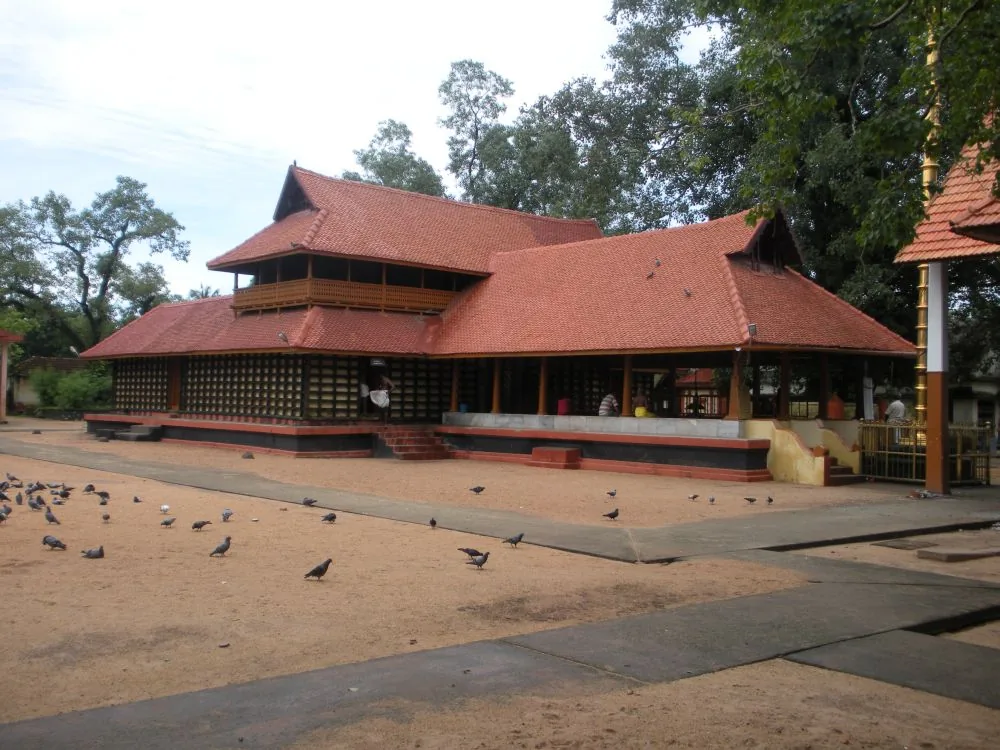
Central Alappuzha town temple (Mullakkal Rajarajeswari) famous for the annual Mullackal Chirappu festival.
14.3 km · ~24 min by cab · straight line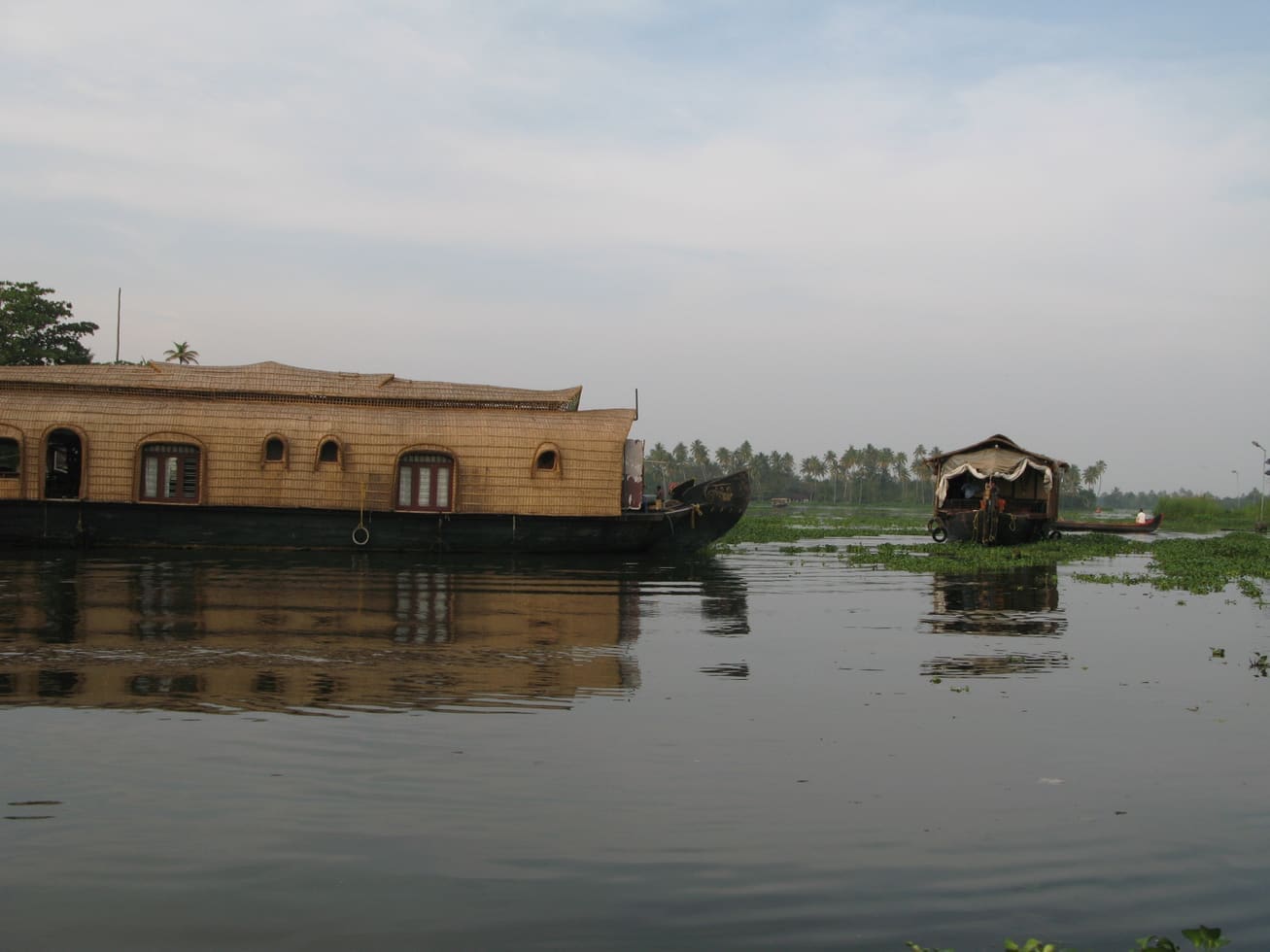
Backwater and houseboat hub with canals, beach, lighthouse and Finishing Point jetty.
14.3 km · ~24 min by cab · straight line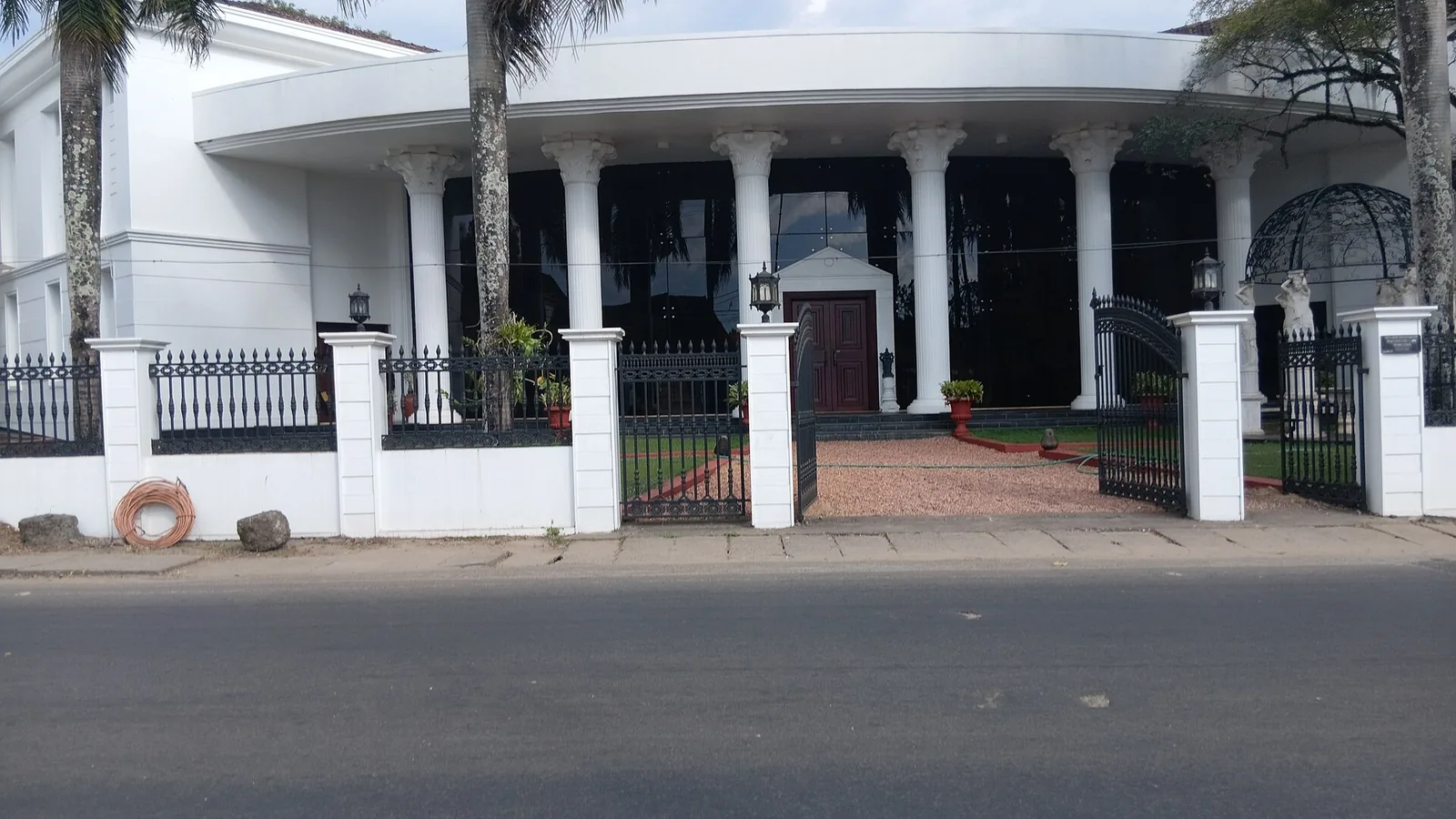
Private memorial museum in Thathampally with a large collection of paintings, ivory, crystal and antiques.
14.7 km · ~24 min by cab · straight line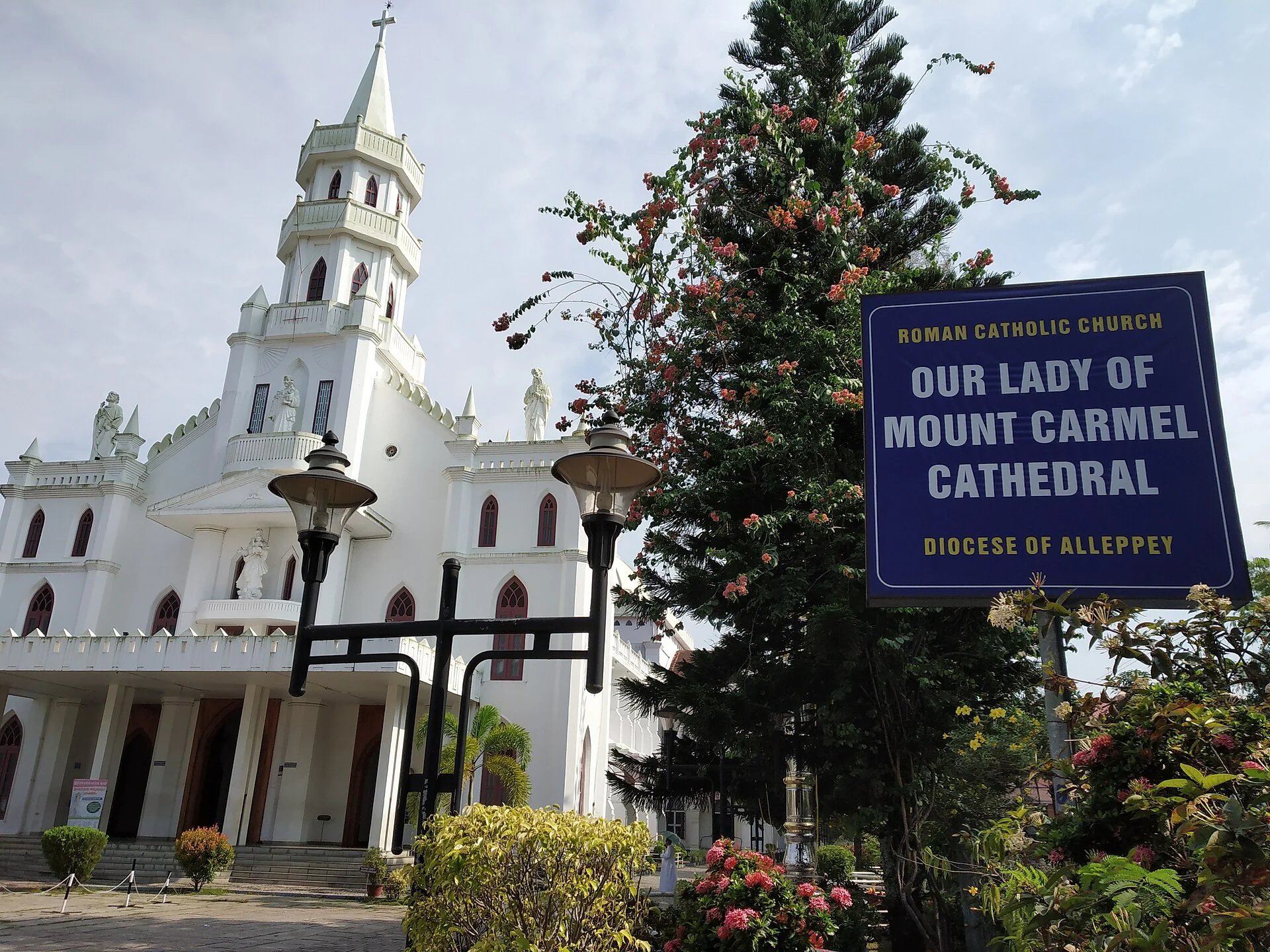
Landmark 19th-century cathedral of the Alappuzha diocese near the town centre.
14.9 km · ~25 min by cab · straight line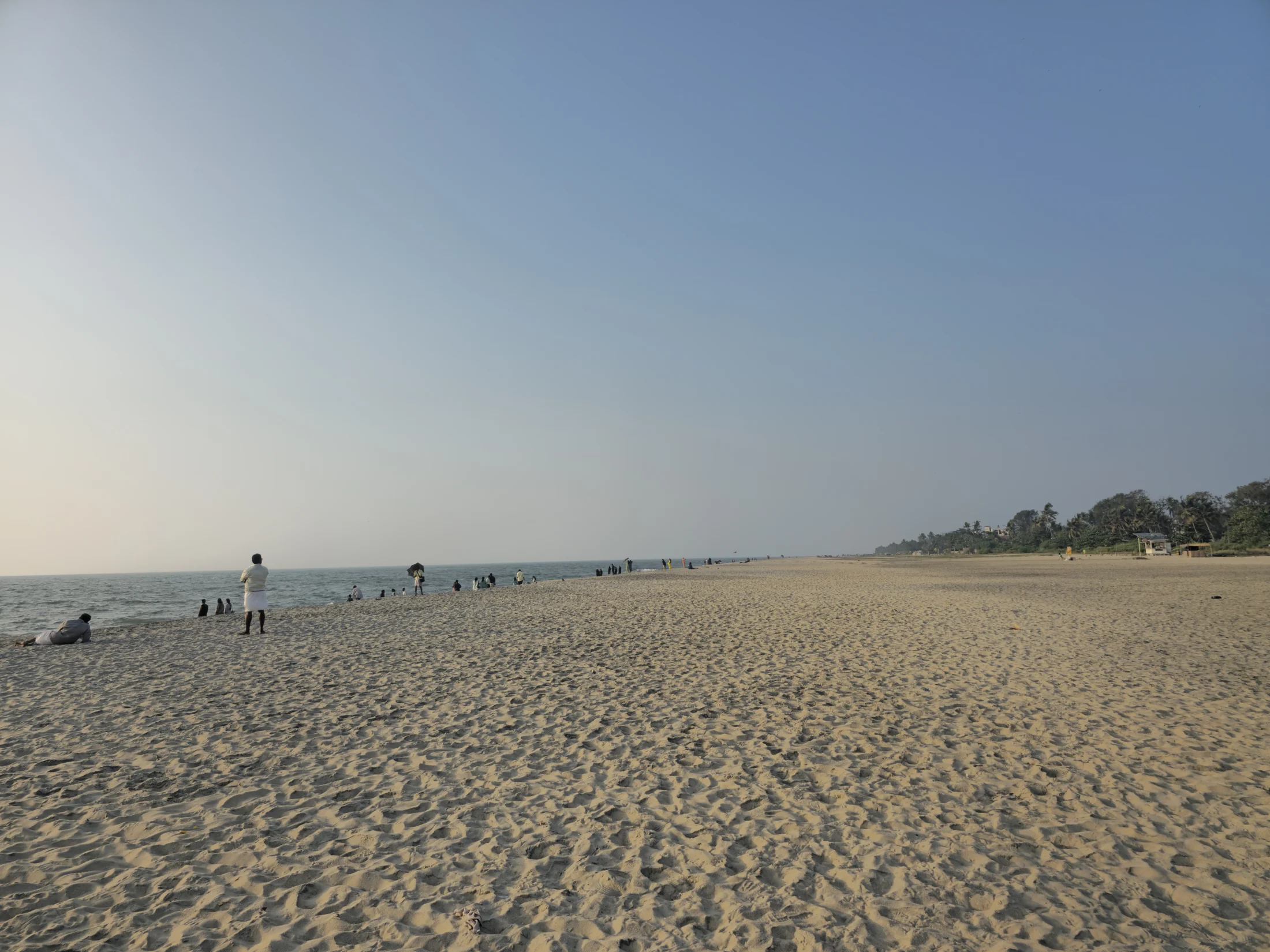
Pair Alappuzha’s broad town beach and old pier remains with the red-and-white lighthouse on C.C.S.B. Road, commissioned in 1862 and still maintained as a navigational light.
15.6 km · ~26 min by cab · straight line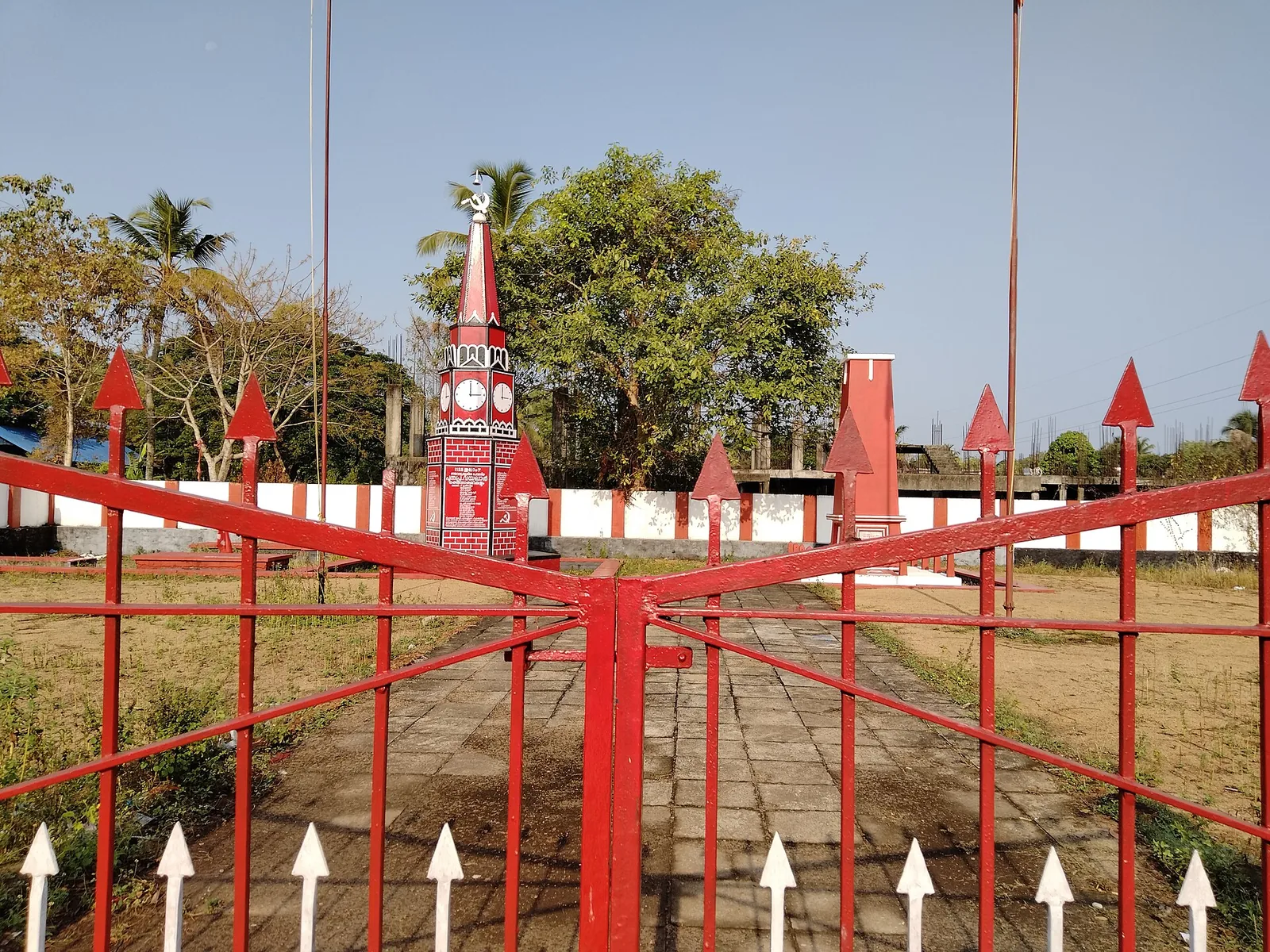
Martyrs’ memorial (Rakthasakshi Mandapam) to the 1946 Punnapra–Vayalar uprising, on the coastal belt north of Punnapra on the Alappuzha side.
16.7 km · ~28 min by cab · straight lineNearby toilets, pharmacies, ATMs, seating and vets are community-mapped and may be incomplete or out of date. Map data © OpenStreetMap contributors | Walking times © openrouteservice.org by HeiGIT
Only by boat — there is no road, bridge or land route to the island. Most visitors reach it on a houseboat or shikara (country boat) hired from Alappuzha, Kumarakom or the Muhamma jetty; it lies roughly 1.5 km off Muhamma and about a 20–30 minute ride from the Kumarakom side. Arrange the boat leg in advance, as you cannot simply drive up.
For birds, the northern-winter window of roughly November to February is best, when migratory species are present and the weather is cooler and drier for boating. Whatever the month, go early: the hour or two just after sunrise is by far the best for birdlife and light. The monsoon months make the island wet and marshy underfoot.
Any small island entry or eco-tourism charge, and the practical hours you can visit, are best confirmed on the day — they change and are tied to your boat operator and daylight. Realistically the “hours” are dawn-to-dusk, since the island is unlit and unstaffed at night and the whole trip depends on your boat. Budget mainly for the boat hire, which is the main cost.
No — Pathiramanal is uninhabited, with no shops, cafés or reliable facilities. Carry your own drinking water and anything you need, and plan to eat on your houseboat or back on the mainland. Take all your litter away with you; this is a fragile bird habitat with no waste service.
The island itself is small and a walk around it plus birdwatching takes roughly one to two hours. Most people fold it into a longer half-day or full-day backwater cruise from Alappuzha or Kumarakom, so allow extra time for the boat crossings at each end rather than treating it as a standalone stop.
Both. Dedicated birders come for the resident and migratory species, but casual travellers enjoy it just as much for the peace, the scenery and the boat ride across Vembanad Lake. It is an easy, gentle add-on to a Kumarakom or Kuttanad trip — no special skills needed, though comfortable shoes for soft, sometimes muddy ground help.
November to February is most comfortable and better for birding. Monsoon needs more flexibility because wind and rain can affect lake movement.
Entry: Any small island or eco-tourism entry charge is best confirmed locally on the day; the main cost is the boat hire to reach it. Timings: Effectively daylight hours only — the island is uninhabited and unlit, so visits run dawn to dusk and are tied to your boat operator’s schedule; early morning is best for birds.
Base in Alappuzha, Muhamma, Kuttanad or Kumarakom depending on the boat route. Confirm exact jetty, return point, life jackets and whether island landing is currently allowed. Use morning or late-afternoon light if birding and photography matter.
1 to 2 hours as a boat stop; half day when paired with a longer backwater route.
Nearby you can pair Thanneermukkom Bund (6.4 km), International Coir Museum (8.8 km), Cherthala Karthyayani Temple (8.9 km), Marari Beach (9.6 km).
Use boats with life jackets and avoid overloaded craft. Do not litter, play loud music or disturb bird habitat. Avoid lake trips during lightning, rough wind or poor visibility.
Written about Pathiramanal Island itself — its history, its legends and the arguments about them.
These guides explore Kuttanad and the surrounding area. Choose a visit that fits your interests, allowing separately for travel between stops.


Route-level itineraries and practical guides for the rest of Kerala.
Photographs: Vis M (CC BY-SA 4.0), Thilsebatti (CC0), Navaneeth Krishnan S, നവനീത് കൃഷ്ണന് എസ് (CC BY-SA 4.0), Manjithkaini (CC BY-SA 4.0). Wikimedia Commons.


