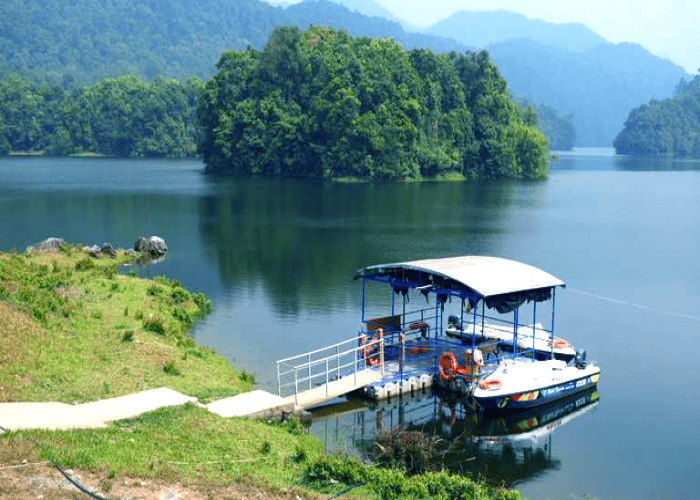
What to expect
Highlights
- Wildlife or forest landscape around Malabar Wildlife Sanctuary
- Official eco-tourism activities where available
- Nature guides, birding and forest-edge stays
Kozhikode’s last evergreen forest block, notified in 2009 under section 18(1) as a declaration of intention and never finally declared — there is no gate, no permit and no wildlife programme, and you cannot go in.
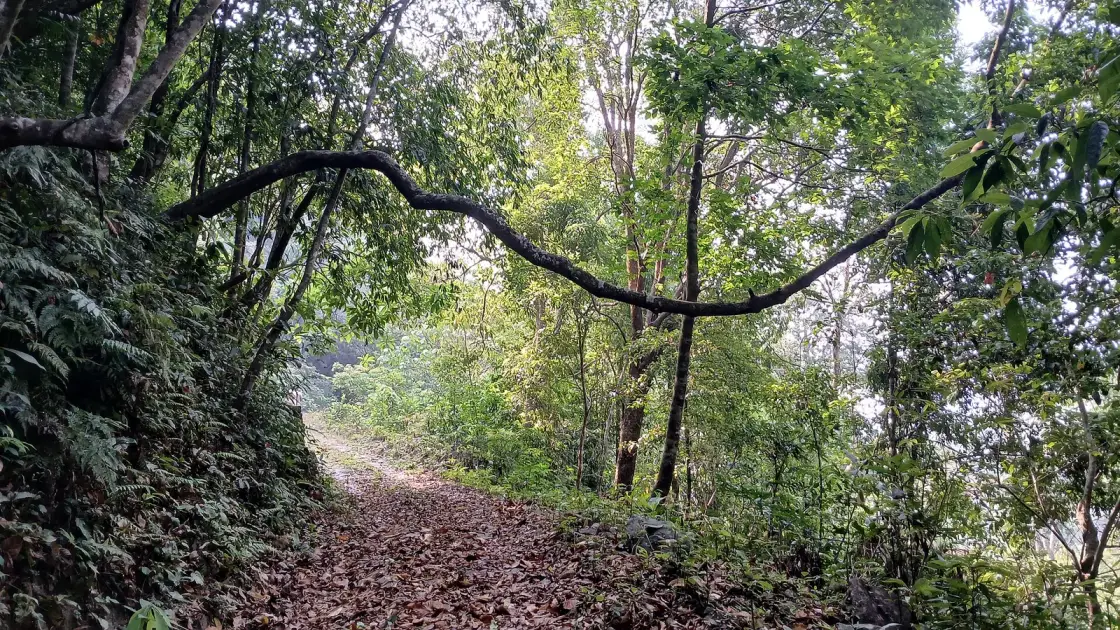
Malabar Wildlife Sanctuary is 74.215 square kilometres of the Western Ghats above Kakkayam, in Koyilandy taluk of Kozhikode district, and the honest thing to say about visiting it is that you cannot. There is no sanctuary gate, no ticket counter, no permit desk, no visitor centre and no wildlife-viewing programme. There is no safari and no birding hide. What exists at the western fringe are two escorted products sold by two different agencies for two different things — a reservoir and a dam site run by the electricity board's tourism arm, and a one-kilometre waterfall walk run by the Forest Department. Both stop at the edge. The sanctuary itself was notified on 5 June 2009 as a declaration of intention, and as far as any reachable record shows it has never been finally declared.
Most protected-area pages can write that a place was declared a sanctuary in a given year and move on. Malabar cannot, and that turns out to be the most interesting thing about it.
Kerala did not declare this sanctuary under section 26A of the Wildlife (Protection) Act, which is the section that produces a final, constituted sanctuary. It notified under section 18(1) — the declaration of intention. That is not a formality. It starts a statutory clock: a Collector is appointed to inquire into and determine the existence, nature and extent of any person's rights in or over the land; claims must be preferred within a stated period; and only when every claim has been disposed of can the state issue the notification that finally constitutes the sanctuary.
The 2009 proposal says plainly why it was done that way: rights over the reserve forests and the vested forests were yet to be settled. That is the standard Kerala pattern for a protected area assembled out of vested forest — land that came to the state through private-forest vesting legislation, and over which private claims are common and slow. We searched specifically for a subsequent section 26A notification and found none. That is a negative finding rather than proof of absence, but it is consistent with everything else about the place.
This framing explains everything downstream. It explains why the visitor infrastructure is thin. It explains why there is no wildlife division of its own and no Wildlife Warden — the sanctuary is run as territorial forest, from the Peruvannamuzhi Range of the Kozhikode Forest Division, and the trek permit is signed by a Section Forest Officer. It explains why visitor management and eco-restoration are handled through Vana Samrakshana Samithis, community forest-protection committees, rather than departmental staff. And it explains why nobody can simply walk in.
The date sequence gets collapsed almost everywhere, usually into 2010. Notification was 5 June 2009 — the Kerala Forest Department's own sanctuary table gives 2009. On 26 March 2010 the press was still calling it a proposed sanctuary, reporting that the Chief Conservator of Forests for the Northern Region had prepared a management plan and submitted it to the Chief Wildlife Warden for approval: nine months after notification, still awaiting sign-off. The public inauguration came on 8 August 2010, with the Forest Minister of the day, the local MLA presiding and a website launched. That inauguration is the event that generated the established-2010 line now carried by reference works and a thousand copies of them.
What the sanctuary is made of is worth reading closely, because it is not a wilderness. It was assembled from the Kakkayam and Pannikottoor reserve forests, the vested forests of Karampara Mala, Olathukki Malavaram, Sankaran Puzha and Attikode, and — deliberately — the waterspread of the Kakkayam reservoir. And of an original Pannikottoor block of about 2,200 hectares, roughly 400 were excluded: about 115 hectares earmarked for a tiger safari park, and about 94 leased to the Indian Institute of Spices Research.
A sanctuary drawn around a spice research station and a proposed safari park is a sanctuary drawn through a working landscape, not around a pristine one. The 2009 proposal is candid about the case for protecting it, and the case was never size or purity. It was that this is the only evergreen patch left in Kozhikode district — the phrase is in the proposal text — and that it had already been cut into pieces by hydroelectric development, plantations and settlement.
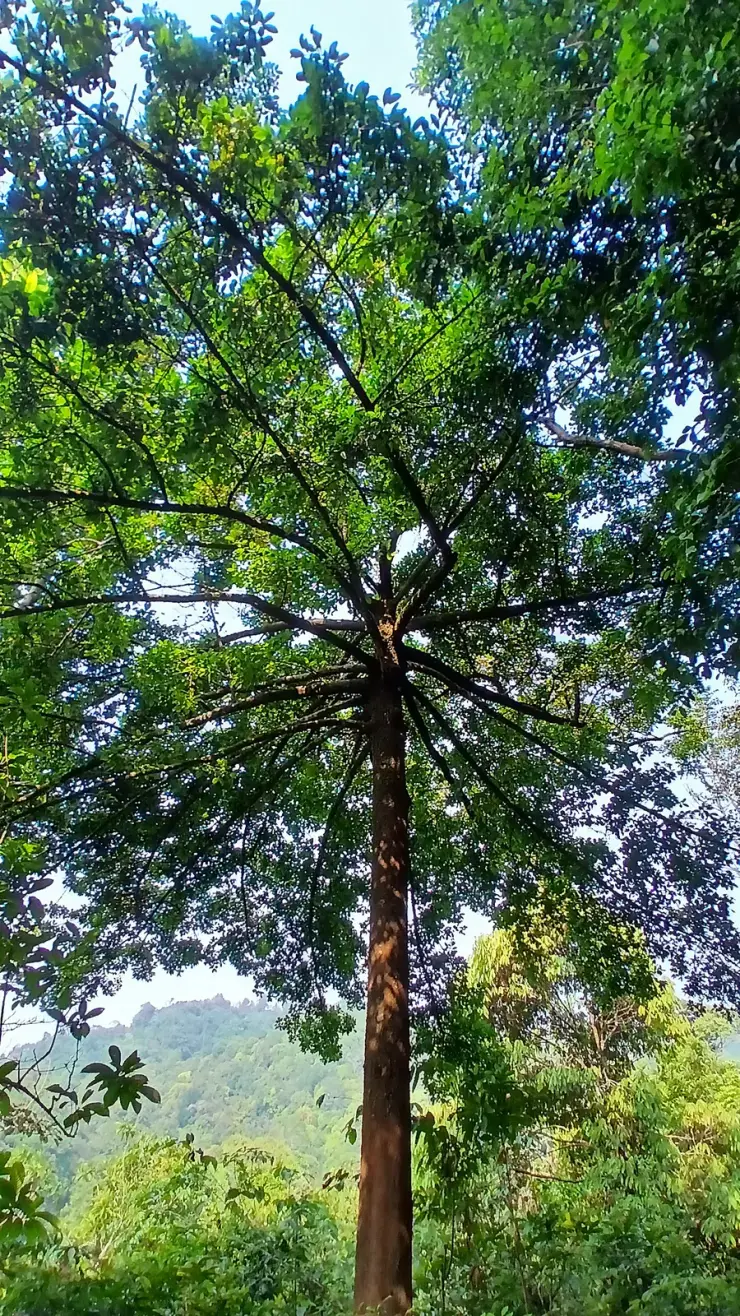
The gradient is the other reason. The sanctuary runs from about 40 metres above sea level to 1,506 metres, which across 74 square kilometres means near-lowland forest climbing into hill-top evergreen and grassland in a very short horizontal distance. Six forest types are recorded: west-coast tropical evergreen, west-coast semi-evergreen, southern moist mixed deciduous, southern hill-top evergreen, grasslands and marshy grasslands. Its own high point is Vannathimala at about 1,505 metres, which matches that stated ceiling almost exactly.
The first thing to correct is the altitude, because the error is on a state government website and will therefore keep coming back. Kerala Tourism's own ecotourism page says that Kakkayam is at an altitude of 2,500 metres above sea level and forms part of Malabar Wildlife Sanctuary. It is wrong by more than a factor of three, and three independent lines kill it. The 2021 peer-reviewed description of the shrub frog named after Kakkayam puts its type locality at about 750 metres. The sanctuary's own stated span is 40 to 1,506 metres, so 2,500 would be a full kilometre above the sanctuary's ceiling. And 2,500 metres would make Kakkayam one of the highest inhabited places in South India, which it plainly is not — it has a post office, a primary health centre, a police aid post and a telephone exchange. Our Kakkayam trek page traces the number to a signboard where a figure in feet was printed as metres.
The second is the word declared. Malabar was notified, under section 18(1), which is a declaration of intention. Writing that it was declared a sanctuary implies a section 26A final declaration that we cannot find any evidence of. The distinction is not pedantry — it is the reason the place is administered the way it is.
The third is the founding year. 2010 is the inauguration; 2009 is the notification, and the Forest Department's own table says so.
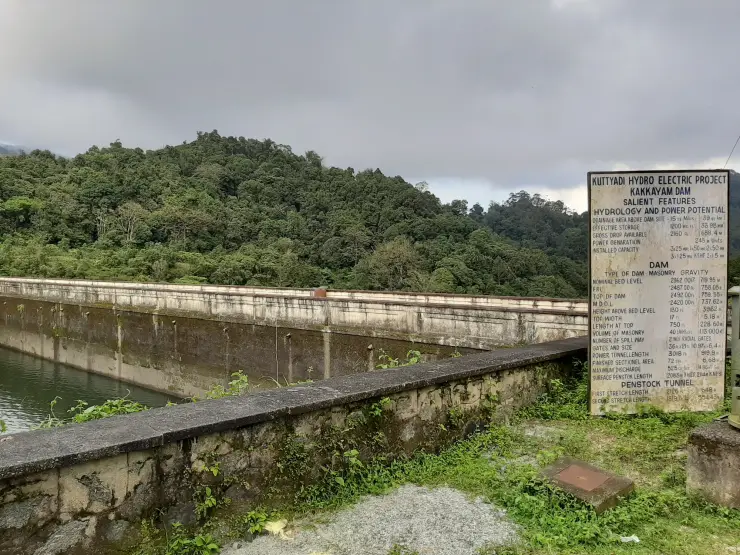
A fourth claim circulates locally and is more flattering than true: that this is Kerala's only hydroelectric project inside a sanctuary. It is not — Idukki Wildlife Sanctuary contains the Idukki complex, and Periyar Tiger Reserve the Mullaperiyar works. What is true, and still striking, is narrower: a 225-megawatt hydroelectric complex draws its water from this sanctuary's catchment, and the Kakkayam reservoir's waterspread lies inside the notified boundary rather than outside it.
A fifth: the sanctuary is not in Wayanad. It is in Kozhikode district, Koyilandy taluk. The confusion is understandable, because the eastern boundary runs along the Wayanad district line and the sanctuary belongs administratively to the Wayanad Elephant Reserve, but the forest is Kozhikode's. In the same vein, Vellarimala and Banasuramala are outside the sanctuary, not in it, and the heights of 2,050 and 2,100 metres attached to them in tourist copy are themselves inflated.
The sixth is the one that matters most for anyone planning a trip. You will read that this is a place to see tigers and elephants, and the boat operator's own copy promises that visitors will view herds of elephants and bison grazing in the catchment area. Tiger, leopard, elephant and gaur are all on the recorded species list for the sanctuary. But there is no safari, no game drive and no wildlife-viewing programme of any kind here. What is actually on offer is a walk to a waterfall and a boat ride on a reservoir. Any sighting is incidental, and that promise is marketing copy from an electricity board's tourism arm rather than an ecology statement.
Finally, a boundary caution for anyone tempted to trace one off a map. The single OpenStreetMap polygon for this sanctuary encloses about 52 square kilometres against a notified 74.215, and it excludes the Kakkayam reservoir, the dam and Urakkuzhi Falls — all of which the notification includes or sits beside. It appears to trace only the eastern core block against the Wayanad district line. We are not publishing an area or a boundary derived from it, and neither should anyone else.
Three organisms carry this forest in their formal scientific identity, which for a 74-square-kilometre sanctuary notified in 2009 is a remarkable density of type localities — and it is the strongest argument that this is a protected area rather than a scenic reservoir.
The first is Raorchestes ochlandrae, the Ochlandra reed frog, described in 2007 with its type locality at Kakkayam Reserve Forest. It is small — males 22 to 26 millimetres — squat and flattened, with golden-yellow bands edged in dark brown running from the upper eyelid down the flanks. What makes it a story is where it lives. It is found in dense stands of the reed bamboo Ochlandra setigera at forest edges, and it does not merely perch on the bamboo: it lives inside it, in the hollow internodal chambers of the culm, two to three metres above the ground. The species epithet is a formal statement that the animal cannot be separated from that one plant. It has since been found at other Western Ghats sites, so the old line that it is known only from Kakkayam is superseded; the type locality is the durable claim.
The second is Glyptotermes chiraharitae, a dampwood termite described in 2016, with its type locality given as Malabar Wildlife Sanctuary. The epithet means ever-green, for the forest it was found in. A dampwood termite is an indicator organism: it needs decaying wood held at high moisture, which means closed-canopy evergreen forest with a functioning deadwood cycle. Its discovery six years after the inauguration is evidence that the sanctuary's least glamorous habitat — rotting logs on a wet slope — was doing its job.
The third puts the place-name in the binomial. Raorchestes kakkayamensis, the Kakkayam shrub frog, was described in 2021 from an adult male collected at Kakkayam, at around 750 metres, on leaf litter and low vegetation. Its type locality lies north of the Palghat Gap, the great biogeographic break in the Western Ghats either side of which shrub frog lineages have been diverging for millions of years. The IUCN lists it as Data Deficient, and it is known only from its type locality. Read that against the notification: a frog known from nowhere else on Earth was described in 2021, and the forest it lives in is held by a declaration of intention.
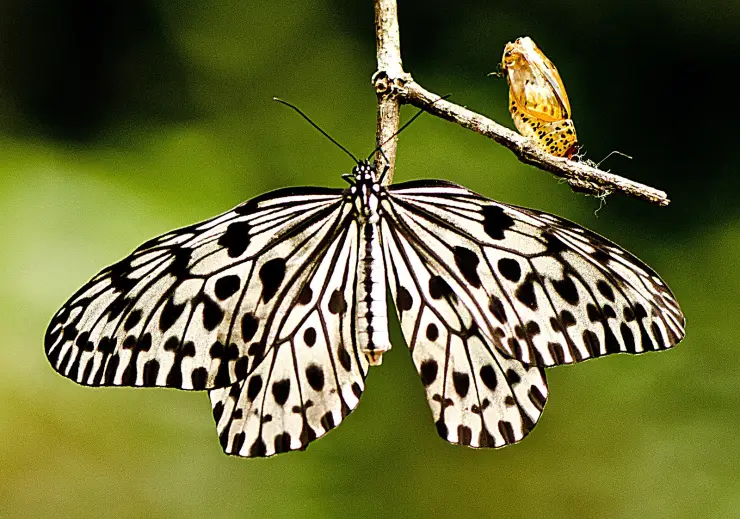
The broader inventory comes from the management plan prepared for the Northern Region and reported in March 2010, and it is internally consistent in a way copied lists usually are not: 680 flowering plants of which 226 are Western Ghats endemics, 41 mammals of which 6 are endemic, 179 birds with 10 endemics, 36 reptiles with 12, 38 amphibians with 26, and 52 fishes with 8. The six endemic mammals are named consistently across sources: lion-tailed macaque, Nilgiri langur, brown palm civet, stripe-necked mongoose, dusky palm squirrel and Malabar spiny dormouse. The Malabar Natural History Society records 94 butterflies here, twelve of them legally protected, with the Malabar tree nymph as the flagship. Two figures drift a little between sources and are best given as ranges — the bird count is 179 in the plan and about 180 including 14 migratory species in the inauguration reporting.
The sanctuary's memberships are real and verifiable rather than decorative. It lies within the Nilgiri Biosphere Reserve, established in September 1986 as India's first under UNESCO's Man and the Biosphere programme, 5,520 square kilometres across three states; the Kerala environmental information centre's database records a Kozhikode division component of 387.60 square kilometres explicitly including the Kuttyadi and vested forests, which is what Malabar is made of. It also lies within the Wayanad Elephant Reserve, notified on 2 April 2002 under Project Elephant, which the Forest Department's own page describes as comprising reserve forest and protected areas across the Wayanad, South Wayanad, North Wayanad, Kannur and Kozhikode divisions. The chronology is worth printing: the elephant reserve came first in 2002 and the sanctuary second in 2009. Elephants were being managed as a unit here seven years before the forest got its own status.
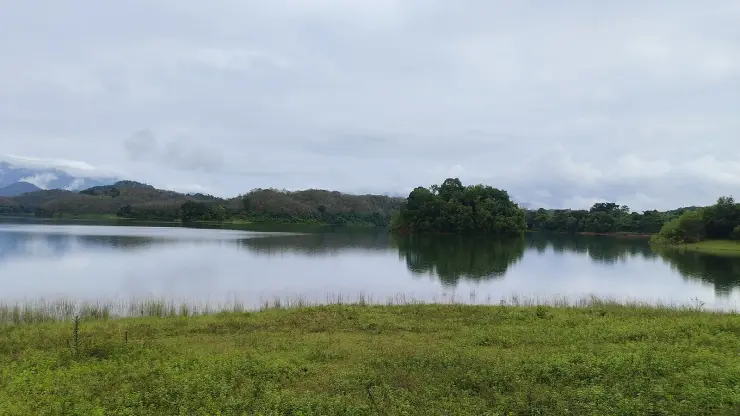
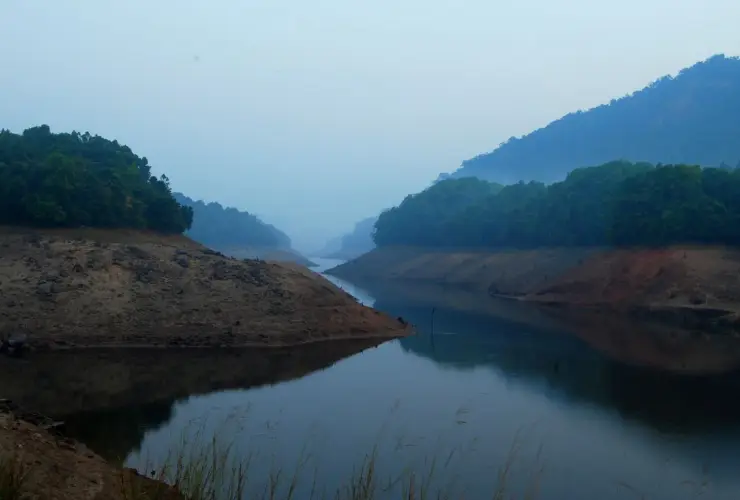
And the relationship with the dam is not adversarial in the way it first looks. These forests are the catchment of the Kuttiadi river, which feeds the reservoirs the hydroelectric complex runs on. Protecting the forest protects the water that turns the turbines, and the notification deliberately swallowed the Kakkayam reservoir's waterspread rather than excluding it. The dam is, in a legal sense, a tenant of the protected area, and the boat that carries visitors crosses sanctuary water.
Understand first that you cannot visit the sanctuary itself. There is no gate, no permit and no programme — the two things you can do are at the fringe, and they are the Kakkayam dam site and the Urakkuzhi walk.
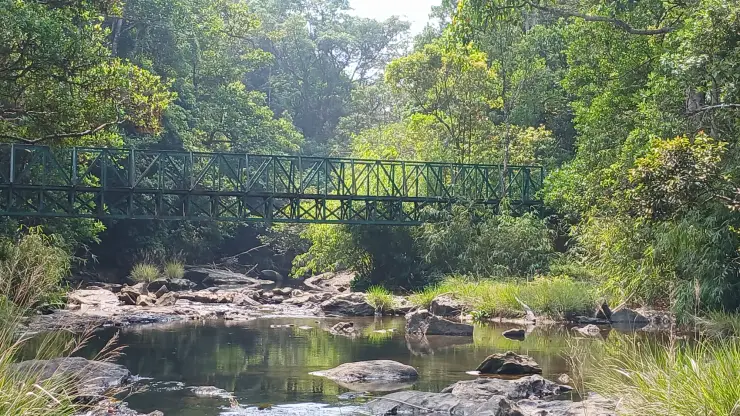
The Kakkayam dam site, run by the electricity board's hydel tourism arm, gives you the reservoir, the boat and the view into the gorge — on water that lies inside the notified sanctuary boundary.
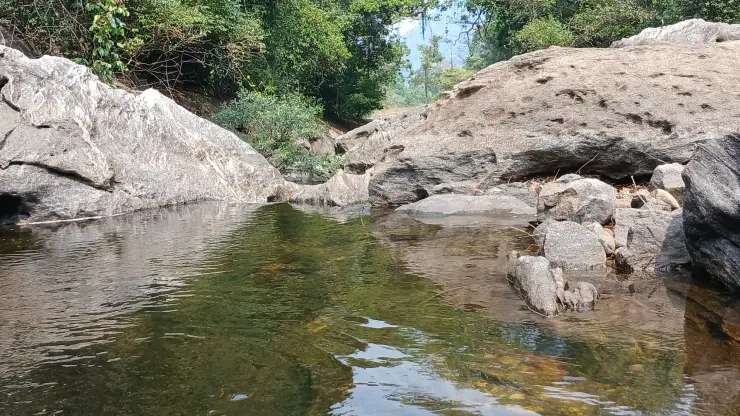
The Urakkuzhi trek, run by the Forest Department, is about a kilometre from the dam site down to the head of the falls, and it is the only walking in the sanctuary open to visitors.
The reason the forest matters is not scenery: three species carry this place in their scientific names, and one of them — the Kakkayam shrub frog, described in 2021 — is known from nowhere else on Earth.
The altitude span is the ecological point. Forty metres to 1,506 across 74 square kilometres, from near-lowland forest to hill-top evergreen and grassland.
Road km to Kozhikode; ghat roads and traffic vary — allow extra.
Dryer months are easier for wildlife access; monsoon access depends on local rules.
Live forecast loads in your browser.
Check the official alert before you travel. Kerala’s beaches, waterfalls and trekking routes close at short notice during heavy rain, and district alert levels change day to day. We do not publish an alert level of our own — read it from the state authority: Kerala State Disaster Management Authority, or the district control room on 1077.
Sun and moon are calculated for this location and shown in IST. Photography windows are the hour around sunrise and sunset; the sunset bearing is degrees clockwise from true north. Moon phase is accurate to about half a day.
These are official or public-sector eco offerings that match this place, town or forest destination. Confirm availability, permits, tariffs and reporting times with the official operator before travel.
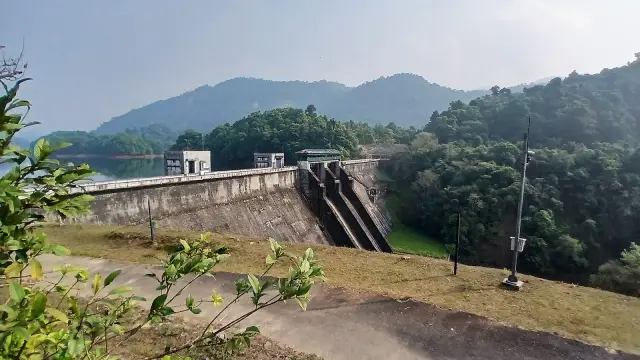
Forest Department sightseeing in the Kakkayam reservoir landscape. Ask the local counter which Urakkuzhi paths and viewpoints are admitted; reservoir boating is a separate service.
Official source →Lake and forest-edge destination in Kozhikode district, included in Kerala Tourism’s ecotourism destination list.
Official source →Hill trek/viewpoint landscape where district borders meet, listed by Kerala Tourism as an ecotourism destination.
Official source →Verified hotels, homestays, restaurants, experiences, sights, shops and rentals around Malabar Wildlife Sanctuary — commission-free, with direct contact. Filter by what you need.
Kerala Hydel Tourism Centre source for Kakkayam Reservoir boating and access context. Reservoir, Hydel tourism, Kozhikode high ranges.
Book with the place itself. India’s cyber-crime coordination centre warned in April 2025 that convincing copies of hotel and pilgrimage booking sites are being pushed through sponsored search and social ads, taking payment for rooms the property never hears about. Every listing here links to the business’s own contact details and its own Google or Bing profile — we take no commission and sit in nobody’s payment path. If a booking page reached you through an ad, check the address bar against the property’s own site before you pay. Fraud can be reported on cybercrime.gov.in or on 1930.
Find food, accommodation and activities across Kakkayam. Browse the guides for places to eat, stay and explore along your route.
4 more places around Kakkayam. Open a guide to plan the visit and onward journey.
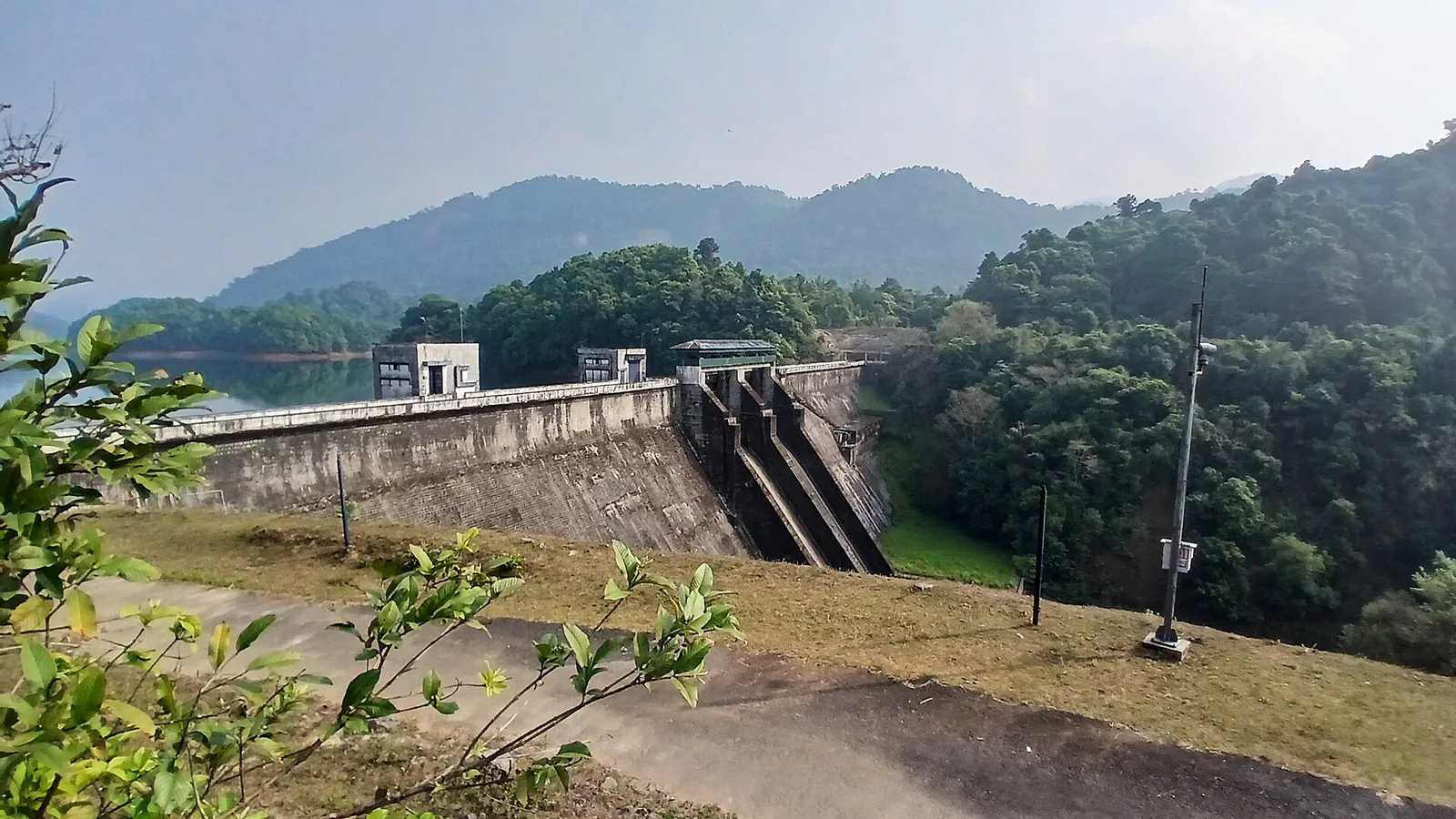
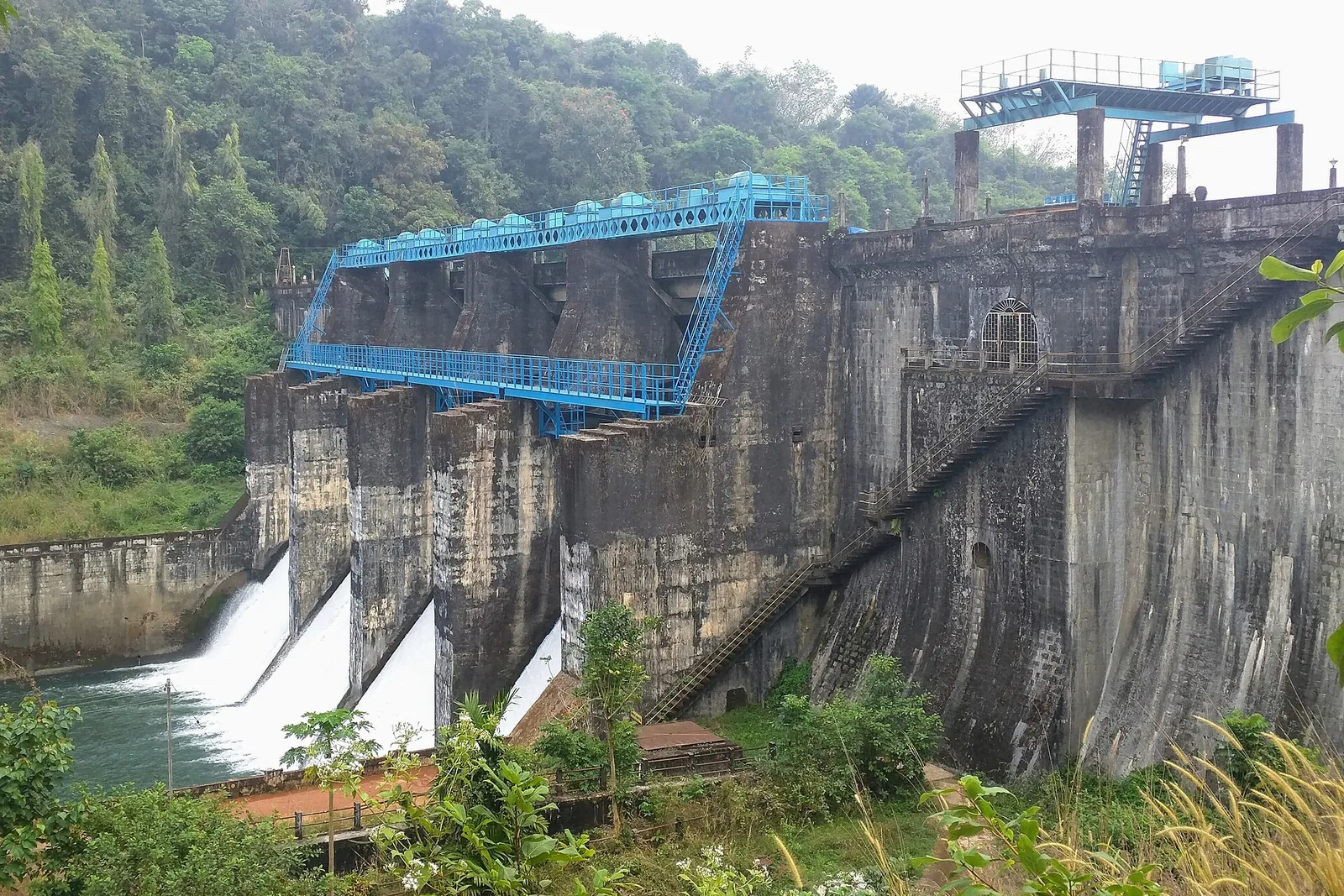
6.4 km · ~16 min by auto
Reservoir and forested day-trip area in the Western Ghats foothills.
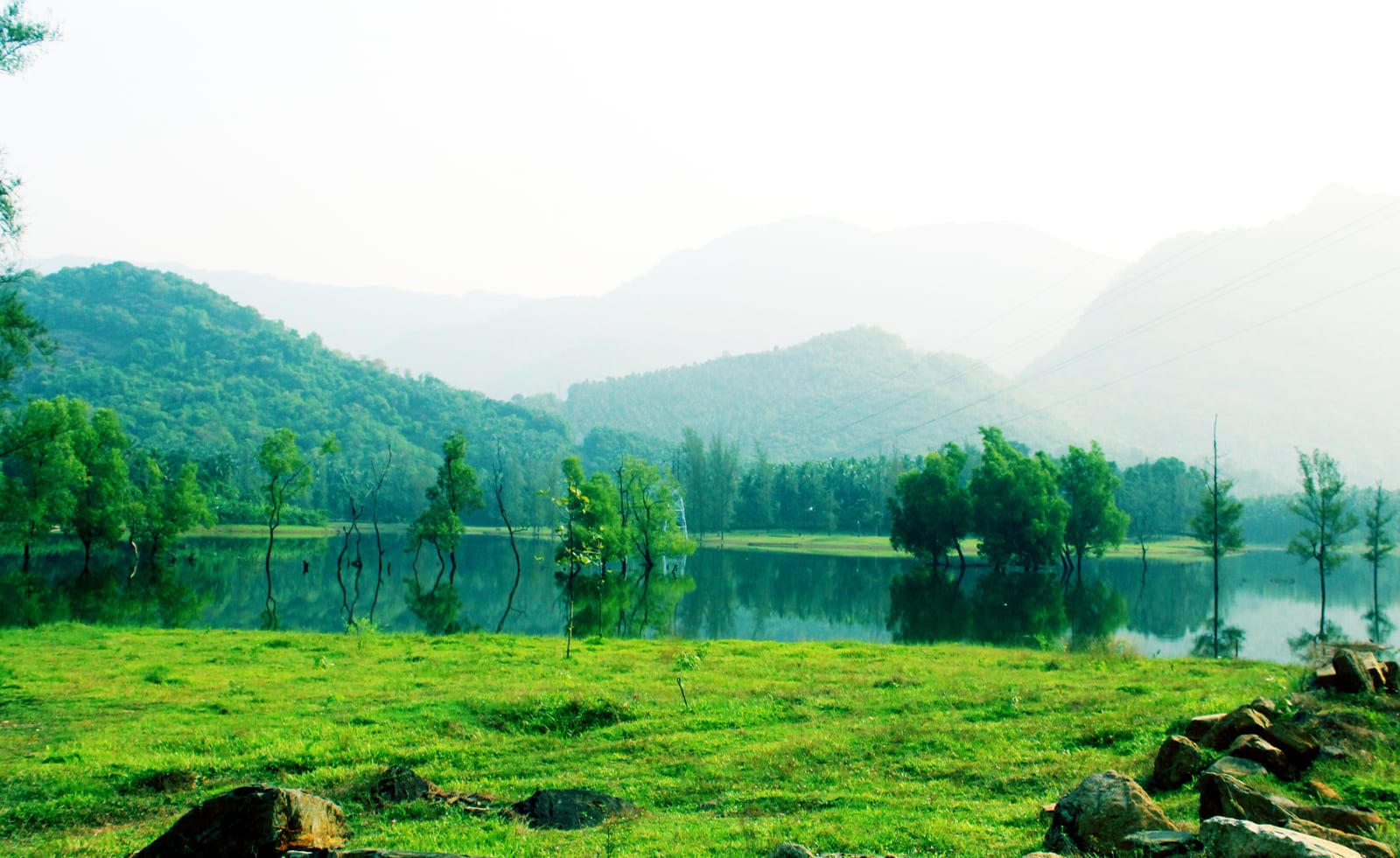
15.7 km · ~26 min by cab
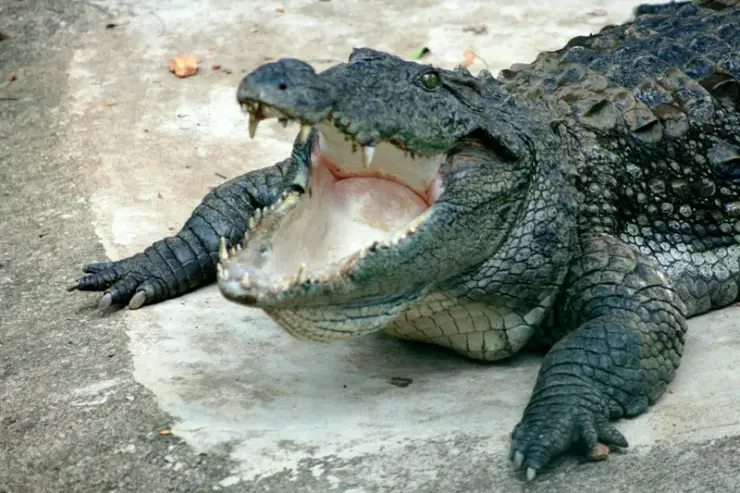
Irrigation reservoir and boating spot in the Kozhikode high ranges, with a 1977 government crocodile breeding centre on the shore.
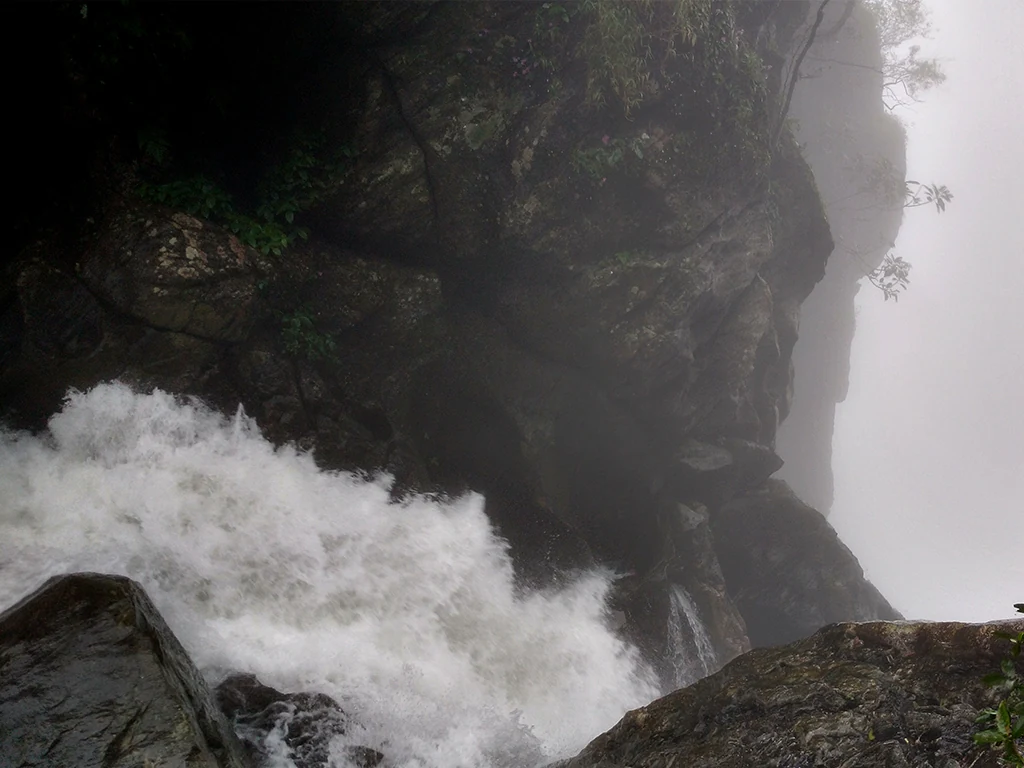
10.0 km · ~17 min by cab
A ticketed riverside bathing and picnic centre on Irrigation Department land where the Kuttiyadi runs over a bedrock sheet into the head of the Peruvannamuzhi backwater — at 57 m, with no drop and no forest permit, but a serious drowning history.
9.0 km · ~15 min by cab
The managed forest outing towards Urakkuzhi Falls above Kakkayam, distinct from reservoir boating. Confirm the admitted route with the forest counter: recent reports describe restrictions at the waterfall viewpoint and Shankaranpuzha.
Roampedia is commission-free — own or know a stay, eatery, guide or shop near Malabar Wildlife Sanctuary? List it and it appears here once verified.
Add a nearby businessEntry: ⚠ TWO DIFFERENT TICKETS FROM TWO DIFFERENT AGENCIES — never average them, which is how the aggregator figures went wrong. KAKKAYAM DAM SITE, operated by Kerala Hydel Tourism (KSEB), from the operator's own tariff table: entry ₹30 adult / ₹15 child; jeep two-way pass ₹350; still camera ₹50, professional camera ₹600, video camera ₹1,000; parking ₹10 for a two-wheeler up to ₹100 for a big bus. Boating is ₹750 per boat per trip, up to five passengers plus a driver — not per person. URAKKUZHI TREK, operated by the Divisional Forest Office, Kozhikode, as listed on the state tourism site: ₹40 Indian adult / ₹20 child / ₹60 foreigner. ⚠ The ₹20/₹10/₹60 figures on aggregator sites match neither table and are not a GST variant of either. The Forest Department's own booking platform could not be reached from this connection; if it disagrees with ₹40, the department's own site wins.
Dress code: Nothing formal. Shoes with real grip for the walk, and salt or a lemon for leeches during and after the monsoon.
Festivals: None. This is forest, not a festival site.
Photography: At the dam site cameras are separately ticketed by the hydel tourism operator — ₹50 still, ₹600 professional, ₹1,000 video — and the operator's own note is that a camera holder must also hold an entry pass.
If you are travelling by bus or ferry, check the return service with the operator before setting out. Leave time to reach the stop or jetty after your visit.
Ask at the bus stand for the time of the last service back, not the next one. If you miss it, an auto or app cab is the fallback — agree the fare before you get in.
If you need step-free access, contact the site before travelling. Ask about a level entrance, steps along the route, the nearest drop-off point, seating and accessible toilets.
Emergency numbers are verified against official government and state tourism sources. 112 works anywhere in India.
Reservoir and forested day-trip area in the Western Ghats foothills.
6.4 km · ~16 min by auto · straight lineThe managed forest outing towards Urakkuzhi Falls above Kakkayam, distinct from reservoir boating. Confirm the admitted route with the forest counter: recent reports describe restrictions at the waterfall viewpoint and Shankaranpuzha.
9.0 km · ~15 min by cab · straight lineA ticketed riverside bathing and picnic centre on Irrigation Department land where the Kuttiyadi runs over a bedrock sheet into the head of the Peruvannamuzhi backwater — at 57 m, with no drop and no forest permit, but a serious drowning history.
10.0 km · ~17 min by cab · straight lineIrrigation reservoir and boating spot in the Kozhikode high ranges, with a 1977 government crocodile breeding centre on the shore.
15.7 km · ~26 min by cab · straight line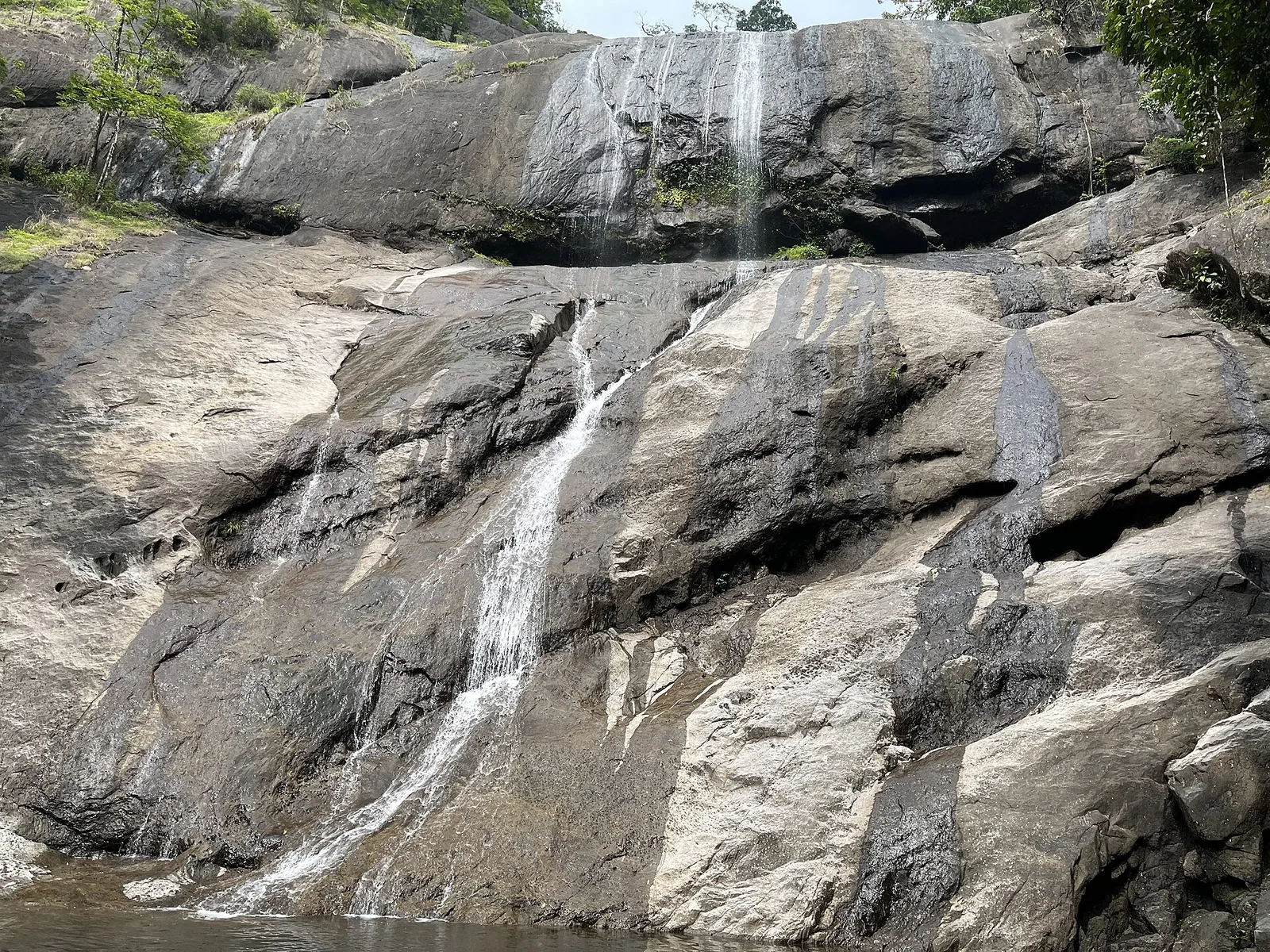
Waterfall and trekking area in the foothills east of Kozhikode.
16.1 km · ~27 min by cab · straight line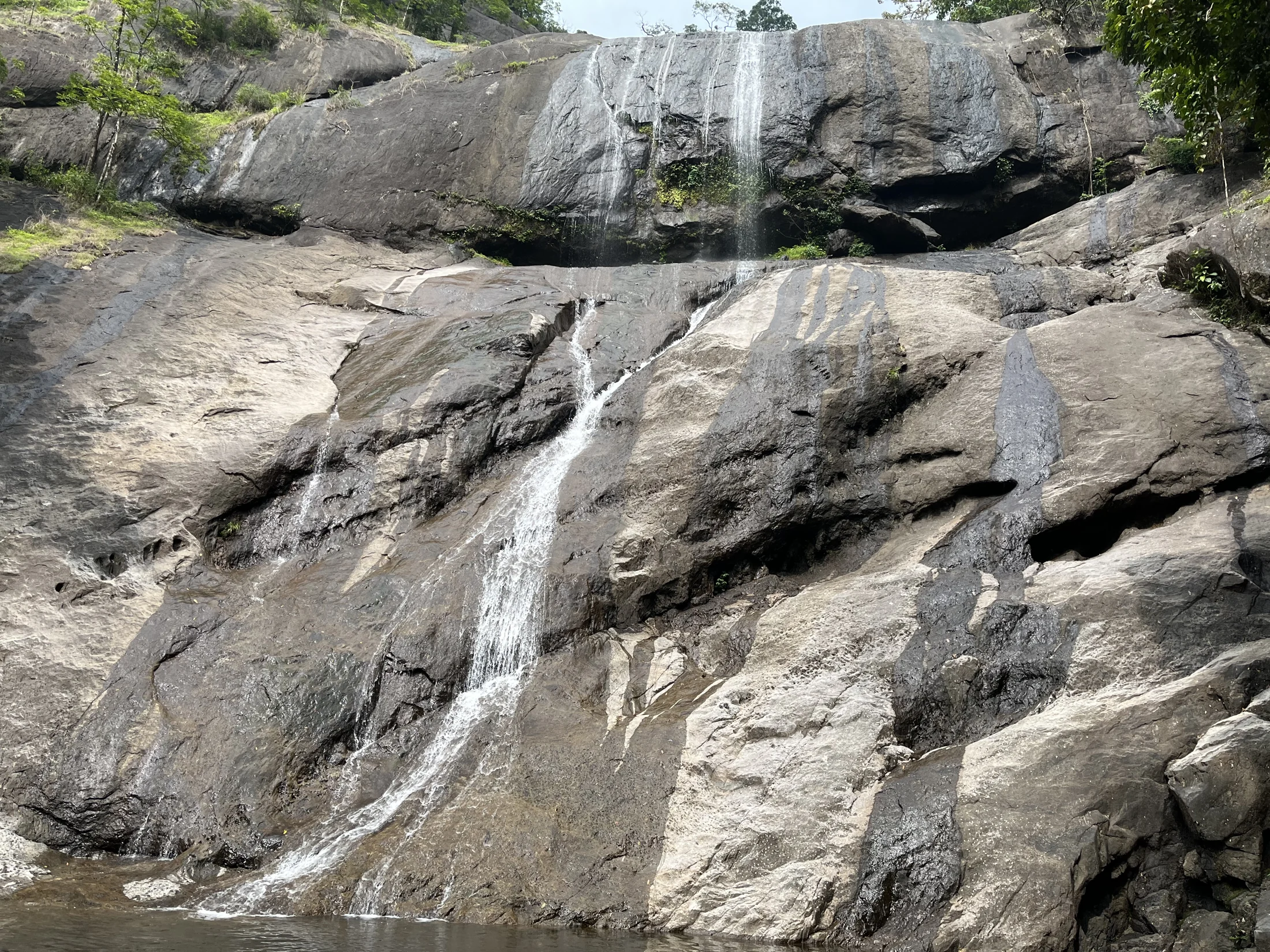
Forest Department waterfall trails near Kodencherry in Kozhikode: distinguish the ordinary waterfall entry, the Thumbithullumpara route and the separately approved Thenpara interior-forest trek.
16.1 km · ~27 min by cab · straight line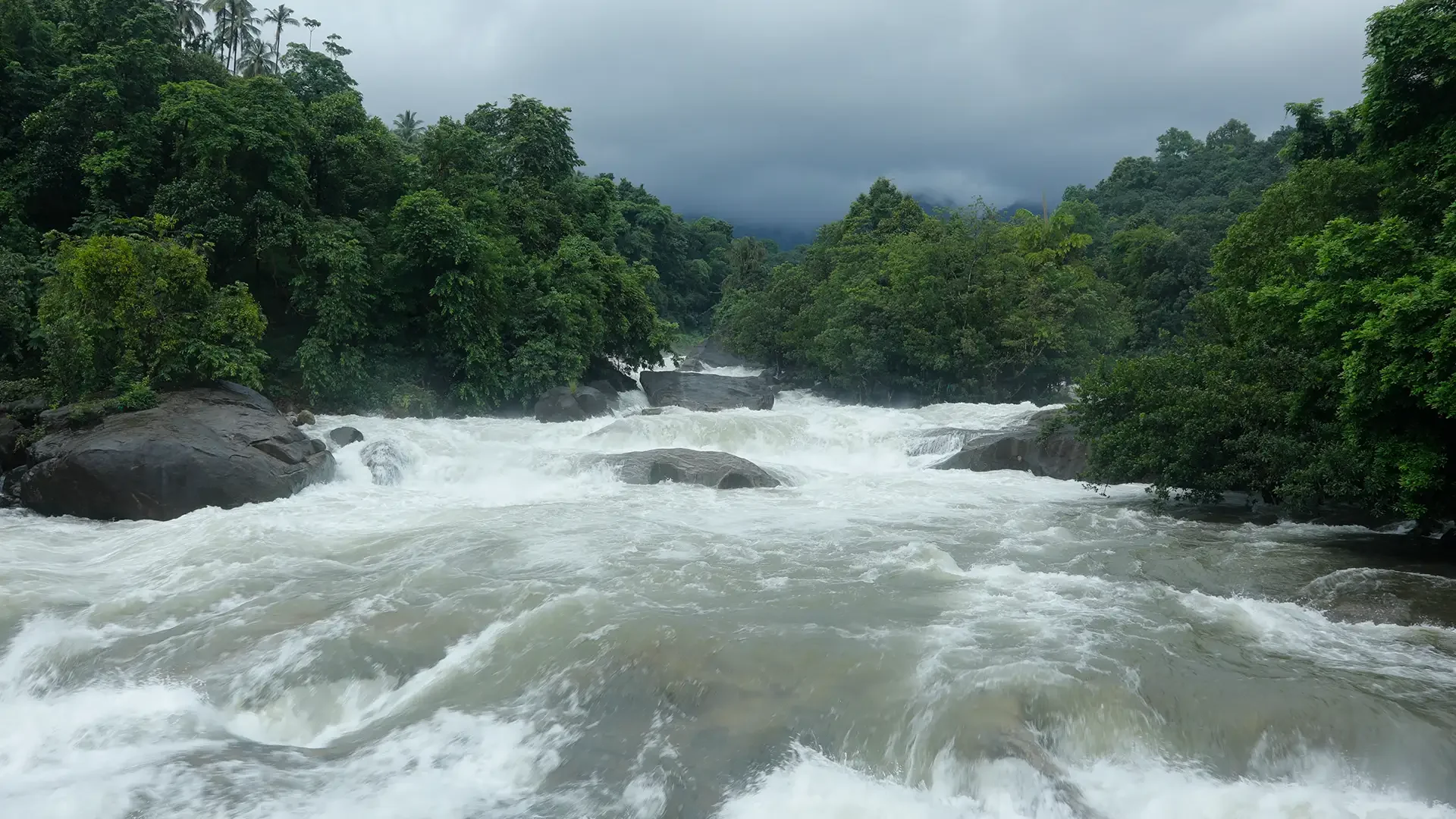
Arippara is a sequence of rocky cascades on the Iruvanjippuzha near the Thiruvambady–Anakkampoyil route, with a visitor approach beside a hanging bridge; it is separate from Thusharagiri.
19.0 km · ~32 min by cab · straight line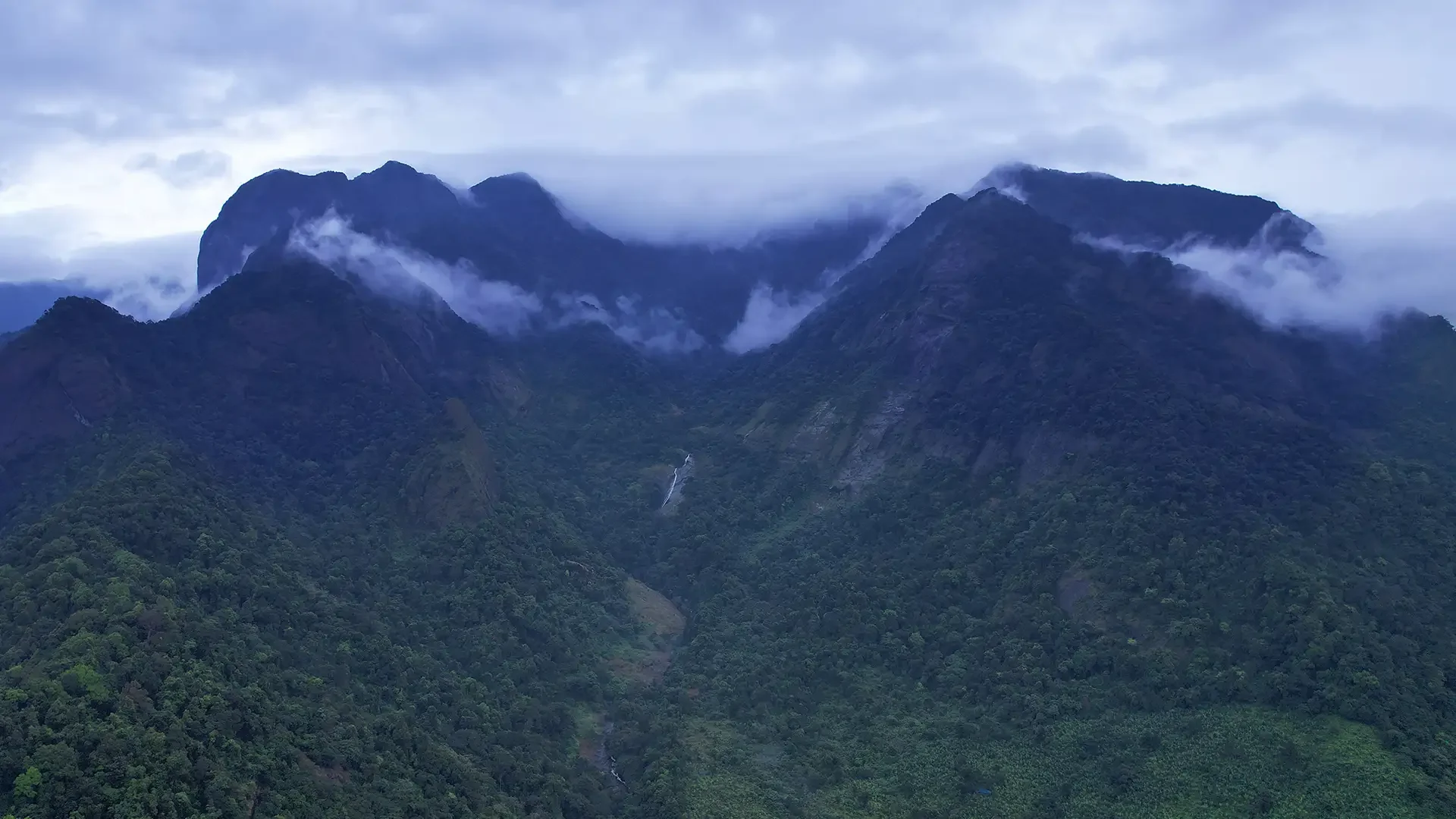
Vellarimala is the mountain range above Muthappanpuzha, extending across Kozhikode and Wayanad. The arrival pin identifies Muthappanpuzha village, not the summit or an authorised trail entrance.
20.8 km · ~35 min by cab · straight line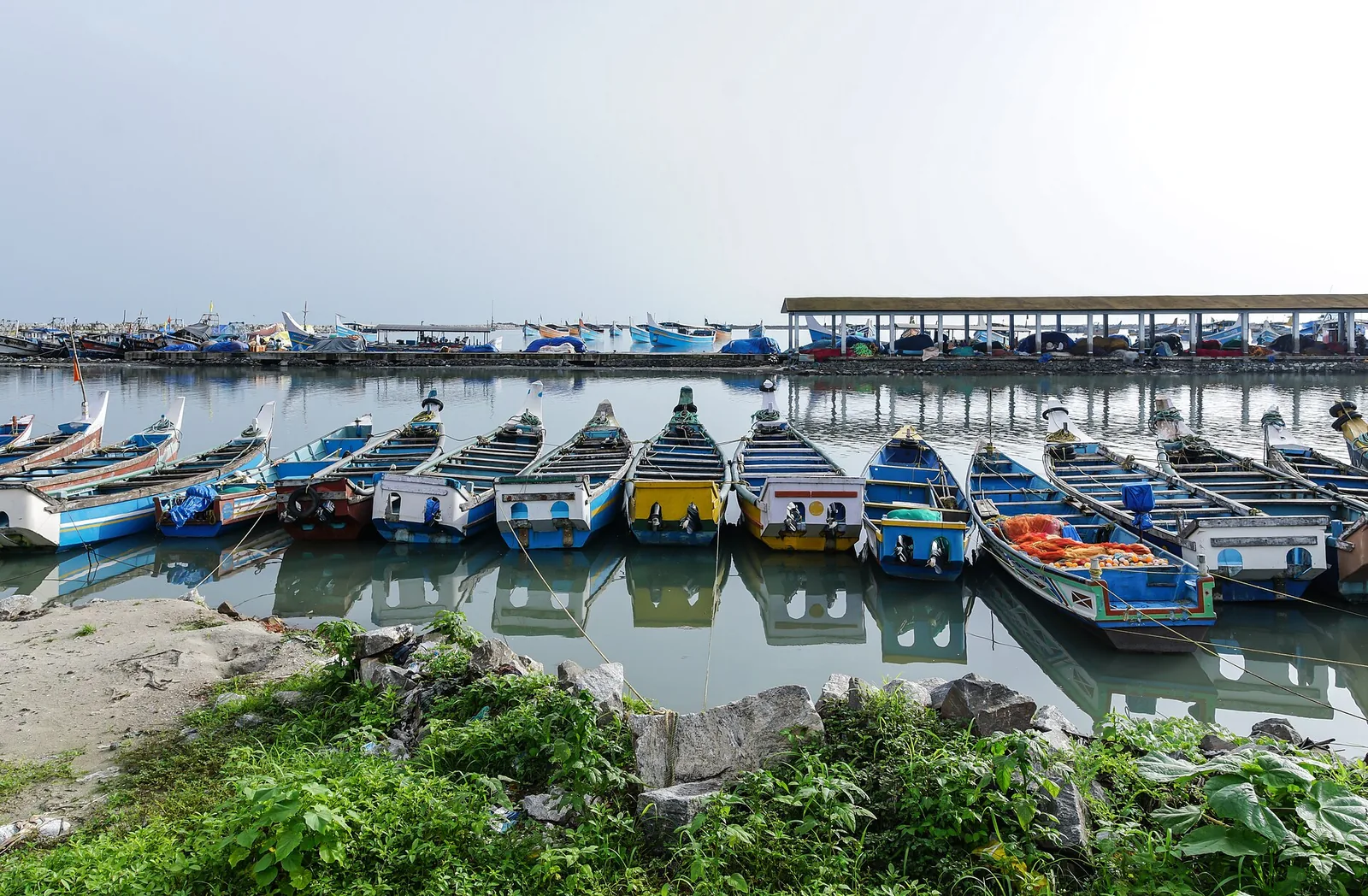
The medieval port of Panthalayani Kollam — Ibn Battuta’s Fandarayna, where Chinese junks wintered, and the anchorage where da Gama’s fleet lay 88 days in 1498. Nothing of the port survives above ground; the working fishing harbour is what you come for.
34.8 km · ~58 min by cab · straight line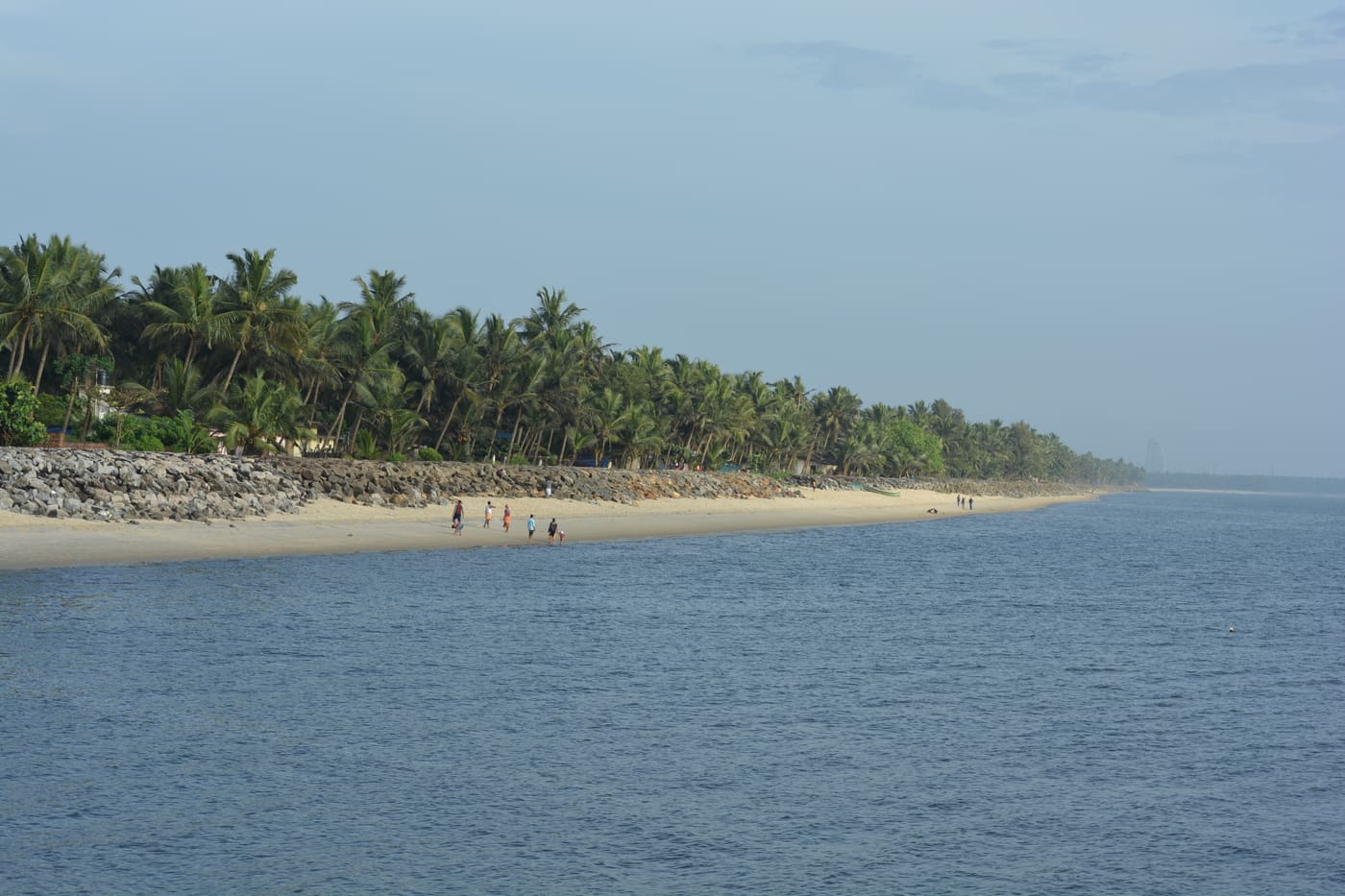
Historic beach associated with Vasco da Gama’s arrival on the Malabar coast.
35.6 km · ~59 min by cab · straight line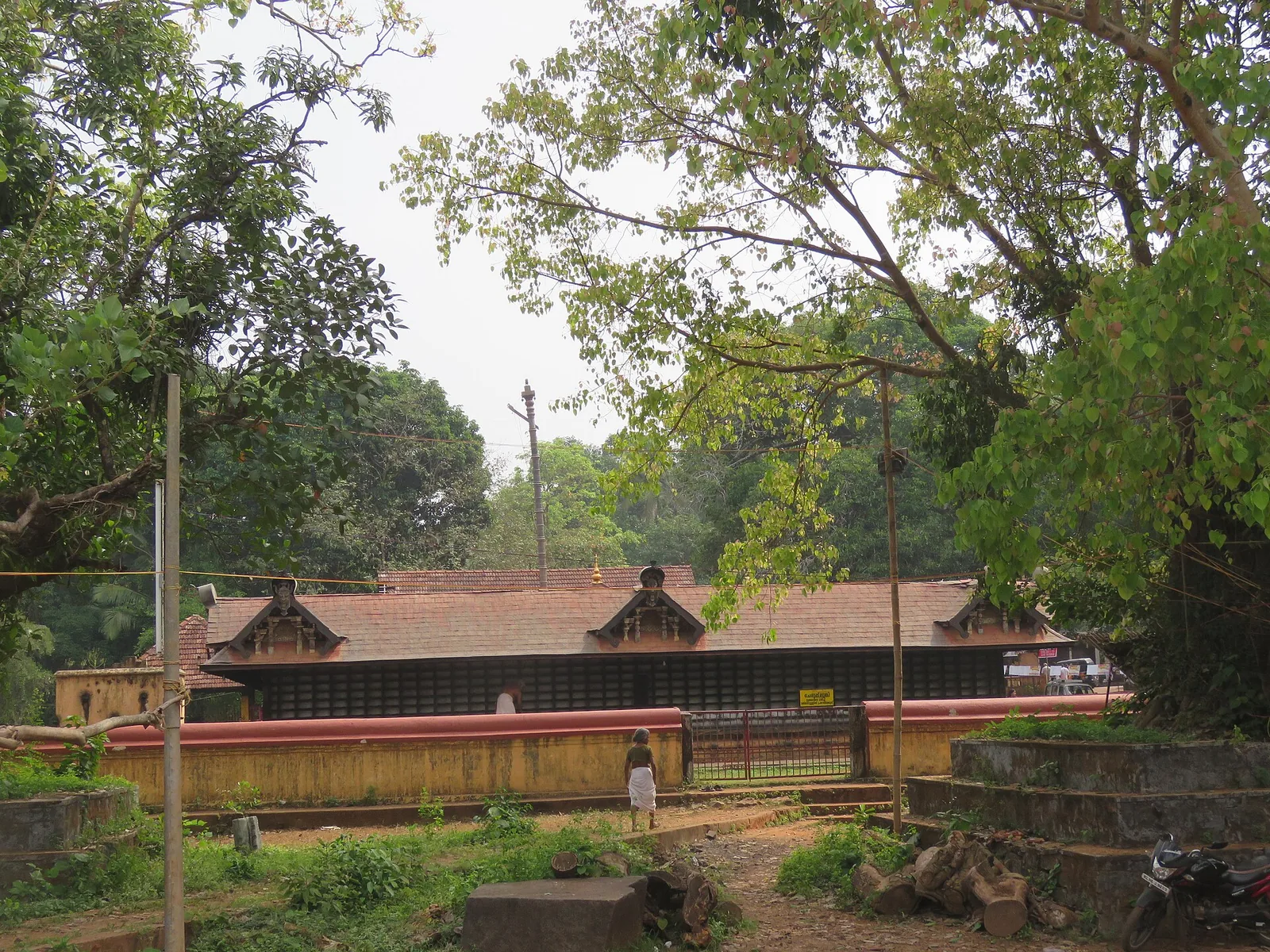
Ancient Durga/Bhagavathy temple at Vadakara, celebrated in the Vadakkan Pattukal and linked to the Kalaripayattu hero Thacholi Othenan.
37.9 km · ~63 min by cab · straight line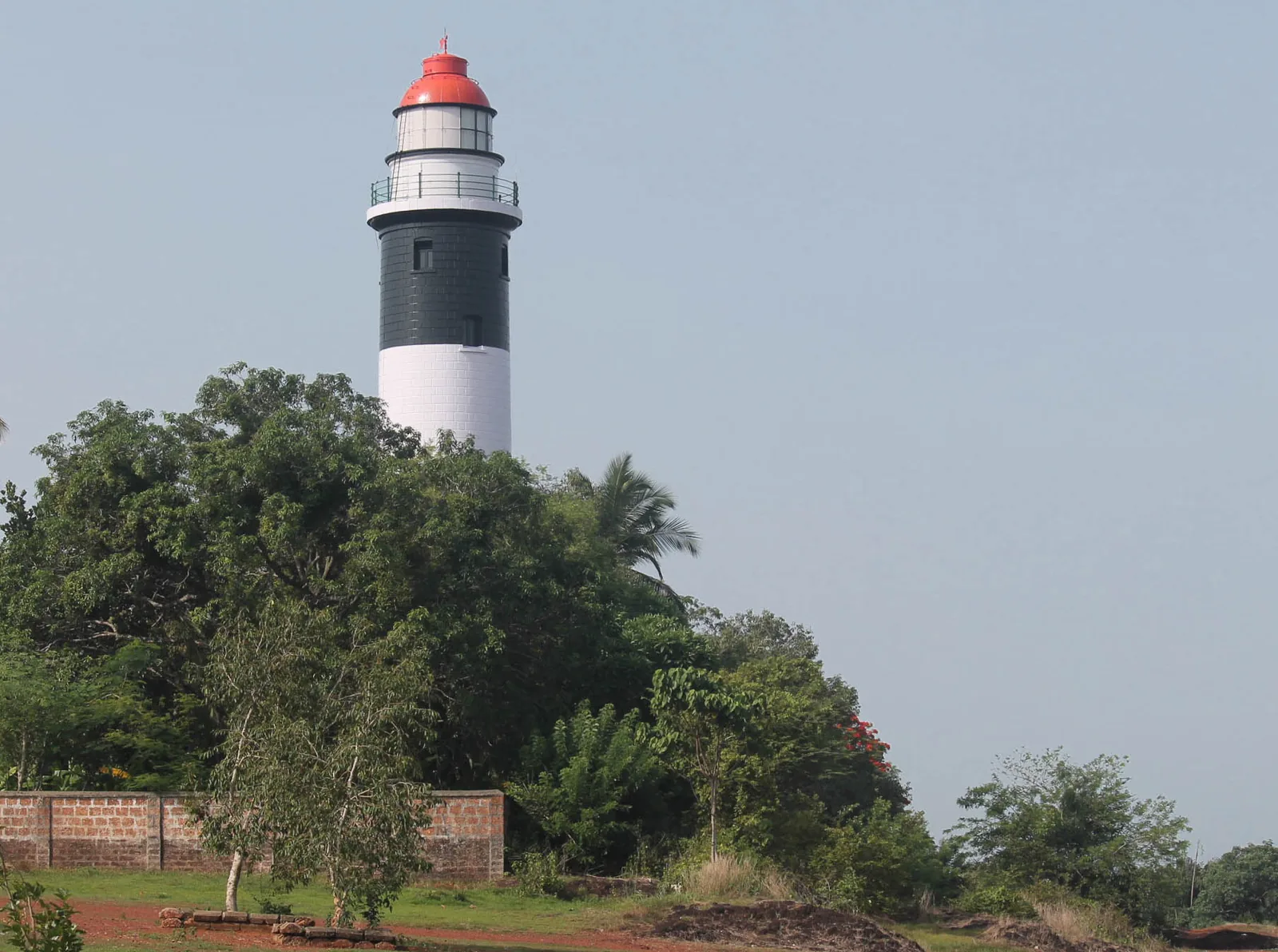
A 1909 lighthouse on the laterite headland at Kadalur Point, built to mark the submerged Sacrifice Rock eight kilometres offshore.
38.4 km · ~64 min by cab · straight lineNot as such. There is no sanctuary gate, no ticket counter, no permit desk, no visitor centre and no wildlife-viewing programme, and there is no permit that lets you enter independently. What exists are two escorted products at the western fringe: the Kakkayam dam site, run by the Kerala hydel tourism arm of the electricity board, and the Urakkuzhi waterfall trek, run by the Forest Department. Both stop at the edge.
No safari, no game drive, no hide. Tiger, leopard, elephant and gaur are on the recorded list, and the boat operator's promotional copy promises herds of elephants and bison in the catchment, but that is marketing rather than an ecology statement. Any sighting is incidental to a waterfall walk or a reservoir boat ride.
It was notified on 5 June 2009 under section 18(1) of the Wildlife (Protection) Act — a declaration of intention, issued that way because rights over the reserve and vested forests had not been settled. We could find no subsequent section 26A final declaration. The public inauguration on 8 August 2010 is where the widely printed 2010 date comes from.
74.215 square kilometres — 7,421.5015 hectares — in Koyilandy taluk, Kozhikode district, administered from the Peruvannamuzhi Range of the Kozhikode Forest Division. Do not trust a boundary traced from OpenStreetMap: the single mapped polygon encloses about 52 square kilometres and leaves out the reservoir, the dam and Urakkuzhi.
Two different tickets from two different agencies, and they should never be averaged. The dam site is ₹30 for an adult and ₹15 for a child as listed by the hydel tourism operator, with separate camera and parking charges. The Urakkuzhi trek is ₹40 for an Indian adult, ₹20 for a child and ₹60 for a foreigner as listed on the state tourism site. The figures circulating on aggregator sites match neither table.
No. Kerala Tourism's own ecotourism page says so and it is wrong by more than three times. Kakkayam is at roughly 750 metres, and the sanctuary as a whole spans about 40 to 1,506 metres.
No — Kozhikode district, Koyilandy taluk. Its eastern boundary runs along the Wayanad district line and it belongs to the Wayanad Elephant Reserve, which is where the confusion comes from.
Three organisms have their type locality here: the Ochlandra reed frog Raorchestes ochlandrae (2007), which lives inside the hollow culms of reed bamboo; the dampwood termite Glyptotermes chiraharitae (2016); and the Kakkayam shrub frog Raorchestes kakkayamensis (2021), which the IUCN lists as Data Deficient and which is known only from its type locality.
Dryer months are easier for wildlife access; monsoon access depends on local rules.
Entry: ⚠ TWO DIFFERENT TICKETS FROM TWO DIFFERENT AGENCIES — never average them, which is how the aggregator figures went wrong. KAKKAYAM DAM SITE, operated by Kerala Hydel Tourism (KSEB), from the operator's own tariff table: entry ₹30 adult / ₹15 child; jeep two-way pass ₹350; still camera ₹50, professional camera ₹600, video camera ₹1,000; parking ₹10 for a two-wheeler up to ₹100 for a big bus. Boating is ₹750 per boat per trip, up to five passengers plus a driver — not per person. URAKKUZHI TREK, operated by the Divisional Forest Office, Kozhikode, as listed on the state tourism site: ₹40 Indian adult / ₹20 child / ₹60 foreigner. ⚠ The ₹20/₹10/₹60 figures on aggregator sites match neither table and are not a GST variant of either. The Forest Department's own booking platform could not be reached from this connection; if it disagrees with ₹40, the department's own site wins. Timings: The sanctuary itself has no visiting hours because it has no visitor access. The two fringe products do. The Kakkayam dam site runs in two sessions, 09:00–13:00 and 13:00–17:00, with the afternoon entry-pass slot shown as 13:30–16:30 and camera slots in two-hour blocks between 09:15 and 17:15. The Urakkuzhi trek runs 10:00–17:00 (as listed by the operator — confirm locally).
Base yourself in Kakkayam or a nearby town in Kozhikode, then confirm the last-mile route locally before leaving. Book official entry, safari, boat or eco-tourism slots first, then plan transport and stay. If the visit depends on forest, temple, boat, ferry, weather or seasonal access, check the official/local rule on the day before travel.
Half day to full day.
Nearby you can pair Kakkayam Dam (6.4 km), Kakkayam trek (9.0 km), Kariyathumpara (10.0 km), Peruvannamuzhi Dam (15.7 km).
Do not feed or approach wildlife. Use official routes and approved operators only.
Written about Malabar Wildlife Sanctuary itself — its history, its legends and the arguments about them.
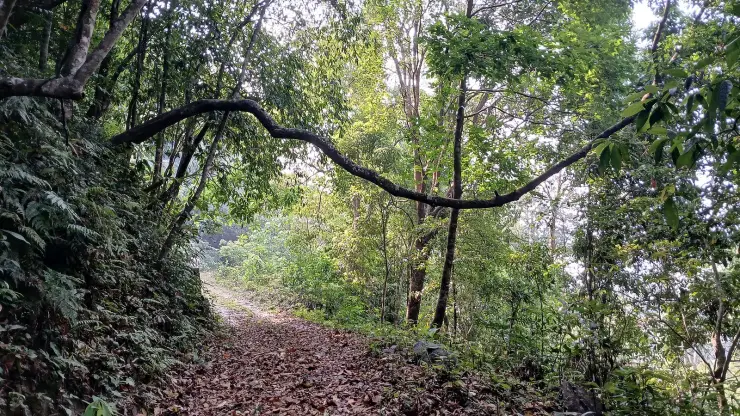
These guides explore Kakkayam and the surrounding area. Choose a visit that fits your interests, allowing separately for travel between stops.
Route-level itineraries and practical guides for the rest of Kerala.
Photographs: Nativeplants garden (CC BY-SA 4.0), Uajith (CC BY-SA 3.0). Wikimedia Commons.