What to expect
Highlights
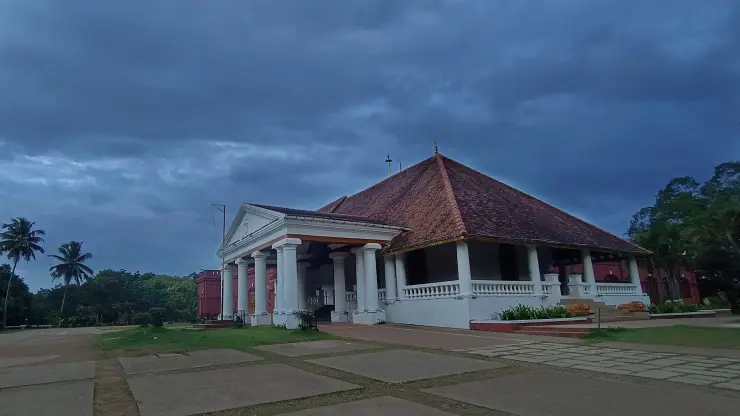
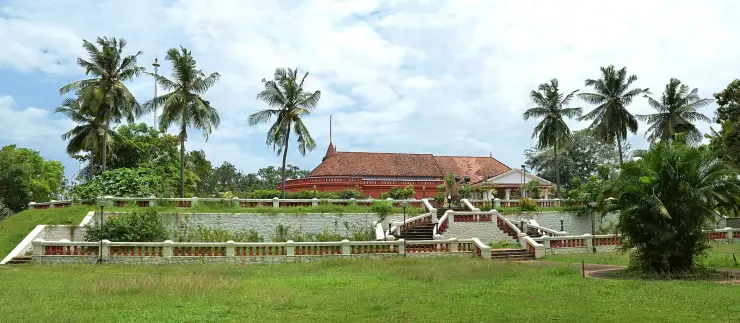
- The red-brick building and entrance portico.
- Grounds used for cultural programmes.
- The Nishagandhi auditorium within the premises.
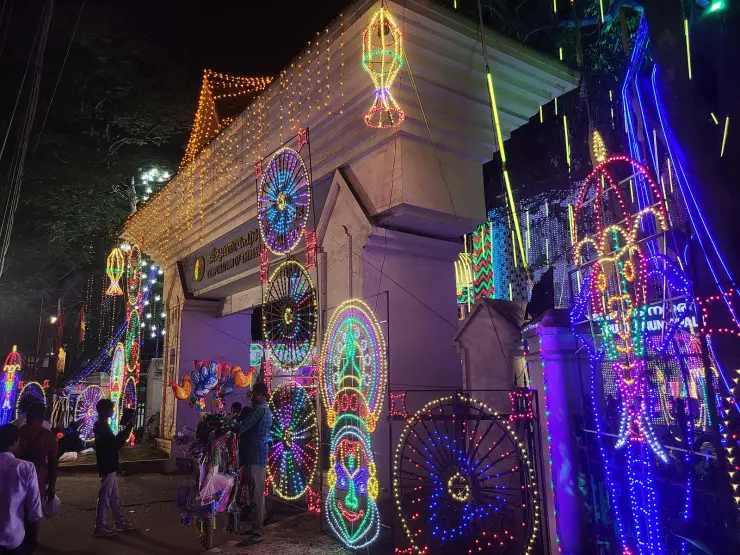
Kanakakunnu puts a Travancore palace among gardens and cultural venues near Thiruvananthapuram’s Museum Park. Come for an evening walk or choose a date around a performance.
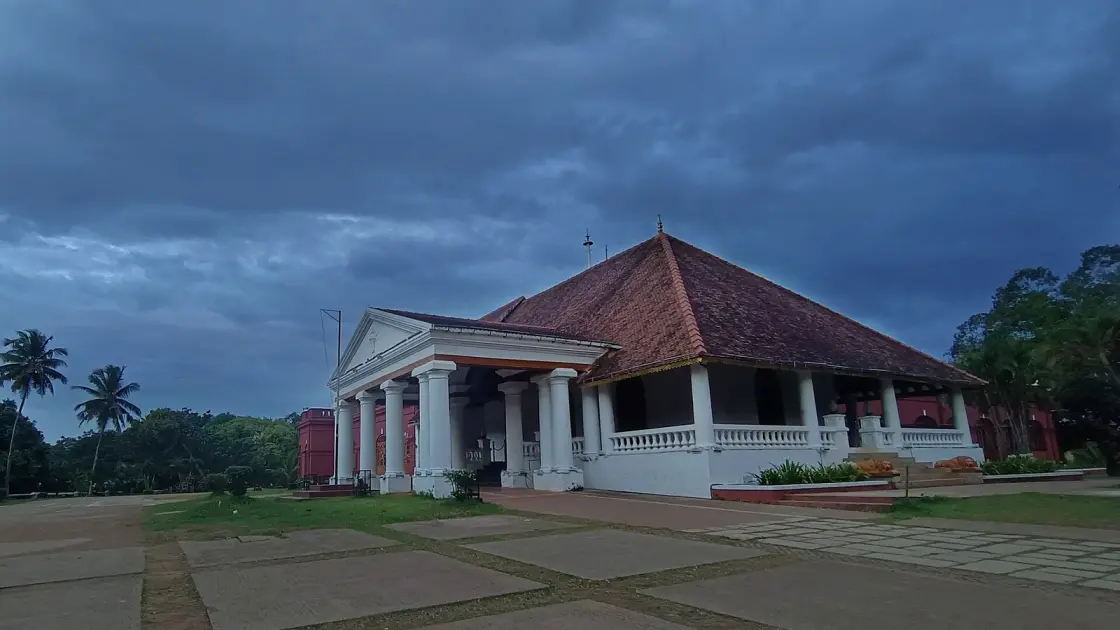
A former Travancore reception building in a public cultural precinct near the museum and zoo.
Exterior, grounds and event access may differ on the day.
Kanakakunnu is a former Travancore guest and durbar building that became one of Thiruvananthapuram’s civic stages.
Kerala Tourism places the palace on a hill near the Napier Museum and zoo. Its 2022 account says the building is traditionally assigned to the reign of Sree Moolam Thirunal and describes a red-brick structure with a circular hall and neoclassical entrance portico. A visitor can read the palace’s mixed architectural vocabulary without needing to give it an exact construction year.
The more visible story today is public use. Kerala Tourism’s 2015 account calls it a former Travancore durbar and banquet hall and documents plans to renovate the grounds and the Nishagandhi auditorium. Its event records show the premises hosting dance and other cultural programmes. That transformation from royal reception to public gathering is what makes the place distinct from a sealed palace museum.
The grounds may be accessible when the building interior is closed or reserved for an event. Check the day’s programme and present entry notices before promising a tour of chandeliers or royal furniture. An event venue changes its visitor route more often than a static monument.
Kerala Tourism attributes the palace to Sree Moolam Thirunal’s era and documents a major renovation plan in 2015. The older royal use and present cultural programme are separate chapters.
See the palace exterior and grounds beside the museum quarter.
Check whether a public cultural event is scheduled at Nishagandhi.
Read the building as a transition from royal guest space to city venue.
Road km to Thiruvananthapuram; ghat roads and traffic vary — allow extra.
Late afternoon for the grounds, or the advertised time for a performance.
Live forecast loads in your browser.
Sun and moon are calculated for this location and shown in IST. Photography windows are the hour around sunrise and sunset; the sunset bearing is degrees clockwise from true north. Moon phase is accurate to about half a day.
Browse listed stays, food, activities, sights, shops and rentals around Kanakakunnu Palace. Check each listing’s locality and contact the business directly for current arrangements.
Thiruvananthapuram International Airport serves the city and southern Kerala’s coast. Match your airline’s terminal to your pickup point when booking an airport-side stay or meeting a driver.
Mango Cabs lists an Edapazhanji office and advertises city taxis, airport transfers, outstation cabs and vehicle hire. If you are arriving at Thiruvananthapuram airport, give the operator your terminal, flight time, destination and luggage count before asking for a vehicle. For a Kovalam, Varkala or longer trip, request a written quote covering the exact route, tolls, parking, waiting time and return journey. The website lists vehicle categories, but the car and fare for your date need direct confirmation.
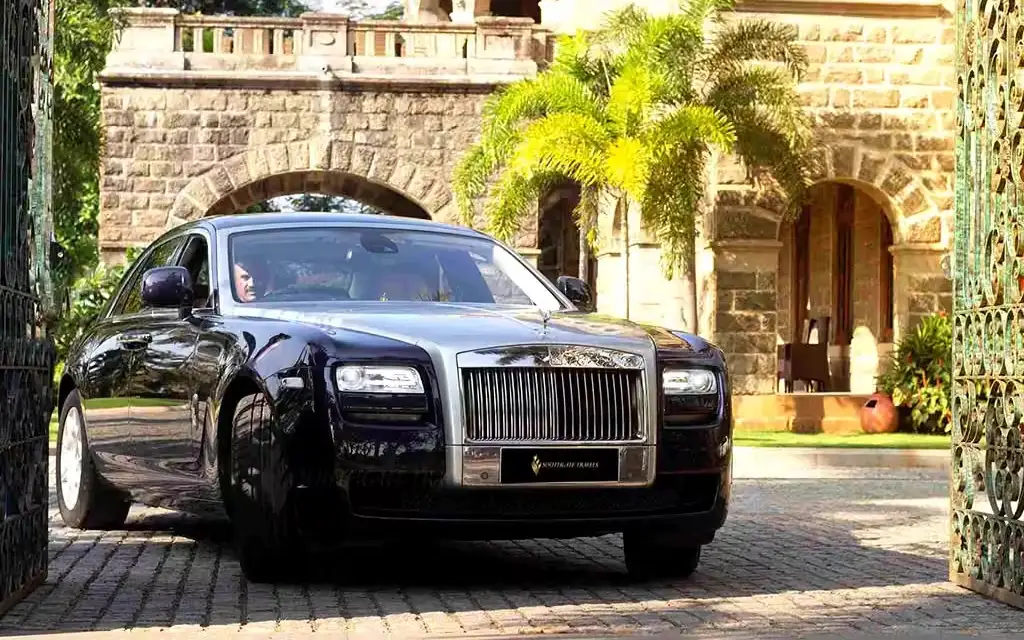
Southgate Travels operates from Vikas Lane in Kunnukuzhy and advertises chauffeured taxis, airport pickups, self-drive cars and vehicle hire for events. Its own gallery shows a Southgate-branded car; that image does not promise the same vehicle for every booking. For a city or airport transfer, give the operator the exact pickup point, flight or train time, destination and luggage count, then ask for the total fare and waiting allowance. Self-drive and event bookings need a different quote: confirm the named vehicle, documents, deposit, mileage limit and cancellation terms before paying.
Do on Eanchakkal Westfort Rd, J P Nagar, VKK Nagar, Pazhavangadi in Thiruvananthapuram City.
Book with the place itself. India’s cyber-crime coordination centre warned in April 2025 that convincing copies of hotel and pilgrimage booking sites are being pushed through sponsored search and social ads, taking payment for rooms the property never hears about. Use the contact and source details on each profile to confirm the exact business and booking channel. A directory entry or map pin alone does not establish an operator’s identity or current availability. Roampedia takes no commission and does not collect booking payments. If a booking page reached you through an ad, check the address bar against the property’s own site before you pay. Fraud can be reported on cybercrime.gov.in or on 1930.
Find food, accommodation and activities across Thiruvananthapuram city. Browse the guides for places to eat, stay and explore along your route.
Walking routes start at Kanakakunnu Palace. Check the route and access before setting out, especially where a road, gate or waterway separates the stops.
22 more places around Thiruvananthapuram city. Open a guide to plan the visit and onward journey.
The ancestral palace compound associated with Raja Ravi Varma at Kilimanoor; visitor access concerns the working family estate and must be confirmed before travel.
6.6 km · straight line
A major coastal Muslim pilgrimage landmark south-west of the city centre, known for the Beemapally Uroos and the tombs honoured within the shrine complex.
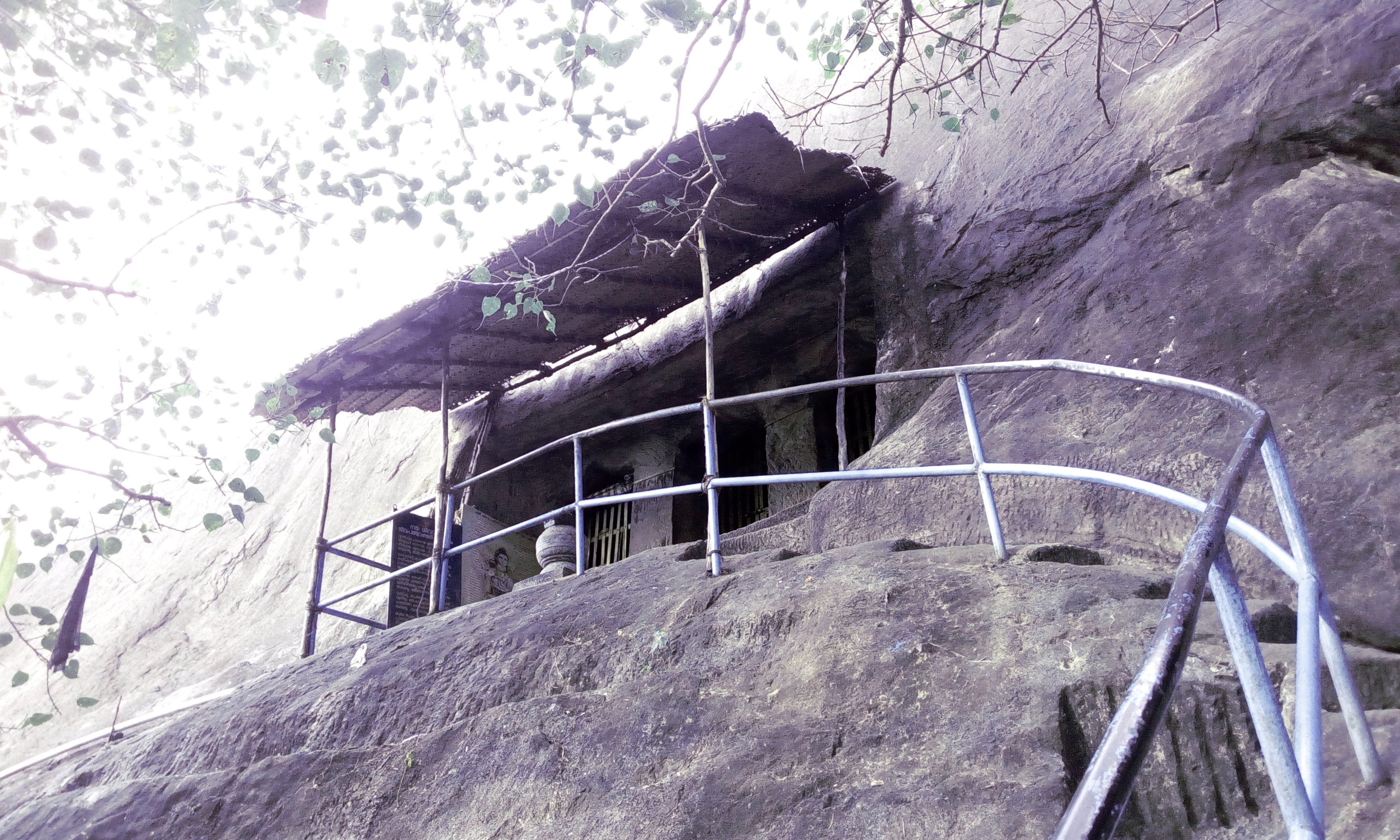
Madavoorpara combines a rock-cut Shiva shrine with a rocky hill landscape on Thiruvananthapuram’s northern edge. The temple and the climb offer different reasons to visit, and both deserve time.
5.0 km · 8 min drive
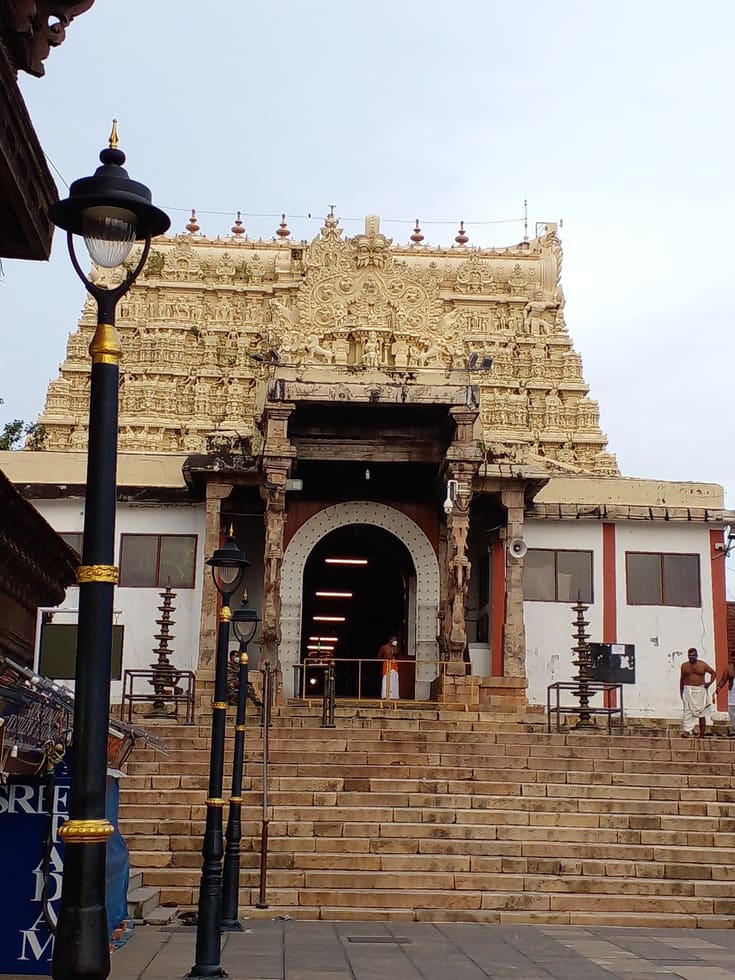
Major Vishnu temple and one of Kerala’s most important pilgrimage landmarks; strict entry and dress rules apply.
540 m · 7 min walk
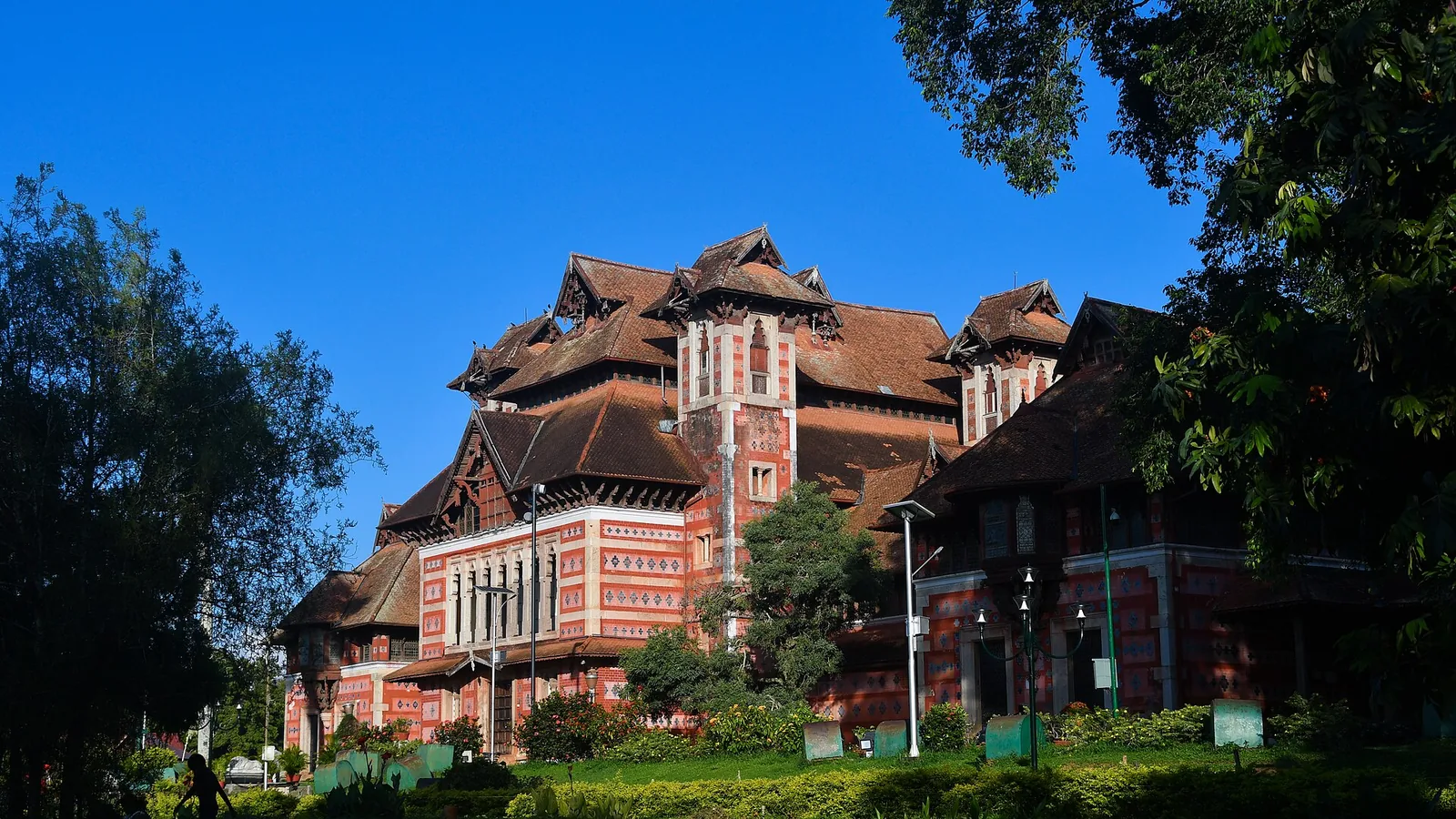
Robert Chisholm’s 1880 Indo-Saracenic museum in the Museum Park — a polychrome landmark holding Chola and Kerala bronzes, ivories and temple carts, with the Sree Chitra Art Gallery alongside it.
1.0 km · 12 min walk
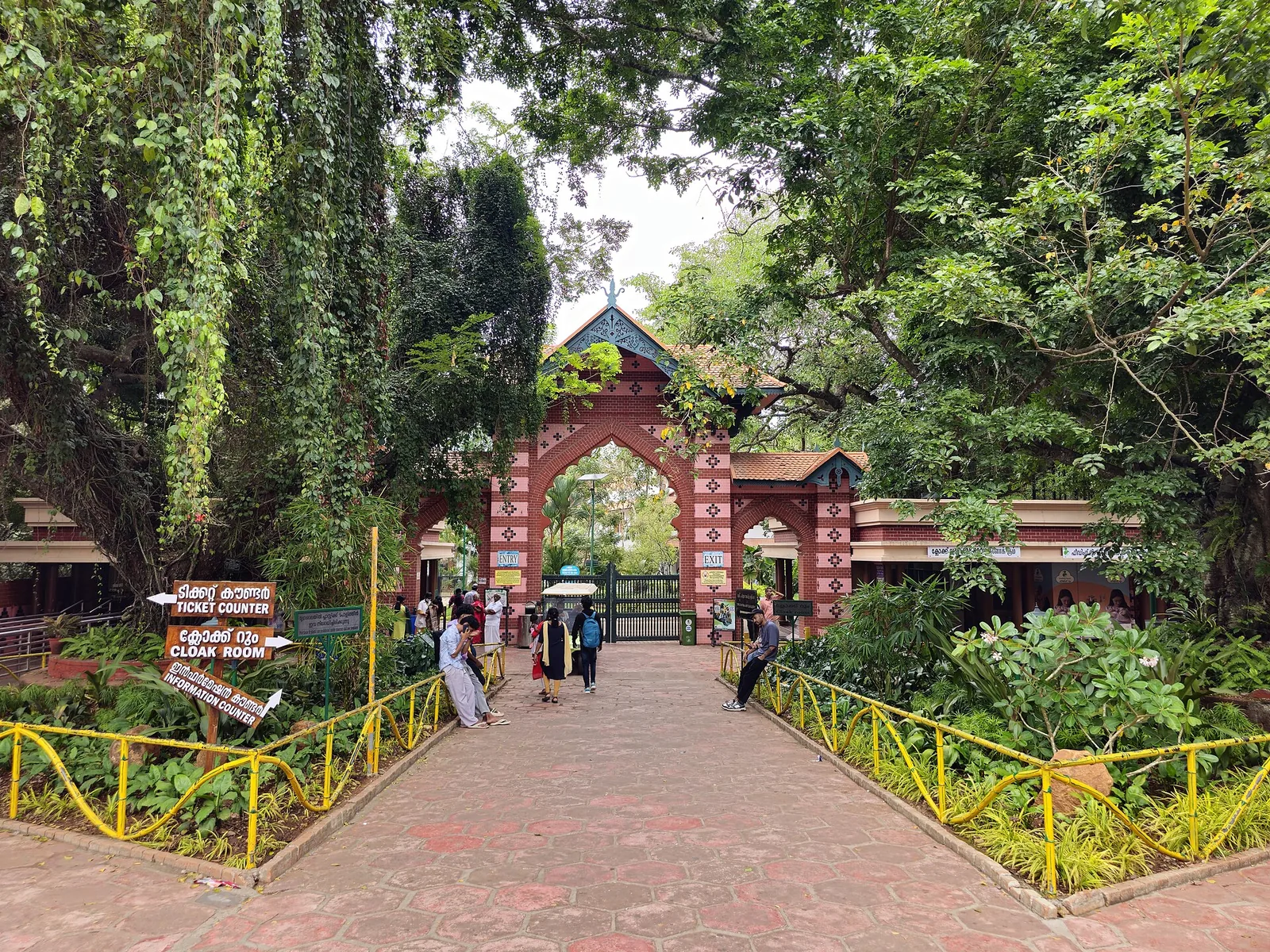
Old trees, winding paths and animal enclosures share the Museum Park at Thiruvananthapuram Zoo, also known as Trivandrum Zoo. Allow time for the garden as well as the collection, with the Napier Museum close by.
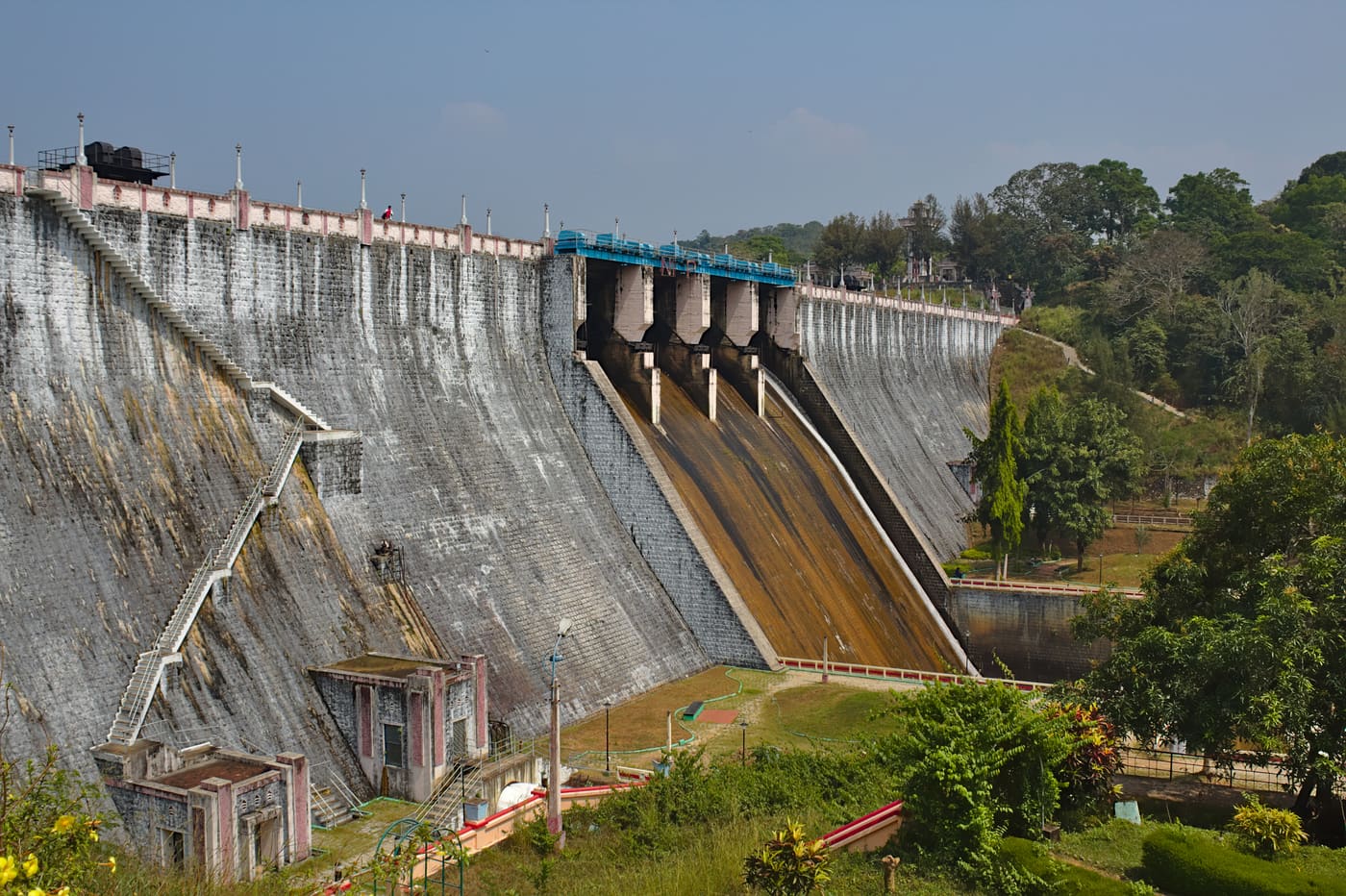
Guided forest trekking in the Neyyar Wildlife Sanctuary near the Agasthyamala foothills, south-east of Thiruvananthapuram.
6.6 km · 10 min drive
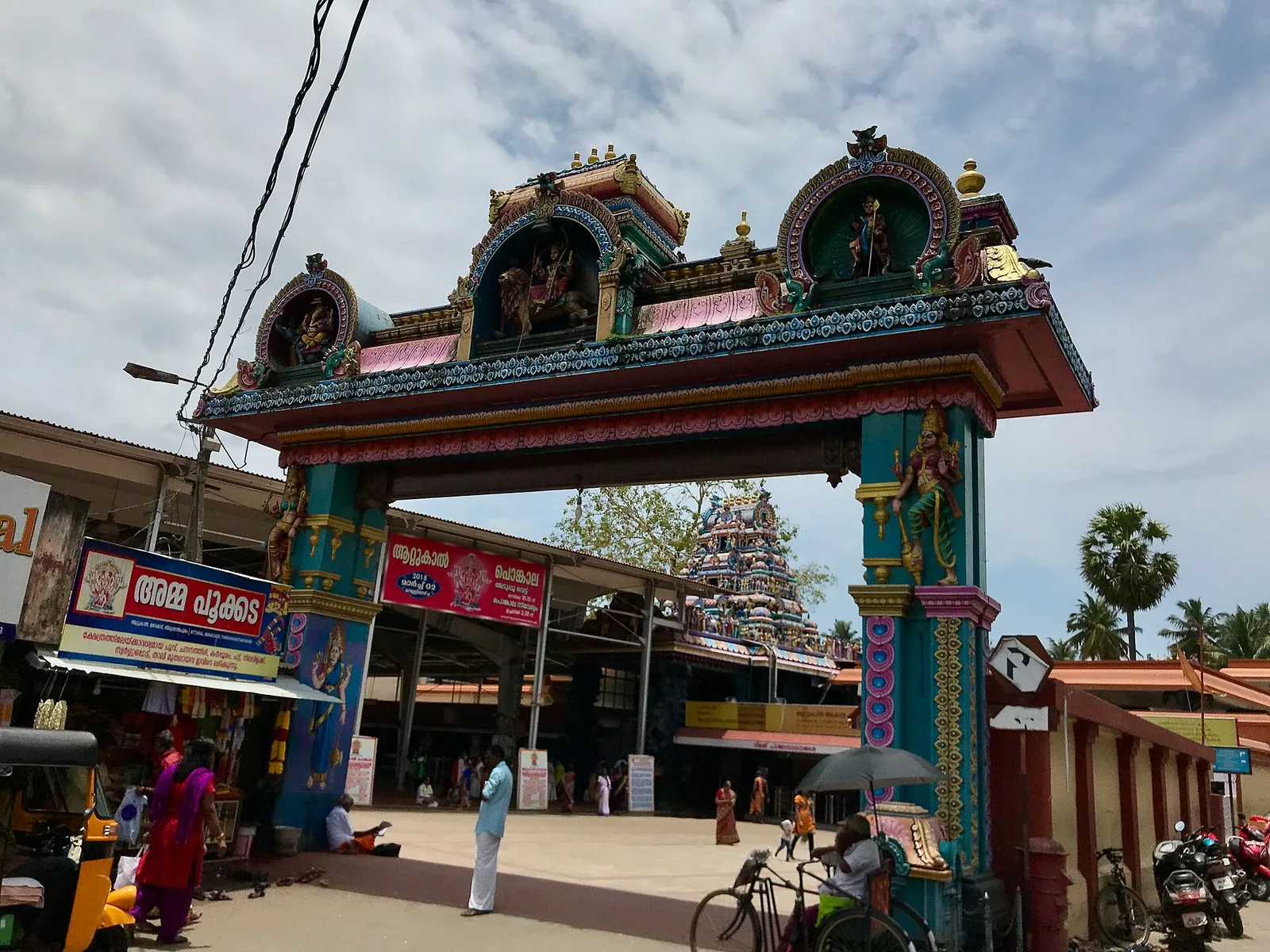
Famous Devi temple in the city, home of the Attukal Pongala — recorded as the largest annual gathering of women.
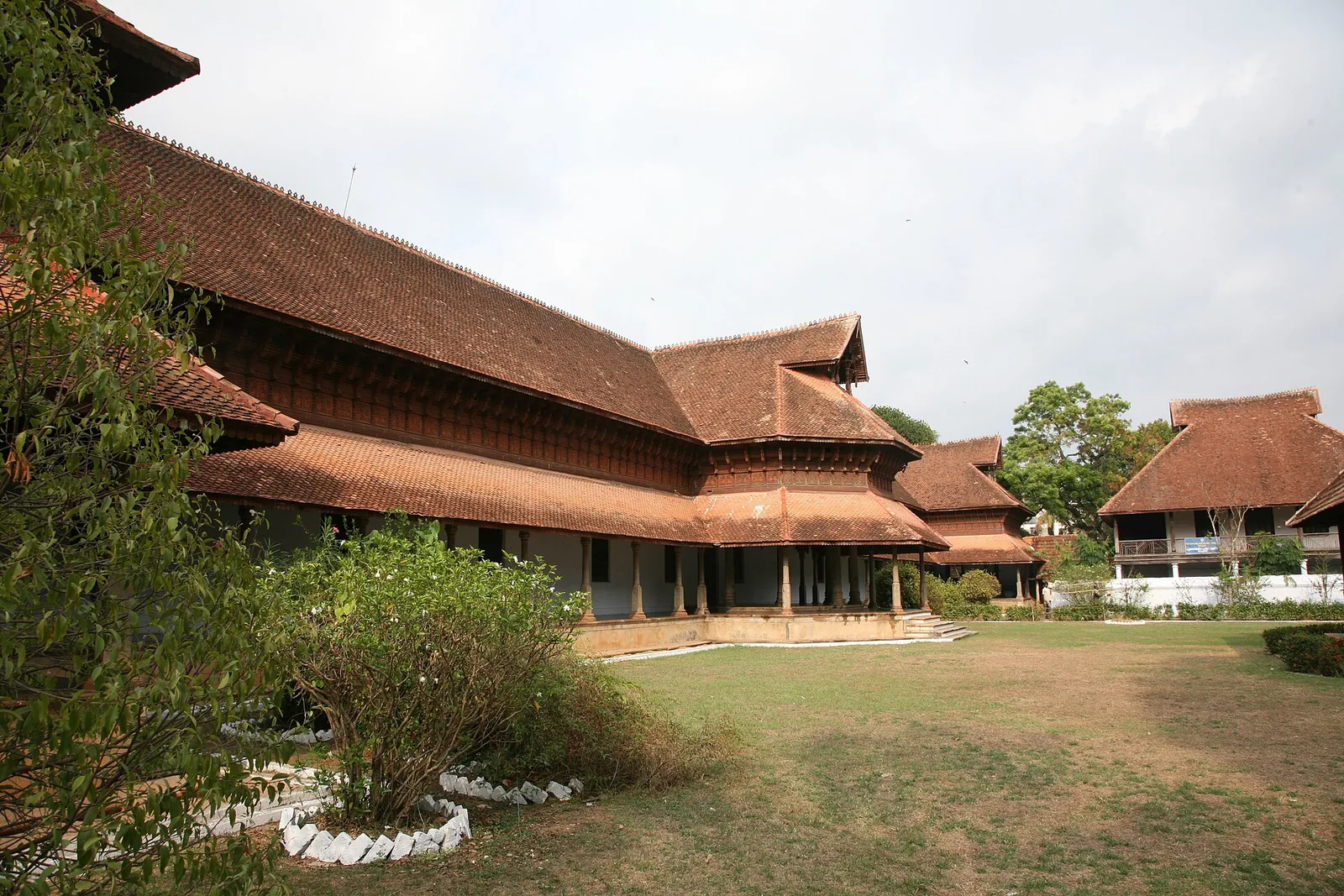
4.6 km · 7 min drive
A row of carved wooden horses gives Kuthiramalika its name. Beside Sree Padmanabhaswamy Temple, this Travancore palace museum brings timber craftsmanship and royal collections into one compact visit.
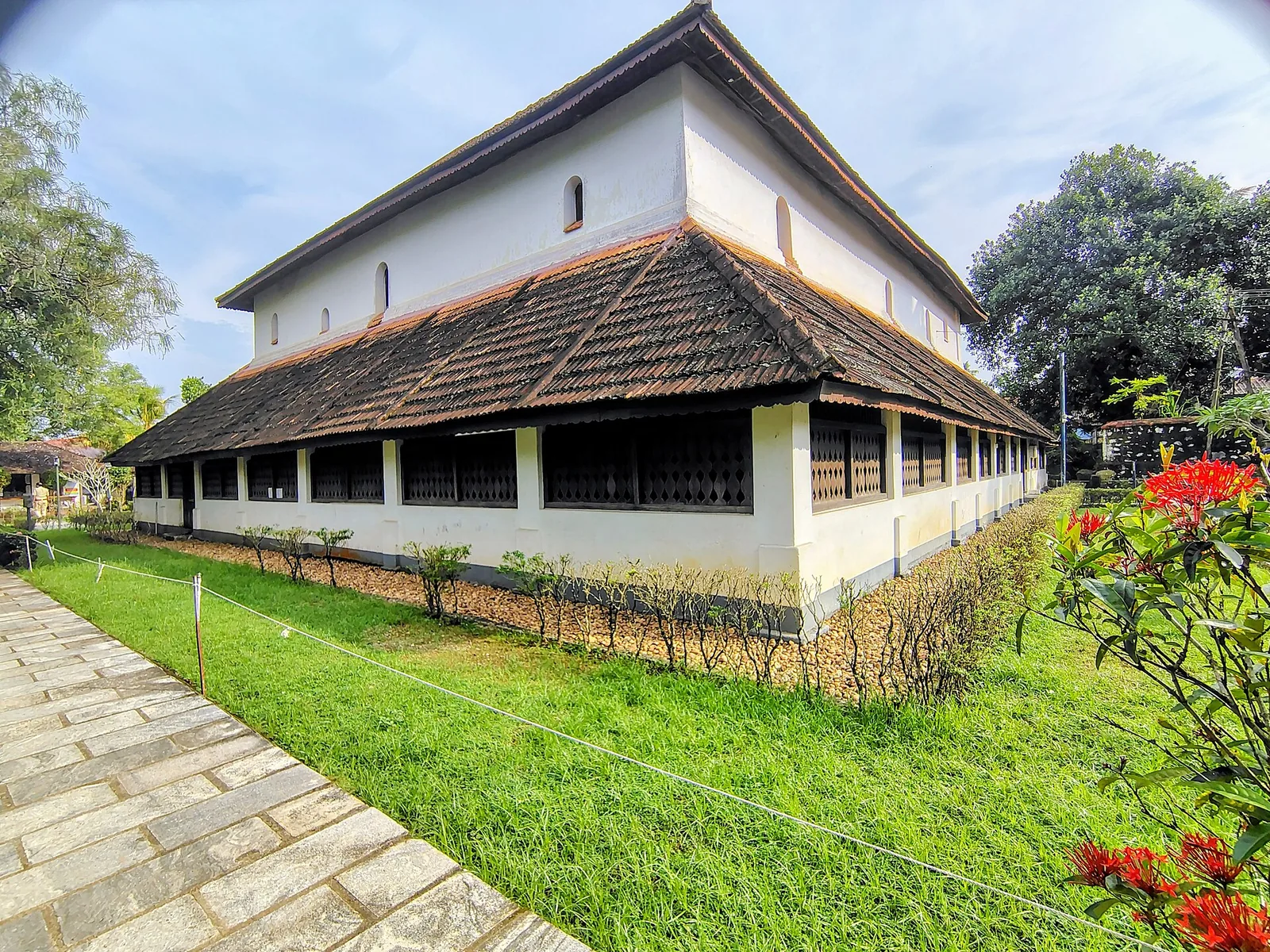
Koyikkal Palace at Nedumangad houses folklore and coin collections inside a traditional Kerala palace. Everyday objects, instruments and currency make this a more intimate museum stop than a grand royal gallery.
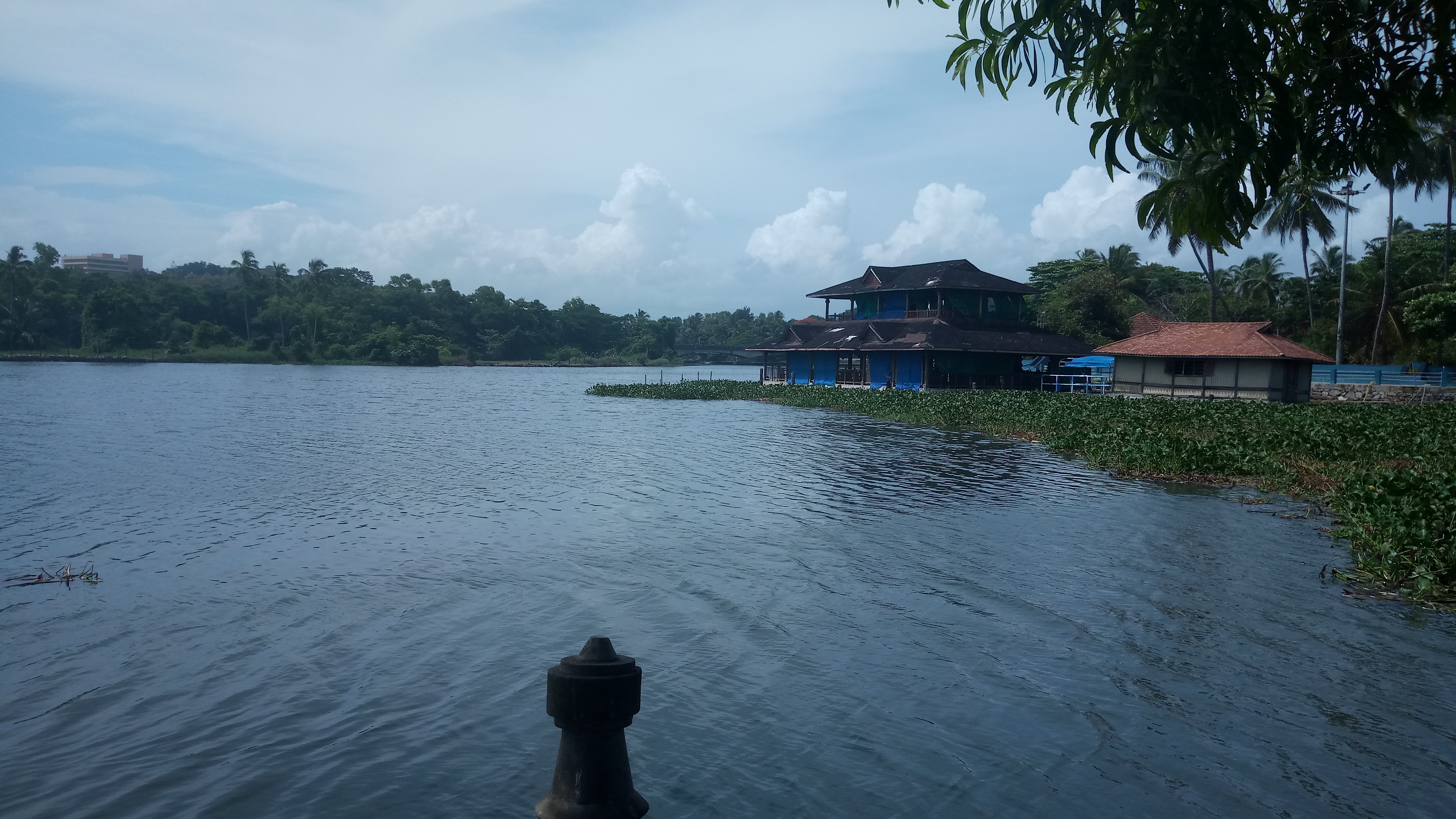
9.7 km · 14 min drive
Veli Tourist Village brings lake views, gardens and boating to the coast near Thiruvananthapuram. It is a family outing at the meeting of Veli Lake and the Arabian Sea.
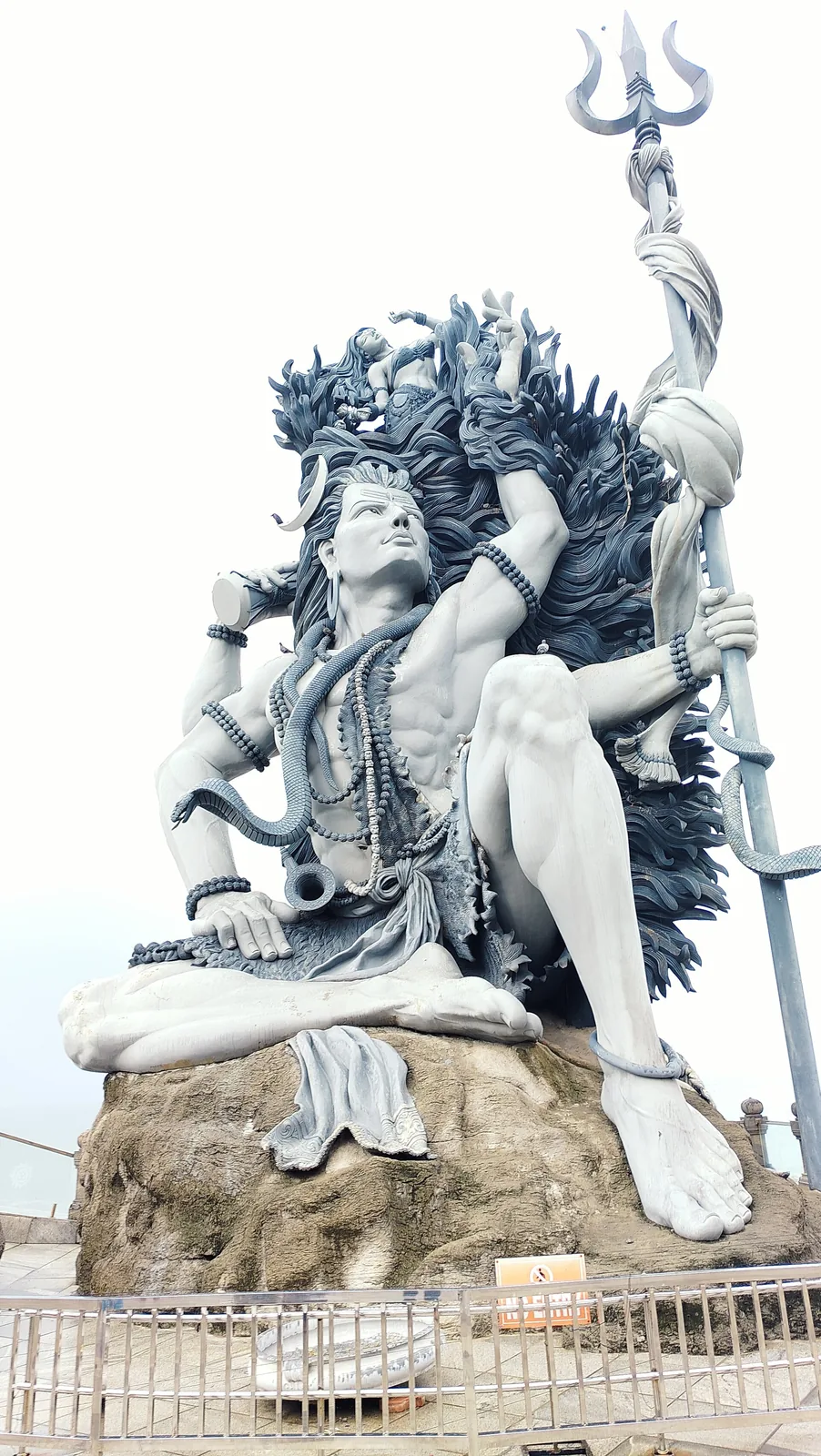
A clifftop seaside temple at Adimalathura near Vizhinjam, known for a giant Gangadhareswara (Shiva) sculpture.
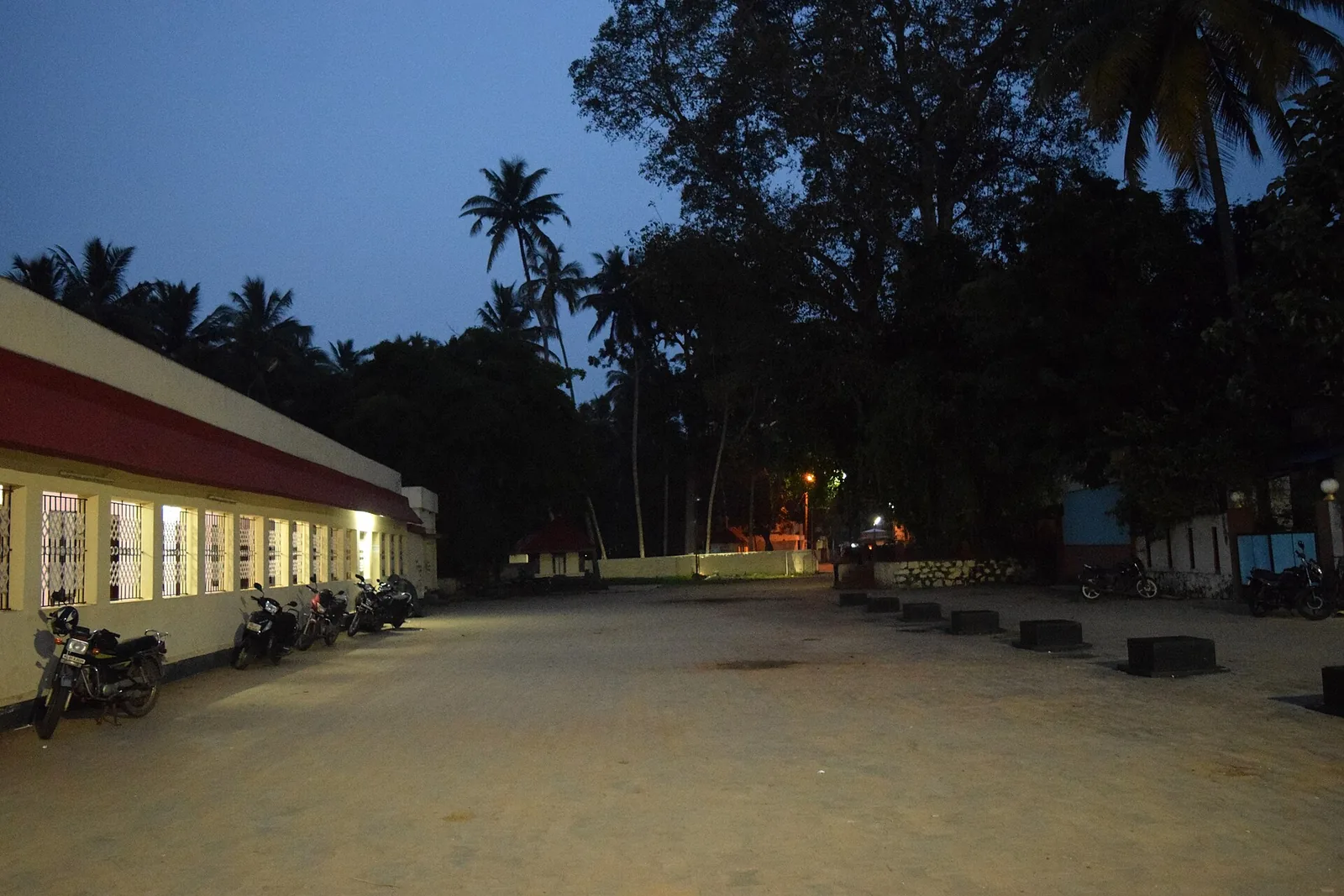
An ancient temple on the Karamana river, the district’s main site for ancestral (bali) rituals and rare for its Parasurama deity.
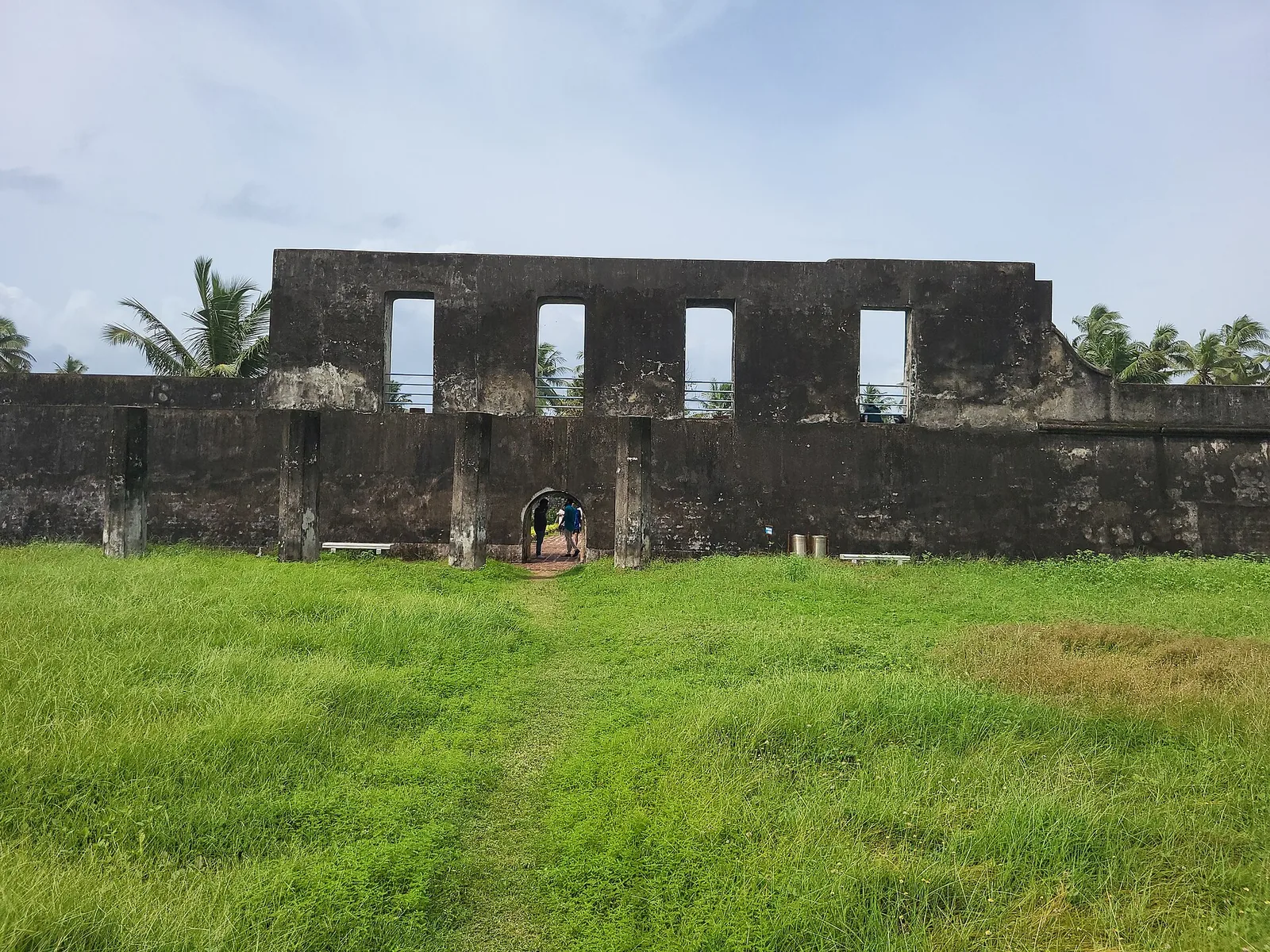
A 1690s English East India Company sea fort (Anjengo) on the coast north of the city, one of the earliest English settlements in Kerala.
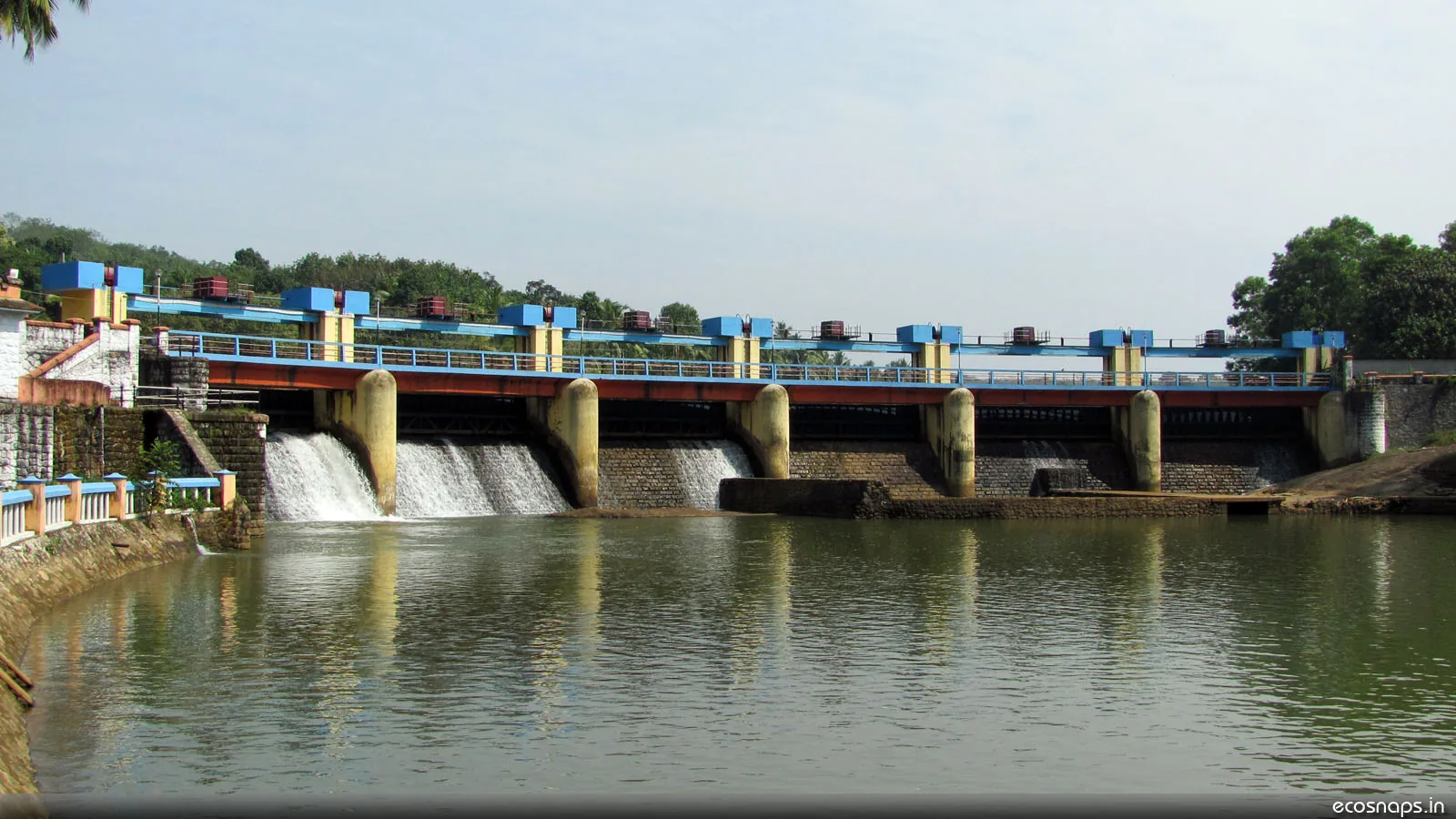
A reservoir, riverside temple and small park on the Karamana river north-east of the city, a popular local picnic spot.
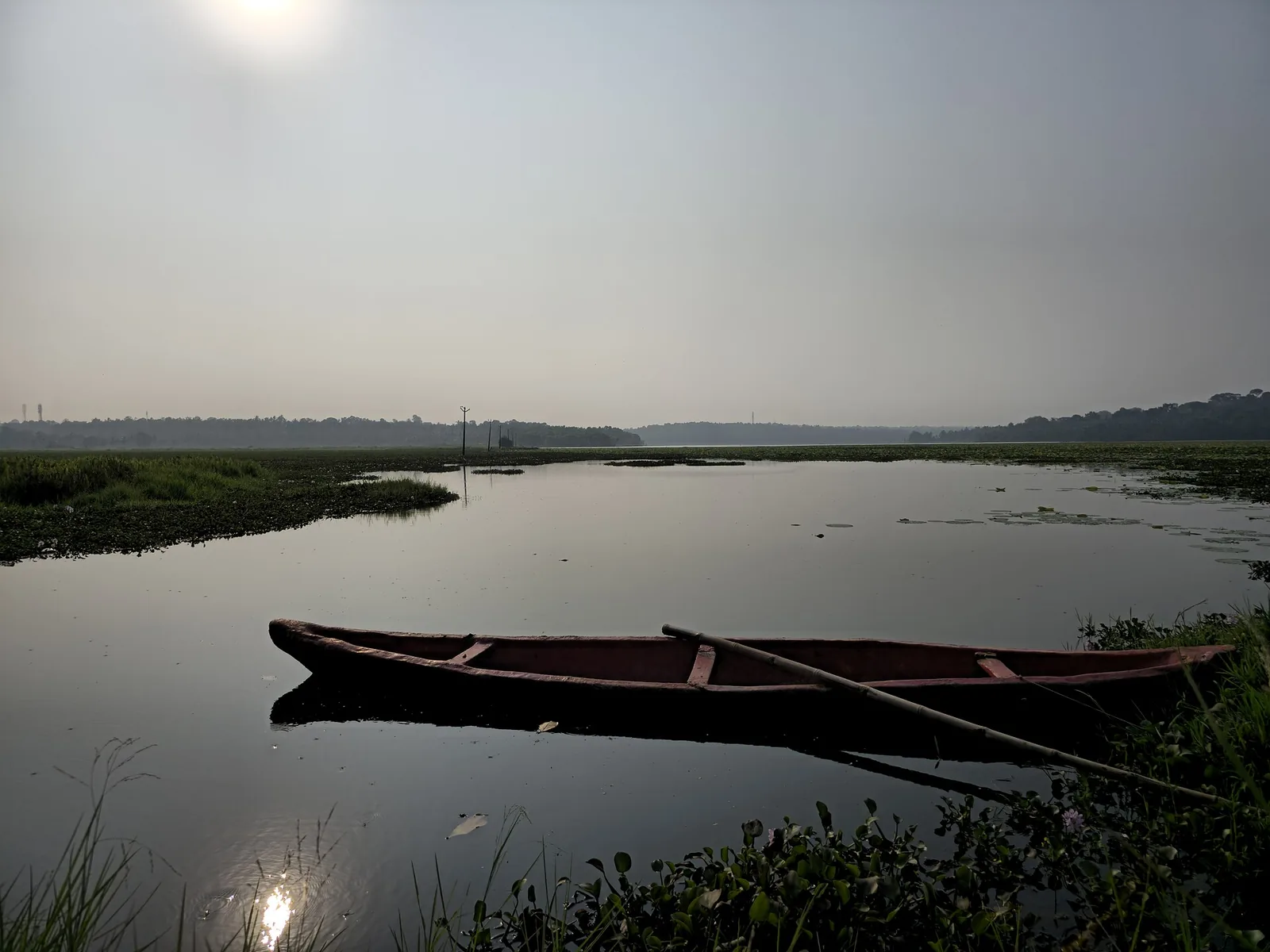
A freshwater lake in Thiruvananthapuram district, with the Punchakari–Vellayani wetlands nearby offering seasonal birdwatching.
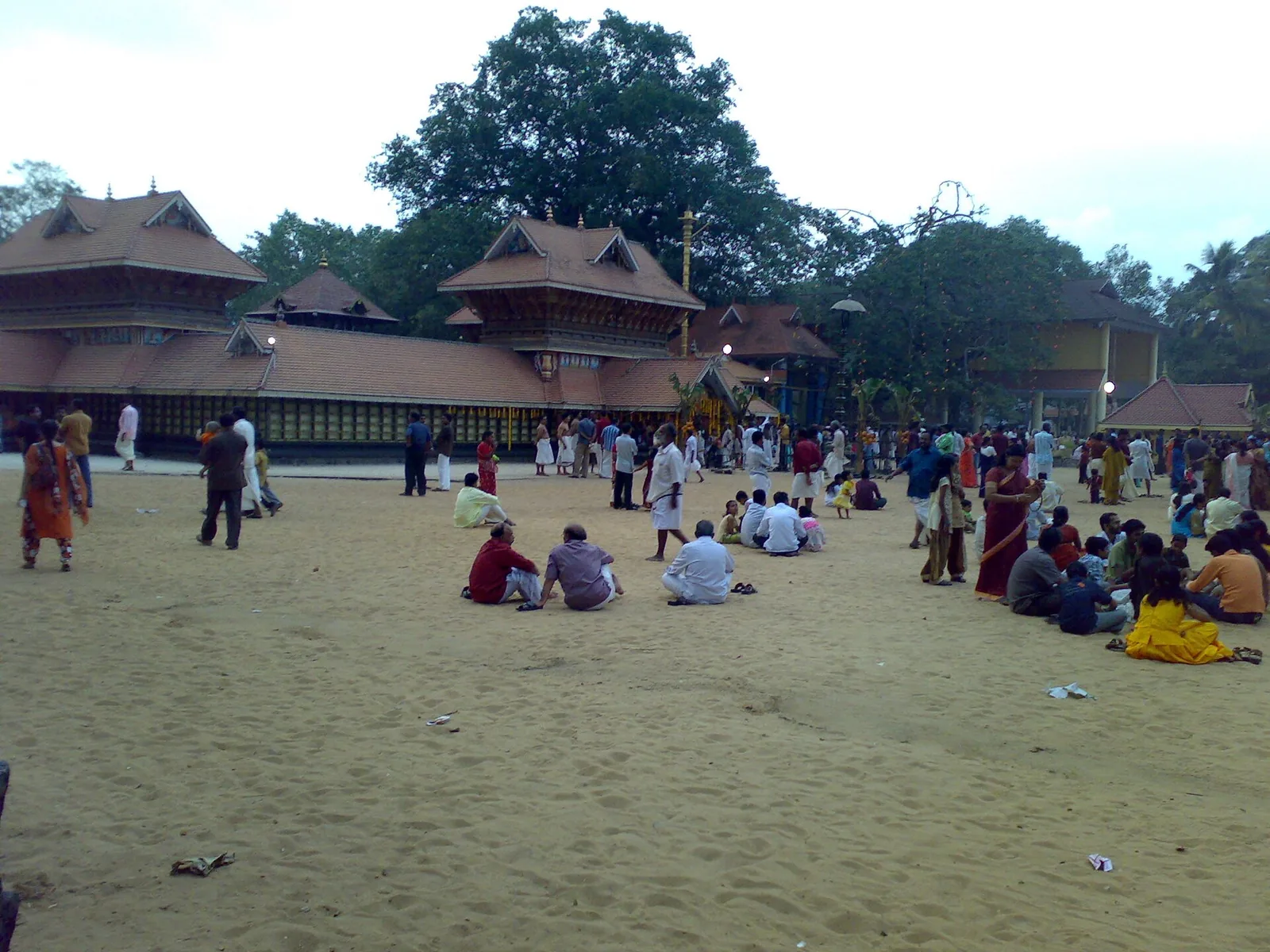
A renowned Devi temple at Chirayinkeezhu, famous for the Kaliyoot festival and the Sarkara jaggery legend.
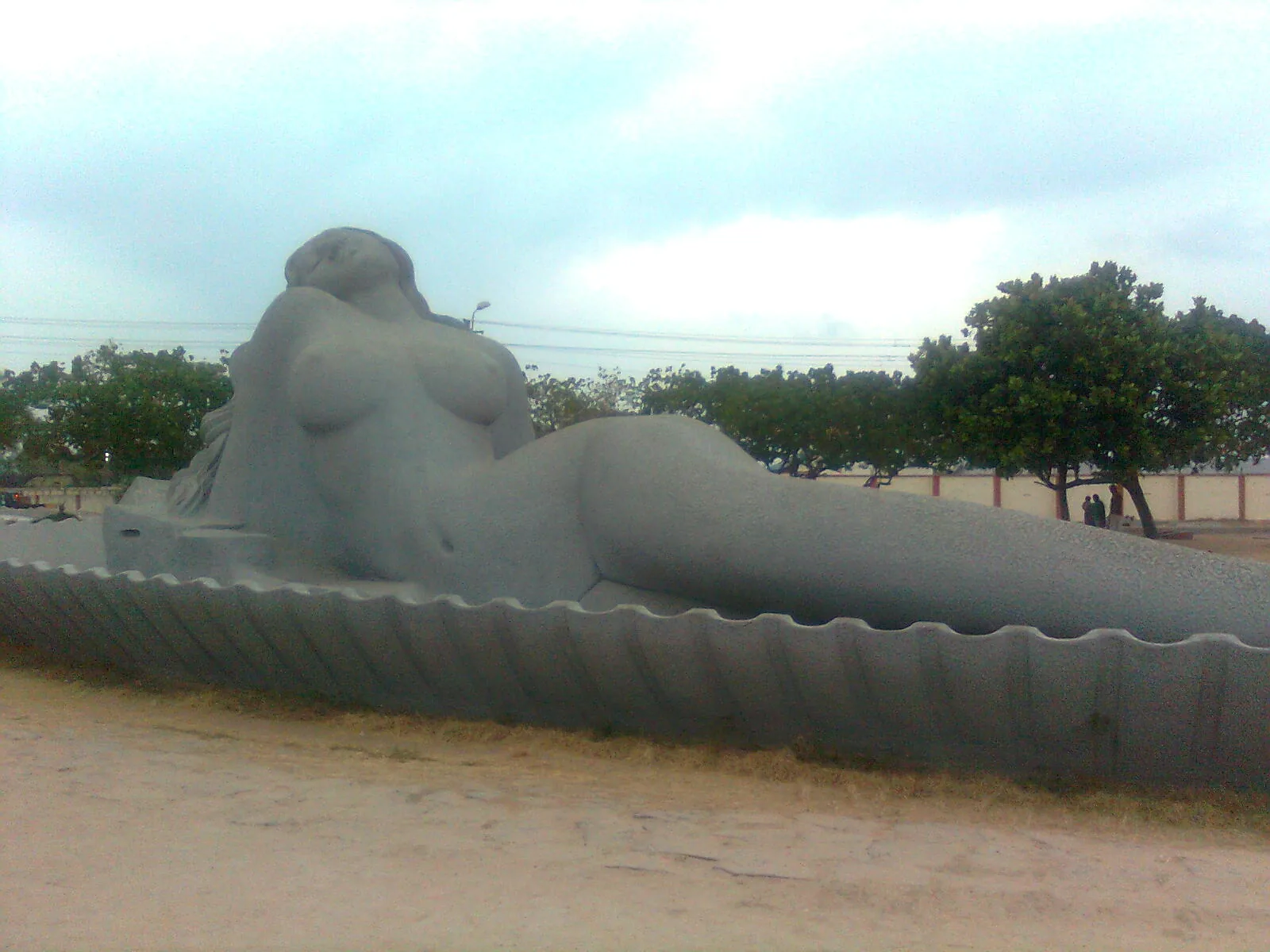
11.0 km · 15 min drive
Shanghumukham is Thiruvananthapuram’s evening shoreline: an open sea horizon, airport-side access and Kanayi Kunhiraman’s reclining mermaid sculpture. Come for a coastal walk and the changing light.
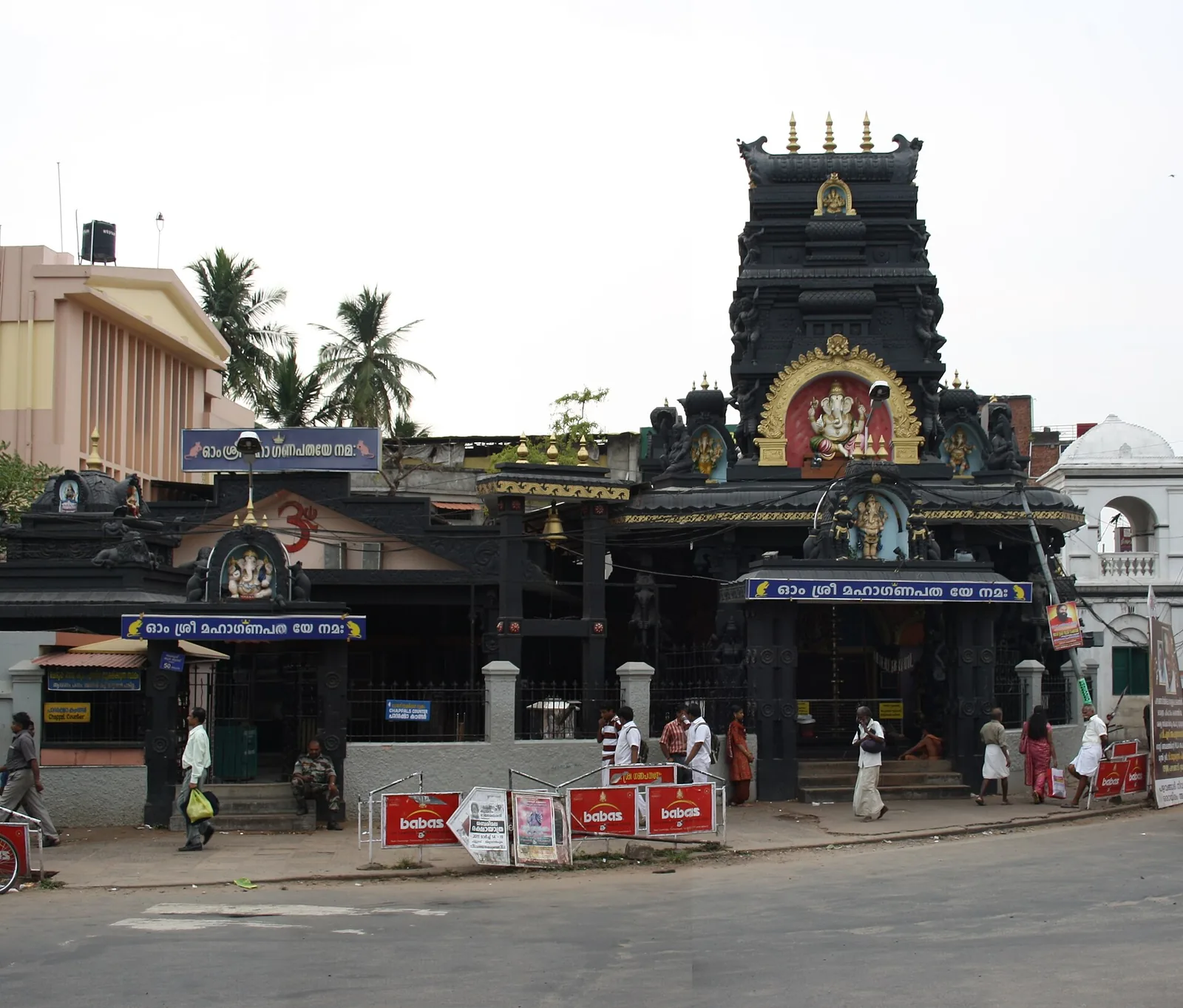
4.2 km · 7 min drive
A popular Ganapathy temple near East Fort, known for the coconut-breaking offering; run by the defence services.
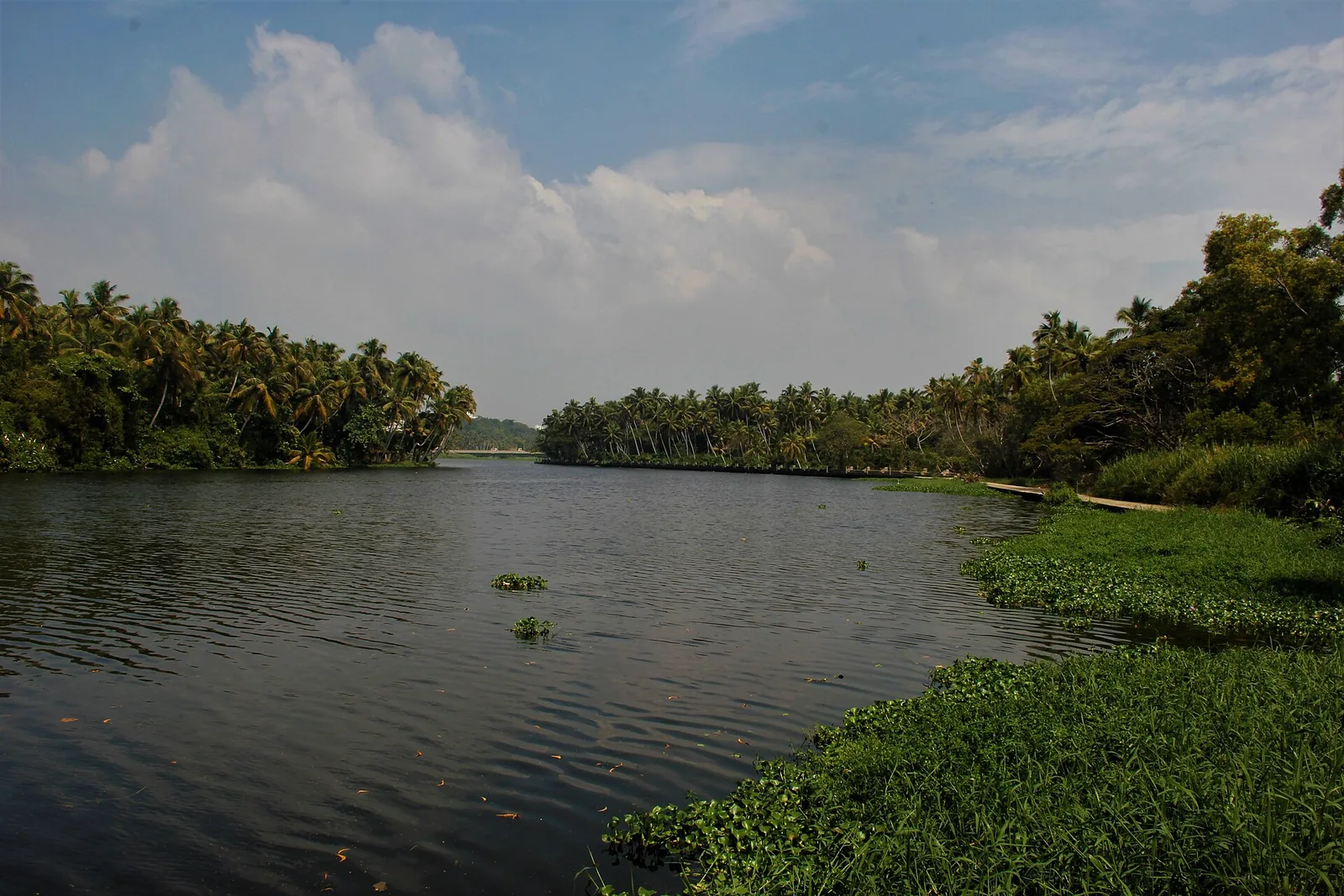
8.4 km · 12 min drive
A calm backwater and boating spot near Veli with a lakeside tourist village and children’s park.
8.6 km · 14 min drive
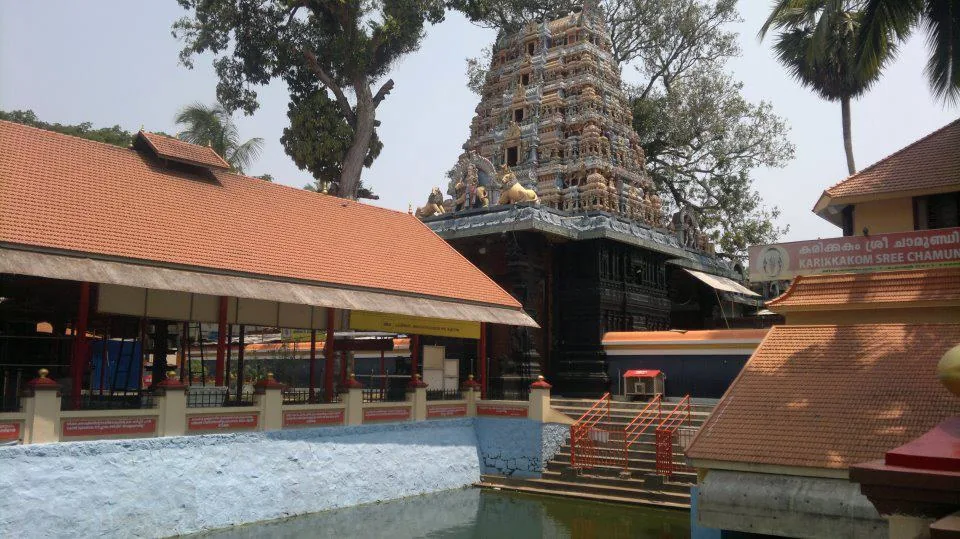
A well-known Chamundi Devi temple on the western edge of the city, busy during its festival season.
1.7 km · 20 min walk
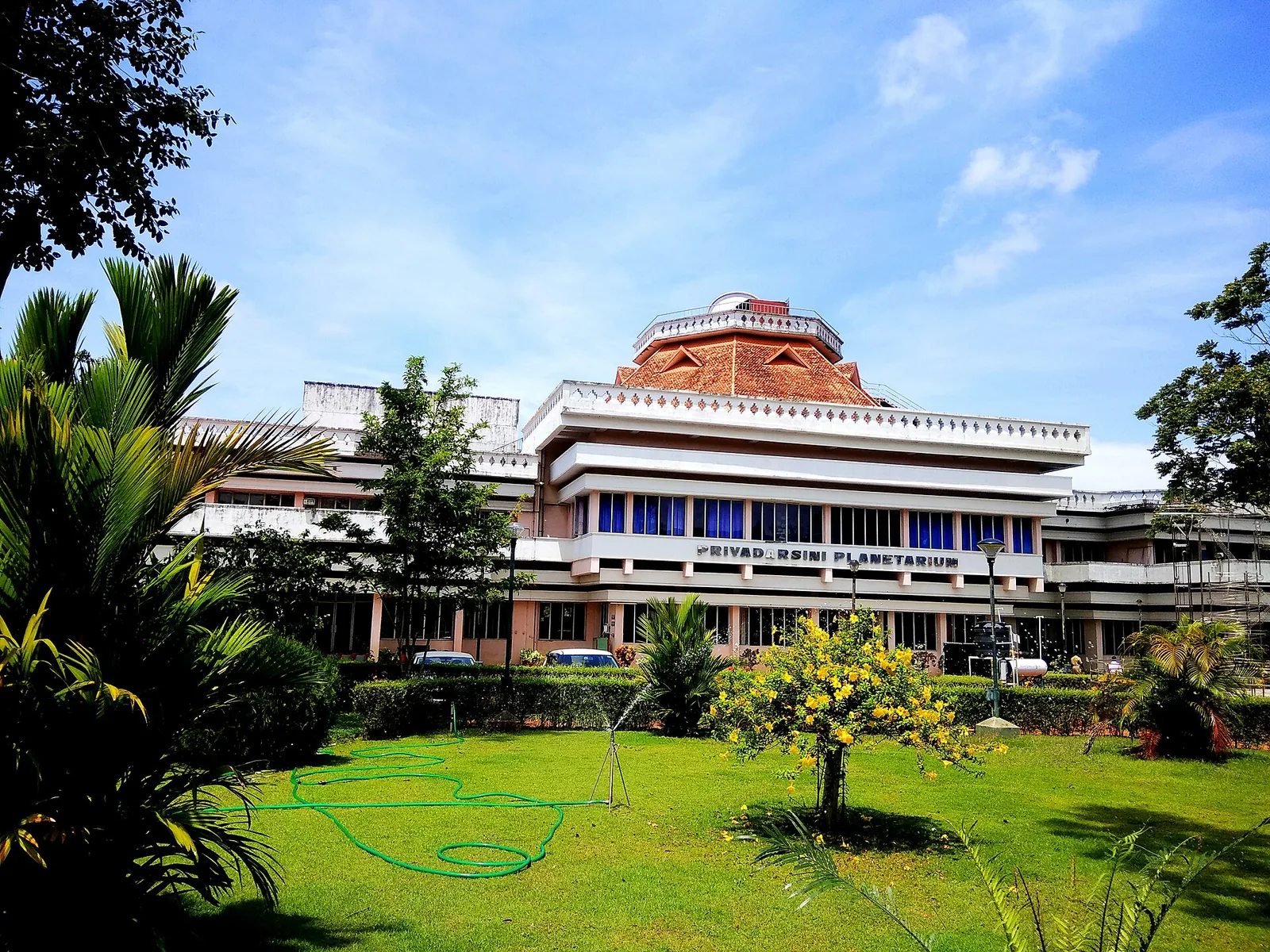
A hands-on science museum with the Priyadarshini Planetarium, popular with families and school groups.
Roampedia is commission-free — own or know a stay, eatery, guide or shop near Kanakakunnu Palace? Submit public business details for review.
Add a nearby businessEntry: Confirm any event or interior admission charge at the venue.
Near the Napier Museum and Thiruvananthapuram Zoo; use the current public entrance.
If you are travelling by bus or ferry, check the return service with the operator before setting out. Leave time to reach the stop or jetty after your visit.
Ask at the bus stand for the time of the last service back, not the next one. If you miss it, an auto or app cab is the fallback — agree the fare before you get in.
If you need step-free access, contact the site before travelling. Ask about a level entrance, steps along the route, the nearest drop-off point, seating and accessible toilets.
Charge cap and free-transaction limits: Reserve Bank of India, ATM FAQ updated 4 July 2025; checked 4 October 2026.
These services are listed within about 1.2 km of Kanakakunnu Palace. Walking distances follow mapped routes; access and opening hours can change. Other services may be closer but are not included here.
Published emergency and visitor-assistance contacts. For an immediate emergency, call 112. Shared Kerala contact sources checked 4 October 2026; publication does not establish a tested live response.
Robert Chisholm’s 1880 Indo-Saracenic museum in the Museum Park — a polychrome landmark holding Chola and Kerala bronzes, ivories and temple carts, with the Sree Chitra Art Gallery alongside it.
540 m · 7 min walkOld trees, winding paths and animal enclosures share the Museum Park at Thiruvananthapuram Zoo, also known as Trivandrum Zoo. Allow time for the garden as well as the collection, with the Napier Museum close by.
1.0 km · 12 min walkA hands-on science museum with the Priyadarshini Planetarium, popular with families and school groups.
1.7 km · 20 min walkA popular Ganapathy temple near East Fort, known for the coconut-breaking offering; run by the defence services.
4.2 km · 7 min driveA row of carved wooden horses gives Kuthiramalika its name. Beside Sree Padmanabhaswamy Temple, this Travancore palace museum brings timber craftsmanship and royal collections into one compact visit.
4.6 km · 7 min driveMajor Vishnu temple and one of Kerala’s most important pilgrimage landmarks; strict entry and dress rules apply.
5.0 km · 8 min driveA major coastal Muslim pilgrimage landmark south-west of the city centre, known for the Beemapally Uroos and the tombs honoured within the shrine complex.
6.6 km · straight lineFamous Devi temple in the city, home of the Attukal Pongala — recorded as the largest annual gathering of women.
6.6 km · 10 min driveA calm backwater and boating spot near Veli with a lakeside tourist village and children’s park.
8.4 km · 12 min driveA well-known Chamundi Devi temple on the western edge of the city, busy during its festival season.
8.6 km · 14 min driveVeli Tourist Village brings lake views, gardens and boating to the coast near Thiruvananthapuram. It is a family outing at the meeting of Veli Lake and the Arabian Sea.
9.7 km · 14 min driveShanghumukham is Thiruvananthapuram’s evening shoreline: an open sea horizon, airport-side access and Kanayi Kunhiraman’s reclining mermaid sculpture. Come for a coastal walk and the changing light.
11.0 km · 15 min driveRoad and walking figures are route estimates, with travel times dependent on access, traffic and conditions. Figures marked “straight line” show direct separation and do not describe a road or walking route. Fare estimates use Kerala’s 26 April 2022 auto/taxi notification and exclude waiting, night and applicable one-way surcharges. Confirm the current meter or operator quote before travelling. Routing: © openrouteservice.org by HeiGIT | Map data © OpenStreetMap contributors
Nearby toilets, pharmacies, ATMs, seating and vets are community-mapped and may be incomplete or out of date. Map data © OpenStreetMap contributors | Walking times © openrouteservice.org by HeiGIT
Interior access varies with events and current management. Check at the site before planning an interior tour.
Kerala Tourism says it is believed to date to Sree Moolam Thirunal’s reign; the reviewed source does not give a precise construction year.
Late afternoon for the grounds, or the advertised time for a performance.
Entry: Confirm any event or interior admission charge at the venue. Timings: Grounds and interior access vary with the current cultural programme; confirm at the entrance.
Check the current public entrance and event programme. Treat palace-interior access separately from the grounds. Combine with the nearby museum quarter if time allows.
About 45–90 minutes for a walk; use the event duration for a performance.
Nearby you can pair Napier Museum (540 m, route estimate), Thiruvananthapuram Zoo (1.0 km, route estimate), Kerala Science and Technology Museum (1.7 km, route estimate), Pazhavangadi Ganapathy Temple (4.2 km, route estimate).
Follow event barriers and staff directions. Do not assume interior areas are open without current permission.
Written about Kanakakunnu Palace itself — its history, its legends and the arguments about them.
These guides explore Thiruvananthapuram city and the surrounding area. Choose a visit that fits your interests, allowing separately for travel between stops.


Route-level itineraries and practical guides for the rest of Kerala.


Photographs: Shagil Kannur (CC BY-SA 4.0), athulnair (CC BY-SA 4.0), Augustus Binu (CC BY-SA 3.0), Athulvis (CC BY-SA 4.0).