Highlights
- The main shrine of Parasurama holds his axe and faces north towards Sree Padmanabhaswamy Temple.
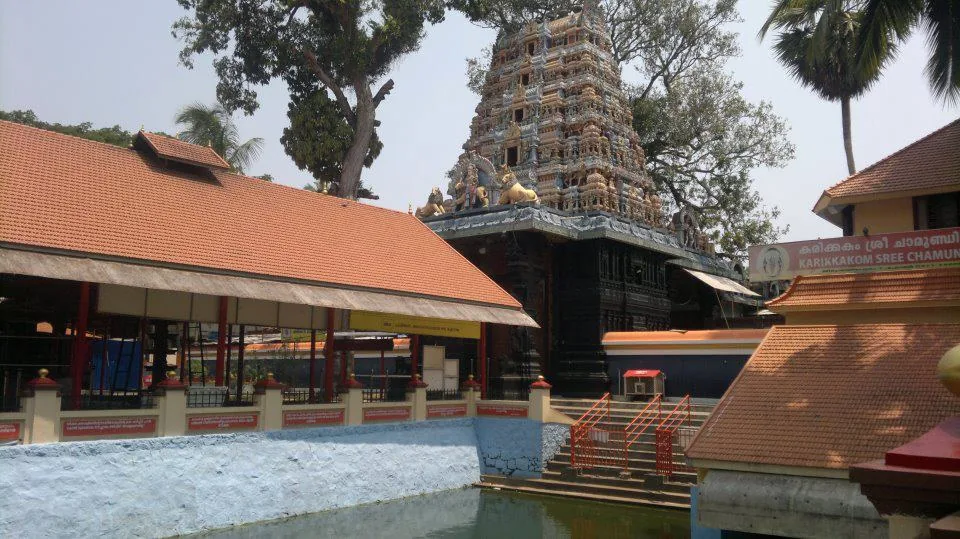
- A double-walled nalambalam encloses circular, square and combined shrines.
- Families perform bali on the riverside ground beside the Karamana.
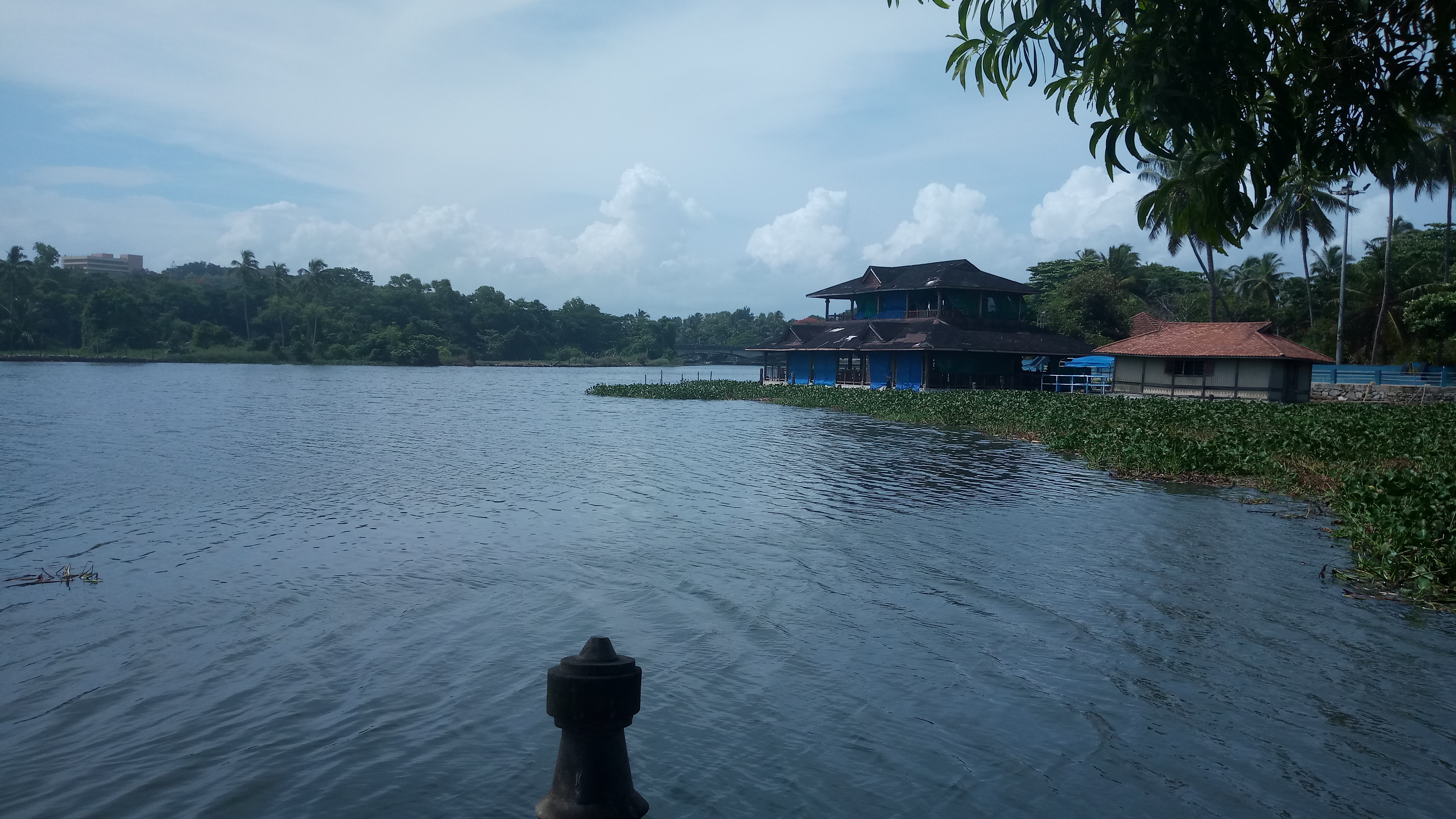
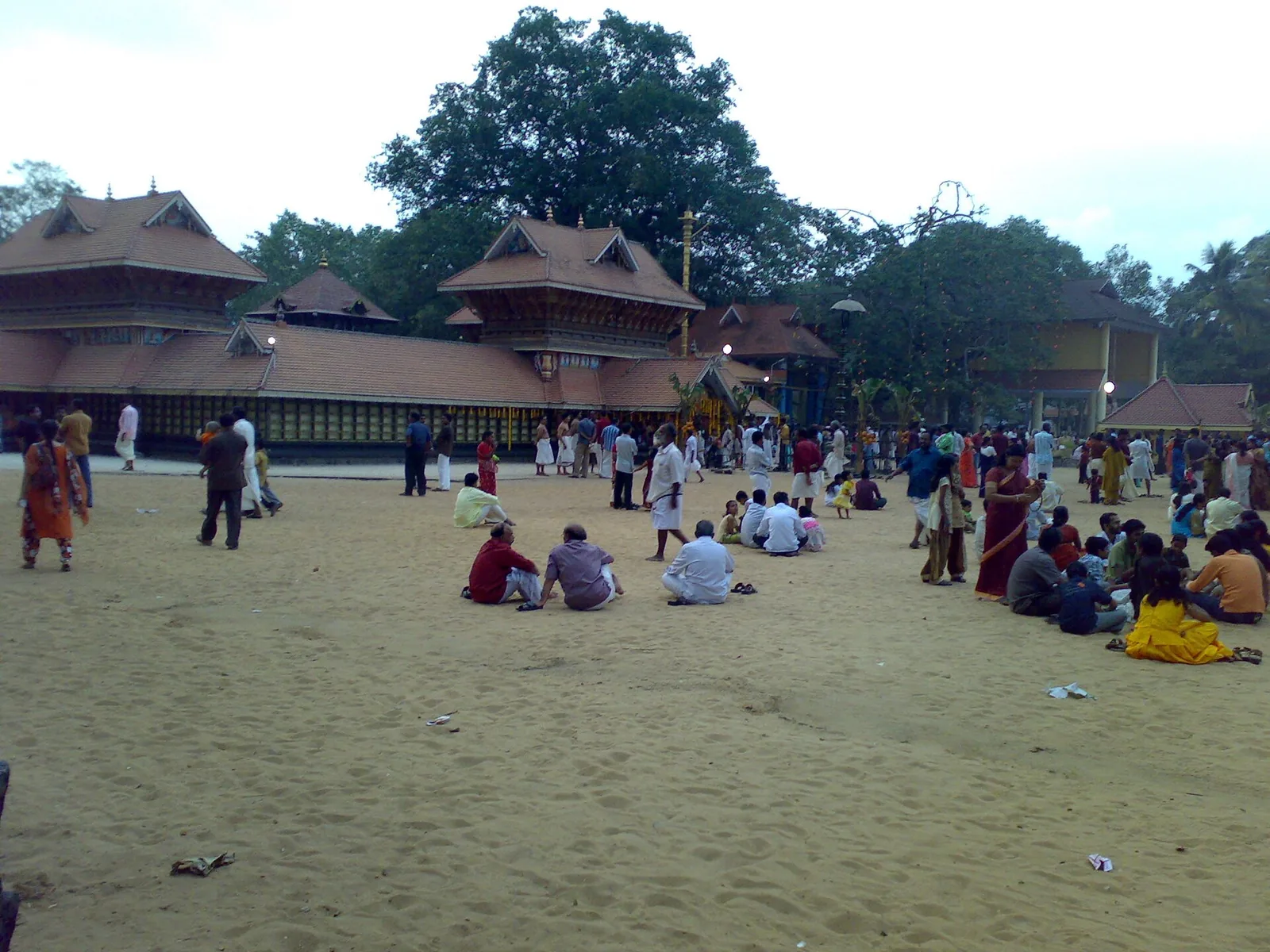
The Thiruvallam Parasurama Temple stands on the bank of the Karamana river about 7 km from the centre of Thiruvananthapuram, and Kerala Tourism records it as the only temple in the state dedicated to Parasurama. That makes it unusual, because Parasurama is the sage who, in legend, raised Kerala from the sea, yet almost nowhere else is he the main deity of a shrine.

Entry rules. Temple staff set the rules on visitor entry, dress and access to the inner shrine, and these matter most for non-Hindu visitors.
Dress respectfully and follow the institution’s admission and photography rules.
What draws most people here, though, is the river rather than the rarity. Legend says Parasurama offered bali for his mother on this bank, so families come to Thiruvallam to perform the same rite for their own dead, and on Karkidaka Vavu in July or August thousands fill the riverside. The temple also faces north towards the Sree Padmanabhaswamy Temple, which ties this quiet bend of the river to the heart of the old city.
The sage who made Kerala came to this riverbank not as a warrior but as a grieving son, and the families who mourn here still follow him.
Every child in Kerala hears how Parasurama, the sixth avatar of Vishnu and a Brahmin who carried an axe, threw that axe from Gokarna into the western sea, so that the water drew back and the land of Kerala rose between the mountains and the shore. Yet the temple's own legend remembers him at Thiruvallam for something gentler, because it says he performed bali tharpanam for his mother on the bank of the Karamana here. That act of mourning made the ground sacred, which is why the founder of the land is honoured on this spot as a son, even though inside the main shrine he still holds his axe. Read the full account in our story The riverbank where the sage who made Kerala mourned his mother.
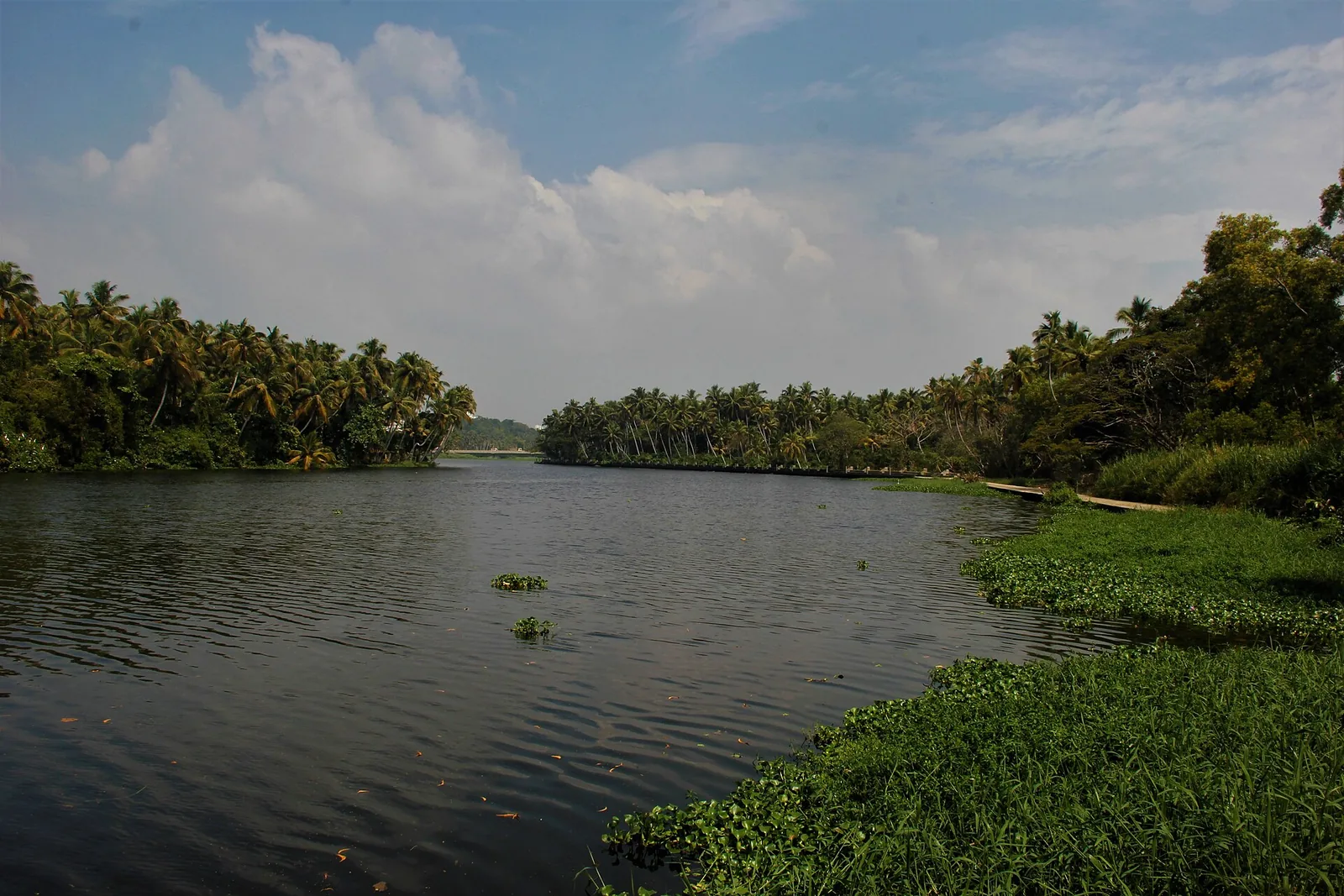
The river he chose explains why the grieving keep coming after him. At this point the Karamana and its tributary the Killi join the Parvathy Puthanar, a man-made channel along the coast, so three waters meet below the temple. In Hindu practice offerings for the dead go to flowing water, and a Triveni Sangamam, a meeting of three rivers, carries special weight for those rites. The Killi is the same stream that flows past the Attukal Bhagavathy Temple upstream, so the city's two great shrines share a river.
Parasurama was not the last famous son to mourn on this bank, because tradition says Adi Sankara, the eighth-century teacher, also performed bali here for his own mother. While he was at Thiruvallam he installed the idol of Brahma inside the compound, and that gave the temple one of its rarest features, since Brahma is seldom worshipped in a shrine of his own anywhere in India. Brahma stands beside a Shiva that Parasurama is said to have installed himself, and with the sage as the form of Vishnu, the whole trinity shares one compound.
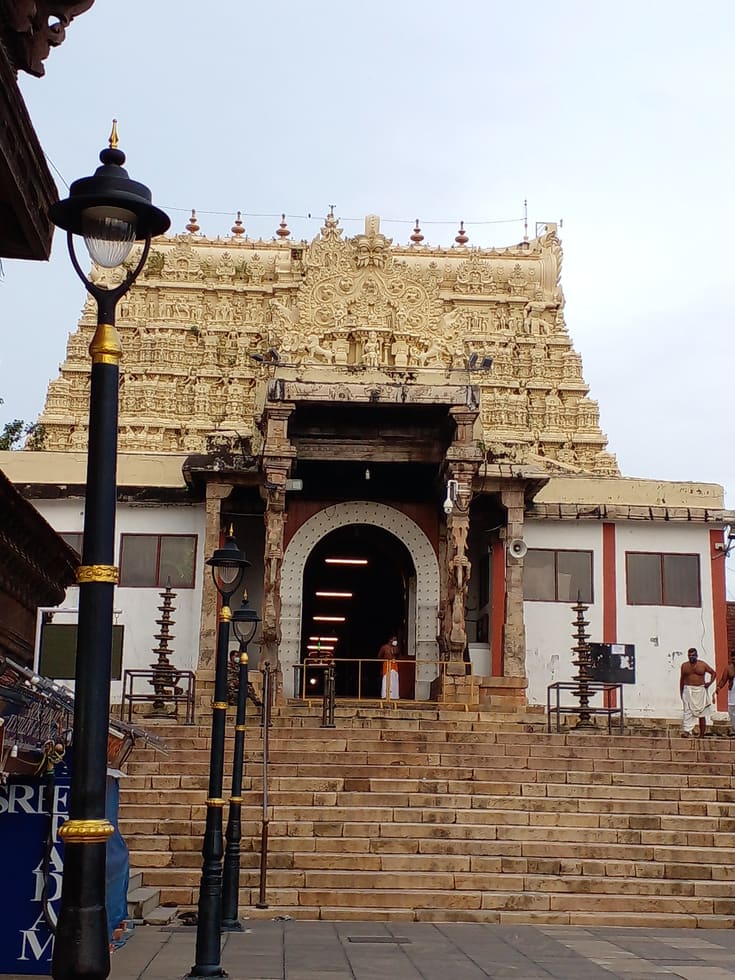
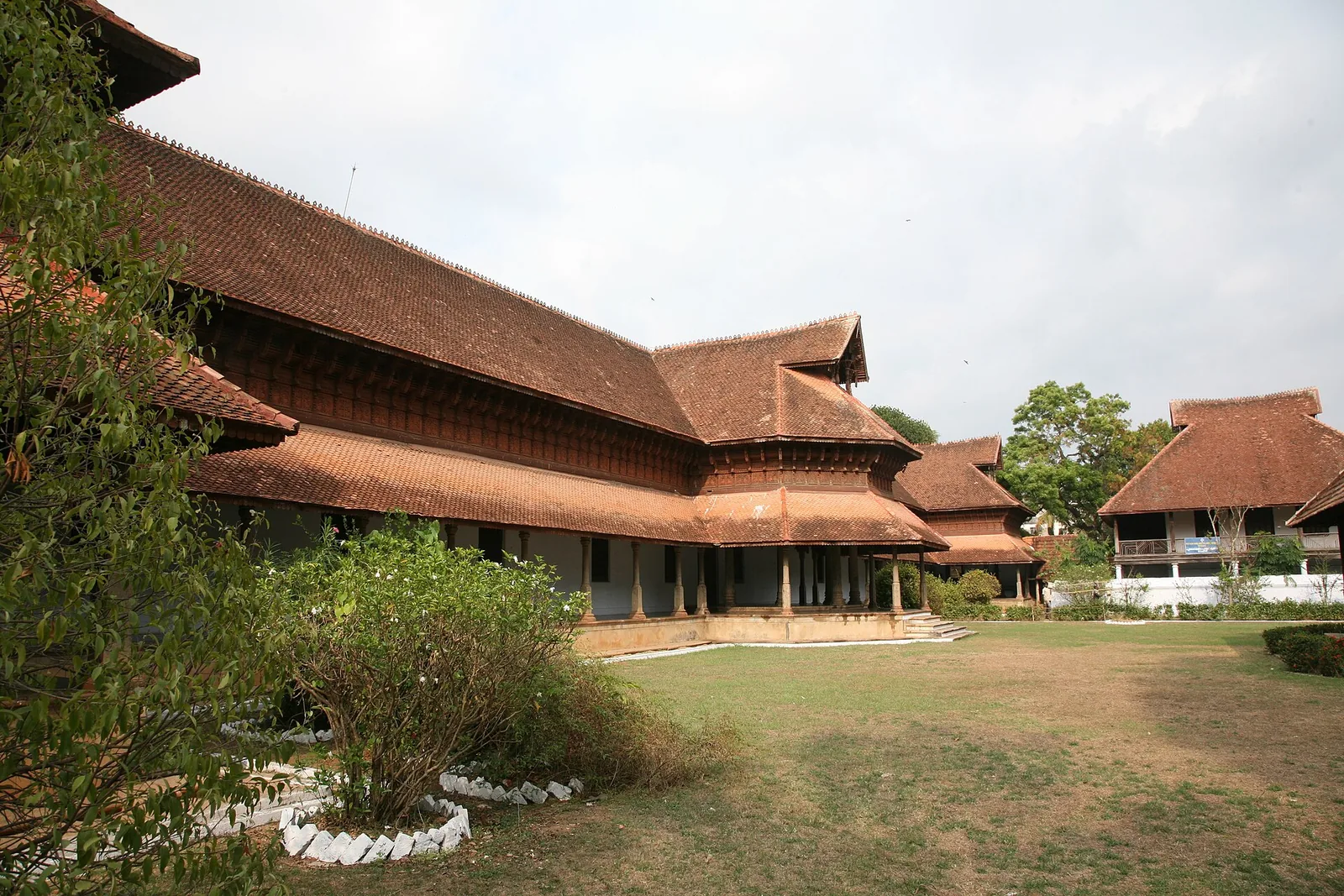
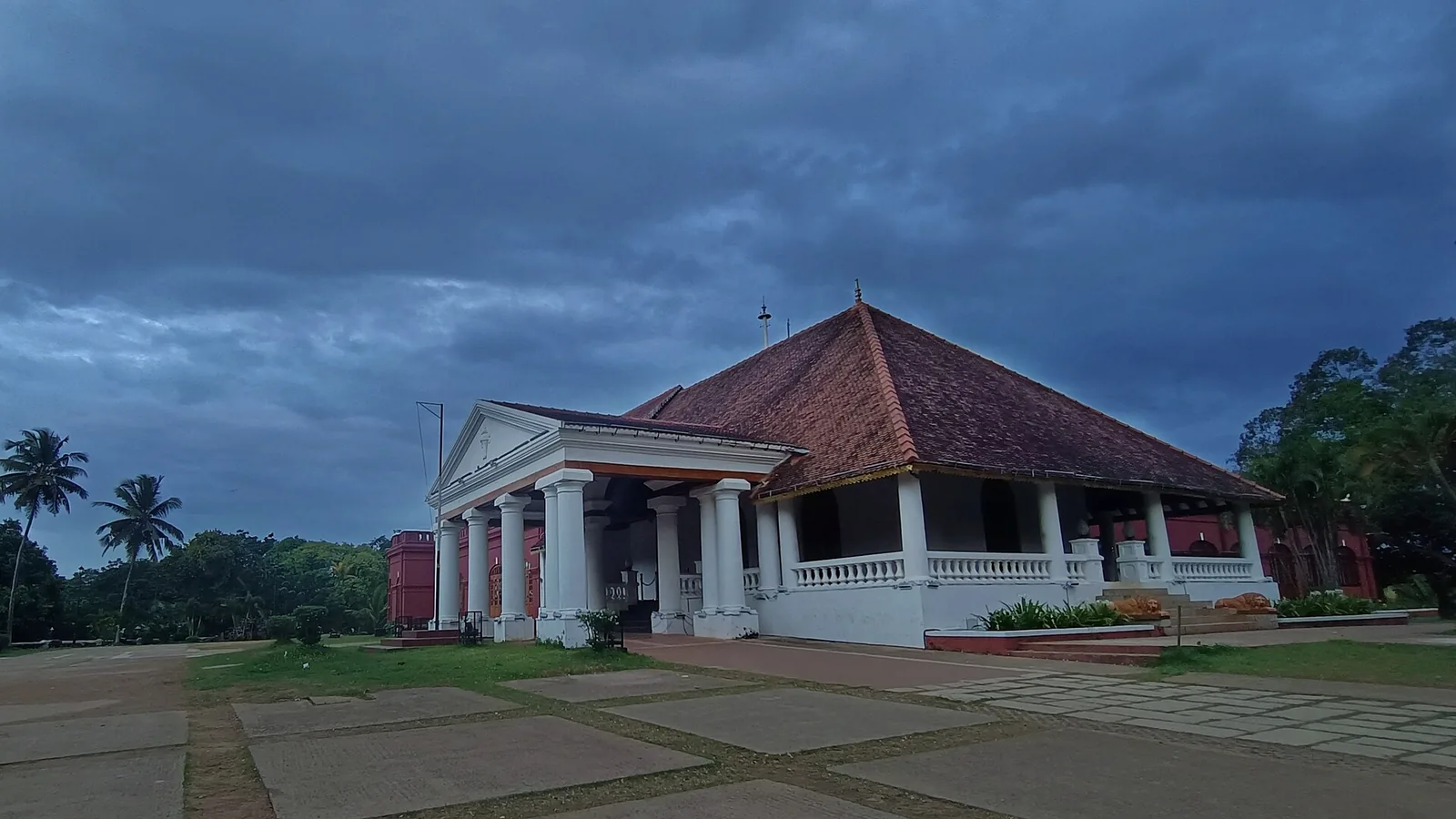
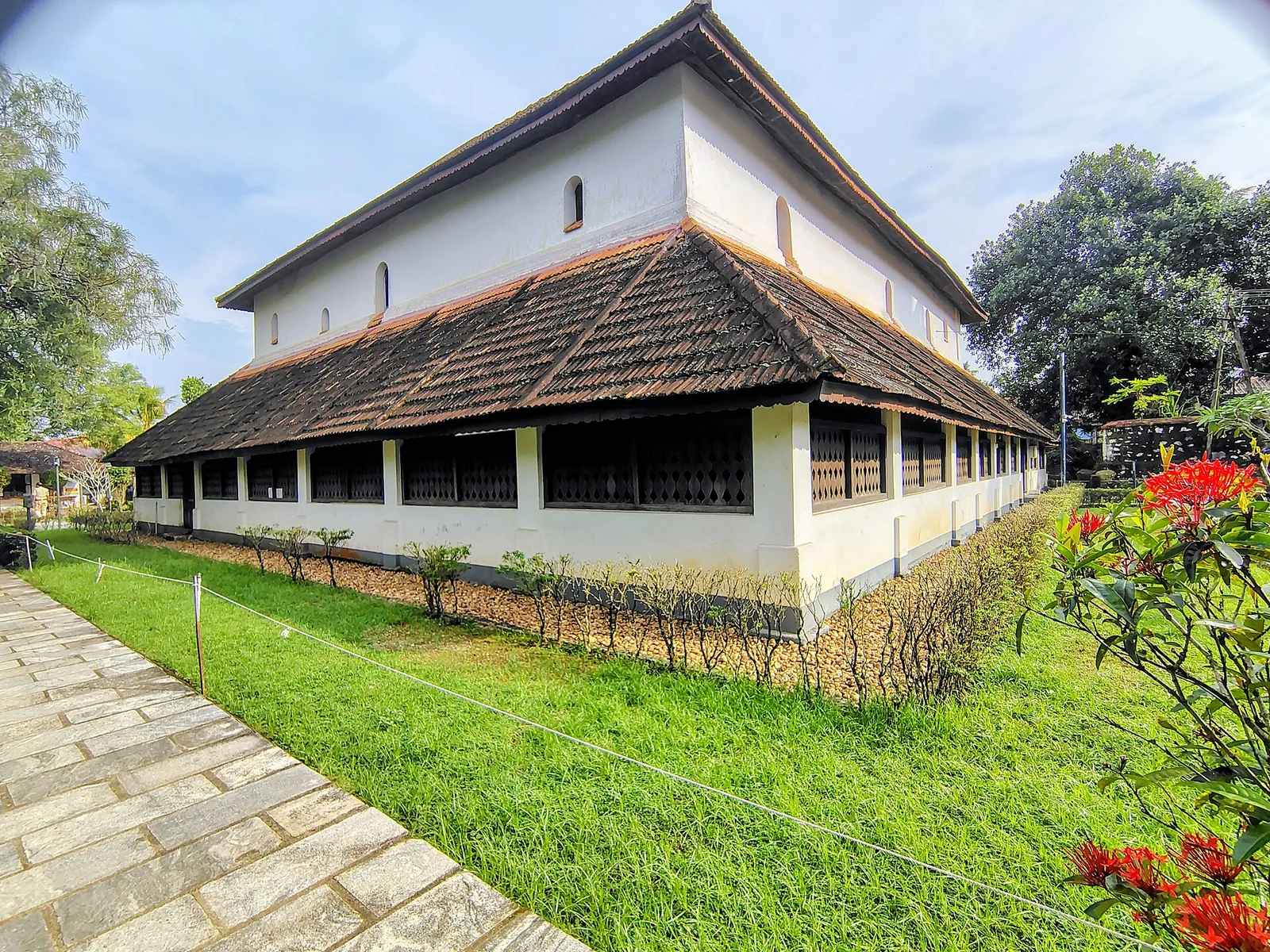
The stones that hold these stories are old, though younger than the legends. Kerala Tourism calls Thiruvallam a 2,000-year-old temple, credits its first consecration to the saint Vilwamangalam Swamiyar and says the Chera king Athiyaman Perumal rebuilt it. The black granite building that stands today, however, dates from the late Pandya kings of the twelfth and thirteenth centuries, and its double-walled nalambalam holds shrines in unusual shapes, one circular, one square and one combining both. The Archaeology Department now protects the whole structure.
The direction the sage faces carries the story out into the city. Parasurama's shrine looks north towards the Sree Padmanabhaswamy Temple, and one account of the name says "vallam" is the head of the reclining Padmanabha, whose body lies at Ananthankadu and whose feet rest at Thiruppapur. For that reason devotees believe that visiting all three temples on one day brings special merit, so a morning of mourning at Thiruvallam can become a pilgrimage across the capital.
On most days that pilgrimage is a quiet one, because families arrive a few at a time for bali several times each month. The quiet ends on Karkidaka Vavu, the new moon of the Malayalam month of Karkidakam, when Thiruvallam becomes one of the largest bali centres in the south of the state. Each mourner wears a ring of darbha grass and lays sesame, flowers, darbha, sandalwood and raw rice on a plantain leaf, which rests on the offering stones until the crows come, since the crows are believed to carry the offering to the departed. The leaves then go into the river and the families bathe in it, just as the legend says the sage once did, and the Papanasam beach bali story tells how the same day unfolds at Varkala.
The best-known legend of the temple is Parasurama's own bali for his mother on the Karamana bank, which tradition gives as the reason the temple stands here. A second legend follows from it, because Adi Sankara is said to have come for the same rite for his mother and to have installed the Brahma idol while he was here.
The name carries a legend of its own. One account says "vallam" means the head of the reclining Padmanabha, whose body lies at Ananthankadu and whose feet rest at Thiruppapur, so Thiruvallam is read as the head of the god whose great temple stands in the city.
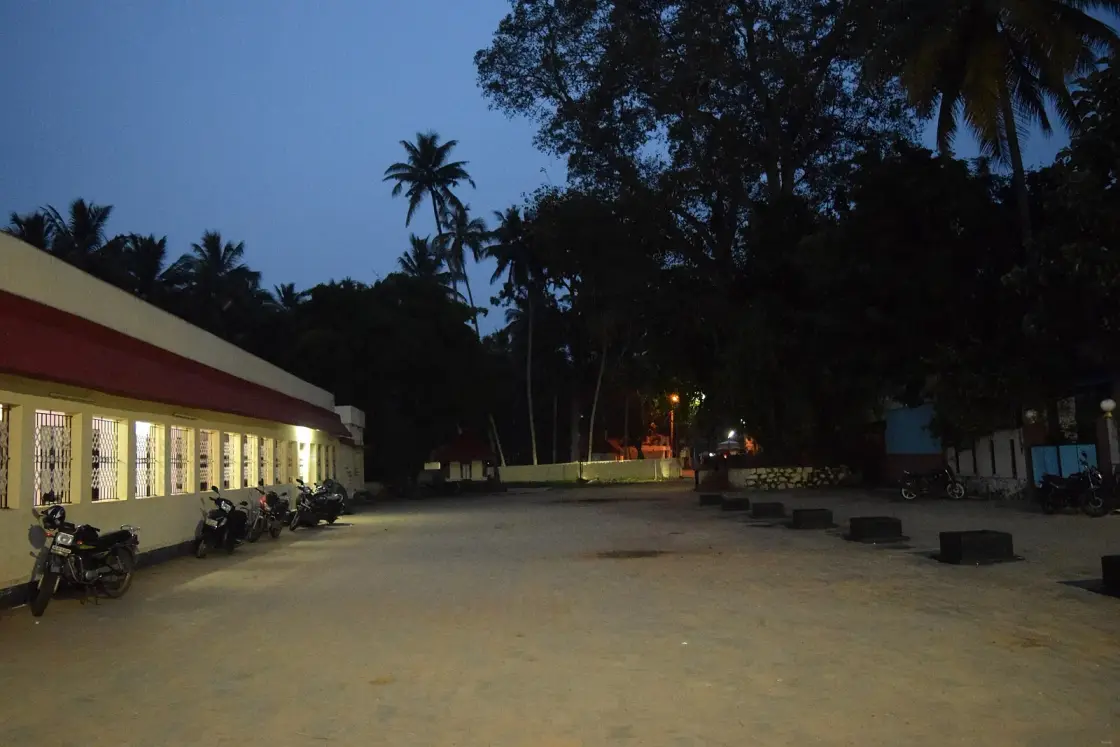
Legend: Vilwamangalam Swamiyar consecrated the first temple, which Kerala Tourism calls 2,000 years old (Kerala Tourism).
Early period: the Chera king Athiyaman Perumal rebuilt the temple (Kerala Tourism).
12th–13th centuries: the late Pandya kings built the black granite temple that stands today (Live History India).
Today: the Archaeology Department protects the structure, and in 2026 Karkidaka Vavu fell on 12 August (Kerala Tourism; Onmanorama, 10 Aug 2026).
See the only temple in Kerala dedicated to Parasurama, the sage who raised Kerala from the sea in legend.
Stand on the bank where three waters meet, the Karamana, the Killi and the Parvathy Puthanar.
See a rare shrine to Brahma, said to have been installed by Adi Sankara.
See the whole trinity of Brahma, Vishnu and Shiva in one compound.
Walk around a black granite temple from the twelfth and thirteenth centuries.
Watch one of the largest Karkidaka Vavu bali gatherings in south Kerala.
Road km to Thiruvananthapuram; ghat roads and traffic vary — allow extra.
Karkidaka Vavu in July or August is the temple’s biggest day; Parasurama Jayanti falls in May, and the 20-day Thiruvonam Arattu festival runs in October and November (Live History India).
Live forecast loads in your browser.
Sunset is in about 2 hours.
Sun and moon are calculated for this location and shown in IST. Photography windows are the hour around sunrise and sunset; the sunset bearing is degrees clockwise from true north. Moon phase is accurate to about half a day.
Listed stays, food, activities, sights, shops and rentals around Thiruvallam Parasurama Temple, each with its locality and direct contact details.
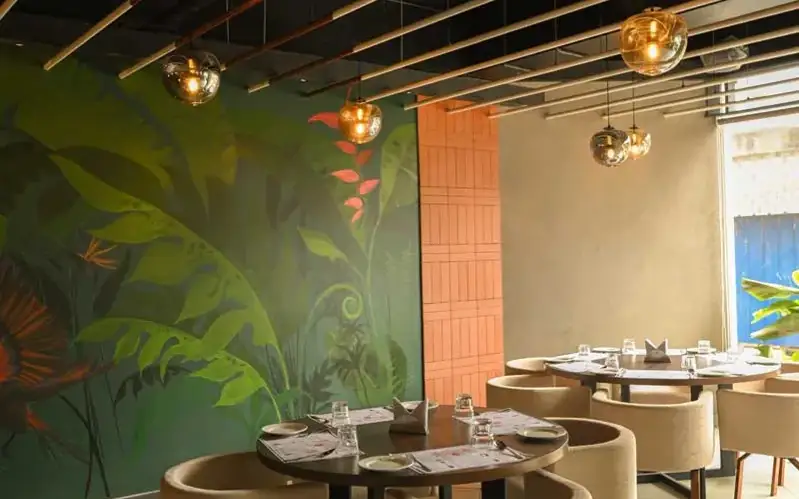
Restaurant (regional, north indian) on Venpalavattom, Near Lulu Mall in Thiruvananthapuram City. Regional, North Indian, AC.
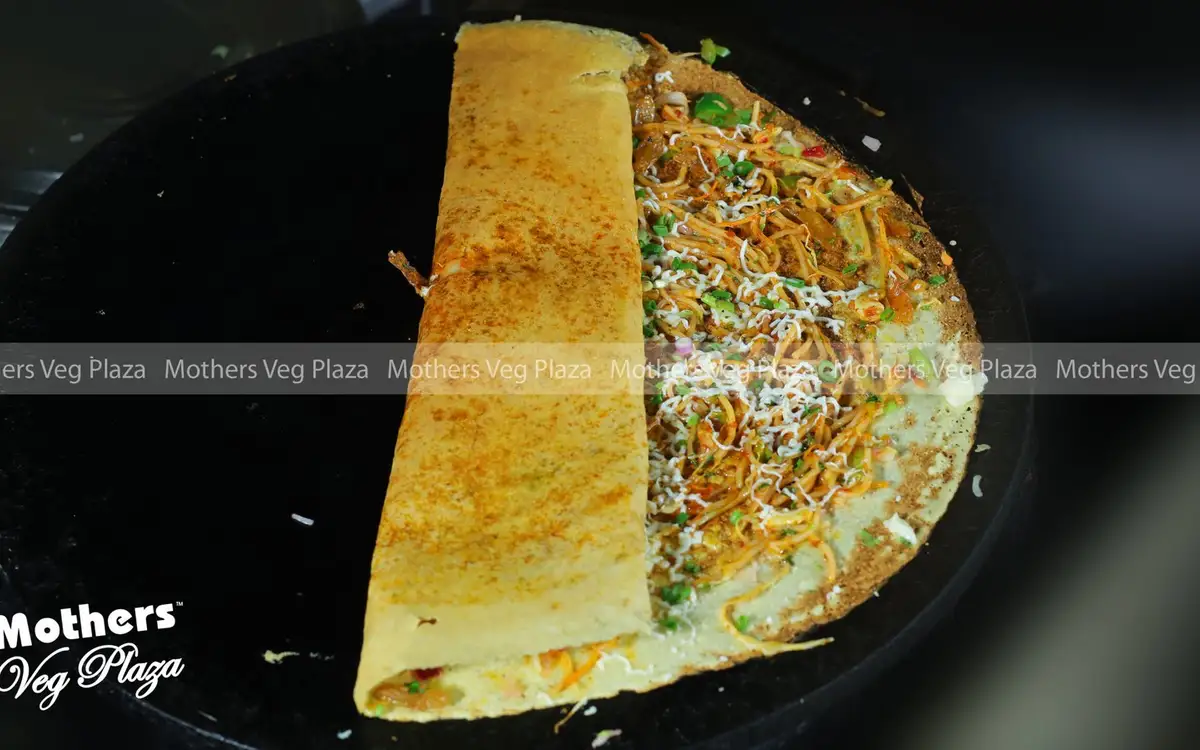
Pure vegetarian restaurant at Bakery Junction, Palayam, serving Kerala sadya every day and about 100 kinds of dosa.
Restaurant (regional) on Kuttikad Lane in Thiruvananthapuram City.
Restaurant (south indian) on kuravankonam, Opposite Surya Medicals in Thiruvananthapuram City.
Restaurant (regional) on Fort South Nada road in Thiruvananthapuram City.
Restaurant (burger) on kuravankonam in Thiruvananthapuram City.
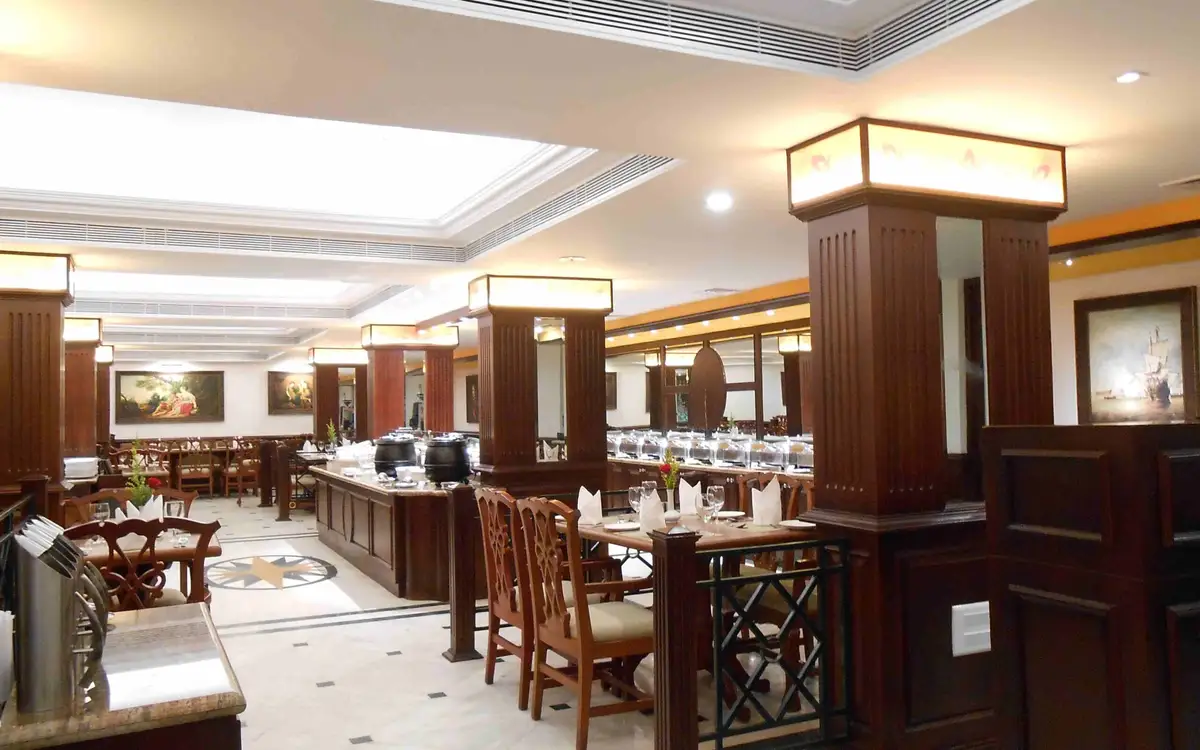
The restaurant at Uday Suites near the airport, serving South Indian, Indian, Continental and Chinese food from 6 am to 10 pm.
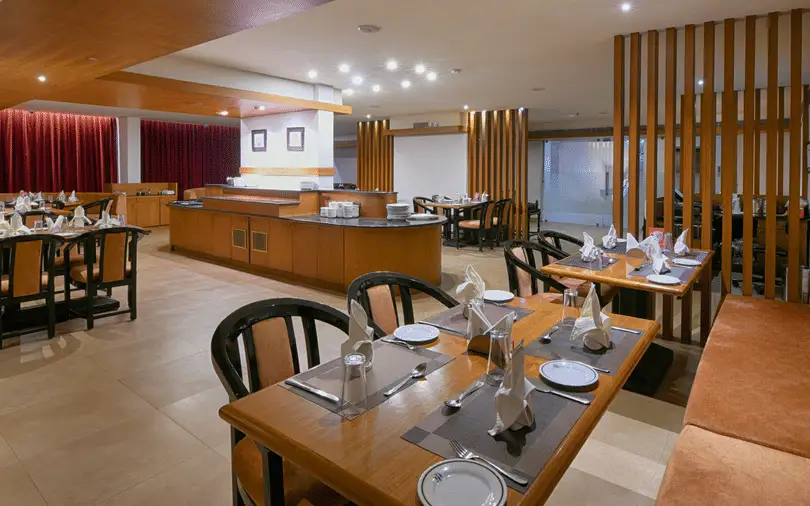
Hotel Horizon's all-day multi-cuisine restaurant near Thampanoor, with a breakfast buffet and a private dining room for 10.
The South Park's multi-cuisine restaurant on M G Road, Palayam, with a buffet and an à la carte menu.
A long-running Palayam bakery at Bakery Junction for fresh cakes, plum cake and snacks made in its own kitchen.
The Kesavadasapuram branch of the 1939 Paragon group, serving Malabar and Kerala dishes, biriyani and seafood.
Pan Asian and Continental family restaurant at Kuravankonam Junction, Kowdiar, open since 2006, with vegetarian and gluten-free dishes.
Café (coffee shop, regional, indian) on Old NH in Thiruvananthapuram City.
Restaurant (indian) on Anaval Street in Thiruvananthapuram City.
Street food (indian, chicken, coffee shop, kebab) on Old NH in Thiruvananthapuram City.
Street food (burger) on Unit# GF - 30, Kazhakootam - Kovalam Bypass Rd, Chacka, Thiruvananthapuram, Kerala 695024 in Thiruvananthapuram City.
Café (coffee shop) on Unit# GF - 1, Kazhakootam - Kovalam Bypass Rd, Chacka in Thiruvananthapuram City.
Restaurant (indian, south indian, seafood) on Mahatma Gandhi Road in Thiruvananthapuram City.
Café (regional, coffee shop) on Old NH in Thiruvananthapuram City. Regional, Coffee Shop, Outdoor seating.
Restaurant (indian) on Valiyavila Maruthankuzhi Road in Thiruvananthapuram City.
Restaurant (seafood) on Ganapathy Kovil Road in Thiruvananthapuram City.
Café (coffee shop, indian) on pappanamcode in Thiruvananthapuram City.
Restaurant (chicken) on Vellayambalam- Sasthamangalam Road in Thiruvananthapuram City.
Restaurant (indian) on Westfort road in Thiruvananthapuram City.
Book with the place itself. India’s cyber-crime coordination centre warned in April 2025 that convincing copies of hotel and pilgrimage booking sites are being pushed through sponsored search and social ads, taking payment for rooms the property never hears about. Each profile carries the business’s own contact details and its source. Roampedia takes no commission and does not collect booking payments. Booking pages reached through ads sometimes imitate a property’s own site. Fraud can be reported on cybercrime.gov.in or on 1930.
Find food, accommodation and activities across Thiruvananthapuram city. Browse the guides for places to eat, stay and explore along your route.
23 more places around Thiruvananthapuram city. Open a guide to plan the visit and onward journey.
The ancestral palace compound associated with Raja Ravi Varma at Kilimanoor; visitor access concerns the working family estate and must be confirmed before travel.
2.9 km · straight line
A major coastal Muslim pilgrimage landmark south-west of the city centre, known for the Beemapally Uroos and the tombs honoured within the shrine complex.

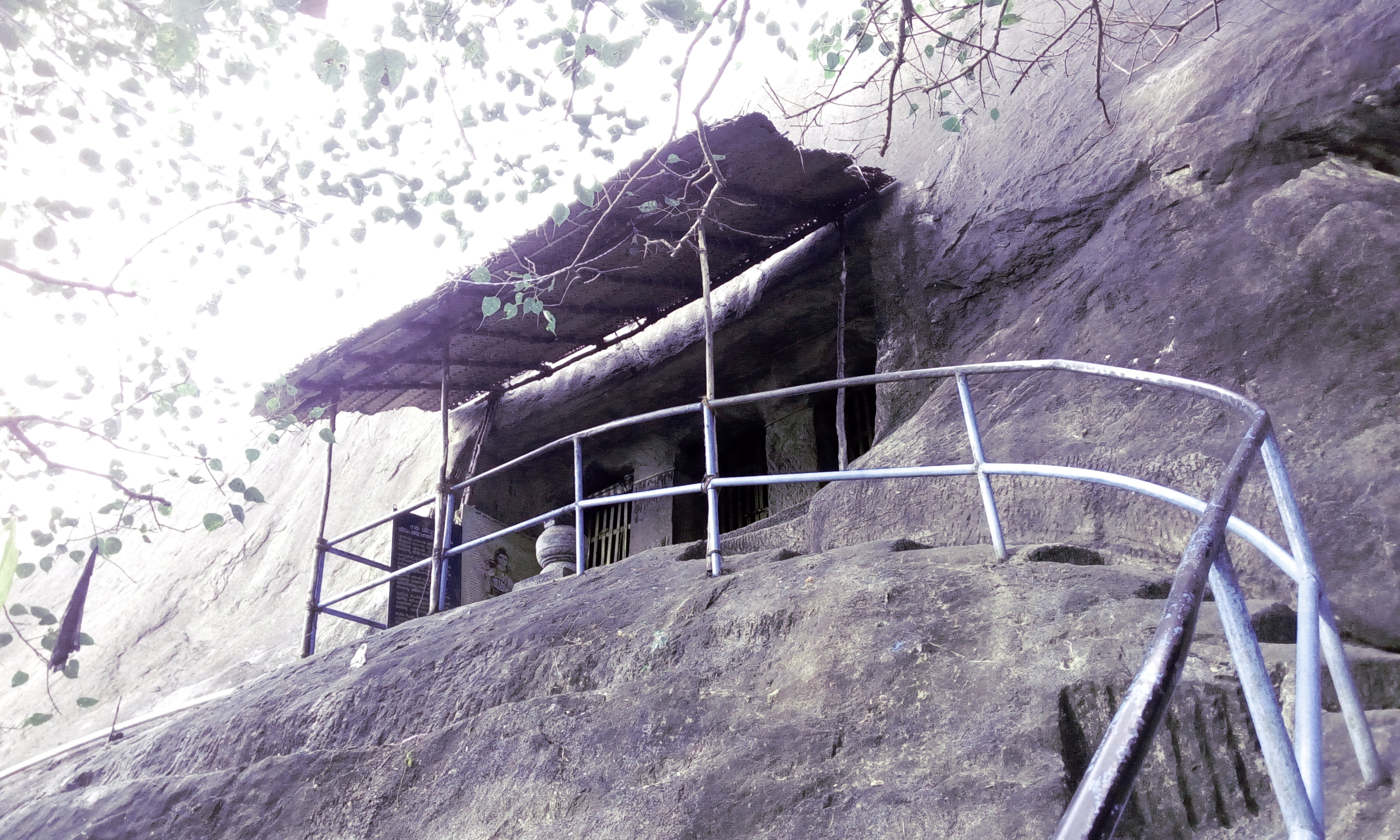
Madavoorpara combines a rock-cut Shiva shrine with a rocky hill landscape on Thiruvananthapuram’s northern edge. The temple and the climb offer different reasons to visit, and both deserve time.
5.2 km · straight line
Kerala’s capital and the old seat of Travancore, built around the Sree Padmanabhaswamy Temple.

6.5 km · 8 min drive
Major Vishnu temple and one of Kerala’s most important pilgrimage landmarks; strict entry and dress rules apply.

Robert Chisholm’s 1880 Indo-Saracenic museum in the Museum Park — a polychrome landmark holding Chola and Kerala bronzes, ivories and temple carts, with the Sree Chitra Art Gallery alongside it.

Old trees, winding paths and animal enclosures share the Museum Park at Thiruvananthapuram Zoo, also known as Trivandrum Zoo. Allow time for the garden as well as the collection, with the Napier Museum close by.

Guided forest trekking in the Neyyar Wildlife Sanctuary near the Agasthyamala foothills, south-east of Thiruvananthapuram.

5.0 km · 6 min drive
Famous Devi temple in the city, home of the Attukal Pongala — recorded as the largest annual gathering of women.

6.0 km · 8 min drive
A row of carved wooden horses gives Kuthiramalika its name. Beside Sree Padmanabhaswamy Temple, this Travancore palace museum brings timber craftsmanship and royal collections into one compact visit.

Kanakakunnu puts a Travancore palace among gardens and cultural venues near Thiruvananthapuram’s Museum Park. Come for an evening walk or choose a date around a performance.

Koyikkal Palace at Nedumangad houses folklore and coin collections inside a traditional Kerala palace. Everyday objects, instruments and currency make this a more intimate museum stop than a grand royal gallery.

Veli Tourist Village brings lake views, gardens and boating to the coast near Thiruvananthapuram. It is a family outing at the meeting of Veli Lake and the Arabian Sea.

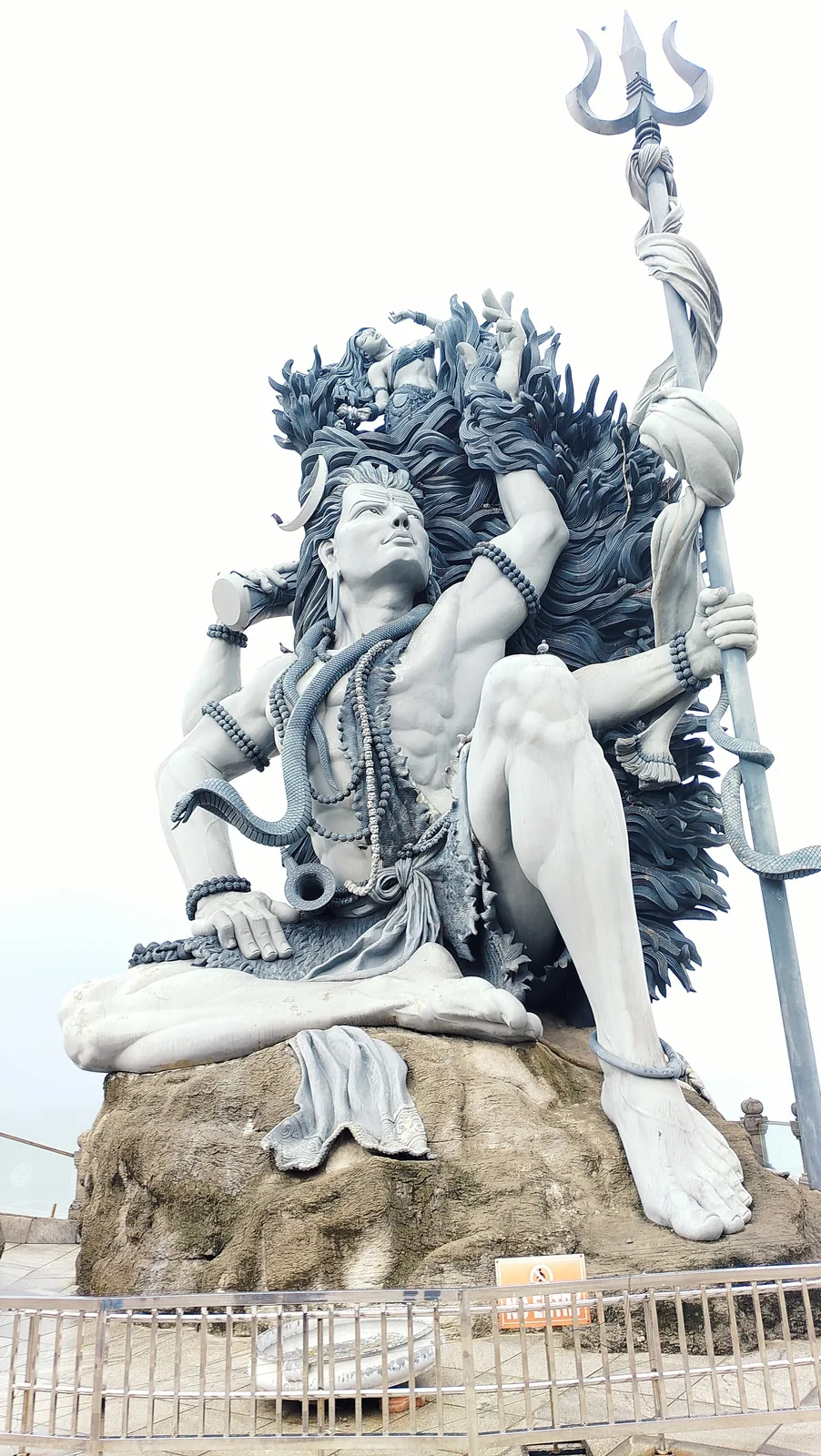
A clifftop seaside temple at Adimalathura near Vizhinjam, known for a giant Gangadhareswara (Shiva) sculpture.

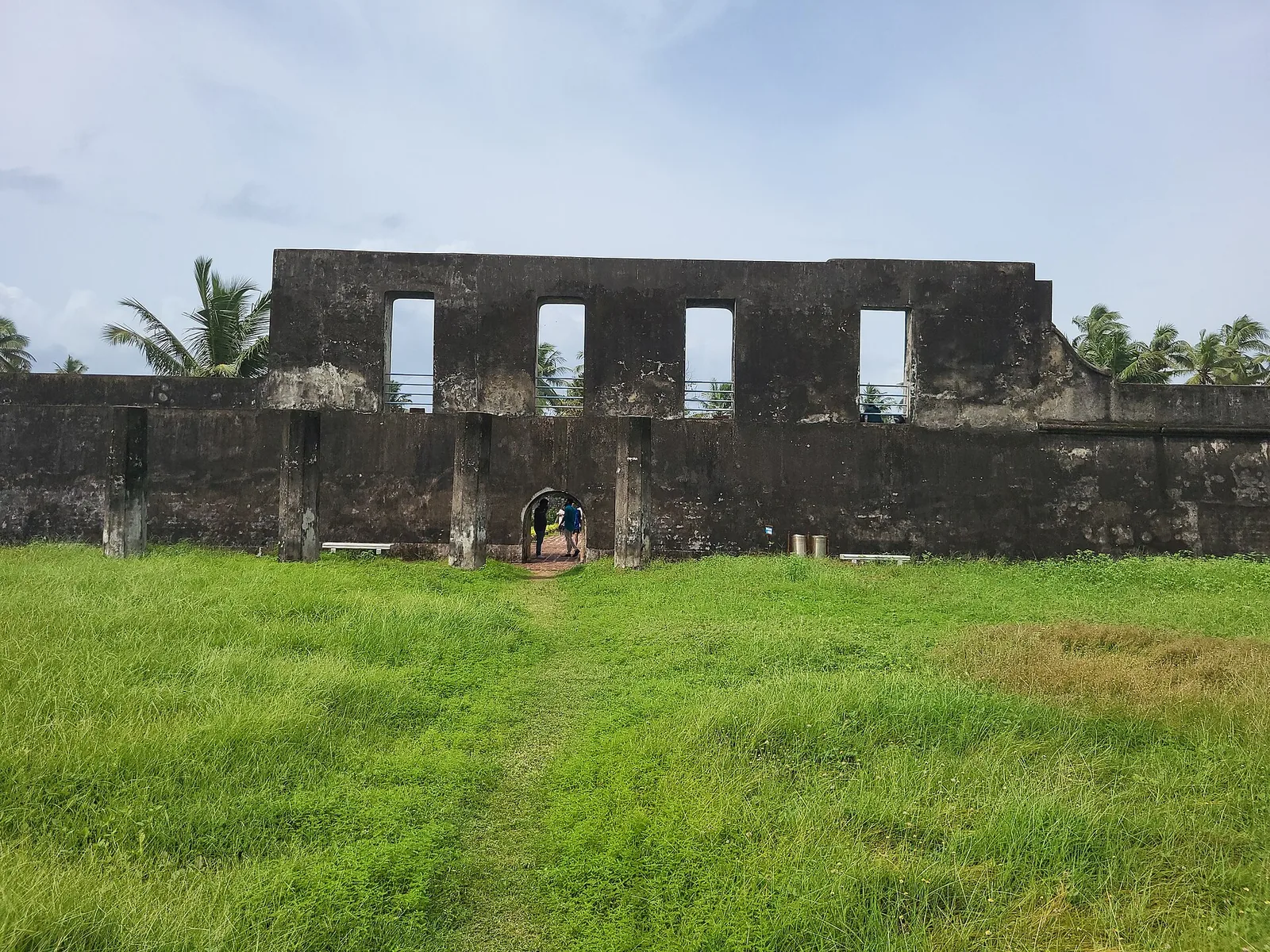
A 1690s English East India Company sea fort (Anjengo) on the coast north of the city, one of the earliest English settlements in Kerala.

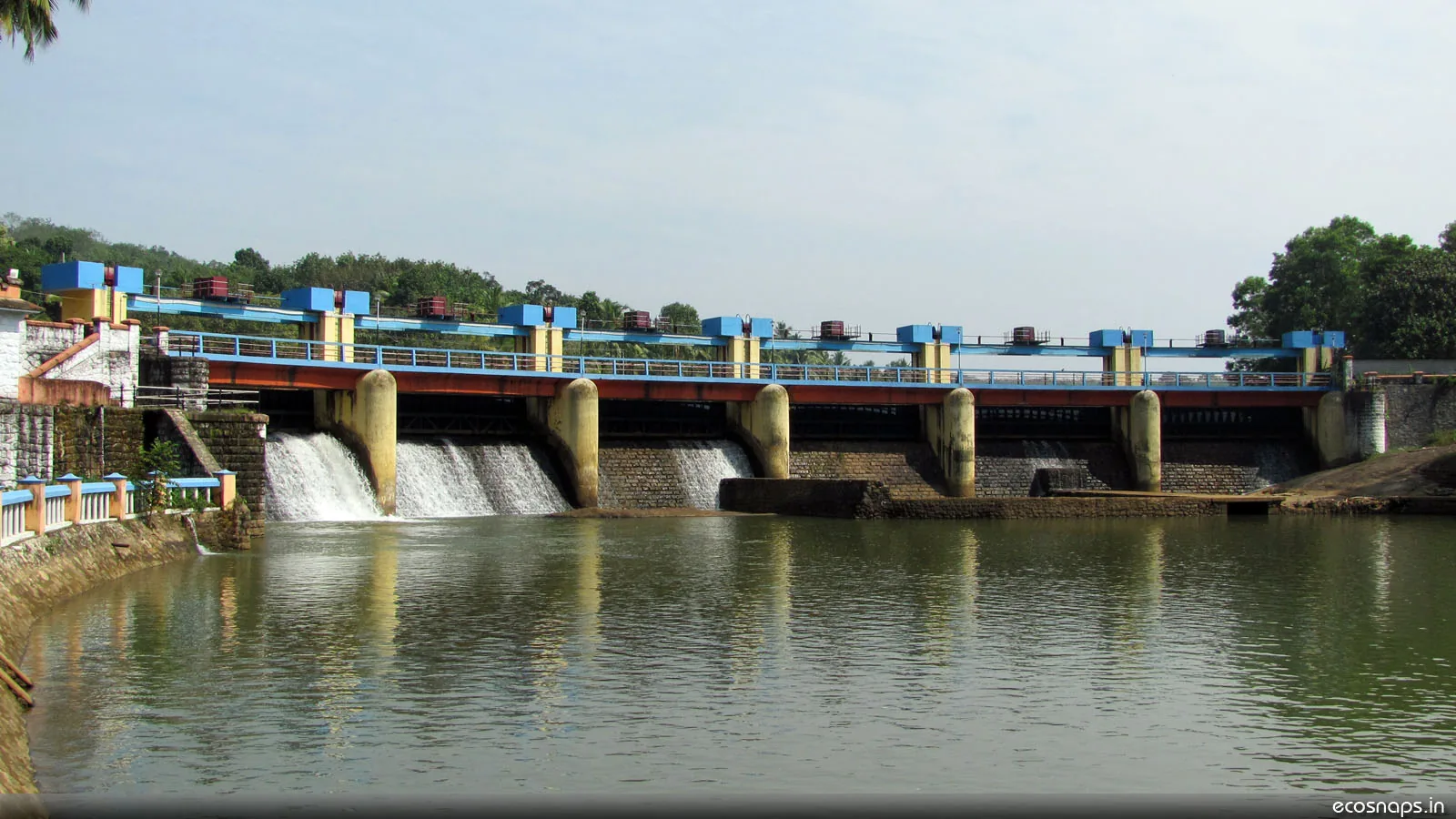
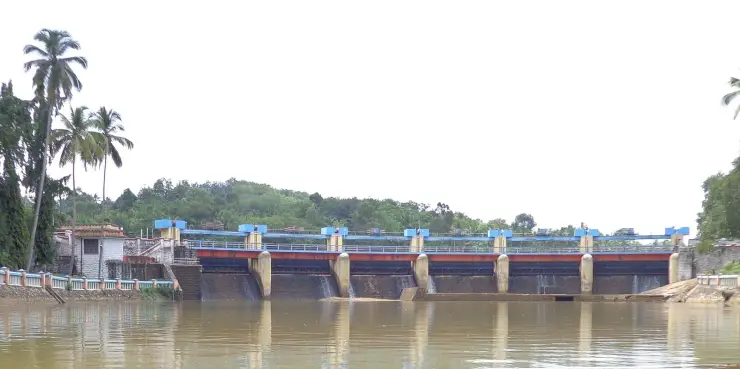
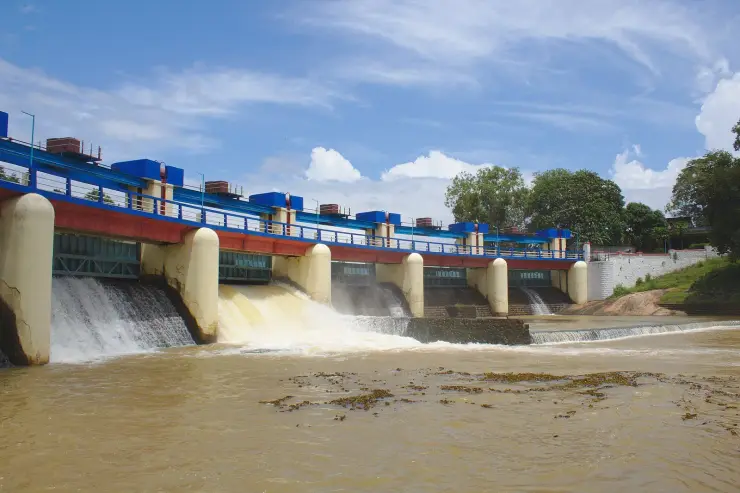
A reservoir, riverside temple and small park on the Karamana river north-east of the city, a popular local picnic spot.

6.8 km · 9 min drive
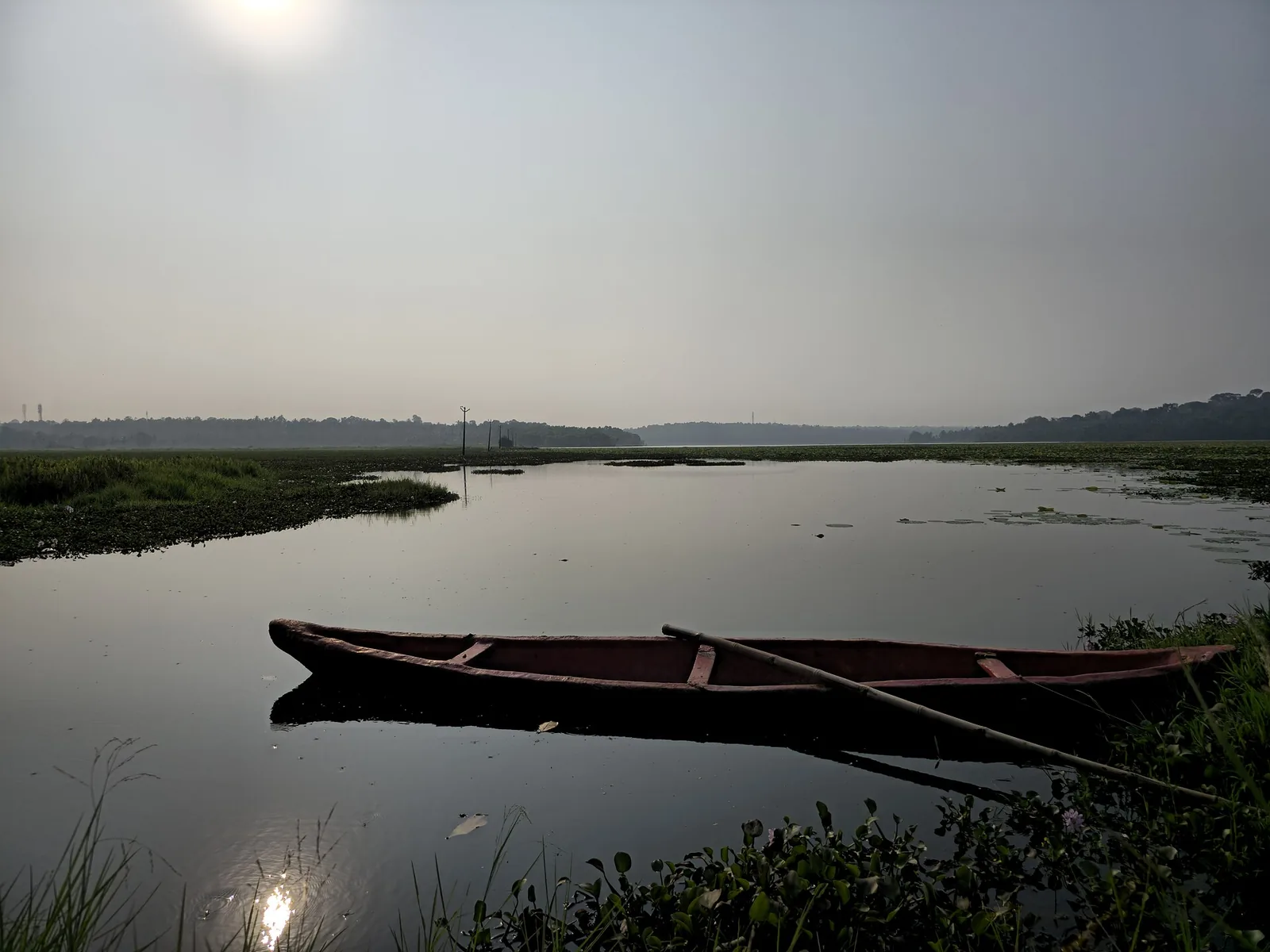
A freshwater lake in Thiruvananthapuram district, with the Punchakari–Vellayani wetlands nearby offering seasonal birdwatching.

A renowned Devi temple at Chirayinkeezhu, famous for the Kaliyoot festival and the Sarkara jaggery legend.

9.2 km · 11 min drive
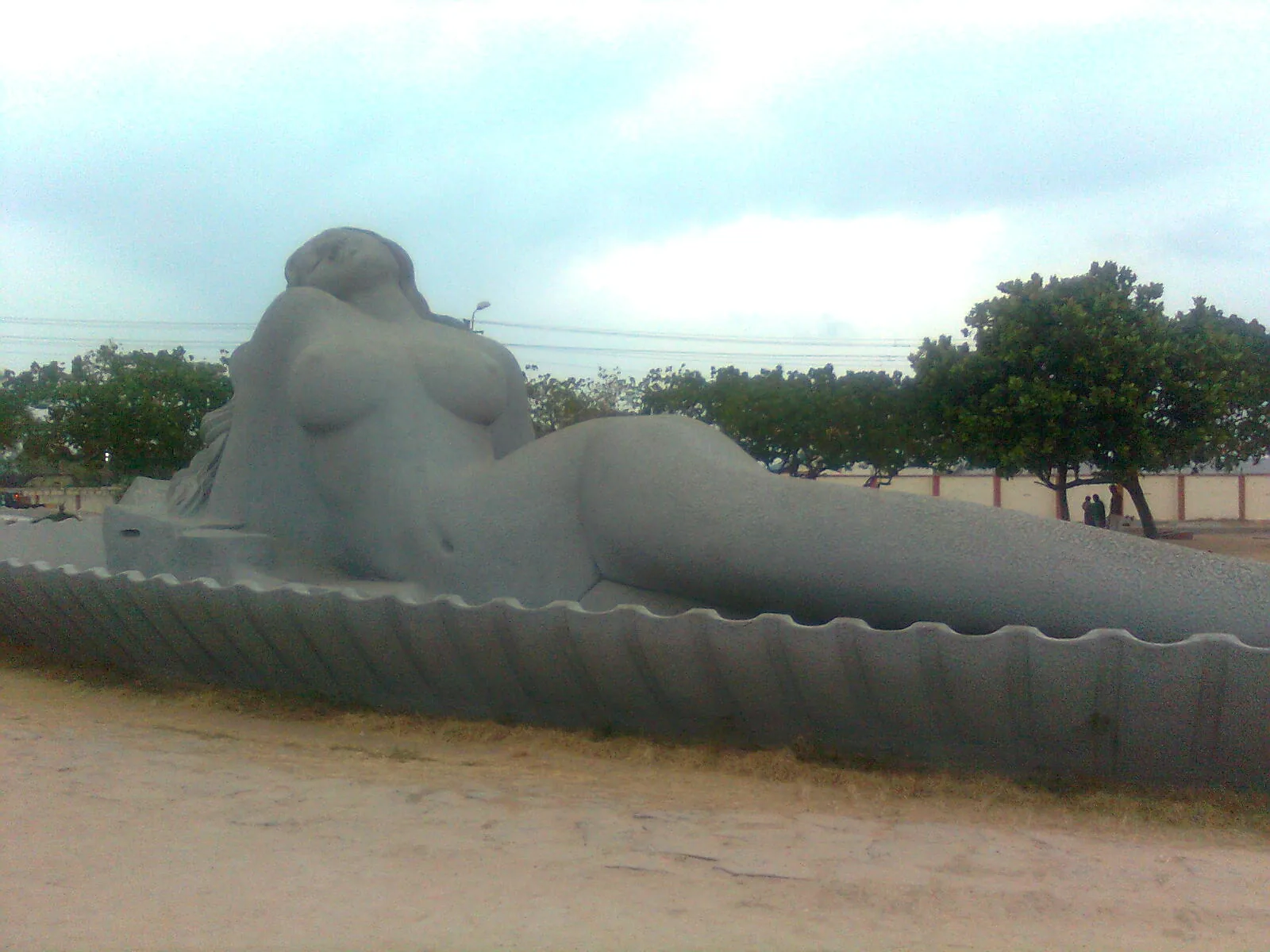
Shanghumukham is Thiruvananthapuram’s evening shoreline: an open sea horizon, airport-side access and Kanayi Kunhiraman’s reclining mermaid sculpture. Come for a coastal walk and the changing light.

6.2 km · 8 min drive
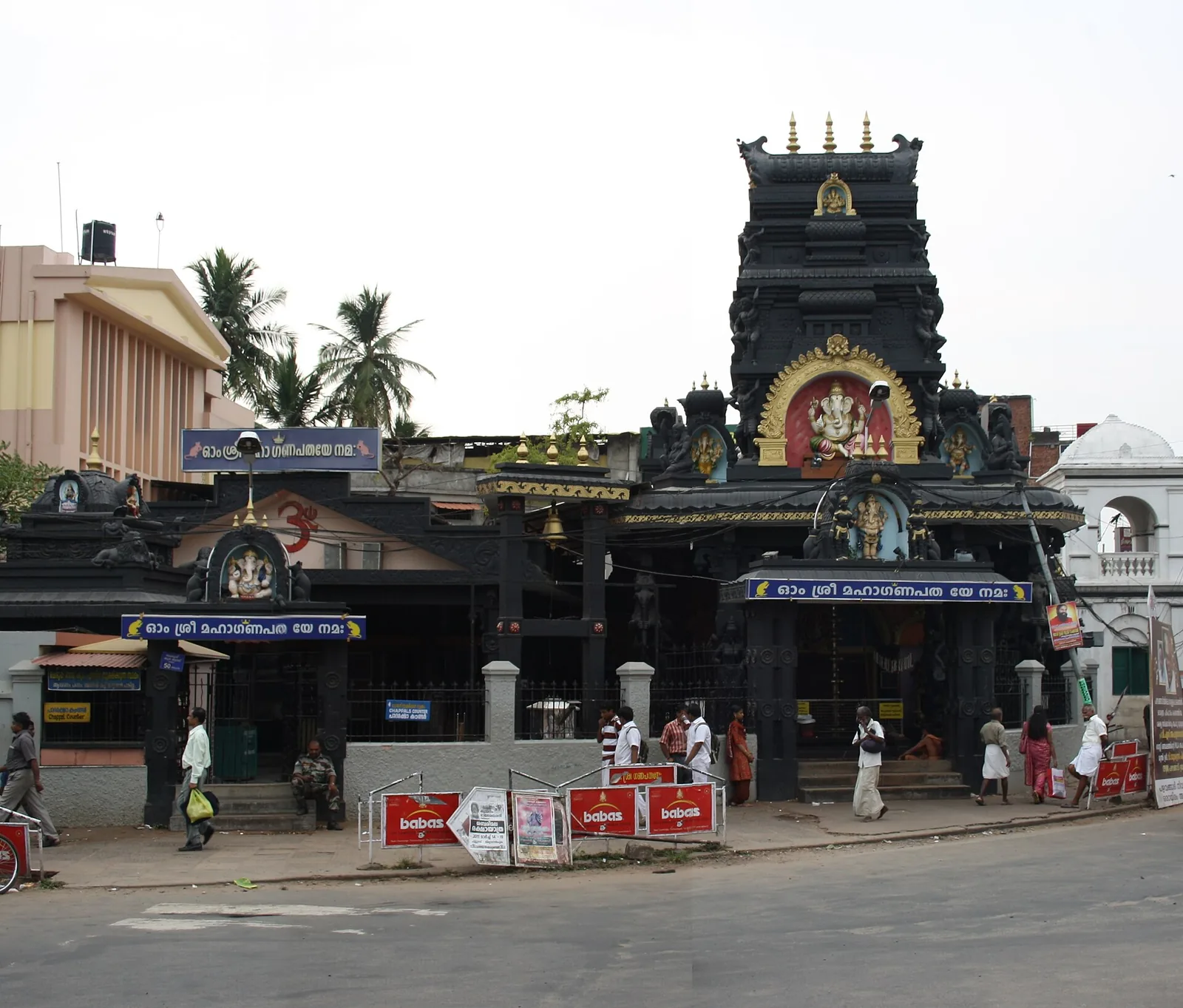
A popular Ganapathy temple near East Fort, known for the coconut-breaking offering; run by the defence services.

A calm backwater and boating spot near Veli with a lakeside tourist village and children’s park.

A well-known Chamundi Devi temple on the western edge of the city, busy during its festival season.

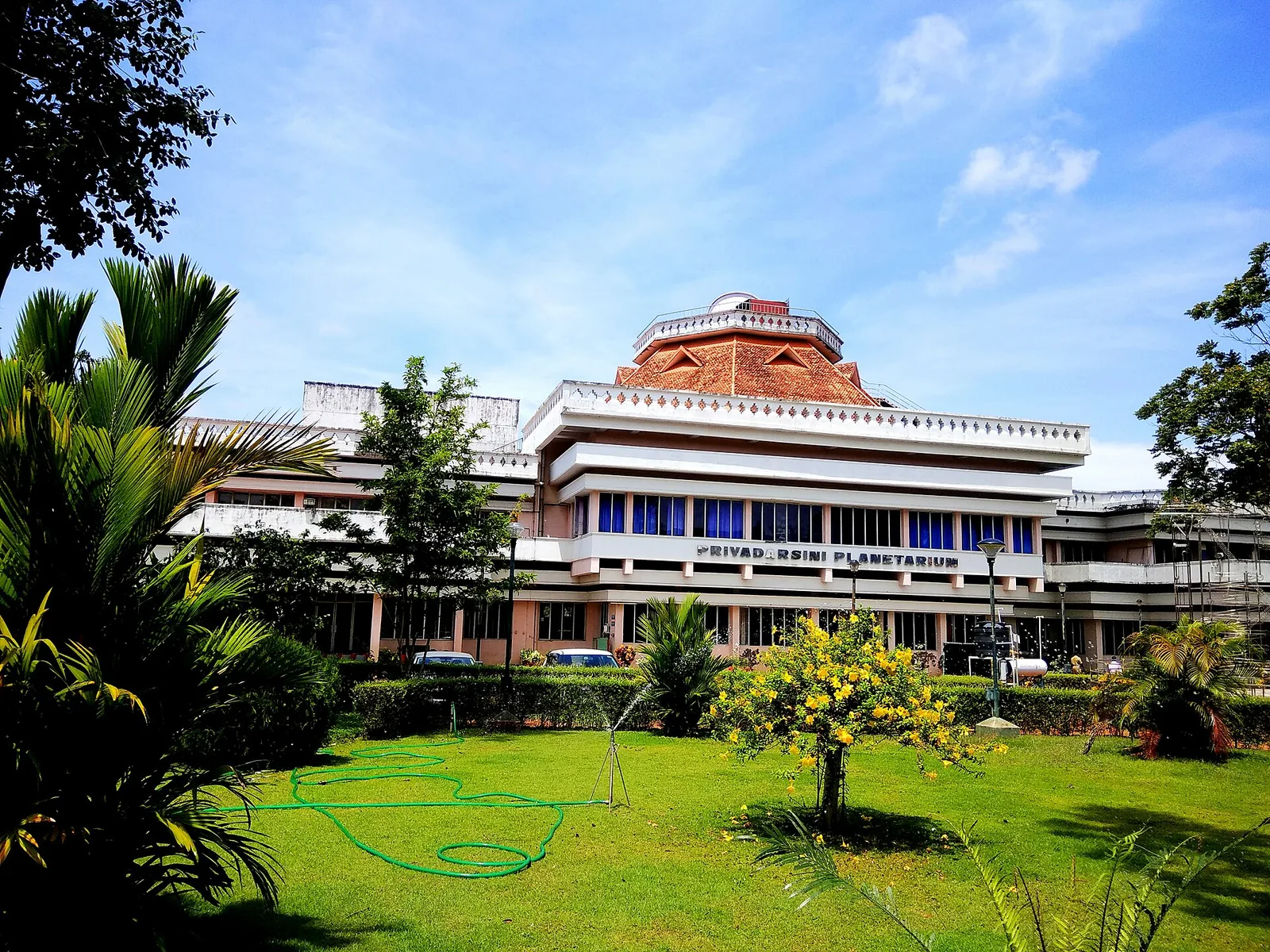
A hands-on science museum with the Priyadarshini Planetarium, popular with families and school groups.
Roampedia is commission-free — own or know a stay, eatery, guide or shop near Thiruvallam Parasurama Temple? Submit public business details for review.
Add a nearby businessA major coastal Muslim pilgrimage landmark south-west of the city centre, known for the Beemapally Uroos and the tombs honoured within the shrine complex.
2.9 km · straight line
Famous Devi temple in the city, home of the Attukal Pongala — recorded as the largest annual gathering of women.
5.0 km · 6 min driveKerala’s capital and the old seat of Travancore, built around the Sree Padmanabhaswamy Temple.
5.2 km · straight line
Samudra is the northern Kovalam shore, separated from the busier coves by rocky headlands. Choose it for a quieter sea view and a slower coastal walk.
5.3 km · straight line
A row of carved wooden horses gives Kuthiramalika its name. Beside Sree Padmanabhaswamy Temple, this Travancore palace museum brings timber craftsmanship and royal collections into one compact visit.
6.0 km · 8 min drive
Kerala’s classic beach resort area, known for Lighthouse Beach, Hawa Beach and sunset viewpoints.
6.2 km · straight line
Hawa, also called Eve’s Beach, is Kovalam’s middle cove. Its short sweep of sand and fishing activity offer a different atmosphere from the longer promenade at Lighthouse Beach.
6.2 km · straight line
A popular Ganapathy temple near East Fort, known for the coconut-breaking offering; run by the defence services.
6.2 km · 8 min drive
Major Vishnu temple and one of Kerala’s most important pilgrimage landmarks; strict entry and dress rules apply.
6.5 km · 8 min drive
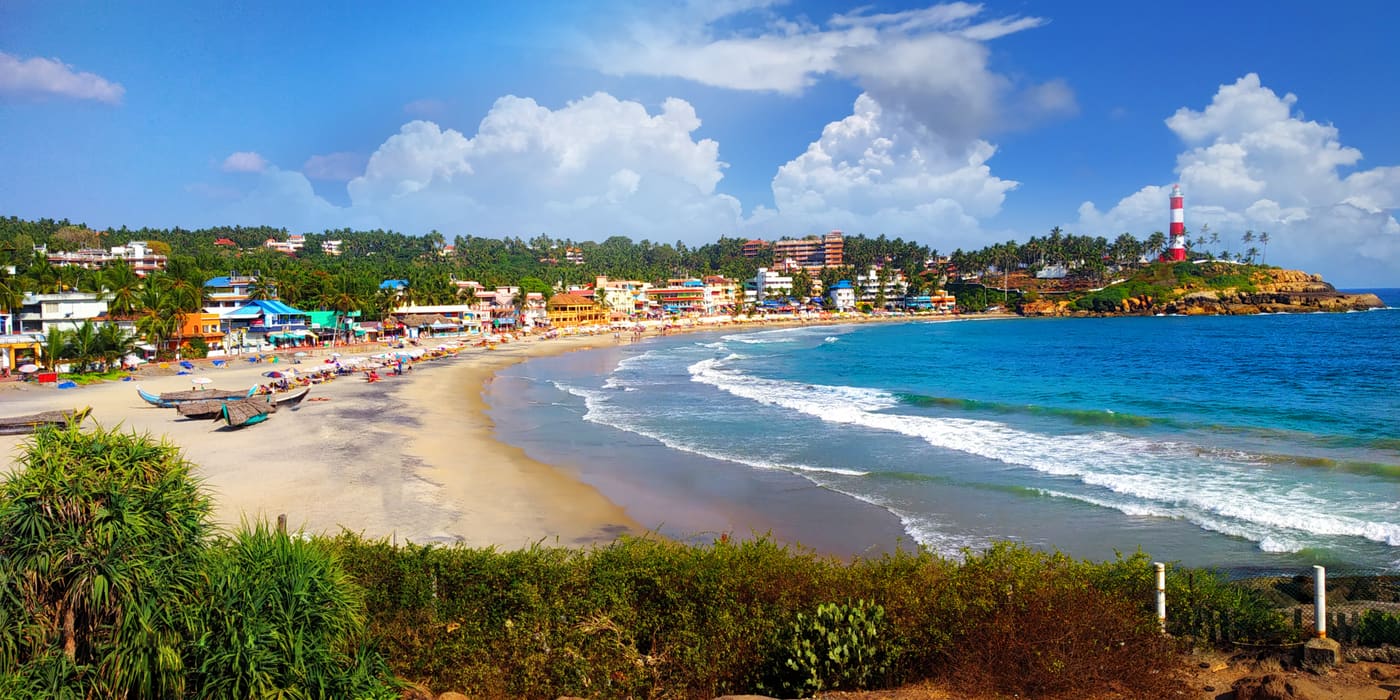
Kovalam’s southern cove brings the striped Vizhinjam lighthouse, a busy promenade and a long seaside evening into one view. Lighthouse Beach suits visitors who want cafés and coastal scenery close together.
6.7 km · straight line
A freshwater lake in Thiruvananthapuram district, with the Punchakari–Vellayani wetlands nearby offering seasonal birdwatching.
6.8 km · 9 min drive
Shanghumukham is Thiruvananthapuram’s evening shoreline: an open sea horizon, airport-side access and Kanayi Kunhiraman’s reclining mermaid sculpture. Come for a coastal walk and the changing light.
9.2 km · 11 min driveRoad and walking figures are route estimates, with travel times dependent on access, traffic and conditions. Figures marked “straight line” show direct separation and do not describe a road or walking route. Fare estimates use Kerala’s 26 April 2022 auto/taxi notification and exclude waiting, night and applicable one-way surcharges. Routing: © openrouteservice.org by HeiGIT | Map data © OpenStreetMap contributors
Nearby toilets, pharmacies, ATMs, seating and vets come from OpenStreetMap community mapping. Map data © OpenStreetMap contributors | Walking times © openrouteservice.org by HeiGIT
Kerala Tourism records it as the only temple in Kerala dedicated to Parasurama. In legend, this sage raised Kerala from the sea by throwing his axe.
Legend says Parasurama offered bali for his mother on this bank. Three rivers also meet here, which gives the spot special weight for rites for the dead.
Vavu is the new moon of the Malayalam month of Karkidakam, in July or August. In 2026 it fell on 12 August.
Parasurama is the main deity, with shrines to Shiva and Brahma, so the trinity stands together in one compound.
Kerala Tourism calls it 2,000 years old. The black granite building that stands today dates from the late Pandya kings of the twelfth and thirteenth centuries.
The temple is about 7 km from the city, on the bank of the Karamana river. The road beside it runs south towards Kovalam.
Karkidaka Vavu in July or August is the temple’s biggest day; Parasurama Jayanti falls in May, and the 20-day Thiruvonam Arattu festival runs in October and November (Live History India).
The temple is on the bank of the Karamana river at Thiruvallam, about 7 km from Thiruvananthapuram city (Kerala Tourism). For Karkidaka Vavu 2026, families booked 50-minute bali slots between midnight and 1 pm on the temple website, with Aadhaar and a photograph (Onmanorama). On Vavu 2026, KSRTC ran 100 special buses to the bali centres from 2 am (Onmanorama).
Nearby you can pair Beemapally Mosque (2.9 km, approximate straight-line separation), Attukal Bhagavathy Temple (5.0 km, route estimate), Thiruvananthapuram (5.2 km, approximate straight-line separation), Samudra Beach (5.3 km, approximate straight-line separation).
Written about Thiruvallam Parasurama Temple itself — its history, its legends and the arguments about them.
These guides explore Thiruvananthapuram city and the surrounding area. Choose a visit that fits your interests, allowing separately for travel between stops.


Route-level itineraries and practical guides for the rest of Kerala.


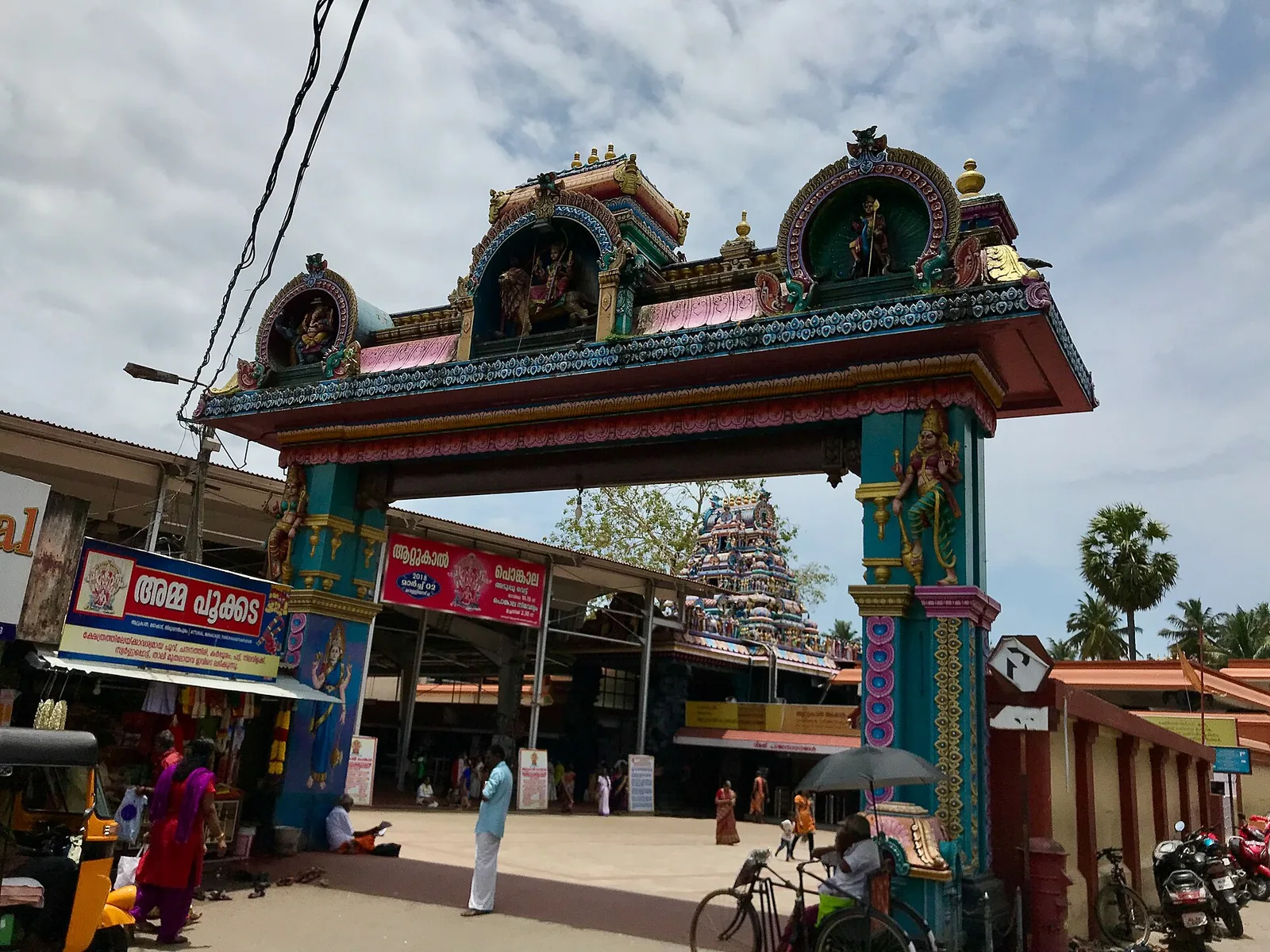
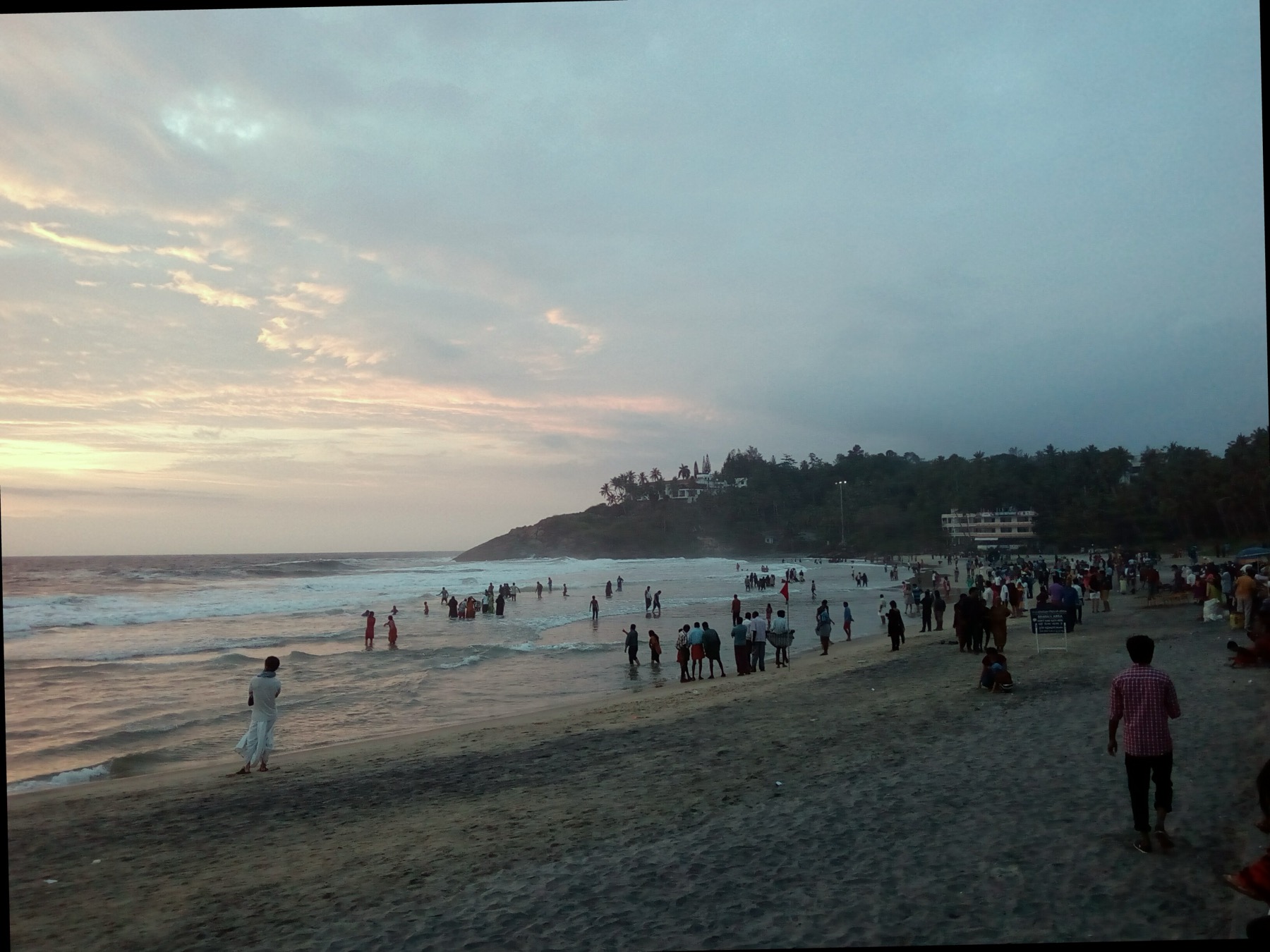
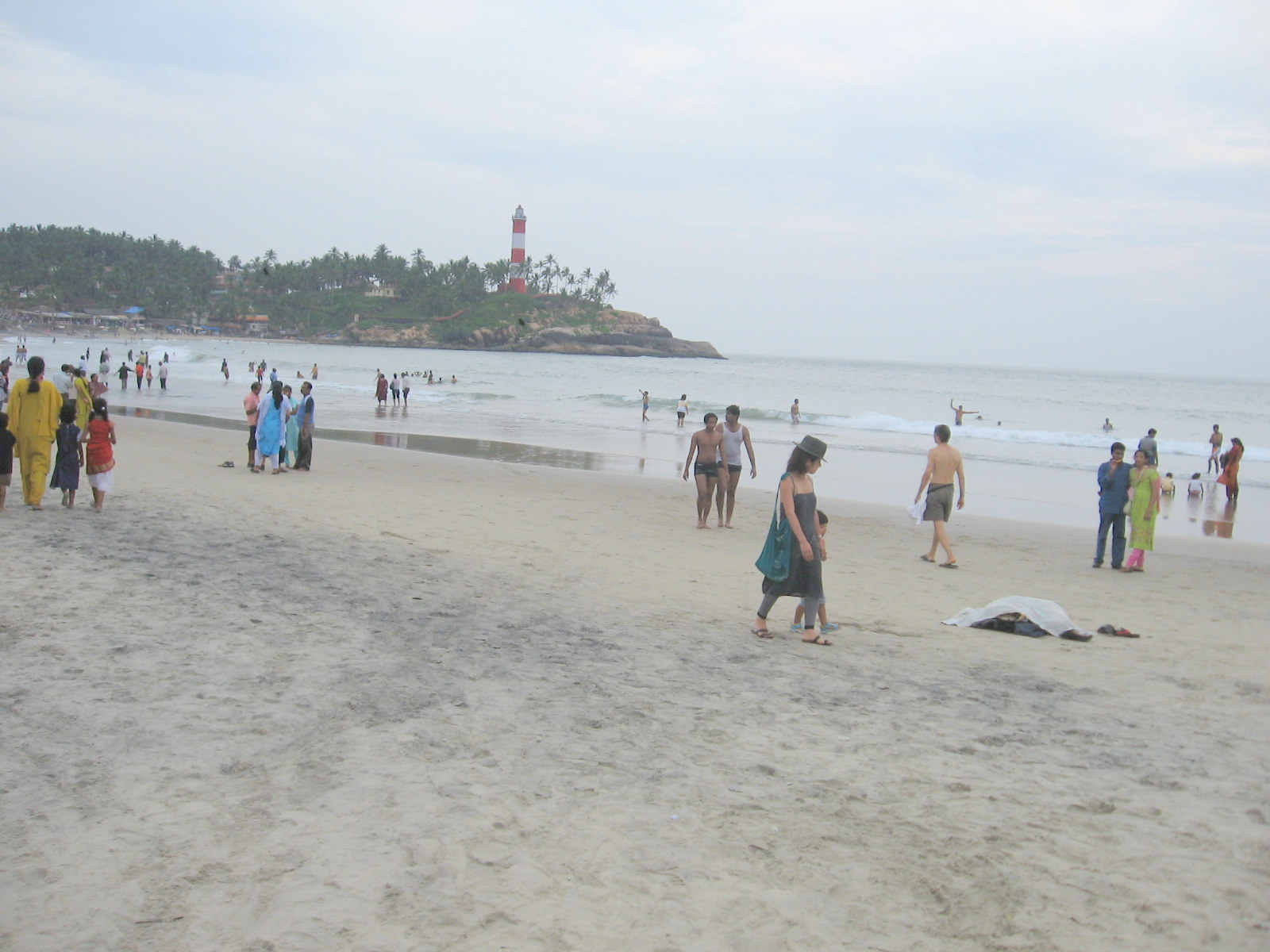
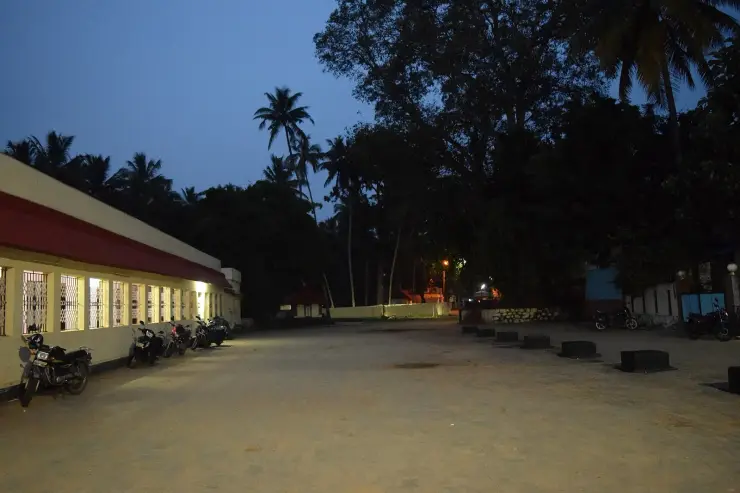
Photographs: Ranjithsiji (CC BY-SA 4.0), Rahulrnath001 (CC BY-SA 4.0). Wikimedia Commons.