What to expect
Highlights
- Museum visit at International Coir Museum
- Indoor cultural or historical context
- Easy pairing with nearby food and heritage stops
Museum on Kerala’s coir (coconut-fibre) heritage — the craft Alappuzha built its trade on.
The world's first coir museum — and, as far as anyone can establish, still its only one — sits not in Alappuzha town but eight kilometres north of it, on the highway at Kalavoor, inside the Coir Board of India's complex beside the Central Coir Research Institute. It was inaugurated on 27 May 2014 by Oommen Chandy, then Chief Minister of Kerala, in the Coir Board's diamond jubilee year. What it contains is the explanation of the town down the road: why a port was built here in 1762, why an Irish-American opened a factory here in 1859, and why a bacterial process that takes the better part of a year could be done properly in this stretch of water and almost nowhere else. It is also, quietly, a museum about an industry that has largely stopped doing the thing the museum is about.
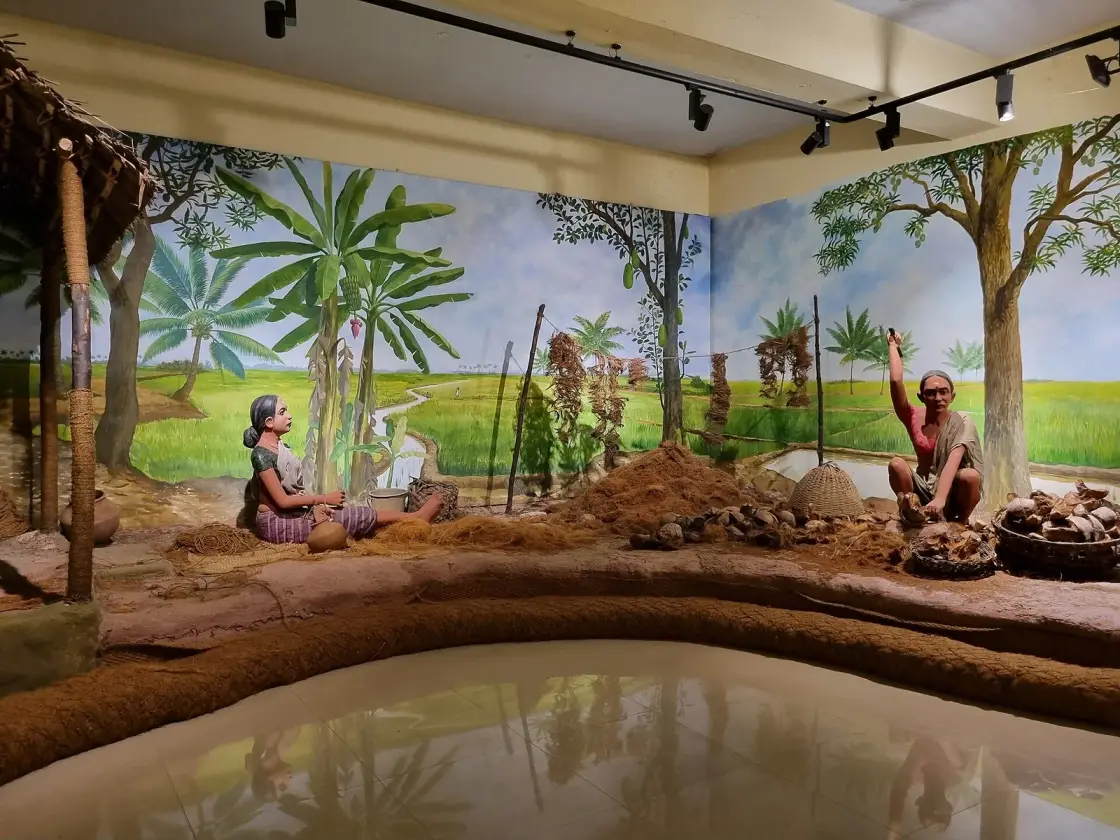
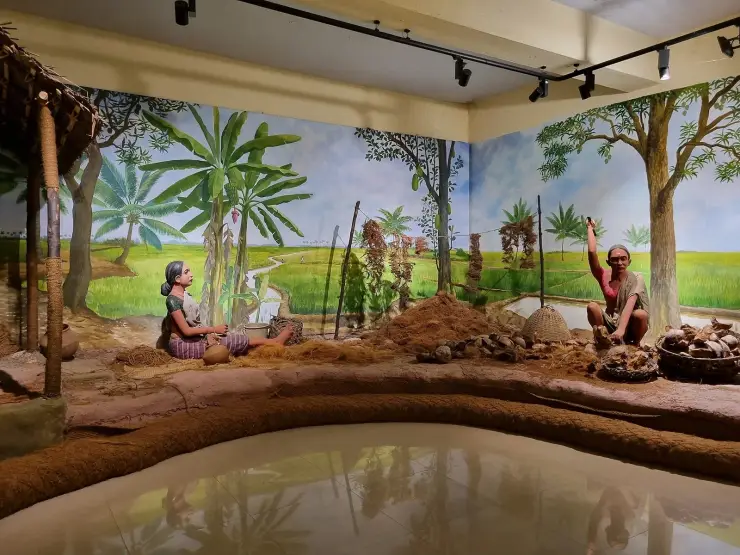
Start with the room that justifies the building. One gallery is given over to a full walk-in retting diorama: life-size painted figures of a woman and a man working coconut husks beside a backwater channel, a thatched hut, a coir-rope bund, a painted Kuttanad backdrop, and a real pool of water set into the floor so the scene reflects. It is the only place in Kerala where you can still stand inside a retting scene, which is a stranger sentence than it looks, because retting is what built this coast and it has now nearly vanished from it.
The museum's own panels are the best thing in it, and they are unusually specific. The History of Retting board explains the process without romance: green husks are sunk in brackish backwater under weights for eight to eleven months, where anaerobic bacteria dissolve the pectin binding the fibre to the pith, after which the softened husk is beaten out with wooden mallets. It gives the fibre-to-pith ratio, and it makes the point that matters most — that fibre quality is superior where the water has both tide and flow. That is not a general truth about coconuts. It is a statement about this particular brackish, tidal, river-fed lagoon, and it is the reason the industry is here and not somewhere with more coconuts.
A companion panel, The Place of Retting, does something museums funded by an industry board are not obliged to do: it prints the case against. Traditional retting is a significant emitter of greenhouse gases, and the dipping and hauling of husks is women's work carried out at a real cost to their health. The museum states both plainly, on the wall, in a room that also celebrates the trade. That honesty is worth noticing.
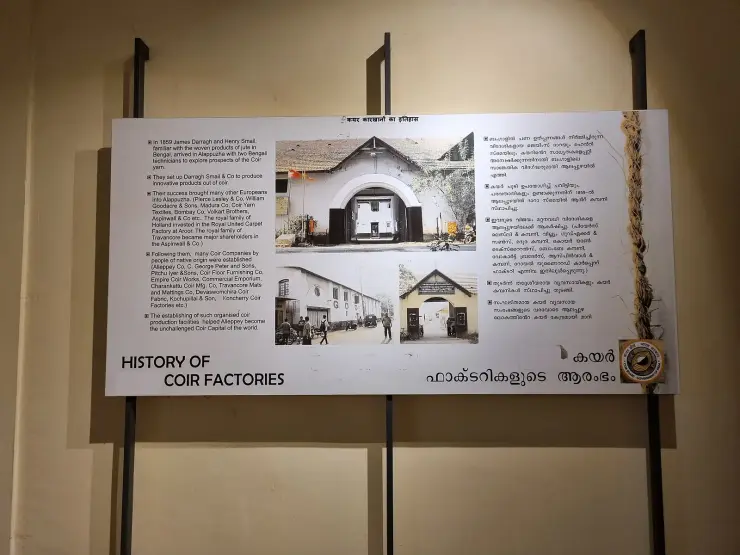
The History of Coir Factories panel is the page's other primary source, and we have read it off the photograph rather than taking it second-hand. It records that in 1859 James Darragh and Henry Smail, familiar with the woven jute products of Bengal, arrived in Alappuzha with two Bengali technicians to explore the prospects of coir yarn, and set up Darragh Smail & Co. It then lists the European firms their success drew in — Pierce Lesley & Co, William Goodacre & Sons, Madura Co, Coir Yarn Textiles, Bombay Co, Volkart Brothers, Aspinwall & Co — and adds two details that are easy to miss: the royal family of Travancore became major shareholders in Aspinwall & Co, and the royal family of Holland invested in the Royal United Carpet Factory at Aroor.
The same panel then names the firms founded by people of native origin that followed: Alleppey Co, C. George Peter and Sons, Pithu Iyer & Sons, Coir Floor Furnishing Co, Empire Coir Works, Commercial Emporium, Charankattu Coir Mfg. Co, Travancore Mats and Mattings Co, Devaswomchira Coir Fabric, Kochupillai & Son and Koncherry Coir Factories. It concludes that this concentration of organised production made Alleppey the unchallenged coir capital of the world. Reading the two lists in order is the fastest history lesson available in the district.
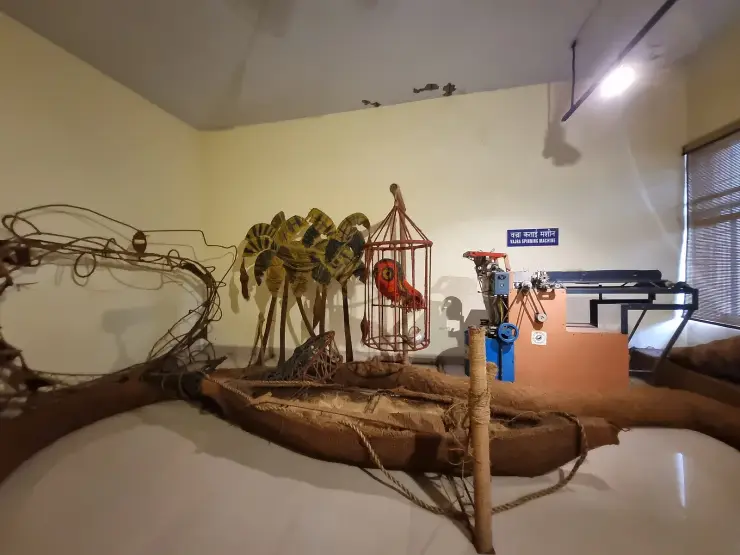
The rest of the museum is arranged as an argument about mechanisation, and it does not pretend the argument was painless. You move from the husking spike and the hand-and-foot ratt that twists fibre into two-ply yarn, to a labelled Vajra spinning machine, to modern defibring — past a full-size coir-clad country boat, a coir fishing net, geo-textiles and pith briquettes. Handloom production has effectively disappeared; most of the old factories are shut; much of the trade has migrated to neighbouring states, and Kerala's mills now depend on Tamil Nadu for raw fibre. Coir still employs something like half a million people in Kerala, around 80% of them women.
And then there is the museum's third register, which catches most visitors off guard: a gallery of coir as an art material. Portraits of Gandhi and Mother Teresa woven in fibre. A life-size coir lion in a village-hut diorama. Coir bulls, horses, spiders and crabs. A nettipattam — the caparison of a temple elephant — executed in coir and brass. A coir rope spiral several metres across mounted as a wall piece. It is easy to be sniffy about this, and we would rather not be: it is what a craft does when its industry stops needing it, and it belongs in the story.
This page has no folklore section in the ordinary sense, and rather than pad one out, it is worth saying exactly why, and what stands in its place.
The subject here is a government museum that opened on 27 May 2014. It is a building of the present century inside a statutory board's research complex on a highway, and no legend, origin story or sacred tradition attaches to it, to the complex, or to the fact of its founding. We looked, and we would say so if we had found one. That is a different situation from a beach, a grove, a temple or an old village, where an absence of recorded folklore is much more likely to mean that nobody has written the folklore down than that none exists — and where we treat a blank as a failure of our own searching rather than as a fact about the place. A museum commissioned by a board resolution in 2012 and opened two years later is genuinely allowed not to have a myth.
We are also deliberately not borrowing one. It would be easy to reach a few kilometres in any direction and bring in the Ambalappuzha payasam and the chess-and-rice legend, or the black Buddha at Karumadi, or the midnight island out in Vembanad, and to let one of them sit on this page as though proximity were relevance. Those stories belong to their own places and are told there. None of them is about coir, and none of them is about this site.
What exists here instead is not myth but craft memory, and it is worth naming as such rather than dressing it up. There is, first, the museum's own monumental sepia mural of four men in conversation — two Europeans in suits and a pith helmet, two Malayali men in mundu and kurta — standing before a colonial-era factory with coir bales stacked behind them and retting figures beyond. It depicts the founding moment of the industry: a conversation in or around 1859 that changed what this coast did for a living. No transcript of that conversation exists. Nobody recorded what was said, what was offered, or what was understood on either side. The mural is a reconstruction, and the museum presents it as one. It functions in exactly the way an origin legend functions — a scene everyone can picture, standing in for an event nobody witnessed.
And there is a second body of knowledge that is genuinely oral, genuinely local, and genuinely at risk. Retting is not a uniform process. Which stretch of backwater you sink husks in, how the tide moves through it, how the fresh and salt water mix there across the seasons, how long you leave them and how you read a husk when you pull it out — this was practical expertise held largely by the women who did the work, transmitted by demonstration rather than in writing, and specific to particular channels rather than to the region. The museum's own panel gestures at it when it says fibre quality is superior where the water has tide and flow. That single line is the compressed residue of a great deal of unrecorded knowledge.
As retting has disappeared from Kerala — for ecological reasons and social ones, and because the fibre now arrives ready-processed from Tamil Nadu — that knowledge has gone with the practice, without ever having been folklore, and without anyone having written it down while there were still people who held it. If this page has anything standing where a legend would be, it is that: not a story about how the industry began, but the fact that the most detailed thing anyone here knew is the part that was never recorded.
The Coir Board of India is a statutory body constituted under the Coir Industry Act, 1953, and functioning from 7 July 1954, under what is now the Ministry of Micro, Small and Medium Enterprises. Its head office is Coir House on M.G. Road in Kochi, not in Alappuzha; the Kalavoor campus is its research and training side, and houses the Central Coir Research Institute, established in 1959.
The museum was the idea of Coir Board Chairman Prof. G. Balachandran, and the decision to build it was taken at the Board's 208th meeting in Kochi in May 2012. It opened on 27 May 2014, inaugurated by Oommen Chandy, then Chief Minister of Kerala, in the Board's diamond jubilee year.
⚠ It is described by the Coir Board's own material and by Wikipedia as the world's first and currently the only coir museum. Whether it is the only coir museum anywhere is not something we can state as an absolute. The Alappuzha Heritage Project has two more in this same town, both dated 2021 by their architects — a Coir History Museum in the Kerala State Coir Corporation building, the former Volkart Brothers factory, and a living coir museum in the New Model Co-operative Society complex. Both are written up in the future tense, so the Coir Board's may well still be the only one OPEN; but it is no longer true that nothing else exists. We print the Coir Board's claim as the Coir Board's claim.
⚠ Two persistent errors are worth correcting because both circulate widely. The museum is not at Kalarcode — Kalarcode lies south of Alappuzha and is where the Medical College and the Kalarcode Sree Mahadeva Temple are. It is at Kalavoor, roughly eight kilometres north of the town on the highway. And it is not run by NCRMI: the National Coir Research and Management Institute is a Kerala Government body founded in 1994 and based in Thiruvananthapuram. This museum belongs to the Coir Board of India.
The industry it documents began with a single commercial decision. Before 1859, coir's principal Kerala use was rope and netting, and such yarn as was exported went raw to Europe and America to be woven there. Darragh's innovation was to move the weaving onto Kerala soil — to make the finished mats and mattings here rather than shipping the fibre out — and that decision is what turned a Travancore port into a town of factories, warehouses and a pier.
Because it explains the town. Alappuzha makes very little sense as a place until you understand what coir is, how it is made and why it could only be made properly here — and this is the only building anywhere that sets that out.
For the walk-in retting diorama with its reflecting floor pool: the one place left in Kerala where you can stand inside a retting scene, now that the practice itself has all but gone from the state.
For the panels, which are better than the objects. The History of Coir Factories board names eleven European and eleven native firms in the museum's own words, and is a citable primary source in its own right.
For the mechanisation gallery — husking spike, hand ratt, the labelled Vajra spinning machine — which lays out the transition that ended handloom coir as an argument rather than as a lament.
For the coir art gallery, which is genuinely odd and worth seeing: Gandhi and Mother Teresa woven in fibre, a life-size coir lion, a coir-and-brass nettipattam.
Because it is honest about the costs. The museum's own wall text names the greenhouse-gas problem of traditional retting and the health hazard to the women who did the dipping and hauling.
Road km to Alappuzha; ghat roads and traffic vary — allow extra.
Midday works well for museums, especially when outdoor heat is high.
Live forecast loads in your browser.
Sun and moon are calculated for this location and shown in IST. Photography windows are the hour around sunrise and sunset; the sunset bearing is degrees clockwise from true north. Moon phase is accurate to about half a day.
Browse listed stays, food, activities, sights, shops and rentals around International Coir Museum. Check each listing’s locality and contact the business directly for current arrangements.
Lake Canopy is at Komalapuram on Aspinwall Road, North Aaryad, Alappuzha. Its operator publishes Royal Creek Pool Villa, Creek Jacuzzi, Lagoon Deluxe and Aqua Premium choices. Choose the exact category before enquiring; a Jacuzzi room is not the same booking as a private-pool villa.
Lakeside resort with heritage-style villas on the banks of Punnamada Lake, Alappuzha. It sits in the Nehru Trophy ward of Punnamada, on the Vembanad backwater fringe.
Backwater resort with pagoda-style cottages and an indoor pool at Chungam, Mullackal, Alappuzha town.
Lakefront backwater resort run by EGH Resorts, with lake-view rooms and cottages near North Aryad, Alappuzha. The property faces Vembanad Lake on the northern edge of the district.
Alleppey houseboat operator offering Deluxe, Premium and Luxury boats, with reservations through its Avalookunnu office.
Kerala Houseboat offers day cruises and overnight houseboat stays from the Alappuzha backwaters. Its website distinguishes Deluxe, Premium and Luxury categories. Compare the named boat and bedroom count for your party, and ask how the air-conditioning schedule differs for the option offered.
Ultra-luxury houseboat operator running spice-named kettuvallams through the Alleppey backwaters, based at Chennamkary, Alappuzha.
Sterling’s current property page identifies Sterling Lake Palace Alleppey at Thirumala Ward, Chungam, Alappuzha 688011. The earlier Kerala Tourism owner-submitted Lake Palace Resort record uses this same address. This Alappuzha resort is separate from KTDC Lake Palace in Thekkady.
Backwater resort on the shores of Vembanad Lake at Kottankulangara, Punnamada, Alappuzha. Punnamada, Backwater resort, UDS Hotels.
Fleet of luxury air-conditioned kettuvallam houseboats cruising the Alleppey backwaters, based near Pallathuruthy Bridge, Alappuzha.
Large Ramada by Wyndham hotel facing Punnamada backwaters at the Nehru Trophy Boat Race finishing point, Alappuzha.
Arcadia Regency is a town hotel near Iron Bridge in Alappuzha. Its address is useful for a stay centred on the town, with a houseboat boarding point or beach visit arranged separately. The operator lists an on-site restaurant and a travel desk that can help with transport and outing enquiries.
Matthews Palmy Residency is listed off Finishing Point Road in Alappuzha. Confirm the exact location, available room category and arrival time directly before booking. Ask for an itemised quote and the facilities included in that room; the listing does not establish a current room count or tariff.
ISO-certified houseboat cruise operator running a fleet of luxury kettuvallams in the Alleppey backwaters. It is based at the DTPC building, Sanathanapuram, Pallathuruthy, Alappuzha.
Bag2Bag lists Keralan Homestay at Sreevalsam Inn on Punnamada Finishing Point Road. Confirm the room and host contact before booking; the linked platforms use their own terms.
Backwater resort with heritage villas and houseboats overlooking Punnamada Lake at Kottankulangara, Alappuzha.
Raheem Residency is a restored 1868 heritage mansion on Alleppey beach, run as a boutique luxury hotel with an infinity pool, antique-furnished rooms and an acclaimed restaurant. It is regularly ranked among Kerala's finest heritage boutique stays and draws an international clientele to the Alappuzha seafront.
Hotel Royale Park is a long-running three-star hotel in central Alleppey with a banquet hall, restaurant and air-conditioned rooms. It sits close to the Boat Jetty and railway station, making it convenient for backwater day trips.
Hotel AJ Park is a budget hotel about 1.5 km from Mullackal Temple in Alleppey, with a garden, restaurant and free parking. It offers value-priced air-conditioned rooms with a 24-hour front desk and room service.
Palm Beach Resort is a three-star property near Alappuzha Beach with a swimming pool, restaurant and sea-facing rooms. Its mid-range rooms suit travellers who want a comfortable base for houseboat cruises and Ayurveda sessions.
Cherukara Nest is a family-run budget heritage guesthouse about a kilometre from central Alleppey. It offers simple air-conditioned and non-AC rooms with home-cooked meals on request at value tariffs.
Book with the place itself. India’s cyber-crime coordination centre warned in April 2025 that convincing copies of hotel and pilgrimage booking sites are being pushed through sponsored search and social ads, taking payment for rooms the property never hears about. Use the contact and source details on each profile to confirm the exact business and booking channel. A directory entry or map pin alone does not establish an operator’s identity or current availability. Roampedia takes no commission and does not collect booking payments. If a booking page reached you through an ad, check the address bar against the property’s own site before you pay. Fraud can be reported on cybercrime.gov.in or on 1930.
Browse food, accommodation and activities across Alappuzha town. Check each address and journey before adding it to your day; these selections are not all beside International Coir Museum.
6 more places around Alappuzha town. Open a guide to plan the visit and onward journey.
7.3 km · straight line
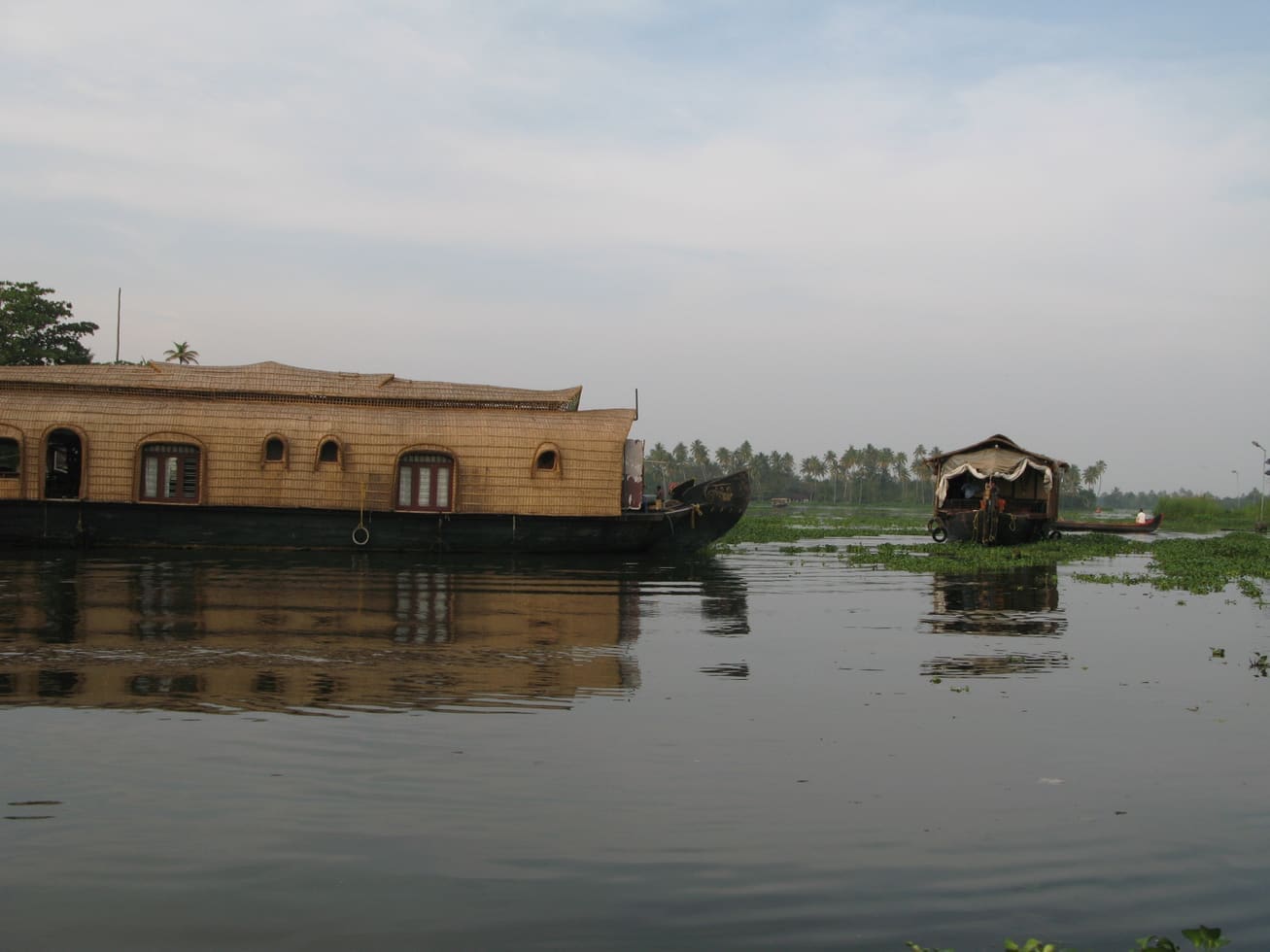
Backwater and houseboat hub with canals, beach, lighthouse and Finishing Point jetty.
7.7 km · straight line
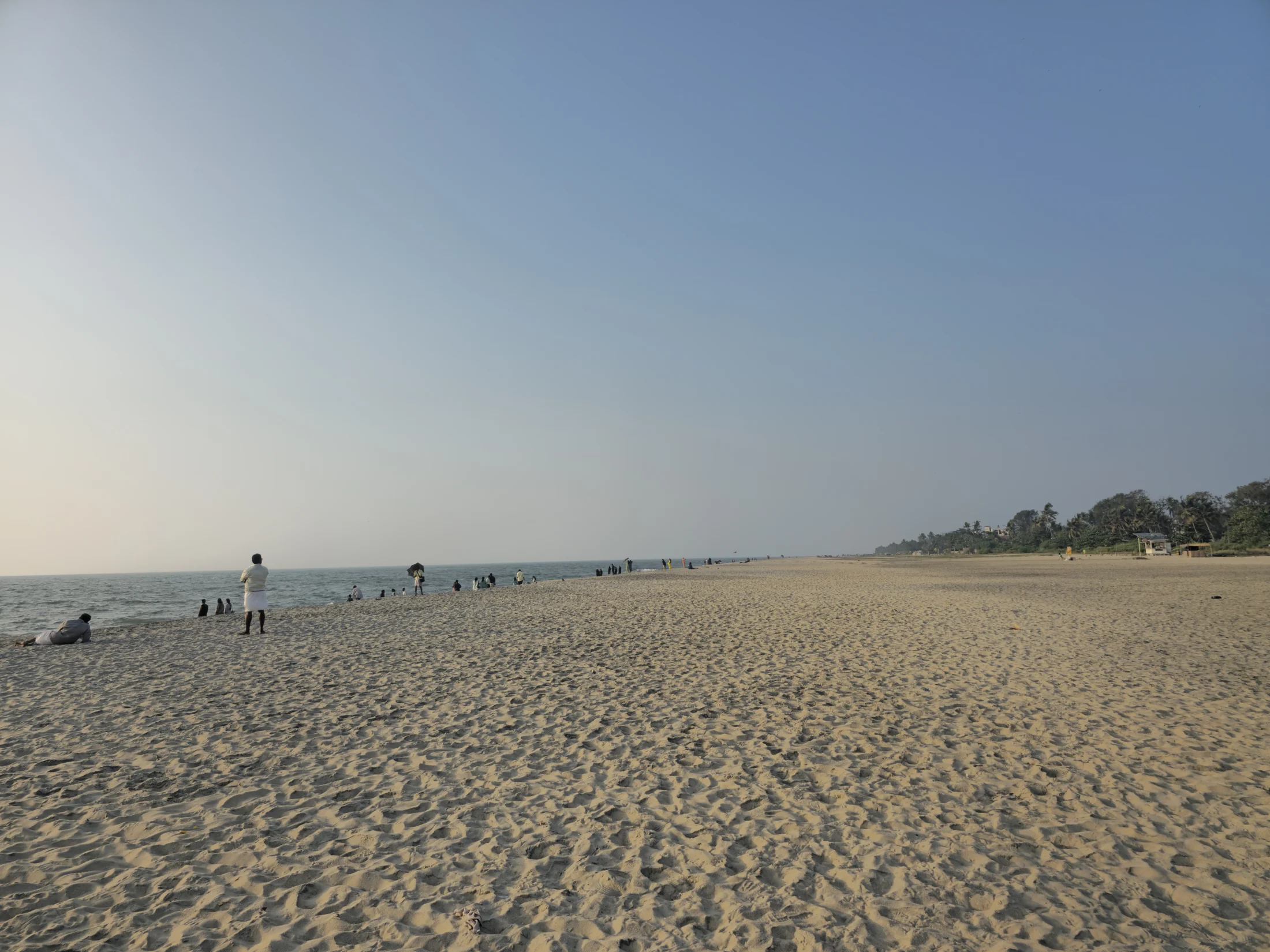
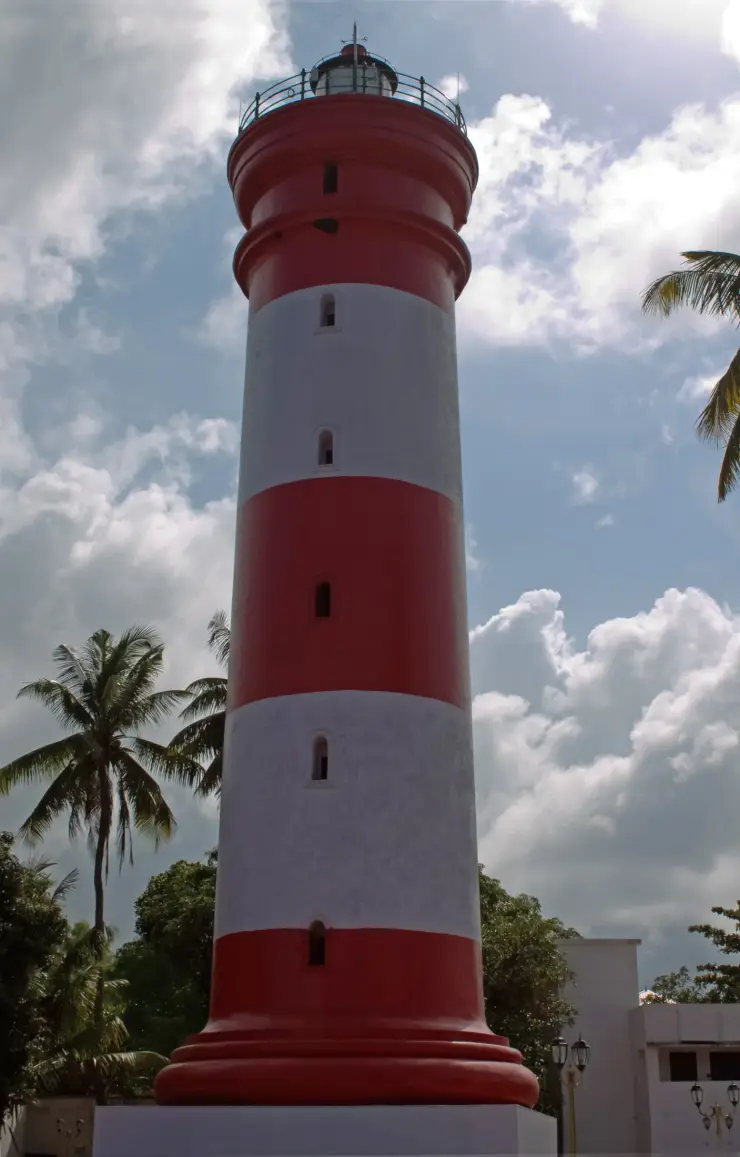
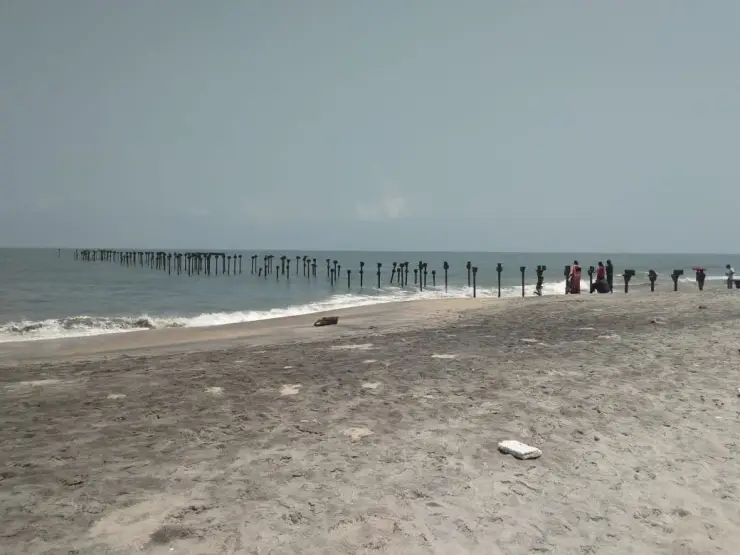
Pair Alappuzha’s broad town beach and old pier remains with the red-and-white lighthouse on C.C.S.B. Road, commissioned in 1862 and still maintained as a navigational light.
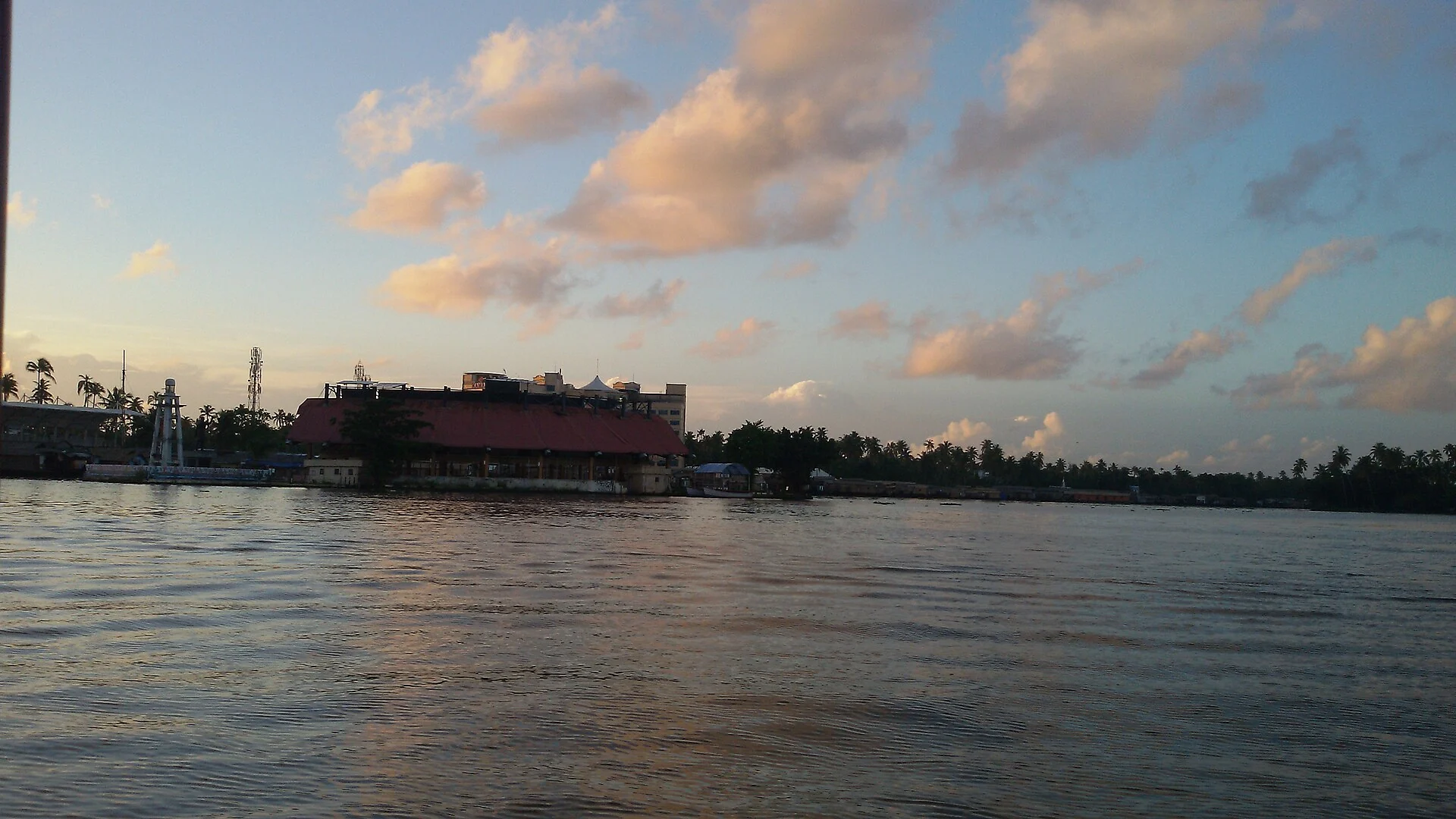
7.4 km · straight line
Finishing-point lake of the Nehru Trophy Boat Race and the main houseboat cruising water off Alappuzha.
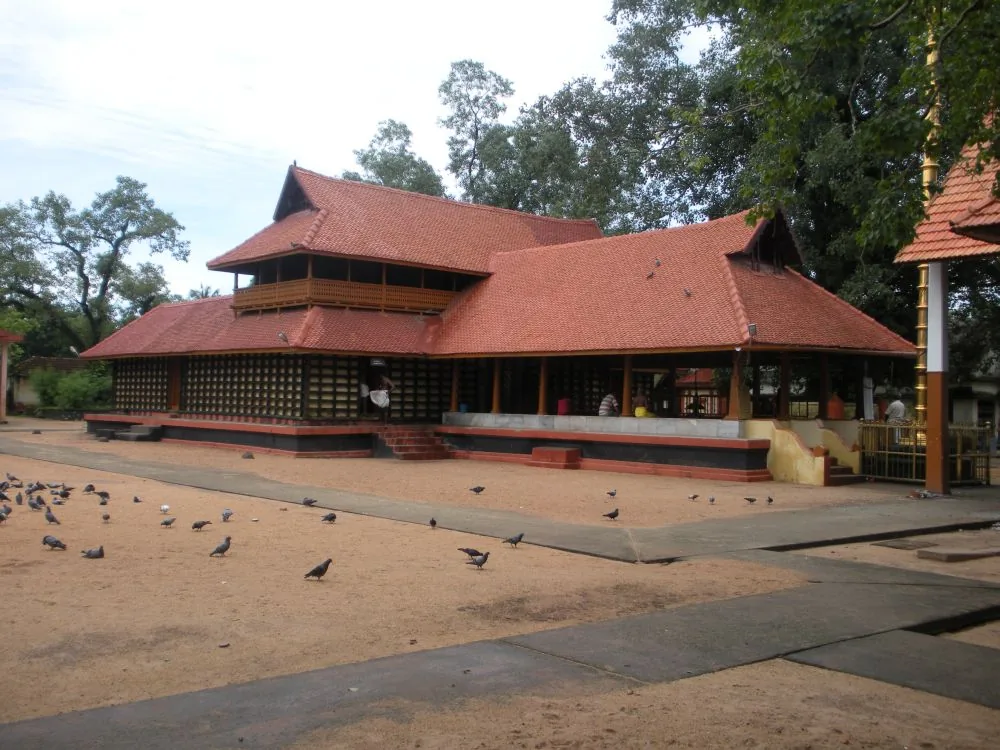
7.5 km · straight line
Central Alappuzha town temple (Mullakkal Rajarajeswari) famous for the annual Mullackal Chirappu festival.
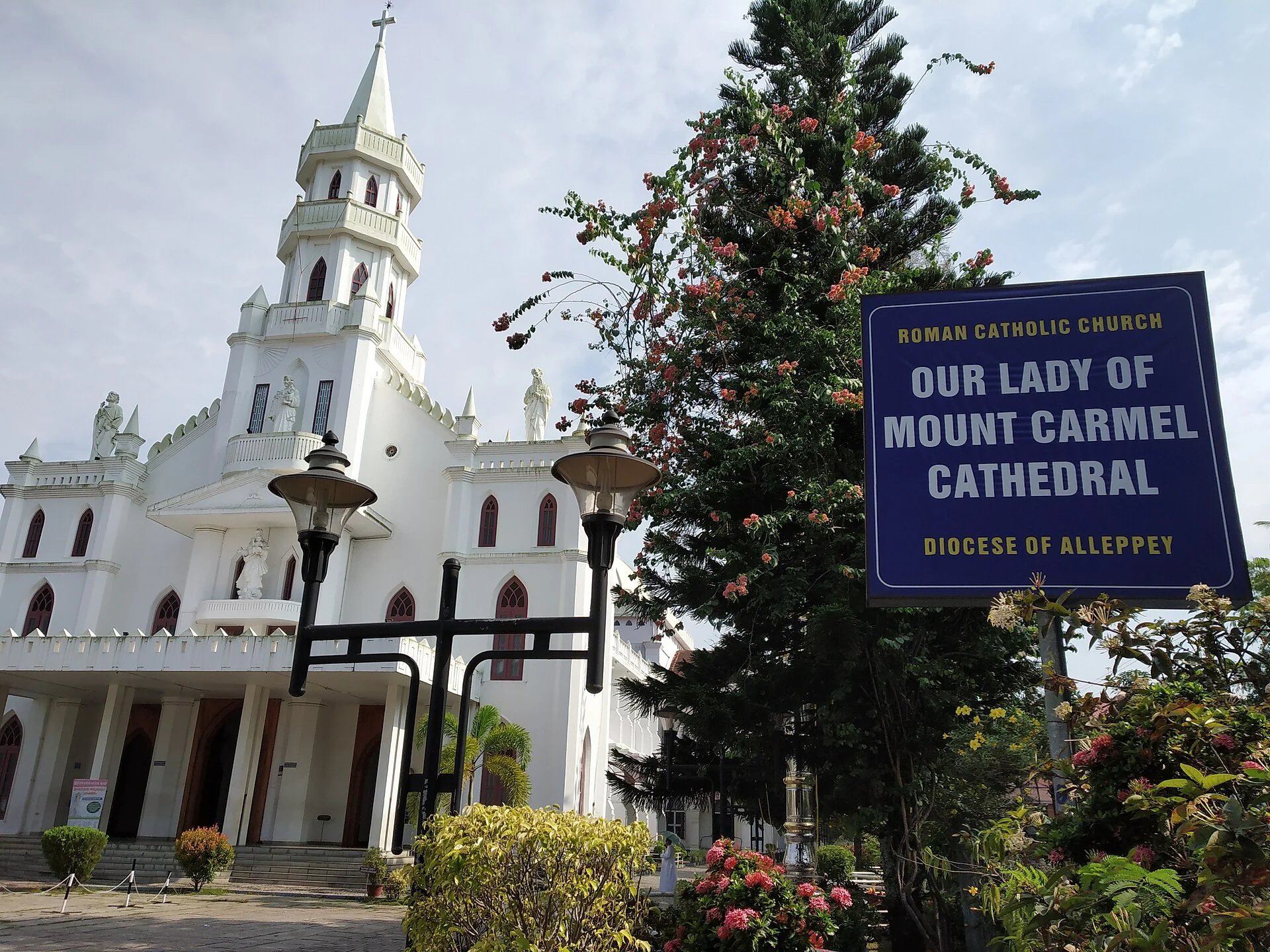
7.4 km · straight line
Landmark 19th-century cathedral of the Alappuzha diocese near the town centre.
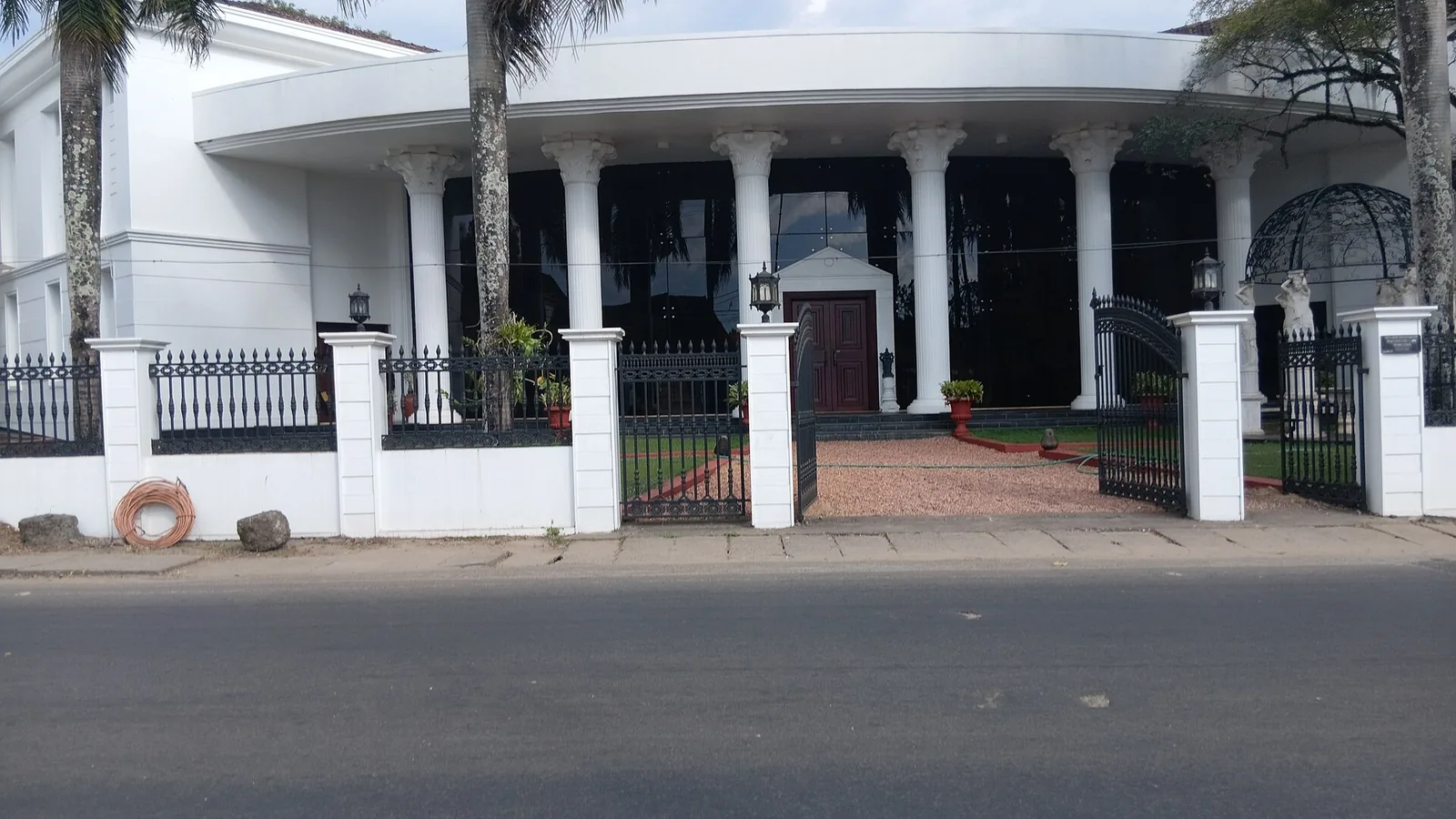
7.1 km · straight line
Private memorial museum in Thathampally with a large collection of paintings, ivory, crystal and antiques.
Roampedia is commission-free — own or know a stay, eatery, guide or shop near International Coir Museum? Submit public business details for review.
Add a nearby businessGovernment monuments, museums and forest reserves in India often charge foreign visitors more. We have not verified whether this site does — ask at the counter.
Fees change without notice. Check the current rate at the counter.
Entry: ₹50 per person, per DTPC Alappuzha. Booking is offline only, at the gate. Any separate still or video camera charge should be confirmed on arrival.
Dress code: No dress code; ordinary comfortable clothing. The galleries are indoors and mostly level.
Festivals: The museum has no festivals of its own. It is busiest during Kerala school excursion season and around the Onam holidays.
Photography: Photography is generally permitted in the galleries and the wall panels are worth photographing — they are the most substantial thing here and several are legible primary sources on the history of the coir firms. Confirm any camera charge or restriction at the counter.
If you are travelling by bus or ferry, check the return service with the operator before setting out. Leave time to reach the stop or jetty after your visit.
Ask at the bus stand for the time of the last service back, not the next one. If you miss it, an auto or app cab is the fallback — agree the fare before you get in.
If you need step-free access, contact the site before travelling. Ask about a level entrance, steps along the route, the nearest drop-off point, seating and accessible toilets.
Charge cap and free-transaction limits: Reserve Bank of India, ATM FAQ updated 4 July 2025; checked 4 October 2026.
These services are listed within about 1.2 km of International Coir Museum. Walking distances follow mapped routes; access and opening hours can change. Other services may be closer but are not included here.
Published emergency and visitor-assistance contacts. For an immediate emergency, call 112. Shared Kerala contact sources checked 4 October 2026; publication does not establish a tested live response.
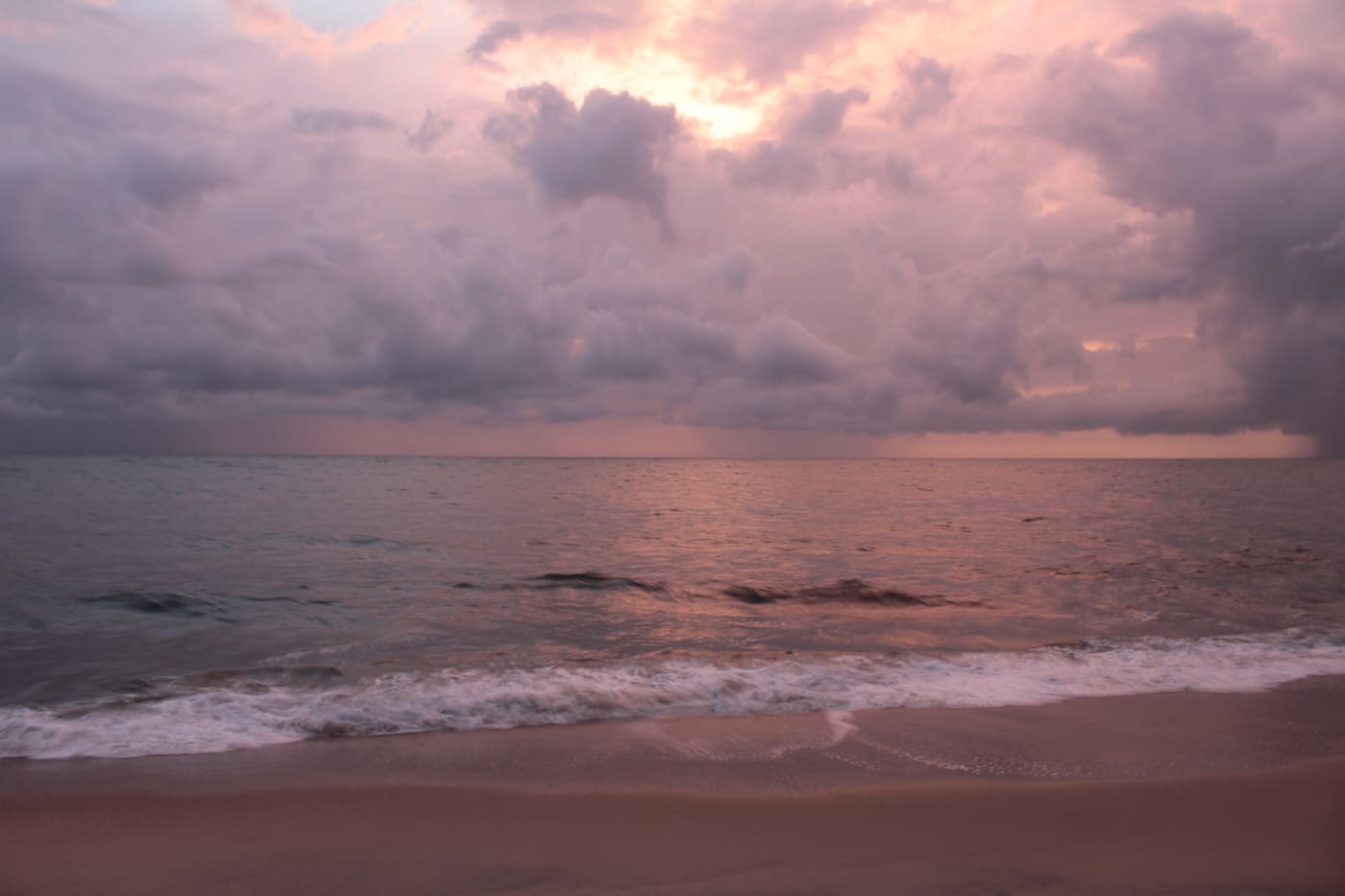
Quiet beach belt north of Alappuzha, popular for relaxed stays.
5.0 km · straight linePrivate memorial museum in Thathampally with a large collection of paintings, ivory, crystal and antiques.
7.1 km · straight lineBackwater and houseboat hub with canals, beach, lighthouse and Finishing Point jetty.
7.3 km · straight lineLandmark 19th-century cathedral of the Alappuzha diocese near the town centre.
7.4 km · straight lineFinishing-point lake of the Nehru Trophy Boat Race and the main houseboat cruising water off Alappuzha.
7.4 km · straight lineCentral Alappuzha town temple (Mullakkal Rajarajeswari) famous for the annual Mullackal Chirappu festival.
7.5 km · straight linePair Alappuzha’s broad town beach and old pier remains with the red-and-white lighthouse on C.C.S.B. Road, commissioned in 1862 and still maintained as a navigational light.
7.7 km · straight line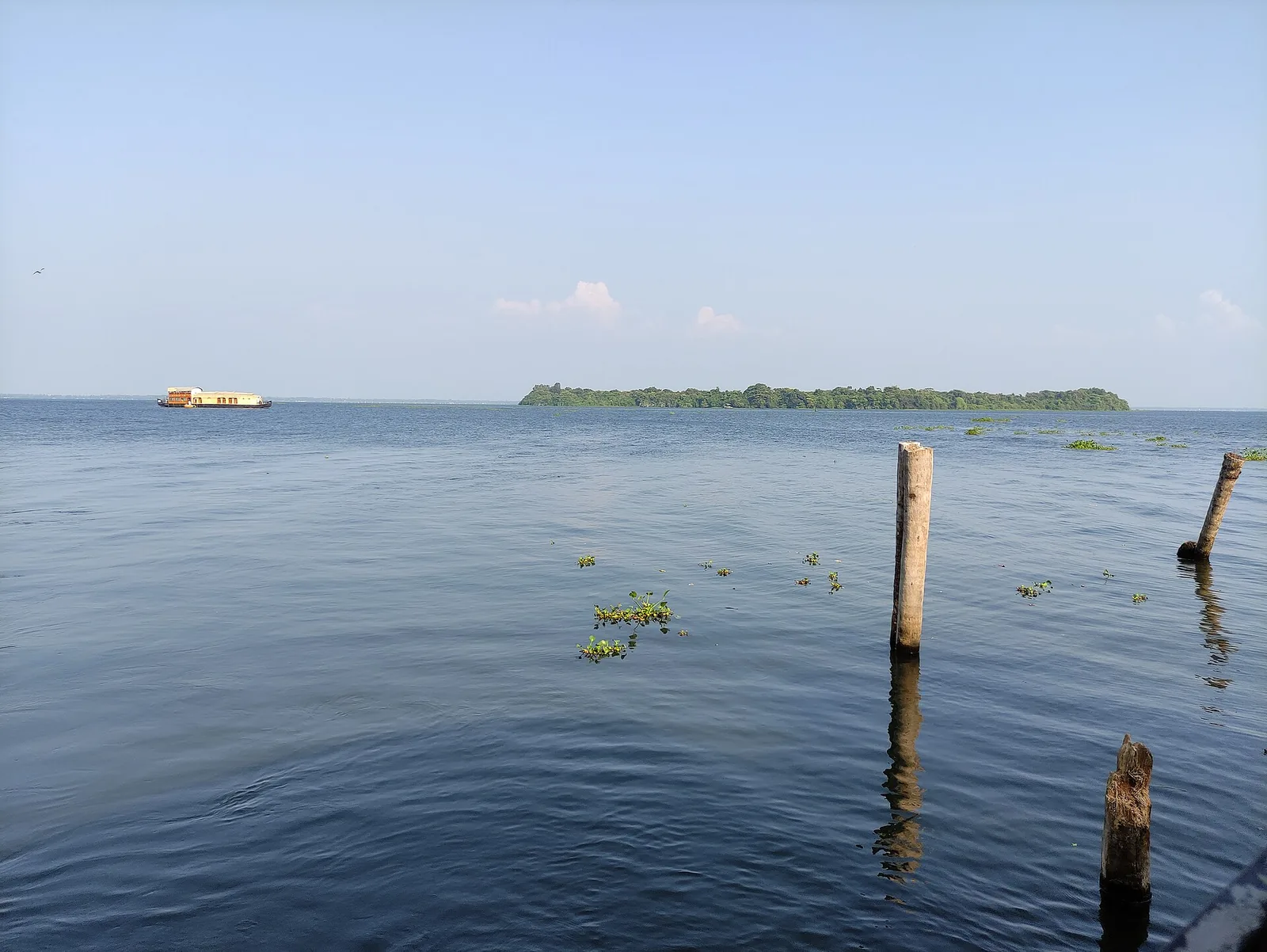
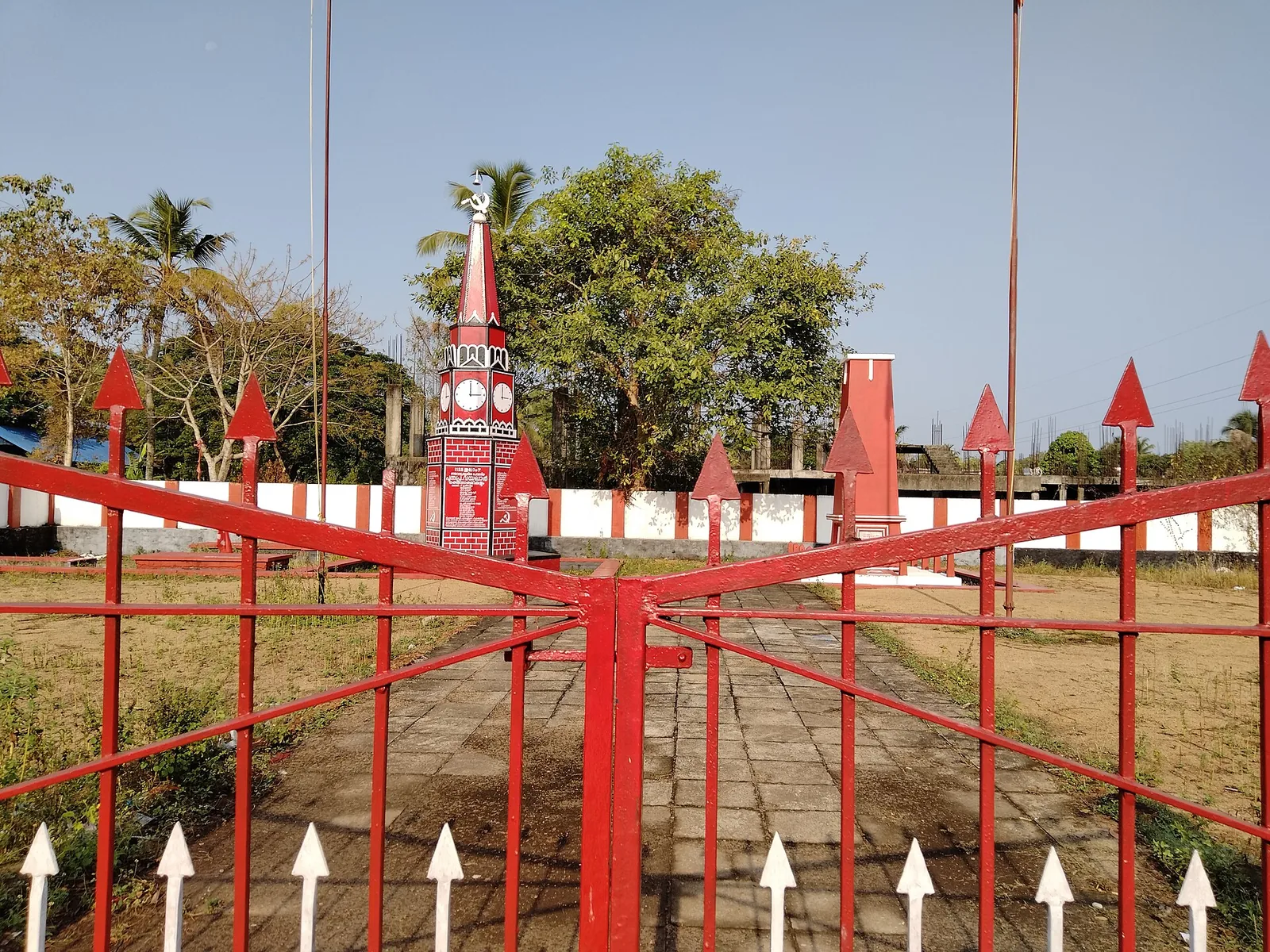
Martyrs’ memorial (Rakthasakshi Mandapam) to the 1946 Punnapra–Vayalar uprising, on the coastal belt north of Punnapra on the Alappuzha side.
9.7 km · straight line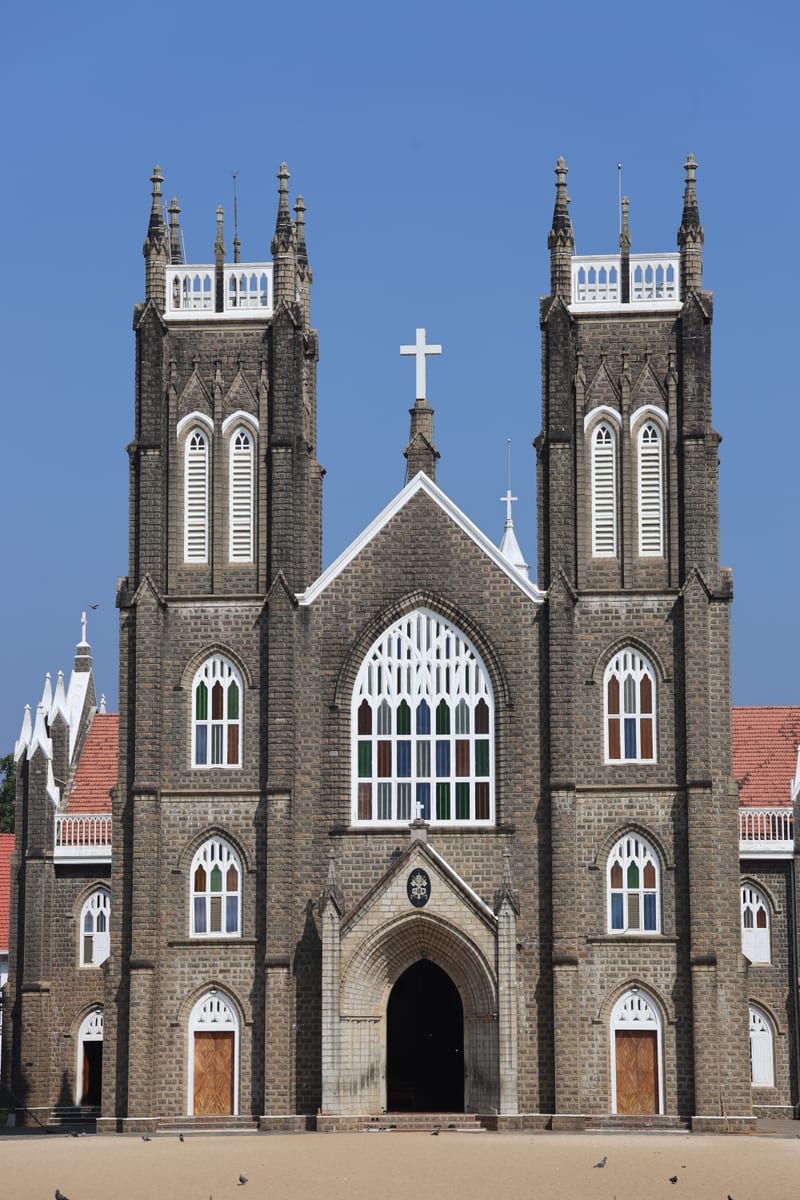
St Andrew’s Forane Basilica at Arthunkal, a major coastal pilgrimage church north of Alappuzha.
11.3 km · straight line
Iconic below-sea-level reclaimed farmland at Kainakary, ringed by bunds with the canal water sitting higher than the paddy fields.
12.3 km · straight line
The Devi temple in the middle of Cherthala town, one of the 108 Durgalayas — where the goddess sits about four feet below ground level, hundreds of cockerels released as offerings live in the compound, and the town’s own name is said to come from the legend of her rescue from the mud.
13.8 km · straight lineNearby toilets, pharmacies, ATMs, seating and vets are community-mapped and may be incomplete or out of date. Map data © OpenStreetMap contributors | Walking times © openrouteservice.org by HeiGIT
In the Coir Board complex at Kalavoor P.O., on NH-66 about 8 km north of Alappuzha town, beside the Central Coir Research Institute (Alappuzha 688522). ⚠ It is not at Kalarcode, which is south of the town — that is a common error.
The Coir Board of India, a statutory body constituted under the Coir Industry Act, 1953 and working under the Ministry of MSME. It is not run by NCRMI, which is a Kerala Government institute based in Thiruvananthapuram. The Coir Board's head office is in Kochi, not Alappuzha.
District tourism (DTPC Alappuzha) gives ₹50 per person and 09:30–17:00 on all days, with offline booking only. ⚠ Wikipedia states it is closed on Mondays, and DTPC lists no closed day — the two disagree, so call ahead on +91 477 225 8067 if a Monday is your only option.
That is the claim made by the Coir Board's own material and by Wikipedia — the world's first and, as of 2025, the only one. We could find no competing coir museum anywhere, so we print it as it stands rather than softening it to “India's first”.
The process at the heart of coir. Green coconut husks are sunk in brackish backwater under weights for eight to eleven months, during which anaerobic bacteria dissolve the pectin binding the fibre to the pith; the softened husks are then beaten with wooden mallets. The museum's panel notes that fibre quality is superior where the water has both tide and flow — which is why this particular lagoon, and not simply anywhere with coconuts, became the centre of the trade.
About an hour to an hour and a half covers it comfortably — longer if you read the panels properly, which is the best reason to come. It sits on the highway, so it pairs easily with a drive between Alappuzha and Cherthala or Kochi.
Midday works well for museums, especially when outdoor heat is high.
Entry: ₹50 per person, per DTPC Alappuzha. Booking is offline only, at the gate. Any separate still or video camera charge should be confirmed on arrival. Timings: 09:30 to 17:00. ⚠ Sources disagree on the closed day: DTPC Alappuzha lists all days, while Wikipedia states it is closed on Mondays. If a Monday is your only option, call +91 477 225 8067 first. The rupee figure quoted is the Indian adult rate. Government monuments, museums and forest reserves in India often charge foreign visitors more, and we have not verified whether this site does.
Base yourself in Alappuzha town or a nearby town in Alappuzha, then confirm the last-mile route locally before leaving. Check weekly closure day and ticket counter timings before going. If the visit depends on forest, temple, boat, ferry, weather or seasonal access, check the official/local rule on the day before travel.
1 to 2 hours.
Nearby you can pair Marari Beach (5.0 km, approximate straight-line separation), Revi Karunakaran Museum (7.1 km, approximate straight-line separation), Alappuzha / Alleppey town (7.3 km, approximate straight-line separation), Our Lady of Mount Carmel Cathedral (7.4 km, approximate straight-line separation).
Use official ticket counters and cloakroom rules. Keep bags and cameras within permitted areas.
Written about International Coir Museum itself — its history, its legends and the arguments about them.
These guides explore Alappuzha town and the surrounding area. Choose a visit that fits your interests, allowing separately for travel between stops.
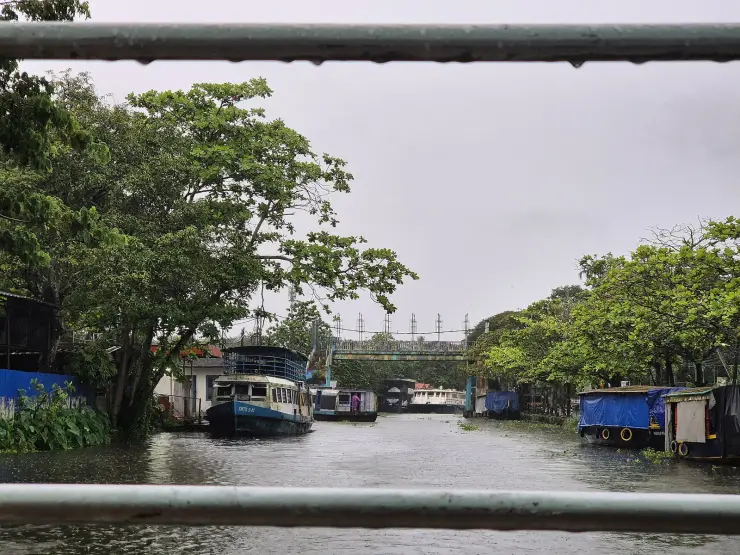
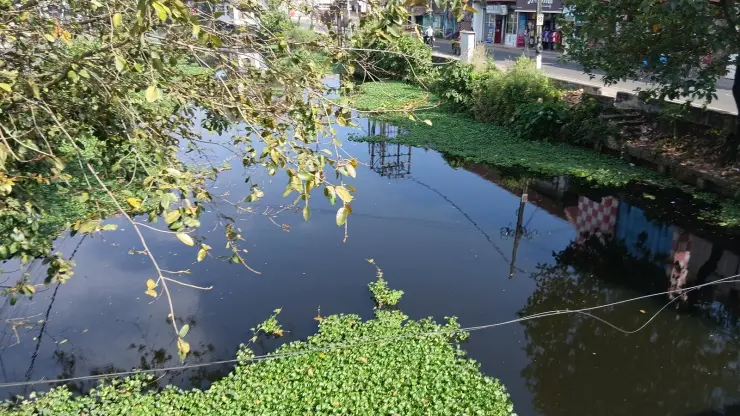
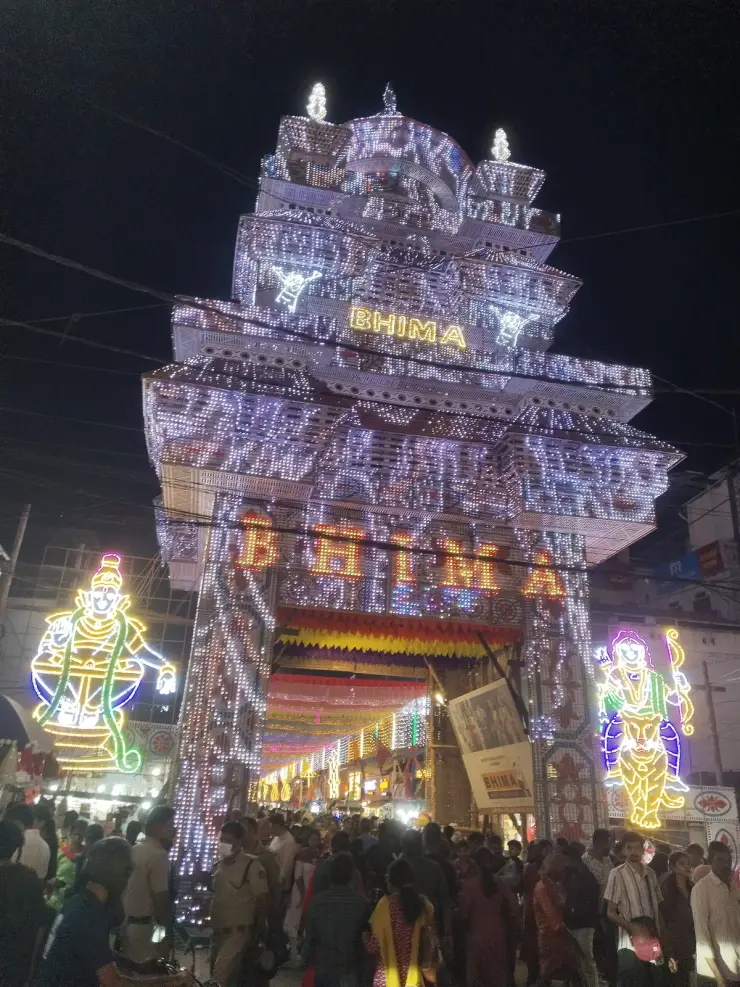
Written about Alappuzha town as a whole rather than about International Coir Museum — its history, its streets, and how to spend a day in it.
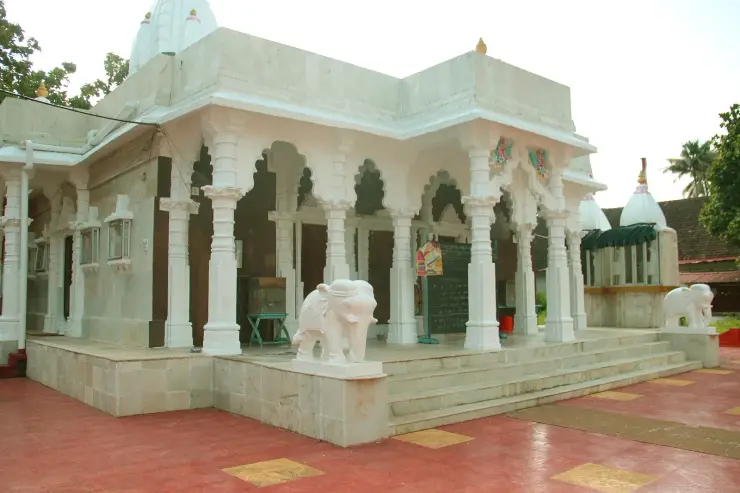
Route-level itineraries and practical guides for the rest of Kerala.
Photographs: Ganesh Mohan T (CC BY-SA 4.0), Vis M (CC BY-SA 4.0). Wikimedia Commons.