What to expect
Highlights
- Church visit at Arthunkal Church
- Pilgrimage, architecture or local Christian heritage
- Nearby town food and stays
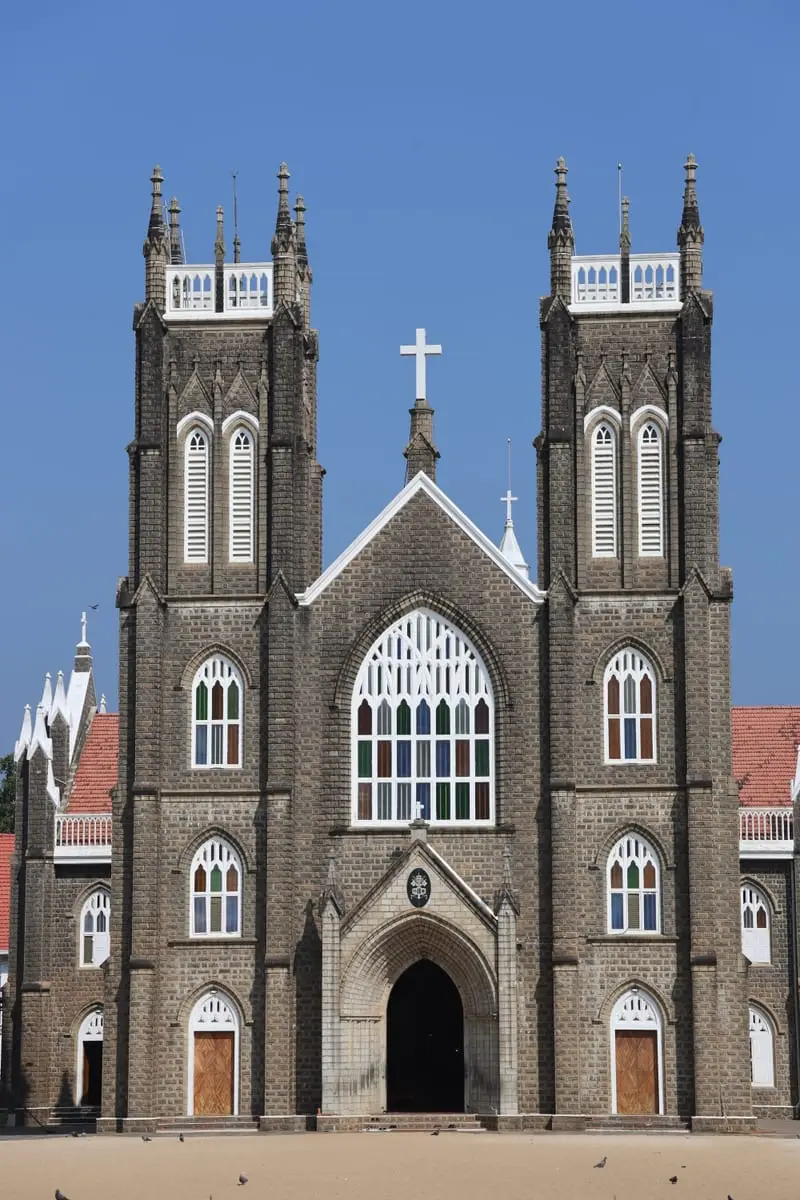
St Andrew’s Forane Basilica at Arthunkal, a major coastal pilgrimage church north of Alappuzha.
Check entry arrangements. Ask the church about visiting times around services and any dress or photography rules. During worship, keep voices low and follow staff directions.
Dress respectfully and follow the institution’s admission and photography rules.
On the palm-fringed coast just north of Alappuzha, where the Arabian Sea rolls onto the long white sands near Mararikulam, stands one of Kerala’s most beloved pilgrimage churches — St Andrew’s Basilica at Arthunkal, known to millions simply as the shrine of Arthunkal Veluthachan, the fair father. A Latin Catholic sanctuary with Portuguese roots reaching back to the 16th century, it is famous across south India for its towering devotion to St Sebastian and for the extraordinary January feast that draws pilgrims of every faith walking in from far-off towns.
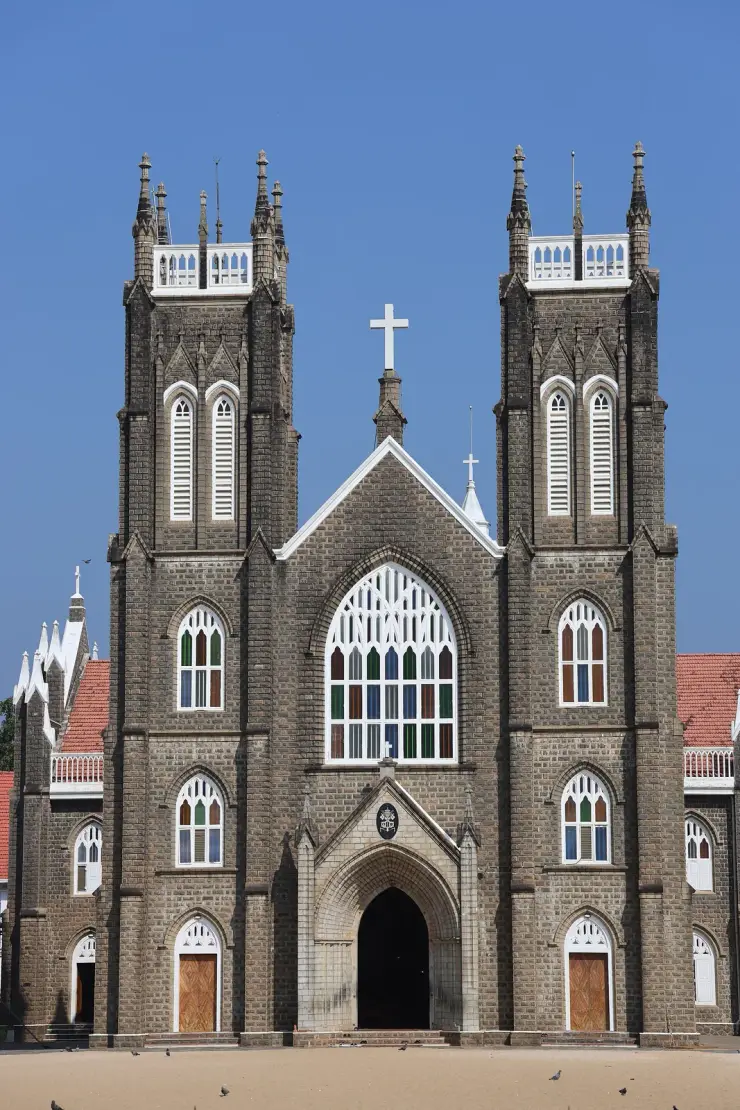
Approach Arthunkal along the coastal road and the basilica reveals itself across a broad sand plaza set back from the sea — and it is not the white Kerala church you are probably picturing. St Andrew’s is a dark grey-brown stone building in the Gothic Revival manner, with a pointed-arch west front and twin pinnacled spires, standing tall rather than low and broad. ⚠ We described it here as “gleaming-white” until August 2026; the photographs do not support that and neither does anything else
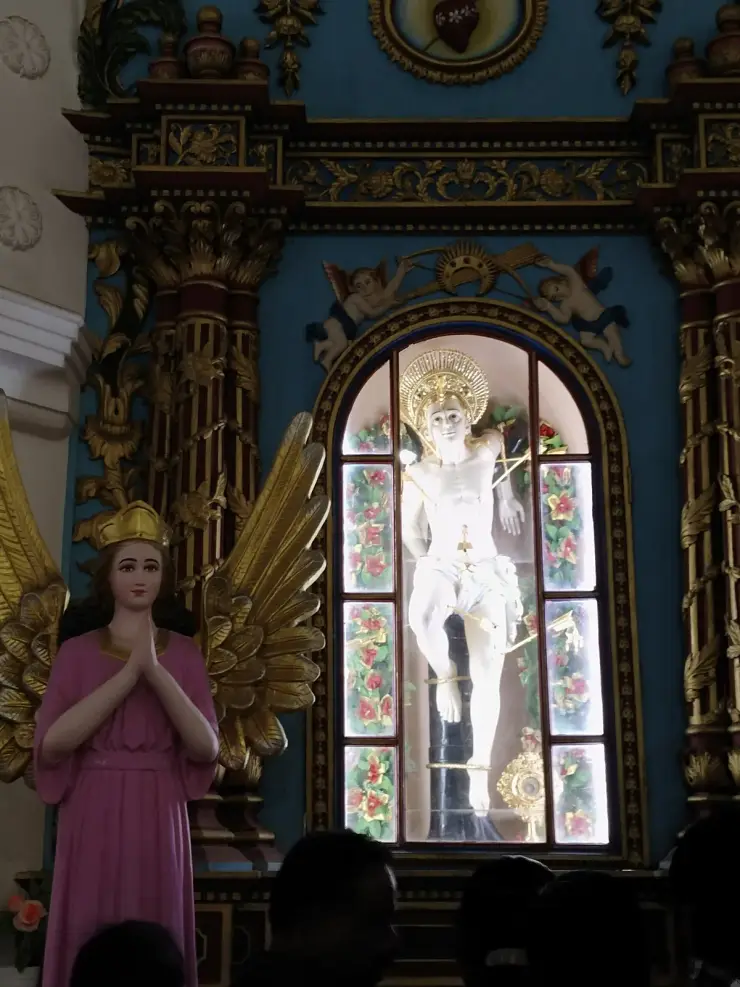
Inside, the devotion centres on St Sebastian — the Roman soldier-saint traditionally depicted bound to a tree and pierced with arrows. The much-venerated statue of the saint, his body struck with arrows, is the focus of prayer, petition and thanksgiving. Pilgrims move quietly past it, many having travelled long distances on foot, lighting candles and leaving offerings in fulfilment of vows made in times of illness or trouble.
The name that everyone uses, though, is Arthunkal Veluthachan — the white or fair father. The affectionate title is bound up both with the fair-skinned image of the martyr-saint and, in local memory, with a European priest who shaped the shrine in its early days. It is this warm, almost familial devotion that gives Arthunkal its particular character: less a grand monument than a home to which the faithful return year after year.
What makes Arthunkal genuinely remarkable is who comes here. In one of Kerala’s most cherished expressions of shared devotion, Hindu Ayyappa pilgrims returning from the great forest shrine of Sabarimala have long counted a visit to Arthunkal as part of their journey. Wearing their black or blue clothes and sacred garlands, they arrive alongside Christian pilgrims, and the shrine becomes a living picture of Kerala’s communal harmony.
The single most electric moment in the Arthunkal calendar is the great January feast, the Arthunkal Perunnal. For days the little coastal town swells with hundreds of thousands of pilgrims; the roads fill, temporary stalls line the approaches, and long lines of walkers converge on the church. On the main feast day the statue of St Sebastian is carried out in a vast, candle-lit procession — a spectacle that fuses deep faith with the colour and scale of a true Kerala festival.
⚠ One point of geography, because most sources including our own have been loose about it. Arthunkal is in CHERTHALA taluk, not in Mararikulam, and it is about 7 km north of Marari Beach — a short drive, not a stroll. Nothing here is “beside” the beach. We file the page under the Mararikulam town grouping for travel-base reasons and record that as a judgement call rather than a fact about the map.
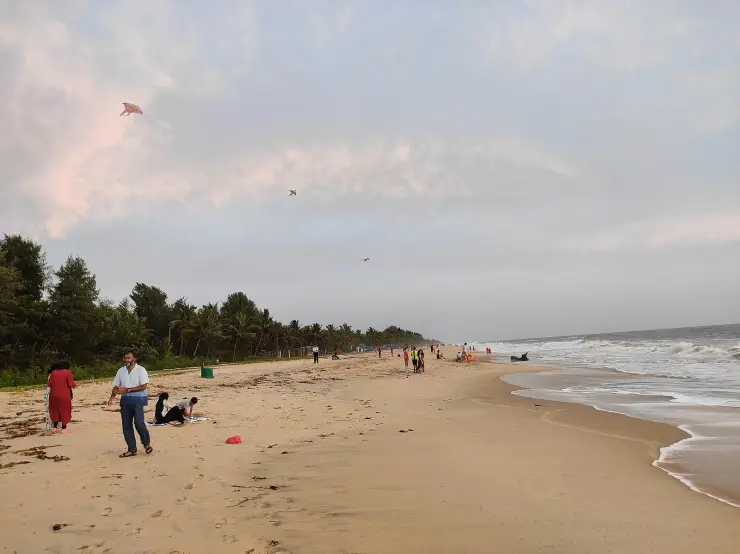
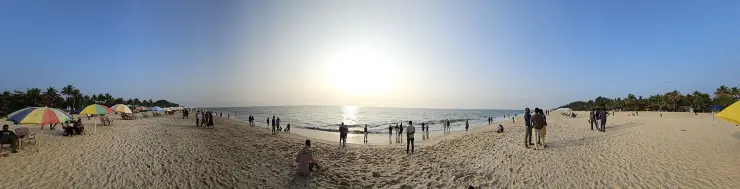
Beyond the crowds and the feast, Arthunkal rewards the ordinary visitor too. The basilica sits within easy reach of Marari Beach and the wider Alappuzha backwater country, so a stop here folds neatly into a coastal Kerala itinerary. ⚠ And since we have said so elsewhere, we should be consistent: Marari is quieter and far less built up than Kovalam or Varkala, but it is not the deserted shore it is usually described as — on fine evenings it fills with local families, kite flyers and hawkers.
The devotional world of Arthunkal is woven from tradition rather than documented fact, and it is best experienced in that spirit. The central figure is St Sebastian, and generations of the faithful have come here trusting in his intercession — countless stories of healing of body and mind are passed down within families, framed always as matters of faith and answered prayer rather than proven event. Devotees describe the saint as Arthunkal Veluthachan, the fair father, a title of tender closeness.
A striking strand of the tradition surrounds the great procession itself: pilgrims say that when the statue of St Sebastian is borne out during the feast, eagles are seen circling high above it. The sight is understood to recall the older legend of birds and caring hands tending the wounded martyr, and for the faithful the wheeling eagles are read as a sign of the saint’s living presence — a belief cherished, again, as devotion rather than as claim.
🔑 There are in fact two competing explanations of who Veluthachan is, and the Malayalam sources set them out side by side rather than choosing. The first is documentary and comes from Francis Day, writing in 1863, who recorded that St Andrew — the church’s formal patron — was a close friend of Ayyappan and of Vavar. The second identifies Veluthachan not with any saint but with Fr Jacome Fenicio, the Italian priest who was vicar here from 1584: a man described as interested in the arts and in visions, who is said to have gone to Cheerappanchira to learn kalarippayattu, and who found that Ayyappan’s own gurukulam was at Cheerappanchira too, so that the two of them lived and studied there in brotherly affection.
⚠ Cheerappanchira is a real and checkable place — the Malayalam article on Muhamma names the kalari-famous tharavadu of Pachayil Chira there — but it is about 9 km east of Arthunkal, near Pathiramanal, so it should never be described as nearby. And it is worth noticing that the two explanations are doing different work: one makes the friendship a matter between a saint and a god, the other makes it a matter between two young men at a martial-arts school.
🔑 The vows here have a physical form that most accounts leave out. Those who believe they have been delivered from grave illness or from danger come to the church to give thanks, and some of them do it by crawling on their knees the whole way from the nearby seashore to the basilica. Others offer models — human limbs made in gold and silver, for the part of the body that was healed, and also models of arrows and of bows, for the saint who was shot with them. A wall of small gold and silver limbs is a very old European votive practice, and here it has arrived on a Kerala beach and picked up the arrows on the way.
Sabarimala pilgrims returning from the forest shrine still come to Veluthachan at Arthunkal to make their offerings — and, for many, to remove the mala, the garland worn through the weeks of the vow. That is the detail that gives the tradition its weight: this is not a stop for a look. It is where some devotees end the vow itself.
Most beautiful of all is the tradition that binds Arthunkal to the Hindu pilgrimage of Sabarimala. In popular belief among many Ayyappa devotees, St Sebastian and Lord Ayyappa are spoken of almost as brothers, and a visit to the Arthunkal shrine has long been folded into the Sabarimala journey — many pilgrims stop here in connection with their season of vows. This is a folk tradition of neighbourly faith, not a doctrine of either religion, and it is precisely this crossing of boundaries that Keralites hold up with pride: at Arthunkal, Christian and Hindu pilgrims kneel and walk side by side.
Christian presence along this stretch of the Alappuzha coast is old, but the church at Arthunkal takes its documented shape with the arrival of the Portuguese. It was the Portuguese missionaries who established the shrine here in the 16th century, and it grew quickly into an important centre of the Latin Catholic community on the Kerala shore.
🔑 The founding has a detail worth keeping. Arthunkal was then the seat of the Moothedath kingdom, and the king refused permission for a church at first. He then relented — and gave trees from his own garden for the timber. The first building was wood and thatch, it faced north, and it was consecrated on 30 November 1581, which is St Andrew’s day, under Fr Gaspar Pius. That is where the dedication comes from.
The pivotal figure in that early history is Fr Jacomo Fenicio, an Italian Jesuit remembered as the vicar under whom the church was rebuilt in 1584. Fenicio, who died in 1632, was so revered by the local people — and, in tradition, associated with the fair complexion that gave the shrine its Veluthachan name — that his memory remains entwined with the devotion at Arthunkal to this day.
🔑 Fenicio is not simply remembered here; he is buried here. He died in 1632 and was interred, before a great crowd, inside the church itself. Whatever one concludes about the Veluthachan question, the priest at the centre of one version of it is under this floor.
The church was rebuilt again, facing west this time, in 1640 — granite ferried in by boat, since there is no stone on this coast — and it was at that rebuilding that the celebrated statue of St Sebastian, said to have been sculpted in Milan, was installed. ⚠ Our page previously dated that statue to 1647 and the Malayalam sources give 1640, tied to the westward rebuilding. We have not been able to reconcile the two and are printing the disagreement rather than picking, because a date that moves by seven years between sources is exactly the kind of thing that gets copied silently.
For centuries thereafter Arthunkal grew steadily as a shrine of St Sebastian, its January feast expanding into one of the largest pilgrim gatherings in Kerala and its reputation spreading well beyond the Christian community. The present basilica — dark grey-brown stone in the Gothic Revival manner, twin-spired, with a pointed-arch west front — is the fruit of that long history of rebuilding and enlargement to accommodate ever-greater crowds. 🛑 It is not the whitewashed Kerala coastal church that the Veluthachan name leads people to expect, and this page said otherwise until August 2026.
🔑 The feast itself has a route, and it crosses three places before it starts. The flag for the Perunnal is brought from Pala, taken first to the Alappuzha cathedral, and then carried on to Arthunkal — receiving the blessing of Thumboli Matha on the way. The feast runs from 10 to 27 January with the main day on 20 January, and its centrepiece is a procession that lasts about four hours. So the January crowds at Arthunkal are the end of a journey that began in the hills at Pala, came down through the town and along the coast, and stopped at a Marian shrine to be blessed.
The modern honour came on 9 July 2010, when the church was elevated to the status of a Minor Basilica — an act attributed to Pope Benedict XVI — making it the first parish in the Diocese of Alleppey to receive that dignity. The title placed Arthunkal formally among Kerala’s most significant Catholic shrines, confirming in Church law the standing it had long held in the hearts of pilgrims.
To stand before one of India’s great pilgrimage shrines dedicated to St Sebastian — a place where centuries of Portuguese-rooted devotion are still vividly alive.
To witness, in the January Arthunkal Perunnal, one of Kerala’s largest and most moving feasts, when hundreds of thousands of pilgrims and a candle-lit procession fill the coastal town.
To experience a rare living symbol of Kerala’s communal harmony, where Hindu Ayyappa pilgrims from Sabarimala arrive to pray alongside Christian devotees.
To trace real history on the ground — the first thatched church consecrated on St Andrew’s day 1581 with timber from the Moothedath king’s own garden, Fr Jacome Fenicio’s grave inside the building, and the Milan-sculpted St Sebastian installed at the westward rebuilding.
To pair devotion with the coast: Marari Beach is about 7 km south, an easy half-day — quieter and far less built up than Kovalam or Varkala, though busy on fine evenings.
To feel the atmosphere of a genuine local shrine — not a museum piece but a place families return to, wrapped in the affectionate name Arthunkal Veluthachan.
Road km to Alappuzha; ghat roads and traffic vary — allow extra.
Morning or late afternoon for quieter visits and better light.
Live forecast loads in your browser.
Sun and moon are calculated for this location and shown in IST. Photography windows are the hour around sunrise and sunset; the sunset bearing is degrees clockwise from true north. Moon phase is accurate to about half a day.
Verified hotels, homestays, restaurants, experiences, sights, shops and rentals around Arthunkal Church — commission-free, with direct contact. Filter by what you need.
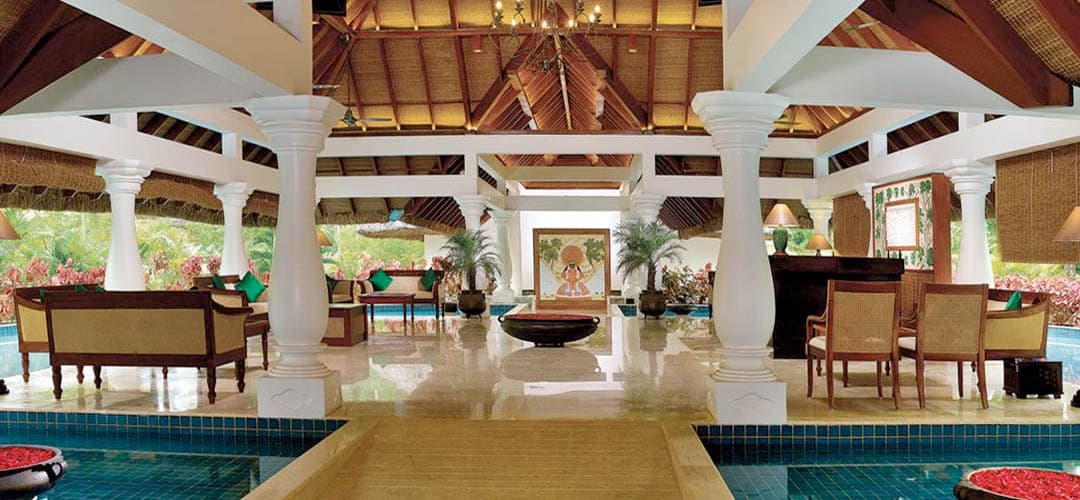
Wellness resort in Mararikulam. Chennaveli, Chethy P.O., Mararikulam, Alappuzha, Kerala 688530 · Carnoustie, Wellness resort, mararikulam.
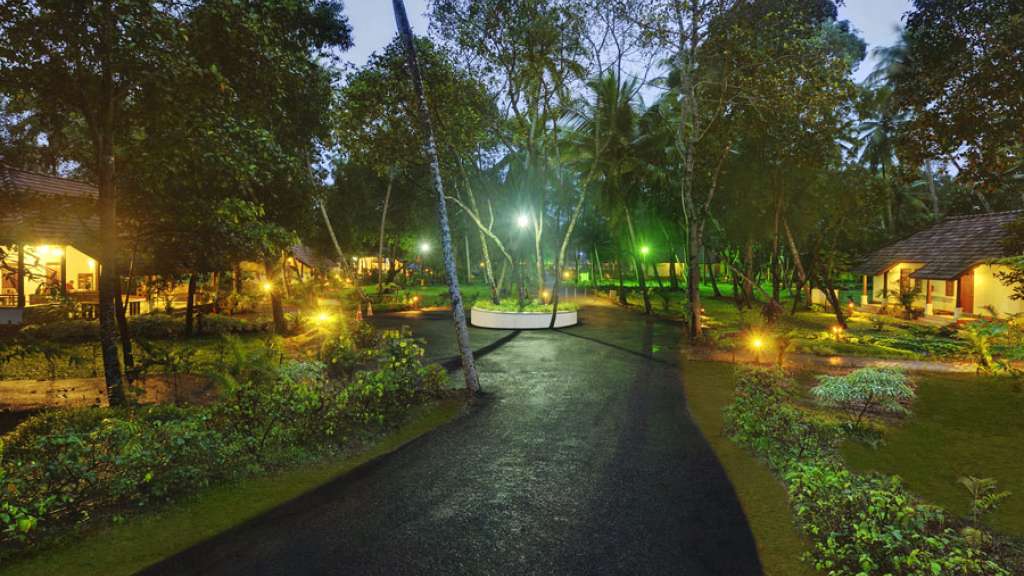
Mararikulam beach resort with cottages, Ayurveda, spa, pool, restaurant and travel desk. Marari Beach, Abad Hotels, Resort.
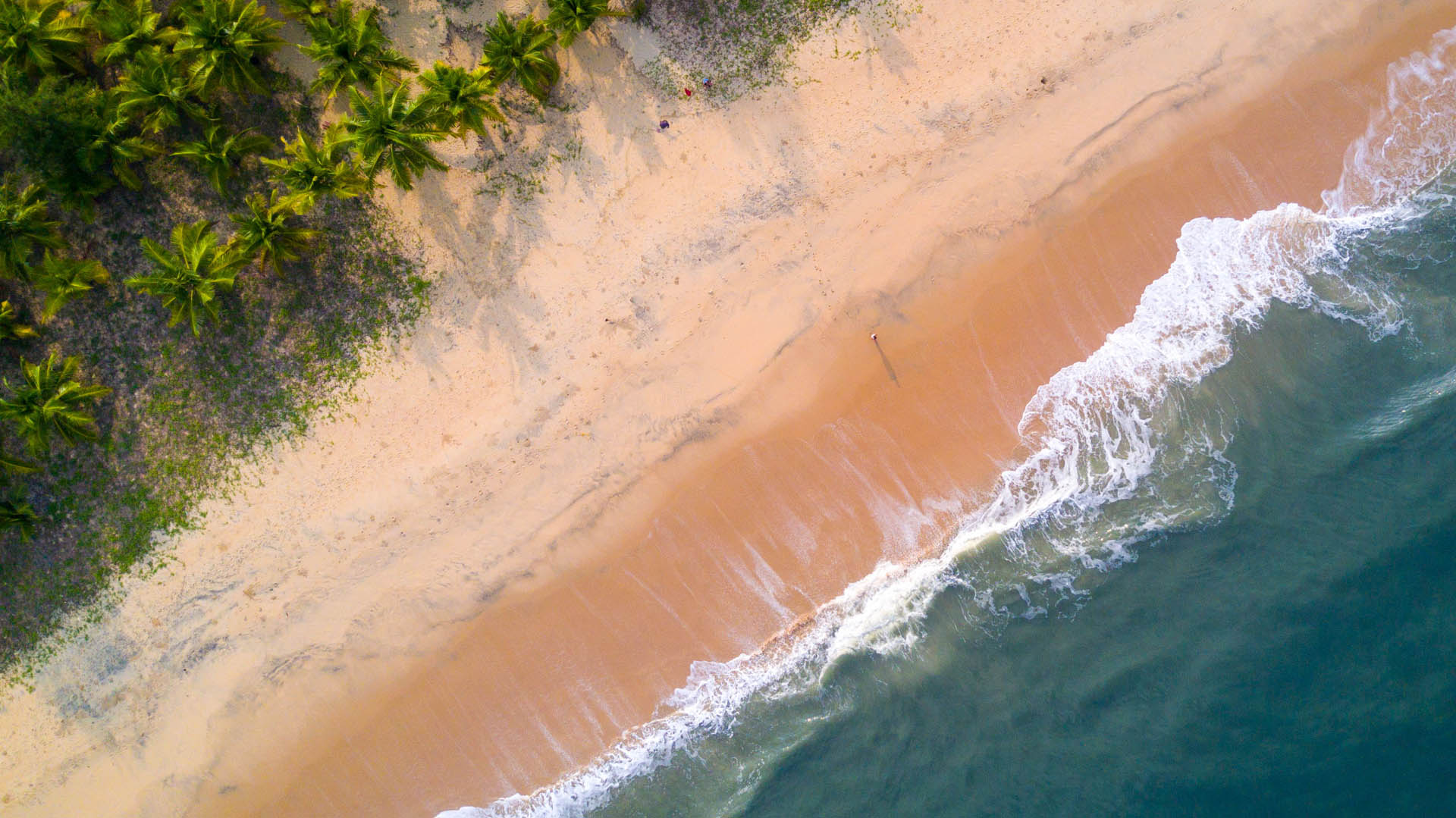
CGH Earth seaside village-style resort at Mararikulam near Alleppey. S.L. Puram, Mararikulam P.O., Alleppey 688523 · Marari Beach, CGH Earth, Resort.
Book with the place itself. India’s cyber-crime coordination centre warned in April 2025 that convincing copies of hotel and pilgrimage booking sites are being pushed through sponsored search and social ads, taking payment for rooms the property never hears about. Every listing here links to the business’s own contact details and its own Google or Bing profile — we take no commission and sit in nobody’s payment path. If a booking page reached you through an ad, check the address bar against the property’s own site before you pay. Fraud can be reported on cybercrime.gov.in or on 1930.
Find food, accommodation and activities across Mararikulam. Browse the guides for places to eat, stay and explore along your route.
3 more places around Mararikulam. Open a guide to plan the visit and onward journey.
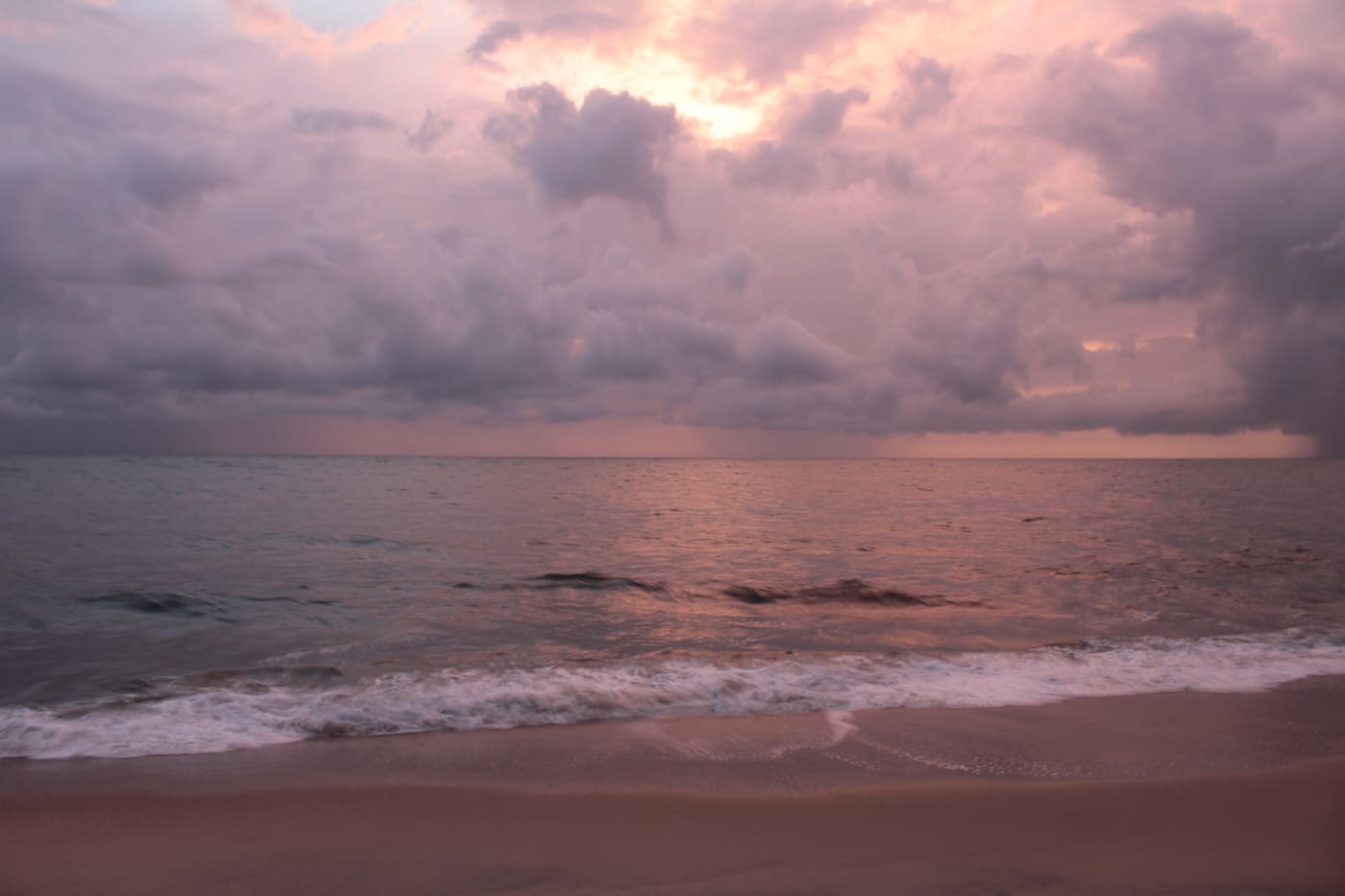
7.0 km · ~18 min by auto
Quiet beach belt north of Alappuzha, popular for relaxed stays.
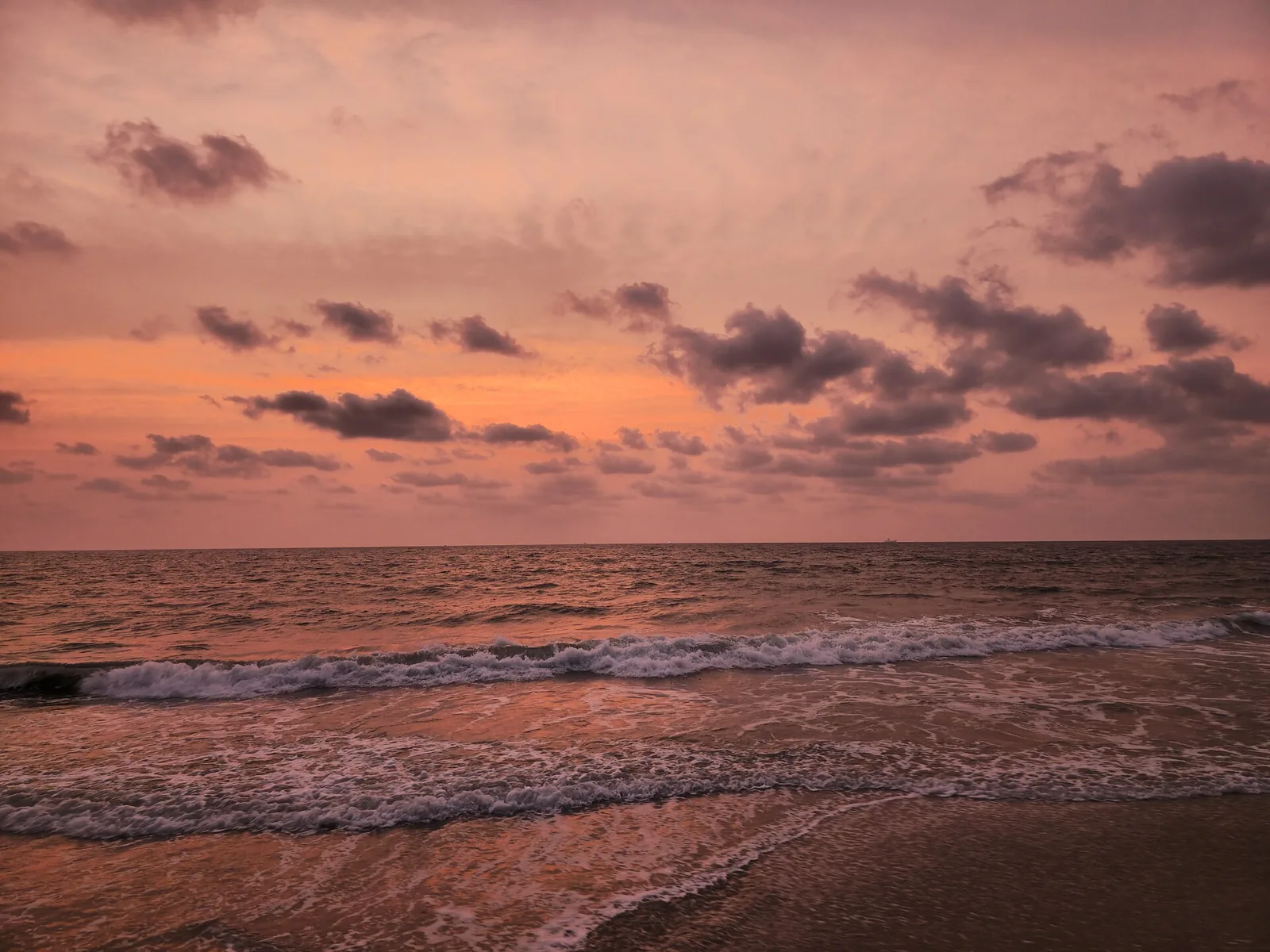
9.8 km · ~16 min by cab
Estuary beach at the north Alappuzha coast near Cherthala where backwater meets sea.
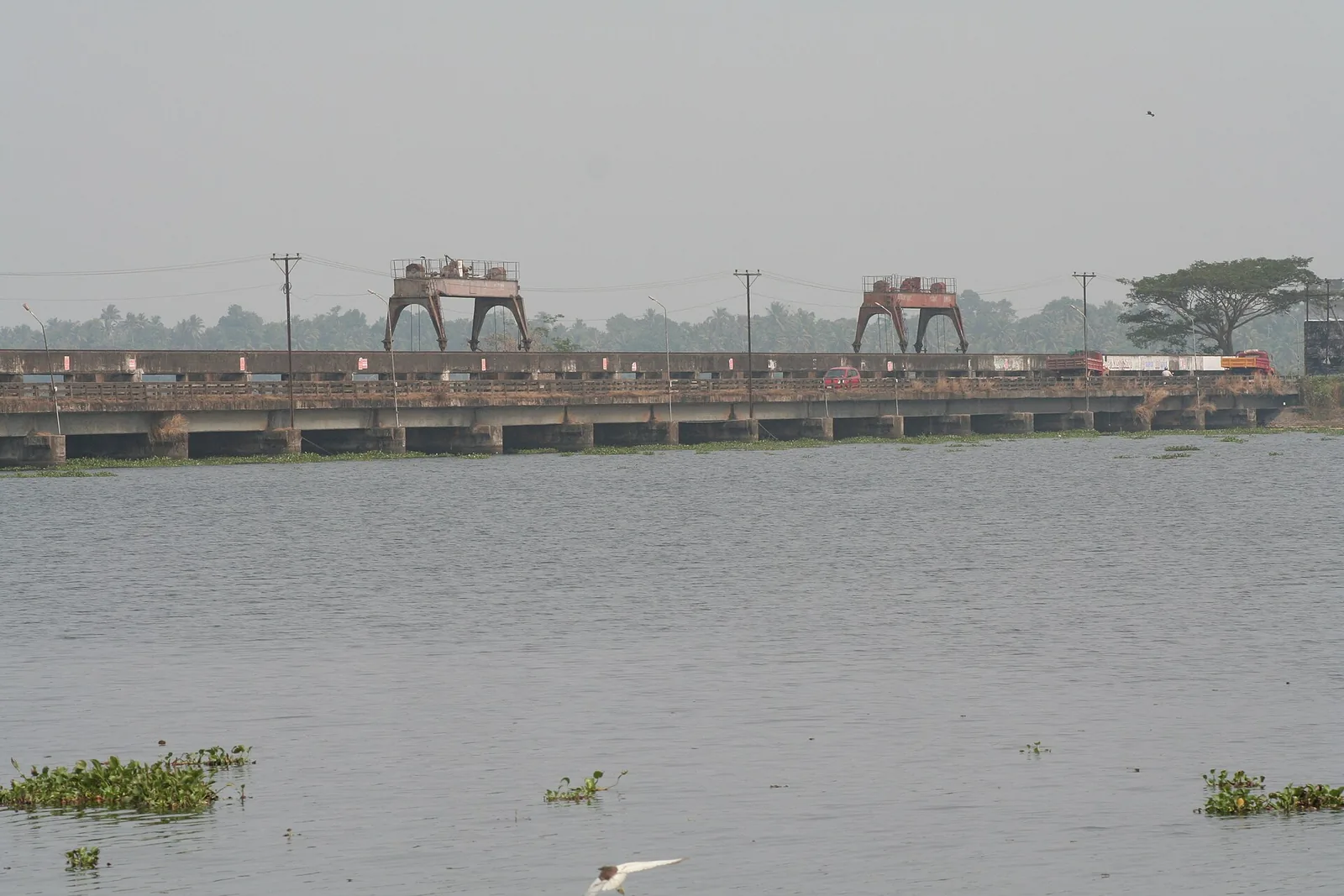
11.0 km · ~18 min by cab
Salt-water barrier and bridge across Vembanad Lake that keeps the sea out of Kuttanad’s paddy in the cropping season — a long causeway with lake views.
Roampedia is commission-free — own or know a stay, eatery, guide or shop near Arthunkal Church? List it and it appears here once verified.
Add a nearby businessEntry: Free — there is no entry charge to visit or pray at the basilica.
Dress code: Modest, respectful church dress — shoulders and knees covered for both men and women; this is an active place of worship.
Festivals: The Arthunkal Perunnal — the annual feast of St Sebastian — is the great event, celebrated in January over roughly eight to ten days, with the principal feast day traditionally around 20 January and a further major day (the Ettam Perunnal) about a week later.
Photography: Photography of the exterior and grounds is generally fine; be discreet and check for any restrictions inside the church and during Mass, and always avoid photographing worshippers at prayer without consent.
If you are travelling by bus or ferry, check the return service with the operator before setting out. Leave time to reach the stop or jetty after your visit.
Ask at the bus stand for the time of the last service back, not the next one. If you miss it, an auto or app cab is the fallback — agree the fare before you get in.
If you need step-free access, contact the site before travelling. Ask about a level entrance, steps along the route, the nearest drop-off point, seating and accessible toilets.
Charge cap and free-transaction limits: Reserve Bank of India, in force since 1 May 2025.
These services are listed within about 1.2 km of Arthunkal Church. Walking distances follow mapped routes; access and opening hours can change. Other services may be closer but are not included here.
Emergency numbers are verified against official government and state tourism sources. 112 works anywhere in India.
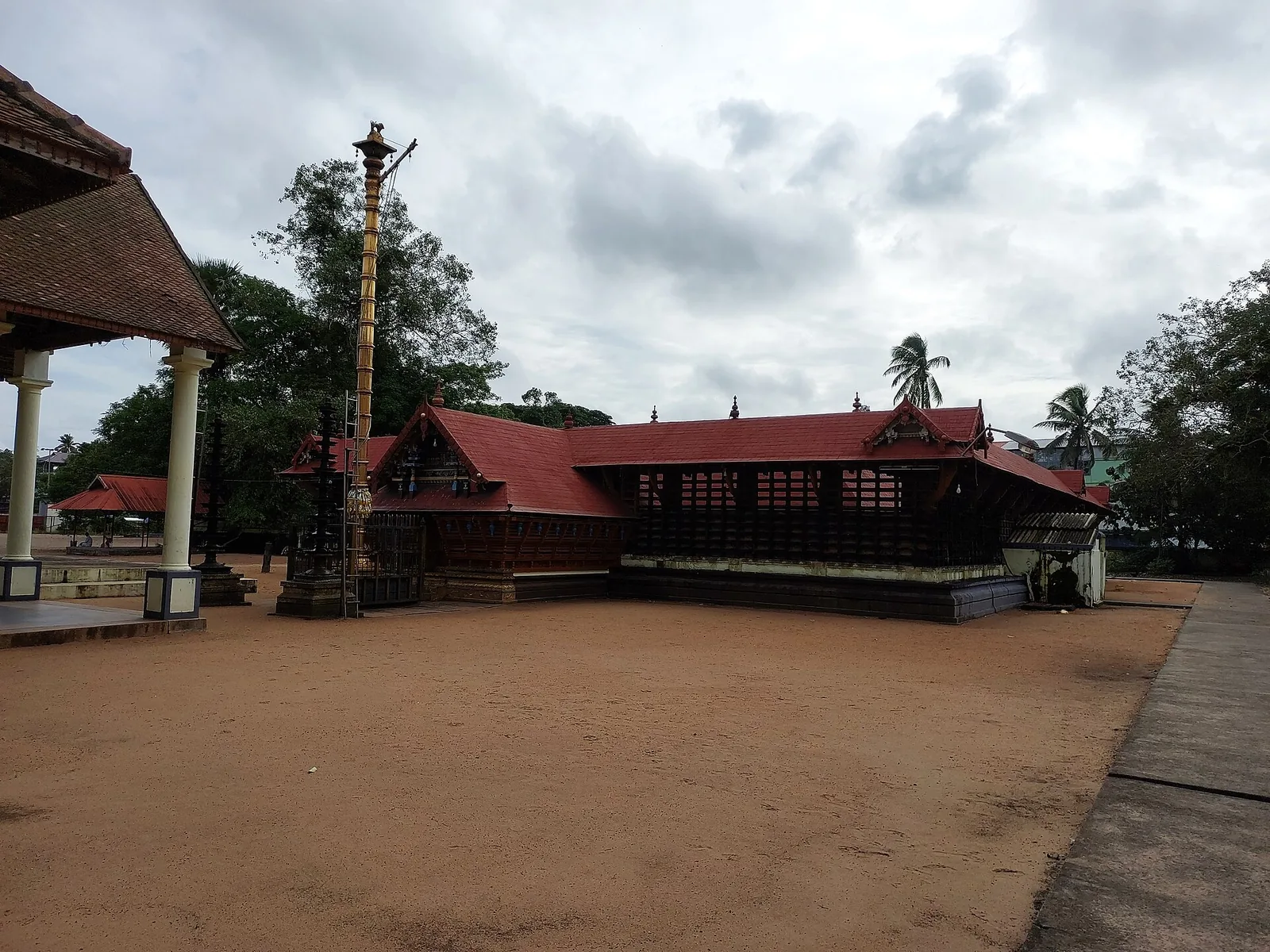
The Devi temple in the middle of Cherthala town, one of the 108 Durgalayas — where the goddess sits about four feet below ground level, hundreds of cockerels released as offerings live in the compound, and the town’s own name is said to come from the legend of her rescue from the mud.
5.3 km · ~13 min by auto · straight lineQuiet beach belt north of Alappuzha, popular for relaxed stays.
7.0 km · ~18 min by auto · straight lineEstuary beach at the north Alappuzha coast near Cherthala where backwater meets sea.
9.8 km · ~16 min by cab · straight line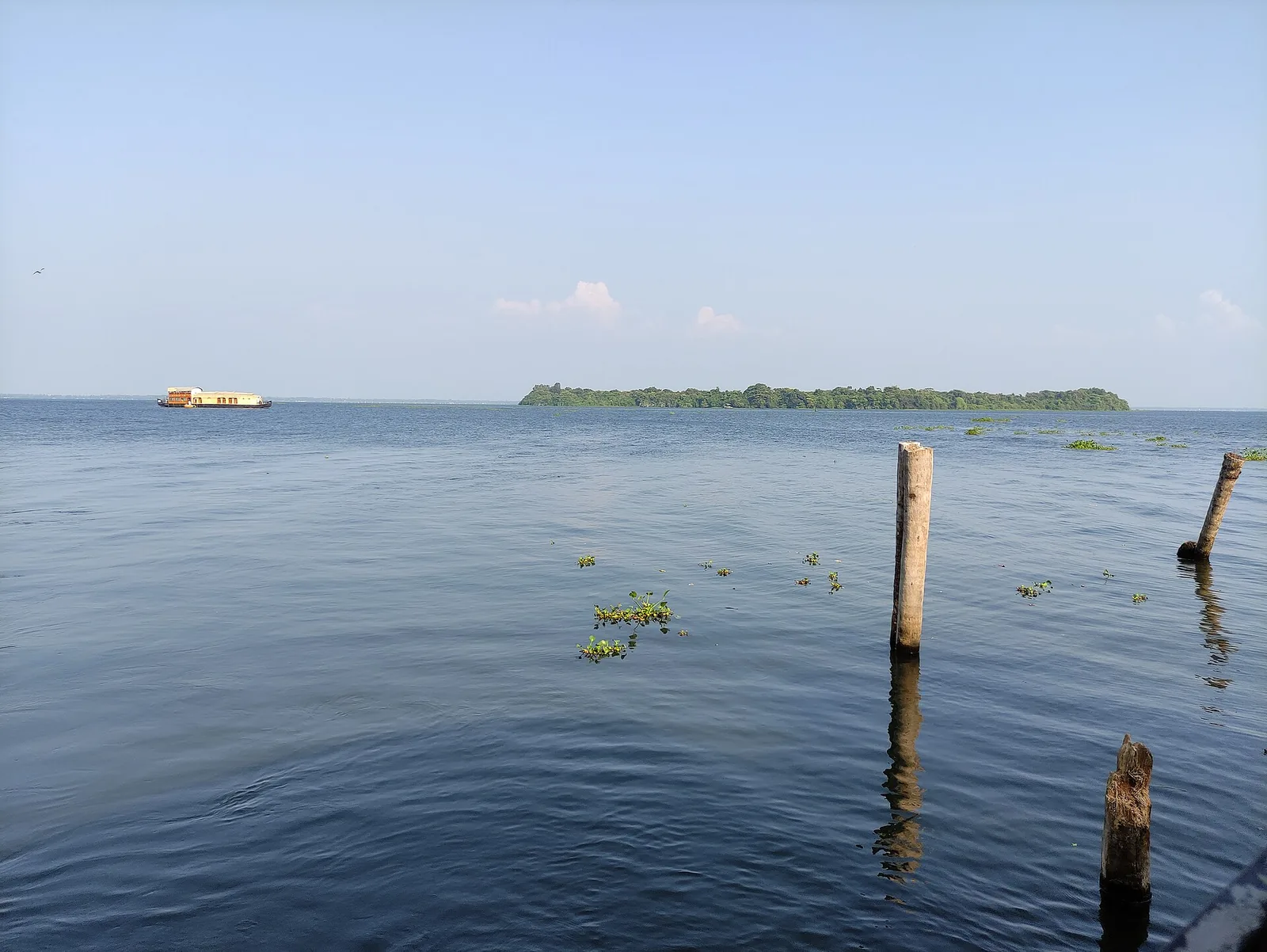
Small Vembanad Lake island known for birdwatching.
10.4 km · ~17 min by cab · straight lineSalt-water barrier and bridge across Vembanad Lake that keeps the sea out of Kuttanad’s paddy in the cropping season — a long causeway with lake views.
11.0 km · ~18 min by cab · straight line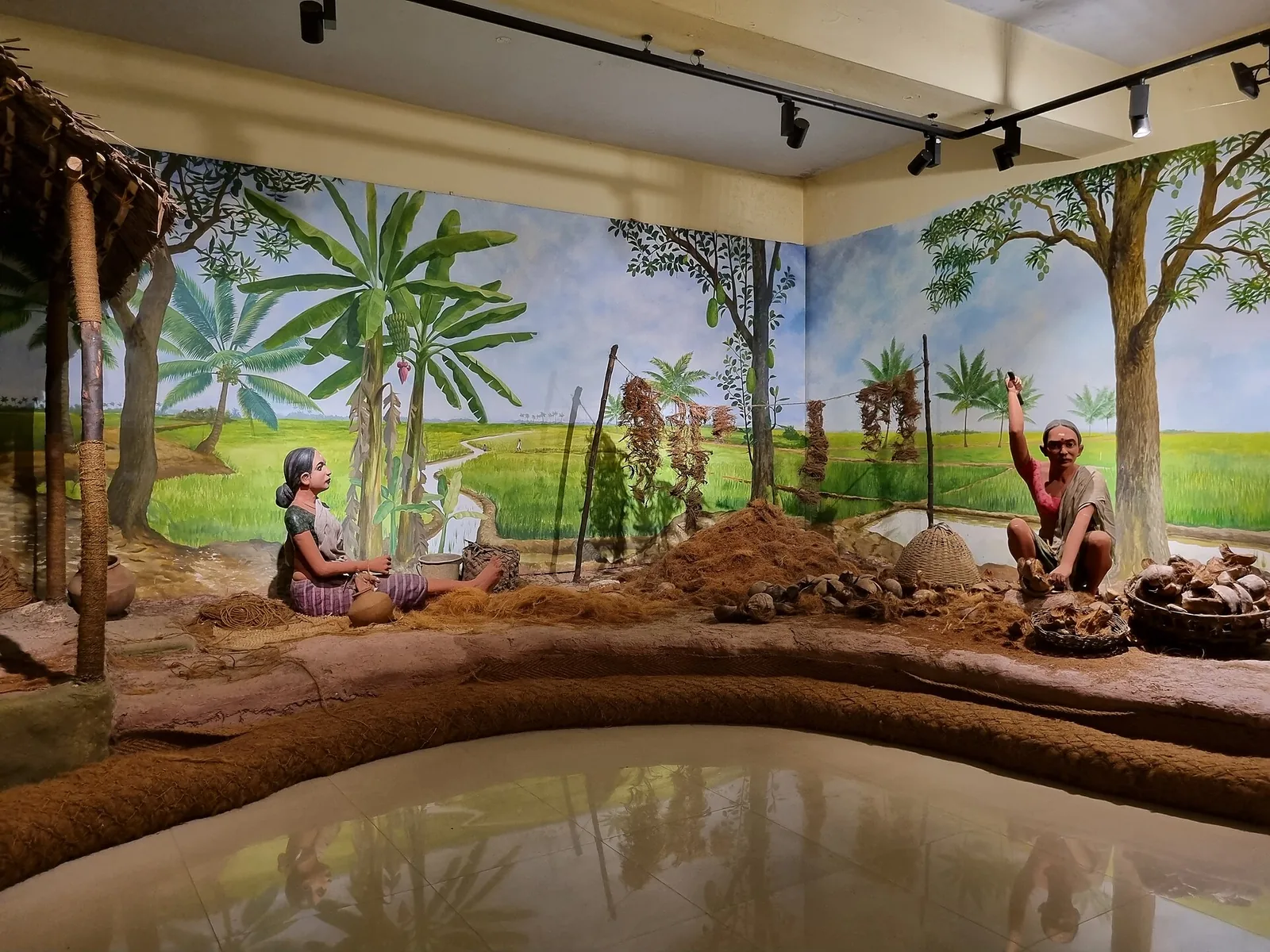
Museum on Kerala’s coir (coconut-fibre) heritage — the craft Alappuzha built its trade on.
11.3 km · ~19 min by cab · straight line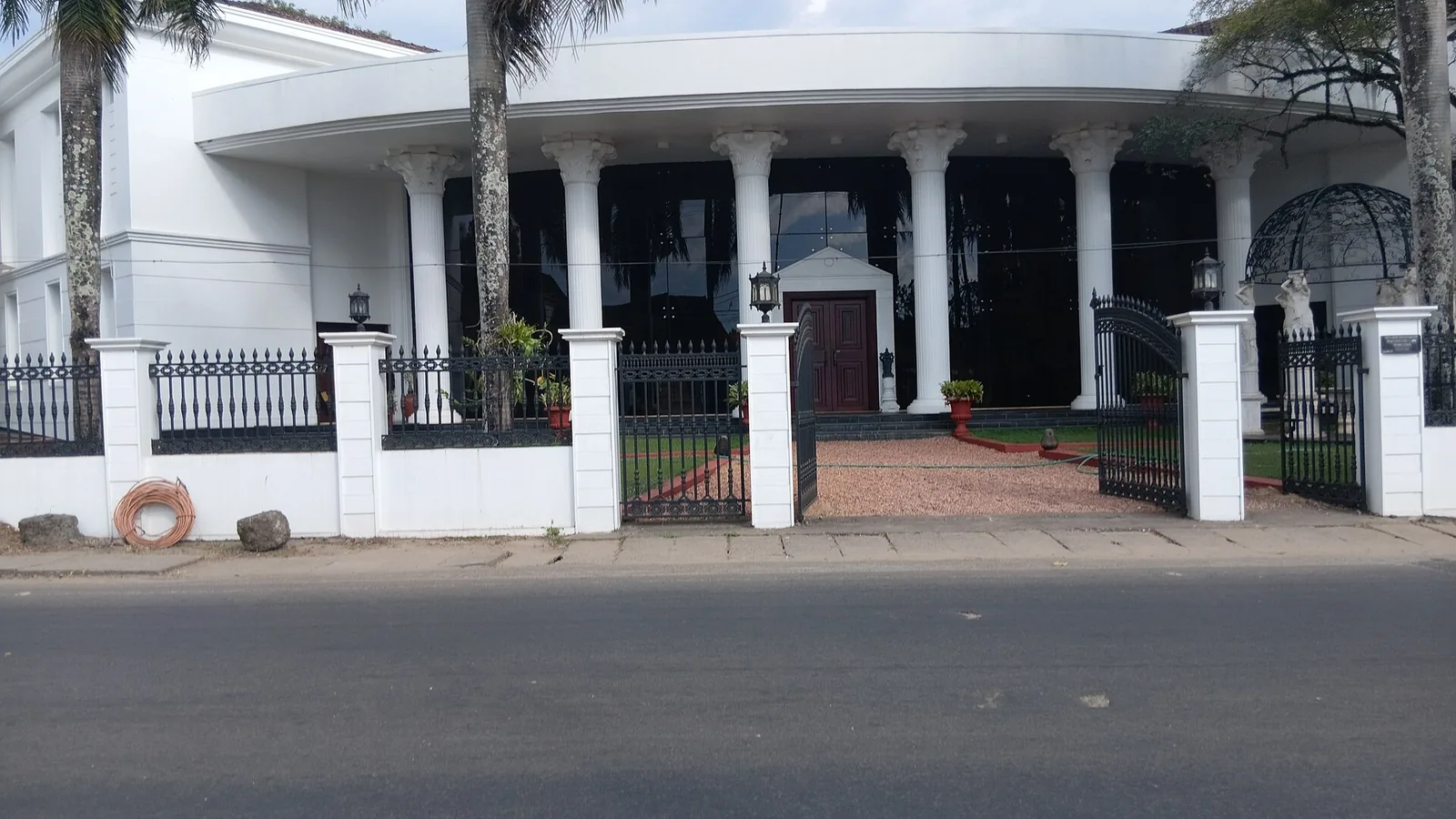
Private memorial museum in Thathampally with a large collection of paintings, ivory, crystal and antiques.
18.3 km · ~30 min by cab · straight line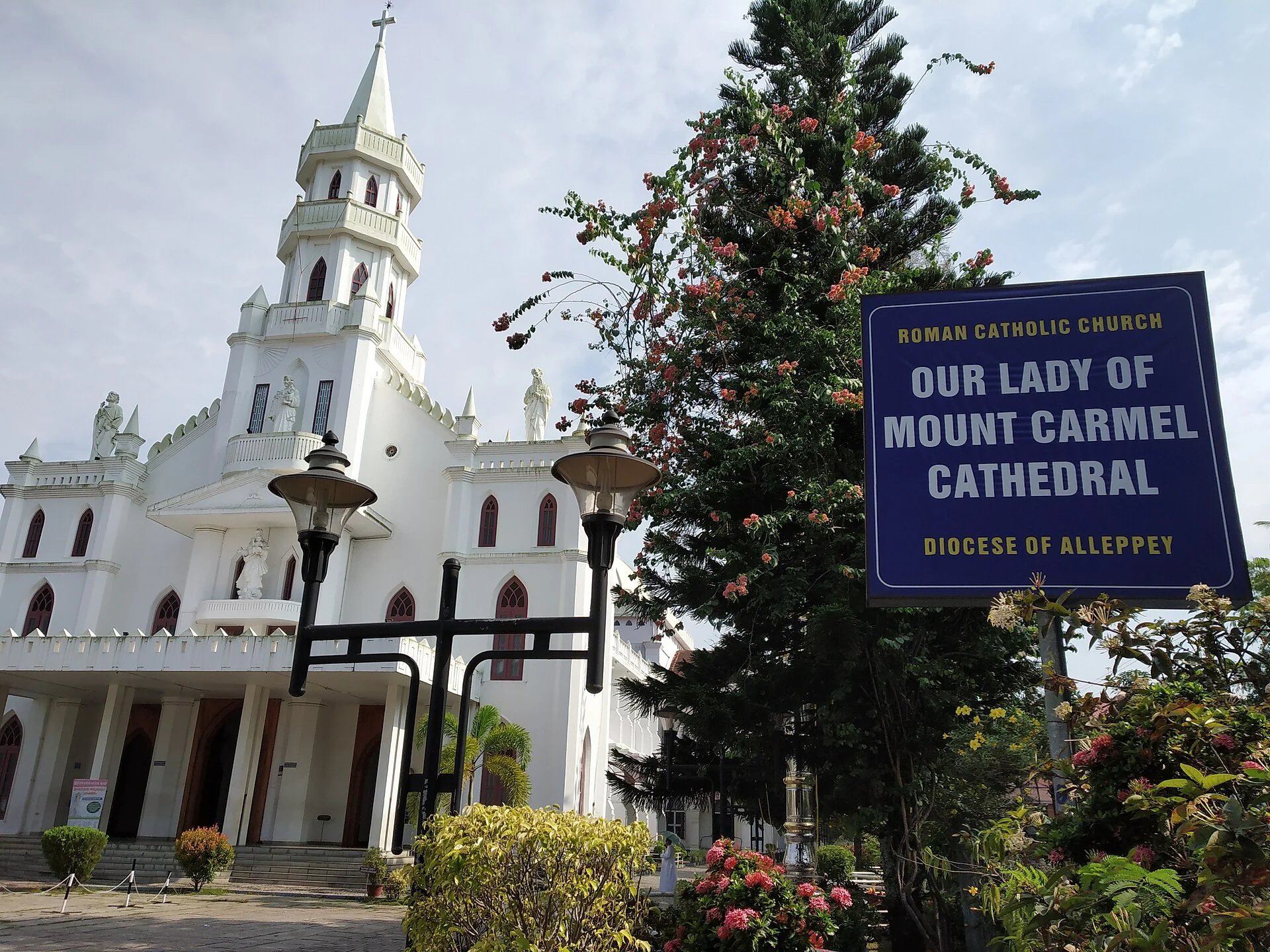
Landmark 19th-century cathedral of the Alappuzha diocese near the town centre.
18.6 km · ~31 min by cab · straight line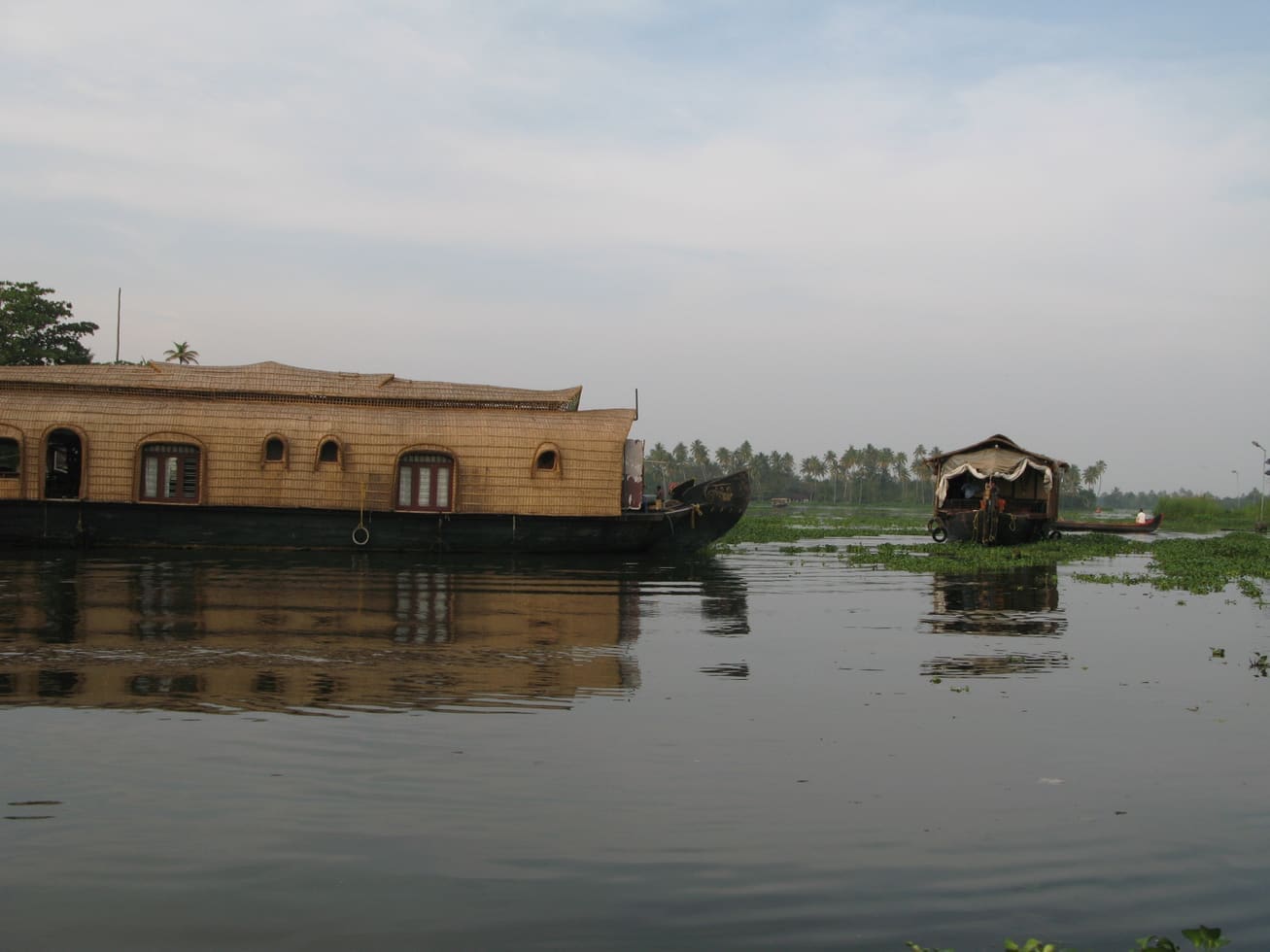
Backwater and houseboat hub with canals, beach, lighthouse and Finishing Point jetty.
18.6 km · ~31 min by cab · straight line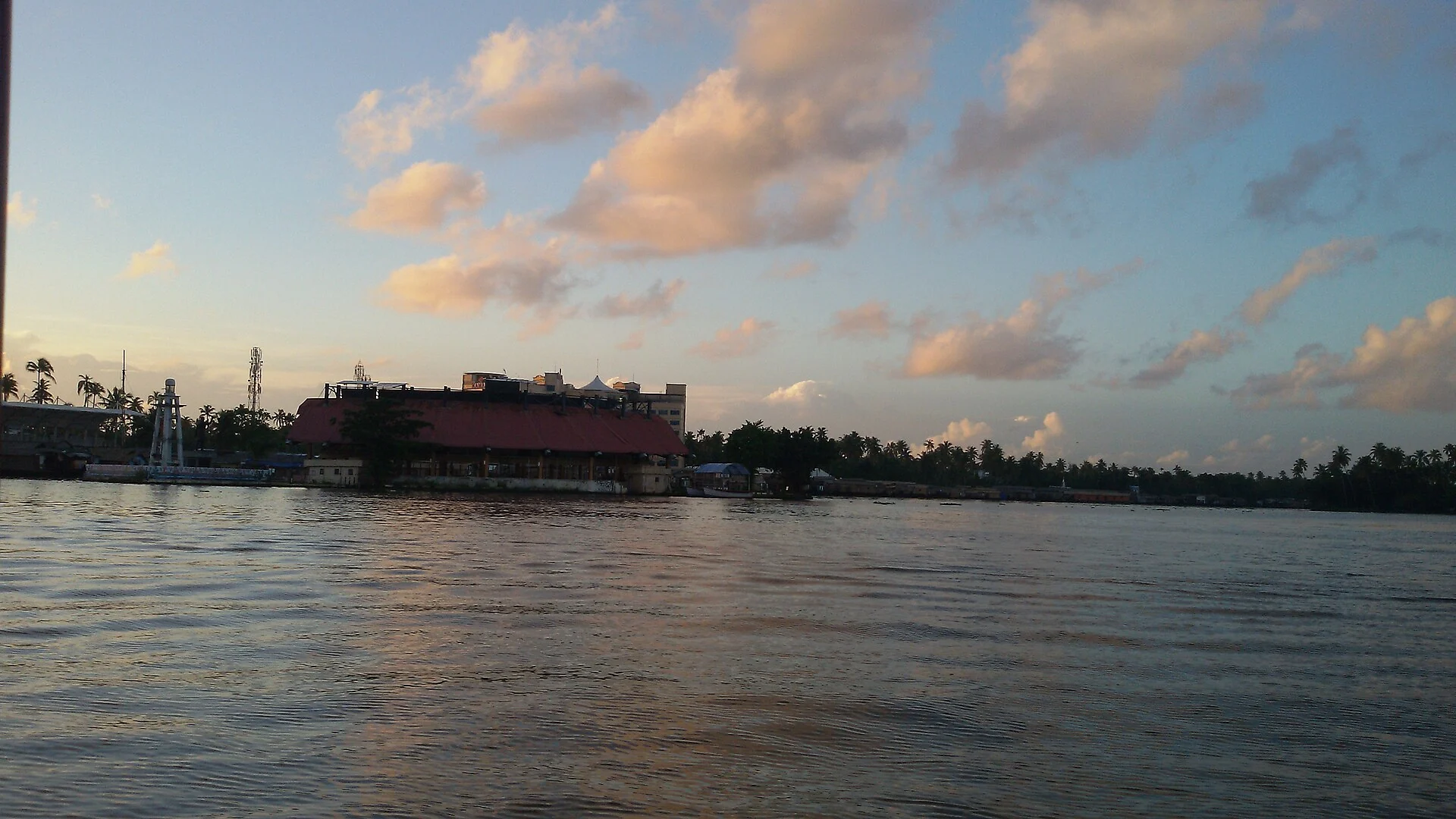
Finishing-point lake of the Nehru Trophy Boat Race and the main houseboat cruising water off Alappuzha.
18.7 km · ~31 min by cab · straight line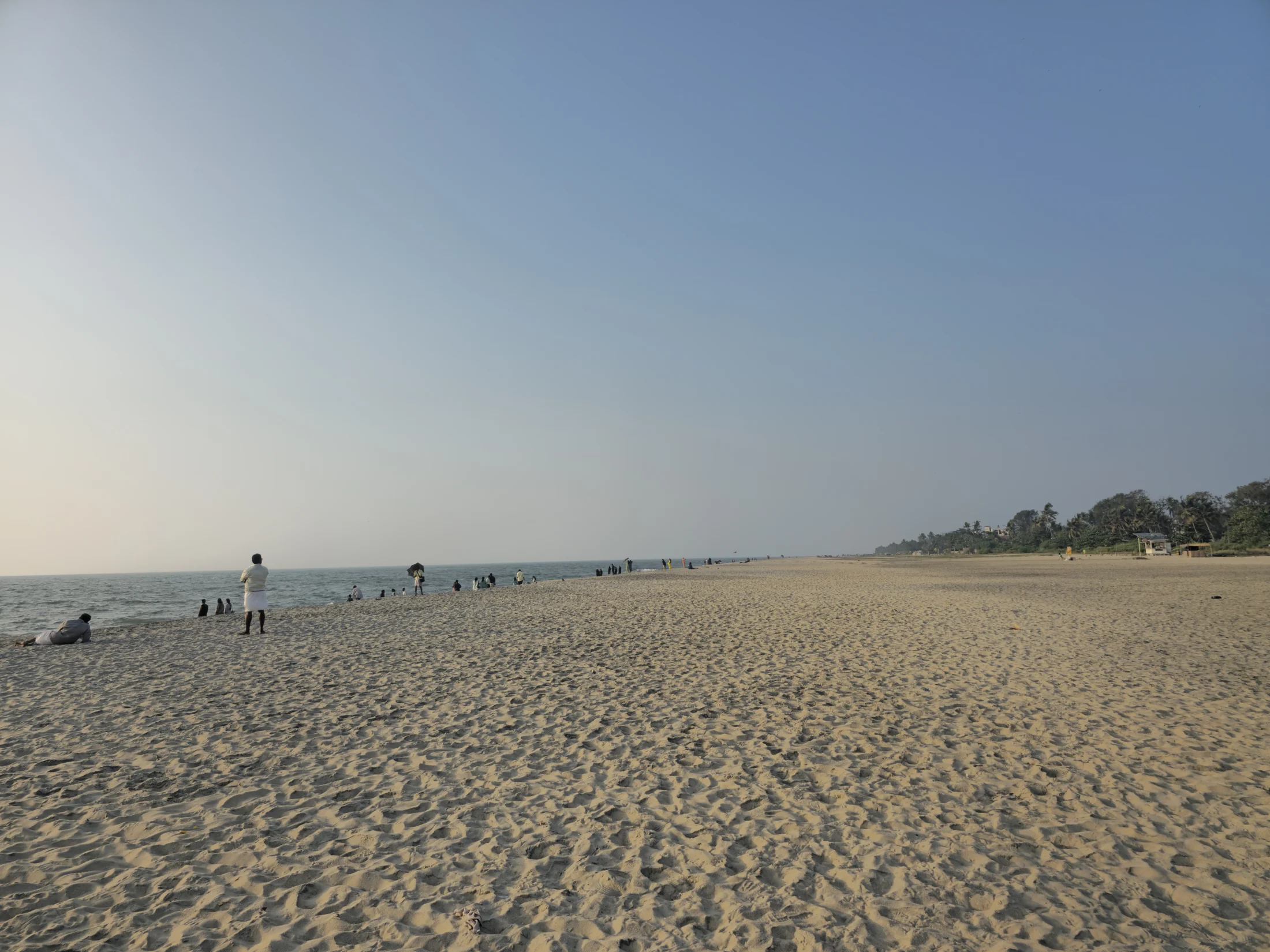
Pair Alappuzha’s broad town beach and old pier remains with the red-and-white lighthouse on C.C.S.B. Road, commissioned in 1862 and still maintained as a navigational light.
18.7 km · ~31 min by cab · straight line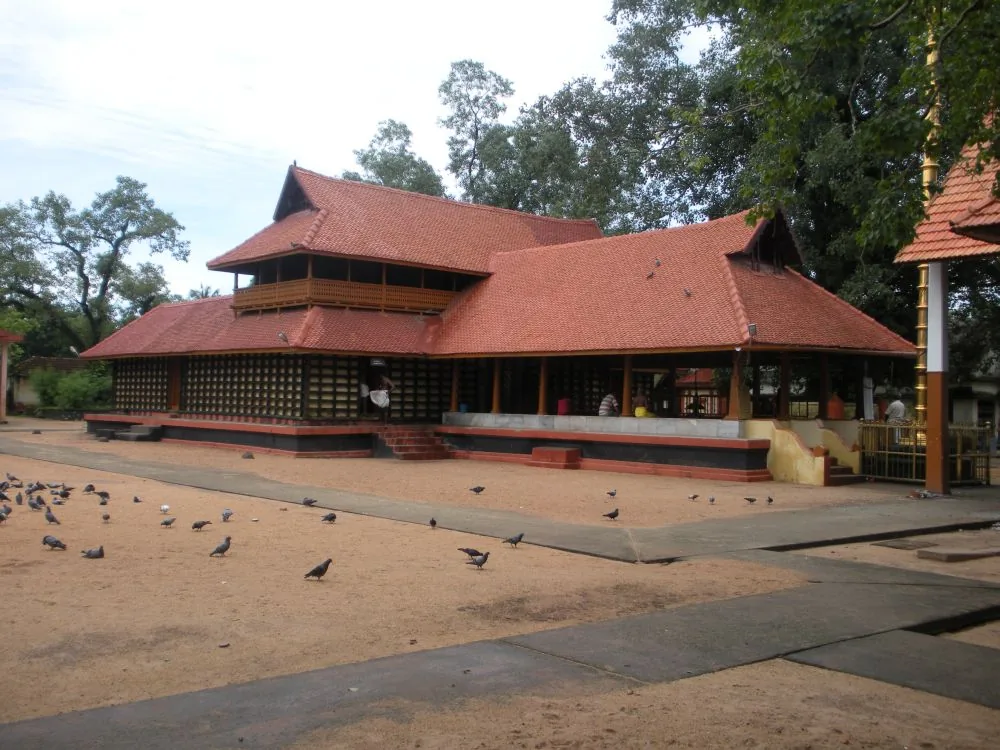
Central Alappuzha town temple (Mullakkal Rajarajeswari) famous for the annual Mullackal Chirappu festival.
18.8 km · ~31 min by cab · straight lineNearby toilets, pharmacies, ATMs, seating and vets are community-mapped and may be incomplete or out of date. Map data © OpenStreetMap contributors | Walking times © openrouteservice.org by HeiGIT
The shrine is formally St Andrew’s Basilica, but its overwhelming devotion is to St Sebastian, the Roman martyr shown pierced with arrows. Pilgrims lovingly call the shrine and its saint Arthunkal Veluthachan — the fair, or white, father — a name also linked in local memory to the early Italian vicar Fr Jacomo Fenicio.
The great feast of St Sebastian, the Arthunkal Perunnal, falls in January, with the main feast day traditionally around 20 January and celebrations spread over roughly a week to ten days before and after.
It is a long-cherished folk tradition, not a religious rule: many Hindu Ayyappa devotees returning from the Sabarimala pilgrimage include a visit to Arthunkal, popularly speaking of St Sebastian and Lord Ayyappa as brothers. It is one of Kerala’s most admired examples of shared, cross-community devotion — best understood as tradition rather than doctrine.
There is no entry fee — the basilica is a place of worship open to visitors and pilgrims of all faiths free of charge. Visitors are simply asked to dress modestly and respect prayers and services in progress.
Its origins go back to Portuguese missionaries in the 16th century, with a major rebuilding in 1584 under Fr Jacomo Fenicio and the revered St Sebastian statue installed in 1647. It was raised to the rank of Minor Basilica on 9 July 2010, the first in the Diocese of Alleppey.
The basilica lies right beside the peaceful Marari (Mararikulam) beach, and within easy reach of Cherthala town and the Alappuzha backwaters, so it combines well with a coastal Kerala itinerary of beach time, backwater cruises and village walks.
Morning or late afternoon for quieter visits and better light.
Entry: Free — there is no entry charge to visit or pray at the basilica. Timings: The basilica is generally open to visitors and pilgrims daily from early morning until evening, with several Holy Mass services through the day (and additional Masses at weekends and on feast days). Timings are indicative — confirm the current Mass and darshan schedule with the basilica office before visiting.
Base yourself in Mararikulam or a nearby town in Alappuzha, then confirm the last-mile route locally before leaving. Check mass/prayer timings if visiting for worship; otherwise visit outside service rush. If the visit depends on forest, temple, boat, ferry, weather or seasonal access, check the official/local rule on the day before travel.
30 minutes to 1.5 hours.
Nearby you can pair Cherthala Karthyayani Temple (5.3 km), Marari Beach (7.0 km), Andhakaranazhi Beach (9.8 km), Pathiramanal Island (10.4 km).
Expect crowds on feast days and Sundays. Use marked parking and official entry points.
Written about Arthunkal Church itself — its history, its legends and the arguments about them.
These guides explore Mararikulam and the surrounding area. Choose a visit that fits your interests, allowing separately for travel between stops.


Route-level itineraries and practical guides for the rest of Kerala.
Photographs: Gannu03 (CC BY-SA 4.0), Vis M (CC BY-SA 4.0), Challiyil Eswaramangalath Vipin from Chalakudy, India (CC BY-SA 2.0), Varghesepunnamada (CC BY-SA 4.0), 991joseph (CC0). Wikimedia Commons.


