What to expect
Highlights
- Museum visit at Durbar Hall Art Centre
- Indoor cultural or historical context
- Easy pairing with nearby food and heritage stops
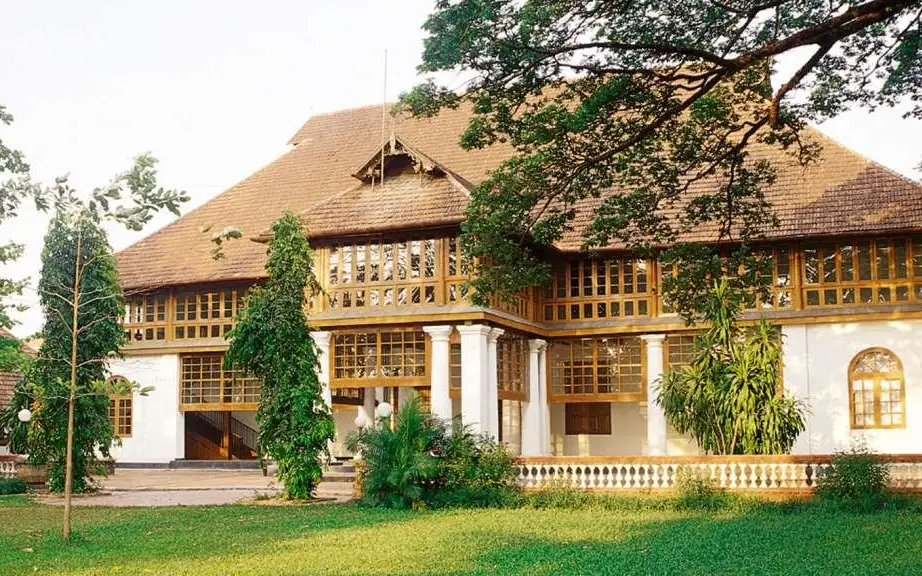
A heritage hall in Ernakulam run as a contemporary art gallery by the Kerala Lalithakala Akademi.
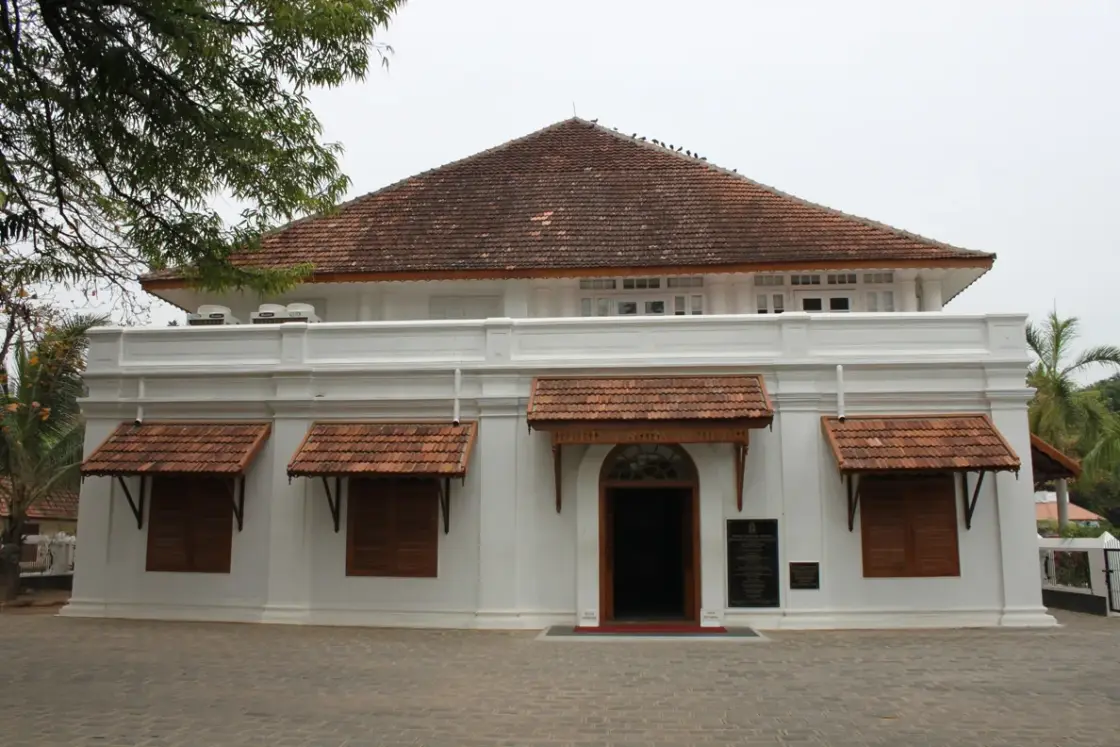
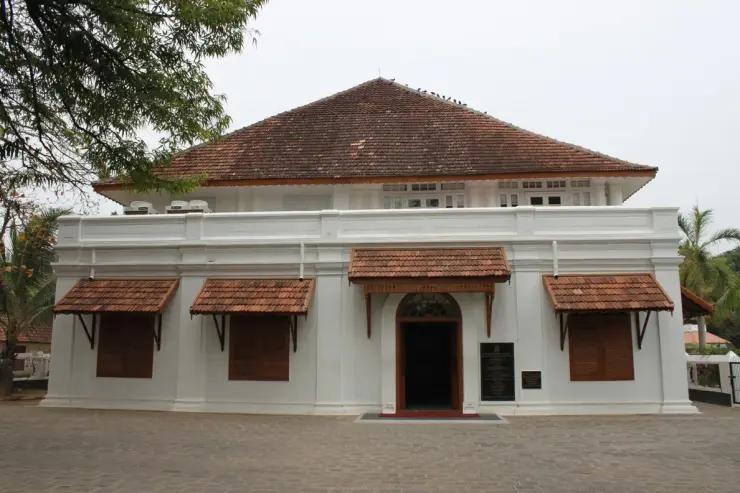
The Maharaja of Cochin built this hall in the 1850s to hold his durbar — the formal royal court, with the ruler inside and the public assembled on the open ground outside. Today it is a free contemporary art gallery run by the Kerala Lalithakala Akademi, and after an overhaul by the Kochi Biennale Foundation it is the best-equipped exhibition space in the city. The ground it stands on is where the Cochin state's 1938 constitution was proclaimed, and where, until temple entry was thrown open, people of lower caste were not permitted to walk.
The hall sits on a two-acre compound in the middle of Ernakulam, close to Ernakulam South railway station and hard against the open Durbar Hall Ground. The setting is unglamorous — city traffic, a sports ground, a low nineteenth-century building — which is part of why visitors miss it entirely, and why the art inside is often a surprise.
Read the site as two things and it makes far more sense. There is the hall, which was the audience chamber, and there is the ground, which was the audience. The durbar was held in the building that now holds the gallery, while the public gathered outside on the maidan — which is why almost everything that happened here historically happened on grass rather than under a roof.
What is on show changes constantly. This is a working gallery, not a permanent collection, so there is no fixed thing to come and see. It runs a programme of national and international exhibitions through the year, along with shows by Kerala artists, and it has served as a venue during the Kochi-Muziris Biennale. Check what is hanging before you go; that is the whole visit.
The renovation matters more than it sounds. The Kochi Biennale Foundation's work turned what had been a handsome but limited old hall into a space with museum-standard lighting, wall surfaces and climate handling — the practical difference between a building that can host a serious touring exhibition and one that cannot. The Biennale's effect on Kochi is usually described in terms of attention; this is one of the places where it is visible as infrastructure.
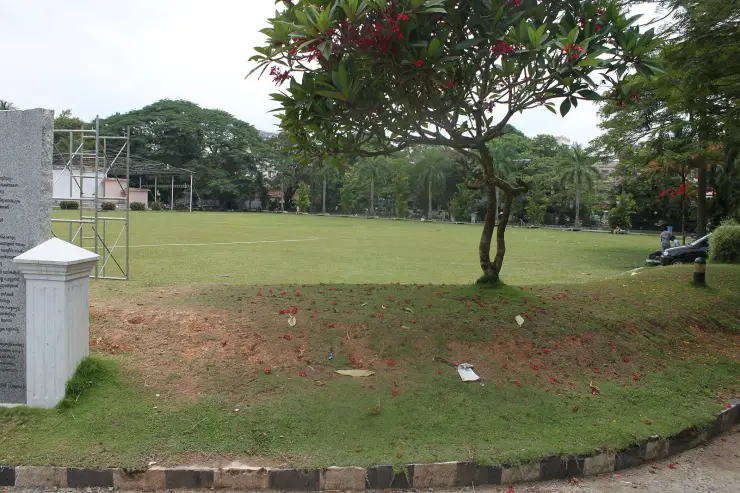
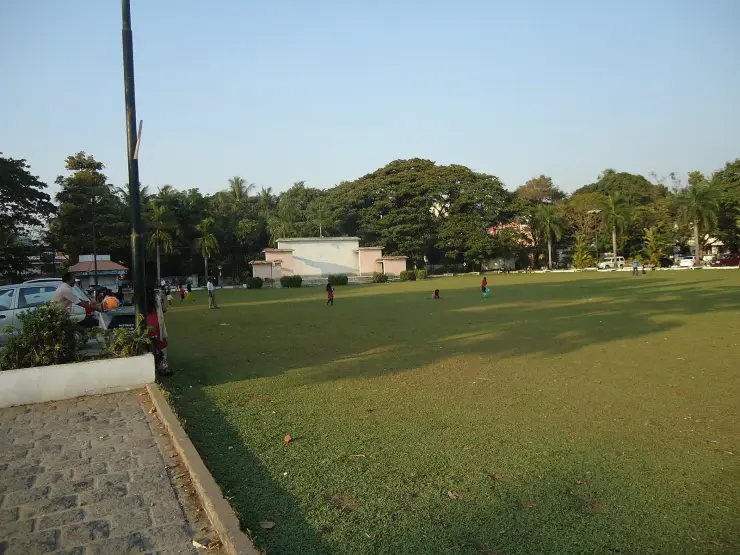
Outside, the ground has its own long life as the city's main open space: exhibitions, military parades, the processions of the Ernakulam Shiva Temple festival, football between the local Town Club and British army sides, and for years the principal cricket venue in Kochi, with a small band shed at the north-east corner as its pavilion. At one end stands the Kulapuramalika, where Appan Thampuran and Kunjukuttan Thampuran launched the literary magazine Rasikaranjini.
Entry to the gallery is free, which is unusual for a space of this standard and is the single most persuasive reason to drop in. If there is nothing on that interests you, you have lost twenty minutes and no money.
It pairs naturally with the rest of mainland Ernakulam rather than with Fort Kochi — Marine Drive, Broadway and the city-centre food and shopping are all a short auto ride away.
“Durbar Hall” is often assumed to be a palace. It is not, and never was a residence: a durbar hall is the room where a ruler holds court and receives people, which is a different kind of building with a different purpose. The Cochin royal residences are elsewhere — Hill Palace at Tripunithura is the one most visitors mean.
The 1850s date is repeated everywhere and sourced nowhere we can find. No account names a year, an architect or a commissioning maharaja by name, and the building has been reworked repeatedly across roughly a century and a half of changing use. What you walk into is a much-altered interior inside an old shell, not a preserved 1850s room, and “the 1850s” should be read as a received decade rather than a dated fact.
The commonest error, though, is treating the hall and the ground as one story. Most of the history attached to the name belongs to the maidan, not the building: the administrative reforms of 4 January 1938, the new constitution of the Cochin State of 17 June 1938 and the formation of the Cochin State Central War Committee on 28 June 1940 were all proclaimed on that ground. So was the exclusion — the ground, and the path leading from it to the Shiva temple, were closed to those of lower caste until temple entry was opened. A gallery guide that skips all of this and calls the site “a heritage art space” is describing a roof and ignoring a field.
Two acres is also a survivor's figure rather than an original one. Roughly half the ground was taken over for residential quarters for the District Collector and for High Court judges, and more went to the widening of Durbar Hall Road and to parking for the Rama Varma Club. The compound you see is what is left.
And there is a third history on this site that gets a single clause almost everywhere, including on our own page until now. At one end of the ground stands the Kulapuramalika, and what happened there was the launch of Rasikaranjini, a Malayalam literary monthly that ran from 1903 to 1907. Five years is nothing, and the two men behind it were not nothing at all. Kodungallur Kunjikkuttan Thampuran, who lived from 1864 to 1914, is the man Kerala calls Kerala Vyasa, for translating the entire Mahabharata into Malayalam word by word and metre by metre in 874 days. Appan Thampuran, of the Cochin royal house, went on to write Bhaskara Menon, published in 1924 and generally reckoned the first detective novel in Malayalam. So this compound has a political history, a caste history, a sporting history and a literary one, and the literary one is the only that left no mark on the ground at all.
The detail that makes it worth the paragraph is a contradiction inside Kunjikkuttan himself. He was among the finest Sanskrit scholars Kerala produced, and he was also the moving force behind Pacha Malayalam — pure Malayalam — a movement to write the language with its Sanskrit borrowings stripped out. A man arguing that Malayalam should stand without Sanskrit, while personally hauling the largest Sanskrit text in existence into Malayalam, is not a hypocrite; he is somebody who had thought about what a language is for. That argument was being run out of a building on this maidan while the Cochin durbar met in the hall next door.
Finally, “restored” covers two different projects with two different reputations. The Kochi Biennale Foundation's upgrade of the gallery is a genuine success and is why the building can host touring exhibitions. The District Tourism Promotion Council's ₹49.94 lakh beautification of the ground is not universally admired: it demolished the old band house and put car parking inside the ground, and local accounts record it as a loss of character. Both are called restoration; only one is uncontested.
The Durbar Hall was built in the 1850s by the Maharaja of Cochin as the venue for his royal court, on a two-acre site in what was then the growing mainland town of Ernakulam. The durbar itself was held in the building that now houses the gallery, with the public assembled on the open ground outside.
That ground was the state's public stage. The administrative reforms of 4 January 1938, the new constitution of the Cochin State of 17 June 1938 and the formation of the Cochin State Central War Committee on 28 June 1940 were all proclaimed here, and during the Second World War the war committee staged a large war exhibition on the site.
It was also a place of exclusion. The ground and the path running from it to the nearby Ernakulam Shiva temple were out of bounds to people of the lower castes, and that restriction lifted only with the opening of temple entry.
Alongside the official use it became the city's main open space: exhibitions, military parades, temple festival processions, football matches between the local Town Club and British army sides, and for many years the principal cricket ground in Kochi, with a band shed at the north-east corner as its pavilion. At one end, the Kulapuramalika was where Appan Thampuran and Kunjukuttan Thampuran launched the literary magazine Rasikaranjini.
The compound shrank across the twentieth century. Close to half of the original ground went to residential quarters for the District Collector and for judges of the Kerala High Court, and further land was lost to the widening of Durbar Hall Road and to parking for the Rama Varma Club.
In 1989 the first floor of the hall was handed to the Kerala Lalithakala Akademi, the state academy of fine arts, and the building's principal function became that of an art gallery showing national and international exhibitions alongside work by Kerala artists.
The ground, by then neglected and used partly as a dumping area, was restored and beautified by the District Tourism Promotion Council at a cost of about ₹49.94 lakh, adding an open-air auditorium, a band stand, light towers and pay-and-park facilities. It is now held by the Revenue Department.
The Kochi Biennale Foundation subsequently carried out an extensive renovation of the hall itself, upgrading it to a museum-quality exhibition venue, and it has been used as a Biennale site — including in the 2014 edition.
Because it is free, central, and after the Biennale Foundation's renovation it is genuinely the best-equipped gallery space in Kochi.
Because the programme is real contemporary art — national and international shows, not a tourist display of handicrafts.
Because the building is an 1850s royal court hall, and the transformation from durbar to public gallery is the more interesting exhibit.
Because the ground outside is where the Cochin state was proclaimed into its modern shape in 1938, and where, on the same grass, whole castes were forbidden to walk.
Because it takes twenty to forty minutes and sits in the middle of mainland Ernakulam, so it costs you almost nothing to look in.
And because it is one of the few places in the city where you see what Kochi's art scene is doing now rather than what Kochi did in the sixteenth century.
Road km to Ernakulam; ghat roads and traffic vary — allow extra.
Midday works well for museums, especially when outdoor heat is high.
Live forecast loads in your browser.
Sun and moon are calculated for this location and shown in IST. Photography windows are the hour around sunrise and sunset; the sunset bearing is degrees clockwise from true north. Moon phase is accurate to about half a day.
These are official or public-sector eco offerings that match this place, town or forest destination. Confirm availability, permits, tariffs and reporting times with the official operator before travel.
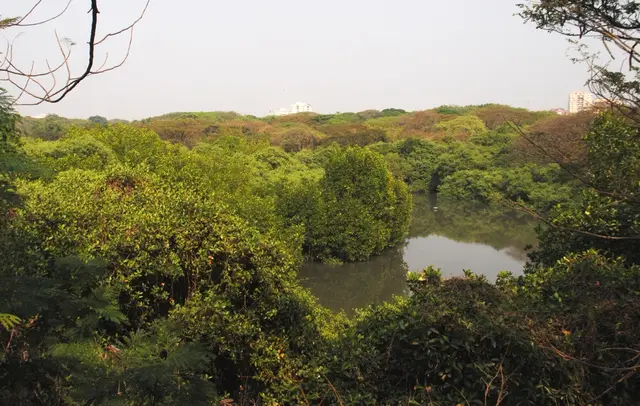
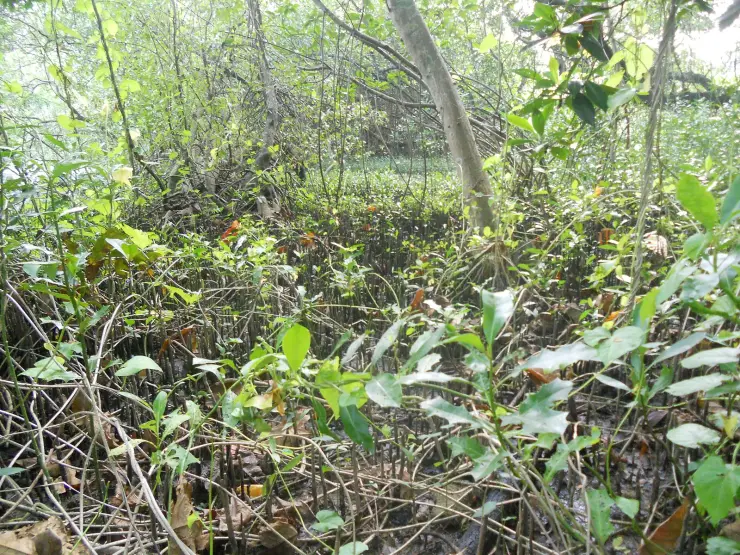
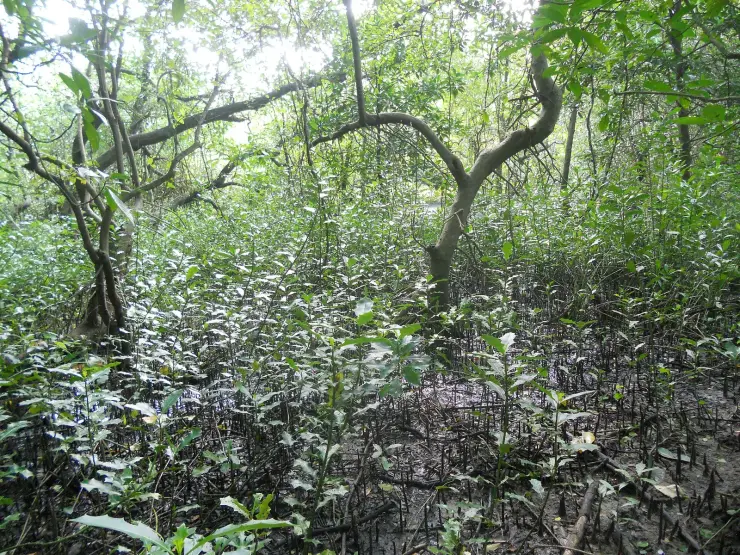
Urban bird sanctuary and mangrove pocket in central Kochi, useful as a short nature stop.
Official source →Browse listed stays, food, activities, sights, shops and rentals around Durbar Hall Art Centre. Check each listing’s locality and contact the business directly for current arrangements.
Marriott hotel in Maradu with rooms, restaurants, spa and event facilities. 5-star luxury hotel · Maradu, Ernakulam city, Marriott.
Grand Hyatt Kochi Bolgatty is a waterfront hotel on Bolgatty Island, separate from KTDC’s Bolgatty Palace. Hyatt distinguishes king and twin rooms, Backwater View choices, Club Access categories and named suites and villas. Choose the bed, view and access category before comparing a quote.
Hotel in Kochi City Centre, Ernakulam, Kerala, India. AC, Wheelchair access.
Grand Hotel in Ernakulam: confirm the exact property, room options and total price before planning a stay. No confirmed booking or contact link is available here.
Kochi Marriott Hotel at Edappally houses Quan Spa alongside its accommodation, dining and outdoor pool. Reserve a specific spa service with the hotel, asking about duration, price and access for non-resident guests. A treatment booking does not automatically include pool use.
Kochi Marriott Hotel at Edappally houses Quan Spa alongside its accommodation, dining and outdoor pool. Reserve a specific spa service with the hotel, asking about duration, price and access for non-resident guests. A treatment booking does not automatically include pool use.
Hostel in Kochi City Centre, Ernakulam, Kerala, India. WiFi.
ATS Willingdon Hotel is listed on Willingdon Island near Cochin Port. Its owner-submitted Kerala Tourism profile describes single rooms, double rooms and a suite. Ask which category is offered for your dates and how many guests and beds the quote covers.
KTDC’s Bolgatty Palace and Island Resort is at Mulavukadu on Bolgatty Island, Kochi. The operator distinguishes the main, mansion and marina blocks. A resort booking should identify the room category and block; it should not be assumed to place you in the historic palace.
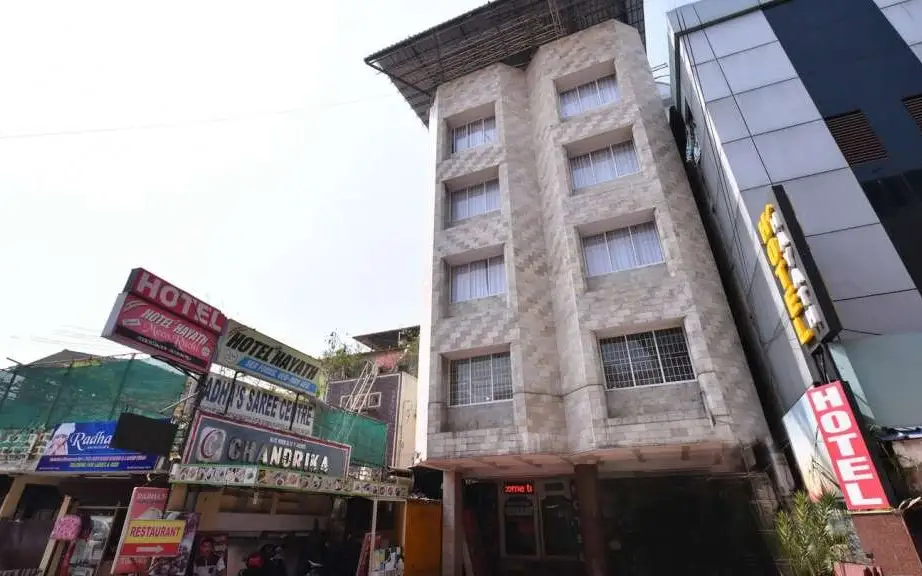
Chandrika Residency is listed near TDM Hall on Diwans Road in Ernakulam, at PIN 682016. Its owner-submitted Kerala Tourism profile mentions a restaurant and parking, but it does not establish the room category, meal package or present facilities available for your stay.
The operator’s listing describes Hotel Millennium Continental as having a 40-seat multi-cuisine restaurant, centrally controlled VRV air conditioning, on-site parking and rooms furnished in a contemporary style.
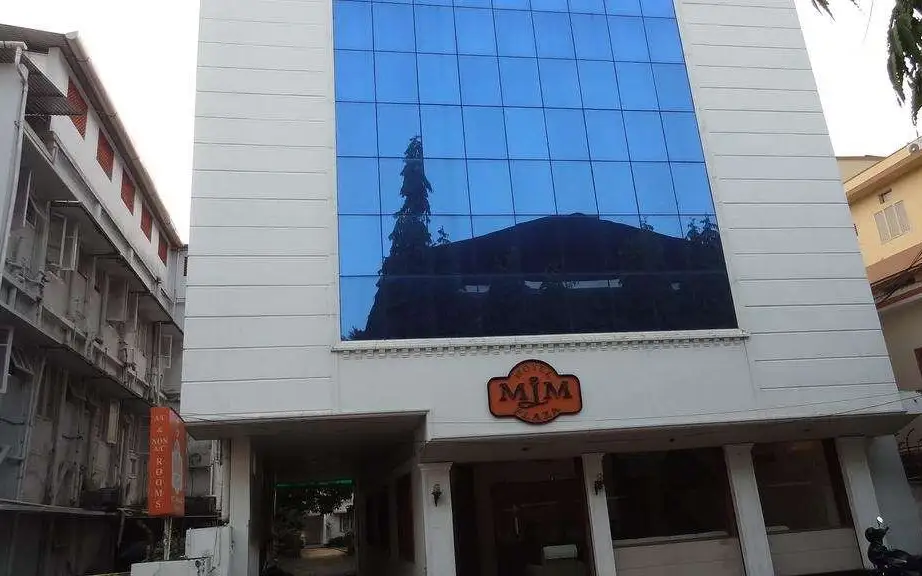
Hotel MJM Plaza is listed on T. D. Road in Ernakulam, Kochi. The operator presents it as a centrally located hotel aimed in part at business travellers.
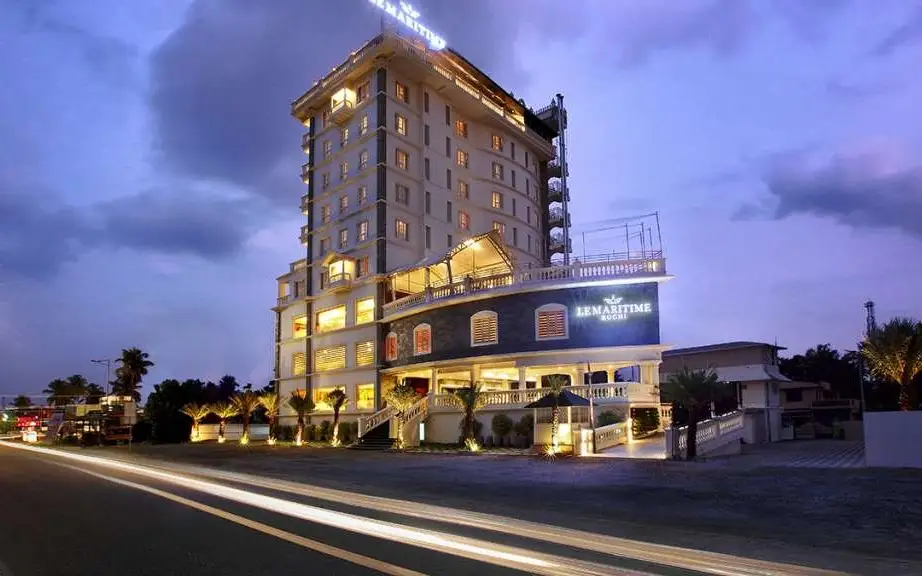
Le Maritime is a hotel at Goshree Junction in Vypin, Kochi. Its address is the first detail to keep in mind when planning a city stay: the operator describes it as off Marine Drive, while identifying the property itself with Vypin and the Goshree junction. Use that exact location when arranging a transfer or comparing travel to meetings and sightseeing stops.
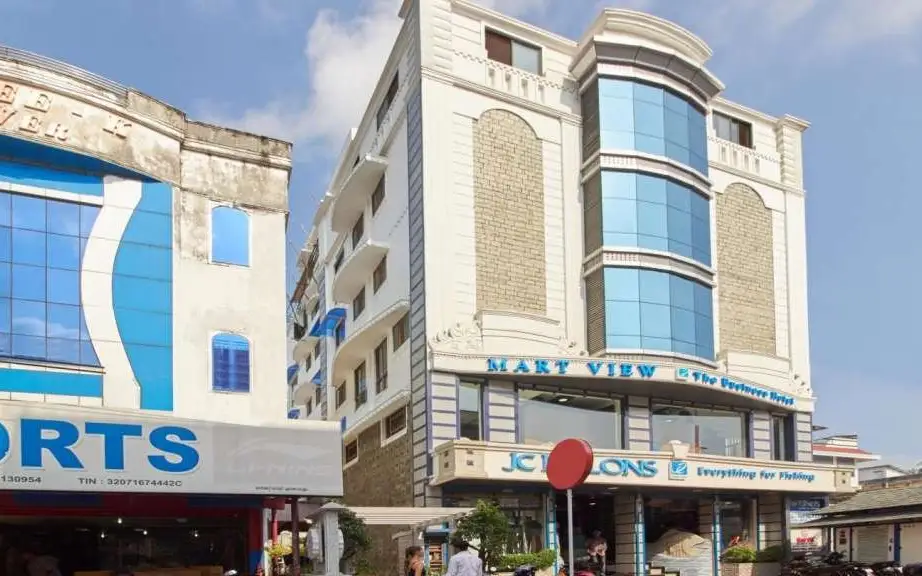
Mart View is listed at Panakkal Towers, near Saritha Theatre on Market Road in Ernakulam, Kochi. The operator describes it as a business hotel with access to Marine Drive and M. G. Road.
Nanda Inn is listed at Minn Shenoy Center on T. D. Road in Ernakulam, behind Padma Theatre and opposite City Hospital. The operator describes it as a smaller city hotel with air-conditioned and non-air-conditioned rooms and modern in-room amenities.
Padamadan Homestay offers rooms with breakfast in Bolgatty, Kochi. According to owner Mani Padamadan, the property is within walking distance of Lulu Convention Centre and near Bolgatty Palace Hotel.
An older operator-submitted listing places Saas Tower on Cannon Shed Road near the boat jetty in Ernakulam and describes 72 rooms with satellite television, telephones, internet access and air conditioning.
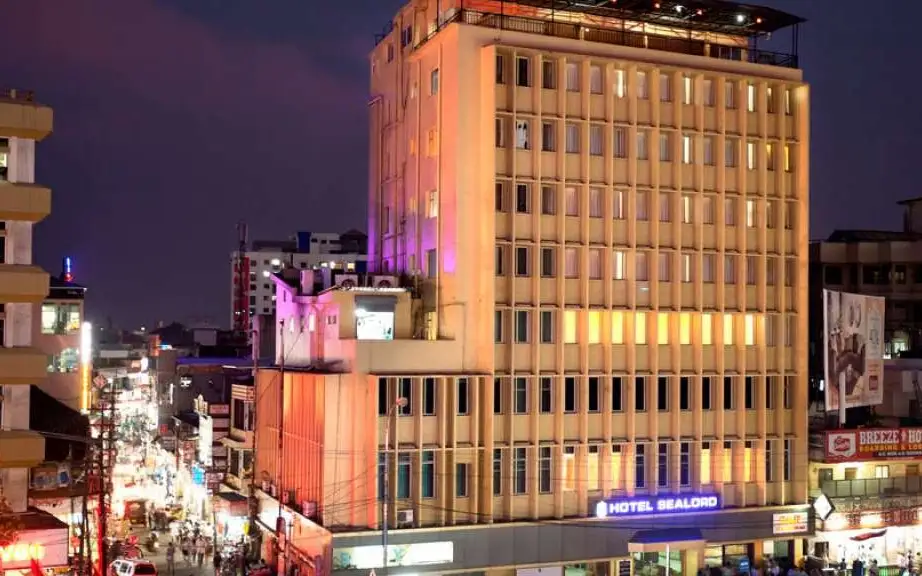
Sealord Hotel is on Shanmugam Road on the Marine Drive and Menaka side of central Kochi. Its operator website identifies Hotel Sealord as the Kochi property within the Sealord group. Use the Kochi address when enquiring, since the group also promotes properties in other Kerala destinations.
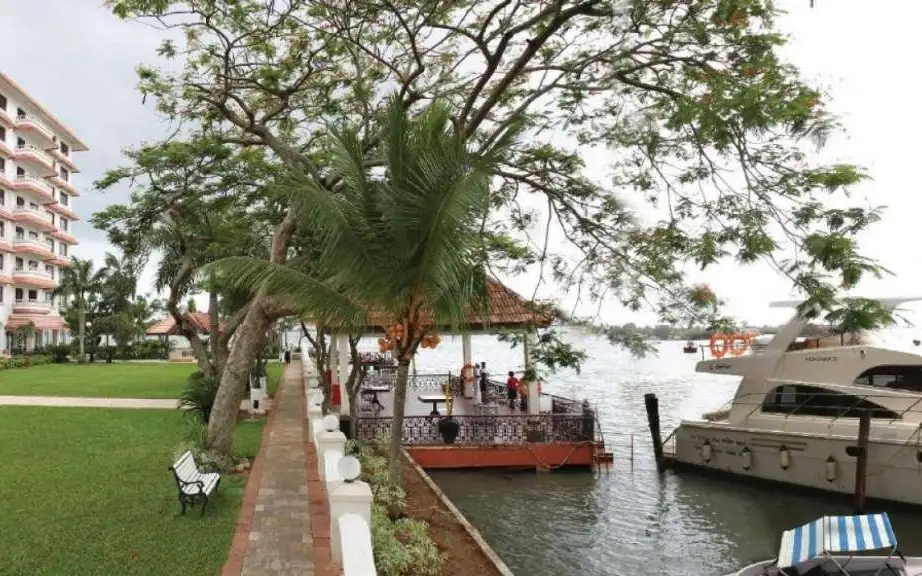
Taj Malabar Resort & Spa, Cochin is on Willingdon Island, at Willingdon harbour and across the water from central Ernakulam. The operator’s listing describes coconut trees, a harbour setting and old-world character.
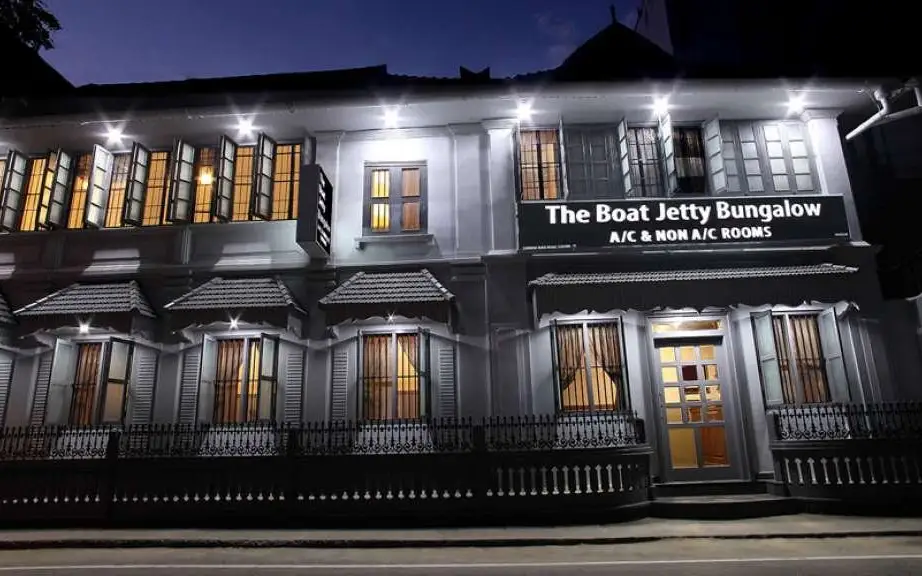
The Boat Jetty Bungalow occupies a former family home opposite Ernakulam's main boat jetty on Cannon Shed Road. According to the operator's history, the building began as P.K.V House, built in 1891 for P.K. Varughese of the Puthenpurackal family. It passed through later generations before becoming a heritage hotel.
Bedrooms at The Island House Home Stay feature poster beds, wooden furniture and wallpaper, while the Vallarpadam property’s decor includes a retro staircase styled after the 1920s. The living area has French windows that bring in natural light, alongside framed photographs and other wall decorations.
Book with the place itself. India’s cyber-crime coordination centre warned in April 2025 that convincing copies of hotel and pilgrimage booking sites are being pushed through sponsored search and social ads, taking payment for rooms the property never hears about. Use the contact and source details on each profile to confirm the exact business and booking channel. A directory entry or map pin alone does not establish an operator’s identity or current availability. Roampedia takes no commission and does not collect booking payments. If a booking page reached you through an ad, check the address bar against the property’s own site before you pay. Fraud can be reported on cybercrime.gov.in or on 1930.
Find food, accommodation and activities across Kochi City. Browse the guides for places to eat, stay and explore along your route.
Walking routes start at Durbar Hall Art Centre. Check the route and access before setting out, especially where a road, gate or waterway separates the stops.
12 more places around Kochi City. Open a guide to plan the visit and onward journey.
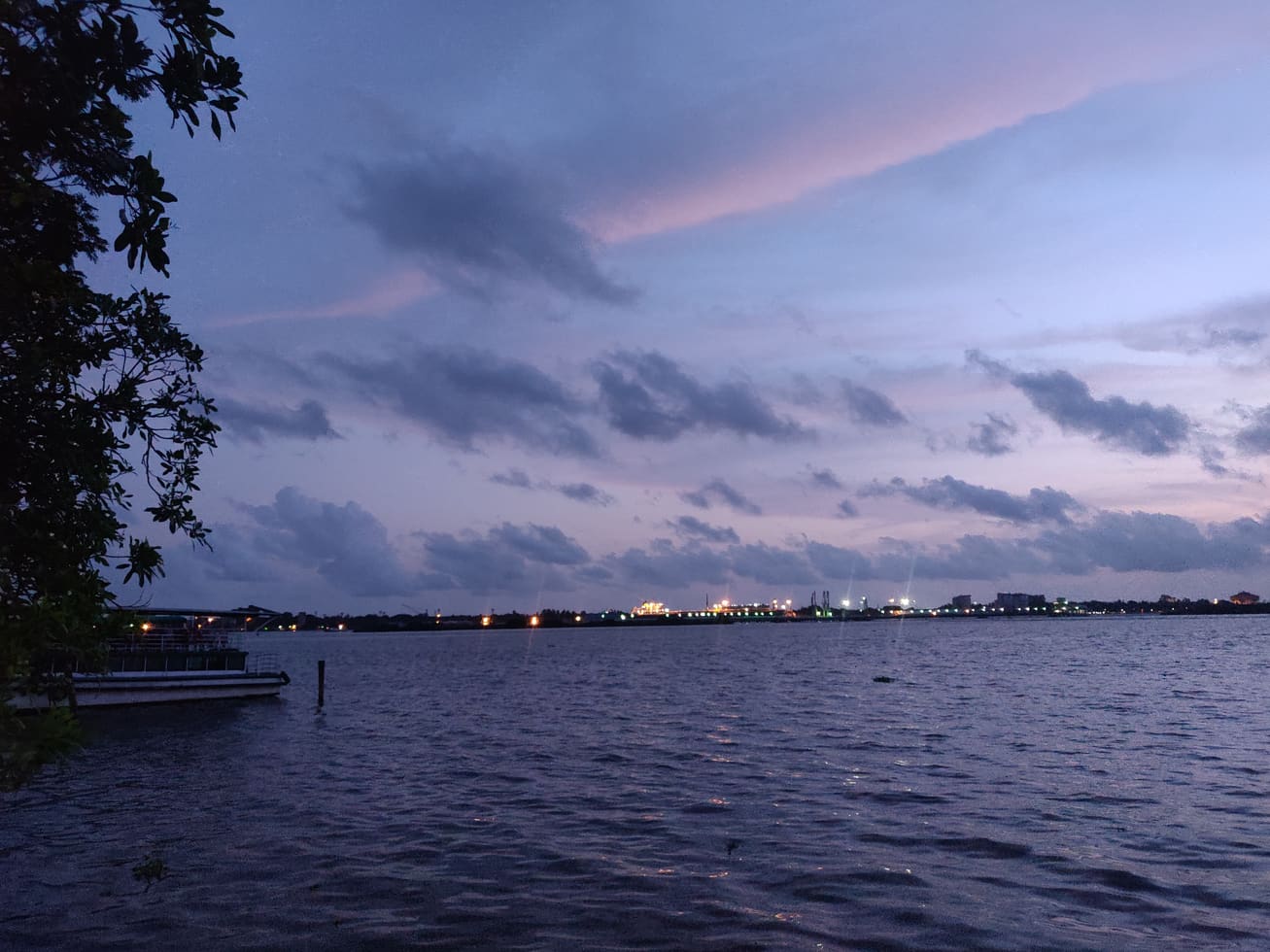
1.7 km · 21 min walk
Waterfront promenade in mainland Kochi, good for evening walks and ferries.
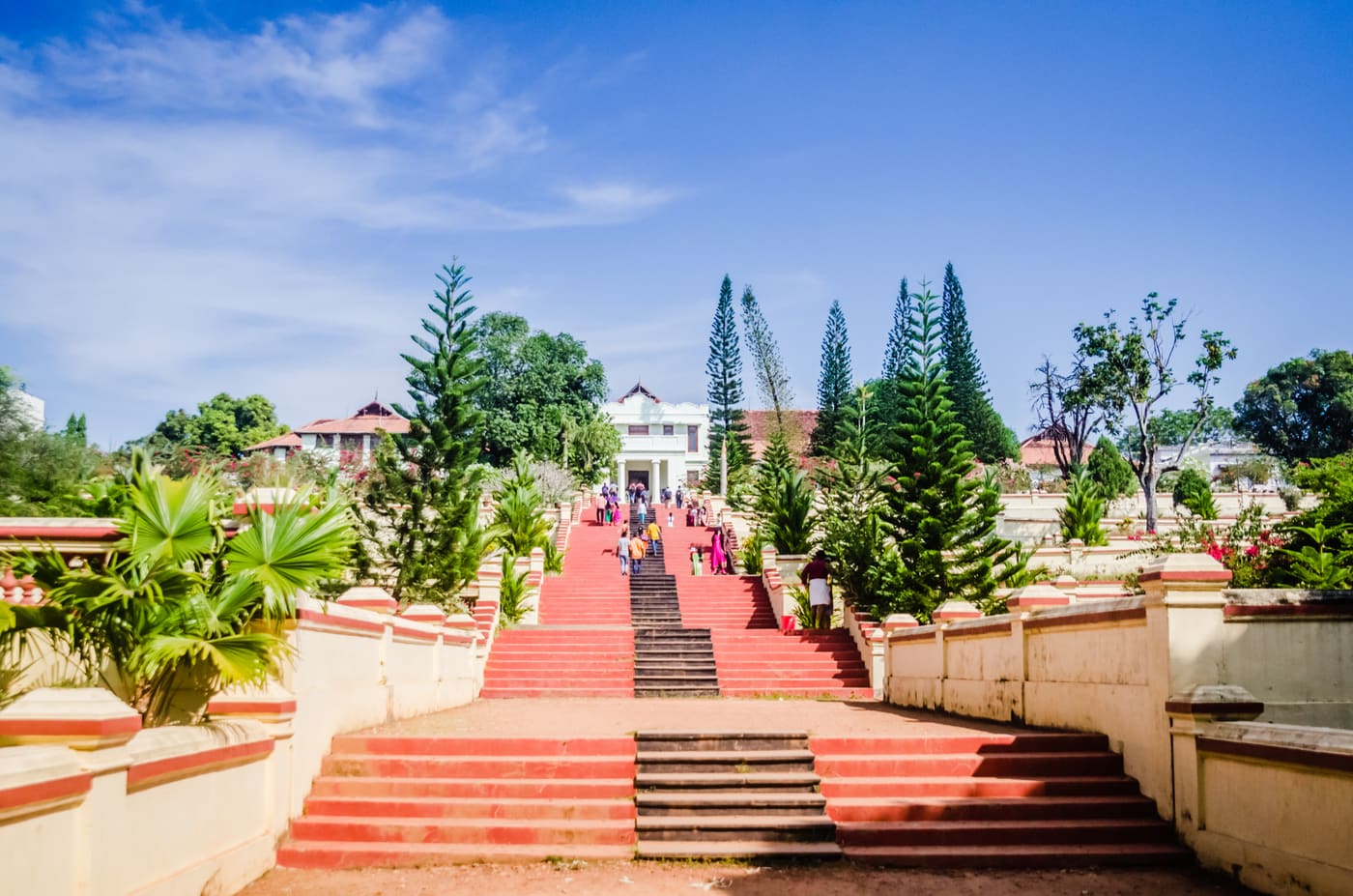
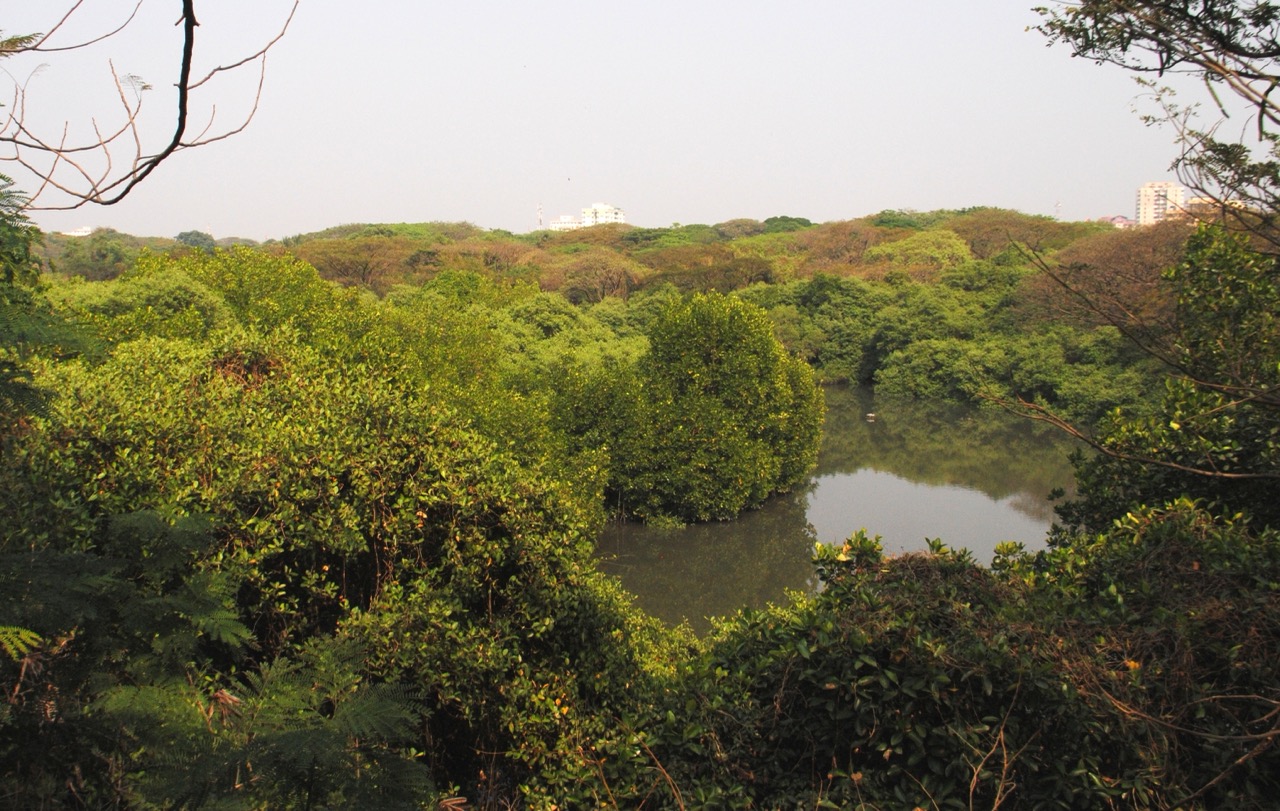
3.5 km · 7 min drive
A small mangrove “green lung” behind the High Court in Ernakulam, a nesting site for migratory and resident birds.
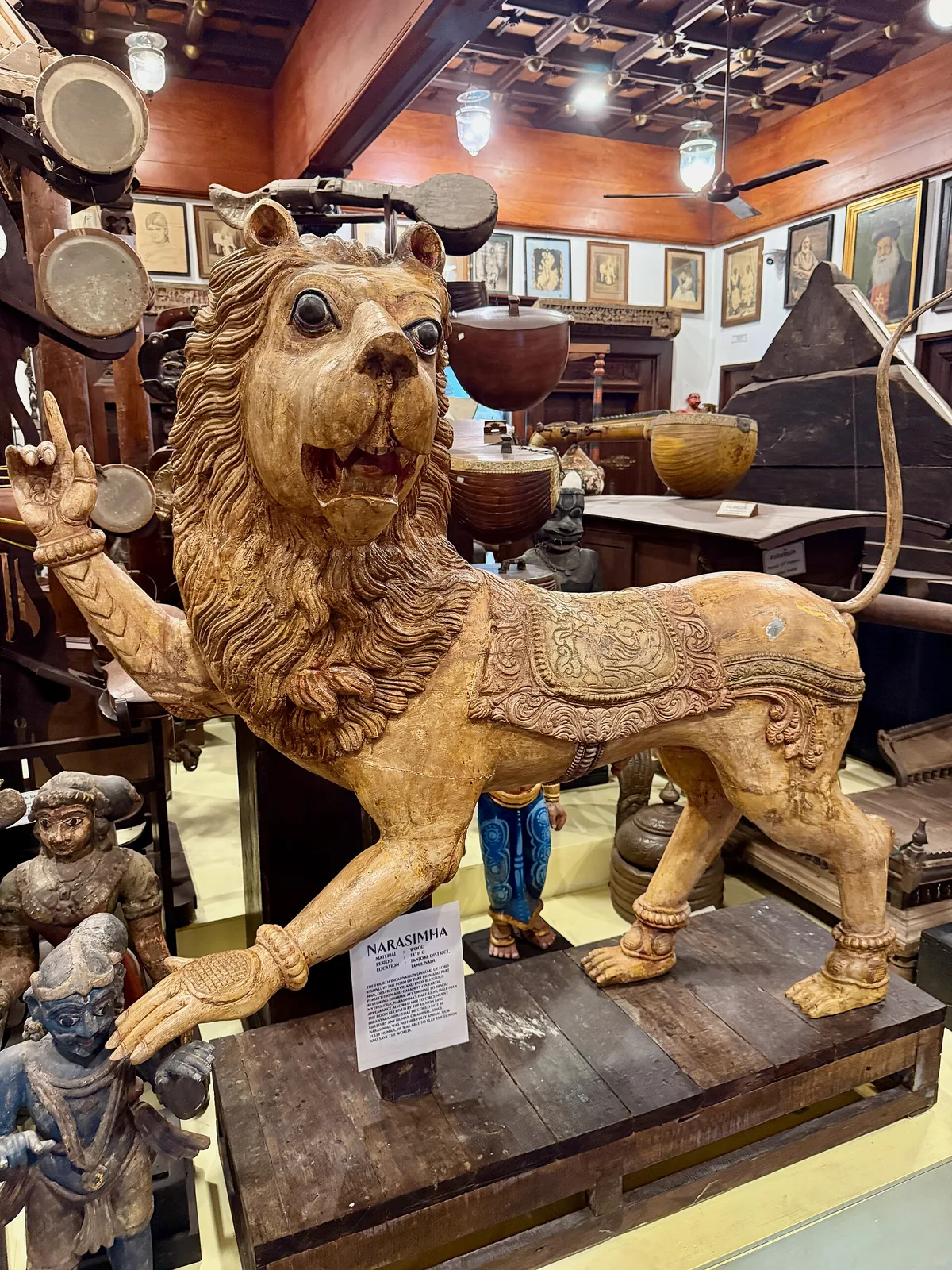
A privately built museum at Thevara with thousands of Kerala folk and ritual artefacts across Malabar, Kochi and Travancore styles.
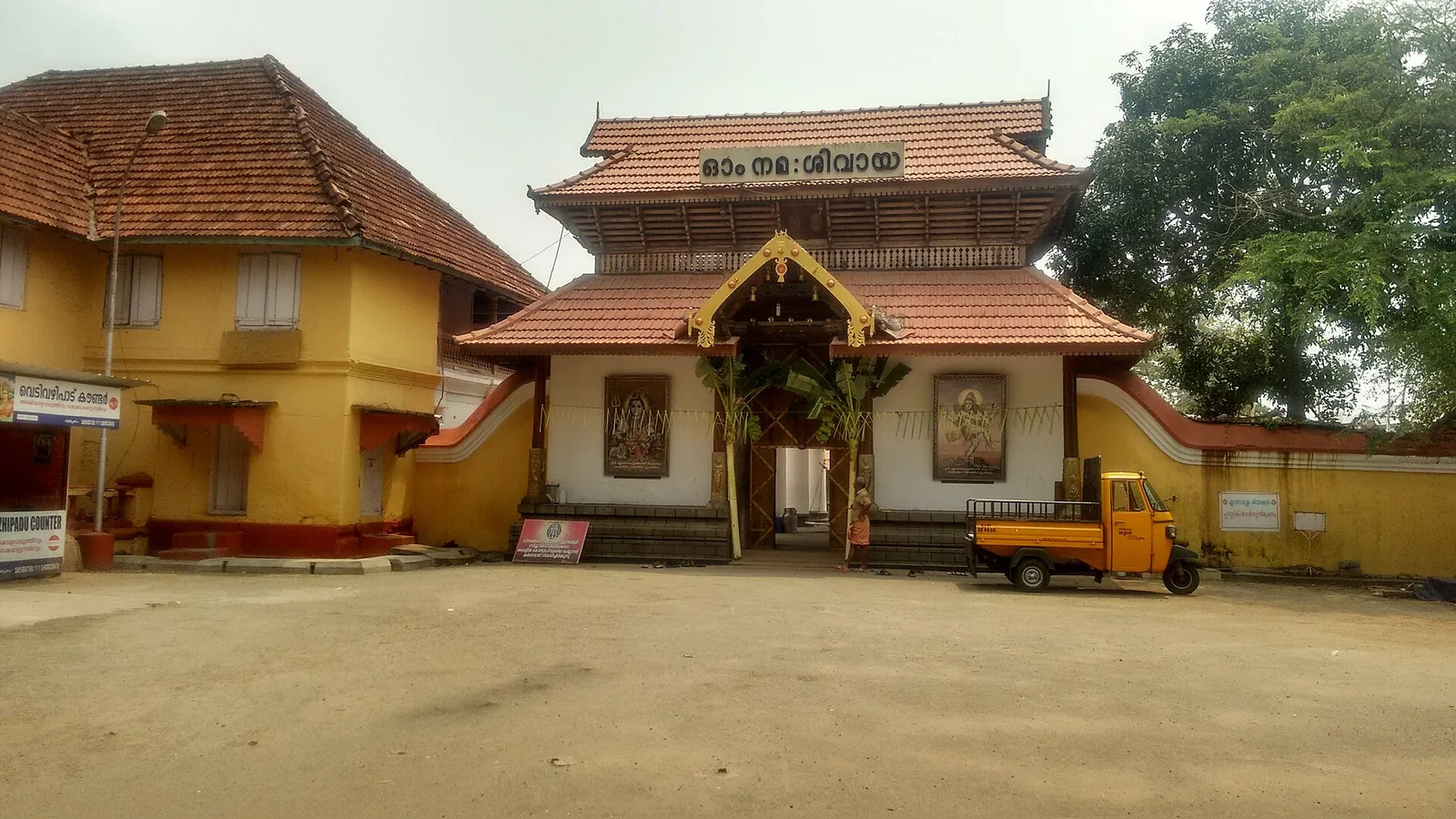
500 m · 6 min walk
The Ernakulam Shiva temple on Durbar Hall Road, the city’s principal temple and home to the eight-day Ernakulathappan festival.
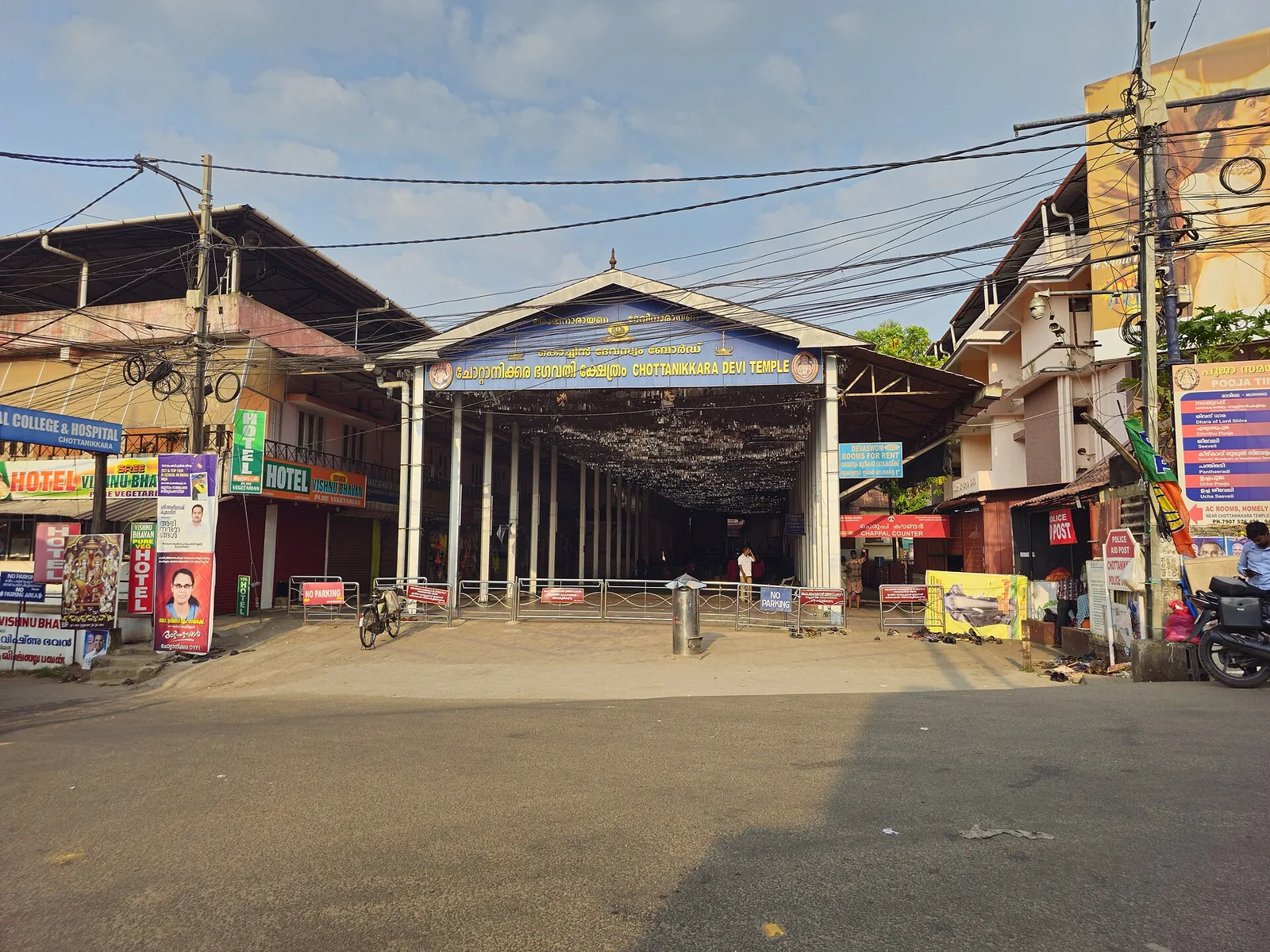
A major Bhagavathy (Devi) temple south-east of Kochi, famous for the dawn Nirmalya Darshanam and its Makam Thozhal festival.
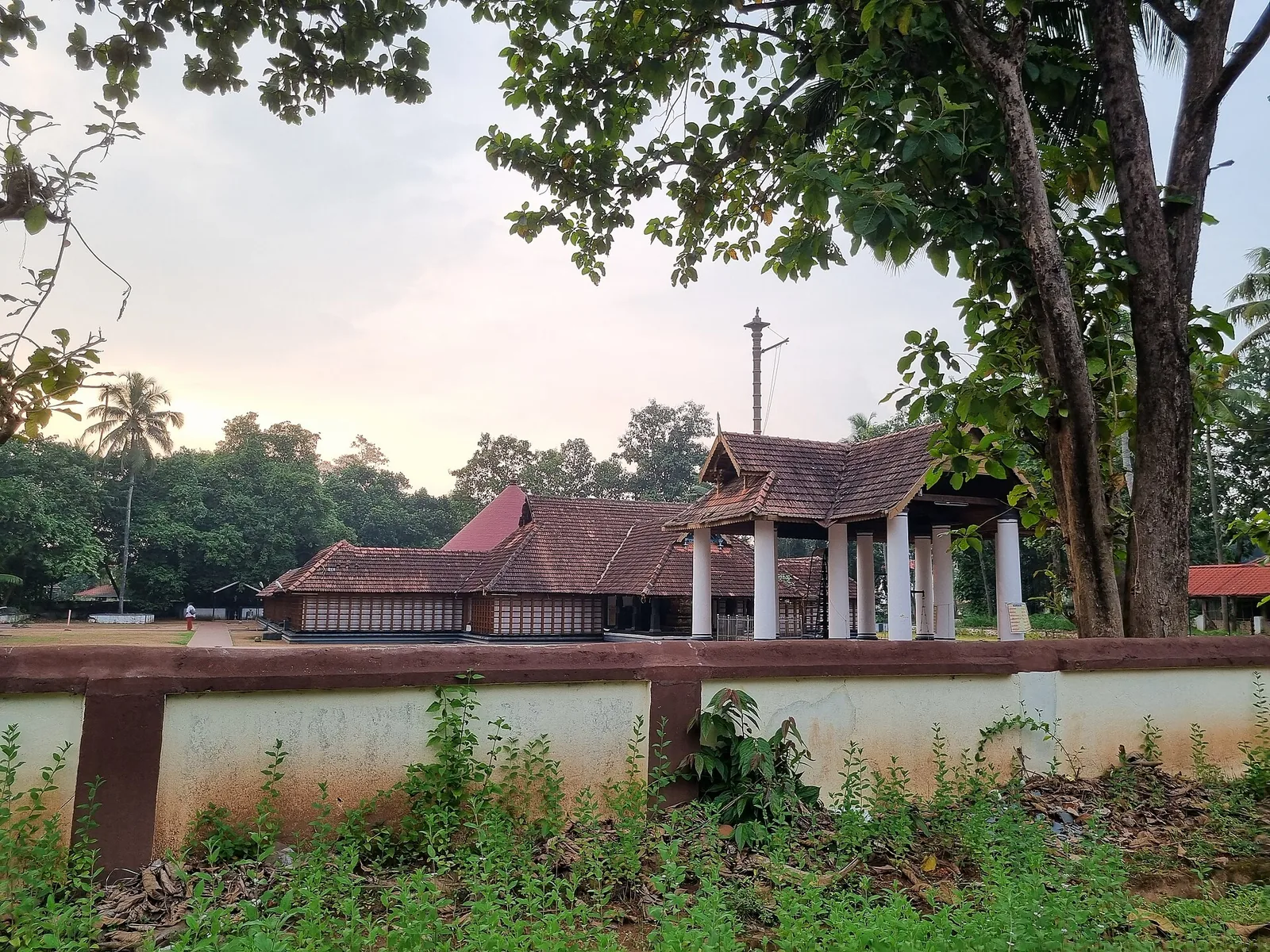
The only major temple to Vamana in Kerala, at Thrikkakara near Kakkanad — traditionally regarded as the origin place of the Onam festival.
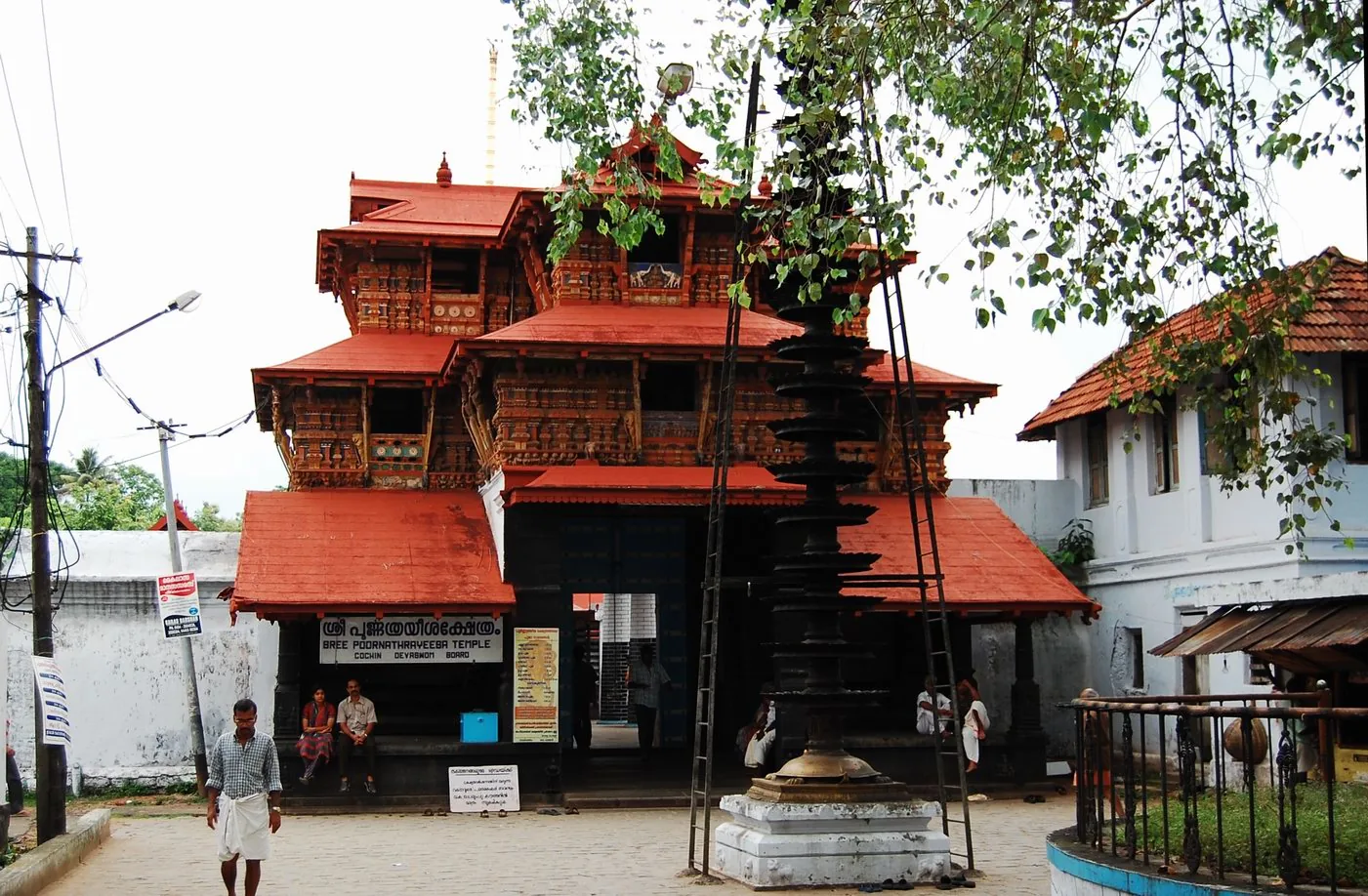
One of the great Vishnu temples of Kerala, at Tripunithura, known for its Vrischikotsavam festival.
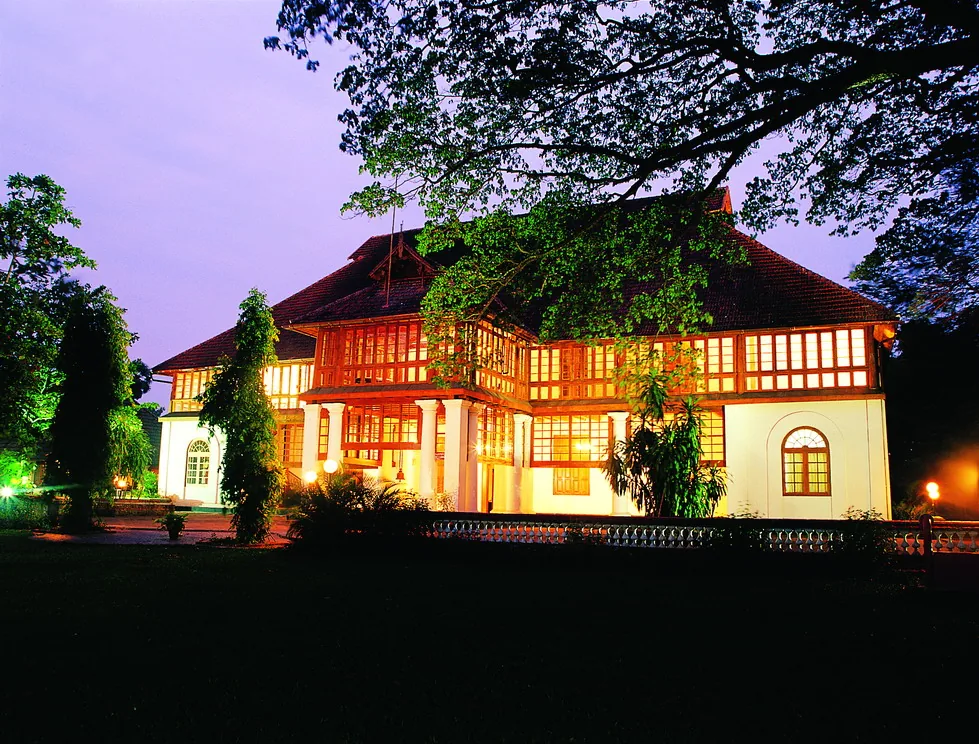
5.8 km · 11 min drive
A 1744 Dutch palace on Bolgatty Island, one of the oldest existing Dutch palaces outside the Netherlands, set in island gardens (now a KTDC heritage hotel).
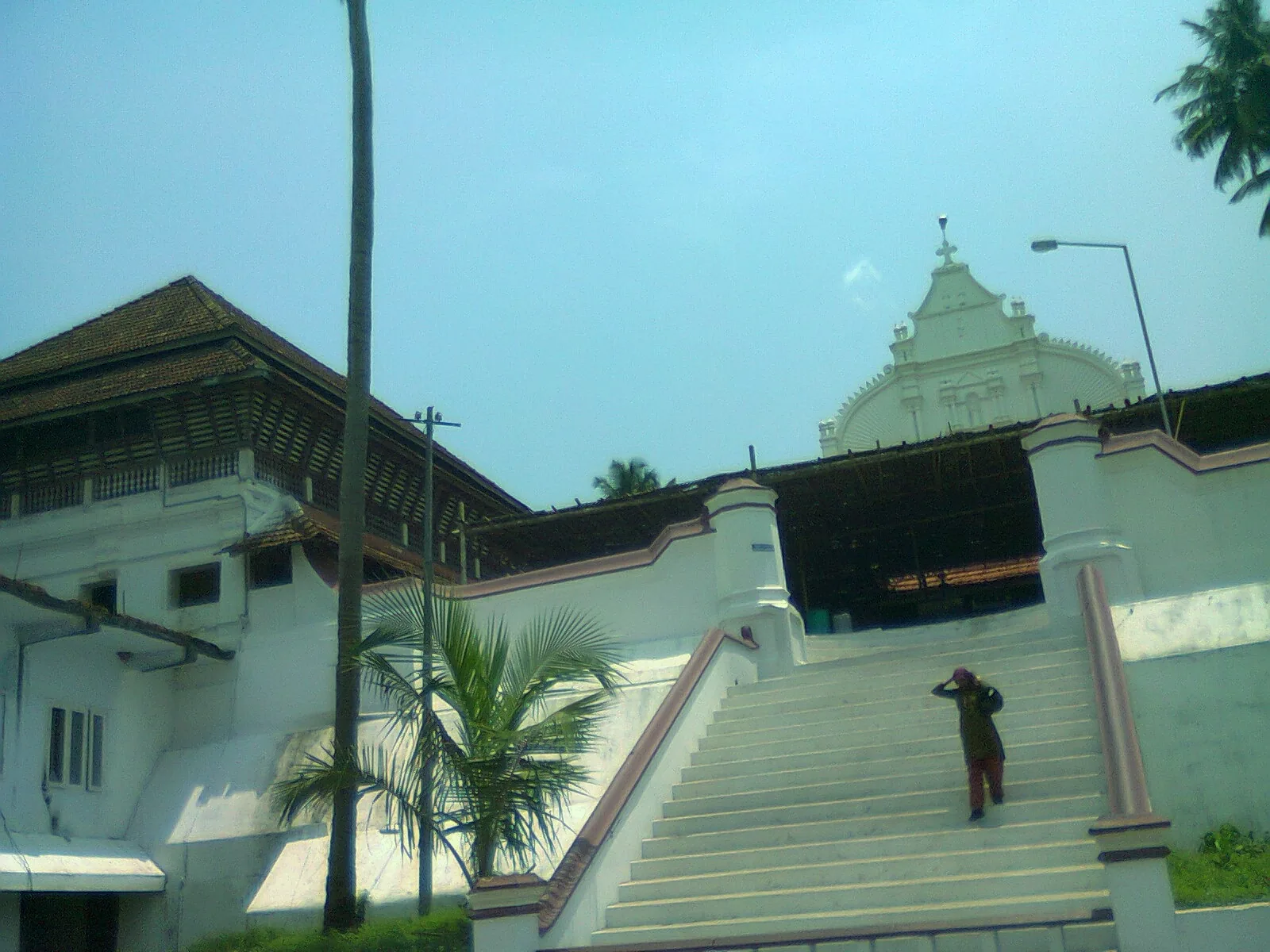
An ancient Orthodox church east of Kochi linked to the legend of the sorcerer-priest Kadamattathu Kathanar, drawing large crowds at its annual feast.
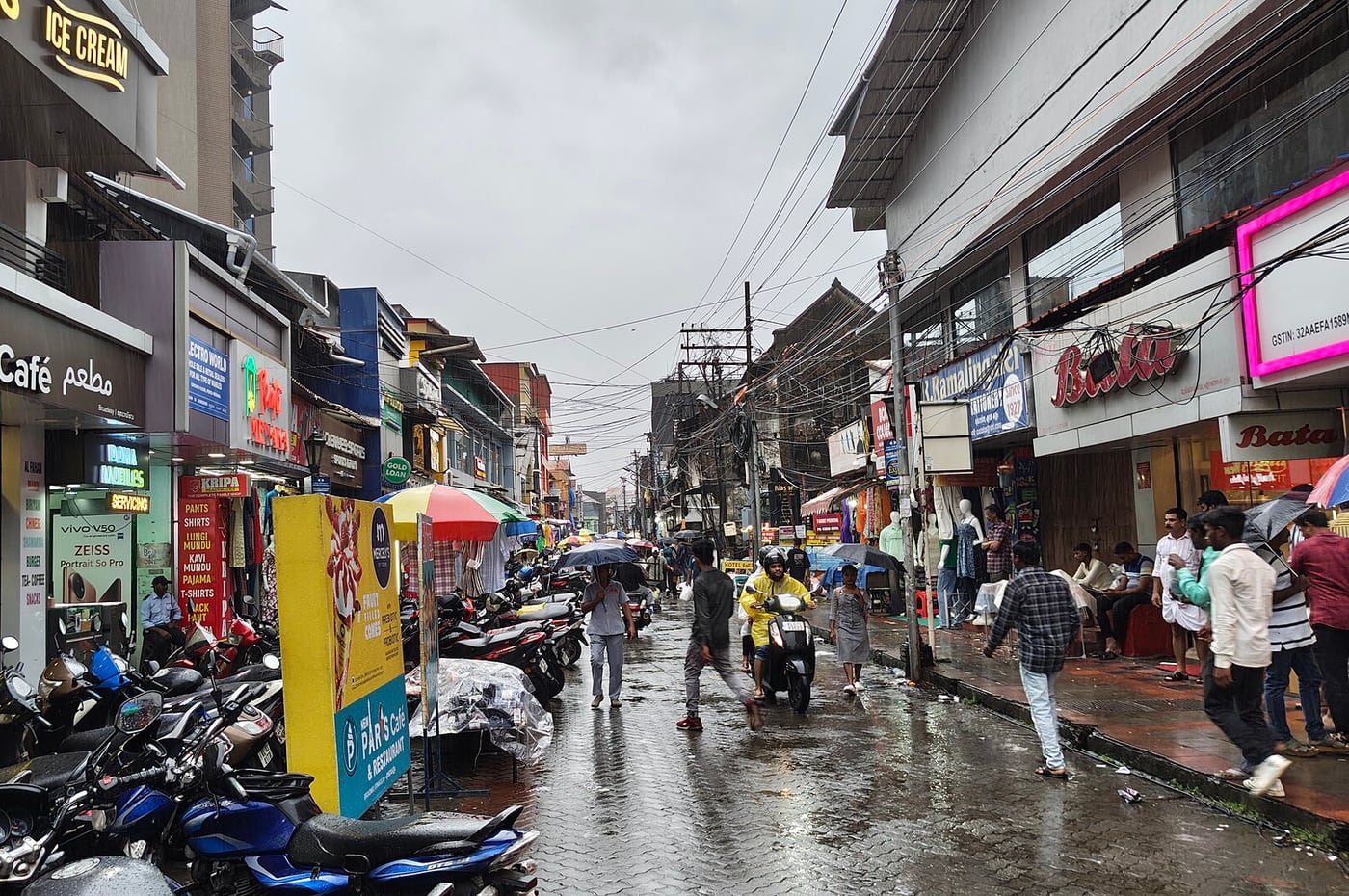
1.8 km · 22 min walk
Mainland Kochi’s old shopping street, a pedestrianised run of textile, provision, spice and gold shops between MG Road and the boat jetty — the city’s everyday market rather than a heritage set piece.
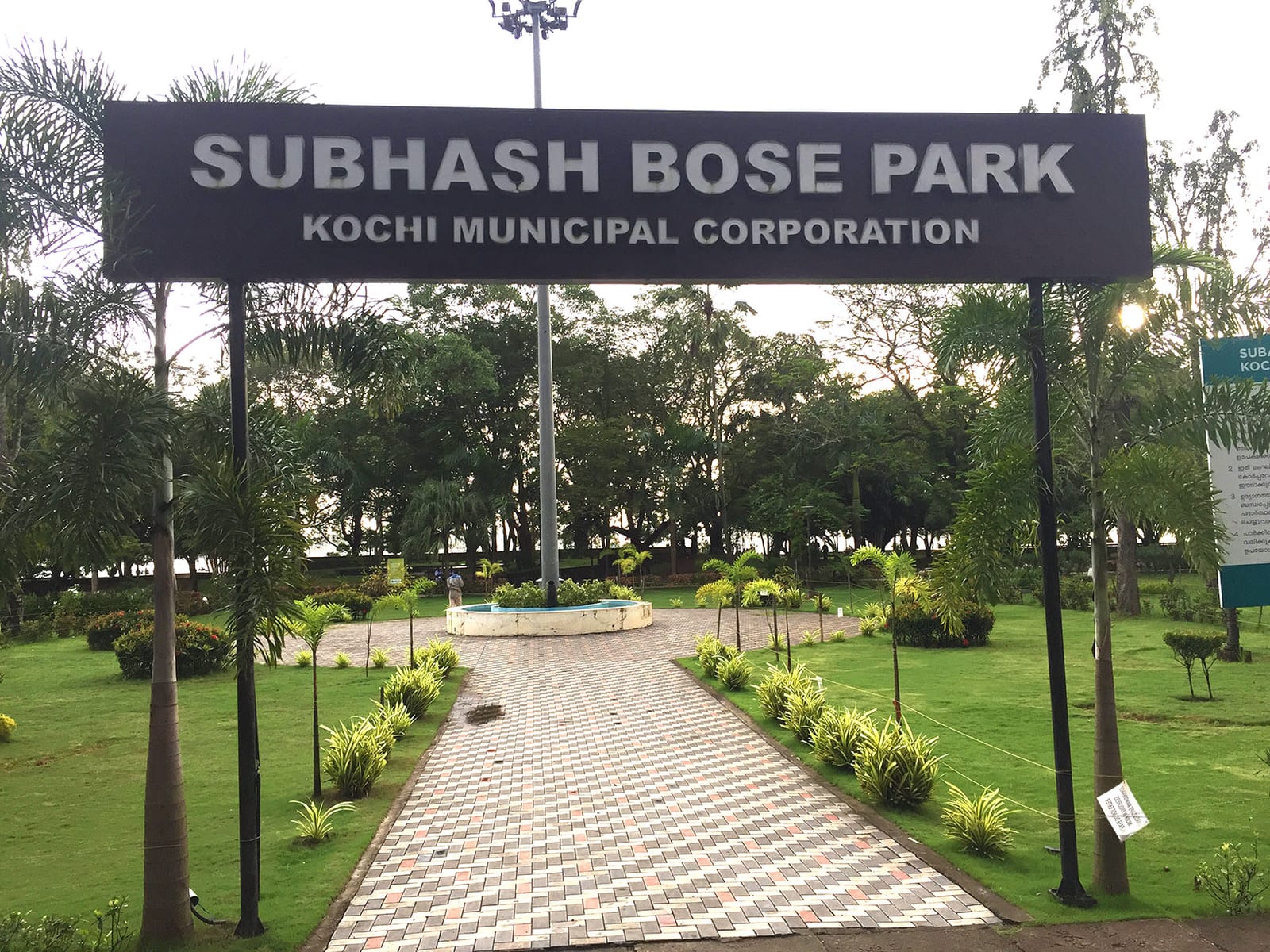
820 m · 10 min walk
The waterfront park beside Ernakulam Boat Jetty, at the southern end of the Marine Drive walkway — a short, shaded green break between the ferries, the market streets and the backwater.
Roampedia is commission-free — own or know a stay, eatery, guide or shop near Durbar Hall Art Centre? Submit public business details for review.
Add a nearby businessEntry: Free. It is a public gallery run by the Kerala Lalithakala Akademi and the exhibitions are not ticketed.
If you are travelling by bus or ferry, check the return service with the operator before setting out. Leave time to reach the stop or jetty after your visit.
Ask at the jetty or stand for the time of the last service back, not the next one. If you miss it, an auto or app cab is the fallback — agree the fare before you get in.
If you need step-free access, contact the site before travelling. Ask about a level entrance, steps along the route, the nearest drop-off point, seating and accessible toilets.
Charge cap and free-transaction limits: Reserve Bank of India, ATM FAQ updated 4 July 2025; checked 4 October 2026.
These services are listed within about 1.2 km of Durbar Hall Art Centre. Walking distances follow mapped routes; access and opening hours can change. Other services may be closer but are not included here.
Published emergency and visitor-assistance contacts. For an immediate emergency, call 112. Shared Kerala contact sources checked 4 October 2026; publication does not establish a tested live response.
The Ernakulam Shiva temple on Durbar Hall Road, the city’s principal temple and home to the eight-day Ernakulathappan festival.
500 m · 6 min walkThe waterfront park beside Ernakulam Boat Jetty, at the southern end of the Marine Drive walkway — a short, shaded green break between the ferries, the market streets and the backwater.
820 m · 10 min walkWaterfront promenade in mainland Kochi, good for evening walks and ferries.
1.7 km · 21 min walkMainland Kochi’s old shopping street, a pedestrianised run of textile, provision, spice and gold shops between MG Road and the boat jetty — the city’s everyday market rather than a heritage set piece.
1.8 km · 22 min walk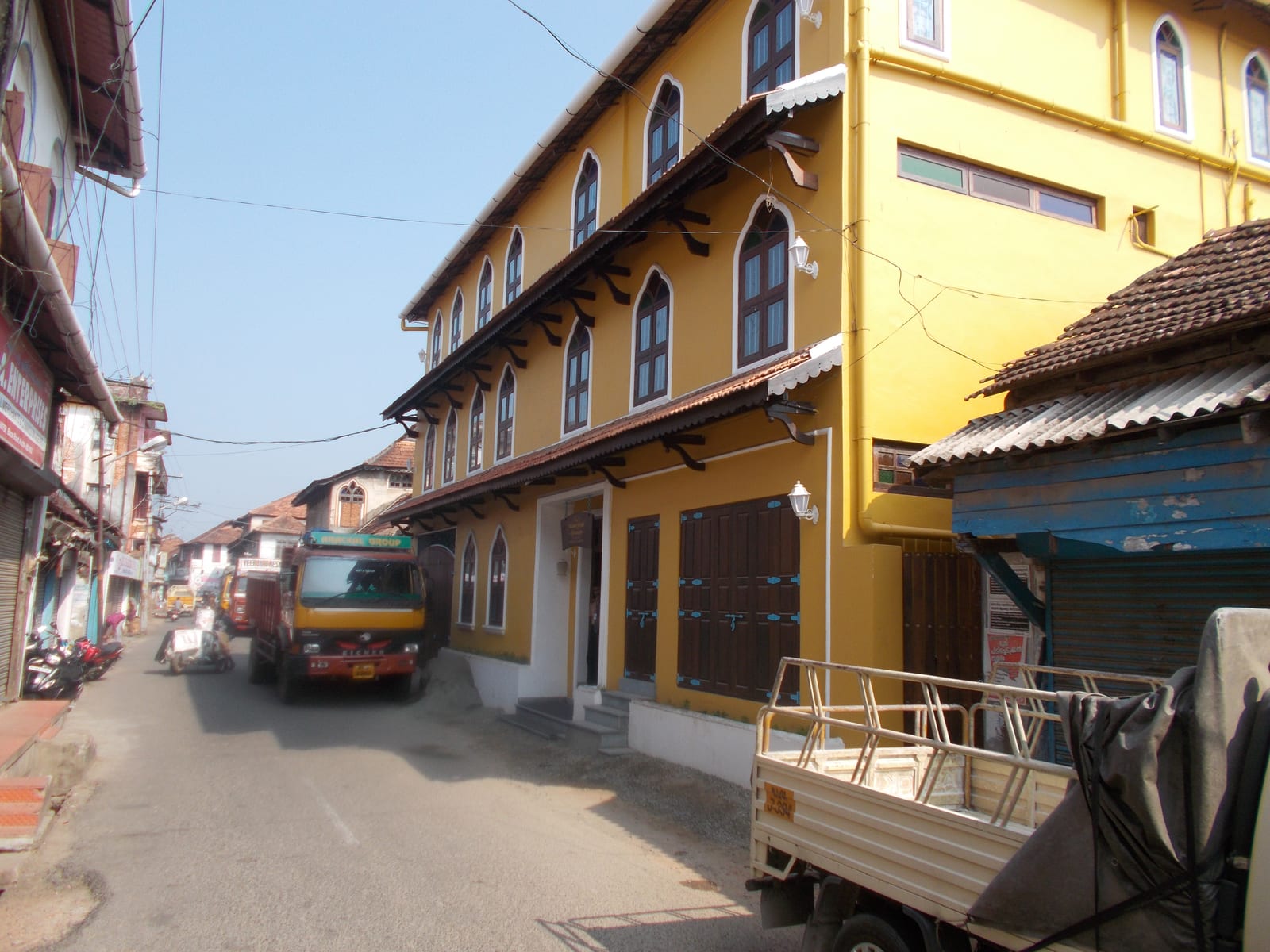
The working spice quarter along Mattancherry’s Bazaar Road — godowns where pepper, ginger, turmeric and cardamom are still graded, sacked and weighed, and where the smell reaches the street before the signage does.
2.9 km · straight line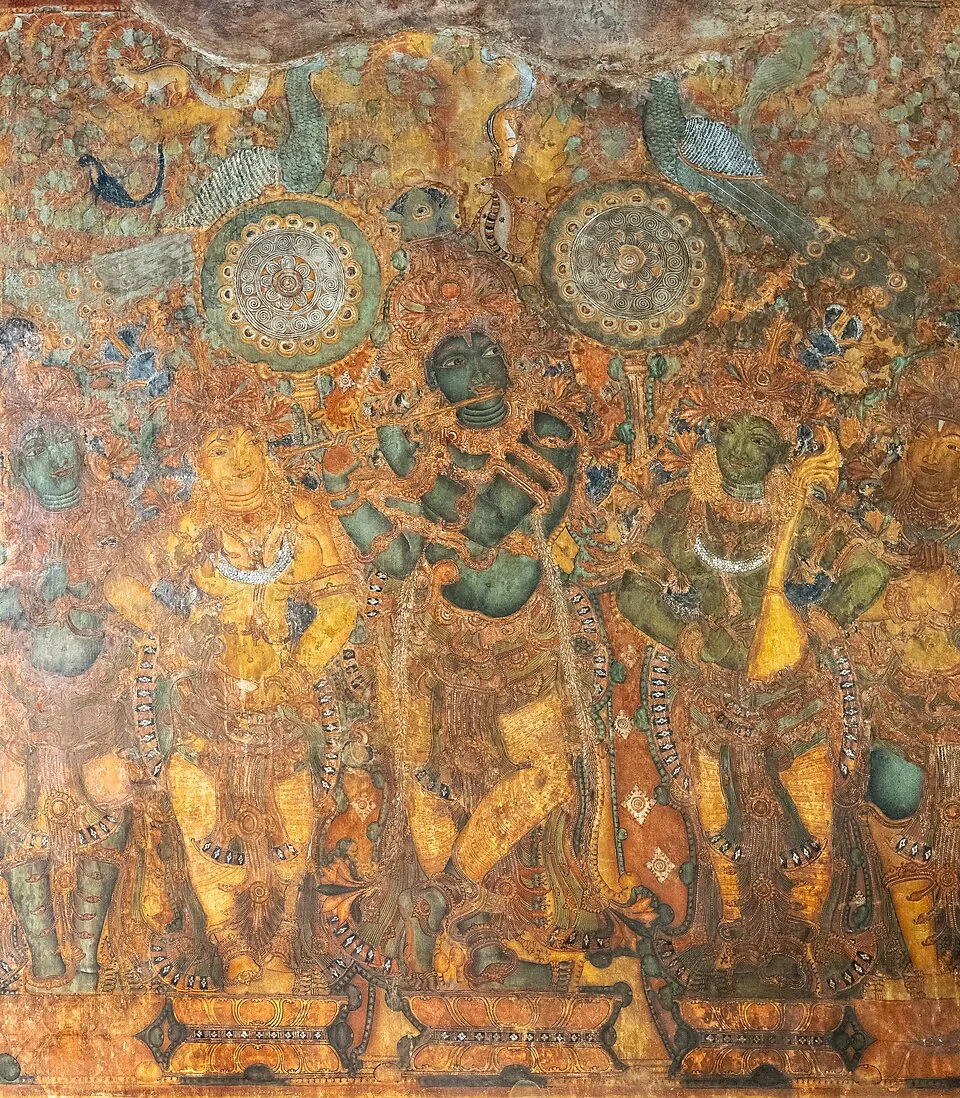
The Mattancherry Palace, known as the Dutch Palace, with celebrated Kerala mural paintings from the Ramayana and royal portraits.
2.9 km · straight line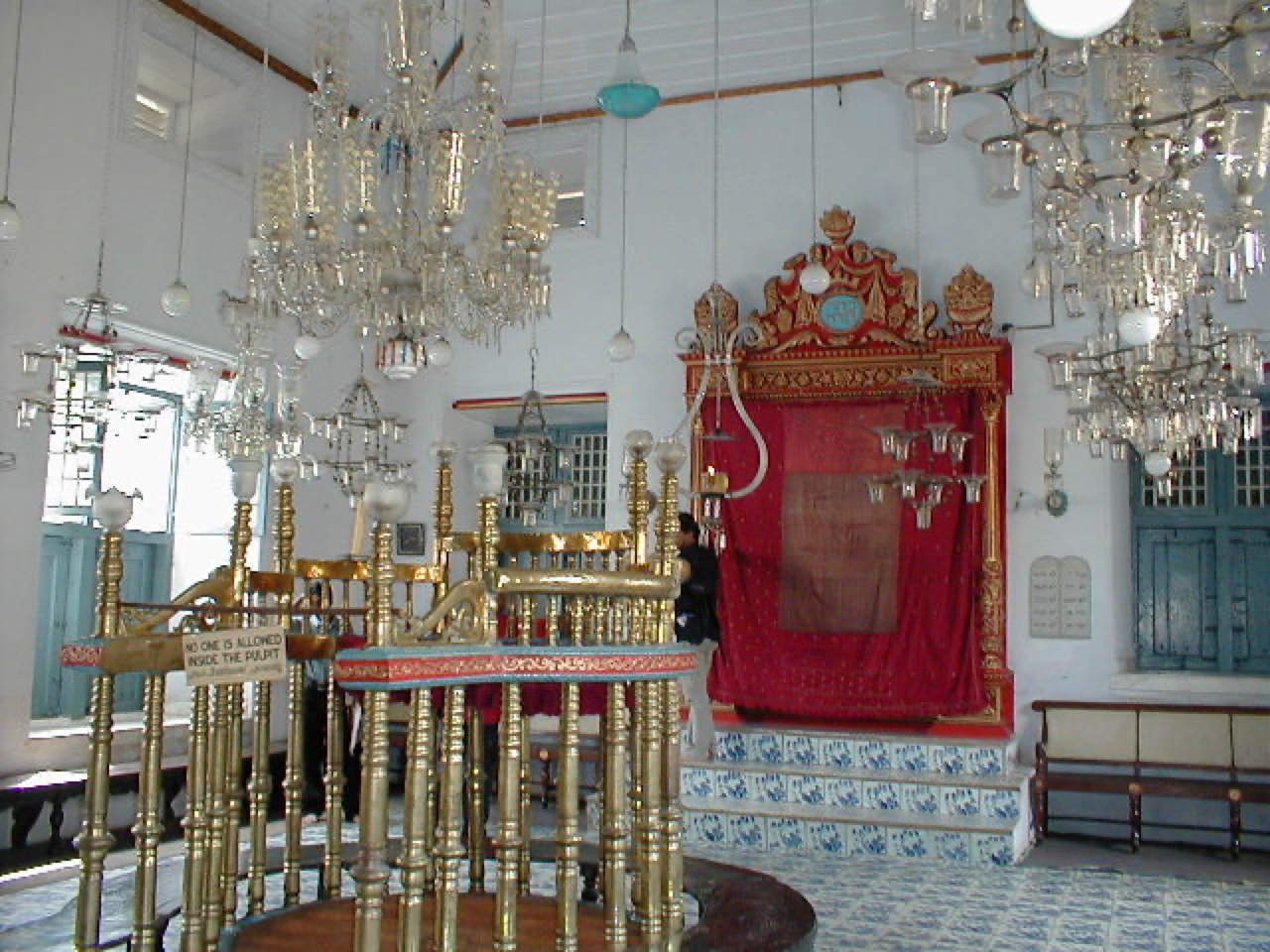
The oldest active synagogue in the Commonwealth (1568), in Jew Town, Mattancherry, with hand-painted Chinese floor tiles.
3.0 km · straight line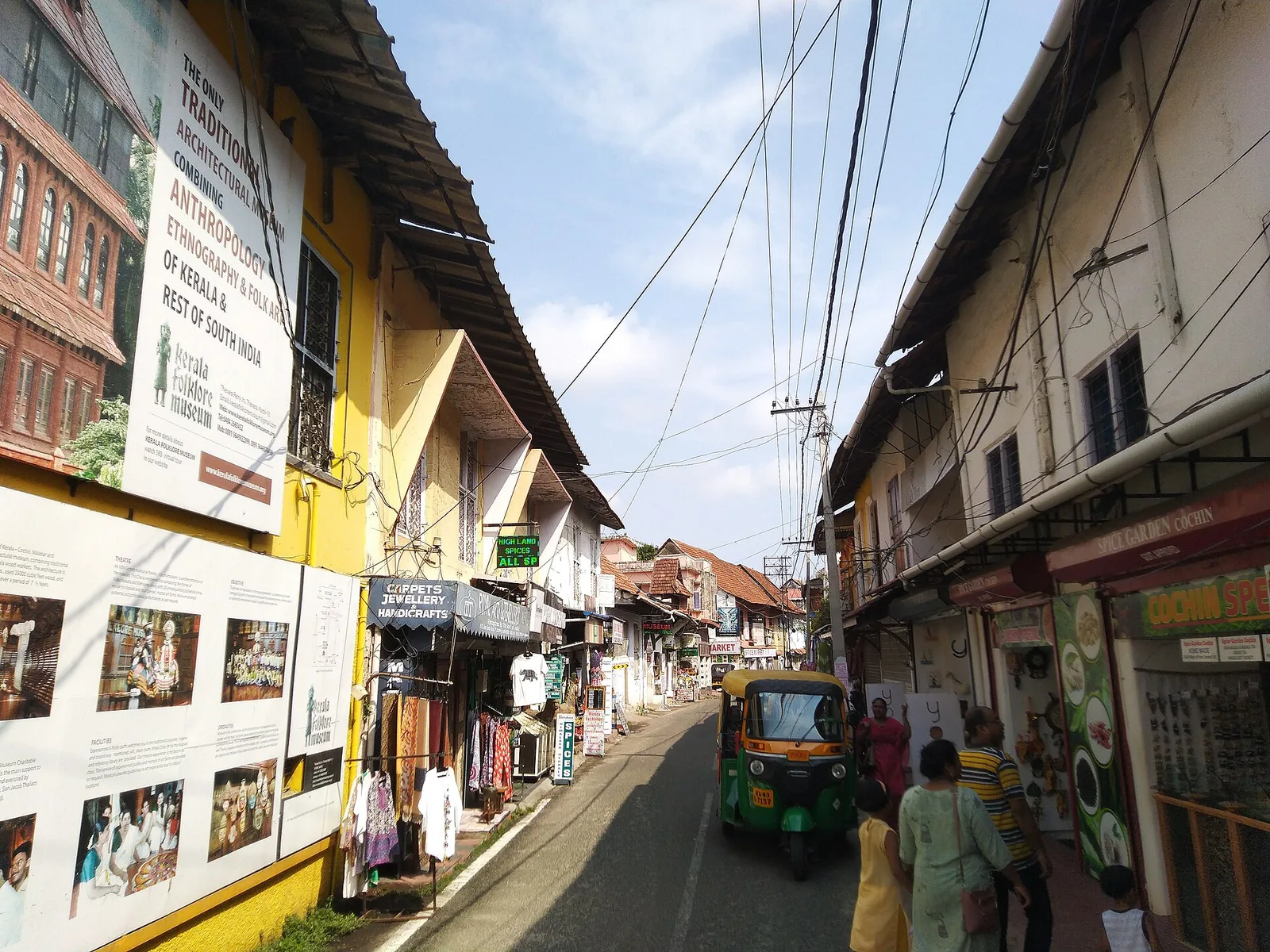
Spice warehouses, antiques, Mattancherry Palace and Paradesi Synagogue.
3.0 km · straight line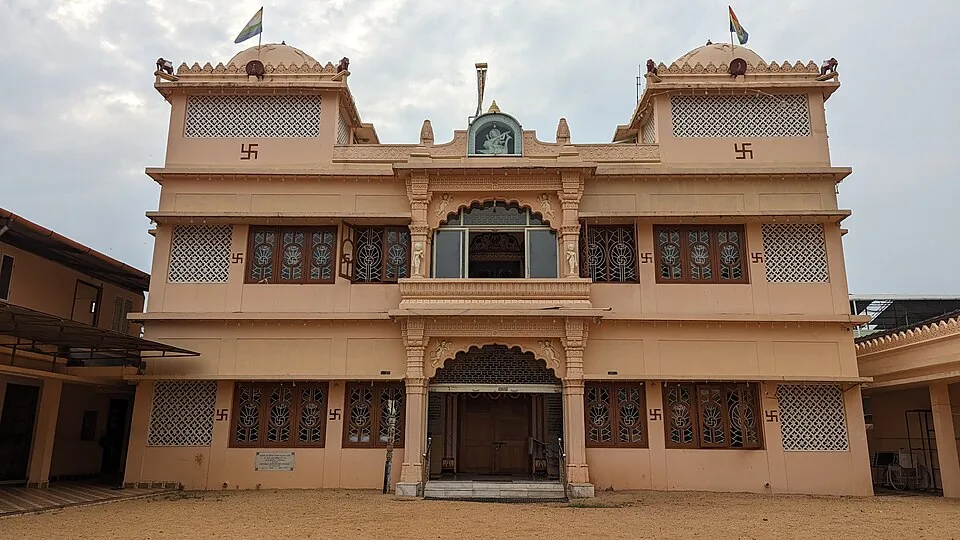
An ornate Jain temple in Mattancherry’s Gujarati quarter, raised in 1904 by Hirubai in memory of her husband Jivraj Dhanji and dedicated to Dharmanatha, the fifteenth Tirthankara — known for its white marble work and the daily midday feeding of the pigeons outside.
3.3 km · straight lineA small mangrove “green lung” behind the High Court in Ernakulam, a nesting site for migratory and resident birds.
3.5 km · 7 min drive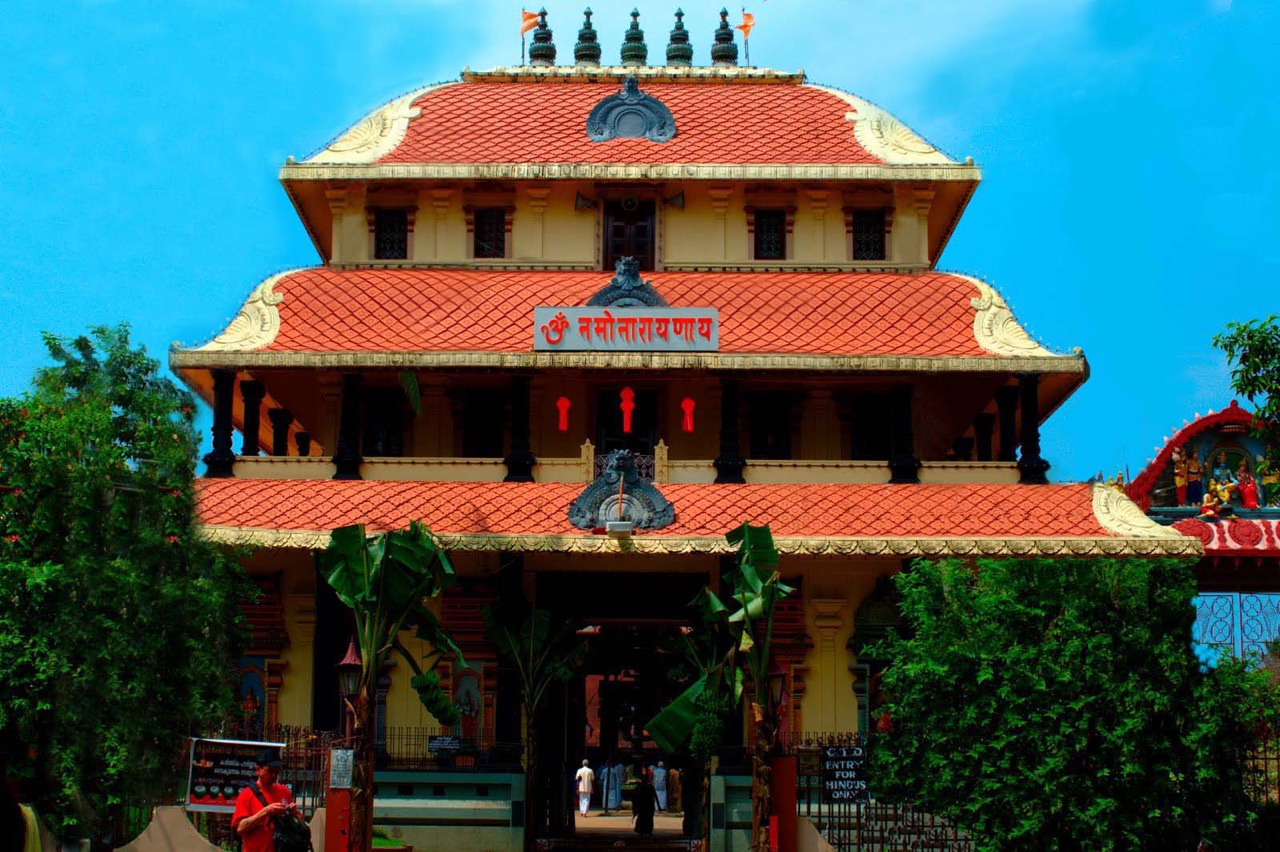
A historic Gowda Saraswat Brahmin temple in Cherlai, Mattancherry, central to Kochi’s Konkani community.
3.9 km · straight lineA 1744 Dutch palace on Bolgatty Island, one of the oldest existing Dutch palaces outside the Netherlands, set in island gardens (now a KTDC heritage hotel).
5.8 km · 11 min driveRoad and walking figures are route estimates, with travel times dependent on access, traffic and conditions. Figures marked “straight line” show direct separation and do not describe a road or walking route. Fare estimates use Kerala’s 26 April 2022 auto/taxi notification and exclude waiting, night and applicable one-way surcharges. Confirm the current meter or operator quote before travelling. Routing: © openrouteservice.org by HeiGIT | Map data © OpenStreetMap contributors
Nearby toilets, pharmacies, ATMs, seating and vets are community-mapped and may be incomplete or out of date. Map data © OpenStreetMap contributors | Walking times © openrouteservice.org by HeiGIT
No — entry is free. It is a public gallery run by the Kerala Lalithakala Akademi, and there is no ticket for the exhibitions.
It is a changing-exhibition gallery rather than a permanent collection, so what you see depends entirely on when you go: national and international touring shows, exhibitions by Kerala artists, and Biennale programming in Biennale years. Check the current show before making the trip — there is no default thing to see.
No. A durbar hall is a court or audience chamber, not a residence. The Maharaja of Cochin built this in the 1850s to hold his durbar, with the public gathered on the ground outside. For a royal palace and its collections, go to Hill Palace at Tripunithura.
The hall is the building — now the art gallery. The ground is the open maidan beside it, and it carries most of the site's history: the 1938 proclamations of the Cochin administrative reforms and constitution, the 1940 war committee, the temple festival processions, decades of cricket and football, and the caste exclusion that kept people off it. They are usually written about as one thing and they are not.
Twenty to forty minutes for most exhibitions. It is a single principal space, not a large museum. Add ten minutes if you want to walk the ground and find the Kulapuramalika.
On Durbar Hall Road in central Ernakulam, on a two-acre compound beside the Durbar Hall Ground, close to Ernakulam South railway station and Maharaja's College metro — mainland Kochi, not Fort Kochi.
The first floor was handed to the Kerala Lalithakala Akademi in 1989, and the building's main function has been exhibition space since. The museum-grade fit-out came later, with the Kochi Biennale Foundation's renovation.
A Malayalam literary monthly, launched at the Kulapuramalika at one end of the Durbar Hall Ground and published from 1903 to 1907. Its founders were Kodungallur Kunjikkuttan Thampuran and Appan Thampuran. It is the least visible layer of the site's history — there is nothing on the ground to tell you about it — and arguably the one with the longest reach, since both men shaped modern Malayalam letters well beyond the magazine's five-year run.
Kodungallur Kunjikkuttan Thampuran (1864–1914) is known in Kerala as Kerala Vyasa, for translating the whole Mahabharata into Malayalam word by word and metre by metre in 874 days. He also led Pacha Malayalam, a movement to write Malayalam stripped of its Sanskrit borrowings — a striking position for one of the state's leading Sanskrit scholars. Appan Thampuran, of the Cochin royal family, wrote Bhaskara Menon, published in 1924 and widely regarded as the first detective novel in Malayalam.
Walk the ground rather than only the hall, because most of what happened here happened on grass. Find the Kulapuramalika at one end, where Rasikaranjini was launched. Stand on the open maidan where the Cochin administrative reforms and the state's new constitution were proclaimed in 1938 — and remember that the same ground, and the path from it to the Shiva temple, were closed to people of lower caste until temple entry was opened. The gallery is free and takes twenty minutes; the field takes ten and carries more.
The Kochi Biennale Foundation renovated the hall into a museum-quality exhibition venue, and it has served as a Biennale site, including in the 2014 edition. That upgrade is why it can host serious touring exhibitions today.
Midday works well for museums, especially when outdoor heat is high.
Entry: Free. It is a public gallery run by the Kerala Lalithakala Akademi and the exhibitions are not ticketed. Timings: Around 11:00am to 7:00pm while an exhibition is running. It is exhibition-led rather than a permanent museum, so between shows the gallery may be shut or being hung — check what is on before travelling.
Base yourself in Kochi City or a nearby town in Ernakulam, then confirm the last-mile route locally before leaving. Check weekly closure day and ticket counter timings before going. If the visit depends on forest, temple, boat, ferry, weather or seasonal access, check the official/local rule on the day before travel.
1 to 2 hours.
Nearby you can pair Ernakulathappan Temple (500 m, route estimate), Subhash Park (820 m, route estimate), Marine Drive (1.7 km, route estimate), Broadway Market (1.8 km, route estimate).
Use official ticket counters and cloakroom rules. Keep bags and cameras within permitted areas.
Written about Durbar Hall Art Centre itself — its history, its legends and the arguments about them.
These guides explore Kochi City and the surrounding area. Choose a visit that fits your interests, allowing separately for travel between stops.
Route-level itineraries and practical guides for the rest of Kerala.
Photographs: നിരക്ഷരൻ (CC BY-SA 3.0), Augustus Binu (CC BY-SA 3.0). Wikimedia Commons.