What to expect
Highlights
- Heritage experience at Chinese Fishing Nets
- Architecture, local stories and old trade/cultural routes
- Good fit for guided walks and nearby cafes/shops
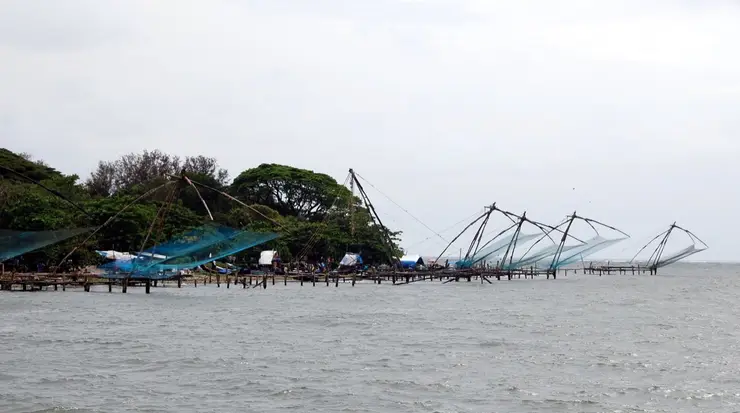
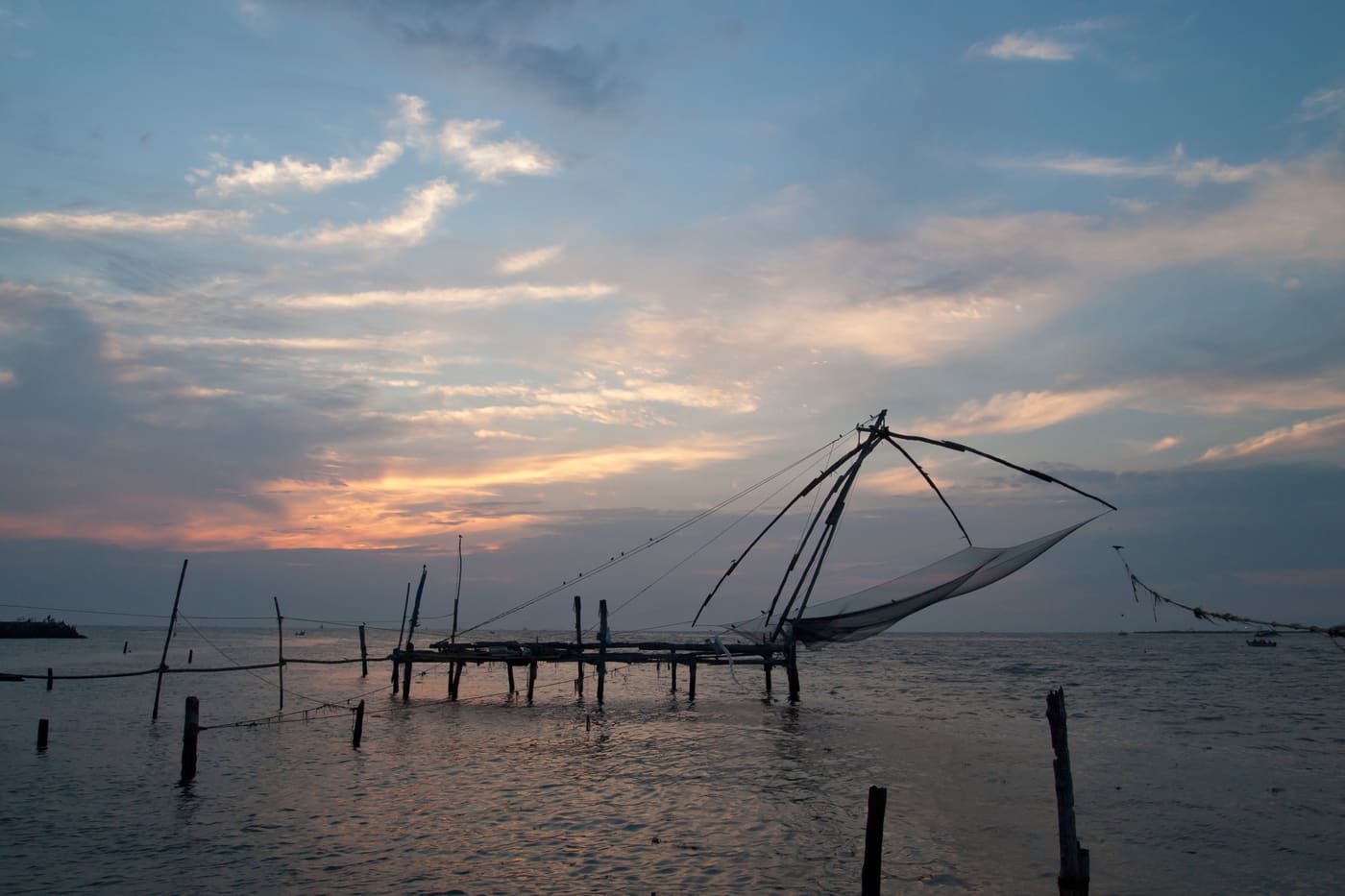
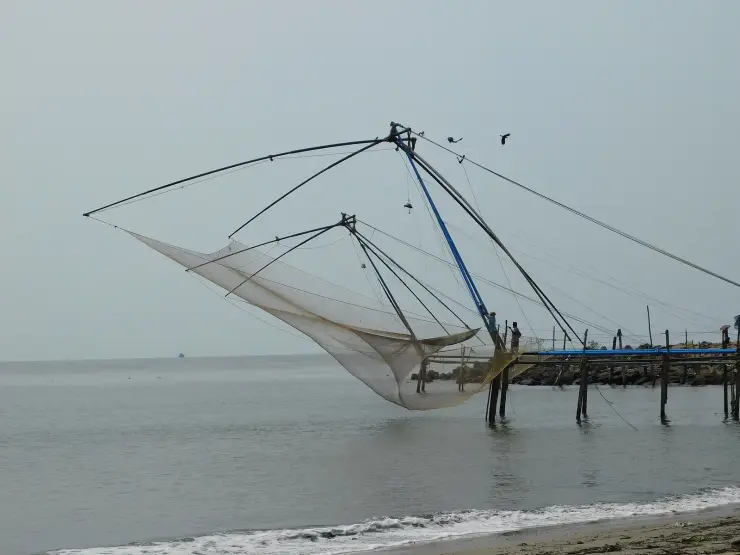
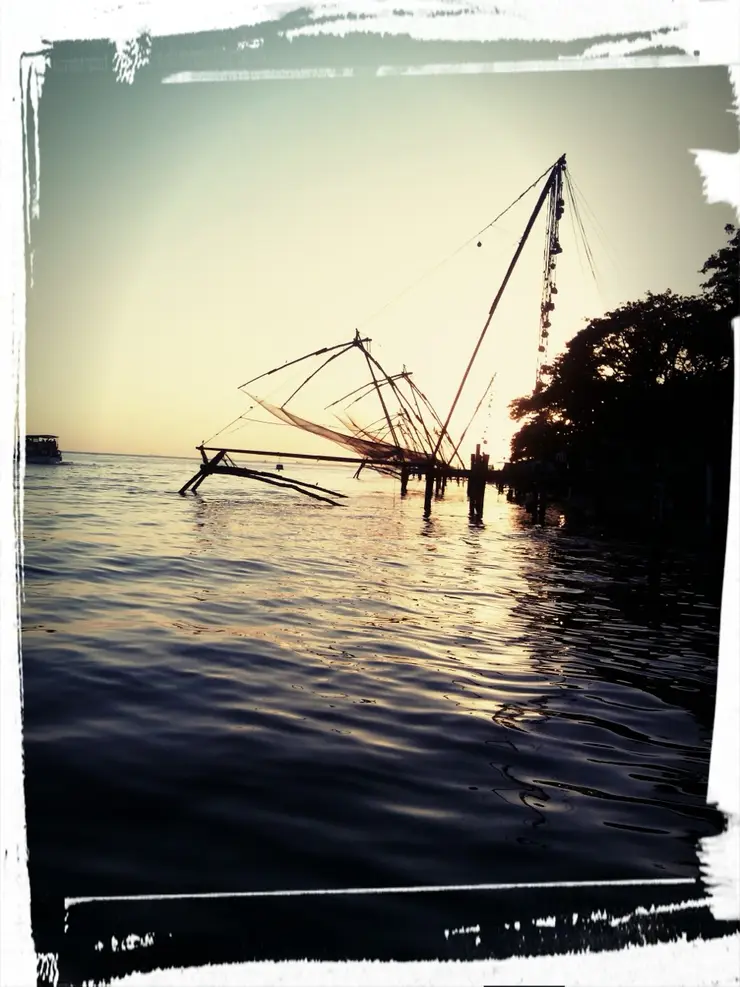
Kochi’s iconic cantilevered shore-operated fishing nets along the Fort Kochi seafront at Vasco da Gama Square, best photographed at sunset.
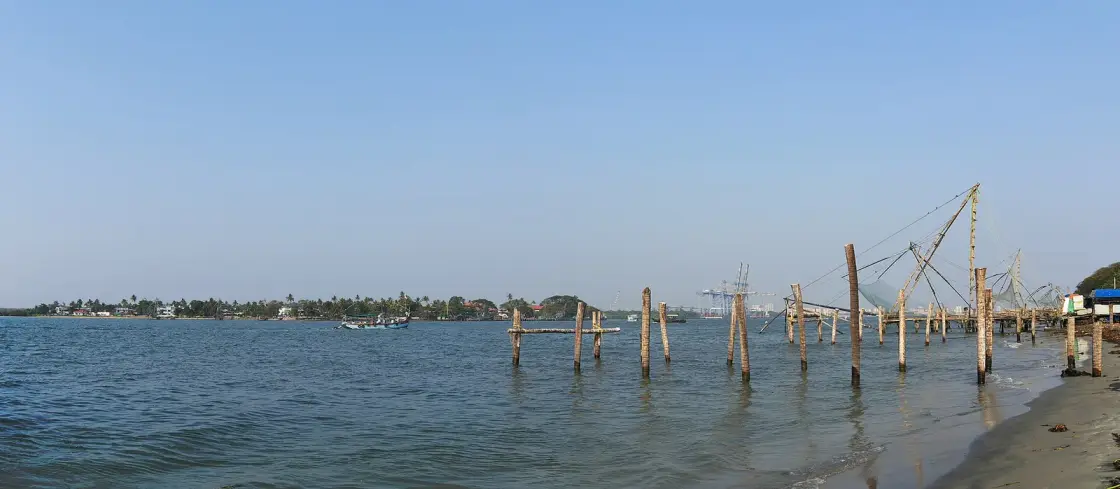
Strung along the Fort Kochi waterfront where the backwaters spill into the Arabian Sea, the Chinese fishing nets — Cheena vala in Malayalam — are the single most photographed silhouette in Kerala. Great cantilevered frames of teak and bamboo, hung with fine mesh and balanced by dangling stones, they dip into the tide and rise again in a slow, creaking arc that has become the emblem of Kochi itself. At sunset, when the sky behind them turns copper and the fishermen lean into the ropes, the sight is pure theatre — a working machine that also happens to be one of the loveliest things on the Indian coast.
Walk out to Vasco da Gama Square on the northern tip of Fort Kochi and you meet them one after another, a row of skeletal giants leaning over the water like herons frozen mid-hunt. Each net is a shore-operated lift net: a horizontal frame perhaps ten metres across, slung from the end of a long cantilever arm and lowered flat into the sea. It is not cast or dragged like an ordinary fishing net — it simply waits, submerged, for fish and prawns to drift over it on the current, and then it is hauled straight up before they can escape.
The physics is beautifully simple and entirely human-powered. The long arm pivots on a heavy timber A-frame planted at the water’s edge. At the shore end hang rows of stones — often smooth granite or laterite blocks lashed in ropes — that act as counterweights. When the net is down, the fishermen add their own weight and walk the main beam down; the counterweights, rising, store the effort. To lift, a team of four to six operators grab the ropes and walk backwards along the gangplank, letting the stones swing down and do most of the work as the dripping net swings up out of the sea. A good crew can drop and raise the net every few minutes, harvesting a small silver flicker of sardines, mullet, prawns or the odd crab each time.
It is slow, patient, sociable fishing. Between lifts the men sit on the platform mending mesh, sharing tea and gossip, watching the ferries cross to Vypin and Ernakulam. Nothing about the rig is powered; every rise and fall is muscle and cleverly stored gravity, a design that has changed remarkably little in six centuries. That antiquity is exactly why visitors are drawn to them — you are watching a piece of living medieval technology still doing, more or less, the job it was built for.
The nets stand where they do because Kochi is one of the great natural harbours of the world. Here the Vembanad backwaters and the rivers of central Kerala meet the sea through a wide tidal mouth, and it was this sheltered, fish-rich channel that made Kochi a magnet for traders from China, Arabia, Portugal, the Netherlands and finally Britain. The nets are a survivor of that cosmopolitan past — a Chinese idea, or perhaps a Portuguese one, planted on an Indian shore and kept alive by generations of local fishing families.
Today the row of nets is as much a stage as a fishery. Come late afternoon the promenade fills with couples, families, photographers and tour groups; hawkers sell tender coconut and cut mango; and the fishermen, sensing an audience, will often wave visitors up onto the platform to lean on a rope and feel the net rise. It is a small, generous piece of theatre — and, increasingly, the tips from that theatre matter as much to the crews as the fish in the mesh.
For all their romance, the nets carry a quiet melancholy too. Many stand idle or half-collapsed; the harbour silts, the catch thins, and the young drift to steadier work. What you are watching at sunset is both a spectacle and, honestly, a tradition in slow retreat — which is all the more reason to stand there while the light lasts and the arm swings down one more time.
The name itself carries the most enduring legend. Popular tradition holds that the nets were brought to the Malabar coast by Chinese traders — often the tale names the great Ming-dynasty admiral Zheng He (Cheng Ho), whose treasure fleets are recorded as sailing the Indian Ocean between 1405 and 1433, and just as often it invokes the court of Kublai Khan a century earlier. (The two attributions sit awkwardly together, since Kublai Khan was a Yuan-dynasty emperor who died in 1294 and Zheng He served the later Ming — so the “Chinese origin” is best treated as a cherished tradition rather than a single documented event; confirm against scholarship, not folklore.) The romantic version says Chinese merchants trading in spices left the nets behind on Kochi’s shores, and that the design took root here and nowhere else in India. A competing account, taken seriously by many historians, credits the Portuguese, who ruled both Macau and Cochin and may have carried the technology from the South China Sea in the 16th century — a case supported by the old Portuguese-sounding names still used for parts of the rig. The delicious puzzle at the heart of the legend is that these nets survive in Kochi and its lagoons yet are hard to find in China today. Whichever story is true — Chinese gift, Portuguese import, or a blend of both — treat it as debated tradition, not settled fact, and enjoy it for the window it opens onto Kochi’s tangled, ocean-crossing past.
There is a third account worth adding, less romantic than either and better at explaining the object. On this version the Portuguese did not carry the nets from China at all: they picked up a much smaller shore-operated lift net further east, on the Mekong, where variants of it are still worked, and the huge cantilevered machine you are looking at is a local enlargement, built to suit a wide, shallow, tidal estuary. The awkward fact that keeps the whole question open is that these nets are found nowhere else in India. A device introduced by a seafaring empire with ports the length of the coast somehow took root in one harbour mouth and nowhere beyond it — which is strange for an import and entirely ordinary for a local invention wearing a borrowed name.
The second and much less comfortable myth about this row is that it is safe. Being famous looks like protection, and here it has not been. Fort Kochi had around 22 net structures three decades ago and is down to roughly a dozen. Reporting by AFP in 2014 found the surviving crews hauling about a hundred times a day where they had once hauled two hundred and fifty, and quoted V R Simon, then 75 and among the oldest operators on the beach, saying flatly: “We live like beggars.” Another, John Kalathil Barried, 62, put it as arithmetic — less fish, less money, not enough of either to keep a family on.
The state did respond, and the response is the strangest part of the story. Kerala Tourism put up ₹1.5 crore, which grew into a ₹2.40 crore scheme implemented by the consultancy KITCO to renovate eleven nets and build platforms so visitors could watch them worked at close range. Nine years on it was still unfinished. Roughly ₹1.20 crore of teak and kalasanti wood had been bought and left stacked since 2017; 220 teak logs were eventually supplied; four operators, tired of waiting, went out and bought twelve-metre coconut stumps themselves, and their bills sat uncleared, snagged in part on a GST registration problem with the operators' association.
Meanwhile the nets had to stand up somehow, so most crews propped them on lengths of steel pipe. That is the situation to keep in mind while you photograph them. The most photographed wooden structures in India are partly held up by scaffolding pipe, because the timber bought to restore them has been sitting in a yard for the better part of a decade. The heritage object and the working machine have come apart, and the money meant to reunite them has not been spent.
Kochi’s fortune was always the sea. The natural harbour — dramatically reshaped, tradition says, by a great flood in 1341 that opened the estuary and silted up the older port of Muziris (Kodungallur) to the north — became the finest anchorage on the Malabar coast. Long before Europeans arrived, Arab, Chinese and Gujarati merchants were trading here for the black pepper, cardamom and ginger that grew in the hills inland, spices worth their weight in silver in distant markets. It is into this medieval trading world that the fishing nets are said to have arrived, whether by Chinese junk or, later, by Portuguese carrack.
In 1500 the Portuguese reached Cochin, and in 1503 Vasco da Gama’s countrymen built Fort Emmanuel here, the first European fort in India — the origin of the name Fort Kochi. For over a century the Portuguese ran the pepper trade and left their churches, their surnames and, quite possibly, the fishing-net technology carried from their colony at Macau. The very square where the nets stand today is named for Vasco da Gama, and the nearby St Francis Church holds the spot where he was first buried in 1524.
The Dutch seized Cochin from the Portuguese in 1663 and held it for well over a century, remodelling the fort town and the trade to their own advantage; their bungalows, cemetery and the cool, thick-walled architecture of the old quarter still flavour Fort Kochi. The British followed, taking control in 1795, and Cochin grew into a modern port under the Raj and after. Through every change of flag, the nets kept dipping into the same tide — an unbroken domestic tradition running quietly beneath the grand imperial story.
For most of the twentieth century the Cheena vala were genuine working gear, a reliable if modest way for shore families to harvest the estuary without a boat. Whole clusters of nets lined the Fort Kochi and Vypin foreshore, worked in shifts around the tides. They were part of the everyday economy, not yet a postcard.
That balance has tipped in recent decades. Heavy siltation of the harbour, dredging for the modern port and Vallarpadam container terminal, pollution, and above all the far greater efficiency of motorised trawlers have thinned the estuary catch. Many frames now stand un-repaired; some have collapsed in storms. Today the nets survive above all as heritage and as a tourist draw, sustained as much by visitors’ tips and photographs as by the fish they still occasionally lift — a working symbol that is slowly becoming a monument.
It is the iconic image of Kerala. If you have seen one photograph of Kochi, it was almost certainly these nets against a burning sky — and standing among them in person, hearing the timber creak and the ropes strain, is far more atmospheric than any picture suggests.
The sunset is the headline act. As the sun sinks over the Arabian Sea directly behind the row of nets, the frames turn to black silhouettes and the water lights up gold and rose. Arrive an hour before dusk, claim a spot on the promenade, and watch one of India’s great free spectacles unfold.
You can join in. For a small tip, the fishermen will usually invite you up onto the platform to grab a rope and help walk the net down and haul it up — a genuinely memorable, hands-on brush with a six-hundred-year-old technique, and a good photograph into the bargain.
Fish doesn’t get fresher. A cluster of stalls beside the nets sells the day’s catch — prawns, pearl spot (karimeen), squid, crab, kingfish — which you pick and hand to a neighbouring shack to be cleaned, spiced and grilled or fried on the spot. Eating fish landed a few metres away, watching the nets work, is a Fort Kochi rite of passage.
It is the perfect start to Fort Kochi on foot. The nets sit at the head of a wonderfully walkable heritage quarter — St Francis Church, the Santa Cruz Basilica, the Dutch-era streets, the spice warehouses and Jew Town of Mattancherry are all a stroll or short auto-ride away, so the nets anchor a whole day of wandering.
You are witnessing something genuinely endangered. Watching a living tradition that is quietly fading gives the visit a poignancy the postcard never shows — a reason to come now, while the arms still swing and the crews still work them.
Road km to Ernakulam; ghat roads and traffic vary — allow extra.
November to February and early mornings are best for walking; avoid midday heat where possible.
Live forecast loads in your browser.
Sun and moon are calculated for this location and shown in IST. Photography windows are the hour around sunrise and sunset; the sunset bearing is degrees clockwise from true north. Moon phase is accurate to about half a day.
Verified hotels, homestays, restaurants, experiences, sights, shops and rentals around Chinese Fishing Nets — commission-free, with direct contact. Filter by what you need.

Ayurville offers Ayurveda and massage appointments in Fort Kochi. Discuss the chosen service, duration and suitability with the centre before booking; a spa session and a medical treatment programme are different arrangements.
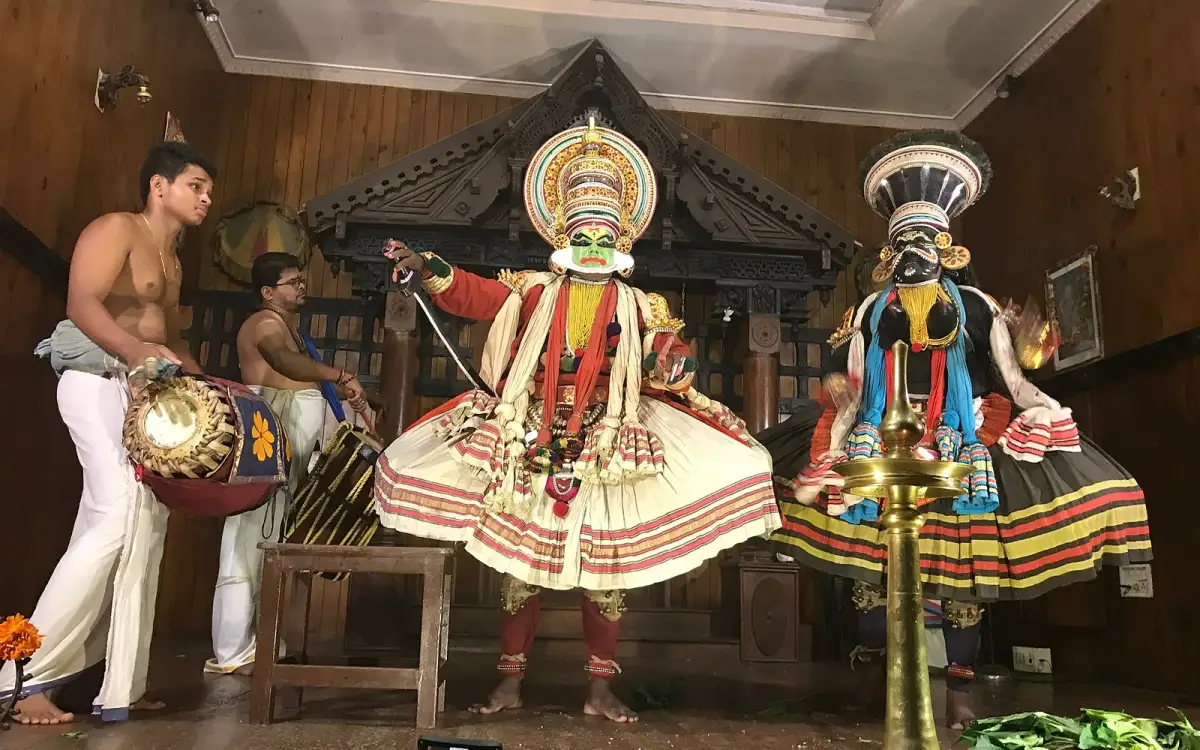
Fort Kochi cultural centre for Kathakali, Kalaripayattu, classical music and related performances. Published show prices; confirm direct · Fort Kochi, Kathakali, Kalaripayattu.
Book with the place itself. India’s cyber-crime coordination centre warned in April 2025 that convincing copies of hotel and pilgrimage booking sites are being pushed through sponsored search and social ads, taking payment for rooms the property never hears about. Every listing here links to the business’s own contact details and its own Google or Bing profile — we take no commission and sit in nobody’s payment path. If a booking page reached you through an ad, check the address bar against the property’s own site before you pay. Fraud can be reported on cybercrime.gov.in or on 1930.
Browse food, accommodation and activities across Fort Kochi. Check each address and journey before adding it to your day; these selections are not all beside Chinese Fishing Nets.
10 more places around Fort Kochi. Open a guide to plan the visit and onward journey.
320 m · 4 min walk
Kerala’s most walkable heritage quarter, with Chinese fishing nets, colonial churches, art cafes and Mattancherry nearby.
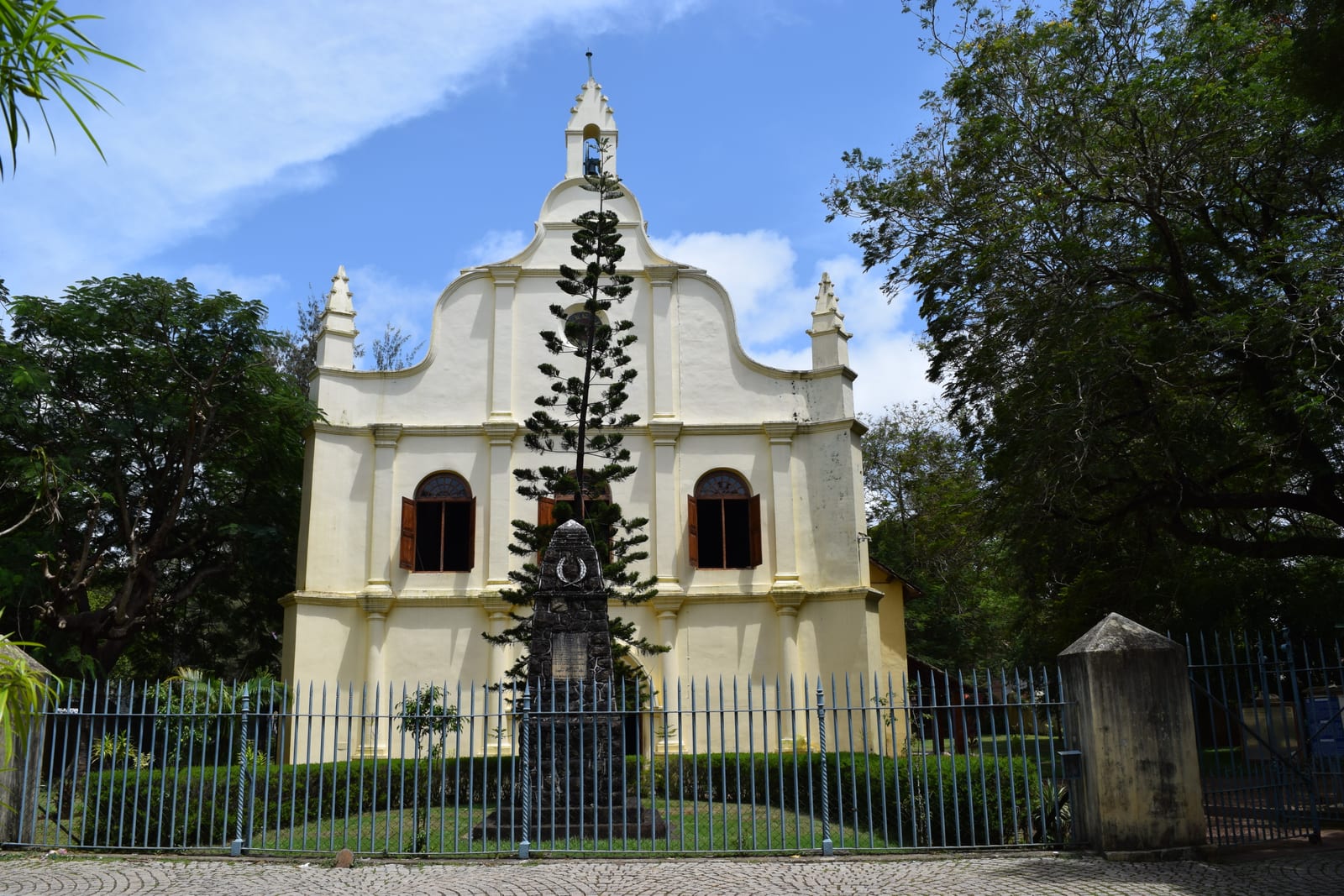
330 m · 4 min walk
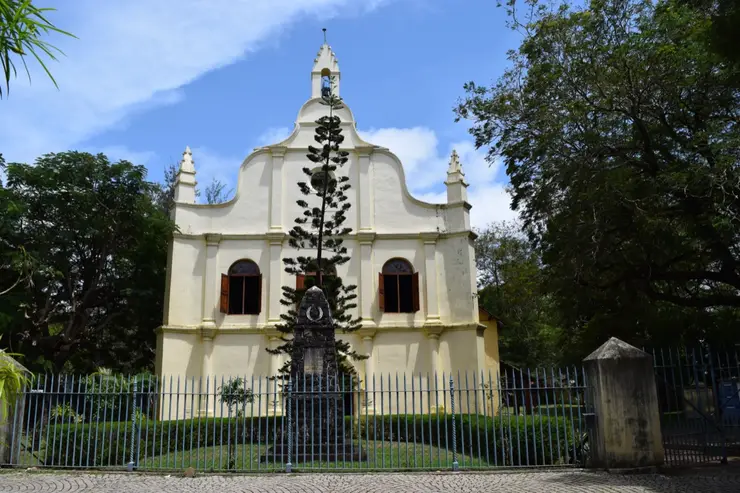
Believed to be the oldest European church in India (1503); Vasco da Gama was buried here before his remains were moved to Lisbon.
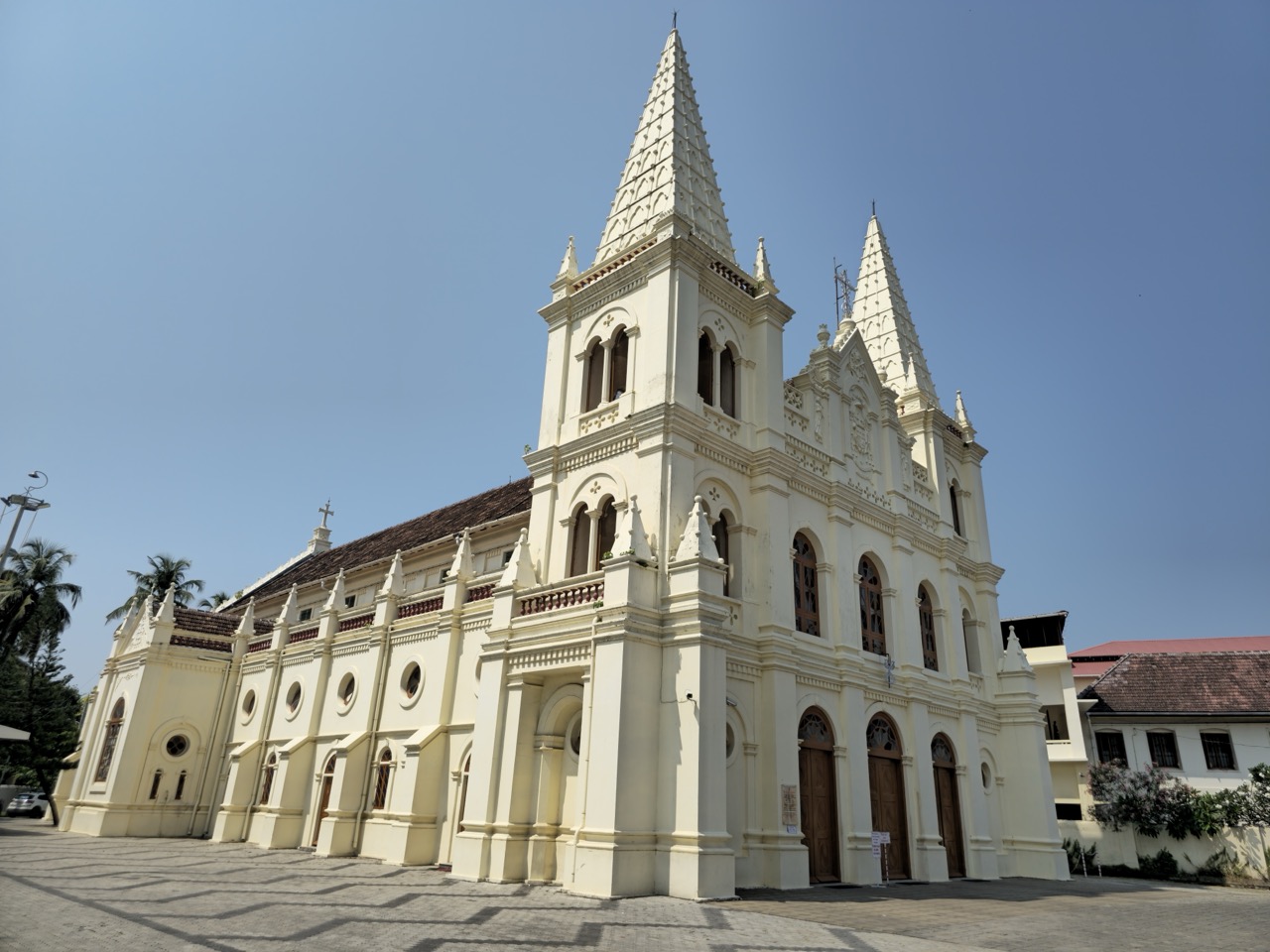
590 m · 7 min walk
One of the finest churches in Kerala, with a richly painted interior, beside the Kerala Kathakali Centre in Fort Kochi.
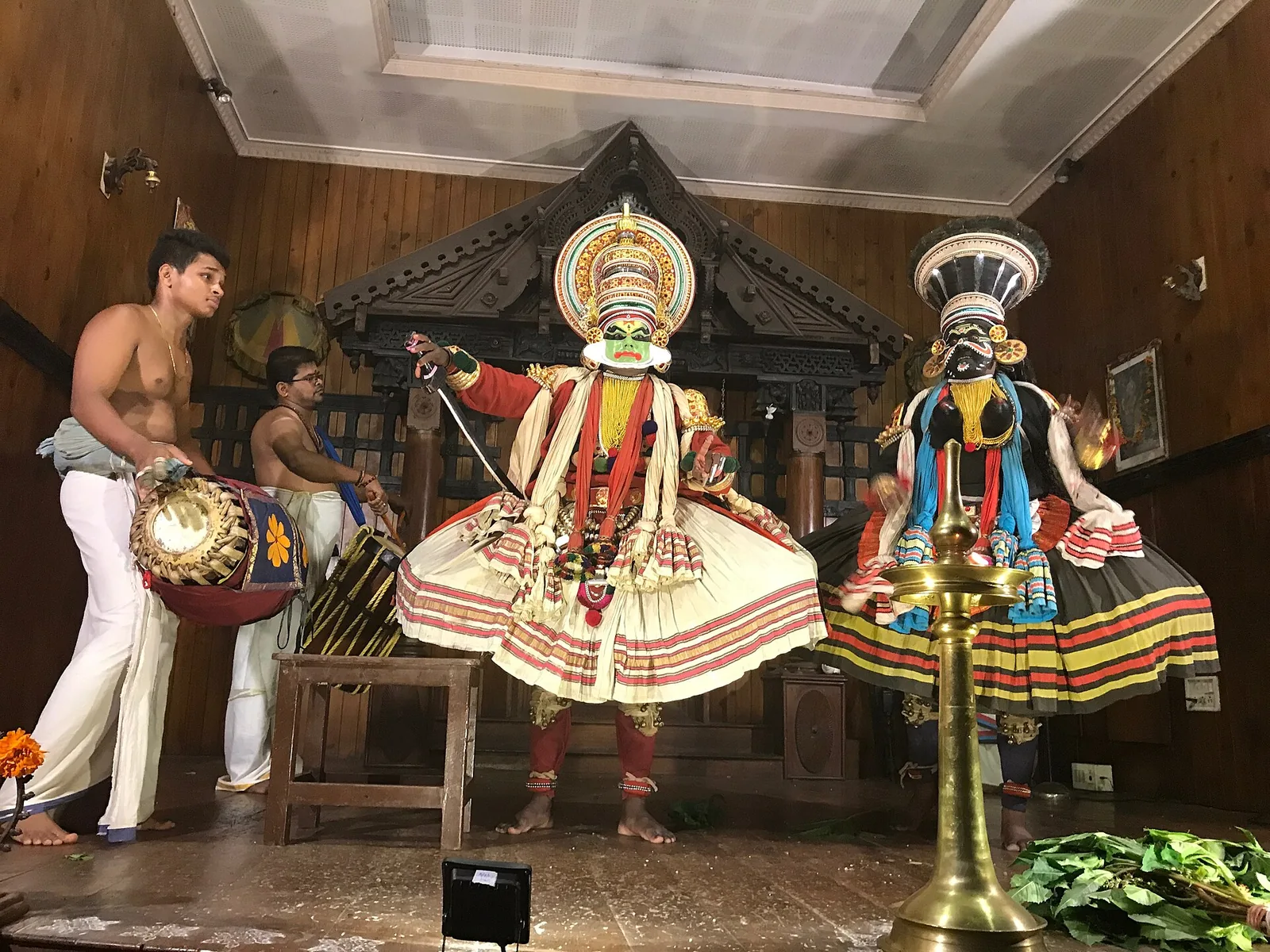
700 m · 8 min walk
Evening Kathakali and Kerala classical-art performances in Fort Kochi, with make-up shown before the show.
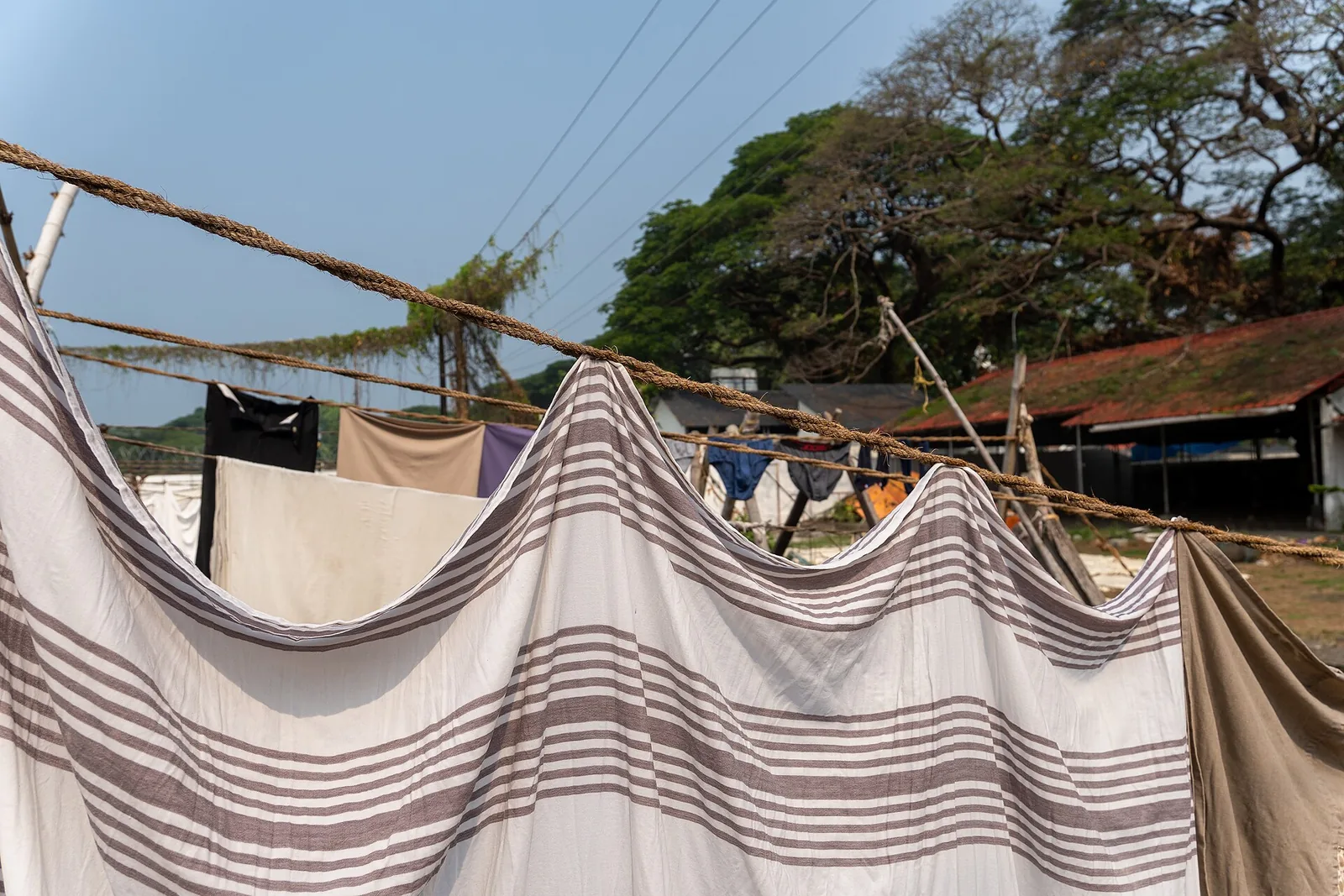
2.2 km · 3 min drive
A working colonial-era community open-air laundry in Fort Kochi, still used by traditional washermen families.
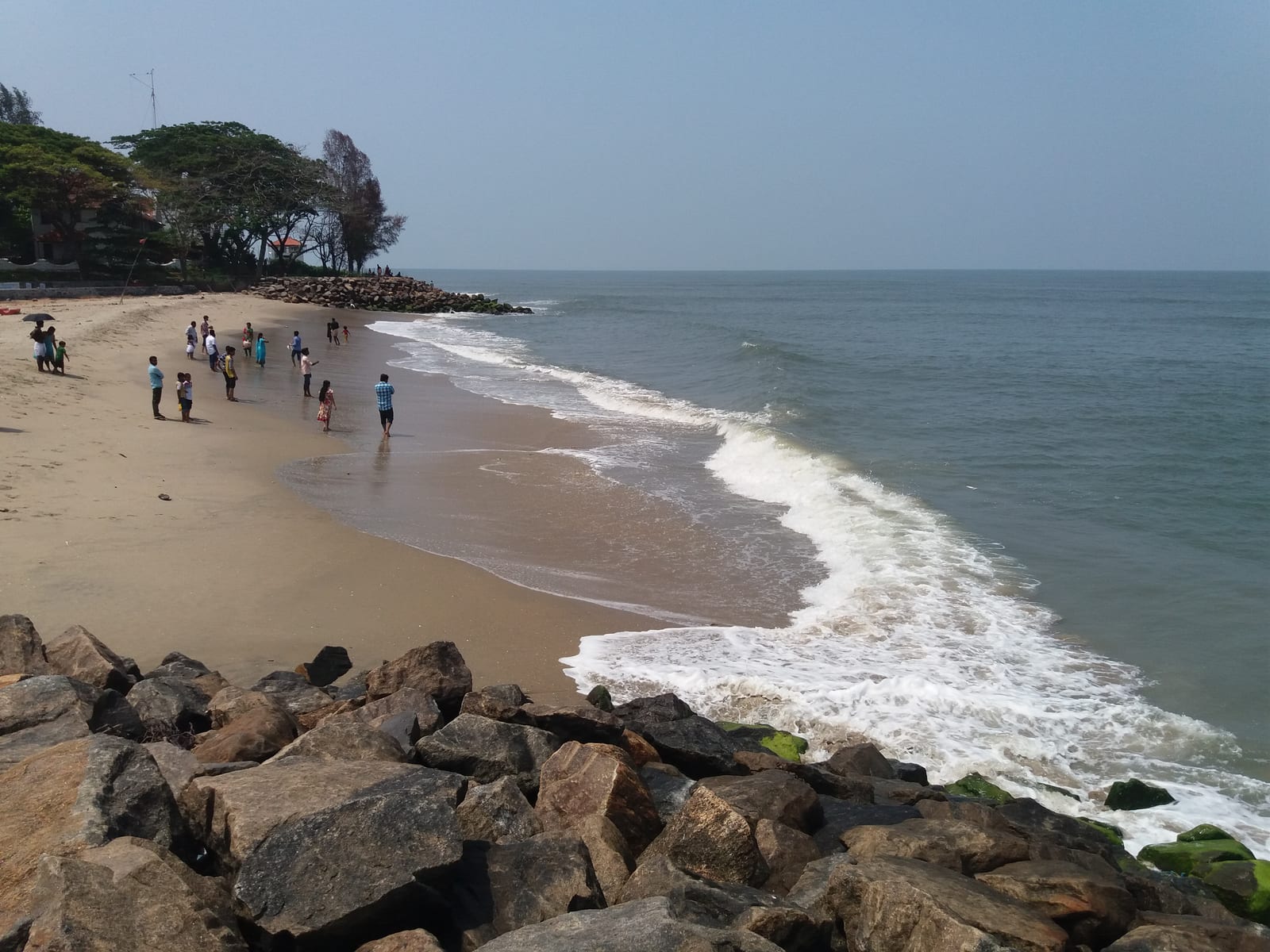
270 m · 3 min walk
Public seafront beside the Chinese fishing nets — a walking-and-sunset beach, not a swimming beach.
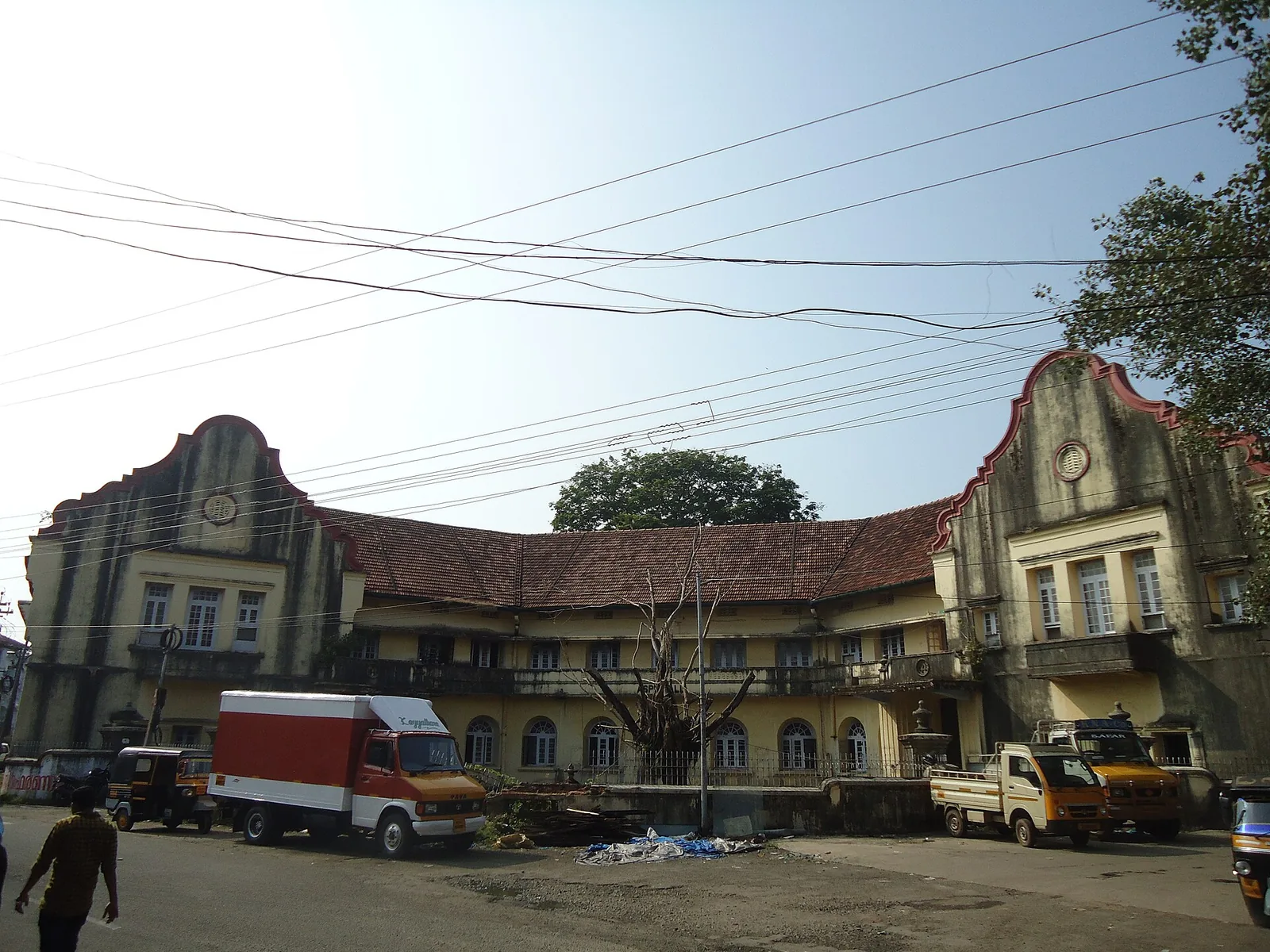
560 m · 7 min walk
A large 19th-century waterfront trading compound in Fort Kochi, the principal venue of the Kochi-Muziris Biennale.
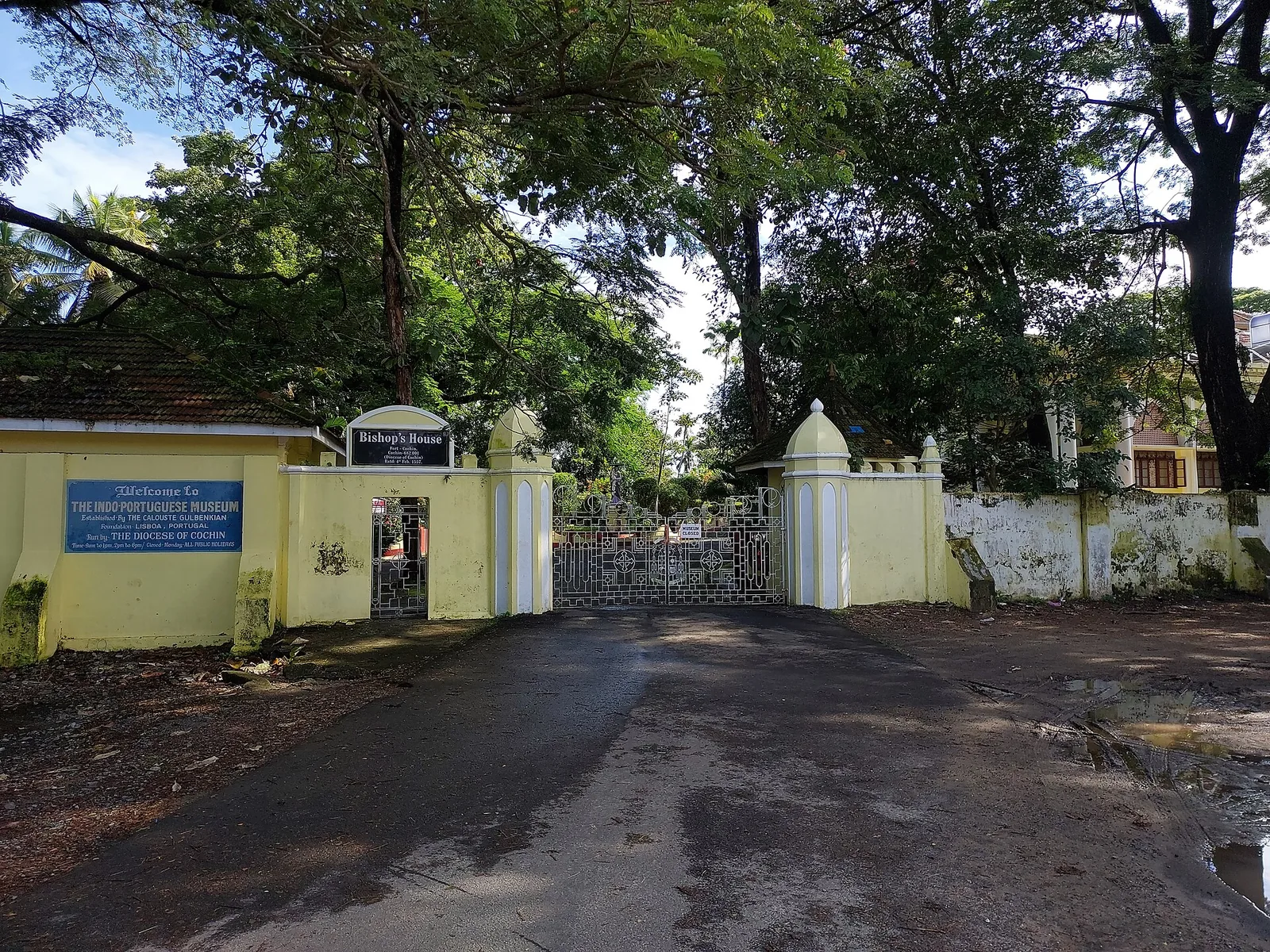
770 m · 9 min walk
Museum of Kerala’s Indo-Portuguese Catholic heritage in the Bishop’s House garden, Fort Kochi.
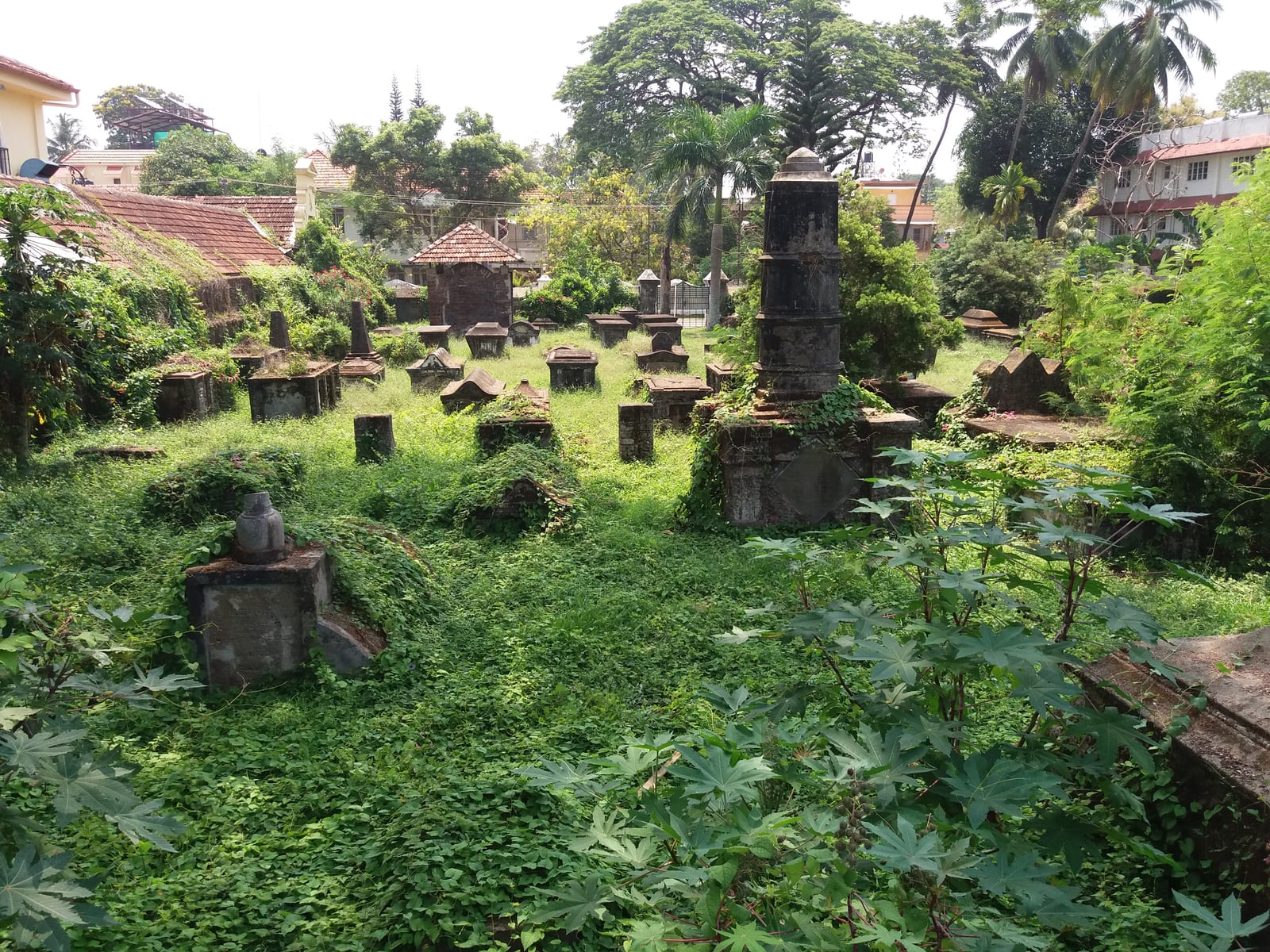
730 m · 9 min walk
The 1724 burial ground of Kochi’s Dutch colonial officials and merchants, beside St Francis Church — ASI-protected, and usually locked.
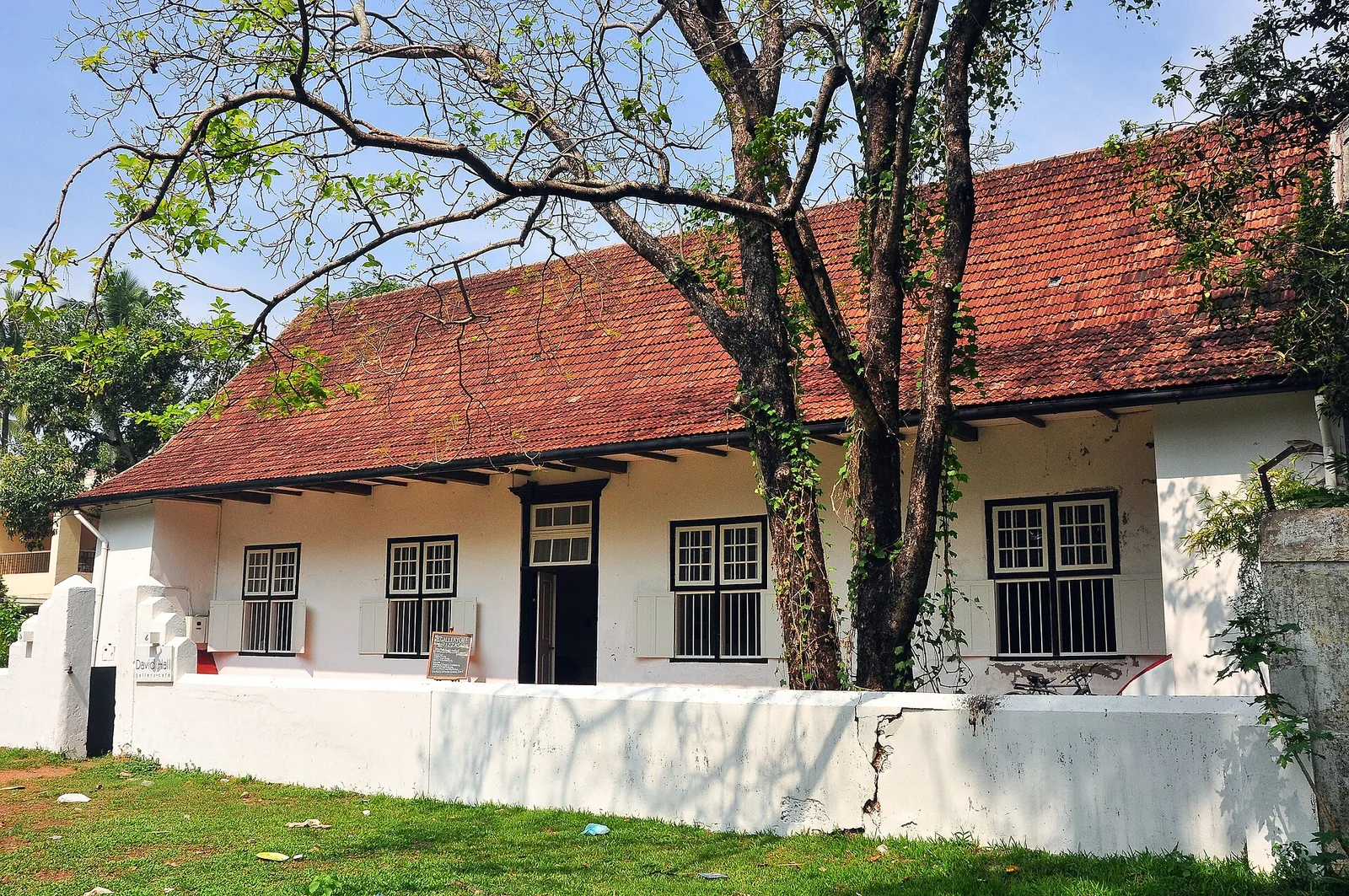
520 m · 6 min walk
A restored 17th-century Dutch bungalow on the Fort Kochi parade ground, now a contemporary art gallery and cafe.
Roampedia is commission-free — own or know a stay, eatery, guide or shop near Chinese Fishing Nets? List it and it appears here once verified.
Add a nearby businessEntry: Free to view from the promenade. Crews may ask for a small tip to watch them work or to photograph them closely; agree the amount beforehand. Do not go up onto a platform, whatever is offered: on 21 November 2025 one collapsed under a tour group at Vasco da Gama Square, dropping seven people into about 15 feet of water, and Fort Kochi police barred operators from allowing it — the operator and owner were charged. Of the nets that remain, reporting at the time put only three in fully restored condition. Fish at the adjacent stalls is sold by weight with a separate cooking charge; agree both the per-kilo rate and the cooking charge before you hand anything over.
Dress code: No formal code — light, breathable clothing and comfortable footwear suit the humid coastal weather. Modest dress is appreciated in this traditional fishing and heritage quarter, and sun protection plus water are wise for afternoon visits.
Festivals: The nets form a scenic backdrop to the Cochin Carnival held around New Year in Fort Kochi, and to the Kochi-Muziris Biennale, a major contemporary-art festival staged across the quarter in its edition years. The waterfront is also busy during the general December–January tourist and festival season.
Photography: Photography is free and encouraged; the silhouetted nets at sunset are the classic shot. Crews may expect a small tip if you photograph them closely — ask first, and shoot from the promenade rather than from the platforms, which visitors are no longer permitted onto. A wide lens captures the full cantilever arm; the golden hour before dusk gives the best light.
If you are travelling by bus or ferry, check the return service with the operator before setting out. Leave time to reach the stop or jetty after your visit.
Ask at the bus stand for the time of the last service back, not the next one. If you miss it, an auto or app cab is the fallback — agree the fare before you get in.
Checked 4 August 2026 against source 1. Conditions change and surfaces vary with weather — if step-free access is essential, confirm with the site before you travel.
Charge cap and free-transaction limits: Reserve Bank of India, in force since 1 May 2025.
These services are listed within about 1.2 km of Chinese Fishing Nets. Walking distances follow mapped routes; access and opening hours can change. Other services may be closer but are not included here.
Fort Kochi is one of Kerala’s safest and most walkable tourist quarters, comfortable by day and on the main lanes after dark. Violent crime against visitors is rare — the realistic risks are auto/guide scams, petty theft in crowds, and the sea, not personal danger.
Safety guidance last reviewed 15 June 2026. Always check your own government's current travel advice before you travel.
Emergency numbers are verified against official government and state tourism sources. 112 works anywhere in India.
Public seafront beside the Chinese fishing nets — a walking-and-sunset beach, not a swimming beach.
270 m · 3 min walkKerala’s most walkable heritage quarter, with Chinese fishing nets, colonial churches, art cafes and Mattancherry nearby.
320 m · 4 min walkBelieved to be the oldest European church in India (1503); Vasco da Gama was buried here before his remains were moved to Lisbon.
330 m · 4 min walkA restored 17th-century Dutch bungalow on the Fort Kochi parade ground, now a contemporary art gallery and cafe.
520 m · 6 min walkA large 19th-century waterfront trading compound in Fort Kochi, the principal venue of the Kochi-Muziris Biennale.
560 m · 7 min walkOne of the finest churches in Kerala, with a richly painted interior, beside the Kerala Kathakali Centre in Fort Kochi.
590 m · 7 min walkEvening Kathakali and Kerala classical-art performances in Fort Kochi, with make-up shown before the show.
700 m · 8 min walkThe 1724 burial ground of Kochi’s Dutch colonial officials and merchants, beside St Francis Church — ASI-protected, and usually locked.
730 m · 9 min walkMuseum of Kerala’s Indo-Portuguese Catholic heritage in the Bishop’s House garden, Fort Kochi.
770 m · 9 min walk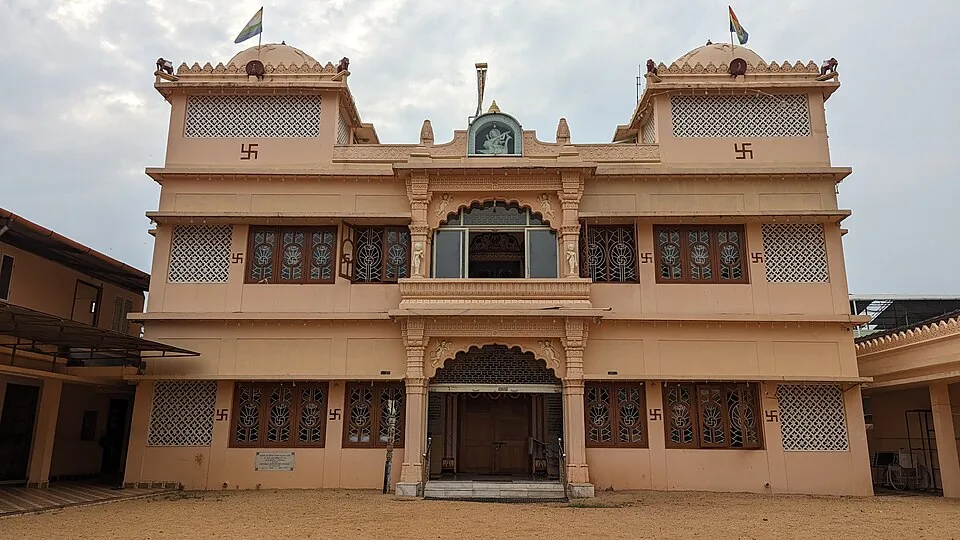
An ornate Jain temple in Mattancherry’s Gujarati quarter, raised in 1904 by Hirubai in memory of her husband Jivraj Dhanji and dedicated to Dharmanatha, the fifteenth Tirthankara — known for its white marble work and the daily midday feeding of the pigeons outside.
1.5 km · 19 min walk · straight line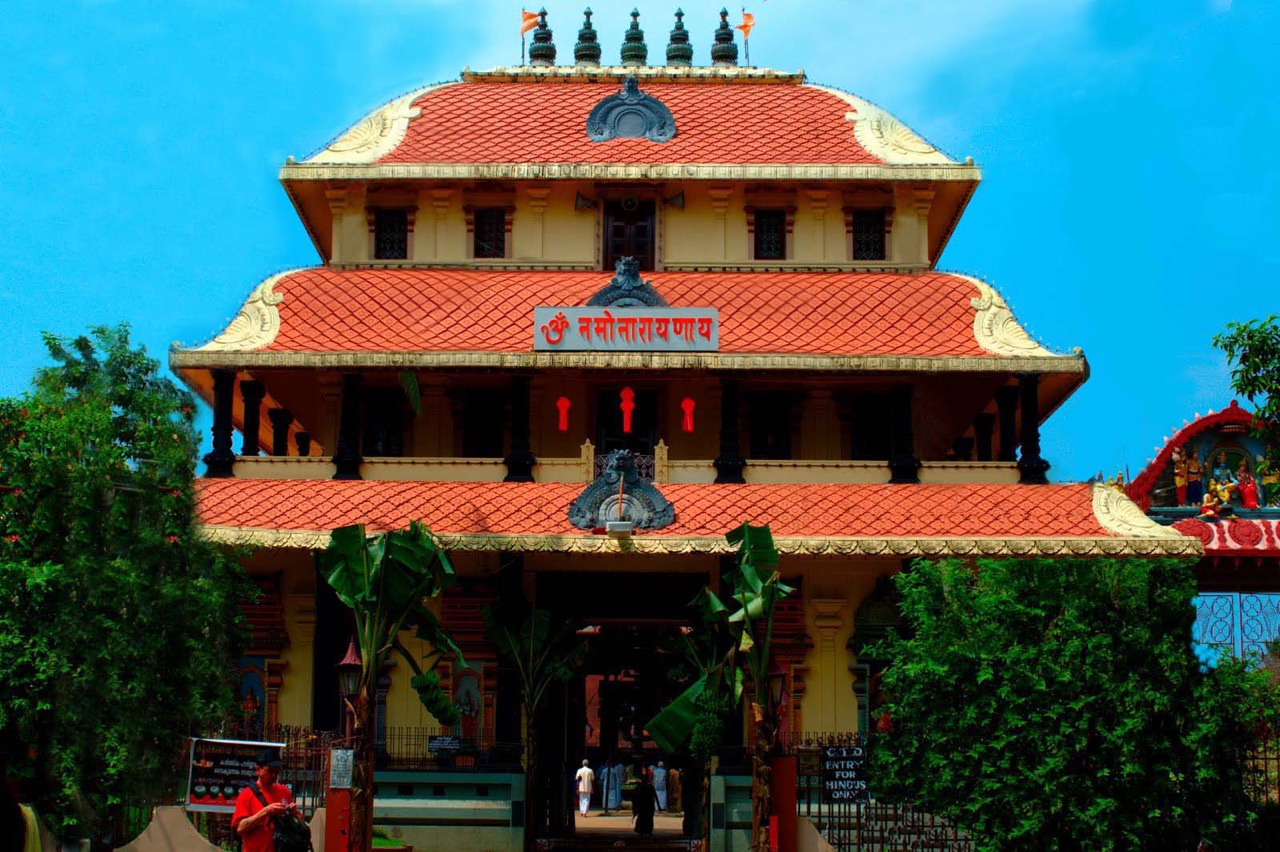
A historic Gowda Saraswat Brahmin temple in Cherlai, Mattancherry, central to Kochi’s Konkani community.
1.6 km · 20 min walk · straight lineA working colonial-era community open-air laundry in Fort Kochi, still used by traditional washermen families.
2.2 km · 3 min driveWalking and driving times are real routed distances, except the few marked “straight line”, which are direct-line estimates and will read short. Fare figures are estimates from Kerala’s notified auto/taxi tariff and exclude waiting and night charges. Routing: © openrouteservice.org by HeiGIT | Map data © OpenStreetMap contributors
Nearby toilets, pharmacies, ATMs, seating and vets are community-mapped and may be incomplete or out of date. Map data © OpenStreetMap contributors | Walking times © openrouteservice.org by HeiGIT
That is the enduring debate. Long tradition credits Chinese traders — the tales variously name the explorer Zheng He (Cheng Ho) and the court of Kublai Khan — with bringing the nets to Kochi some six centuries ago. Many historians, however, argue the Portuguese introduced them from their colony at Macau in the 16th century, pointing to the Portuguese-sounding names still used for parts of the rig. Curiously, the nets survive in Kochi yet are hard to find in China today. Treat the Chinese origin as a much-loved tradition rather than settled fact (confirm against scholarship).
Late afternoon into sunset is unbeatable — the light is soft, the crews are active, and the sun sets over the sea directly behind the nets. Early morning is quieter and cooler and good for photographs without crowds. High tide tends to bring more fishing activity than dead low tide.
Usually yes — the fishermen often welcome visitors onto the platform to pull the ropes. Viewing the nets from the promenade is free, but the crews typically expect a small tip or fee if you climb up to help lift a net or want to pose for photographs. Agree the amount before you start to avoid any awkwardness.
Yes. Stalls beside the nets sell fresh fish, prawns, squid and crab by weight, and adjacent shacks will clean, spice and cook your choice while you wait. It is one of the most enjoyable ways to eat in Fort Kochi — just confirm the price per kilo and the cooking charge before handing anything over, as rates are negotiable and not fixed.
There is no ticket to view the nets — the waterfront is open and free. Most visitors spend anywhere from thirty minutes to a couple of hours, especially if they stay for sunset and a plate of grilled fish. Budget extra if you plan to walk the wider Fort Kochi heritage quarter afterwards.
Some are, but far fewer than in the past. Silting of the harbour, a dwindling estuary catch and competition from motorised trawlers have made the nets increasingly unprofitable, and several stand idle or in disrepair. Today they function largely as a heritage attraction, sustained by visitors as much as by the fish they land.
November to February and early mornings are best for walking; avoid midday heat where possible.
Entry: Free to view from the promenade. Crews may ask for a small tip to watch them work or to photograph them closely; agree the amount beforehand. Do not go up onto a platform, whatever is offered: on 21 November 2025 one collapsed under a tour group at Vasco da Gama Square, dropping seven people into about 15 feet of water, and Fort Kochi police barred operators from allowing it — the operator and owner were charged. Of the nets that remain, reporting at the time put only three in fully restored condition. Fish at the adjacent stalls is sold by weight with a separate cooking charge; agree both the per-kilo rate and the cooking charge before you hand anything over. Timings: Open-air waterfront, accessible at any time; the nets are typically worked from around sunrise through the day and again toward evening, with activity varying by tide. Sunset is the most rewarding window.
Base yourself in Fort Kochi or a nearby town in Ernakulam, then confirm the last-mile route locally before leaving. Walkable heritage areas are best done slowly; combine nearby streets, museums, markets and food stops. If the visit depends on forest, temple, boat, ferry, weather or seasonal access, check the official/local rule on the day before travel.
1 to 3 hours.
Nearby you can pair Fort Kochi Beach (270 m), Fort Kochi (320 m), St. Francis Church (330 m), David Hall Art Gallery (520 m).
Watch traffic on narrow heritage streets. Keep valuables close in crowded markets.
Written about Chinese Fishing Nets itself — its history, its legends and the arguments about them.

These guides explore Fort Kochi and the surrounding area. Choose a visit that fits your interests, allowing separately for travel between stops.

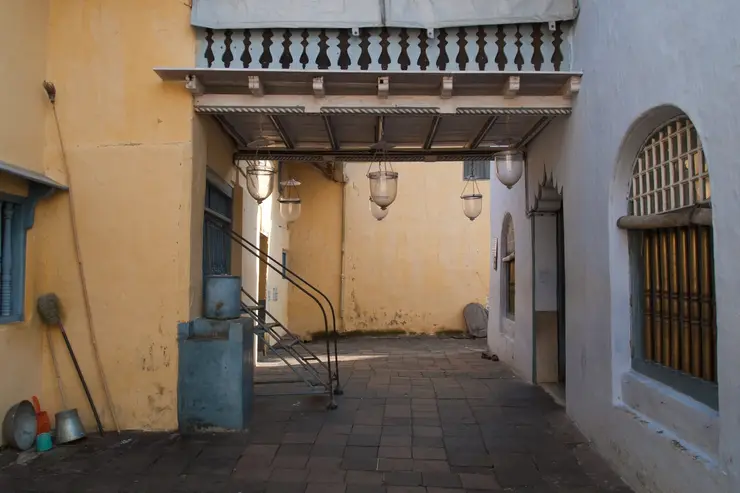
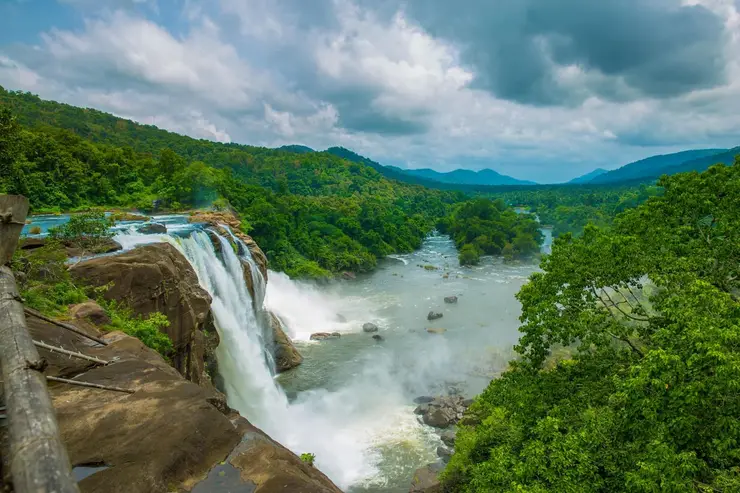
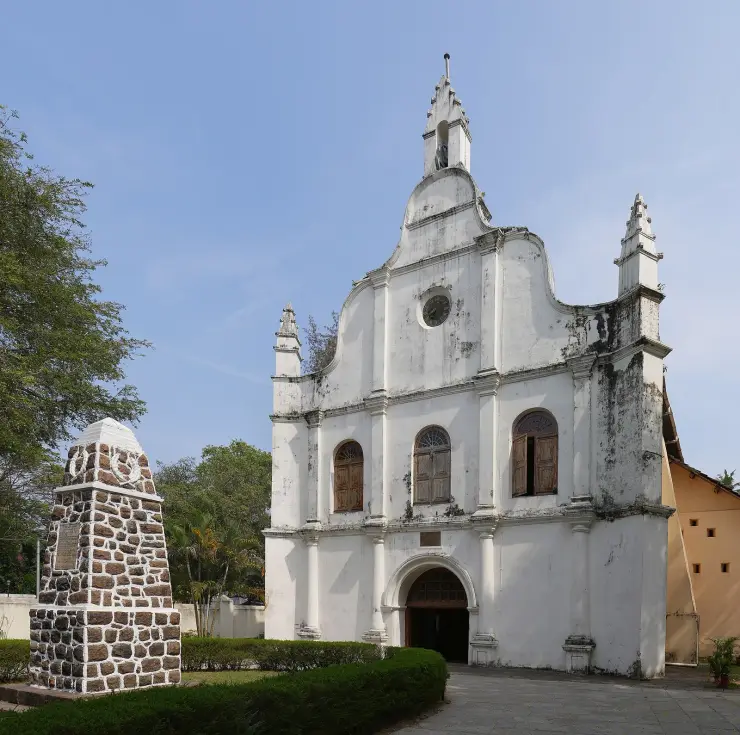
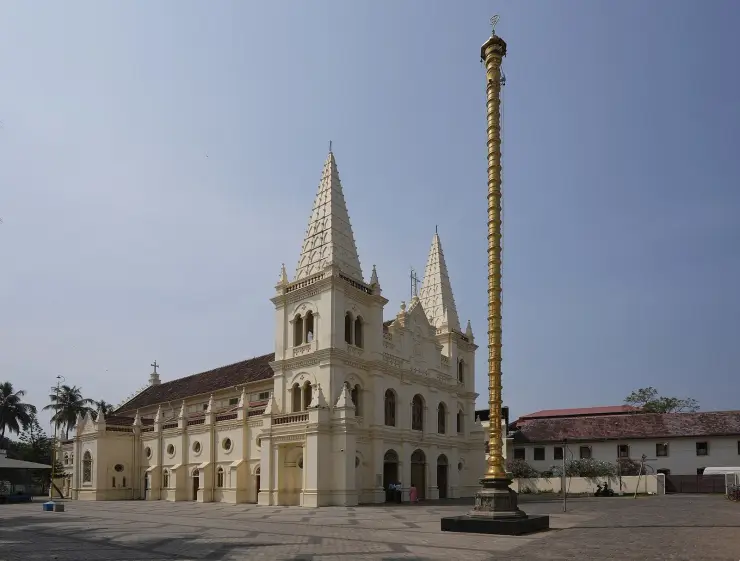
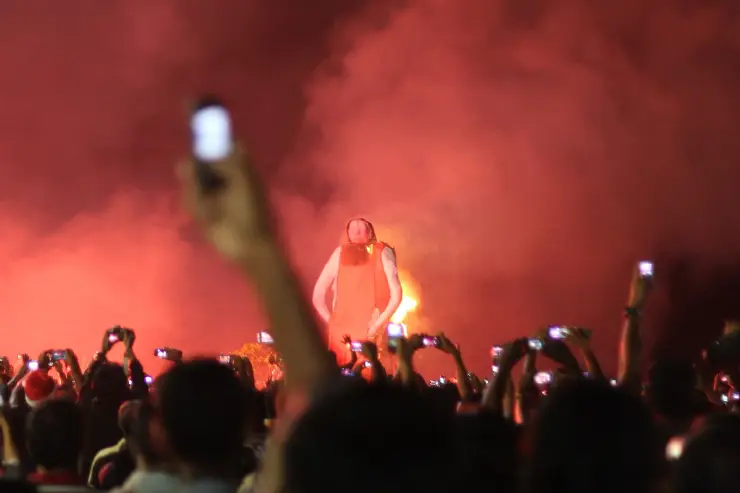
Written about Fort Kochi as a whole rather than about Chinese Fishing Nets — its history, its streets, and how to spend a day in it.
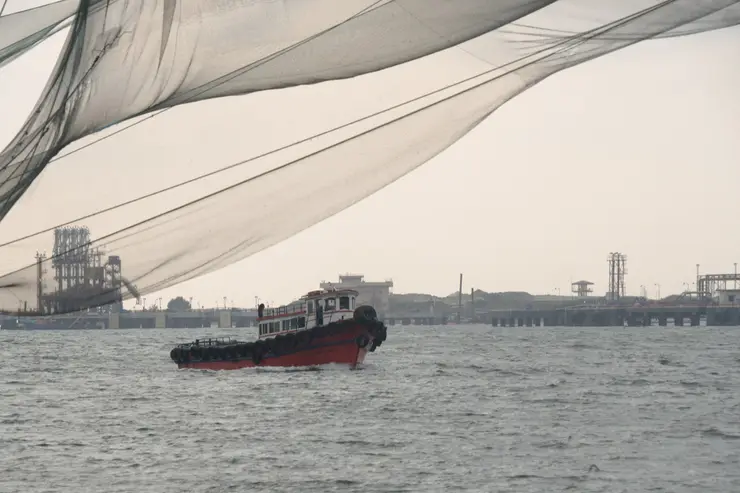
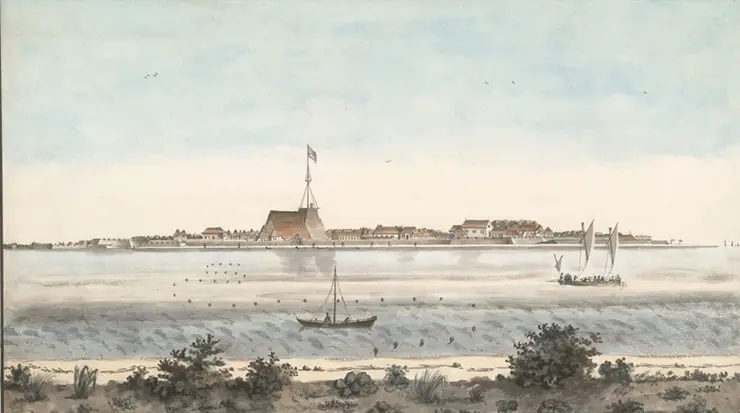
Route-level itineraries and practical guides for the rest of Kerala.
Photographs: Ingo Mehling (CC BY-SA 4.0), Hans A. Rosbach (CC BY-SA 3.0). Wikimedia Commons.