What to expect
Highlights
- Heritage experience at Dutch Cemetery
- Architecture, local stories and old trade/cultural routes
- Good fit for guided walks and nearby cafes/shops
The 1724 burial ground of Kochi’s Dutch colonial officials and merchants, beside St Francis Church — ASI-protected, and usually locked.
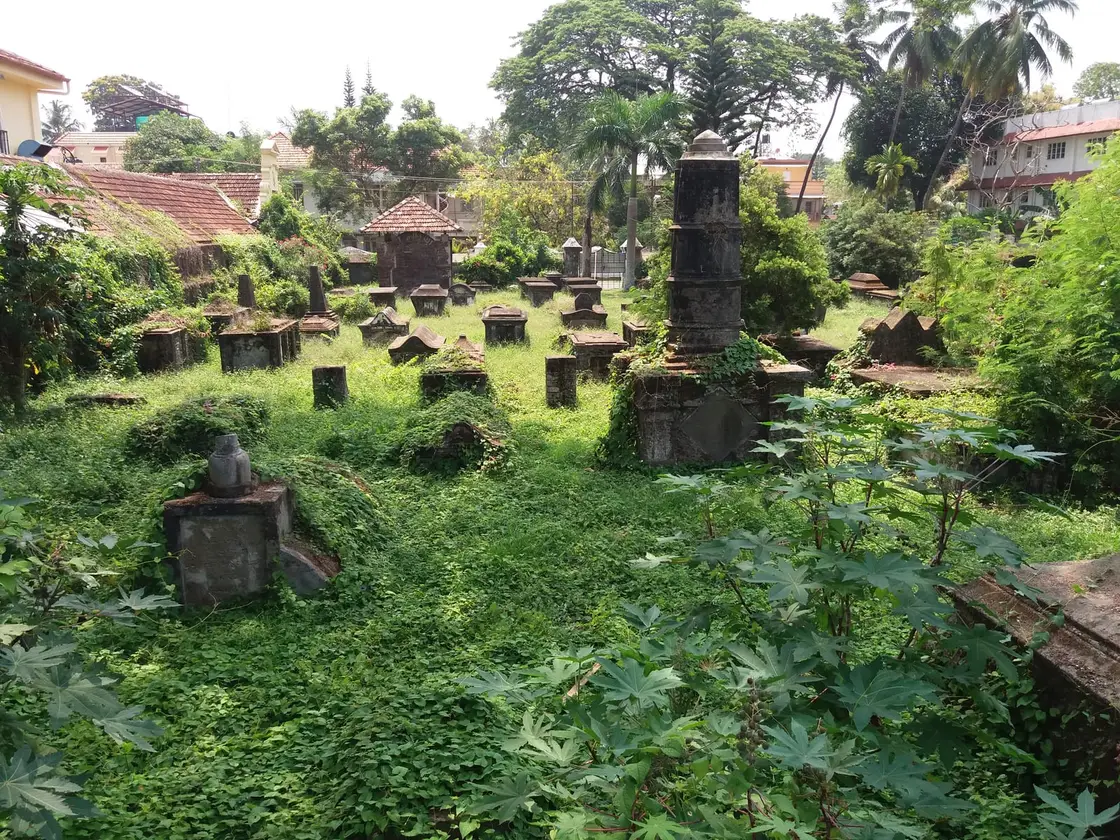
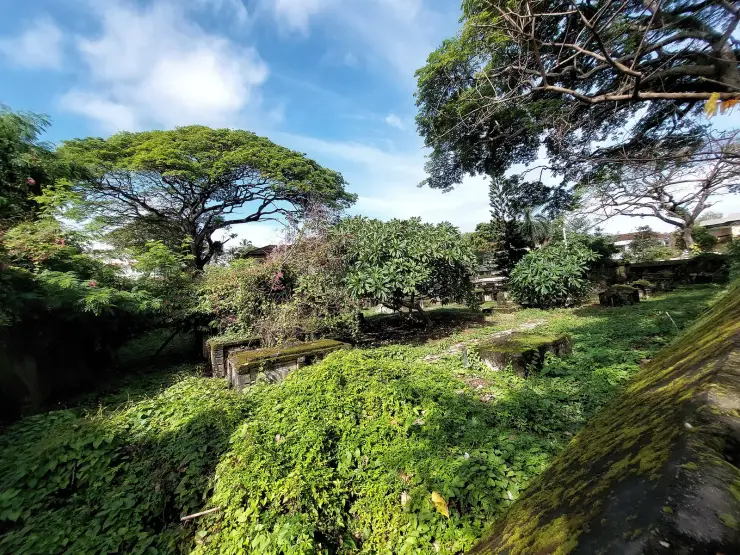
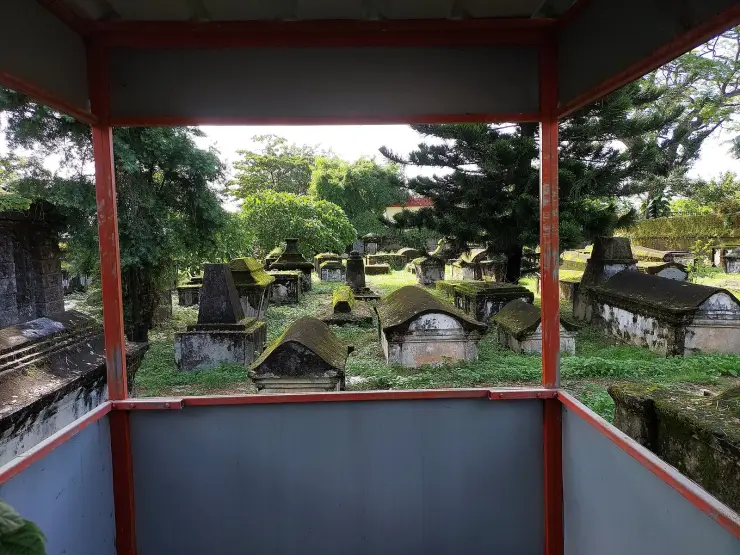
Behind a low wall on the seaward side of Fort Kochi, a few minutes from St Francis Church, lies a small walled plot that most visitors photograph from the outside and never enter. The year 1724 is cut into the gate pillar. Inside are about a hundred graves of the Dutch officials, soldiers and merchants who ran this coast for a century and a half — plain granite and red laterite slabs, many without a cross, lettered in a Dutch that no one in Kochi speaks any more. It is the quietest place in the quarter, and the least visited, mostly because the gate is usually locked.
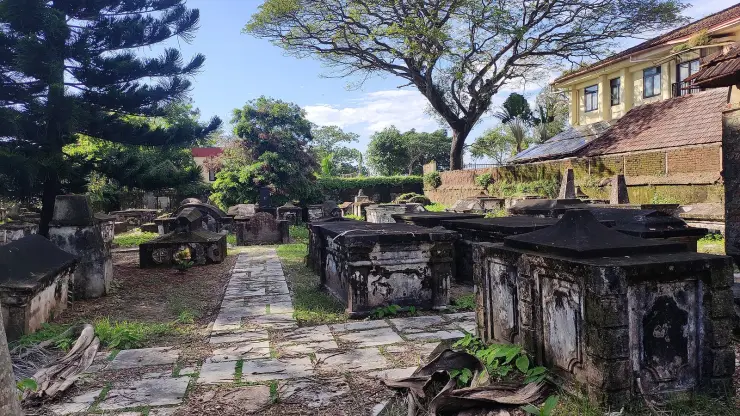
The Dutch Cemetery is not a grand landscaped burial ground. It is a modest rectangle of walled earth, and its power is in its plainness. Where the Portuguese and later the British filled Kochi with carved saints, painted interiors and soaring facades, the Dutch buried their dead under flat, heavy, unornamented stone. Many of the tombs carry no cross at all. That absence is not neglect — it is doctrine, made visible in rock.
The two materials tell you where you are. The dark grey is granite, hauled from inland Kerala. The rusty red is laterite, the soft iron-rich stone that hardens in air and that half of coastal Kerala is built from — the same stone in the walls of the churches and godowns around you. A Dutch burial ground on the Malabar coast, built out of Malabar rock, cut with Dutch names: the whole colonial transaction is legible in a single slab.
The inscriptions are the reason to want to get in. They are in an older form of Dutch, weathered to the edge of legibility, and they record a startling attrition. This was a posting people did not come home from. Fever, not battle, emptied the Dutch establishment at Cochin year after year, and the stones are the ledger of it — men in their twenties and thirties, wives, children, one after another, on a shoreline eight thousand miles from the Netherlands.
Roughly a hundred and four tombs and epitaphs survive. The last burial here is generally given as Captain Joseph Ethelbert Winckler in 1913 — by which time the Dutch had been gone from Kochi for well over a century, and the ground had passed into the keeping of others. The cemetery is now protected by the Archaeological Survey of India and managed by the Church of South India.
The locked gate has a dull administrative explanation that is worth knowing before you resent it. Two bodies hold this ground: the Archaeological Survey of India protects it, and the Church of South India — which inherited the Protestant establishment here — manages it and keeps the burial registers. Neither runs it as a visitor attraction, because it is not one; it is a consecrated burial ground with a conservation designation on top. So there is no ticket office to be annoyed with and nobody whose job is to let you in. If you want inside, the request goes to St Francis CSI Church, in advance, politely, and it may still be no.
In practice, what most visitors experience is the wall and the dated gateway. The enclosure is normally locked, and admission is granted case by case rather than as a matter of course — usually arranged in advance through the nearby St Francis CSI Church, which also holds the burial registers. It is worth knowing that before you build a morning around it. In 2020–21 the cemetery was restored with funding from the Dutch embassy, which is why the walls and stones look better cared for than the access arrangements suggest.
The claim you will read on almost every sign, guidebook and tourism page is that this is the oldest European cemetery in India. It is repeated so consistently that it has hardened into fact, and it deserves a careful qualification rather than a flat contradiction.
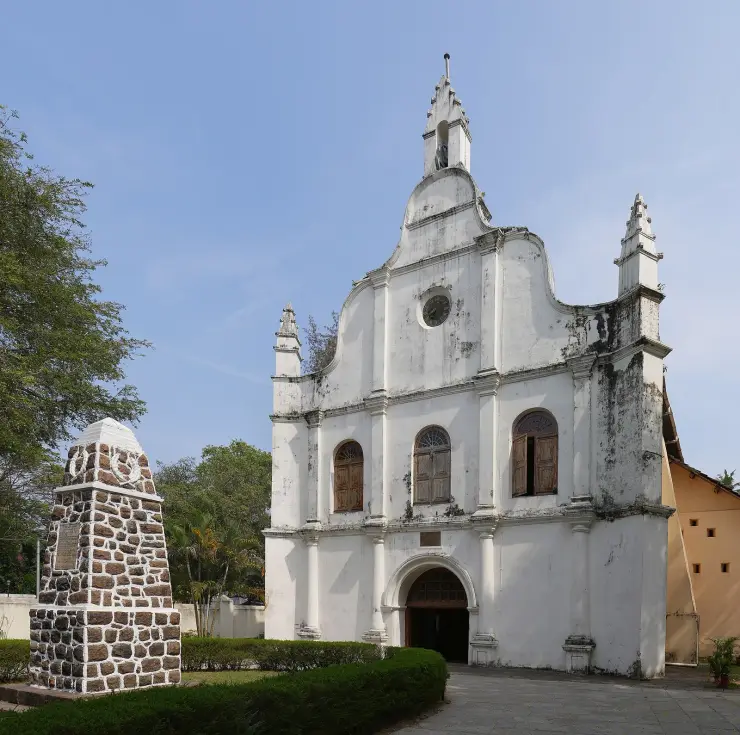
The difficulty is what happened before 1724. Europeans had been dying in Kochi since the Portuguese arrived in the first decade of the 1500s — more than two hundred years before this ground was consecrated. They were buried inside their churches, which was the ordinary European practice of the period: under the floor of the nave, beneath ledger stones, as close to the altar as rank and money allowed. St Francis Church, a few minutes' walk away, holds exactly such burials, and Europeans continued to be buried inside it even after this cemetery opened.
So the claim has to be narrowed before it can even be argued. At best it would mean the oldest surviving purpose-built European cemetery in India — a walled plot set aside specifically for burial, outside a church — rather than the site of the earliest European burials, which it certainly is not. That distinction is itself part of the story: the shift from burying under the church floor to burying in separate consecrated ground is the Protestant Dutch doing things differently from the Catholic Portuguese they had displaced.
And having gone looking for the comparison, we now think even the narrow version does not survive. There are at least two older purpose-built European burial grounds still standing in India. The Dutch cemetery at Pulicat, on the Coromandel coast, was established in 1657 and holds graves dated from 1646 to 1777 — 77 of them, 62 still identifiable, with skeletal figures carved into the gateway pillars and a skull above the arch. The Dutch cemetery at Surat is generally dated to around 1650–51, and contains the enormous domed mausoleum of Hendrik Adriaan van Reede, who died in December 1691 and whose tomb a visiting Dutch admiral in 1775 thought exceeded every other in the ground for size, elegance and richness of material.
Both are Dutch. Both are walled ground set aside for burial rather than space under a church floor. Both predate 1724 by some seventy years. Whichever way the claim is phrased, Kochi is not first, and the line on the signboards should be read as local pride rather than as a fact anybody has checked.
There is a second number worth carrying in with you, because it turns a hundred graves into something larger. Across the Company's whole existence, from 1602 to 1795, roughly a million men sailed east out of the Netherlands in its service. About 340,000 came back. The rest — something over two thirds — died of shipboard disease, of scurvy and dysentery, in wrecks, in fights with rivals and pirates, and above all of fever in the tropical stations they were sent to hold. This ground is a very small, very legible sample of that. The stones are not a memorial to a colonial adventure; they are a page torn out of an actuarial disaster that the Company priced in and kept sailing anyway.
That is worth saying plainly rather than quietly dropping, because the real distinction of this place does not need the superlative. What makes the Kochi ground unusual is not its date but its severity. Pulicat has skulls and skeletons and carved birds and flowers; Surat has a domed mausoleum built to out-do a rival's. Kochi has flat, heavy, unornamented slabs, many with no cross on them at all, in granite and laterite quarried within a few days of where they lie. A hundred-odd graves and almost no imagery is not a lesser version of a Dutch colonial cemetery. It is a different argument about death, made by the same company on a different coast, and it is the more striking of the two once you know what the alternative looked like.
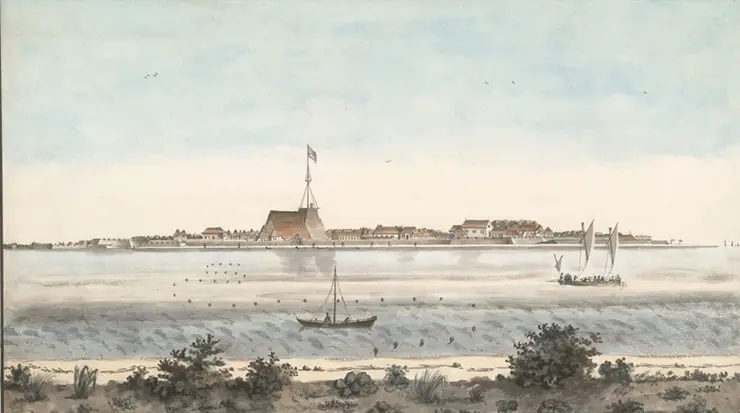
The Dutch East India Company — the VOC — took Cochin from the Portuguese in 1663 after a hard siege, and set about remaking it. They demolished a great deal of Portuguese Catholic building, kept and repurposed what was useful, and shrank the sprawling Portuguese town into something tighter and more defensible. Dutch Cochin was a commercial garrison, and its purpose was pepper.
The cemetery was consecrated in 1724, some sixty years into Dutch rule, and the date is cut into the entrance pillar where you can still read it. Setting aside separate ground for burial was consistent with Dutch Reformed practice, which had no use for the Catholic hierarchy of interment inside a church and around its altar. The plainness of the stones follows from the same conviction: no saints, no imagery, frequently no cross.
Those buried here were the machinery of the Company on this coast — officials, garrison officers, merchants and their families. The mortality recorded on the stones is the real history of European Cochin, and it is not a heroic one. Tropical disease did the work that the Portuguese, the Zamorin and the sea had failed to do.
Dutch power on the Malabar coast declined through the later 1700s, and Cochin passed to the British at the end of the century. The cemetery outlived the regime that built it by a long way: burials continued sporadically into the twentieth century, with Captain Joseph Ethelbert Winckler in 1913 usually named as the last.
The site is now an Archaeological Survey of India protected monument, in the custody of the Church of South India, which inherited the Protestant church establishment in this part of India. It was restored in 2020–21 with support from the Dutch embassy — a piece of heritage diplomacy that has kept the stones legible for another generation.
Because it is the one place in Fort Kochi where the Dutch century is not a museum caption but a hundred and four names in stone.
Because the plainness is the point. After the painted Catholic interiors of Santa Cruz and the Indo-Portuguese Museum, a wall of uncarved granite without a single cross tells you more about what changed in 1663 than any display board.
Because it takes fifteen minutes and sits between St Francis Church and the beach promenade — it costs you almost nothing to include on a walk you are already doing.
Because so few people go in that, on the rare occasion you are admitted, you will have it entirely to yourself.
And because it is a genuine test of how you like to travel: if you need a ticket, a guide and a guaranteed entry, this is not for you. If a locked gate with 1724 on it is itself worth the walk, it very much is.
Road km to Ernakulam; ghat roads and traffic vary — allow extra.
November to February and early mornings are best for walking; avoid midday heat where possible.
Live forecast loads in your browser.
Sun and moon are calculated for this location and shown in IST. Photography windows are the hour around sunrise and sunset; the sunset bearing is degrees clockwise from true north. Moon phase is accurate to about half a day.
Verified hotels, homestays, restaurants, experiences, sights, shops and rentals around Dutch Cemetery — commission-free, with direct contact. Filter by what you need.
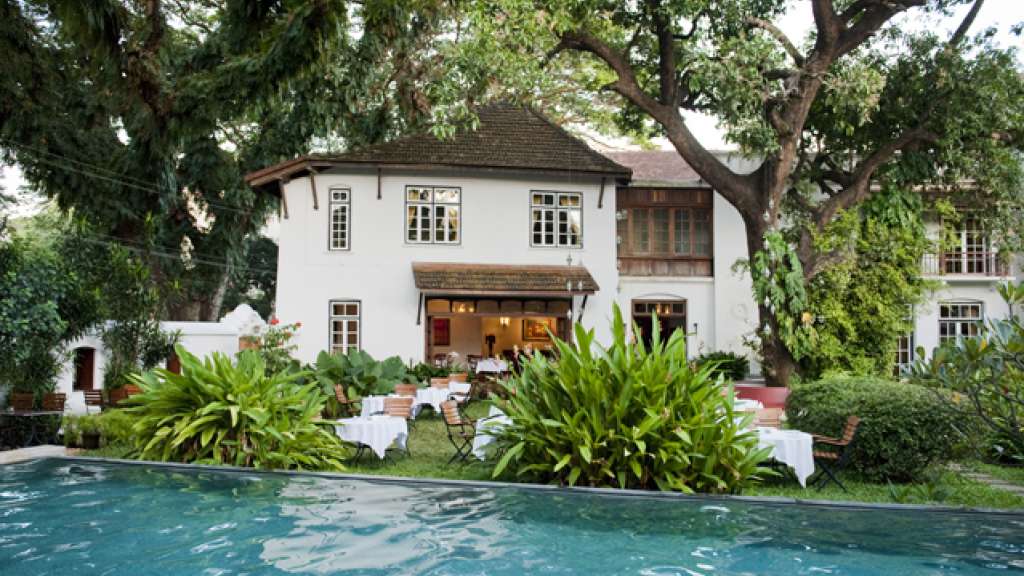
Heritage hotel on Tower Road in Fort Kochi with direct Kerala Tourism-listed contacts. Fort Kochi, Tower Road, Heritage hotel.
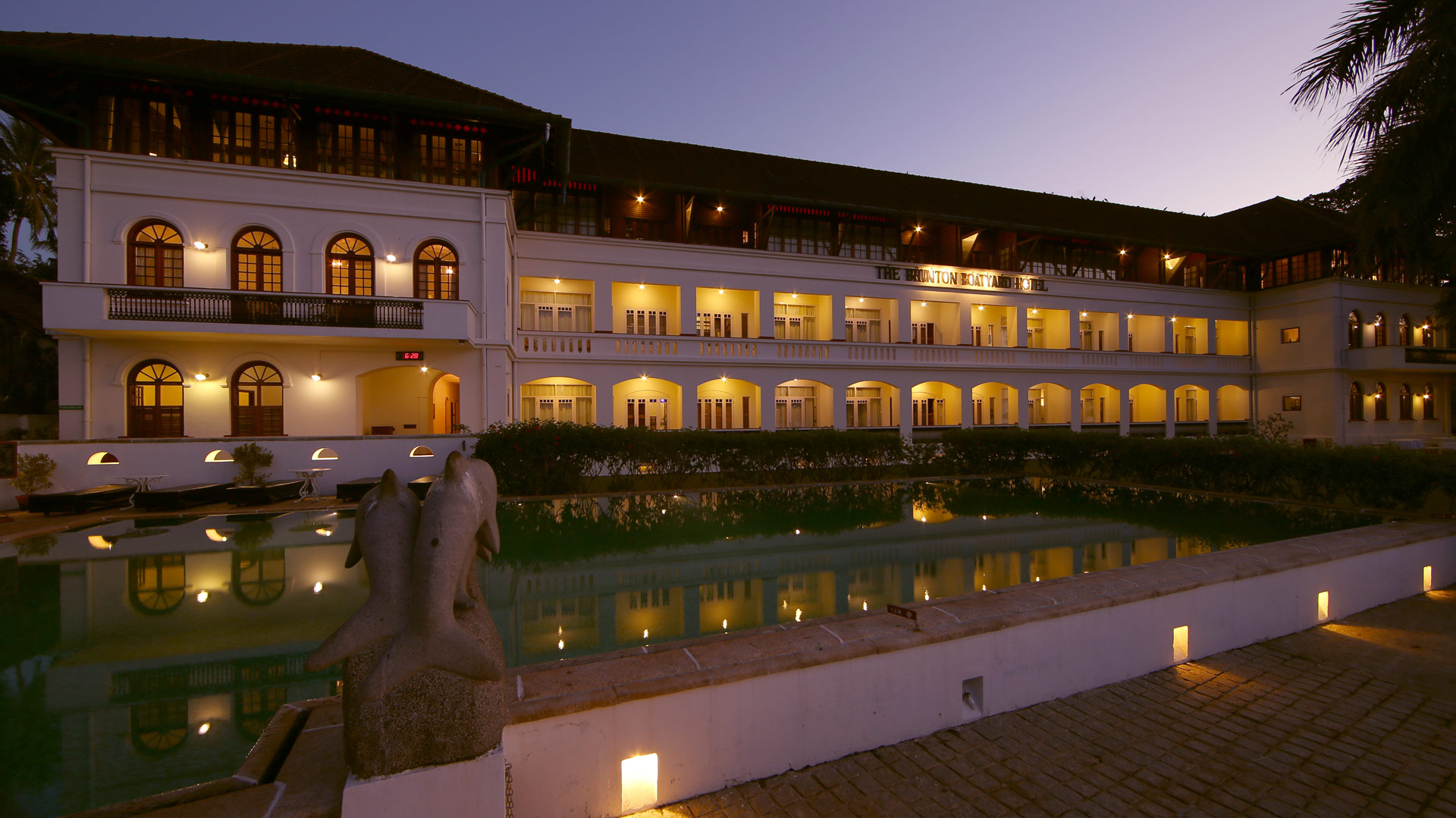
Heritage hotel on the site of George Brunton’s Victorian boatyard at Calvathy, rebuilt in trading-era style around a harbour-facing court — the rooms look onto the ship channel.
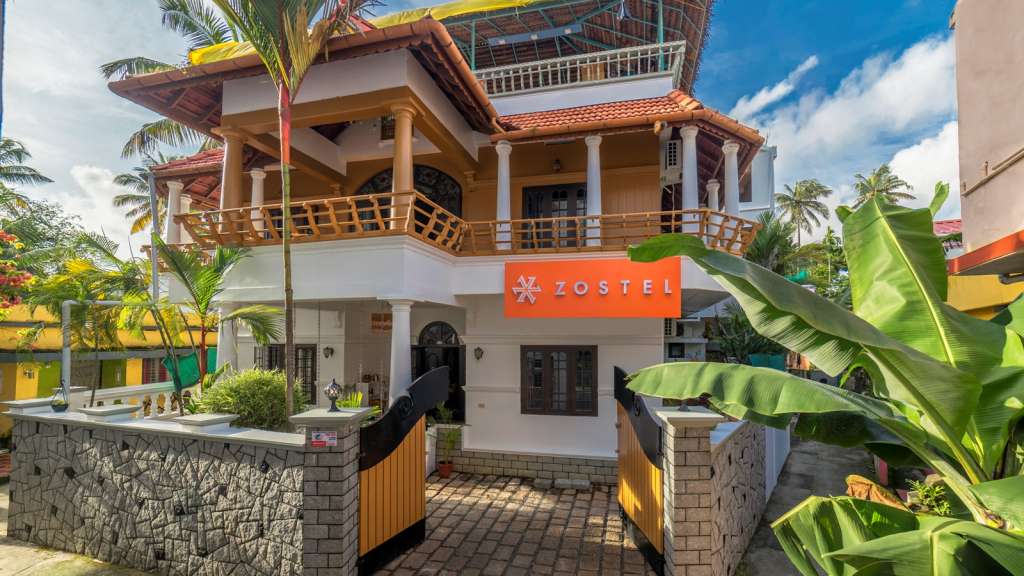
Fort Kochi branch of the Zostel backpacker chain — dorms and private rooms, the quarter’s main hostel option.

Homestay on 1/1519, Chirattapalam Rd, behind Dr Abraham Dental Clinic, Amaravathy, Fort Kochi, Kochi, Kerala 682001, Indien in Fort Kochi.
Budget hotel by the Vypin bus stand, across the ro-ro from Fort Kochi — a practical island-side base rather than a heritage-quarter stay.
Boutique hotel in a colonial trading bungalow at Kunnumpuram — built for a trading company and later a tea firm’s guest house, hence the name.
Boutique hotel at No 18, KB Jacob Road — upper-mid rooms a short walk from both the basilica and the beach.
The Koder family’s early-1900s mansion on Tower Road — the house of Kochi’s best-known Jewish trading family, now a boutique heritage hotel.
Heritage hotel built around a Portuguese-era courtyard off Princess Street — creaking floors and planters’ chairs rather than polish, which is the charm.
Guest house on Quieros Street, one of the old Portuguese-named lanes off Princess Street — a plain budget base in the middle of the quarter.
Hotel in Fort Kochi, Ernakulam, Kerala, India. Fort Kochi, Napier Street, CGH Earth.
CGH Earth heritage waterfront hotel on Calvetty Road in Fort Kochi. Luxury heritage hotel (CGH Earth) · Fort Kochi, Heritage stay, CGH Earth.
Book with the place itself. India’s cyber-crime coordination centre warned in April 2025 that convincing copies of hotel and pilgrimage booking sites are being pushed through sponsored search and social ads, taking payment for rooms the property never hears about. Every listing here links to the business’s own contact details and its own Google or Bing profile — we take no commission and sit in nobody’s payment path. If a booking page reached you through an ad, check the address bar against the property’s own site before you pay. Fraud can be reported on cybercrime.gov.in or on 1930.
Browse food, accommodation and activities across Fort Kochi. Check each address and journey before adding it to your day; these selections are not all beside Dutch Cemetery.
10 more places around Fort Kochi. Open a guide to plan the visit and onward journey.
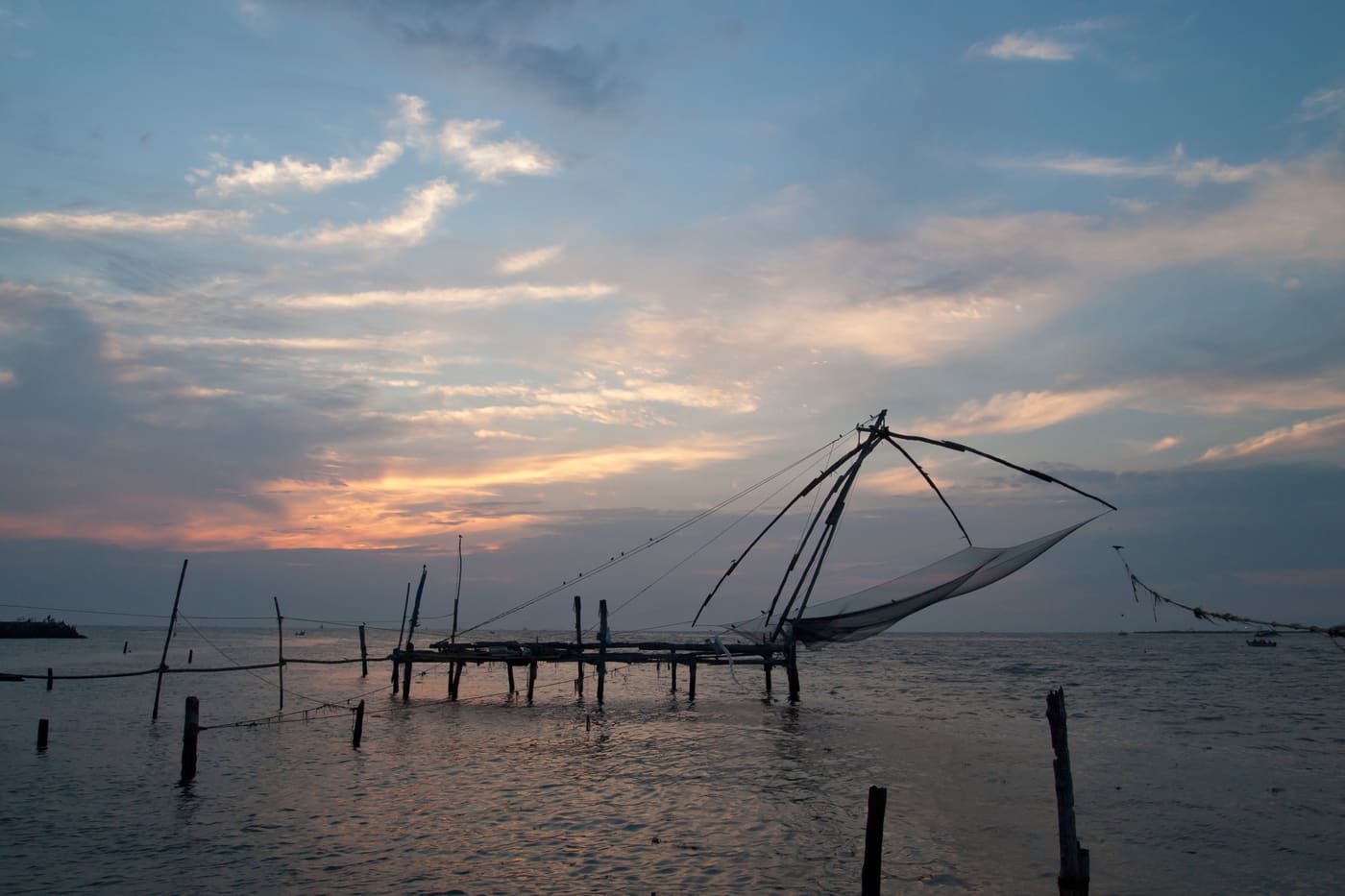
610 m · 7 min walk
Kerala’s most walkable heritage quarter, with Chinese fishing nets, colonial churches, art cafes and Mattancherry nearby.
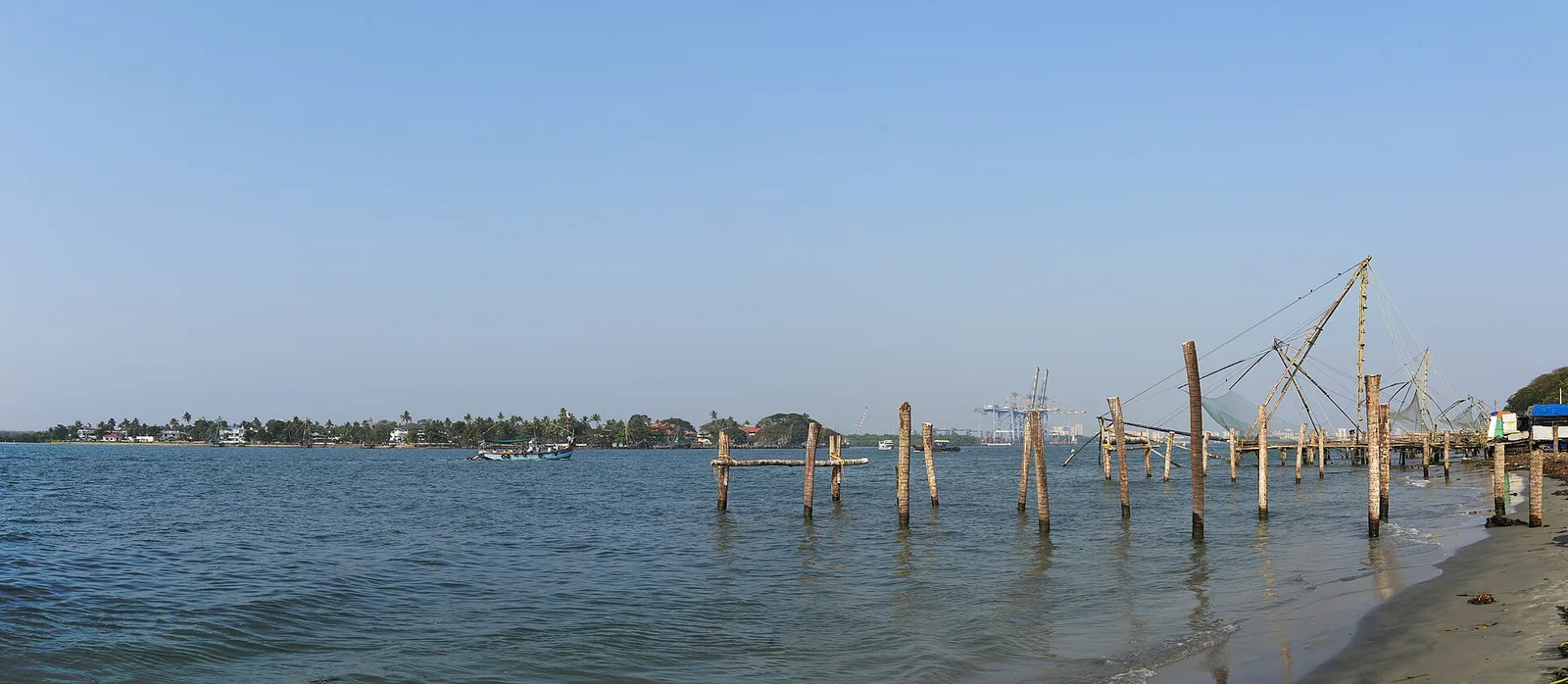
730 m · 9 min walk
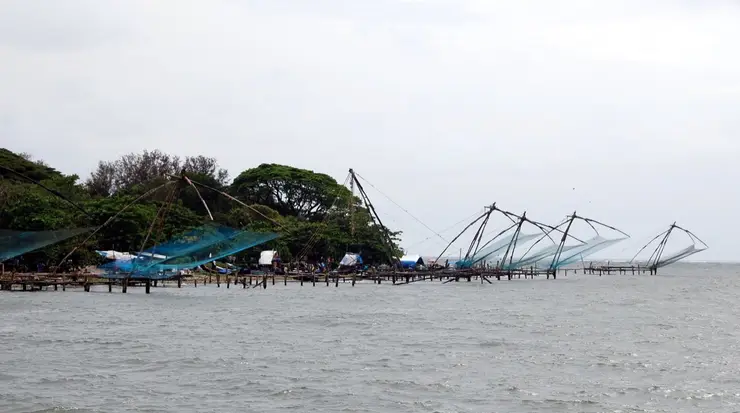
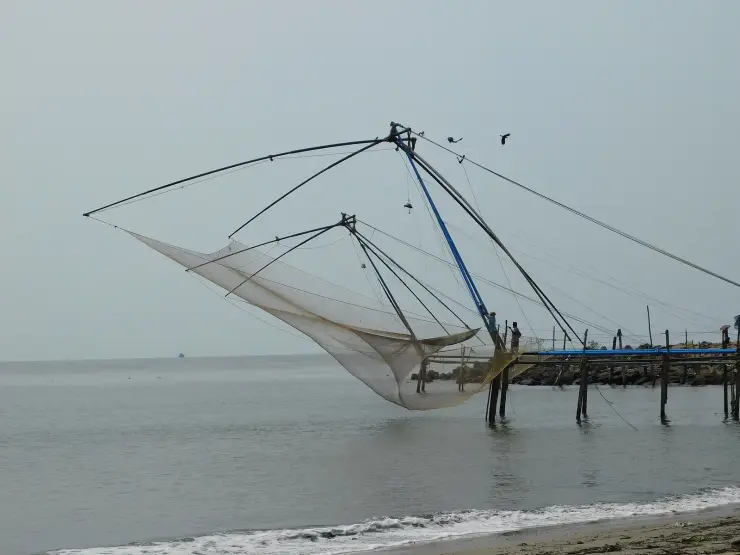
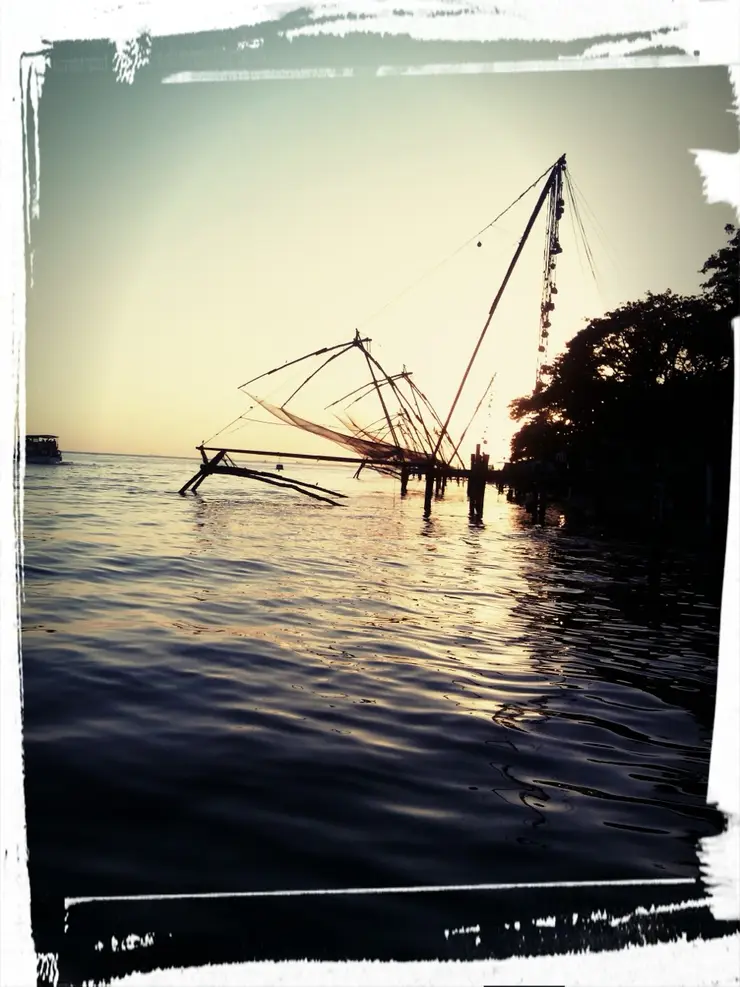
The giant cantilevered lift nets that are Fort Kochi’s emblem, strung along the shore at Vasco da Gama Square and still landing fish. Even their origin is argued — popular tradition credits Chinese traders of Zheng He’s era, some scholars later Portuguese settlers from Macau — and the argument is part of the attraction.
420 m · 5 min walk
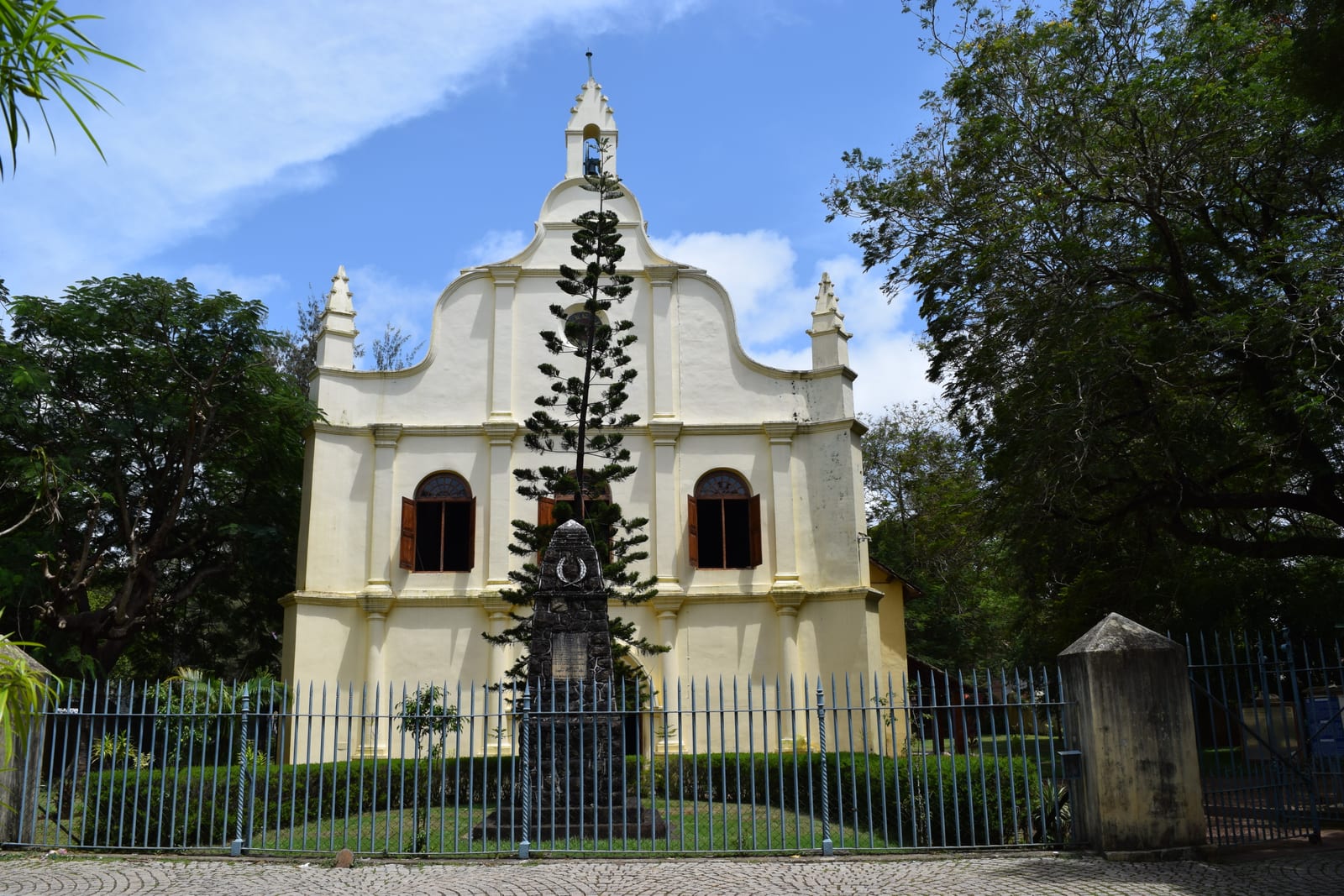
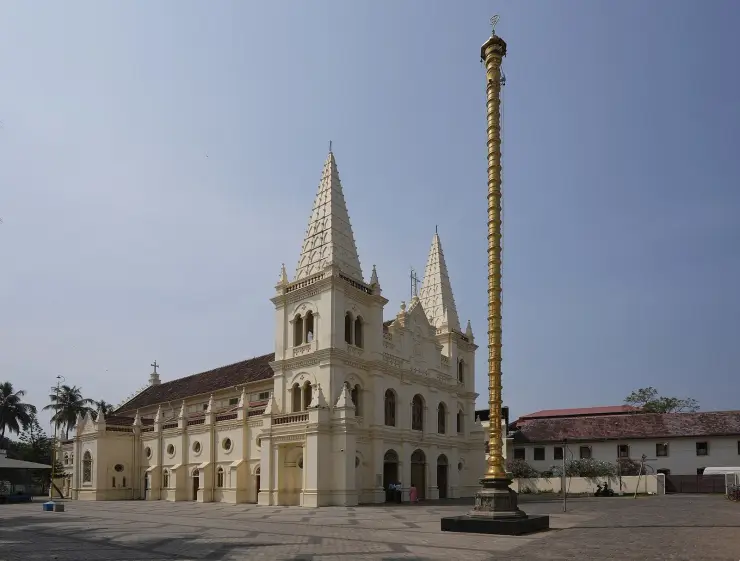
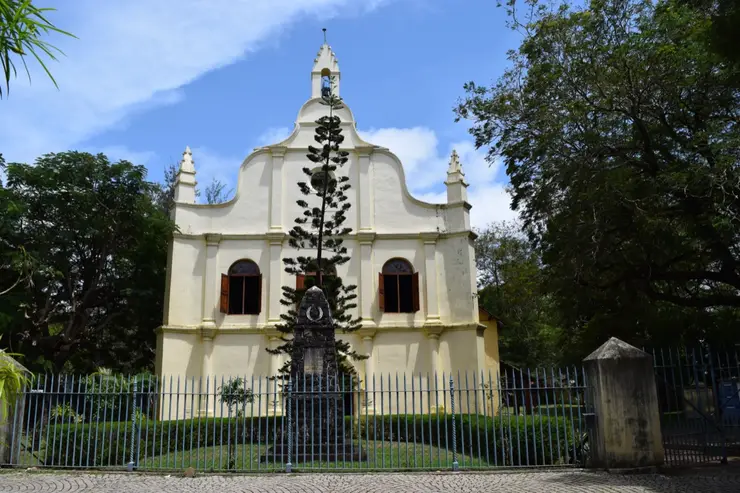
Believed to be the oldest European church in India (1503); Vasco da Gama was buried here before his remains were moved to Lisbon.
650 m · 8 min walk
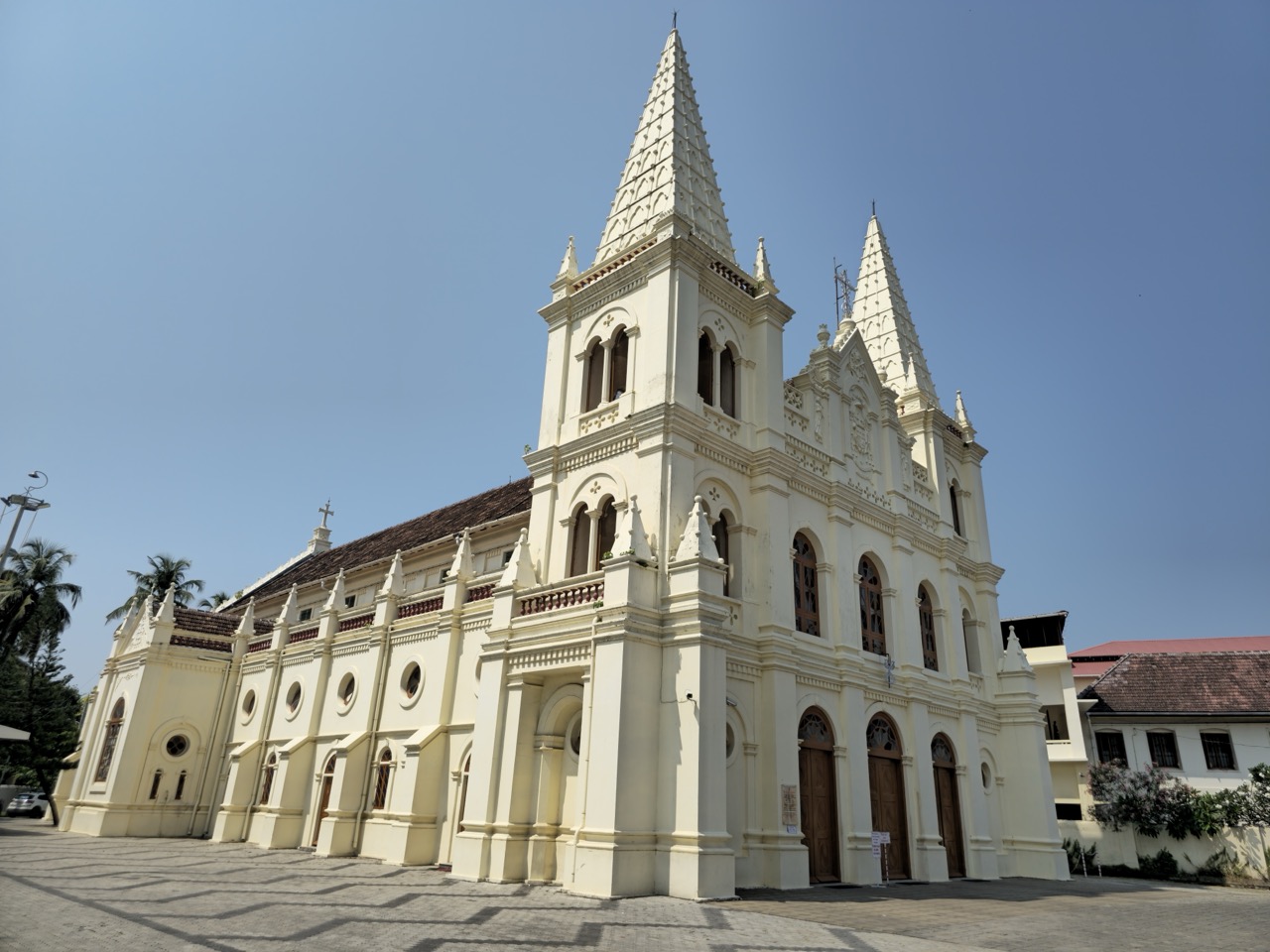
One of the finest churches in Kerala, with a richly painted interior, beside the Kerala Kathakali Centre in Fort Kochi.
710 m · 8 min walk
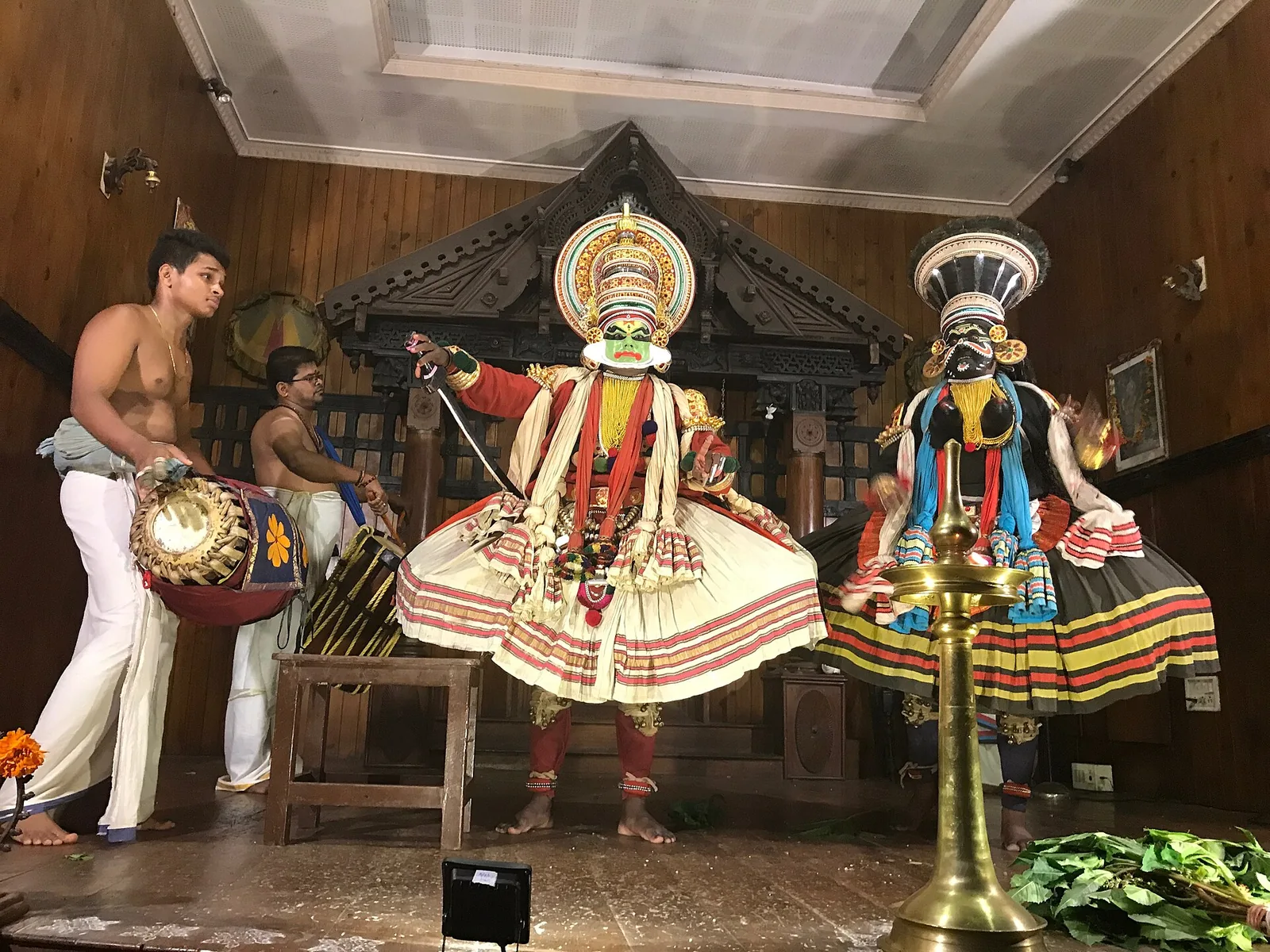
Evening Kathakali and Kerala classical-art performances in Fort Kochi, with make-up shown before the show.
2.2 km · 27 min walk
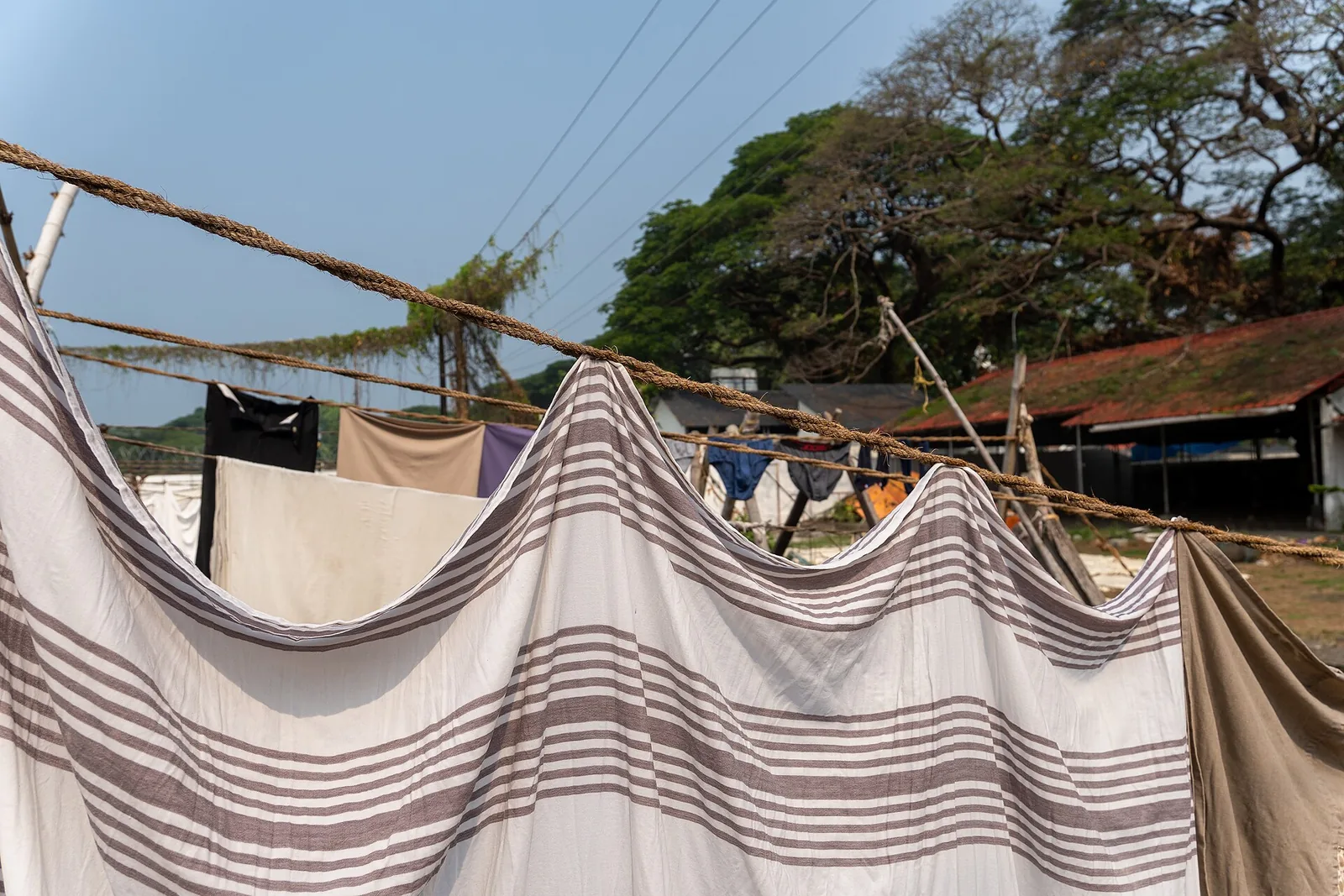
A working colonial-era community open-air laundry in Fort Kochi, still used by traditional washermen families.
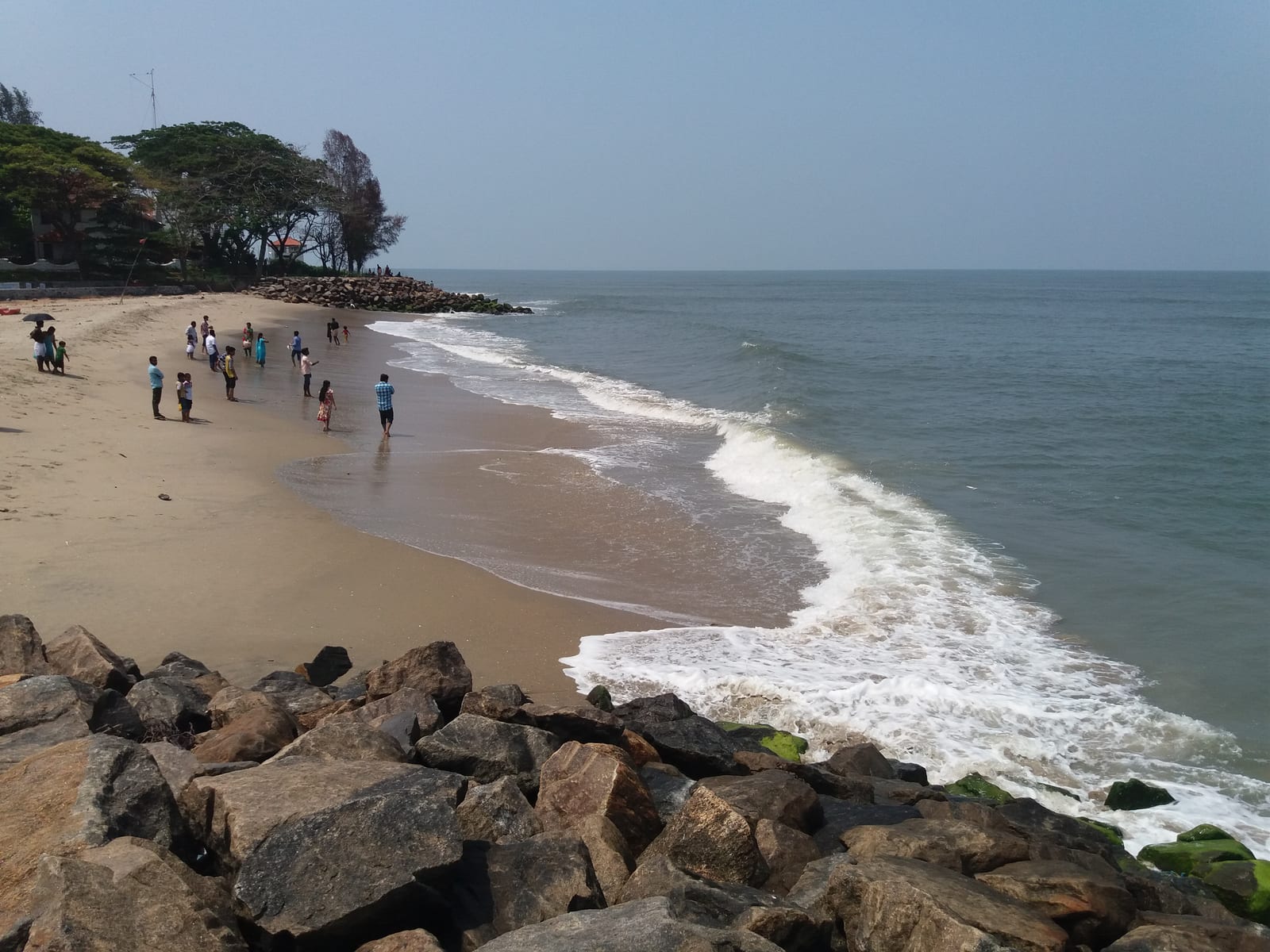
460 m · 6 min walk
Public seafront beside the Chinese fishing nets — a walking-and-sunset beach, not a swimming beach.
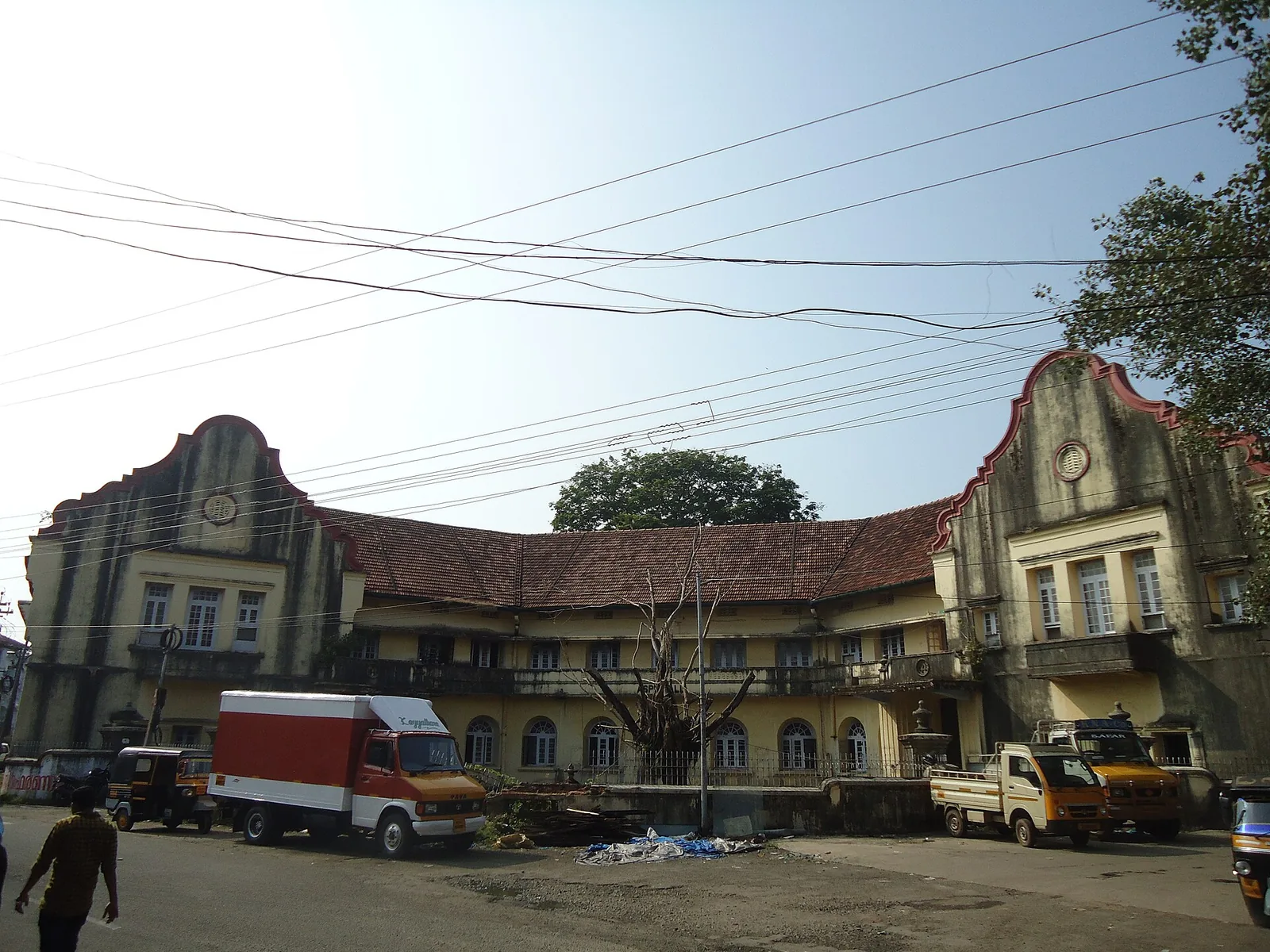
1.3 km · 15 min walk
A large 19th-century waterfront trading compound in Fort Kochi, the principal venue of the Kochi-Muziris Biennale.
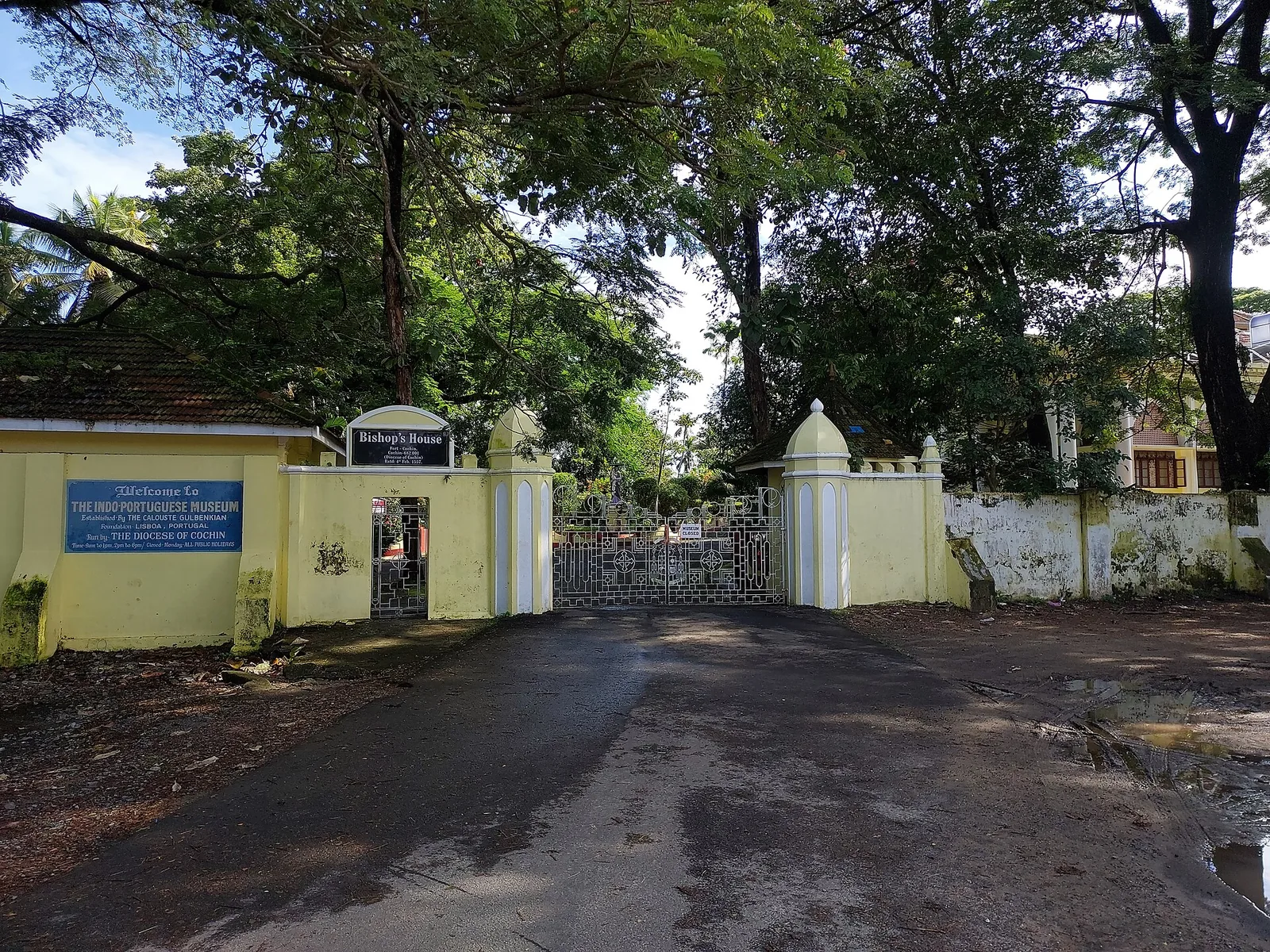
550 m · 7 min walk
Museum of Kerala’s Indo-Portuguese Catholic heritage in the Bishop’s House garden, Fort Kochi.
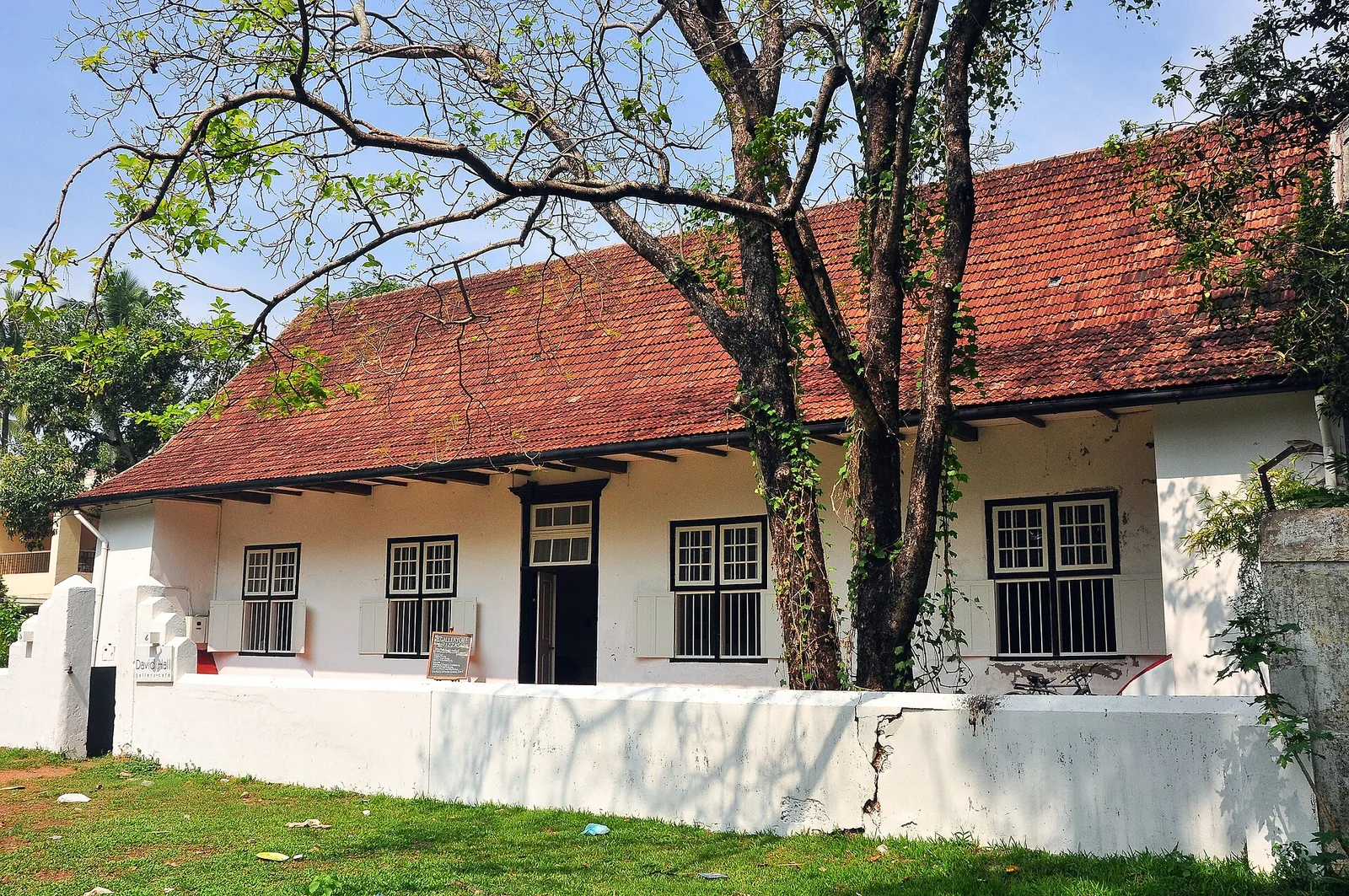
220 m · 3 min walk
A restored 17th-century Dutch bungalow on the Fort Kochi parade ground, now a contemporary art gallery and cafe.
Roampedia is commission-free — own or know a stay, eatery, guide or shop near Dutch Cemetery? List it and it appears here once verified.
Add a nearby businessEntry: No ticket is charged. The practical barrier is not money but access: the cemetery is enclosed and normally kept locked, and entry is granted case by case rather than as a matter of course.
Photography: Photography of the exterior wall and the dated gate pillar is unrestricted from the road. If you are admitted, treat it as a working burial ground and ask before photographing; the epitaphs are cut in old Dutch and are the most rewarding subject.
If you are travelling by bus or ferry, check the return service with the operator before setting out. Leave time to reach the stop or jetty after your visit.
Ask at the jetty or stand for the time of the last service back, not the next one. If you miss it, an auto or app cab is the fallback — agree the fare before you get in.
Checked 8 August 2026 against source 1source 2source 3. Conditions change and surfaces vary with weather — if step-free access is essential, confirm with the site before you travel.
Charge cap and free-transaction limits: Reserve Bank of India, in force since 1 May 2025.
These services are listed within about 1.2 km of Dutch Cemetery. Walking distances follow mapped routes; access and opening hours can change. Other services may be closer but are not included here.
Fort Kochi is one of Kerala’s safest and most walkable tourist quarters, comfortable by day and on the main lanes after dark. Violent crime against visitors is rare — the realistic risks are auto/guide scams, petty theft in crowds, and the sea, not personal danger.
Safety guidance last reviewed 15 June 2026. Always check your own government's current travel advice before you travel.
Emergency numbers are verified against official government and state tourism sources. 112 works anywhere in India.
A restored 17th-century Dutch bungalow on the Fort Kochi parade ground, now a contemporary art gallery and cafe.
220 m · 3 min walkBelieved to be the oldest European church in India (1503); Vasco da Gama was buried here before his remains were moved to Lisbon.
420 m · 5 min walkPublic seafront beside the Chinese fishing nets — a walking-and-sunset beach, not a swimming beach.
460 m · 6 min walkMuseum of Kerala’s Indo-Portuguese Catholic heritage in the Bishop’s House garden, Fort Kochi.
550 m · 7 min walkKerala’s most walkable heritage quarter, with Chinese fishing nets, colonial churches, art cafes and Mattancherry nearby.
610 m · 7 min walkOne of the finest churches in Kerala, with a richly painted interior, beside the Kerala Kathakali Centre in Fort Kochi.
650 m · 8 min walkEvening Kathakali and Kerala classical-art performances in Fort Kochi, with make-up shown before the show.
710 m · 8 min walkKochi’s iconic cantilevered shore-operated fishing nets along the Fort Kochi seafront at Vasco da Gama Square, best photographed at sunset.
730 m · 9 min walkA large 19th-century waterfront trading compound in Fort Kochi, the principal venue of the Kochi-Muziris Biennale.
1.3 km · 15 min walk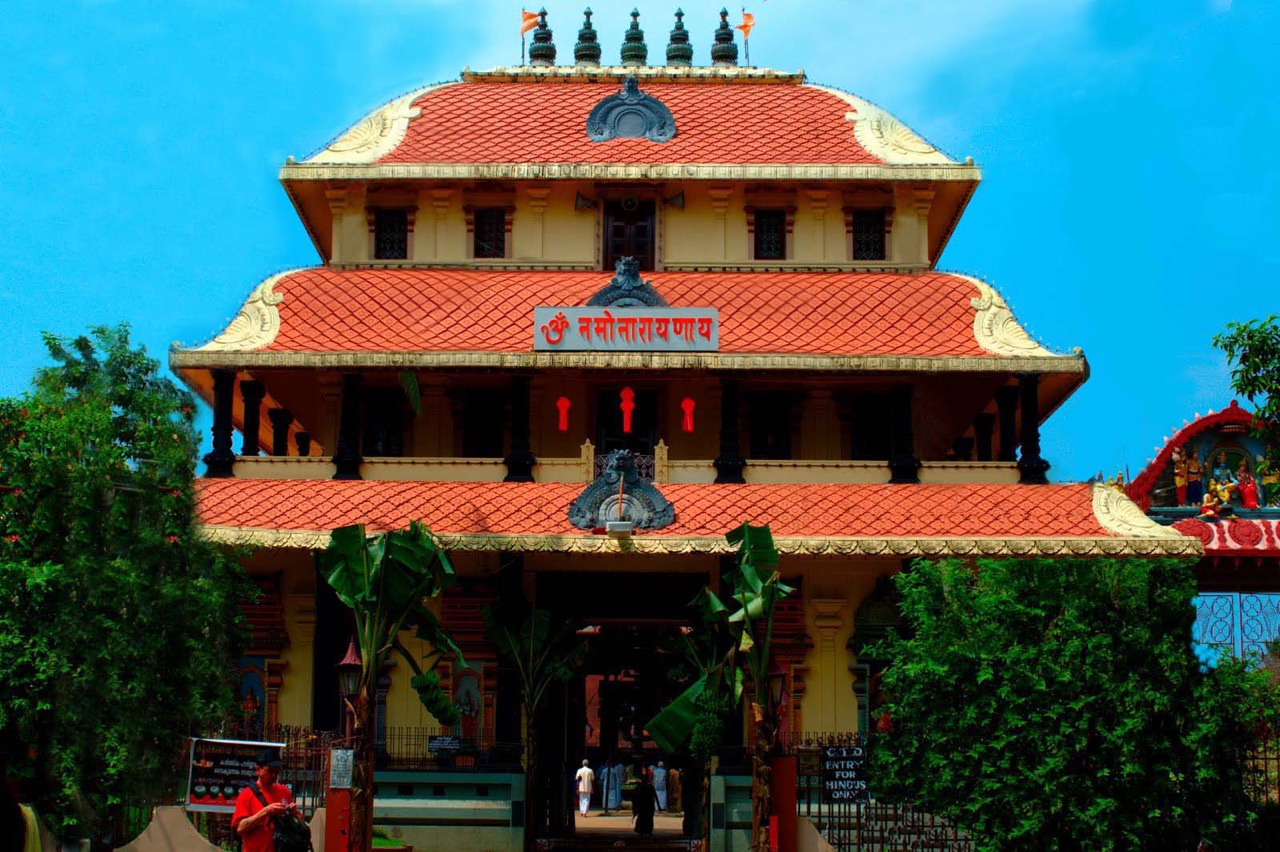
A historic Gowda Saraswat Brahmin temple in Cherlai, Mattancherry, central to Kochi’s Konkani community.
1.6 km · 20 min walk · straight line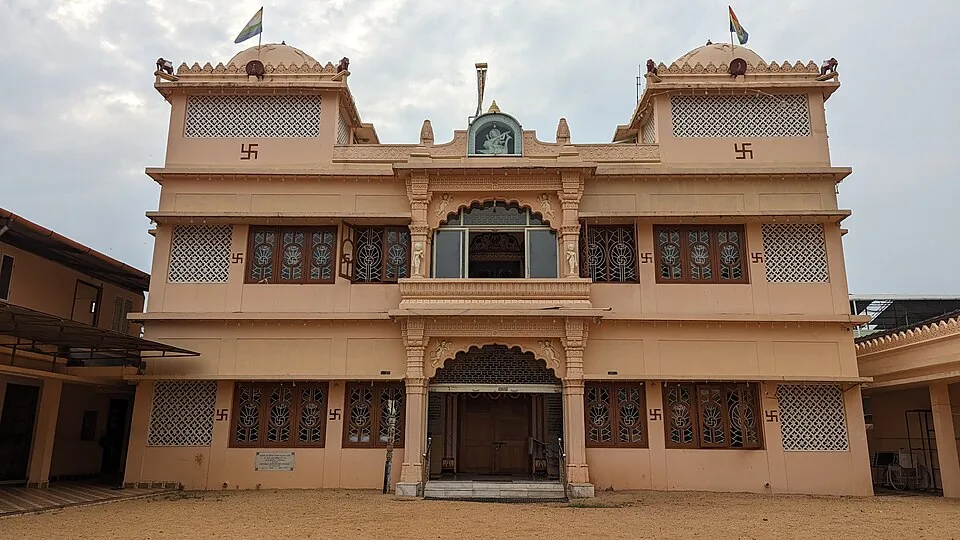
An ornate Jain temple in Mattancherry’s Gujarati quarter, raised in 1904 by Hirubai in memory of her husband Jivraj Dhanji and dedicated to Dharmanatha, the fifteenth Tirthankara — known for its white marble work and the daily midday feeding of the pigeons outside.
1.8 km · 22 min walk · straight lineA working colonial-era community open-air laundry in Fort Kochi, still used by traditional washermen families.
2.2 km · 27 min walkWalking and driving times are real routed distances, except the few marked “straight line”, which are direct-line estimates and will read short. Fare figures are estimates from Kerala’s notified auto/taxi tariff and exclude waiting and night charges. Routing: © openrouteservice.org by HeiGIT | Map data © OpenStreetMap contributors
Nearby toilets, pharmacies, ATMs, seating and vets are community-mapped and may be incomplete or out of date. Map data © OpenStreetMap contributors | Walking times © openrouteservice.org by HeiGIT
Often not. The cemetery is walled and normally kept locked, and it is not a walk-in attraction with published hours. Access is granted case by case, usually arranged in advance through the nearby St Francis CSI Church, which manages it along with the burial records. Many visitors see only the exterior wall and the 1724 gate pillar — plan on that being your visit, and treat entry as a bonus.
No ticket is charged. The barrier here is access rather than money.
No, on the evidence we can find — and we would rather say so than repeat the signboard. Two older purpose-built Dutch cemeteries are still standing in India: Pulicat, established in 1657, with graves dated from 1646 to 1777, and Surat, generally dated to around 1650–51 and holding the 1691 mausoleum of Hendrik Adriaan van Reede. Both predate 1724 by some seventy years. Nor is Kochi the site of the earliest European burials here — those are inside St Francis Church, under the floor, from the Portuguese period. What is genuinely unusual about this ground is its severity, not its date.
About 104 tombs and epitaphs survive, holding Dutch colonial officials, garrison officers, merchants and their families. The last burial is generally recorded as Captain Joseph Ethelbert Winckler in 1913.
Because the Dutch here were Protestant, and Dutch Reformed burial practice avoided the imagery and the in-church interment that Catholic Portugal had used in Kochi for the previous century and a half. The plain, unornamented slab is a doctrinal choice, not a sign of a poor or neglected grave.
Fifteen to twenty minutes if you get in — it is a small plot, not a large landscaped cemetery. A couple of minutes if you are looking at the gate and walls from the road.
It is protected by the Archaeological Survey of India and managed by the Church of South India. It was restored in 2020–21 with funding from the Dutch embassy.
Because the Dutch who took Cochin in 1663 were Protestant and the Portuguese they displaced were Catholic. Catholic practice put the dead under the church floor, as close to the altar as rank and money allowed, and St Francis Church a few minutes away holds exactly those burials. Dutch Reformed practice had no use for that hierarchy, so ground was set aside outside the church instead. The separate walled plot is a doctrinal statement before it is a piece of town planning.
It is far plainer, and that is the point of it. Pulicat has skeletal figures carved into the gateway pillars, a skull above the arch, and gravestones worked with flowers, birds and human faces. Surat has van Reede’s domed mausoleum, built to out-do a rival’s and described by a Dutch admiral in 1775 as exceeding every other tomb in the ground. Kochi has flat, heavy, unornamented slabs of granite and laterite, many with no cross at all. Same company, same century, an entirely different argument about death.
November to February and early mornings are best for walking; avoid midday heat where possible.
Entry: No ticket is charged. The practical barrier is not money but access: the cemetery is enclosed and normally kept locked, and entry is granted case by case rather than as a matter of course. Timings: There are no published visiting hours. The ground is managed by the Church of South India and is generally closed to casual visitors; the usual route in is a request made in advance at the nearby St Francis CSI Church, which also holds the burial records. Many visitors see only the walls and the dated gateway from the road.
Base yourself in Fort Kochi or a nearby town in Ernakulam, then confirm the last-mile route locally before leaving. Walkable heritage areas are best done slowly; combine nearby streets, museums, markets and food stops. If the visit depends on forest, temple, boat, ferry, weather or seasonal access, check the official/local rule on the day before travel.
1 to 3 hours.
Nearby you can pair David Hall Art Gallery (220 m), St. Francis Church (420 m), Fort Kochi Beach (460 m), Indo-Portuguese Museum (550 m).
Watch traffic on narrow heritage streets. Keep valuables close in crowded markets.
Written about Dutch Cemetery itself — its history, its legends and the arguments about them.
These guides explore Fort Kochi and the surrounding area. Choose a visit that fits your interests, allowing separately for travel between stops.
Written about Fort Kochi as a whole rather than about Dutch Cemetery — its history, its streets, and how to spend a day in it.
Route-level itineraries and practical guides for the rest of Kerala.
Photographs: Vis M (CC BY-SA 4.0), Gnoeee (CC BY-SA 4.0), Vyacheslav Argenberg (CC BY 4.0). Wikimedia Commons.